

Fish Farming Technology: Nanobubbles for Aquaculture & Hydroponics
Reviewed September 2026 against USDA NASS and the USDA Agricultural Marketing Resource Center.
Try it: Run your own numbers →
Nanobubble technology is a method of infusing water with gas bubbles 50-200 nanometers wide, small enough to stay suspended for weeks instead of rising and popping in seconds. In fish farming, that means dissolved oxygen delivered at up to 85% transfer efficiency versus roughly 3% for a conventional surface aerator, according to The Fish Site’s review of nanobubble aeration in aquaculture. In hydroponics, the same bubbles oxygenate the nutrient solution bathing plant roots. Below, we cover what the technology actually does, what it costs, and where the real US data stops and the marketing claims begin.
Table of Contents
- What Nanobubble Technology Actually Is
- Nanobubble Technology in Fish Farming
- Hydroponics, Aquaponics, and Fish: Where the Overlap Really Is
- The US Aquaculture and Hydroponics Market, in Numbers
- Costs, Payback, and What’s Not Yet Documented
- Stocking Density Calculator
- Where Satellite Monitoring Fits In
- FAQs
- Try it: Run your own numbers
What Nanobubble Technology Actually Is
Nanobubbles are gas-filled cavities in water, typically 50-200 nanometers in diameter, roughly 1,000 times smaller than the bubbles from a household air stone. That size is the whole story: a bubble that small has almost no buoyancy, so instead of shooting to the surface and popping, it stays suspended in the water column, sometimes for weeks. Three things follow from that:
- Oxygen transfer efficiency: The Fish Site reports nanobubble systems reach up to 85% oxygen transfer efficiency, compared to about 3% for conventional aerators, because the gas dissolves into the water instead of escaping at the surface.
- Oxygen transfer rate: Moleaer, a commercial nanobubble equipment maker, states nanobubble diffusion delivers oxygen at up to 30 times the rate of traditional paddle wheels or diffusers.
- Generation method: Commercial units use hydrodynamic cavitation, ultrasonic cavitation, or pressure-dissolution to shear gas into nanobubble size, then inject the treated water into a pond, tank, or nutrient reservoir.
None of that is unique to fish farming. The same physics apply anywhere dissolved oxygen or nutrient delivery is the bottleneck, which is why the technology shows up in both aquaculture and hydroponic systems, and increasingly in the aquaponic systems that combine the two.
Nanobubble Technology in Fish Farming
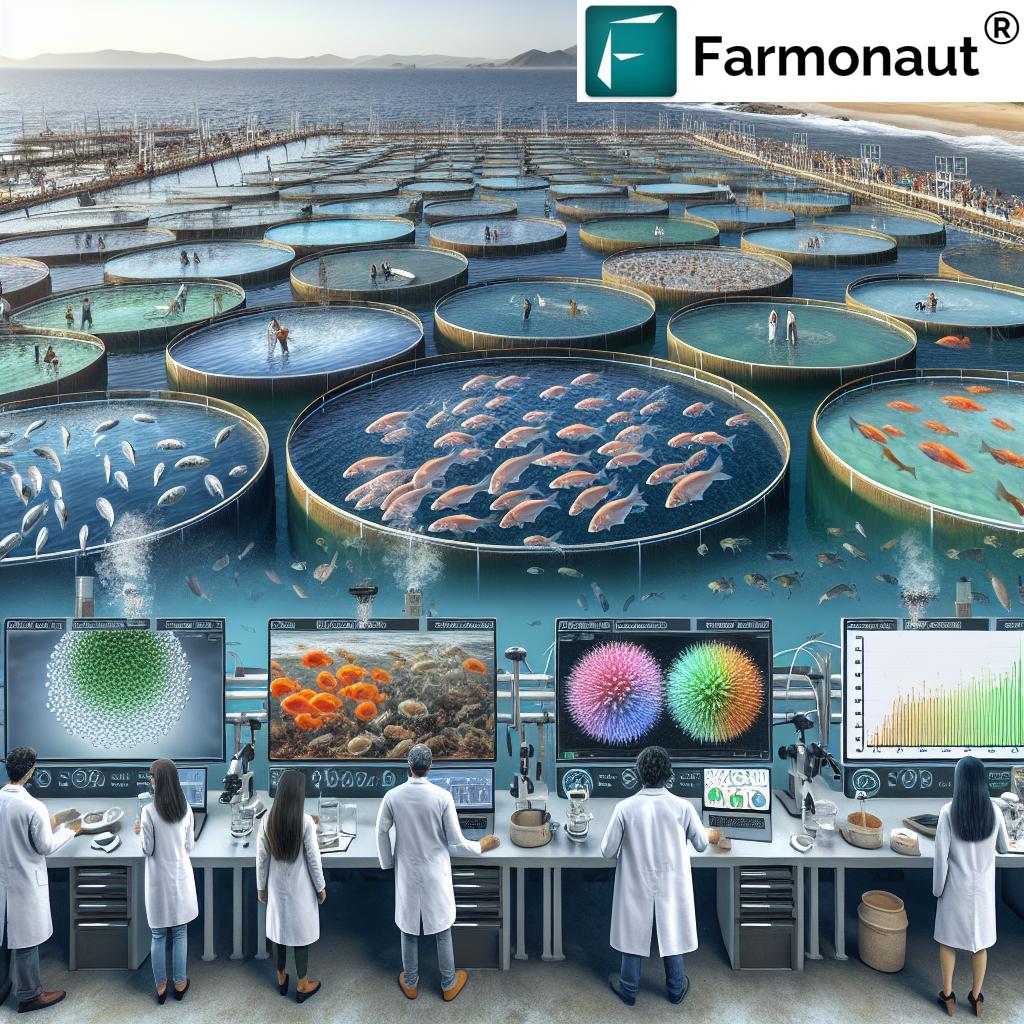
Dissolved oxygen is the ceiling on how many fish a given volume of water can support. Below it, fish stop eating, stop growing, and start dying; above it, farms can push stocking density higher without expanding pond or tank footprint. This is the single biggest reason nanobubble technology has moved from pilot projects into working farms, particularly in Recirculating Aquaculture Systems (RAS), the closed-loop tanks that recycle and treat water on-site rather than drawing continuously from a pond or river.
The documented gains are specific:
- Stocking density: The Fish Site reports nanobubble-oxygenated systems can support stocking densities above 80 kg/m³, against roughly 40 kg/m³ in traditional systems, effectively doubling production per unit of water volume.
- Biomass growth, verified case: A Canadian RAS salmon hatchery recorded a 22% increase in fish biomass after one month of nanobubble aeration, per The Fish Site’s case reporting.
- Cost savings, verified case: Cooke Aquaculture’s sea bass farm in Chile reported combined electricity and oxygen cost savings of $3,100 per month after installing nanobubble generators, also per The Fish Site.
- Payback: Based on those savings, The Fish Site estimates a nanobubble generator investment pays for itself in about one year for that scale of operation. That figure is specific to the equipment and site described in the case study; a smaller US farm should run its own payback math against its actual electricity rate and oxygen supplementation cost, which is what the calculator further down this page is for.
Beyond oxygen, nanobubbles carry a mild oxidative effect that operators use for water quality management inside fish farming systems:
- Organic waste breakdown: nanobubbles help break down uneaten feed and waste solids, reducing the ammonia and organic load that otherwise builds up in stocked ponds and tanks.
- Pathogen and algae suppression: the oxidative species generated at the bubble surface can suppress some bacteria and algal growth without a chemical treatment, though this is a secondary effect, not a substitute for biosecurity protocols.
- pH stability: more even oxygen distribution reduces the swings in dissolved oxygen and pH that stress fish overnight, when photosynthetic oxygen production stops in outdoor ponds.
For context on the scale of US fish farming this technology is being layered onto: USDA NASS’s 2023 Census of Aquaculture recorded $819.6 million in food fish aquaculture sales nationally, out of $1.9 billion in total US aquaculture sales across all products including mollusks and crustaceans, from 3,453 farms reporting sales. The next full Census of Aquaculture is due in 2028; annual estimates in between are available by filtering for the aquaculture commodity at USDA NASS’s QuickStats database.
Hydroponics, Aquaponics, and Fish: Where the Overlap Really Is
Searches pairing “hydroponics” and “fish” usually mean one of two different things, and it’s worth separating them because the nanobubble use case differs.
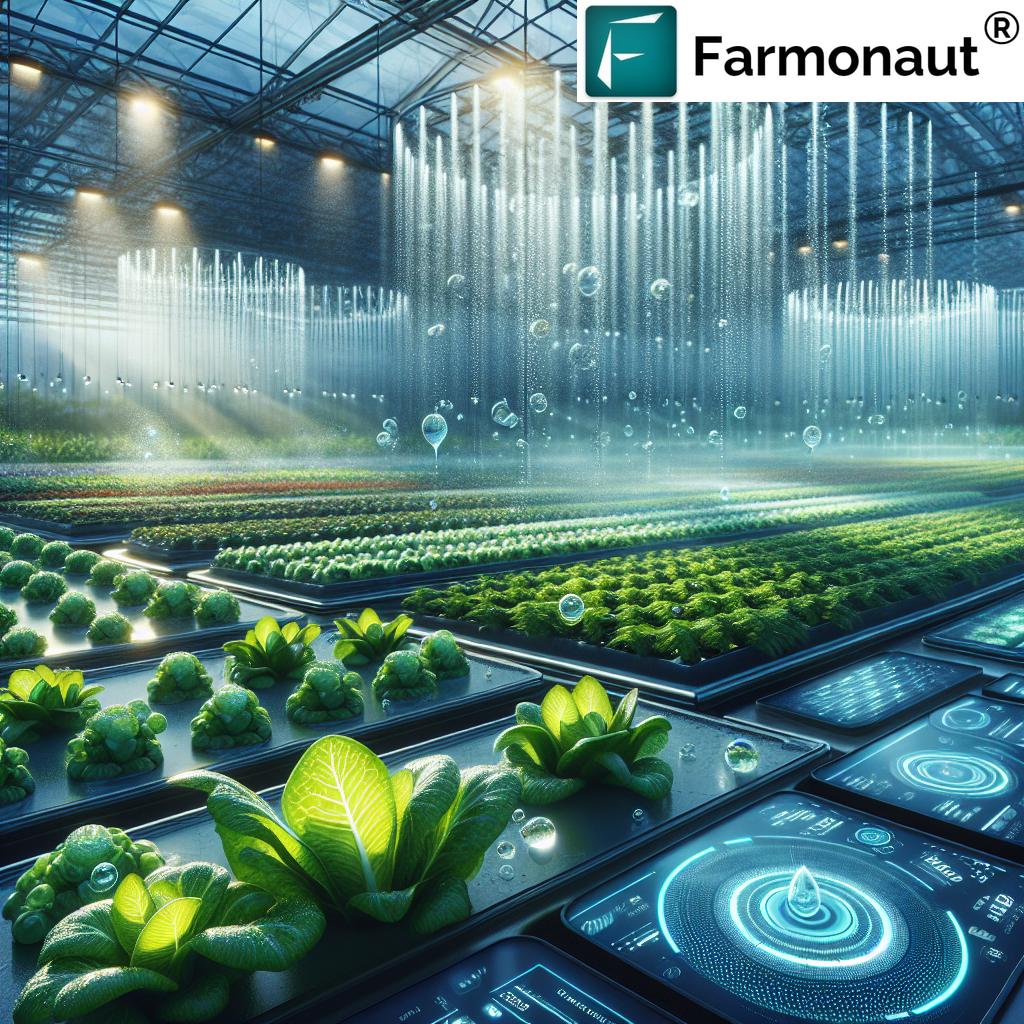
- Hydroponics alone: plants grown in a nutrient solution with no soil. Dissolved oxygen in the root zone matters here for the same reason it matters in a fish tank: roots respire, and an oxygen-starved nutrient solution slows nutrient uptake and invites root rot pathogens like Pythium.
- Aquaponics: a hydroponic grow bed and a fish tank sharing the same recirculating water loop, where fish waste supplies plant nutrients and the plants filter the water fish return to. This is the system where “hydroponics fish” is a literal, single design, not two adjacent topics.
In both, nanobubble generators are used the same way they’re used in a standalone RAS tank: injected into the reservoir or sump to raise and hold dissolved oxygen without mechanical agitation that could stress fish or disturb floating raft systems. The documented benefits reported in commercial and research use include:
- Root zone oxygenation: higher dissolved oxygen at the root promotes better root development and, by extension, nutrient uptake efficiency.
- Disease suppression: the same mild oxidative effect that helps water quality in fish tanks suppresses some root-zone pathogens in hydroponic reservoirs.
- Uniform nutrient distribution: because nanobubbles stay suspended rather than rising out of solution, they help keep dissolved gas and, indirectly, nutrient concentration more even throughout a reservoir.
What’s genuinely not published: there is no USDA or NASS tracking of nanobubble technology adoption specifically among US hydroponic operations, and no figure exists for what share of US hydroponic farms use nanobubble systems versus conventional air stones or venturi injectors. If that number matters for a specific investment decision, the closest available proxy is asking equipment vendors directly for their installed base by region, since no government survey currently segments hydroponic aeration method.
What is published is the size of the market this equipment is being sold into: the US hydroponics market was valued at $3.6 billion in 2025, with a projected compound annual growth rate of 7.28% from 2026 through 2034, according to IMARC Group’s market analysis.
The US Aquaculture and Hydroponics Market, in Numbers
The scale of RAS adoption specifically, the system type nanobubbles most directly serve, is also documented. USDA’s Agricultural Marketing Resource Center counted 575 Recirculating Aquaculture Systems operations across 48 states in its 2023 review of the sector.
| Metric | Figure | Period | Source |
|---|---|---|---|
| US food fish aquaculture sales | $819.6 million | 2023 | USDA NASS Census of Aquaculture |
| Total US aquaculture sales (all products) | $1.9 billion | 2023 | USDA NASS Census of Aquaculture |
| US farms reporting aquaculture sales | 3,453 farms | 2023 | USDA NASS Census of Aquaculture |
| US RAS operations, 48 states | 575 farms | 2023 | USDA Agricultural Marketing Resource Center |
| US hydroponics market size | $3.6 billion | 2025 | IMARC Group |
| US hydroponics market CAGR | 7.28% | 2026-2034 (projected) | IMARC Group |
These figures refresh on different schedules. The full Census of Aquaculture runs every five years, with the next one due in 2028; between censuses, check USDA NASS’s QuickStats tool filtered to the aquaculture commodity for annual estimates. RAS-specific counts are tracked by USDA’s Economic Research Service; search “recirculating aquaculture” on ers.usda.gov for the current release. Market-size and CAGR figures for hydroponics come from private market research firms like IMARC Group and are typically reissued annually or on a multi-year cycle, so treat the 2025 figure above as a snapshot rather than a permanent number.
Costs, Payback, and What’s Not Yet Documented
The case-study numbers above (a 22% biomass increase in one month, $3,100 in monthly savings, roughly a one-year payback) are real, verified, and specific to the sites they came from: a Canadian RAS salmon hatchery and a Chilean sea bass farm run by Cooke Aquaculture. They are not a US national average, because no such average exists yet.
To be direct about the gaps, rather than paper over them with vague language: there is no USDA or NASS tracking of nanobubble technology adoption specifically in US aquaculture, no published US farm count using the technology, no EPA or FDA documentation of regulatory or approval status for nanobubbles in food-fish systems, and no USDA cost-benefit analysis comparing nanobubble capital and operating costs against conventional aeration across different US farm sizes. Anyone citing a US-specific adoption percentage or a national average payback period for nanobubble aquaculture equipment is not drawing on a published government source, because none currently exists.
What a US operator evaluating this equipment can actually do:
- Get vendor quotes scaled to your tank or pond volume, since generator sizing and price scale with flow rate, not species.
- Model payback against your own utility rate and oxygen supplementation spend, using the Chile case study’s $3,100/month combined savings as a reference point, not a guarantee.
- Check current published research directly, since peer-reviewed nanobubble aquaculture studies are archived on ScienceDirect and ResearchGate under the search term “nanobubble aquaculture,” and industry performance reports from vendors including Moleaer and its competitors are updated on a rolling basis.
- Watch USDA’s five-year Census of Aquaculture cycle for the first time this technology gets its own adoption line item, expected at the earliest in the 2028 census.
Stocking Density Calculator
Use the figures above (roughly 40 kg/m³ under conventional aeration versus 80+ kg/m³ with nanobubble aeration, per The Fish Site) to estimate how much additional biomass your own tank volume could support if you upgraded aeration, and roughly how many months of the Chile case study’s $3,100/month savings rate it would take to offset a given equipment price.
Run your own numbers
Assumptions: uses the conventional (~40 kg/m³) and nanobubble-aided (80+ kg/m³) stocking density range and the $3,100/month combined electricity-and-oxygen savings figure reported by The Fish Site's case studies. It does not account for species-specific stocking limits, feed cost scaling, water quality permits, or installation labor, and it is not a substitute for a vendor quote sized to your actual tank geometry and flow rate.
Where Satellite Monitoring Fits In
Farmonaut doesn't manufacture nanobubble generators. What our platform does is give farms and hydroponic operations the surrounding data layer: satellite-based crop health imagery, soil moisture readings, and weather forecasting that inform decisions about the land-based crops often grown alongside aquaculture and hydroponic operations, including the water-scarcity planning that makes technologies like nanobubble aeration worth the investment in the first place, as covered in our look at agtech partnerships expanding farm innovation. For hydroponic and vertical operations sited in cities, the water-efficiency case is similar to the one we cover in urban farming's sustainability approaches, and farms weighing any capital equipment investment benefit from the same fundamentals we lay out in farmer education on maximizing yields.
You can explore Farmonaut's satellite tools directly:

Developers integrating satellite and weather data into their own systems, such as monitoring conditions around an aquaculture or hydroponic site, can use our API and API Developer Docs.
Our mobile apps support on-the-go farm management:



What's Next for Nanobubble Adoption
The durable way to track this technology going forward isn't a single number, it's a method: check USDA NASS QuickStats for the aquaculture commodity annually, and the full Census of Aquaculture when it lands in 2028, for the first time nanobubble or advanced-aeration adoption gets its own line item; check ScienceDirect and ResearchGate under "nanobubble aquaculture" for new peer-reviewed case studies beyond the Canadian and Chilean sites cited here; and get a vendor quote scaled to your own tank or reservoir volume rather than relying on someone else's payback period. The physics (smaller bubbles, more surface area, slower rise, better oxygen transfer) doesn't change year to year. The adoption data around it will, and that's the part worth re-checking.



FAQs
- What is nanobubble technology?
It's a method of infusing water with gas-filled bubbles 50-200 nanometers in diameter, small enough to stay suspended in solution for extended periods instead of rising to the surface. That extended contact time is why nanobubbles transfer oxygen far more efficiently than a conventional aerator, up to 85% versus about 3%, per The Fish Site. - Is nanobubble technology used in fish farming?
Yes. It's applied by injecting nanobubble-treated water into aquaculture ponds and Recirculating Aquaculture System (RAS) tanks to raise dissolved oxygen, which lets farms hold higher stocking densities (documented above 80 kg/m³ versus roughly 40 kg/m³ conventionally) and, in a Canadian RAS salmon hatchery case, increased biomass 22% within one month. - How does nanobubble technology relate to hydroponics and fish together?
In aquaponics, where a fish tank and a hydroponic grow bed share one recirculating water loop, nanobubble generators oxygenate the shared reservoir, benefiting fish respiration and plant root uptake simultaneously. In standalone hydroponics, the same equipment oxygenates the nutrient solution without a fish tank involved. - What is nanobubble technology in aquaculture actually documented to save?
In a verified case at a Cooke Aquaculture sea bass farm in Chile, combined electricity and oxygen costs fell by $3,100 per month after installing nanobubble generators, with an estimated one-year payback on the equipment, per The Fish Site. These figures are specific to that site and should be modeled against your own utility rates, not treated as a national average, since none is currently published. - How big is the US hydroponics market?
IMARC Group valued the US hydroponics market at $3.6 billion in 2025, projecting 7.28% compound annual growth from 2026 through 2034. No breakdown exists yet for what share of that market uses nanobubble aeration specifically versus other methods. - Where can I find current US aquaculture farm counts and sales figures?
USDA NASS's Census of Aquaculture is the authoritative source, run every five years with the next full census due in 2028; between censuses, filter the aquaculture commodity in NASS QuickStats for annual estimates. For Recirculating Aquaculture System counts specifically, USDA's Agricultural Marketing Resource Center reported 575 operations across 48 states in its most recent review. - What are the challenges in adopting nanobubble technology?
Upfront equipment costs, the need for operator training on proper generator sizing and placement, and the absence of EPA or FDA-published regulatory guidance specific to nanobubbles in food-fish systems, which means each operator is currently working from vendor documentation and peer-reviewed case studies rather than a government standard.
Discussion
Questions, corrections or field experience? Share them below. First-time comments are reviewed before they appear, and your email is never published.
No comments yet. Be the first to add a question or your experience.

 Rouge VC
 Yutz Automation
 AgroGreen Dynamics
 Leher
Leher AgroRisk
 Oath Inc
 Reddane Farming
 Esri North East Africa
 Cresol
 Atur Kuliner
 MDCV UK
 Zerella Group
 Etech Consulting Madagascar
 Vestlandsforsking
 Delicio
 WB Dev
 Sama Premium
 Prochecker
 Tres Valles
 LACOS Geoinformation
 Magrifly
 LatConnect 60
 Blickwinkel
