

Reviewed September 2026 against USDA NASS, USDA ERS, and Frontiers in Plant Science.
Try it: Enter your figures above to see the estimated range. →
Sustainable Crops: What the US Data Actually Shows
The most sustainable crops to grow in the US are the ones that already use the least added input per bushel or pound produced — soybeans averaged 50.7 bushels/acre and cotton 836 lbs/acre in the 2024 crop year, per USDA’s National Agricultural Statistics Service, and both are increasingly grown with seaweed-derived biostimulants instead of higher rates of synthetic fertilizer. One driver behind that shift: the October 2024 BASF-Acadian Plant Health partnership, which pairs BASF’s crop-protection distribution network with Acadian’s seaweed extract technology to reach growers in Europe and China. This article covers what “sustainable crops” means in measurable terms, what BASF and Acadian’s biostimulants actually do to yield, and how to check the current numbers yourself.
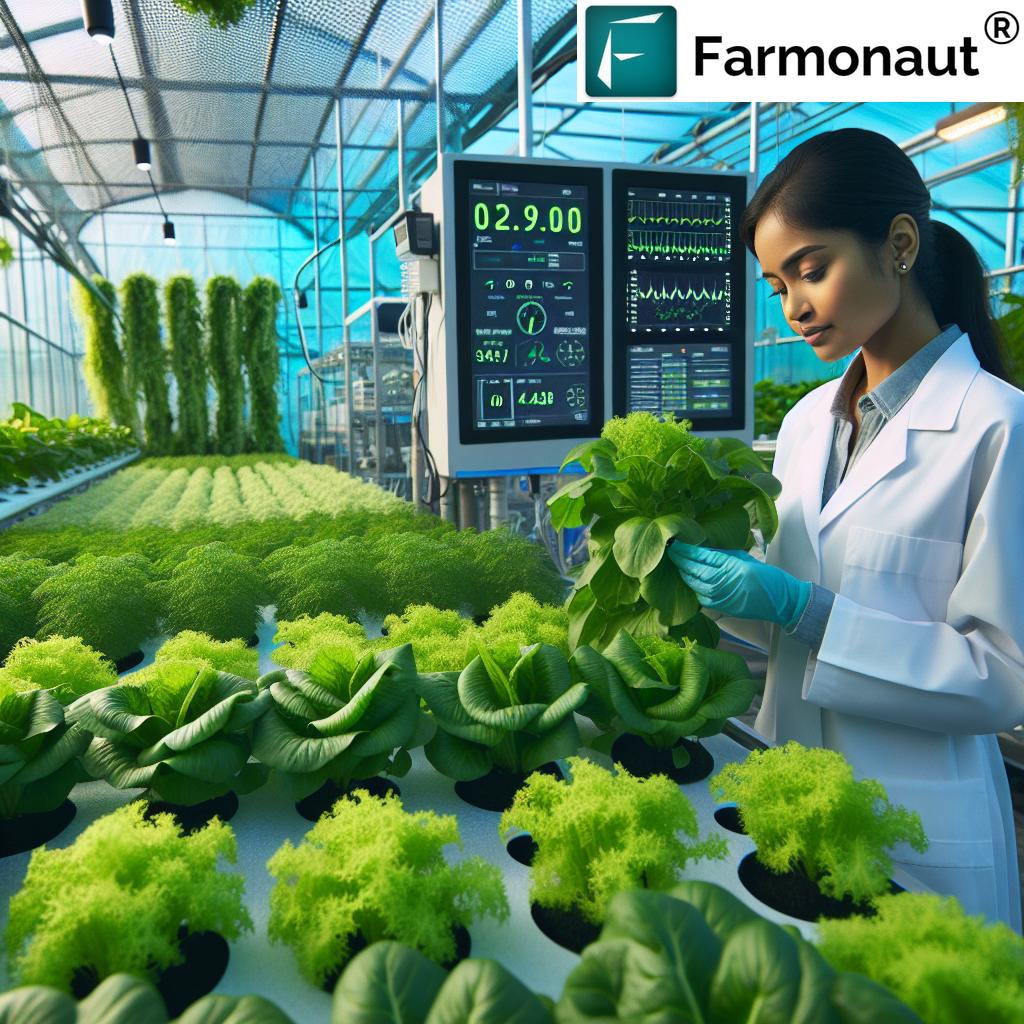
What Makes a Crop “Sustainable” — and Which Ones Qualify
There is no single certification that stamps a crop “sustainable.” In US agronomy, the working definition combines three measurable factors: input intensity (fertilizer and water per unit of yield), soil-conserving practice adoption (cover crops, reduced tillage), and resilience to drought or heat stress without yield collapse. By that standard, US row crops with high cover-crop pairing and biostimulant uptake — soybeans, cotton, and increasingly oilseeds — score better than crops still reliant on high synthetic nitrogen rates alone.
Cover cropping, the most-cited soil-health practice among USDA and land-grant agronomists, sat at 4.7% of US cropland in 2022, according to USDA’s Economic Research Service. Adoption is higher in the Corn Belt: Iowa, Illinois, and Indiana combined for a 5.1% cover-crop rate that same year, per USDA ERS regional survey data reported through NASS. Both figures are below what conservation groups consider a resilient threshold, which is exactly why biostimulant inputs — which don’t require a rotation change — have grown faster than cover-crop acreage itself.
A Quick Checklist for Evaluating “Sustainable” Claims on Any Crop
- Does the practice have a USDA NASS or ERS adoption figure attached, or is it a marketing claim with no dataset behind it?
- Is the yield benefit reported against a control plot, or just “improved”?
- Does the input reduce synthetic fertilizer/water use, or just add another product on top of existing rates?
- Is the geography and crop type specified? A 40% yield gain in one crop class does not transfer to another.
Acadian Plant Health and BASF: What the Partnership Actually Covers
BASF Agricultural Solutions and Acadian Plant Health — a Nova Scotia-based seaweed biostimulant producer now owned by BASF — announced their partnership in October 2024, per BASF’s own release, to extend seaweed-based biostimulant distribution into Europe and China. Acadian’s core technology extracts compounds from Ascophyllum nodosum brown seaweed, which supply plant growth-promoting compounds distinct from standard NPK fertilizer.
Germany is the anchor market for this expansion: it holds 20% of the European biostimulant market, the largest single-country share on the continent, according to Markets and Markets research. That scale is why distribution and regulatory approval routes into Germany specifically matter to BASF’s rollout — though the research available for this article does not include German-language pricing, approval dates, or Acadian-branded product listings for the German market; if you need that detail, check BASF’s regional distributor pages directly, since none of that data is published in the English-language sources reviewed here.
BASF Seaweed Biostimulants: The Yield Numbers, by Crop Type
The strongest independent evidence on seaweed extract biostimulants comes from a peer-reviewed meta-analysis in Frontiers in Plant Science, covering 198 studies and 2,021 crop comparisons. Across all crops, seaweed extract treatment produced a 16.3% average yield increase (95% confidence interval: 13.5% to 19.1%). That range matters more than the headline number — it’s the band a grower should expect, not a guarantee.
The gain is not uniform across crop types:
| Crop category | Average yield increase | Note |
|---|---|---|
| All crops (pooled) | 16.3% (13.5-19.1% CI) | 198 studies, 2,021 comparisons |
| Vegetables and melons | 20% | Largest well-supported crop-type response |
| Legumes | 19% | Includes soybean-family trials |
| Oilseeds | 40% | Limited data — fewer trials than vegetable/legume categories |
| Tropical-region crops | 30-33% | Environmental context, not a crop type |
Read the oilseed figure cautiously: the meta-analysis authors flag it as based on limited data relative to the vegetable and legume categories, meaning the confidence interval around that 40% is wider even though it isn’t published as a separate range in the brief available here. For a US soybean grower averaging the 2024 NASS figure of 50.7 bushels/acre, a legume-category gain in that 19% range (if replicated on-farm) would be the more defensible planning number than the oilseed figure.

The Market Behind the Science: US Biostimulants by the Numbers
The US biostimulants market was valued at $532.38 million in 2024, per Custom Market Insights. Kline Group separately forecasts the US market reaching $700 million in 2025 and $1.0 billion by 2030 — a forecast, not a booked figure, so treat both later numbers as Kline’s projection rather than confirmed sales.
| Year | US biostimulants market size | Status | Source |
|---|---|---|---|
| 2024 | $532.38 million | Actual | Custom Market Insights |
| 2025 | $700 million | Kline Group forecast | Kline Group |
| 2030 | $1.0 billion | Kline Group forecast | Kline Group |
What is not published: a US farm-gate price for seaweed biostimulants in dollars per gallon or per acre, and a US farmer adoption percentage (share of acreage actually treated). Wholesale market-size figures exist; the per-acre economics a grower would budget against do not appear in USDA, ERS, or the market reports reviewed for this piece. Until that data is published, the practical method is to request a per-acre quote directly from your regional distributor and compare it against the yield ranges in the table above for your specific crop.
For the science behind the yield figures, read the full meta-analysis: Frontiers in Plant Science. For the partnership announcement itself: BASF SE press release. For the market forecast: Kline Group.
Estimate Your Own Yield Range: Seaweed Biostimulant Calculator
Enter your crop’s baseline yield and acreage to see the yield-gain range the Frontiers meta-analysis reports for your crop category — this does not include your treatment cost, since no US per-acre price is published.
Enter your figures above to see the estimated range.
Assumptions: uses the Frontiers in Plant Science meta-analysis midpoint gain for each crop category, applied to the pooled study’s 95% confidence interval of 13.5-19.1% for the “all crops” option only; other categories show the single reported average with no CI published. Excludes treatment cost, soil type, water availability, and regional climate, none of which are controlled for in this calculator. Not a substitute for a field trial on your own farm.
Tracking Your Field Once You Apply a Biostimulant
A yield-gain range is only useful if you can measure whether it showed up on your own field. Farmonaut’s satellite monitoring tools track vegetation-index trends across a growing season, which is how growers compare a treated block against an untreated control without waiting for harvest weigh-tickets. Explore the  web app, or pull the same data into your own systems via the Satellite and Weather API, documented in full in the API Developer Documentation.
Related reading on the agronomic side: steps of farming and yield-boosting methods, strategic farm management approaches, and how digital farming tools pair with input decisions like biostimulant timing. For broader innovation context, see recent agriculture technology breakthroughs and a global view of agricultural innovation trends.


How to Get the Current Numbers Yourself
Every figure above has a vintage and a refresh path. USDA NASS updates crop yield data annually each January/February through its Quick Stats database; pull your state and commodity directly rather than relying on a national average. USDA ERS updates sustainable-practice adoption surveys, including cover-crop rates, on a rolling basis through its published documentation. Biostimulant market sizing is republished periodically by Custom Market Insights and Kline Group as new industry reports are commissioned — since these are paid market reports, check for a newer edition before citing the 2024/2025 figures used here as current. For emerging seaweed-biostimulant field trial data beyond the 2026 Frontiers meta-analysis, a standing Google Scholar alert for “seaweed extract biostimulant yield” will surface new peer-reviewed studies as they publish.
The durable takeaway: “sustainable crops” isn’t a fixed list — it’s whatever combination of low input intensity, verified yield response, and soil-conserving practice adoption scores best against USDA’s own datasets in a given season. Check the checklist above against any new product claim, and check the sources linked here for the current numbers before you plan next season’s input budget.

 Godrej Agrovet
 Hayleys Agriculture
 Linx Agritech
 Adinet
 Save Your Soils
 GalaxEye Space
 Grandstream Algérie
 XOS Realty
 Geospatial Lab Africa
 Agro La Gándara
 HIPSAC
 ZOL Zimbabwe
 Juligerm
 AdBio
AdBio MISE Maroc
 NWNS
NWNS Red August Group
 Farm Inc
 WeMe Global
 Agrotoken
 Blue BearX
 Insignito
 DnCubed
 Indosistim Teknologi
 Liquify Digital
 CU Foods
 BeyondTech Global
 Rouge VC
 AgroRisk
 Oath Inc
 Esri North East Africa
 MDCV UK
 Etech Consulting Madagascar
 Vestlandsforsking
 WB Dev
 Sama Premium
 Tres Valles
 Blickwinkel
 Agricultural Credit Policy Council
 eKGIS
eKGIS Mostas Tech
 Andex
Andex Deluxe Conseil
 WICO
WICO Chimera Innovation
 SkyHarvest
 Teledarbas
 Exurbia Geospatial
 FieldZero
