

Reviewed August 2026 against USDA’s National Agricultural Statistics Service (NASS), USDA’s Economic Research Service (ERS), and Saskatchewan’s Water Security Agency (WSA).
Try it: Run your own numbers →
Table of Contents
Agricultural Water Management: Grants, Data & Software
Agricultural water management is the set of practices, infrastructure, and funding programs that control how much water a farm draws, applies, and drains. In the United States it is a $95-billion-a-year irrigation footprint tracked by USDA; in Saskatchewan it is a named provincial fund that pays up to $95,000 per project. This article gives you the current figures for both, the real grant programs (not generic categories), and a calculator so you can size your own project before you apply.
If you searched for farm water management, the short version is: it covers irrigation scheduling, drainage, soil-moisture monitoring, and drought mitigation — and satellite-based tools like Farmonaut’s platform now sit alongside pumps and ditches as part of that toolkit. For a strategy-level view, see our guides on top water management strategies in agriculture, sustainable water management strategies, and farm water management for livestock and drought resilience.
U.S. Irrigation by the Numbers
USDA’s National Agricultural Statistics Service runs the Irrigation and Water Management Survey every five years as part of the Census of Agriculture. The 2023 edition counted 212,714 U.S. farms irrigating, down from 231,474 in 2018 — an 8.1% drop in the number of operations irrigating, even though total irrigated acreage fell by a smaller 5.0% (55.9 million acres in 2018 to 53.1 million in 2023) and total water applied fell just 2.9% (83.4 million to 81.0 million acre-feet). That gap between the three numbers is the story: fewer, larger irrigation operations are running roughly the same water volume over roughly the same land, a consolidation pattern rather than a retreat from irrigation. Groundwater pumped from on-farm wells supplied 54% of that water in 2023, at an average well depth of 241 feet; sprinkler systems covered 12.6 million more acres than gravity irrigation. Five states — Arkansas, California, Idaho, Nebraska, and Texas — accounted for around half of both the irrigated acreage and the water applied nationwide.
Saskatchewan’s WSA Agricultural Water Management Fund
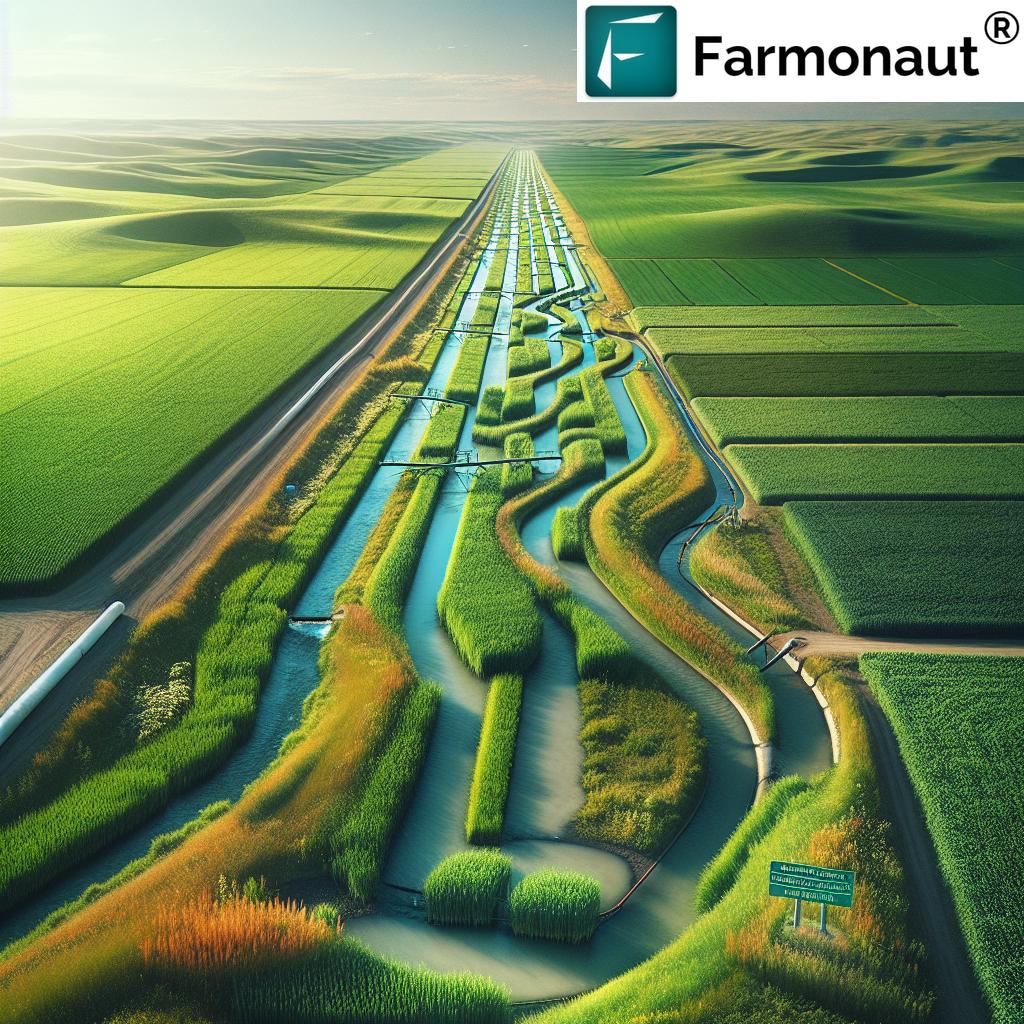
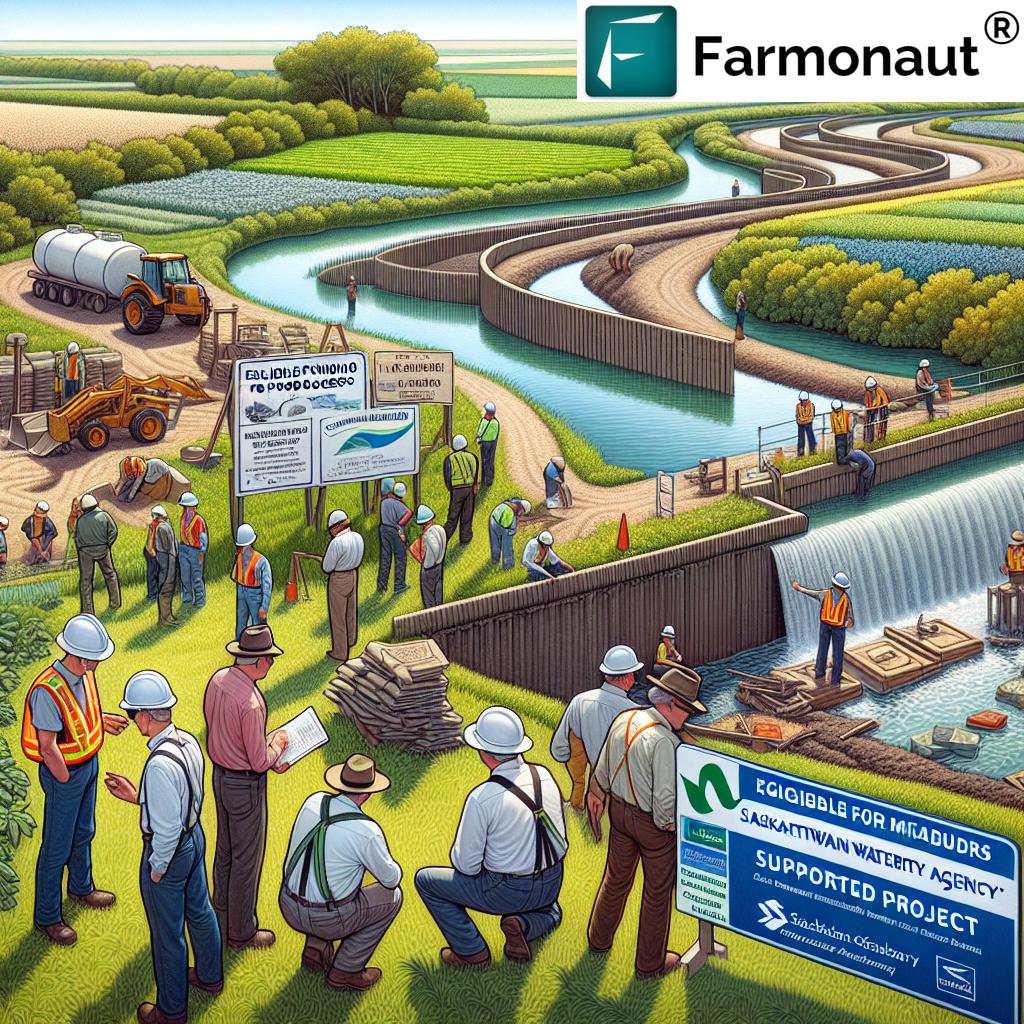
Saskatchewan’s Water Security Agency (WSA) runs the Agricultural Water Management Fund, and its own program page confirms the core terms: up to $95,000 per project on a cost-share basis, with more than $2 million distributed across 93 projects since the fund launched in 2022. WSA’s public page describes the mechanism as “cost-sharing” without posting one fixed percentage — the ratio is set at each intake, so confirm the current share before you budget a project around it, directly at wsask.ca.
Eligible costs cover design and construction of water management works, mitigation and rehabilitation for agricultural land, technical and engineering fees, and support for the qualified persons who sign off on drainage approvals. WSA frames this as part of broader sustainable water management in the province.
The fund sits inside a much larger provincial commitment. Saskatchewan’s 2026-27 budget puts more than $130 million into water management infrastructure, economic development, and safe water supply, including $39 million for capital projects — the Cowan Lake Dam replacement, Lafleche Dam spillway improvements, and the Eastside Pump Station refurbishment among them — and $19 million specifically for irrigation expansion. Since 2020, the province has added 108,000 irrigated acres, already past the 85,000-acre target it originally set for 2030.
Grant Comparison: Saskatchewan, Prairie-Wide & West Virginia
These are the actual, named funding programs behind this article’s figures — not invented categories. Amounts and caps below are what each program’s own page states; where a program does not publish a fixed cost-share percentage, that column says so rather than guessing.
| Program | Region | Max Funding | Cost-Share | Eligible Applicants | Covers |
|---|---|---|---|---|---|
| WSA Agricultural Water Management Fund | Saskatchewan | $95,000 per project | Cost-share; ratio set at each intake — check wsask.ca | Producers, First Nations, rural municipalities, conservation & development area authorities, watershed association boards, irrigation districts | Drainage, mitigation, rehabilitation, technical/engineering fees |
| Prairie Watersheds Climate Program (On-Farm Climate Action Fund) | Saskatchewan & Manitoba | $75,000 per producer; $40M program total | Federal cost-share via Agriculture and Agri-Food Canada | Individual producers | Nitrogen management, cover cropping, rotational grazing |
| WV Stream Partners Program | West Virginia | $5,000 per group | Grant, not cost-share | Citizens’ groups, watershed associations | Stream/river restoration, protection, study projects |
| WV Agricultural Enhancement Program (AgEP) | West Virginia | Not posted centrally — set by local conservation district | Cost-share (district-specific) | Agricultural cooperators | Land and water quality improvements |
| USDA Farm Service Agency conservation programs (CRP/CREP) | United States (incl. West Virginia) | Rental payments + cost-share; no single national cap | Varies by contract, 10-15 year terms for CRP | Producers with eligible cropland | Water quality, erosion control, wildlife habitat |
Cost-Share Calculator: What Would You Actually Get?
Pick a program, enter your project’s estimated cost and the cost-share rate you’ve been quoted, and the calculator applies that program’s published cap.
Run your own numbers
Assumptions: this is a planning estimate only. It applies one flat cost-share rate to your full project cost and the published per-project or per-producer cap; it does not model multi-year contracts, per-category sub-limits, matching-fund timing, or intake windows, which each program sets separately.
Who the Saskatchewan Fund Actually Pays
The WSA Agricultural Water Management Fund is one program with one cap and one cost-share mechanism — it is not five separate grants, even though six different types of applicants can draw from it. What changes by category is the kind of project WSA expects to see, not the funding terms.
Producers, First Nations & Rural Municipalities
Individual and corporate agricultural producers, First Nations in Saskatchewan, and rural municipalities are the largest applicant groups. Typical projects: on-farm drainage works, water retention structures, and rehabilitation of existing works that support sustainable water management on working land.
Irrigation Districts
Saskatchewan's recognized irrigation districts apply as legal entities for infrastructure upgrades, efficiency retrofits, and measurement/monitoring installations — the same fund, the same $95,000 cap, applied to district-scale works rather than a single farm.
Watershed Association Boards & Conservation and Development Area Authorities
These stewardship bodies apply for watershed planning, drainage control, and habitat restoration projects with measurable environmental outcomes — a requirement WSA and its partner, the Saskatchewan Association of Watersheds (SAW), both attach to their funding.
What Every Category Has in Common
- Same $95,000-per-project ceiling, cost-shared at a ratio set per intake.
- Same eligible cost categories: design, construction, mitigation, rehabilitation, technical/engineering fees, qualified-persons support.
- Same application channel: wsask.ca.
If your project is about carbon capture or greenhouse-gas practices rather than drainage or infrastructure, the separate SAW-delivered Prairie Watersheds Climate Program (funded through Agriculture and Agri-Food Canada's On-Farm Climate Action Fund) is the better fit — it pays individual producers in Saskatchewan and Manitoba up to $75,000 for nitrogen management, cover cropping, and rotational grazing, out of a $40 million three-year program total.
How to Apply for Water Management Funding
- Confirm eligibility and the current cost-share ratio. All six WSA applicant categories qualify if the project aligns with water management or stewardship goals — but the exact share percentage is set per intake, so check wsask.ca before budgeting.
- Scope the project. Define whether it's drainage, an irrigation upgrade, or habitat rehabilitation, and gather technical/engineering estimates.
- Bring in a qualified person. Many projects require an engineer or other expert assessment, which is itself an eligible cost under the fund.
- Download and complete the application from wsask.ca during the current intake window.
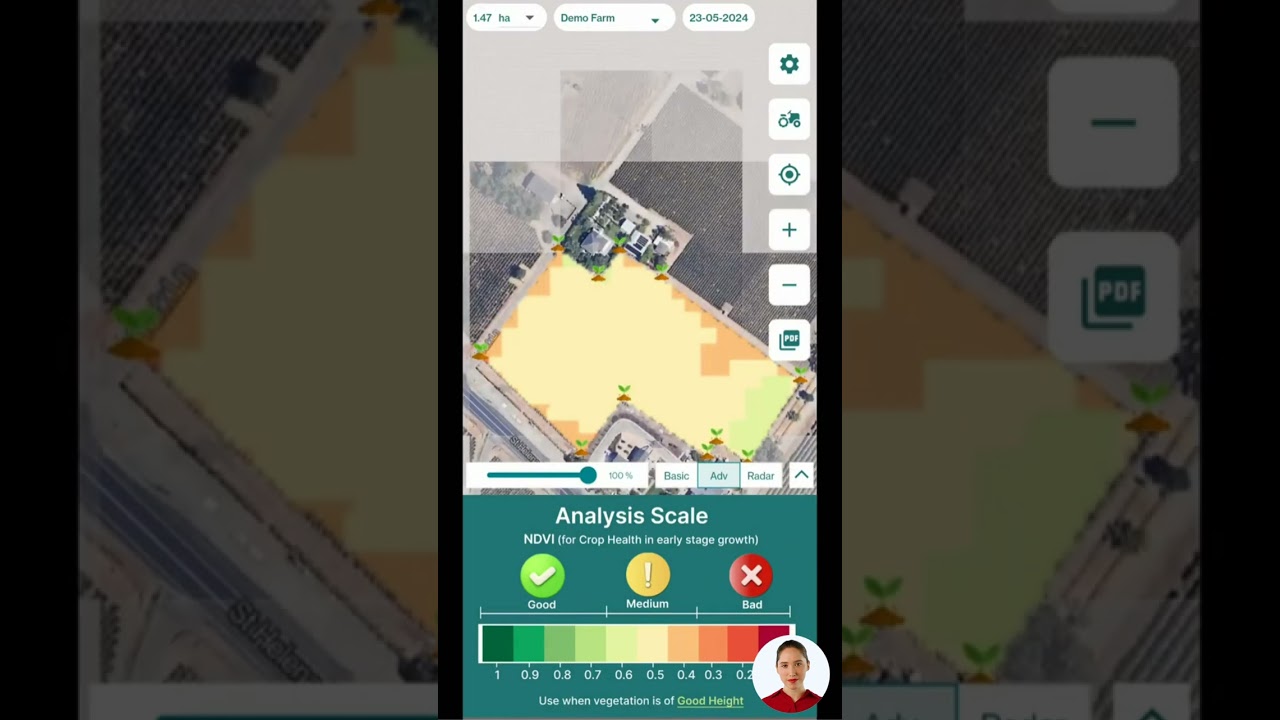
- Attach supporting documentation — maps, imagery, budgets, and timelines. Aerial and satellite imagery are commonly submitted alongside survey maps to support technical assessments.
- Track the intake and respond to follow-ups. WSA and provincial reviewers may request additional detail after the intake window closes.
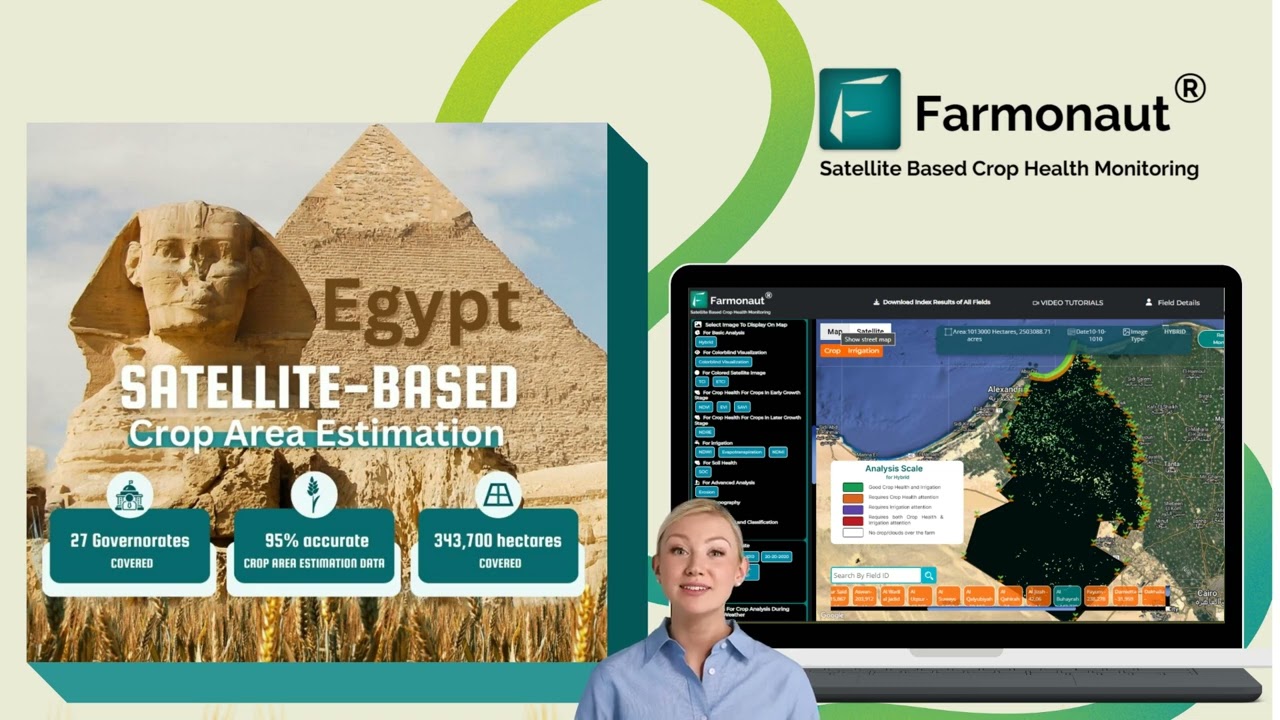
Farmonaut's own apps can generate the crop-health and water-usage imagery applicants attach to a submission: the Crop Plantation & Forest Advisory App, Carbon Footprinting for projects highlighting emissions reduction, and large-scale farm management tools for municipalities and producer groups.
Farm Grants Outside Saskatchewan: West Virginia and Beyond
"Farm grants," "farmers grants," and "grant agriculture" are broad searches with no single answer — the right program depends on where the farm sits and what it needs funded. For West Virginia specifically, the West Virginia Conservation Agency (WVCA) runs the Stream Partners Program (grants up to $5,000 for citizens' groups working on rivers and streams), the Agricultural Enhancement Program for land and water quality — administered through each of the state's 14 local conservation districts rather than one statewide cap — and drought-hardship cost-share funding to help livestock producers maintain water supply. USDA's Farm Service Agency office for West Virginia separately runs the Conservation Reserve Program (CRP), the Conservation Reserve Enhancement Program (CREP, targeted at the Cheat, Kanawha, Little Kanawha, Monongahela, Potomac, and Ohio River drainages), and the Emergency Conservation Program for disaster and drought recovery — none of which publish one fixed dollar cap, since payments are contract- and acreage-specific.
Outside West Virginia, the fastest way to find a real program is to go direct to source rather than a generic grant-aggregator list: your state or provincial department of agriculture, your county's USDA Farm Service Agency office, and your local watershed or conservation district. "Free farm grants" is a search phrase worth a direct answer: every program in this article is cost-share or contract-based, not free money — the applicant always contributes labor, land, or matching funds, even where the public share (like Saskatchewan's up to $95,000, or West Virginia's up to $5,000) is substantial.
Farm Management Software Development, Explained
"Farm management software development" covers the platforms that turn satellite imagery, sensor data, and weather feeds into irrigation and drainage decisions — the software layer that sits on top of every grant program above. The U.S. market for this category was valued at $470.31 million in 2025 and is projected to reach $1,263.52 million by 2034, an 11.61% compound annual growth rate for 2026-2034, according to IMARC Group's market analysis. That growth is the software equivalent of the irrigation-efficiency trend USDA already tracks in hardware: average water use per irrigated acre fell from more than 2 acre-feet in 1969 to a low of 1.49 acre-feet in 2018, then ticked up slightly to 1.52 acre-feet in 2023 — meaning the easy efficiency gains from pressurized systems and better scheduling are largely banked, and further gains increasingly come from data, not just plumbing.
Farmonaut builds this layer directly: multispectral satellite monitoring for vegetation health (NDVI) and soil moisture, the Jeevn AI advisory system for irrigation timing, and blockchain product traceability for compliance reporting. For fleet and machinery costs tied to water-project maintenance, fleet management tools cut redundant runs; for emissions reporting on grant applications, carbon footprinting quantifies the reduction. Municipalities and irrigation districts managing works at scale can use the large-scale farm and plantation management platform. Developers building their own tools on the same data can go straight to the Satellite & Weather Data API and its developer docs.




Maximizing Funding & Project Success
- State environmental outcomes explicitly. Habitat protection and long-term productivity benefits are what watershed-board and conservation-authority reviewers score against.
- Bring partners into the application. Joint submissions from First Nations, municipalities, and watershed boards demonstrate broader stewardship.
- Attach precise data, not estimates. Satellite imagery, soil-moisture logs, and mapped water-usage history support the technical assessment every application needs.
- Include rehabilitation, not just new construction. WSA and WVCA both fund repair and mitigation work, which is easier to justify than speculative new infrastructure.
- Confirm the intake window before you start writing. Saskatchewan's fund and West Virginia's district programs both run fixed annual or per-cycle windows — check the program page directly rather than relying on last cycle's dates.
- Try it: Run your own numbers
Farmonaut Subscriptions: Flexible Solutions for Producers
Whether you're an individual grower, an irrigation district manager, or a government official, Farmonaut's subscriptions pair water-management analytics with satellite crop monitoring to help you document the outcomes a grant application asks for.
Frequently Asked Questions
Q1: Who can apply for Saskatchewan's Agricultural Water Management Fund?
A: Producers, First Nations, rural municipalities, conservation and development area authorities, watershed association boards, and irrigation districts in Saskatchewan — provided the project fits water management or stewardship goals. Confirm current eligibility at wsask.ca.
Q2: Are Saskatchewan farm grants actually "free"?
A: No. Every program covered here — the WSA fund, the Prairie Watersheds Climate Program, and West Virginia's Stream Partners Program — is cost-share or contract-based. The applicant contributes cash, land, or labor alongside the public share.
Q3: What does "grant agriculture" mean as a search — is it a specific program?
A: No single program goes by that name. It's shorthand for the broader category of public funding for farming, which in practice means going to your national or provincial agriculture department, your local conservation district, and USDA's Farm Service Agency (for U.S. farms) as the three primary channels.
Q4: Is satellite imagery accepted as supporting documentation for these grants?
A: WSA's application guidance calls for site maps and technical documentation; satellite and GIS-derived imagery meet that requirement the same way a surveyor's or drone map would, alongside the engineering assessment most projects still need.
Q5: What is farm management software development, and is it the same as precision agriculture?
A: It's the software side of precision agriculture — the platforms and APIs that process satellite, sensor, and weather data into irrigation, drainage, and compliance decisions. The U.S. market for it was valued at $470.31 million in 2025, per IMARC Group, growing toward $1,263.52 million by 2034.
Q6: Where do I check for the current Saskatchewan fund intake dates?
A: Directly at wsask.ca — intake windows and the cost-share ratio are both set per cycle rather than fixed year to year.
Conclusion
Agricultural water management funding is real, current, and specific: Saskatchewan's WSA fund pays up to $95,000 per project across six applicant categories, the Prairie Watersheds Climate Program adds up to $75,000 per producer for climate-focused practices, and West Virginia's conservation districts run their own cost-share and grant channels. Layer USDA's national irrigation data — 53.1 million acres, 81 million acre-feet, $3.3 billion in pumping energy in 2023 alone — on top, and the case for treating water management as a funded, data-driven discipline rather than a one-off expense is straightforward.
See Farmonaut's large-scale farm management tools, or start with the web app.


