

“Carob trees can increase soil organic matter by up to 30% in Mediterranean farms within five years.”
Carob Tree: 7 Key Benefits for Mediterranean Farming
In 2025 and beyond, carob tree (Ceratonia siliqua) cultivation is experiencing a renaissance across Mediterranean regions and similar climates globally. As societies confront escalating climate and resource challenges, the carob presents a model of resilient, sustainable agriculture. This comprehensive guide examines the top seven benefits of carob tree cultivation, exploring its environmental, economic, and health impacts, as well as its transformative roles in agriculture, industry, and forestry systems.
Discover how the carob tree is unlocking a new era of opportunity and sustainability for farming, food, and rural development—and how advanced platforms like Farmonaut empower agricultural decision-makers with actionable satellite-driven insights.



Table of Contents
- Summary: The Carob Tree—A Sustainable Resource for 2025
- Introduction: Why Carob Tree Matters for Mediterranean Sustainability
- Carob Tree Benefits Overview—Comparative Table
- 7 Key Benefits of Carob Tree for Mediterranean Farming
- 1. Soil Health: Stability, Erosion Control, & Nitrogen Fixation
- 2. Water Conservation & Drought Resistance
- 3. Carbon Sequestration & Climate Resilience
- 4. Economic Value: Diversified Income for Rural Regions
- 5. Food & Nutritional Applications—Health Benefits
- 6. Industrial Use: Natural Thickener & Sustainable Ingredients
- 7. Supporting Agroforestry & Ecosystem Restoration
- Carob Cultivation in 2025: Best Practices and Trends
- Satellite Monitoring: Farmonaut’s Role in Sustainable Carob Farming
- Challenges & Future Prospects—What’s Ahead for Carob?
- FAQs: Carob Tree in Mediterranean Agriculture
- Conclusion: Powering Mediterranean Sustainability Beyond 2025
Summary: The Carob Tree—A Sustainable Resource for Agriculture and Industry in 2025
The carob tree (Ceratonia siliqua), native to the Mediterranean region, has gained renewed interest in 2025 as a versatile and eco-friendly crop with benefits across agriculture, food production, and industry. Renowned for its resilience and minimal environmental demands, the carob tree empowers sustainable farming systems—enhancing soil, climate resilience, and ecosystem restoration. From soil health and water conservation to new economic opportunities and innovative foods, the carob tree is shaping the future of agriculture in the Mediterranean and similar regions.
Introduction: Why Carob Tree Matters for Mediterranean Sustainability
The Mediterranean basin is home to farmers whose crops define the landscape, diet, and livelihoods of millions. But by 2025, this region—like many worldwide—is battling increasing droughts, soil degradation, and challenges in resource management. In this context, the carob tree emerges as an ideal candidate for sustainable agriculture and forestry systems.
Unlike many traditional crops which struggle in arid or degraded soils, carob trees thrive—fixing nitrogen, reducing erosion, and bringing food, economic diversification, and climate stability. With minimal irrigation needs and natural pest resistance, carob cultivation aligns perfectly with the functional foods revolution and modern sustainability imperatives.
“Mediterranean carob cultivation sequesters approximately 2.7 tons of CO2 per hectare annually, supporting climate resilience.”
Carob Tree Benefits Overview—Comparative Table
| Carob Tree Benefit | Type (Environmental, Economic, Nutritional) | Description | Estimated Quantitative Impact |
|---|---|---|---|
| Soil Health Improvement | Environmental | Enhances soil stability, increases organic matter, fixes nitrogen | +10–30% increase in soil organic matter within 5 years |
| Water Conservation & Drought Resilience | Environmental/Economic | Thrives with minimal irrigation; ideal for arid, degraded soils | –30% reduction in water use vs. conventional crops |
| Carbon Sequestration | Environmental | Absorbs CO2; effective climate resilience tool | ~2.7 tons of CO2 sequestered per hectare per year |
| Diversified Economic Value | Economic | Stable long-term yields; new income streams from food and industry | Productive for 50+ years; income stability |
| Food & Nutritional Use | Nutritional/Economic | Healthful carob powder and pod uses in foods; functional nutrition | Protein: 4–6g/100g; high dietary fiber; natural sweetener |
| Industrial Applications | Economic/Environmental | Locust bean gum and other valuable raw materials; sustainable food additives | ~70% of carob seed is used for gum production |
| Agroforestry & Ecosystem Restoration | Environmental/Economic | Restores degraded lands, promotes biodiversity, supports rural livelihoods | Up to 18% increase in ecosystem biodiversity indices (estimate) |

7 Key Benefits of Carob Tree for Mediterranean Farming
1. Soil Health: Stability, Erosion Control, and Nitrogen Fixation
A defining feature of carob tree (Ceratonia siliqua) is its remarkable impact on soil health. Its deep root systems anchor soil, reduce erosion on Mediterranean hillsides, and physically stabilize lands vulnerable to desertification. Even in heavily degraded soils, carob trees thrive and help to restore structure.
- Soil Organic Matter: Carob trees naturally increase organic matter in soil. Research and observational trials show up to 30% increase in just five years—boosting soil fertility and water holding capacity.
- Nitrogen Fixation: Unlike many tree crops, carob trees participate in fixing nitrogen, reducing the need for synthetic fertilizers and lowering costs and ecological impact.
- Erosion Control: Especially valuable on Mediterranean slopes and terraces, carob’s strong roots prevent runoff and topsoil loss, maintaining productivity in the face of increasingly unpredictable climates.
The integration of carob into agroforestry systems delivers not just agricultural, but environmental benefits—a true win-win for sustainable farming and ecosystem restoration.

2. Water Conservation and Drought Resistance
The changing Mediterranean climate is marked by water scarcity and frequent drought. The carob tree is exceptionally well-adapted to arid and semi-arid regions, requiring minimal irrigation while maintaining productivity.
- Drought Tolerance: Deeper root systems and physiological adaptations allow carob to thrive where many crops struggle, decreasing dependency on costly water infrastructure.
- Water Savings: Carob cultivation can reduce total water use by up to 30% compared to conventional crops—freeing water for other uses and supporting resource-efficient systems.
- Crop Resilience: This makes the carob an important contributor to climate adaptation strategies across Mediterranean regions and similar agroecological zones worldwide.
For farmers in regions facing drought or in degraded lands, carob is truly a sustainable, climate-smart alternative.

3. Carbon Sequestration and Climate Resilience
As the world intensifies its fight against climate change, carob tree cultivation is increasingly recognized for its role in carbon sequestration and fostering climate-resilient farming systems.
- CO2 Absorption: A single hectare of carob can sequester up to 2.7 tons of CO2 annually, directly offsetting greenhouse emissions.
- Climate Buffer: In regions with increasing climate extremes, integrating carob tree into forestry and farming systems helps stabilize the local environment and sustains ecosystems.
- Restoration Projects: Carob tree planting is central to restoration strategies where soil has been degraded by overgrazing, crop mismanagement, or deforestation.
Including the Farmonaut Carbon Footprinting platform in farm planning enables producers to quantify and optimize their carbon sequestration and environmental performance using advanced satellite analytics.

4. Economic Value: Diversified Income for Rural Regions
Traditional Mediterranean agriculture often relies on a narrow set of crops. The carob tree disrupts this model, enabling rural development and stable, long-term income for farmers.
- Longevity: Carob trees remain productive for over 50 years—providing generational benefits and guaranteeing incomes longer than most annual crops.
- Market Versatility: Both the pod’s sweet pulp and the seeds serve multiple lucrative sectors—confectionery, beverages, animal feed, cosmetics, and industrial applications.
- Reduced Input Costs: Their minimal irrigation and natural pest resistance dramatically lower operational costs.
- Global Export Potential: With growing interest worldwide in sustainable, functional foods, the carob market is set to flourish from 2025 and beyond.
Thus, the carob tree is a cornerstone for resilient rural economies—securing income as well as environmental capital.

5. Food & Nutritional Applications—Health, Powder, and Pods
The carob pod is harvested for its sweet pulp and nutrient-rich seeds, making it a standout in food production and functional foods.
- Healthier Alternatives: Carob powder is traditionally used as a cocoa substitute in confectionery. Today, it is gaining popularity as a cholesterol-free, caffeine-free alternative in protein bars, drinks, and desserts.
- Functional Foods: High in fiber, calcium, iron, and antioxidants, carob supports digestive health and aligns perfectly with 2026’s health and wellness trends.
- Sweetness Without Added Sugar: The natural sweetness of carob eliminates the need for added sugars—meeting the demand for clean-label foods and functional nutrition that is increasing in consumer trends.
- Livestock Feed: Carob pods are also a valuable source of high-energy, nutritious fodder for Mediterranean pastoral systems.
With its rich nutrition profile and growing acceptance in health-conscious markets, carob is positioned to revolutionize future food systems.
6. Industrial Applications: Natural Thickening Agent & Raw Materials
Carob seeds are prized not only for food but also for their valuable industrial uses.
- Locust Bean Gum: Extracted from carob seeds, this natural thickener is widely used in the food industry (dairy, baked goods, ice cream), as well as in cosmetics and pharmaceuticals. It is a bio-based alternative to synthetic stabilizers.
- Bio-Economy: Technological innovation in processing has made extraction more efficient, boosting competitiveness of sustainable industrial applications.
- Agro-Industrial Development: Rising demand for clean-label, natural ingredients has stimulated the integration of carob-derived products into global supply chains.
For farmers and agri-businesses, the carob tree is not just a crop—but a source of multiple raw materials driving rural, industrial development and sustainability.
For organizations seeking to enhance food or supply chain transparency for carob-based products, Farmonaut’s Product Traceability solution ensures authenticity and trust using blockchain-enabled records.

7. Supporting Agroforestry & Ecosystem Restoration
Perhaps nowhere is the carob tree’s influence more visible than in agroforestry and restoration projects designed to rehabilitate degraded Mediterranean ecosystems.
- Multifunctional Landscape Restoration: Carob plantations form ‘green corridors’—restoring fertility, supporting pollinators, and providing habitat diversity.
- Resilient Systems: By integrating carob with olives, almonds, or native shrubs, farmers create climate-resilient landscape mosaics.
- Biodiversity Hotspot: Carob groves encourage biological diversity—vital for soil health, pest management, and future ecosystem resilience.
- Environmental Restoration: Carob’s deep roots and nitrogen fixation also restore lands that have suffered from monoculture or overuse, combatting desertification and restoring balance.
Policy-makers and land managers can leverage these benefits—supported by precise monitoring capabilities such as Farmonaut’s Large Scale Farm Management Tools—to efficiently track, analyze, and enhance agroforestry outcomes.
Carob Cultivation in 2025: Best Practices and Trends
In 2025 and beyond, advances in carob cultivation are shaping a new paradigm in Mediterranean agriculture:
- Improved Planting Techniques: Selective breeding and clonal propagation of carob tree cultivars are delivering enhanced yields, improved disease resistance, and consistent pod quality.
- Integrated Agroecological Systems: Carob trees are woven into traditional multi-species orchards—alongside olives, figs, and local shrubs—to boost system resilience and biodiversity.
- Minimal Chemical Inputs: Inherent pest resistance and adaptation to local climates minimize need for expensive pesticides or fertilizers, reducing input costs and environmental impact.
- Sustainable Mechanization: Harvesting and processing innovations simplify labor needs and improve farm efficiency—critical in areas facing labor shortages or rising wages.
- Market and Regulatory Trends: 2026 market analysis indicates growing consumer demand for functional foods like carob powder, and for traceable, sustainably grown raw material sources.
The future of carob in the Mediterranean is bright—primed for expansion in farming areas previously considered marginal, now seen as strategic assets for sustainable growth.
Satellite Monitoring: Farmonaut’s Role in Sustainable Carob Farming
Effective resource management, transparency, and sustainability require real-time data and actionable insights. This is where satellite technology—such as that provided by Farmonaut—becomes indispensable.
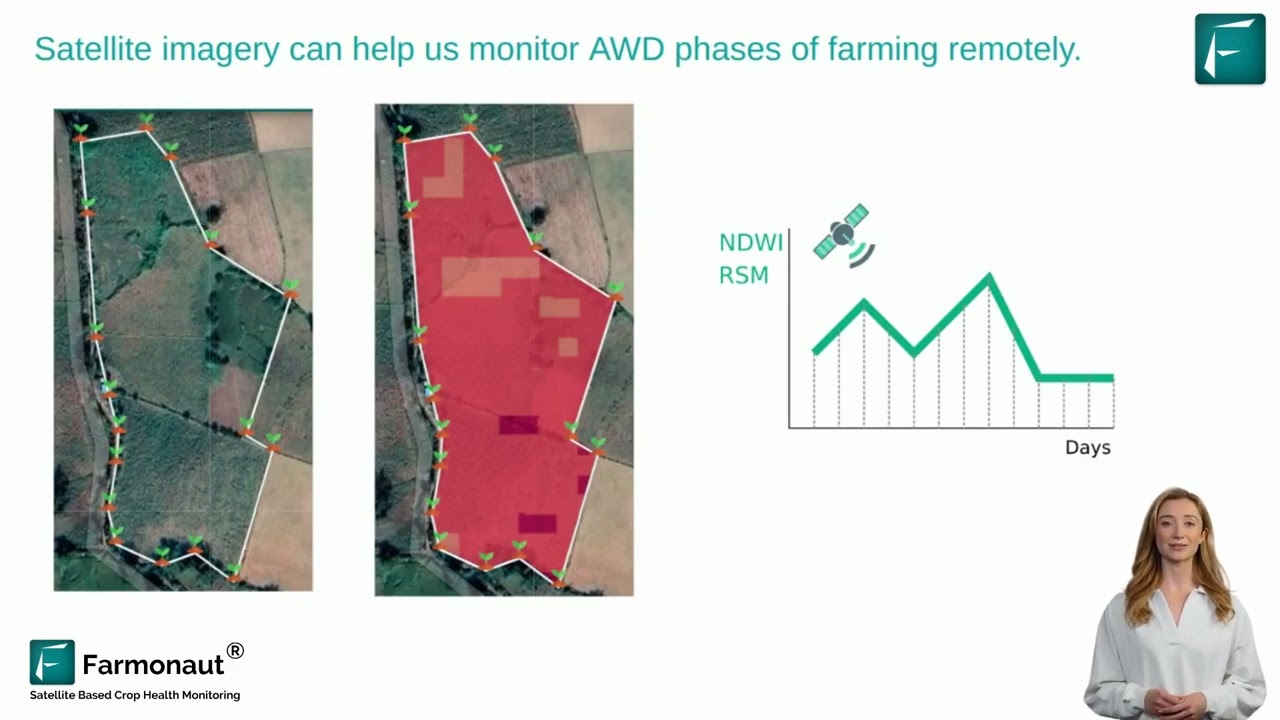
- Monitor Carob Plots from Space: Utilizing multispectral imaging, we at Farmonaut enable farmers and stakeholders to visualize the health of carob trees and detect early signs of water stress, pest outbreaks, or nutrient deficiencies without stepping into the field.
- Optimize Sustainability: Our platform’s Carbon Footprinting and Fleet Management tools help minimize emissions and operational costs throughout the carob value chain.
- Traceability for Food and Industry: Our blockchain-based product traceability ensures transparency—vital for exporting to global markets demanding ethical and sustainable sourcing of carob products.
- Financing and Insurance: Lenders and insurance companies can leverage satellite-based verification to support loans and insurance for carob plantations—facilitating financial stability for rural communities.
- Decision Support: Our Jeevn AI system delivers farm-specific recommendations and risk alerts, optimizing carob tree management for maximum environmental and economic benefit. (Explore the API here or read developer docs.)
These capabilities, integrated via Android, iOS, web/browser App, and API, offer scalable solutions for Mediterranean farmers, businesses, and policy leaders committed to sustainable agriculture and resource stewardship into 2026 and beyond.

Challenges & Future Prospects for Carob Tree Cultivation
While the benefits of the carob tree are substantial, upscaling production across the Mediterranean and similar climates reveals several challenges and future areas for innovation:
- Mechanization Needs: Traditional harvesting is labor-intensive; mechanized solutions, adapted to rugged landscapes and tree forms, are needed to lower costs and increase scale.
- Improved Cultivars: Continued research into disease resistance, pod uniformity, and higher yields is vital to maximize carob’s commercial reliability.
- Market Development: Education and marketing are needed to further integrate carob products into mainstream food and industrial sectors.
- Climate Adaptation: As weather patterns shift, breeding and management practices must evolve to retain climate resilience and productivity.
- Value-Added Processing: Investment in local processing infrastructure (for powder, gum, or other derivatives) will unlock more economic and employment opportunities.
The pathway to large-scale adoption of carob tree cultivation in the Mediterranean region will be shaped by advances in satellite monitoring, market development, and ongoing adaptation to global resource challenges—with innovative companies such as Farmonaut providing the data-driven backbone of this green revolution.
FAQs: Carob Tree in Mediterranean Agriculture
Q1. What makes the carob tree particularly suited for Mediterranean agriculture in 2025 and beyond?
The carob tree is highly resistant to drought, thrives in arid and degraded soils, and features a deep-root system that improves soil health and stability. Its minimal requirements for irrigation and natural pest resistance lower operational costs and environmental impact. Additionally, it provides economic and nutritional benefits, positioning it as an essential crop for Mediterranean sustainability amid climate and resource challenges.
Q2. How is carob powder different from cocoa powder, and is it a healthier alternative?
Carob powder is caffeine- and cholesterol-free, unlike cocoa. With high levels of calcium, fiber, and antioxidants, carob is naturally sweet, allowing food producers to reduce or eliminate added sugars. These qualities, along with its functional benefits, make it a sought-after ingredient in 2026’s health-driven food market.
Q3. Can carob cultivation really improve soil health so significantly?
Yes, carob trees enhance soil by increasing organic matter up to 30% within five years, fixing nitrogen, and preventing erosion. These improvements make them a key tool in restoring degraded Mediterranean lands and supporting sustainable agriculture systems.
Q4. How can farmers monitor carob crop health and optimize management?
Farmers can leverage satellite-based solutions like Farmonaut’s, which provide real-time data on vegetation health, soil conditions, and water stress, as well as AI-driven recommendations. Our platform’s resource management tools (accessible on web and mobile apps) optimize inputs and reduce losses for greater productivity.
Q5. What are the industrial applications of carob beyond food?
Beyond its use as a cocoa substitute, carob seed is used to manufacture locust bean gum—a natural thickener for food, cosmetics, and pharmaceuticals. Carob-based ingredients support the shift to bio-based, sustainable industrial systems and present valuable opportunities for rural economic growth.
Q6. Can carob trees be integrated with other crops for better agroforestry systems?
Absolutely. Carob fits well in intercropping systems with olives, almonds, or cereals—a practice that enhances biodiversity, resilience, and productivity. These integrated systems are at the forefront of Mediterranean landscape restoration.
Q7. Where can I access reliable real-time monitoring and resource management tools for carob cultivation?
Through the Farmonaut app (available on Android and iOS) or our web platform, users access satellite-based monitoring, crop advisory tools, blockchain traceability, and fleet/resource management. For technical integration, consult our API and developer documentation.
Conclusion: Powering Mediterranean Sustainability Beyond 2025
As we look ahead to 2026 and beyond, the carob tree stands out among Mediterranean crops. Its unmatched resilience, sustainable cultivation practices, and diverse economic and nutritional applications make it an essential component of climate-resilient agriculture. Whether improving soil health, reducing irrigation needs, or supporting bio-based industry, carob is a natural solution to some of the region’s most urgent challenges.
Empowering this transformation are advanced platforms like Farmonaut, providing stakeholders with accessible, satellite-powered insights for monitoring, resource management, and sustainability tracking. Together with innovative farming and processing techniques, carob cultivation promises a future where Mediterranean landscapes are restored, rural incomes are stabilized, and food and industrial systems are made more functional, ethical, and resilient.
Explore sustainable agriculture, food production, and climate innovation—putting the carob tree at the heart of a new Mediterranean renaissance.

 AgroRisk
 Oath Inc
 Reddane Farming
 Esri North East Africa
 Farmer Amigo
 Cresol
 Atur Kuliner
 MDCV UK
 Zerella Group
 Etech Consulting Madagascar
 Vestlandsforsking
 Agritein
 Delicio
 WB Dev
 Sama Premium
 Prochecker
 Tres Valles
 LACOS Geoinformation
 Magrifly
 LatConnect 60
 Blickwinkel
 Agricultural Credit Policy Council
