Clover Cultivation 2025: Boost Yield in Central Valley
Are you ready to unlock the full yield potential of clover crops in California’s Central Valley for 2025 and beyond? Dive into a comprehensive, data-driven guide to mastering clover crop management — from optimizing soil health to leveraging satellite-driven insights for smarter, more sustainable farming. Our goal is to equip you with actionable strategies grounded in the latest agronomy research, state-based guidelines, and AI-powered technology.
“Clover yield in Central Valley can increase by up to 25% with optimal irrigation and pest management strategies.”



Understanding Clover in the Central Valley: Agronomy & Yield Potential
Clover stands as a vital forage crop throughout California’s Central Valley, especially in key counties like Kings County. The unique climatic and soil conditions here — including a mix of temperate springs and warm, dry summers — present both opportunity and challenge for clover production. When we apply the latest research and digital tools, farmers can routinely achieve yields ranging from 4,000 to 8,000 kg/acre, with high-performing fields topping 10,000 kg/acre under optimal management (UC ANR Publication 8519; 2022–2024).
- Typical Growth Period: Spring sowing (March–April) with multiple cuttings from May through September
- Primary Challenges: Soil nutrient management, moisture control, weed and pest outbreaks
- Economic Importance: Essential in dairy and livestock forage systems, biological nitrogen fixation, and increasingly in regenerative agriculture for improving soil organic matter (SOC)
To boost yield while maintaining sustainability, aligning practices with each phenological stage, soil condition, nutrient requirement, and the anticipated weather is critical.
What Makes Central Valley Ideal for Clover?
- Soil: Predominantly loams with pH 6–7, low salinity, moderate organic matter
- Climate: Cool, moist springs with hot, dry summers
- Irrigation: Sprinkler systems are the standard method for efficient water and nutrient application (Learn how to monitor irrigation and large-scale field health with Farmonaut)
Clover Phenological Stages: Growth Timeline and Seasonal Tasks
A successful clover cultivation strategy in 2025 hinges on timely, stage-based interventions. Here’s an overview, based on UC ANR and county-level studies for Kings County, California:
| Stage | Days After Sowing (DAS) | Main Tasks |
|---|---|---|
| Germination/Emergence | 7–14 | Monitor soil moisture, temperature, and weed emergence |
| Vegetative Growth (Early) | 15–45 | Early fertilization, weed control, irrigation management |
| Vegetative Growth (Late) | 46–75 | Monitor pests, micro-nutrient top-ups, optimize canopy |
| Flowering | 76–120 | Potassium and phosphorus supplementation, guard against pests/disease |
| Seed Set/Pod Development | 121–150 | Prepare for harvest, maintain irrigation, manage diseases |
| Maturity/Harvest | Typically May–September | Harvest timing, ensure post-harvest stubble management |
| Post-Harvest | Beyond 150 | Soil organic matter amendment, disease break, weed scouting |
The explicit synchronization of management actions to each stage maximizes yield and economic return, while safeguarding long-term soil health.
Developer Docs for Farmonaut Satellite-Weather API
Soil Health Management for Optimal Clover Output
Excellent soil management is the backbone of clover production in the Central Valley. Healthy soil not only increases clover biomass but also boosts nutrient efficiency, resilience, and carbon sequestration — critical in today’s climate-smart agriculture.
“Soil health improvements can boost clover biomass by 18% when integrated with nutrient management in Central Valley farms.”
Critical Soil Parameters for Clover in Kings County
- pH: Maintain between 6.0–7.0 for optimal nutrient uptake (UC ANR, 2023).
- SOC (Soil Organic Carbon): The ideal range is 2.0–5.0%; local fields often test 0.16–0.2% (critically low). Intensify organic inputs to increase SOC.
- Salinity: Keep low through drainage and avoiding excess chloride fertilizers; clover is salt-sensitive, especially at establishment.
- Texture: Loam soils are typical and preferred for root and nodule health.
Best Practices to Improve Soil Health
- Annual soil testing for pH, major nutrients (N, P, K, S, Zn), and organic matter content
- Cover crops: Integrate legumes or grass cover in rotations, especially post-harvest
- Organic amendments: Apply compost or aged manure pre-sowing and post-harvest to enhance SOC, structure, and water-holding capacity
- Avoid deep tillage to minimize SOC losses and maintain soil structure
- Monitor salinity: Use NDWI data and soil EC measurements to adjust irrigation and fertilizer sources
Common Clover Soil Management Pitfalls
- Neglecting regular pH or EC testing — especially after successive chemical NPK inputs
- Failing to incorporate organic matter following harvests, which can reduce SOC over time
- Over-irrigation causing leaching of key nutrients (especially N and K)
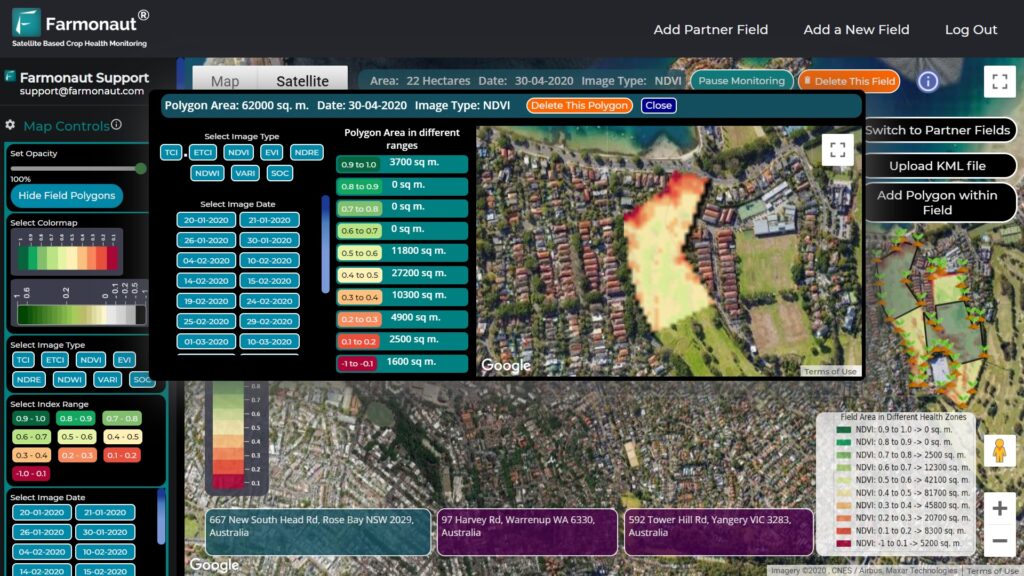
For tailored field-level soil health analysis, satellite-based platforms like Farmonaut can provide time-series soil moisture, NDVI, and custom advisories — supporting data-driven interventions.
Nutrient & Fertilizer Management: Balancing N, P, K, S, and Zn
Clover, as a legume, fixes its own nitrogen (N) via symbiotic bacteria, but phosphorus (P), potassium (K), sulfur (S), and zinc (Zn) are critical for growth, nodulation, and yield. The application rate and method should be stage- and soil-analysis driven.
Ideal Nutrient Ranges (kg/acre) for Clover at Key Stages
| Nutrient | Ideal Range (kg/acre) | Criticality if Low | Main Source/Recommendations | Stage to Apply |
|---|---|---|---|---|
| N (Nitrogen) | 18.2–27.3 | Low–Moderate (at establishment) | Urea (chemical), Compost/Manure (organic); minimize to enhance nodulation | Early establishment only (do not apply late) |
| P (Phosphorus) | 18.2–36.4 | High (critical for roots, nodulation) | Triple superphosphate (chemical), Bone meal (organic) | Pre-plant, side-dress early growth |
| K (Potassium) | 109.2–182.0 | High (withstand stress and maximize yield) | Potassium chloride (chemical), Wood ash/Greensand (organic) | Early to mid-growth |
| S (Sulfur) | 9.1–18.2 | Moderate (protein synthesis, nodule development) | Gypsum (chemical), Compost/Manure (organic) | Pre-plant/early |
| Zn (Zinc) | 0.9–2.7 | Low–Moderate (enzyme function) | Zinc sulfate (chemical), Compost (organic) | Pre-plant |
Practical Fertilizer Application Strategies – 2025
- Soil-Analysis Based Application: Conduct soil testing for P, K, S, and Zn — apply only where measured ppm is below sufficiency
- Single application of chemical P (triple superphosphate) and K (potassium chloride) at pre-plant; split-dose organic sources if using compost, bone meal, or wood ash
- pH Impact: Watch for potassium chloride (neutral); triple superphosphate (slightly acidic); bone meal/wood ash (alkaline); monitor shifts in soil pH over the season
- No in-season N topdressing for established stands — over-application of N can suppress nodulation
- Application timing: Pre-plant in spring (ideal), side-dress up to early vegetative stage, with no fertilizer during dormant or post-harvest periods
Tip for 2025: Use slow-release organic sources for long-term soil health, and fast-acting chemical sources for acute deficiencies, but always base rate and method on soil tests and phenological stage.
Irrigation Optimization Practices for Central Valley Clover
With increasing drought risk in California, irrigation management is more critical than ever for clover crops in 2025. Sprinkler irrigation remains the go-to method for Kings County due to water-use efficiency and uniformity.
Key Irrigation Recommendations
- Early-Season: Keep soil moisture in optimal range (avoid waterlogging and desiccation); apply 2–4 mm every 1–3 days as needed until full emergence
- Main Growth Phase: Increase frequency (every 1–2 days if NDWI and weather data indicate elevated evapotranspiration), but avoid shallow frequent watering to encourage deeper root growth
- Post-Harvest: Reduce irrigation (4 mm every two days only if regrowing biomass; otherwise, maintain only minimum soil moisture for soil health)
- Salinity: Drainage and correct irrigation volumes reduce salt accumulation; avoid excess chloride fertilizers
Farmonaut’s monitoring tools can remotely estimate soil moisture status via NDWI analysis — delivering irrigation advisories tailored to your field’s specific conditions.
Integrated Weed Management Strategies for 2025
Weed competition is a common challenge in clover systems, especially at early growth and post-harvest stages. Typical weeds in Kings County — lambsquarters, pigweed, foxtail, barnyardgrass, and bluegrass — can rapidly overtake unvigilant fields.
Best Weed Control Practices
- Pre-Plant: Use pre-emergent herbicides judiciously or apply heavy mulch to suppress early germination (especially in organic systems)
- Early Post-Emergence (0–30 DAS): Manual hoeing for small acreage, targeted herbicides for larger areas (consult county extension for recommendations)
- Post-Harvest: Scout with NDVI/NDWI images to spot emergent weeds hiding in thin cover; take swift action with hand pulling or cultivation
Unaddressed weed infestations are one of the top reasons for low yield in Central Valley fields; combine multiple tactics for robust weed management.
Comprehensive Pest and Disease Control in Central Valley’s Clover Crops
In 2025, biological and integrated pest management (IPM) is essential, given evolving pest pressures and reduced chemical options.
Most-Common Pests & Diseases in Kings County; Solutions
-
Pests: Alfalfa weevil, aphids, armyworms, cutworms
Organic controls: Beneficial insects, insecticidal soaps, Bacillus thuringiensis
Chemical controls: Pyrethroid sprays, targeted insecticides as per UC ANR 2023 guidelines -
Diseases: Clover rot, powdery mildew, rust, anthracnose
Organic controls: Crop rotation, soil improvement, removing infected plant debris
Chemical controls: Foliar fungicides, copper-based sprays (as a last resort; follow local advisories)
Risk Timing and Early Detection
- Peak disease risk: Late growth through post-harvest (especially with high soil moisture or after heavy irrigation rain events)
- Pest outbreaks: Warm, dry springs and early summers typically lead to spikes — closely monitor NDVI for sharp declines indicating stress
Pest & Disease Surveillance
- Scout fields weekly; use NDVI maps to prioritize high-risk zones
- For late-season regrowth, maintain field sanitation and avoid dense stubble to minimize fungal spread
- Maintain infrastructure such as field borders, as many pests overwinter in weedy field edges
Remote Sensing & NDVI for Clover Crop Health in 2025
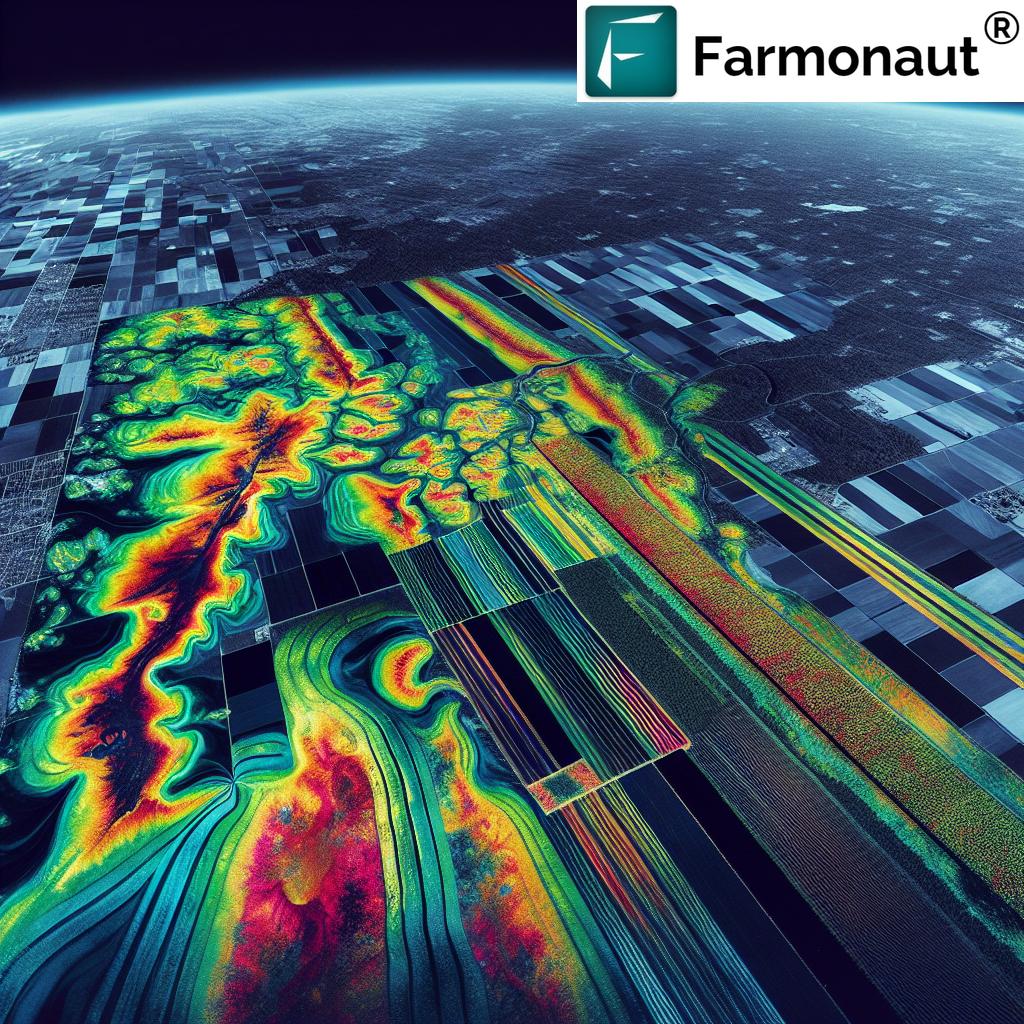
Modern clover cultivation increasingly leverages remote sensing — especially Normalized Difference Vegetation Index (NDVI) and Normalized Difference Water Index (NDWI) — to monitor vegetation health and field moisture.
- NDVI Range for Clover in Central Valley: 0.2–0.45 (harvest/post-harvest stage), up to 0.55 for active vegetative growth
- NDVI drop-offs after cutting or harvest are typical and should recover as regrowth starts
-
Interpretation:
- High NDVI = robust, healthy clover cover; low NDVI = possible senescence, severe weed invasion, disease, or drought
- NDWI readings of 0.16–0.34 indicate moderate soil moisture (Farmonaut satellite advisories can alert when irrigation adjustment is necessary)
Regular use of satellite-based tools like those provided by Farmonaut helps schedule irrigation, fertilization, scouting, and pest management with precision, improving yield while reducing resource waste.
Yield Estimation: Leveraging Data for Better Outcomes
Robust yield estimation is foundational for both farm profitability and sustainability planning. In the Central Valley, yield is influenced by:
- Soil health (pH, SOC, nutrient sufficiency values)
- Timely irrigation (especially through dry summers)
- Stage-based pest and weed control
- Proper synchronization with growth stage and satellite NDVI trends
NDVI and NDWI monitoring, when paired with regular field scouting and historic data, enable accurate prediction rates — leading to yield improvements between 18–25% when best-practices are adopted.
For full, high-resolution yield and biomass estimation, access digital tools such as Farmonaut’s field monitoring platform and APIs for real-time field assessment.
Clover Crop Management Schedule and Yield Impact Table
Below is a stepwise, seasonal clover crop management table for Central Valley, aggregating recommended actions, ideal timing, estimated yield impact, and practical notes:
| Management Practice | Recommended Timing | Estimated Yield Increase (%) | Additional Notes |
|---|---|---|---|
| Pre-plant soil testing (pH, NPKS, SOC, Zn) | Late Winter–Early Spring (Feb–Mar) | +7% | Tailor fertilizer rate and method to test results; crucial for new fields |
| Apply organic amendments (compost, bone meal, wood ash) | Pre-sowing (Mar); Post-harvest (Sept–Oct) | +8–10% | Boosts SOC, soil structure, and moisture retention |
| Irrigation scheduling (sprinkler method; NDWI-based) | Continuous; frequency adjusts by stage/NDWI | Up to +25% | Avoids drought stress & salt buildup; use digital advisories for optimal timings (see large-scale management tools) |
| Integrated pest management | April–September; especially early summer | Up to +12% | Monitor weekly; combine organic & targeted chemical methods |
| Pre- and post-emergence weed control | March–May; September–October | +5–9% | Mulch, manual, or herbicide based on operation scale |
| In-season phosphorus & potassium top-ups (if soil test indicates deficiency) | Vegetative–pre-flowering stage | +6–10% | Apply chemical (triple superphosphate, potassium chloride) or split organic (bone meal, wood ash) doses; avoid late applications |
| Digital remote sensing (NDVI/NDWI monitoring) | March–October (weekly) | +4–6% | Satellite analysis identifies in-field variability for targeted interventions |
| Post-harvest stubble & residue management | September–October | +2–3% | Limits disease carryover; improves SOC if residues re-incorporated |
Farmonaut Solutions for Clover Crop Management in 2025
For 2025 and beyond, leveraging the power of satellite data, AI, and digital traceability is more accessible than ever for growers in California’s Central Valley. We at Farmonaut deliver robust, satellite-driven solutions via app and API platforms — empowering farmers to:
- Remotely monitor NDVI, NDWI, and biomass trends for in-season field health analysis
- Receive AI-based advisories (irrigation, pest, fertilizer, harvest recommendations) on Android, iOS, or web systems
- Access blockchain-based traceability for authenticating crop source and supply chains (increase trust for organic, sustainable, or certified clover). Discover Crop Traceability Solutions
- Evaluate carbon footprint and sustainability metrics for clover systems, aligning with regenerative agriculture and supply-chain carbon commitments (Carbon Footprinting Platform Details)
- Strategically manage large-scale operations, fleets, and logistics for forage and hay production (Fleet Management Solutions Explained)
- Integrate with financial product verification platforms for simpler crop loan or insurance applications (Crop Loan & Insurance Verification)
Try Farmonaut for real-time satellite crop health, powerful yield analysis, and expert recommendations — on field, web, or mobile.
Frequently Asked Questions: Clover Cultivation 2025 in Central Valley
Q1: What is the best sowing period for clover in Kings County, California?
The best period to sow clover in the Central Valley, especially Kings County, is March to April. This spring sowing allows the crop to establish before the more intense summer heat begins. UC ANR Publication 8519 confirms this as the typical recommendation for optimal stand establishment and yield.
Q2: How much can yield be increased with optimal management?
With comprehensive management (optimal irrigation, nutrient management, and integrated pest control), Central Valley clover yields can increase by up to 25%, often approaching 8,000–10,000 kg/acre under best-case scenarios according to recent data (California Alfalfa & Forage Association, 2023).
Q3: Which are the critical nutrients for clover, and how do I apply them?
Phosphorus (P) and potassium (K) are most commonly deficient and critical for root and shoot growth. For P, use triple superphosphate (chemical) or bone meal (organic); for K, potassium chloride (chemical) or wood ash (organic). Routinely test soil and adjust dosage and method to current field requirement.
Q4: What are the common pests and best controls for clover in 2025?
Key pests in 2025 include alfalfa weevil, aphids, armyworms, and cutworms. Use a blend of beneficial insects, insecticidal oil/soap (organic), and schedule-targeted chemical sprays only if thresholds are reached.
Q5: How does NDVI help boost yield and decision-making?
NDVI (Normalized Difference Vegetation Index) is a real-time, satellite-derived metric indicating crop health, biomass, and stress at the field or subfield scale. For clover, using NDVI regularly enables early detection of yield-limiting factors and precise, data-based interventions (fertilizer, irrigation, pest/weed control).
Q6: Why is maintaining soil organic matter important for clover in Central Valley?
Soil organic matter enhances water holding, nutrient cycling, and crop resilience. It is particularly vital in the Central Valley’s irrigated systems where SOC is often critically low (0.16% noted in recent advisories). Integrated organic amendments are recommended annually.
Q7: What digital tools are recommended for clover crop management in 2025?
Farmonaut’s satellite monitoring, AI-powered advisories, and API integrations stand out for remote, real-time, and scalable clover management in 2025. These help optimize field conditions, schedule site-specific applications, and ensure sustainable production across the season.
Conclusion: Boosting Clover Yield in Central Valley 2025 & Beyond
In summary, Clover Cultivation 2025 in California’s Central Valley thrives when leveraging integrated, stage-based management, digital soil and crop monitoring, and sustainable fertilization and pest control practices. Reviewing current data, NDVI trends, and UC ANR recommendations allows each grower to move confidently toward yield optimization and climate-smart agriculture.
By embedding innovative technologies and crop science — including those offered by platforms like Farmonaut — fields across Kings County and the larger Central Valley can break historical yield plateaus, enhance soil health, and lead the next chapter of regenerative forage production.
Ready to transform your clover management? Get started on Farmonaut for satellite crop insights, yield optimization, and sustainable agtech solutions.