Eastern Red Cedar, Blue Atlas Cedar, Weeping Cedars: Southeastern Horticultural Value for 2026 & Beyond
“The Eastern Red Cedar can grow up to 20 meters tall, supporting over 40 bird species through its berries and shelter.”
Introduction: The Importance of Cedars in Southeastern Horticulture
The eco-regions of the southeastern United States, from rolling Piedmont hills to the humid Atlantic plains, have long thrived on a tapestry of native conifers and evergreens. Among these, the eastern red cedar (Juniperus virginiana), the dignified blue atlas cedar (Cedrus atlantica), and the architecturally stunning weeping blue atlas cedar and weeping alaskan cedar are now recognized pillars in southeastern horticultural strategies. These species, with their unique adaptability, ecological value, and resilience, have come to represent not only aesthetic but also sustainable and climate-smart solutions for forestry and landscaping in 2026.
In this comprehensive guide, we delve into how the roles and cultivation techniques of these cedars have evolved, how current environmental challenges and industry demands are shaping their use, and why choosing them is crucial for climate resilience, biodiversity, and economic value in horticulture and forestry.
Why Focus on Cedars?
- Critical shelter for wildlife – especially birds and small mammals
- Exceptional soil improvement through deep roots and organic matter deposition
- Durability and ornamental value in both commercial and private landscapes
- Contributions to climate resilience via carbon sequestration, wind buffering, and drought tolerance
Let’s explore each of these remarkable cedar species—tracking their origins, modern relevance, and future potential from the perspective of southern horticultural practices and sustainable land management.



Eastern Red Cedar (Juniperus virginiana): Native Pillar of Southeastern Landscapes
Origins, Biology & Sustainable Value
The eastern red cedar (Juniperus virginiana) is a native North American conifer, widely recognized for its dense, aromatic foliage, striking bark, and essential ecological role. Found from southern Canada, down through the southeastern United States, its prevalence in forests, farmland edges, and urban plantings is testament to its adaptability and environmental importance.
In 2026, eastern red cedar continues to play an integral role in forestry and southeastern horticultural practices. Its robust, rot-resistant wood is ideal for fencing, furniture, and cedar chests. But its value extends far beyond lumber:
- Provides critical wildlife shelter and food – especially for over 40 bird species drawn by its berries (see trivia above).
- Functions as a sustainable windbreak – the deep green, dense foliage offers natural protection against erosion, wind, and severe weather.
- Adaptable to a range of soil types – thrives in acidic, alkaline, rocky, and sandy soils, including those considered degraded or marginal in the United States.
- Drought and pest tolerant – making it a top species for modern planting projects countering environmental stresses.
Ecological & Economic Importance in 2026
The importance of eastern red cedar is widely recognized, especially as the Southeast faces current challenges:
- Reforestation Programs: Its rapid growth and resilience support rehabilitating degraded lands and restoring wildlife corridors.
- Soil Improvement: Deep roots penetrate compacted soils, improve infiltration, and reduce runoff—key in combating erosion and nutrient loss.
- Modern Timber & Landscaping: Cedar’s durable, aromatic wood is prized for longevity in outdoor and indoor applications.
Modern Forestry Techniques for Eastern Red Cedar
- Selective Breeding: Enhances disease resistance and growth rates for specific southeastern environments.
- Advanced Seedling Care: Boosts survival rates during hot/dry periods in the southern states.
- Monitoring & Planning Tools: Farmers and land managers utilize satellite-driven carbon footprint monitoring to track the environmental benefit of large-scale cedar reforestation and agroforestry projects.
The continued expansion of eastern red cedar cultivation aligns directly with the region’s sustainable horticultural goals—to boost resilience, restore biodiversity, and reduce climate risks into 2026 and beyond.
Blue Atlas Cedar (Cedrus atlantica): Majestic Ornamental for Modern Resilience
“Blue Atlas Cedar forests can sequester approximately 10 tons of carbon per hectare annually, boosting landscape climate resilience.”
Botanical Origins & Characteristics
Hailing from the misty Atlas Mountains of Morocco and Algeria, the blue atlas cedar (Cedrus atlantica) is rising in popularity in the United States—especially in the Southeast—because of its striking visual presence and evolving resilience.
- Needle-like blue-green foliage and robust, majestic growth form command attention in urban landscaping and specialized horticultural designs.
- Long lifespan (sometimes over 150 years) and natural resistance to pests and moderate drought signal durability.
- Slow but steady growth is now offset by advanced selective breeding and seedling care for better establishment in non-native, southern landscapes.
Their resilience and carbon sequestration capability also position blue atlas cedar as a crucial tool in landscape-level carbon management.
See how Farmonaut’s Carbon Footprinting Module enables agro-foresters and landowners to monitor and optimize the carbon-capturing capacity of these plantings via up-to-date satellite data and analysis.
Ornamental & Environmental Roles
- Urban Forestry: Planted as anchor trees in parks, estates, and urban developments for shade, aesthetics, and ecosystem value.
- Green Infrastructure: Supports urban biodiversity, acts as wind buffer, and enhances microclimates, reducing the urban heat island effect—especially in southeastern cities.
- Specialized Projects: Municipalities and corporate campuses utilize blockchain-based tree traceability to ensure authenticity and sustainability in sourcing ornamental species like blue atlas cedar.
Recent Advancements in Cultivation Techniques (2026)
- Selective Breeding for Southeastern Adaptability: Propagation lines increasingly favor drought-tolerance, disease resistance, and improved root development for urban soils.
- Seedling Care and Survival Rates: Use of precision irrigation and soil monitoring (see large-scale farm and forest management tools) to improve plant establishment in tough southern US sites.
- AI-Driven Site Selection: Advanced mapping and satellite analysis (services like Farmonaut’s AI monitoring) guide maintenance and resource deployment for new plantings.
Resilience, Longevity & Economic Value
- High Carbon Storage boosts both environmental and regulatory compliance goals for landowners and municipal projects seeking climate-resilient certification.
- Pest and Disease Tolerance is increasingly relevant as climate unpredictability brings new stresses and pathogens to southeastern forestry.
- Value in Urban Horticulture and High-End Landscape Design elevates property, public space, and commercial land values. Blue atlas cedar’s visual impact is particularly favored in modern, sustainable southern landscaping.
Their integration harmonizes with southern trends in low-water-use horticulture, pollinator-friendly designs, and green infrastructure for climate change mitigation.
Weeping Blue Atlas Cedar & Weeping Alaskan Cedar: Architectural Wonders
Distinctive Growth Habits & Ecological Benefits
Among all ornamentals, the weeping blue atlas cedar (a cultivated form of Cedrus atlantica) and weeping alaskan cedar (Chamaecyparis nootkatensis) are showstoppers of modern southeastern horticulture. Their unique forms make them centerpieces in residential, commercial, and public landscapes across the Southeast.
- Weeping Blue Atlas Cedar: Distinct for trailing, cascading branches—used as focal points in southern gardens and estates. Its drought tolerance and pest resilience make it a sustainable ornamental choice.
- Weeping Alaskan Cedar: Thrives in cool, moist climates and is prized for its graceful silhouette, soft foliage, and resistance to most pests and fungal diseases.
Integrating weeping cedars into urban or suburban settings amplifies biodiversity and natural beauty, while providing shading and climate moderation for understory plantings and nearby wildlife.
Functional and Aesthetic Landscape Roles
- Wind Buffering: They serve as natural screens against wind, protecting more delicate plants and infrastructure in residential and urban areas.
- Microclimate Creation: Their dense, weeping canopies offer both sun protection and moisture retention beneath, proving invaluable in climate-adaptive gardens across the southeastern United States.
- Low Maintenance & Versatility: Drought resilience and soil adaptability mean less irrigation and input, supporting low-impact, sustainable landscaping approaches into 2026.
Increasingly, southeastern landscape architects and urban foresters use advanced AI-assisted advisory to strategically position these trees for maximum ecosystem and ornamental impact.
“Blue Atlas Cedar forests can sequester approximately 10 tons of carbon per hectare annually, boosting landscape climate resilience.”
Southeastern Horticultural Practices: Sustainability, Biodiversity & Soil Health
Southern horticulture in 2026 emphasizes resource-efficient, climate-smart cultivation—that naturally dovetails with the properties of eastern red cedar, blue atlas cedar, and their weeping counterparts.
Modern Practices That Emphasize Cedars:
- Agroforestry Integration: Cedars are incorporated into diverse perennial polycultures to improve microclimates, reduce pest pressure, and increase overall biodiversity.
- Low-Input Landscaping: Drought-tolerant varieties reduce the need for irrigation, helping land managers meet regional water conservation mandates.
- Soil Restoration: Deep roots of cedars stabilize degraded soils, restoring fertility on old fields, mine reclamation sites, and eroded slopes across the southern states.
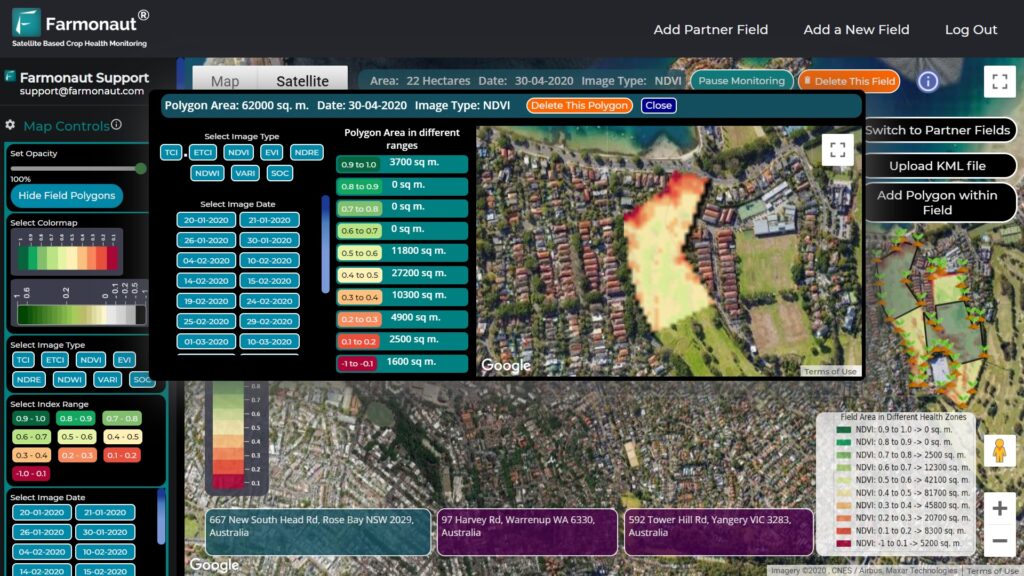
- AI & Satellite-Based Monitoring: Platforms like Farmonaut provide real-time health maps, helping managers determine nutrient needs or detect pest threats for efficient resource allocation.
- Regeneration & Carbon Sequestration: Modern southern forestry programs use cedars to meet carbon footprint reduction targets and regulatory frameworks for conservation and land stewardship. (Learn more about carbon monitoring solutions.)
Benefits to Biodiversity & Environmental Health
- Increased Habitat Diversity: Support for pollinators, birds, and small mammals—many of which are declining in the United States due to landscape simplification.
- Climate Moderation: Evergreen foliage intercepts strong sunlight, lowers soil temperature, and slows moisture loss.
- Enhanced Aesthetic & Recreational Value: Diverse forms—upright, columnar, weeping—fill both functional windbreak and ornamental roles.
Practices that emphasize native cedar species, climate-adapted cultivars, and satellite-informed management are now integral to modern southeastern horticultural success.
For professionals seeking optimal advisory on tree plantation and forest health monitoring in the U.S. Southeast, Farmonaut’s Crop Plantation & Forest Advisory leverages multispectral satellite imagery and AI to deliver precise, real-time health, growth, and environmental reports. This boosts success rates and maximizes ecological value across southern horticultural projects.
Comparison of Eastern Red Cedar, Blue Atlas Cedar, and Weeping Cedars: Ecological Value & Sustainable Suitability
| Cedar Type | Native Range | Biodiversity Support (Estimated Value) | Climate Resilience (Estimated Value) | Preferred Soil Type | Growth Rate (Estimated Height/year) | Drought Tolerance | Carbon Sequestration Potential (Estimated Value) | Notable Sustainable Uses |
|---|---|---|---|---|---|---|---|---|
| Eastern Red Cedar (Juniperus virginiana) | Eastern, Central & Southeastern United States | High (40+ bird species, pollinators, small mammals) | Very High (adaptability to drought, wind, cold) | Wide range: rocky, sandy, clay, and poor soils | 0.45–0.6 m (1.5–2 ft) | High | High (up to 18 tons/ha annually in mature stands) | Windbreaks, erosion control, reforestation, urban green infrastructure, habitat restoration |
| Blue Atlas Cedar (Cedrus atlantica) | Atlas Mountains (Morocco, Algeria), naturalized in southern US | Moderate to High (bird habitats, microclimate, shading) | High (withstand moderate drought, pests) | Well-drained loam, tolerates acidity/alkalinity | 0.3–0.45 m (1–1.5 ft) | Medium–High | Medium to High (~10 tons/ha/year, especially in managed stands) | Urban forestry, climate-resilient landscaping, shade provision, premium ornamentals |
| Weeping Blue Atlas Cedar (Cedrus atlantica ‘Glauca Pendula’) | Cultivar; widely used in US horticulture | High (diverse pollen/nectar, shelter for insects & birds) | High (drought and moderate pest resistance) | Well-drained, fertile soils best; highly adaptable | 0.3–0.45 m (1–1.5 ft); width varies greatly with training | High | Medium | Accent plant, microclimate creation, soil stability, biodiversity buffer zones |
| Weeping Alaskan Cedar (Chamaecyparis nootkatensis ‘Pendula’) | Pacific Northwest (Alaska & British Columbia), cultivated in US East/South | High (insect shelter, nesting, understory protection) | Very High (cool/wet resistance, fungal tolerance) | Moist, acidic, organic-rich soils preferred | 0.3–0.6 m (1–2 ft) | Medium–High | Medium (~8–9 tons/ha/yr) | Storm buffer, urban screening, ornamental urban forestry |
2026 & Beyond: Trends in Forestry, Horticulture, & Climate Resilience
Growing Emphasis on Native & Adaptive Species
Environmental crises—climate change, invasive pests, extreme weather—are shifting priorities in southern forestry and horticulture. As a result, native and highly adaptable species like eastern red cedar are being emphasized for reforestation, urban tree-planting, and habitat enhancements.
Advanced Monitoring, Carbon Markets, and Sustainable Incentives
The intersection of sustainability standards and climate action is driving demand for:
- Satellite-Based Plant Health and Growth Monitoring – platforms such as Farmonaut deliver low-cost, high-frequency updates across vast areas, enabling both private and public managers to optimize tree health and resource inputs.
- Carbon Footprinting & Sequestration Tracking – necessary for both compliance (municipal, federal) and participation in voluntary carbon markets.
- Blockchain Traceability – to ensure the authenticity and origin of high-value trees, especially important for rare cultivars like blue atlas cedar and its weeping varieties (see product traceability).
Climate-Resilient Planting & Urban Forestry Initiatives
- Resilient Green Space Planning: Methods that combine native species (like eastern red cedar) with high-value ornamentals (blue atlas cedar, weeping blue atlas cedar) to buffer biodiversity and public health in cities like Atlanta, Nashville, and Charlotte.
- Soil and Water Conservation Programs: Use deep-rooted cedars to combat erosion and enhance groundwater recharge in drought-prone or storm-affected southern regions.
- Economic Valuation: Market demand for sustainable lumber, carbon credits, and ornamental trees is rising, supporting both government and private incentives (satellite-based crop/forest loan verification is streamlining funding access for growers and landowners).
How Farmonaut Supports Cedar Cultivation and Sustainability
At Farmonaut, we are committed to supporting the forestry and horticulture community as they transition to sustainable practices centered on eastern red cedar, blue atlas cedar, and their weeping varieties. Our multispectral satellite-based monitoring and AI-driven systems provide users with powerful, real-time insights at the species, stand, and landscape level.
- Tree Health & Growth Tracking: Our technology highlights areas of stress, pest infestation, or nutrient deficiencies, allowing managers to intervene early and optimize resource use.
- Environmental Impact Monitoring: Satellite-derived carbon footprint analysis (see product details) quantifies the carbon sequestration of plantations, supporting compliance, reporting, and carbon market goals.
- Blockchain-Based Traceability: Our platform’s traceability solutions bring transparency to tree sourcing and supply chains.
- Loan & Insurance Support: Satellite verification aids southern landowners in securing crop loans and forestry insurance by providing credible, third-party data for underwriting, reducing both fraud and access barriers.
- Large-Scale Management: Our agro-admin app lets businesses and governments monitor, manage, and scale operations—essential for reforestation and urban planting efforts in the Southeast.
- API Support & Custom Integrations: Developers and organizations in the forestry sector can use our API (API developer docs) to build ecosystem-specific solutions for live data access, mapping, and analysis.
Farmonaut’s mission is to offer actionable, scalable technology so that anyone—from a family landowner to a major government agency—can support climate resilience, sustainable forestry, and healthy, thriving landscapes into 2026 and beyond.
FAQs: Cedars & Sustainable Horticulture
1. What makes eastern red cedar such a valuable species in southeastern horticulture?
Eastern red cedar is prized for its adaptability to poor soils, drought resistance, and critical ecological role as both windbreak and wildlife habitat. Its durable, aromatic wood also has high commercial value for fencing, chests, and furniture in the United States.
2. How does blue atlas cedar contribute to carbon sequestration and climate resilience?
Blue atlas cedar can sequester up to 10 tons of carbon per hectare annually, providing significant support for climate-resilient landscapes. Its ornamental charm and resistance to drought and moderate pests enhance its use in urban and commercial landscapes across the southeastern United States.
3. What are key care requirements for weeping blue atlas cedar and weeping alaskan cedar?
Both weeping varieties require well-drained soils and regular watering when newly established, but are drought-tolerant once mature. Their unique form offers architectural interest and wind buffering in gardens and urban green spaces.
4. Are cedars suitable for degraded or marginal southern landscapes?
Yes. Eastern red cedar, and to a significant extent blue atlas cedar, are ideal for rehabilitating degraded lands due to their adaptability, root structure, and low care requirements.
5. How does Farmonaut support cedar cultivation and sustainable landscaping?
We—at Farmonaut—use advanced satellite, AI and blockchain systems to provide tree health, carbon sequestration, and traceability reports for better resource allocation, risk management, and compliance in forestry and horticulture across the Southeast and beyond.
6. What role do cedars play in supporting southeastern biodiversity?
Cedars provide shelter, nesting, and food for a broad array of bird species, pollinators, and mammals. Their ability to create microhabitats—especially when used in mixed plantings—makes them crucial for maintaining and enhancing biodiversity in horticultural and forestry settings.
Conclusion: Cedars at the Heart of Southeastern Sustainability
In summary, eastern red cedar, blue atlas cedar, and their weeping forms represent the apex of adaptability and ecological value in modern southeastern horticultural practices. Their roles—anchored in both tradition and cutting-edge sustainability—make them central to efforts to enhance biodiversity, stabilize soils, improve climate resilience, and maximize economic returns within the fields of forestry and horticulture.
As we look ahead to 2026 and beyond, integrating these significant cedar species into our landscapes will be essential for supporting healthy, climate-resilient environments across the southern United States. Through advanced technology, actionable data, and sustainable cultivation techniques, these trees will continue to offer outstanding value for both people and nature, season after season.