Pincher Bugs & Chinch Bugs: Best Pest Solutions 2026
Meta Summary: Pincher Bugs and Effective Pest Management: Protecting Crops and Infrastructure in 2025 and Beyond. Discover sustainable, integrated solutions against pincher bugs, chinch bugs, bed bugs, and boxelder bugs to safeguard agriculture, forestry, and infrastructure.
Table of Contents
- Quick Trivia
- Overview: Why Pest Management Remains Critical in 2026
- Understanding Pincher Bugs, Chinch Bugs, Bed Bugs, & Boxelder Bugs
- Economic Impact: From Crops to Infrastructure
- Integrated Pest Solutions: Best Practices for 2026
- Latest Insecticides & Pesticides: Selection & Eco-Friendly Use
- Farmonaut: Satellite Technology for Proactive Pest Management
- Expert Video Guides on Pest Control Innovation
- Comparative Pest Management Solutions Table
- Monitoring, Detection & Thresholds for Sustainable Pest Control
- Cultural, Biological & Advanced Technological Practices
- Infrastructure & Housing: Keeping Bugs Out
- Future Trends & Sustainability in Pest Management
- FAQ: Frequently Asked Questions
- How to Get Started with Farmonaut
“Up to 80% of boxelder bug populations can be reduced using integrated, eco-friendly pest management techniques.”
Overview: Why Pest Management Remains Critical in 2026
In the dynamic realms of agriculture, infrastructure maintenance, and forestry, pest management remains a critical concern as we progress into 2026 and beyond. Insects such as pincher bugs, chinch bugs, boxelder bugs, and bed bugs continue to cause substantial economic losses by threatening crop yields, timber resources, and building integrity. The continuous evolution of these pests and changing environmental conditions underscore the importance of employing sustainable, integrated pest management measures. Understanding the biology and behavior of these insects, alongside deploying targeted treatments and advanced technologies, remains vital for protecting our precious resources and maintaining productivity across diverse ecosystems.
Understanding Pincher Bugs, Chinch Bugs, Bed Bugs, & Boxelder Bugs
Pincher Bugs: The Often-Confused Garden Nuisance
Pincher bugs, frequently confused with earwigs due to their distinctive pincers, typically reside in gardens, agricultural fields, and nurseries. While they play a mixed role—sometimes damaging young plants, fruits, and foliage, and occasionally predating on other pests—their numbers can become problematic in high-value crops, leading to foliar and fruit loss.
Chinch Bugs: A Notorious Cereals & Turf Pest
Chinch bugs (Blissus spp.) rank among the most impactful pests for cereal crops (especially wheat, corn, turfgrass), by piercing plant tissues and sucking sap. This feeding often leads to wilting, yellowing, and plant death. Outbreaks remain a critical concern for yield protection in temperate regions, with economic significance persisting through 2026.
Bed Bugs: Infrastructure & Housing Threat
While bed bugs (Cimex lectularius) are predominantly human dwelling pests, they surface in farm housing, dormitories, and other infrastructure where people reside. Their resilience and growing resistance to traditional pesticide treatments makes professional eradication a challenge, especially for farm labor housing and communal buildings.
Boxelder Bugs: Seasonal Aggregators Around Buildings
Boxelder bugs (Boisea trivittata) are best known for their mass gatherings on buildings, especially during cooler months. While less destructive to crops, their presence in fruit orchards, nurseries, and residential infrastructure can cause annoyance and minor plant damage, particularly on boxelder and maple trees or seedlings by feeding on plant sap.
Economic Impact: From Crops to Infrastructure
The presence of pincher bugs, chinch bugs, boxelder bugs, and bed bugs heightens risks for everyone involved in agriculture, forestry, and infrastructure maintenance. Let’s explore how these pests can inflict economic damage:
- Crop Yields: Chinch bug infestations in wheat, corn, and turf devastate yields and threaten livelihoods. Even low infestation levels can escalate rapidly, highlighting the importance of early detection and timely chinch bug treatment.
- Timber Resources: Boxelder bugs feeding on saplings and maple trees endanger forestry projects and tree nurseries.
- Infrastructure Integrity: Bugs—especially boxelder bugs and bed bugs—force costly interventions in homes, farm housing, and storage buildings.
- Human Health & Hygiene: Bed bug infestations compromise worker welfare in farm labor housing and other communal infrastructure, with the need for complete eradication to maintain overall hygiene.
The cumulative effect is clear: unmanaged pest populations can cause substantial economic losses, reduced productivity, and even risk the integrity and safety of essential buildings in our communities.
As we look ahead, our Farmonaut platform empowers growers, managers, and communities by bringing together satellite monitoring, AI-driven advisories, and blockchain-based traceability—an advanced toolkit designed to preserve resources, support targeted interventions, and optimize pest management practices in agriculture, infrastructure, and forestry. Users can easily access real-time data regarding crop and environmental health, enabling more efficient and precise pest management strategies. Visit our Carbon Footprinting feature to learn how environmental impact monitoring dovetails with pest control across large landscapes.
Integrated Pest Solutions: Best Practices for 2026
In 2026, the best solutions for controlling pincher bugs, chinch bugs, bed bugs, and boxelder bugs involve a blend of modern chemical treatments, biological controls, and cultural practices. We outline how integrated pest management (IPM) remains the gold standard for sustainable success in agriculture, forestry, and infrastructure:
- Combine Cultural and Biological Controls: Rotate crops, select resistant plant varieties, and manage habitat structure to disrupt pest breeding cycles while supporting natural enemies.
- Leverage Monitoring & Early Detection: Use field scouting, pheromone traps, visual inspections, and satellite monitoring for timely interventions.
- Apply Targeted Chemical Treatments When Necessary: Reserve insecticides—especially those with low environmental impact—for outbreaks that surpass action thresholds.
- Reduce Resistance Risks: Rotate active ingredients and blend chemical, biological, and cultural strategies to delay or prevent pest resistance.
Such integrated approaches minimize the use and environmental consequences of chemicals, increase efficacy, and preserve beneficial insects—satisfying the dual goal of high-yield agriculture and stewardship for future generations.
Latest Insecticides & Pesticides: Selection & Eco-Friendly Use
In selecting the best insecticide for chinch bugs, best pesticide for bed bugs, and targeted solutions to get rid of boxelder bugs or pincher bugs, it is essential to balance effectiveness, cost, and environmental impact.
Best Insecticide for Pincher Bugs
- Spinosad: An organic, biological insecticide targeting pincher bugs in sensitive crops and nursery stock. Spinosad selectively impacts pests with minimal effects on pollinators and beneficial insects.
- Neem-based Biopesticides: Neem oil acts as a repellent, feeding inhibitor, and disruptor of pest growth while preserving environmental health.
- Targeted Use: Deploy only in high-value situations for direct damage suppression, always following label guidance for timing and concentration.
Best Insecticide for Chinch Bugs & Chinch Bug Treatment
- Neonicotinoids (e.g., Imidacloprid): Still effective, though considerations for pollinator impact mean their use is increasingly regulated.
- Pyrethroids (e.g., Bifenthrin): Highly effective for immediate suppression; combine with non-chemical measures to slow resistance.
- Insect Growth Regulators (IGRs): Disrupt chinch bug lifecycle without harming beneficials.
- Integrated Control: Blend with resistant crop varieties and precise threshold-based applications for sustainability.
Best Pesticide for Bed Bugs
- Heat Treatments: Physical approach that eradicates all life stages—eggs, nymphs, adults—without chemical residues. Suitable for housing and confined structure treatment.
- Pyrethroids (e.g., Permethrin): Still useful in rotation, but only in combination with non-chemical mechanisms due to high rates of resistance.
- Neonicotinoid-Pyrethroid Blends: Offer a one-two punch, but resistance is an escalating concern. Regular monitoring and rotation are crucial.
- Desiccant Dusts (Diatomaceous Earth): Dehydrates and kills bed bugs physically—ideal for organic and sensitive infrastructure scenarios.
For thorough bed bug eradication in farm housing or communal infrastructure, always combine physical removal, cleaning protocols, and chemical treatments.
How to Get Rid of Boxelder Bugs
- Mechanical Exclusion: Seal building entry points, repair screens, and use door sweeps to prevent mass entry during autumn migrations.
- Soap & Water Sprays: For small infestations, a simple soap and water solution effectively reduces populations on walls and in windowsills.
- Pyrethroid Sprays (e.g., Lambda-cyhalothrin): Apply to exterior walls, cracks, and crevices for fast, targeted knockdown.
For progressive, sustainable crop protection, we recommend exploring our Large-scale Farm Management Solutions. Our cloud-based application enables batch monitoring, yield forecasting, and pest pressure prediction, ensuring precise treatments and reduced overall pesticide reliance.
“Sustainable treatments curb chinch bug infestations by 70% without harming beneficial insects or the surrounding environment.”
Farmonaut: Satellite Technology for Proactive Pest Management
In 2026, digital transformation continues to shape how we manage pests in agriculture, forestry, and infrastructure. Our Farmonaut platform brings together a unique suite of satellite-based monitoring, real-time AI advisory, and blockchain traceability tailored to meet the challenges of contemporary pest pressures:
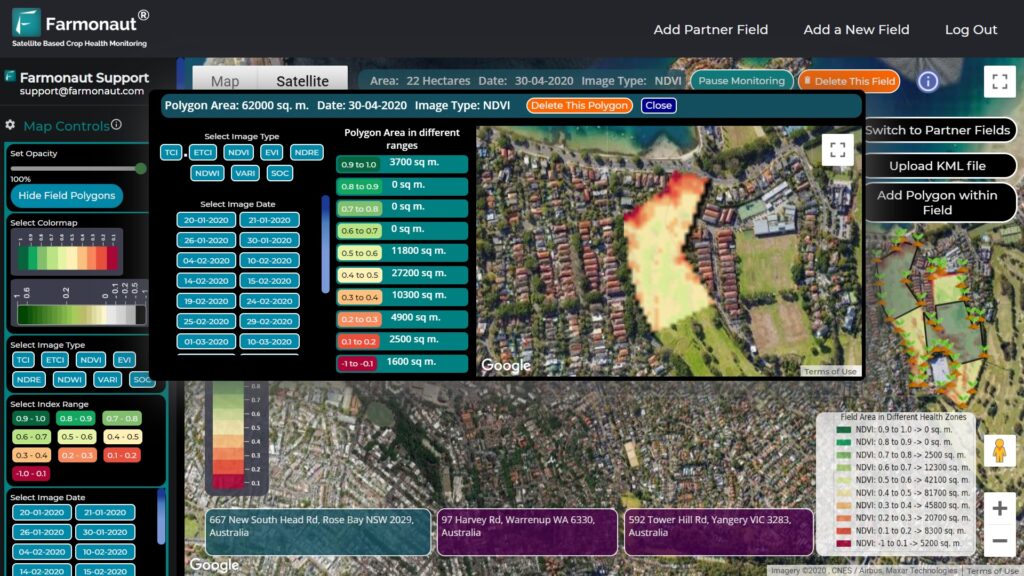
- Satellite Monitoring: Our multispectral imagery enables real-time crop health assessment, early detection of pest damage (like chinch bug hotspots), and the tracking of environmental changes affecting pest abundance.
- AI Advisory (Jeevn AI): Delivers custom pest management strategies based on live field data—adapting to new outbreaks and changing weather patterns.
- Blockchain Traceability: Supports farm-to-end verification, ensuring transparency and quality assurance throughout the agricultural supply chain—helpful for tracking compliance with sustainable pest practices.
- Resource Management: Our tools help deploy fleet and inputs for pest treatment in the most efficient, cost-effective manner, saving valuable time and resources.
- Environmental Monitoring: Quantifies the environmental impact of various pest treatments, including carbon emissions, helping operations maintain their sustainability commitments (learn more).
To learn about our open API and how you can integrate satellite-driven pest and resource monitoring directly into your digital ecosystem, visit the Farmonaut API and Developer Documentation. These powerful tools support flexible, scalable solutions—vital for modern IPM programs.
Expert Video Guides on Pest Control Innovation
Below are the most relevant expert videos, offering further guidance and practical knowledge on pest management for crops and infrastructure:
Comparative Pest Management Solutions Table
| Pest Name | Common Damage | Estimated Prevalence (2025) | Recommended Sustainable Solutions | Environmental Impact (Low/Medium/High) | Estimated Success Rate (%) |
|---|---|---|---|---|---|
| Pincher Bugs | Foliage, fruit, and young plant feeding in gardens and farm fields | Moderate in temperate zones; localized outbreaks | Spinosad, neem biopesticides, habitat management | Low | 85% |
| Chinch Bugs | Wilting/yellowing cereal crops, turf damage, plant death | High in wheat, corn, turf-growing regions | Threshold-based pyrethroids, IPM, resistant varieties, crop rotation | Medium | 70-85% |
| Bed Bugs | Blood-feeding; bites, allergic reactions, stress in housing | Localized to farm housing, communal structures | Heat, cleanup, desiccant dusts, combination insecticides | Medium | 68-80% |
| Boxelder Bugs | Aggregating on home/building exteriors, sap sucking on seedlings | Significant near boxelder & maple populations, cold climates | Mechanical exclusion, pyrethroid spray, cultural landscaping | Low | 80% |
This comparative table demonstrates the diversity of pest threats faced in 2026 and how integrated, sustainable solutions outperform chemical reliance alone, especially regarding long-term environmental health and resistance management.



Monitoring, Detection & Thresholds for Sustainable Pest Control
The cornerstone of modern pest management is the early detection and continuous monitoring of bug populations. Leveraging a mix of on-ground scouting, digital tools, and satellite imagery allows for optimal timing of interventions and minimizes unnecessary chemical use:
- Satellite Monitoring: Our NDVI and true-color imagery spots plant stress before symptoms are visually noticeable, indicating where chinch bugs or other insects may be at work. Early alerts mean cost-effective treatments and lower yield loss.
- Threshold-Based Decision Making: Only treat when populations surpass established action thresholds. This IPM principle reduces unnecessary exposure of crops to insecticides, limiting non-target effects.
- Pheromone and Sticky Traps: Useful for monitoring pincher bug and boxelder bug activity at the margins of fields and buildings.
- Visual Inspections: Still vital—especially for bed bug infestations in farm housing. A regular, structured inspection routine identifies issues before escalation.
Those wishing to apply technology at scale should explore our Fleet Management solutions, which optimize the deployment of spraying, scouting, and harvesting equipment for maximum operational efficiency—especially important for pest and input management on large farms.
Cultural, Biological & Advanced Technological Practices
Sustainability in pest control for pincher bugs, chinch bugs, bed bugs, and boxelder bugs demands a shift toward:
- Cultural Practices: Crop rotation, careful timing of planting/harvest, habitat adjustments (like removing leaf litter)—these strategies disrupt bug reproduction and success.
- Resistant Varieties: Using rye, corn, or turf species bred for chinch bug resistance greatly reduces chemical intervention, as does planting less boxelder-friendly tree species in landscaping.
- Biological Controls: Encourage predators (e.g., ladybird beetles, ground beetles) and parasitoid wasps through flower strips, reduced broad-spectrum pesticide use, and by providing refuge habitats.
- Technological Advancements: AI-driven advisory systems, like our Jeevn AI, help customize interventions to site-specific infestation levels, weather patterns, and crop sensitivities for more precise results.
To maximize environmental and financial sustainability, funding agencies and insurers increasingly require or incentivize the adoption of integrated approaches. For those interested, our Crop Loan & Insurance Verification service helps ensure compliance with sustainable pest practices—unlocking better loan terms and reducing insurance fraud through satellite-verified management records.
Infrastructure & Housing: Keeping Bugs Out
Protecting infrastructure from pests, beyond the field or forest, is equally important. Detailed routines for bed bug eradication in housing and boxelder bug exclusion from buildings emphasize non-chemical approaches first:
Bed Bugs in Housing
- Cleanliness: Regular washing of bedding, vacuuming, and clutter reduction limit hiding spots.
- Physical Barriers: Mattress encasements and insect-proof furniture design help prevent establishment.
- Heat Treatments: For severe cases, raising room temperatures to 50°C (122°F) for several hours is highly effective.
- Rotation of Pesticides: Minimize resistance by alternating chemical classes.
Boxelder & Pincher Bugs in Buildings
- Structural Exclusion: Seal cracks in foundations, windows, and doors.
- Exterior Sprays: When populations surge, treat building exteriors in late summer with targeted, low-impact pyrethroids.
- Landscape Management: Prune trees and shrubs back from foundations to dissuade aggregation.
Our Blockchain Traceability tools provide an extra layer of documentation on sustainable pest solutions, from farm and forestry products to processed goods—key for customer trust and regulatory compliance in 2026.
Future Trends & Sustainability in Pest Management
The trajectory for pest management toward 2026 and beyond is clear: eco-friendly, data-driven, and integrated approaches will define success. The key drivers:
- Remote Sensing & AI: As field labor tightens and scales expand, automated remote monitoring and AI-powered forecasting deliver actionable pest alerts and tailored interventions.
- Sustainable Inputs: Next-generation biopesticides, natural enemies, and IGRs will further reduce reliance on chemicals with negative environmental profiles.
- Resource Optimization: Satellite-based resource tracking ensures that every spray or planting contributes maximally to pest suppression and sustainability goals.
- Regenerative Practices: Regenerative agriculture and forestry, where pest management links directly to healthy soil and functional plant systems, is rising to the forefront.
Our goal at Farmonaut is to empower users worldwide with the most advanced, affordable digital tools for satellite imagery, AI analysis, impact tracking, and blockchain transparency. This holistic approach ensures that sustainable pest management translates to both short-term profits and the long-term stewardship of agricultural, forestry, and built environment resources.
FAQ: Frequently Asked Questions
Q1: What is the most eco-friendly way to get rid of pincher bugs?
Answer: Integrated strategies are best. Use habitat management, neem or spinosad-based biopesticides only where damage is significant. Minimize disturbance to beneficial insects and treat at dusk when pincher bugs are most active.
Q2: How can I prevent chinch bug infestations in my turfgrass or cereal crops?
Answer: Rotate crops, grow chinch bug-resistant varieties, and apply targeted insecticides only when pest thresholds are crossed. Monitor fields regularly using Farmonaut’s satellite monitoring tools for early detection.
Q3: What’s the best pesticide for bed bugs in farm housing?
Answer: Heat treatment and desiccant dusts are effective and non-toxic. Supplement with careful, threshold-based insecticide use, always rotating chemical classes to counter resistance issues.
Q4: Are pyrethroids safe for use around crops and buildings?
Answer: Pyrethroids are generally considered safe when applied according to label instructions, but they should be used sparingly and as part of an integrated pest management program to reduce environmental risks and pest resistance.
Q5: What digital tools does Farmonaut offer for pest management?
Answer: Our platform provides satellite-driven crop health analysis, AI-generated pest advisory, resource monitoring, blockchain traceability, and fleet management—delivering insight for timely, precise interventions in both agriculture and infrastructure.
How to Get Started with Farmonaut: Your Partner for Sustainable Pest Solutions
Whether you manage fields, forests, or facilities, staying ahead of pest threats requires modern data and actionable insights. Our Farmonaut platform is available in web, Android, and iOS versions, all designed to deliver real-time information for strategic pest management. Visit our web app, explore large-scale farm management, or leverage our API for customized integration with agricultural and infrastructure systems.
Conclusion: Toward Resilient, Sustainable Pest Management
In summary, controlling pincher bugs, chinch bugs, boxelder bugs, and bed bugs is an evolving, multifaceted challenge requiring sustainable, integrated solutions for 2026 and beyond. By combining biological understanding, targeted chemical treatments, robust monitoring, and advanced technology, we can reduce economic losses, preserve crop and timber yields, and safeguard infrastructure. Farmonaut is committed to supporting individuals, businesses, and governments in this effort by making advanced digital tools affordable and accessible. Together, we can progress toward a more resilient, resource-efficient, and environmentally responsible future for agriculture, forestry, and building management.