

Rare earth investing · Funds and ASX stocks
Rare Earth ETF on the ASX? Funds and Stocks Compared
No ASX-listed fund holds only rare earth companies. Dedicated funds such as REMX trade in the US; on the ASX the options are critical minerals funds (XMET, GMTL) or shares such as Lynas (LYC).
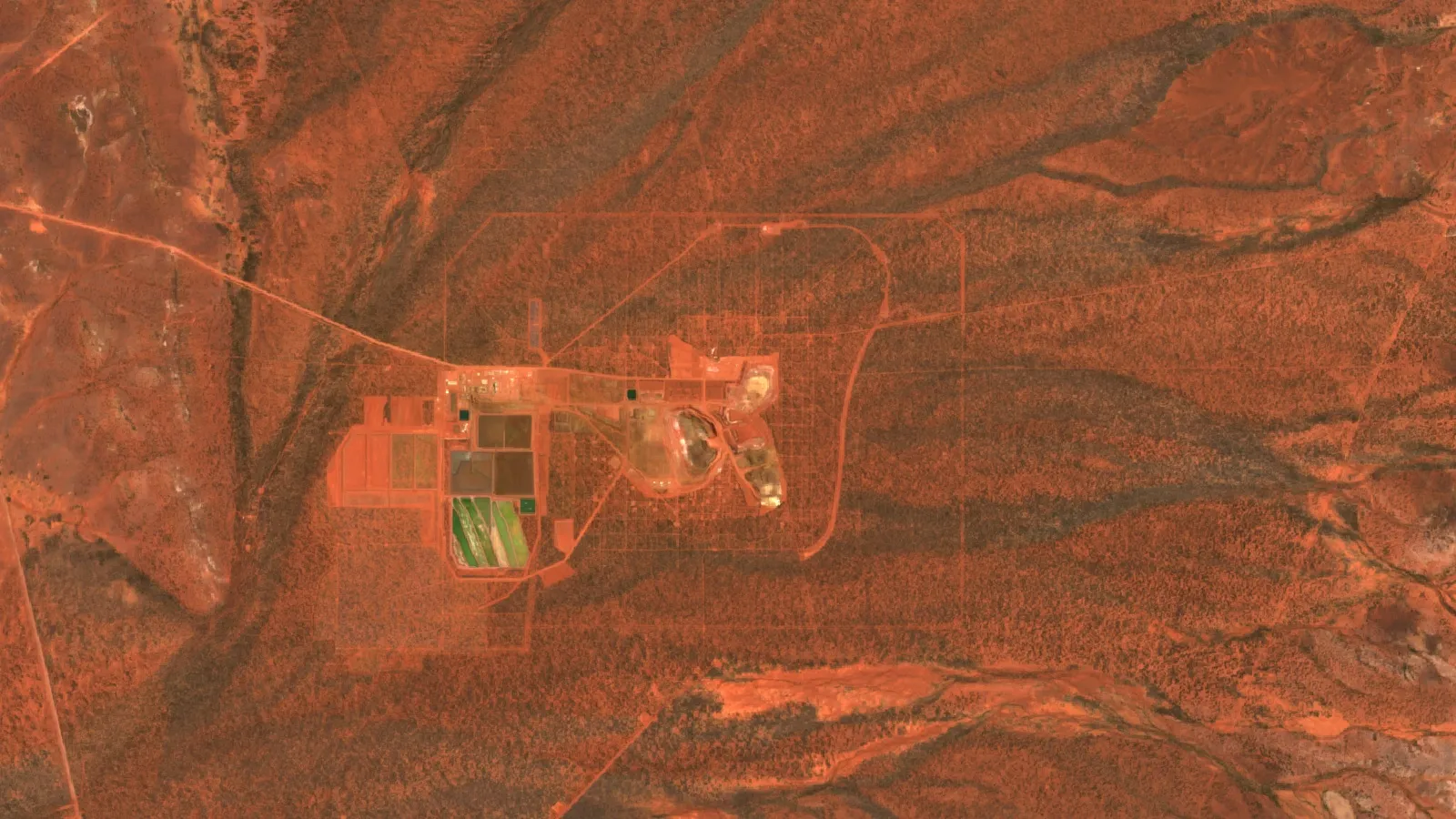
Key takeaways
- No rare-earth-only ETF lists on the ASX (November 2026); REMX, REXC and EART trade in the US.
- REMX charges 0.53% and held about US$1.6 billion; REXC 0.65%; EART 0.59% (The Motley Fool, October 2026).
- Lynas reported FY26 revenue of A$977.9 million and net profit of A$222.4 million (ASX Appendix 4E, August 2026).
- China mined about 270,000 of the world’s 390,000 tonnes of rare earth oxide in 2025 (USGS, 2026).
- Iluka, Arafura, Hastings and Northern Minerals are still building or developing projects.
In this article
- Is there a rare earth ETF on the ASX?
- Rare earth ETFs compared: US and ASX funds
- ASX rare earth stocks by project stage
- Lynas selling prices, quarter by quarter
- How much China controls: production and prices
- How to buy rare earth exposure from Australia
- Fees and currency cost calculator
- What to check before you buy
- Frequently asked questions
There is no ETF on the Australian Securities Exchange (ASX) that holds only rare earth companies. The fund most people mean is REMX, the VanEck Rare Earth and Strategic Metals ETF, which trades on a US exchange. On the ASX you have two routes: a broader critical minerals fund such as Betashares XMET or Global X GMTL, or the listed miners and refiners themselves, led by Lynas Rare Earths (ASX: LYC). This guide lists what actually trades, what each product holds and charges, the ASX companies by project stage, and a calculator for what fees and currency costs take from your returns.
Rare earths are a group of 17 metals: the 15 lanthanides plus scandium and yttrium. The ones investors watch most are neodymium (Nd) and praseodymium (Pr), sold together as NdPr oxide for permanent magnets, and the heavy rare earths dysprosium (Dy) and terbium (Tb), which keep those magnets working at high temperature. For more on the metals themselves, see our guide to heavy rare earth demand and the explainer on whether neodymium is radioactive.
Is there a rare earth ETF on the ASX?
No. As of November 2026 no ASX-listed exchange traded fund tracks a rare-earth-only index. Australian investors who search for one usually end up looking at one of three things:
- A US-listed rare earth fund such as REMX, REXC or EART, bought through a broker that offers international shares.
- An ASX-listed critical minerals fund such as Betashares Critical Minerals ETF (XMET) or Global X Green Metal Miners ETF (GMTL). These hold some rare earth companies, but copper, lithium and nickel miners make up much of the basket.
- Individual ASX shares in rare earth producers and developers such as Lynas, Iluka Resources, Arafura Rare Earths, Hastings Technology Metals and Northern Minerals.
Each route gives a different kind of exposure. A dedicated US fund spreads risk across 30 to 50 companies in several countries. A critical minerals fund dilutes rare earths with other metals. A single share ties your result to one company’s mine, plant, funding and offtake contracts (an offtake is a contract in which a buyer agrees to take a set volume of product, often at an agreed price formula; our guide to offtake agreements in mining explains how they work).
Rare earth ETFs compared: US and ASX funds
The table below lists the dedicated rare earth funds and the two ASX critical minerals funds most often suggested as substitutes. Fees and fund sizes change; each figure carries its date and source.
| Fund (ticker) | Listed on | What it holds | Fee (p.a.) | Size (date) |
|---|---|---|---|---|
| VanEck Rare Earth and Strategic Metals ETF (REMX) | NYSE Arca, US | Rare earth and strategic metals producers, refiners and recyclers worldwide; top holdings in October 2026 were SQM, Albemarle and MP Materials | 0.53% | About US$1.6 billion (15 Oct 2026) |
| Sprott Rare Earths Ex-China ETF (REXC) | Nasdaq, US | About 31 rare earth companies with no Chinese holdings; Australia about 47% and the US about 41% of the fund | 0.65% | About US$72 million (15 Oct 2026) |
| Global X Rare Earth and Critical Materials ETF (EART) | Nasdaq, US | About 50 companies across rare earths, lithium, nickel, cobalt, graphite, zinc and platinum group metals | 0.59% | About US$47 million (Oct 2026) |
| Betashares Critical Minerals ETF (XMET) | ASX | Global critical mineral producers; tracks the Nasdaq Sprott Critical Minerals Select Index | 0.69% | A$126.7 million net assets (14 Oct 2026) |
| Global X Green Metal Miners ETF (GMTL) | ASX | Miners of metals used in clean energy, including copper, lithium and rare earths | 0.69% | About A$12 million (Oct 2026) |
US fund data is from The Motley Fool’s rare earth ETF comparison (data as of 15 October 2026). XMET net assets are from the Betashares fund page (14 October 2026); the fund was previously called the Energy Transition Metals ETF. ASX fees and GMTL size are from the ReviewETF critical minerals list (October 2026). For a longer list of funds, including ones outside this niche, see our rare earth ETF list and the wider guide to rare metals ETFs.
REMX: the fund most people mean
Best for: investors who want the largest and longest-running dedicated fund and can buy US shares. Pros: the biggest asset base of the three US funds, so trading spreads are usually tighter; the lowest fee of the three. Cons: it includes lithium producers and Chinese companies, so it is not a pure rare earth bet; it trades in US dollars, so an Australian holder carries currency risk. The Motley Fool reported a three-year standard deviation of about 38% for REMX (October 2026), which means large swings are normal.
REXC: rare earths without China
Best for: investors who want to avoid Chinese companies. Pros: the heaviest weighting to Australian names of any US fund, with Lynas among its largest holdings (about 19% in October 2026, per The Motley Fool). Cons: a small fund with a 0.65% fee and only about 31 holdings, so a few companies drive the result.
EART: the broad basket
Best for: investors who want critical materials in general rather than rare earths alone. Pros: about 50 holdings across many metals. Cons: the smallest of the three US funds, and the rare earth share is diluted. Fund details are on the Global X EART page.
XMET and GMTL: what you can buy on the ASX
Best for: investors who want to stay on the ASX in Australian dollars. Pros: no international brokerage account needed; units settle like any ASX share. Cons: rare earths are only one part of each fund, and copper miners have been among the largest holdings in XMET in 2026. If your goal is rare earth exposure in particular, check the holdings list on the issuer’s page before you buy.
How we chose these funds
We included every US-listed fund with “rare earth” in its name that The Motley Fool’s October 2026 comparison covered, plus the two ASX-listed funds that ReviewETF lists under critical minerals and that hold rare earth miners. We did not include broad resources funds such as the S&P/ASX 200 Resources ETF, because rare earths are a very small part of them. Fees, sizes and holdings are as stated by each source on the date shown.
ASX rare earth stocks by project stage
For ASX investors, the bigger choice is often between companies rather than funds. Rare earth companies sit at very different stages: one is a producer with revenue and profit, one is building a refinery, and the rest are developers still raising money or finishing engineering. The table groups the main ASX names by stage. It is not a complete list of every small explorer.
| Company (ASX code) | Main asset | Stage (latest report) |
|---|---|---|
| Lynas Rare Earths (LYC) | Mt Weld mine, WA; separation plant in Kuantan, Malaysia | Producer; FY26 revenue A$977.9 million |
| Iluka Resources (ILU) | Eneabba rare earths refinery, WA | Refinery about 60% built; commissioning planned for 2027 |
| Arafura Rare Earths (ARU) | Nolans project, Northern Territory | Final investment decision announced May 2026; production several years away |
| Hastings Technology Metals (HAS) | Yangibana project, WA | Joint venture with Wyloo (Wyloo 60% and operator) |
| Northern Minerals (NTU) | Browns Range heavy rare earths project, WA | Front-end engineering design; investment decision targeted in 2026, subject to finance |
| Meteoric Resources (MEI) | Caldeira ionic clay project, Brazil | Agreed in October 2026 to be acquired by Lynas, subject to approvals |
Two former ASX rare earth names have left the list. Australian Strategic Materials (ASM) was acquired by the US company Energy Fuels, and its shares were delisted from the ASX in August and September 2026 (Motley Fool Australia, August 2026). Meteoric will follow if Lynas completes its takeover. For a global view of companies at the exploration stage, see our list of rare earth exploration companies, and for US names, the list of US rare earth mining companies.
Lynas Rare Earths (ASX: LYC)
Lynas describes itself as the only commercial producer of separated light and heavy rare earth oxides outside China (Lynas, About us). It mines at Mt Weld, about 35 km south-east of Laverton in Western Australia, where a life-of-mine expansion was assessed by the state regulator (WA EPA, Report 1752), and separates oxides in Malaysia, where its operating licence was renewed for 10 years in March 2026. The company also trades in the US over the counter as LYSDY.
In its Appendix 4E for the year to 30 June 2026, Lynas reported record revenue of A$977.9 million, up 76% on FY25, and net profit after tax of A$222.4 million. Its June 2026 quarterly report showed gross sales revenue of A$288.9 million, total rare earth oxide (REO) production of 3,481 tonnes and NdPr production of 1,857 tonnes. REO means the rare earth content expressed as oxides, the standard unit for the industry.
On 1 October 2026 Lynas agreed to buy Meteoric Resources in an all-share deal at 0.0207 Lynas shares per Meteoric share, which the companies said implied an equity value of about A$968 million (Lynas and Meteoric ASX announcement). The deal adds Caldeira, an ionic clay deposit in Brazil. Ionic clay deposits hold rare earths loosely bound to clay and are a common source of the heavy rare earths dysprosium and terbium.
What to check: the quarterly average selling price, NdPr output, and progress on the takeover. Lynas reports each quarter on the ASX.
Iluka Resources (ASX: ILU)
Iluka is a mineral sands company (zircon and titanium minerals) that is building a rare earths refinery at Eneabba in Western Australia. In its first-half 2026 results Iluka said the refinery was nearly 60% built and that it plans commissioning in 2027 (Motley Fool Australia, July 2026). The project is backed by a government loan. Because most of Iluka’s revenue still comes from mineral sands, the share is a mixed exposure.
Arafura Rare Earths (ASX: ARU)
Arafura is developing the Nolans project about 135 km north of Alice Springs in the Northern Territory. It announced its final investment decision in May 2026 after the federal government agreed to buy up to 500 tonnes of NdPr oxide a year for its Critical Minerals Strategic Reserve (ABC News, May 2026). The plan is to mine, concentrate and refine to separated NdPr oxide on site. The managing director told the ABC that production was still several years away, so the company has no product revenue yet.
Hastings Technology Metals (ASX: HAS)
Hastings owns an interest in the Yangibana rare earths and niobium project in Western Australia. In May 2025 Hastings and Wyloo formed an unincorporated joint venture over Yangibana, with Wyloo holding 60%, acting as manager, and holding an option to rise to 70% (Mining Magazine Australia). A Hastings shareholder therefore owns a minority share of the project.
Northern Minerals (ASX: NTU)
Northern Minerals is focused on heavy rare earths, mainly dysprosium and terbium, at its wholly owned Browns Range project in Western Australia. At 30 June 2026 it held A$33.6 million in cash and investments and was working through front-end engineering design, aiming for an investment decision in the third quarter of 2026 subject to financing (Kalkine, July 2026). Check its latest quarterly report for whether that decision has been made.
Lynas selling prices, quarter by quarter
For a producer, the price it receives matters more than any headline spot quote. Lynas reports an average selling price across all its rare earth products each quarter. It rose from A$50.5 per kg in the March 2025 quarter to A$98.2 per kg in the June 2026 quarter, according to its quarterly reports. Part of the rise reflects higher NdPr market prices and part reflects a growing share of heavy rare earth products in the mix, as the company explained in its June 2026 quarterly.
Chart
Lynas average selling price, all rare earth products
A$ per kg, by quarter (Lynas financial year ends 30 June)
A developer such as Arafura or Northern Minerals has no selling price yet. Its value depends on future prices, construction cost, funding and offtake terms, which is why developer shares often move more than producer shares on the same price news.
How much China controls: production and prices
Mine supply is concentrated, and processing even more so. The USGS Mineral Commodity Summaries 2026 estimate world mine production at 390,000 tonnes of REO in 2025, of which China produced 270,000 tonnes, about 69%. The United States produced an estimated 51,000 tonnes and Australia 29,000 tonnes. On reserves, the USGS lists China at 44 million tonnes, Brazil at 11 million tonnes and Australia at 6.3 million tonnes.
Chart
NdPr oxide average price
US$ per kg, 99% minimum, yearly average
Chart
Rare earth mine production, 2025
Thousand tonnes of rare earth oxide (REO), estimates
The same USGS report gives yearly average prices for NdPr oxide (99% minimum): US$92 per kg in 2021, US$124 in 2022, US$75 in 2023, US$55 in 2024 and an estimated US$69 in 2025. Prices like these drive the revenue of every producer in the table above. They also show why a fund or share in this sector can fall by half in a weak year.
The USGS also notes that the leading global use of rare earths is magnets. That links rare earth demand to electric vehicle motors, wind turbines, robotics and defence equipment. Governments in Australia, the US and Japan now treat supply outside China as a strategic question, which is why offtake deals, price floors and government stockpile purchases (such as the Arafura agreement) appear so often in company announcements. For a US view of the same supply chain, see our US rare earth company list.
▶ Benefits of mining to the economy, including energy-transition minerals (5:03). · 5:03
How to buy rare earth exposure from Australia
- Decide fund or shares. A fund spreads company risk; a single share gives more direct exposure to one project.
- Check your broker. XMET, GMTL and the ASX companies trade like any ASX share. REMX, REXC and EART need a broker that offers US shares.
- Count the costs. Add the annual fee, brokerage on each trade and, for US funds, the currency conversion fee. Use the calculator below.
- Read the holdings. Look at the top ten holdings on the issuer’s page. A “critical minerals” fund may hold more copper than rare earths.
- For shares, read the latest quarterly. Every ASX miner files a quarterly activity report. Look for production, cash, debt and project milestones.
- Know the tax position. US-listed funds may need a W-8BEN form and can carry US withholding tax on distributions. Ask your tax adviser.
Fees and currency cost calculator
Small differences in fees add up over years, and buying a US fund adds a currency conversion cost each time you trade. Enter your own numbers below to see the total cost of holding a fund. The fee rates in the table above are the starting point. This does not predict returns.
Calculator
What will fees and currency cost you?
Enter your own amount, fund fee and broker charges.
- Fund fees (A$): $265
- Currency conversion in and out (A$): $120
- Brokerage (A$): $20
- Cost as share of amount: 4.0%
Example values only, not a benchmark. Fee rates are inputs: use the fund’s current fee from the issuer. Currency fee applies to US-listed funds; enter 0 for ASX funds. Ignores returns, tax and spreads.
What to check before you buy
- Stage of the company. A producer has revenue; a developer depends on funding and construction. Check the latest quarterly report on the ASX.
- Offtake and price floors. Government purchase agreements and price floors reduce price risk for some projects. Read the terms in the company’s announcement.
- Takeovers. Meteoric’s shares will convert to Lynas shares if the scheme completes; ASM has already gone. A company in a scheme trades on the deal terms, not on its own project.
- Currency. Rare earth prices are set in US dollars or Chinese yuan. A stronger Australian dollar lowers the A$ price an Australian producer receives.
- Fund overlap. If you own Lynas and also buy REXC, a large part of the fund is the same company.
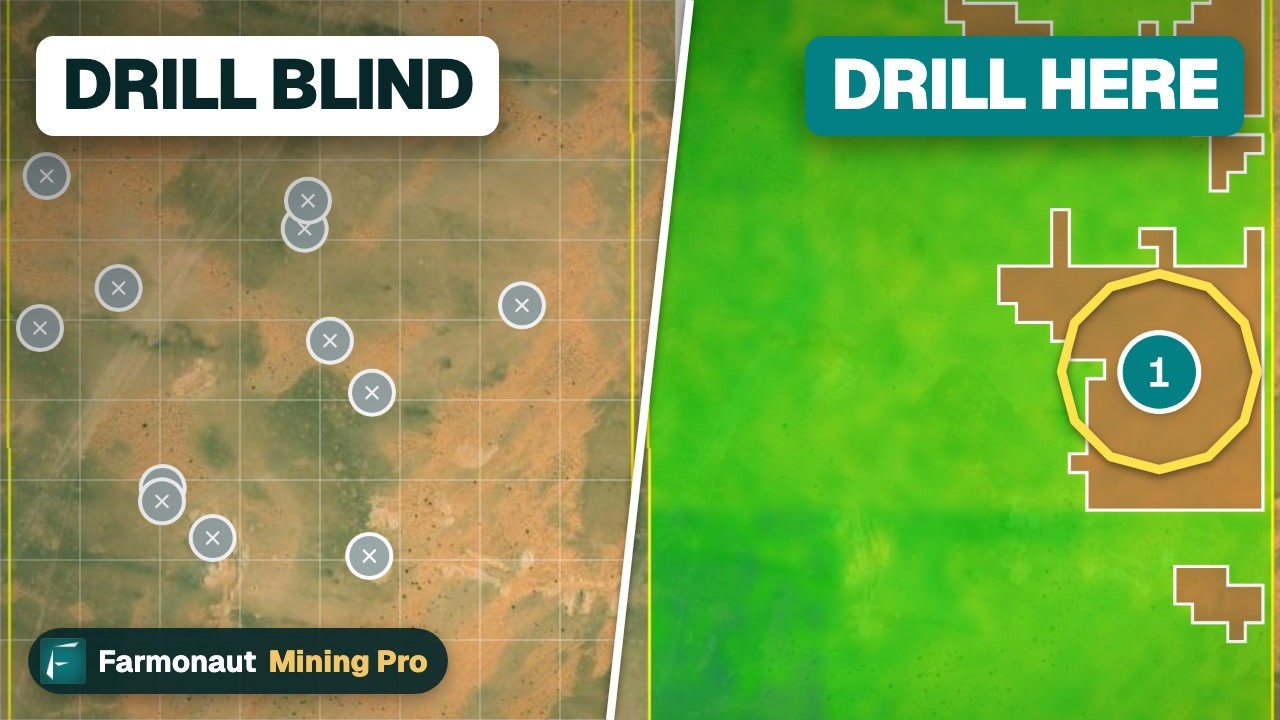
- Ground truth for projects. For developers, satellite imagery can show whether a site is being cleared and built as announced. Tools such as Farmonaut’s satellite mapping are used by mining teams to view a licence area and its surroundings.

▶ What AI and satellite data really do in mineral exploration (4:37). · 4:37
Frequently asked questions
Is there a rare earth ETF on the ASX?
No. As of November 2026 there is no ASX-listed fund that holds only rare earth companies. The closest ASX options are critical minerals funds such as Betashares XMET and Global X GMTL. Dedicated rare earth funds such as REMX trade in the US.
Can I buy REMX from Australia?
Yes, if your broker offers US shares. REMX trades on NYSE Arca in US dollars. You will pay currency conversion and may need to complete a W-8BEN form.
What is the best rare earth ETF?
It depends on what you want. REMX is the largest and cheapest dedicated fund (0.53% fee, about US$1.6 billion, October 2026). REXC excludes China. EART is broader. None is a recommendation; compare holdings and fees.
Which ASX rare earth stock is the largest?
Lynas Rare Earths (LYC) is the only ASX rare earth company with production at scale, reporting A$977.9 million in revenue for the year to 30 June 2026.
Which ASX critical minerals ETF holds rare earth companies?
Betashares XMET and Global X GMTL both hold rare earth miners among other metals. Check each fund’s current holdings, since copper and lithium companies can make up much of the basket.
Is Lynas in REMX?
Lynas has been a holding of the main rare earth ETFs. In October 2026 it was about 19% of REXC, per The Motley Fool. Check the VanEck page for REMX’s current holdings and weights.
What happened to Australian Strategic Materials shares?
Energy Fuels acquired Australian Strategic Materials through schemes of arrangement, and ASM was delisted from the ASX in 2026. Former shareholders received Energy Fuels securities.
When will Arafura start producing?
Arafura announced its final investment decision for Nolans in May 2026. The company said production was several years away, so check its quarterly reports for the construction timeline.
Why are rare earth shares so volatile?
Prices swing widely and supply is concentrated in China. USGS figures show the average NdPr oxide price fell from US$124 per kg in 2022 to US$55 in 2024. Many companies are developers with no revenue.
Are rare earths actually rare?
Not in the crust as a whole. The USGS says rare earths are relatively abundant, but deposits rich enough to mine are less common than for most other mineral commodities, and separating the elements is hard.
More from Farmonaut: agro admin app, carbon footprinting, crop loan and insurance, farmonaut satellite weather api developer docs, fleet management, cybersecurity for mining 7 powerful strategies for 2025, oil and gas supply chain management 7 innovations, rare earths in wind turbine generators 2025 challenges, product traceability.
This page is for information only. It is not investment advice. Fund and company figures are as stated by each source on the date shown.
Farmonaut mining
See a rare earth project area from space
Investors and analysts can view a licence area and its surroundings with satellite imagery before relying on a project update.

Mining Pro sample view, synthetic data
Keep reading
Sources
- The Motley Fool, Rare earth ETFs (data 15 Oct 2026): fool.com
- Betashares, Critical Minerals ETF (XMET) fund page (Oct 2026): betashares.com.au
- ReviewETF, Critical minerals ETFs Australia (Oct 2026): reviewetf.com.au
- Global X, EART fund page: globalxetfs.com
- USGS, Mineral Commodity Summaries 2026: Rare Earths: pubs.usgs.gov
- Lynas Rare Earths, Appendix 4E, year to 30 June 2026: announcements.asx.com.au
- Lynas Rare Earths, quarterly report to 31 March 2026: announcements.asx.com.au
- Lynas Rare Earths, quarterly report to 30 June 2026: announcements.asx.com.au
- Lynas and Meteoric, scheme announcement (1 Oct 2026): announcements.asx.com.au
- Lynas Rare Earths, About us: lynasrareearths.com
- Kitco, Malaysia renews Lynas operating licence (Mar 2026): kitco.com
- ABC News, Arafura final investment decision (May 2026): abc.net.au
- Mining Magazine Australia, Wyloo and Hastings at Yangibana (2025): miningmagazine.com.au
- Kalkine, Northern Minerals June 2026 quarter: kalkinemedia.com
- Motley Fool Australia, Iluka H1 2026 results (Jul 2026): fool.com.au
- Motley Fool Australia, ASM scheme effective (Aug 2026): fool.com.au
- WA Environmental Protection Authority, Report 1752: Mt Weld Rare Earths Project, Life of Mine: epa.wa.gov.au
Discussion
Questions, corrections or field experience? Share them below. First-time comments are reviewed before they appear, and your email is never published.
No comments yet. Be the first to add a question or your experience.

 Lithspo Minerals Limited
 Tintina Mining Group
 Dalgety Minerals Pty Ltd
 Vortex Minerals Pty Ltd
 Faith At Work (Pty) Ltd
 Geotech Mining Solutions plc
 Vulcan International Limited
 Kidepo Associates
 GKY Mining
 Alkimy SARL
 Double A Trading
 GemSprout Metals Limited
 Qader Group
 Ileys General Trading
 SG Gold Mining LLC
 VRV Global Pte Ltd
 Omsri International FZE
 G.I.T.T.
 Jaunita Erss Ltd
 Almosi SARL
 SRK Consulting
 Berks Gold Limited
 Mwerezi Minerals Company Limited

 Exploration consultancy · South Africa · Gold










