

Satellite-Powered Precision Agriculture Advisory for a 276-Acre Palm Oil Nursery in Peru
How Farmonaut’s JeevnAI precision agriculture platform delivered AI-driven crop advisories — covering irrigation, fertilisers, pest risk, and yield forecasting — for a commercial oil palm nursery deep in the Peruvian Amazon.
Blog Introduction
Precision Agriculture Meets Tropical Palm Oil Farming
Precision agriculture is redefining how commercial plantations are managed across the tropics. In the Ucayali Region of Peru — one of South America’s most productive palm oil corridors — Farmonaut’s satellite-powered precision agriculture platform, JeevnAI, was deployed to monitor field PalmasRQP across six consecutive satellite acquisition dates between 7 and 25 March 2026.
This case study demonstrates how precision agriculture technology can translate raw satellite indices — NDVI, NDWI, SAR backscatter — into daily, actionable farm management decisions. From detecting a critical waterlogging event that triggered Phytophthora Bud Rot to recommending split-dose fertigation schedules, this is precision agriculture AI advisory in full operation.
Executive Summary
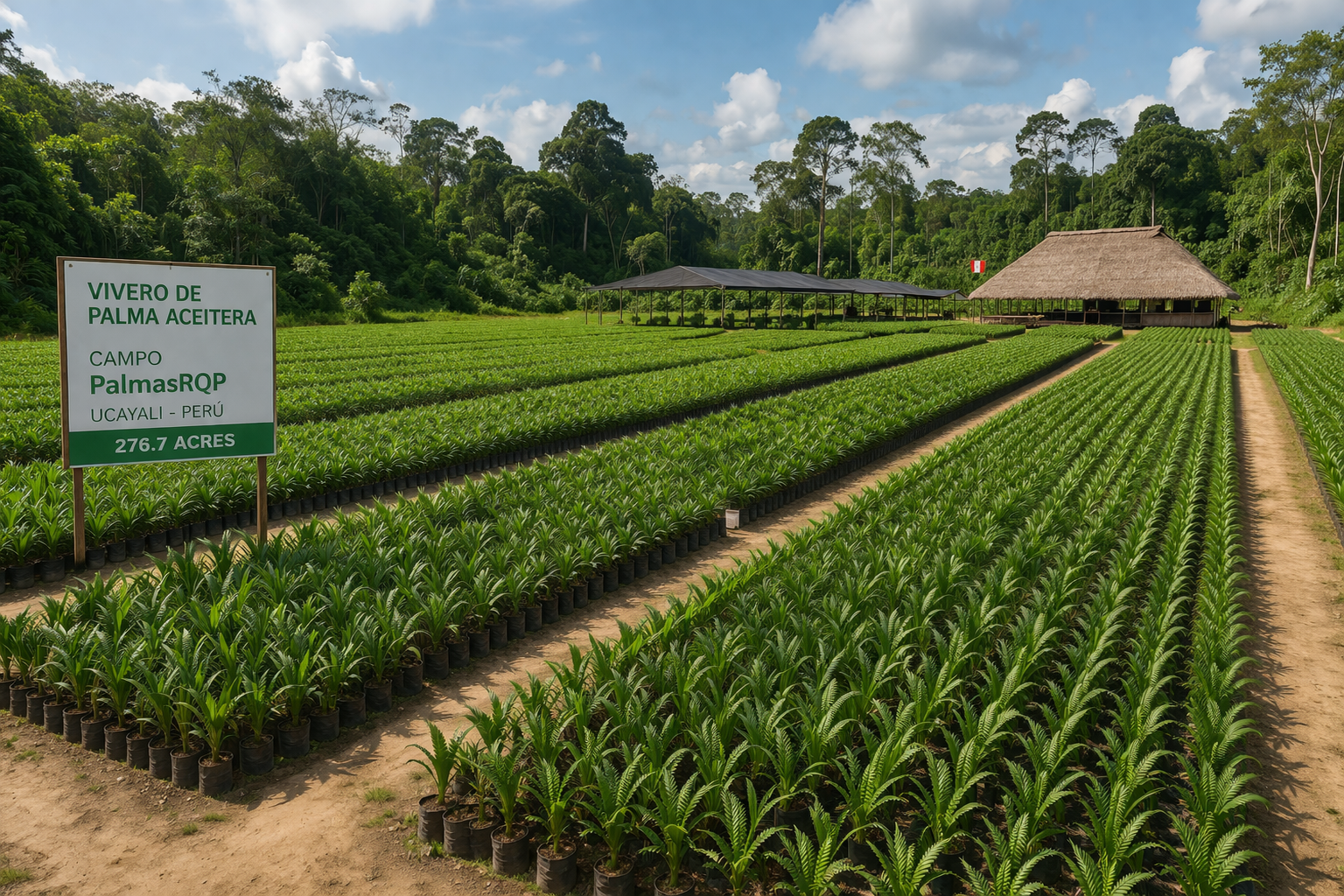
At a Glance: Field PalmasRQP
A commercial oil palm nursery monitored using Farmonaut’s precision agriculture satellite stack across six Sentinel-2 and Sentinel-1 SAR passes. AI-generated advisories adapted continuously to evolving field conditions.
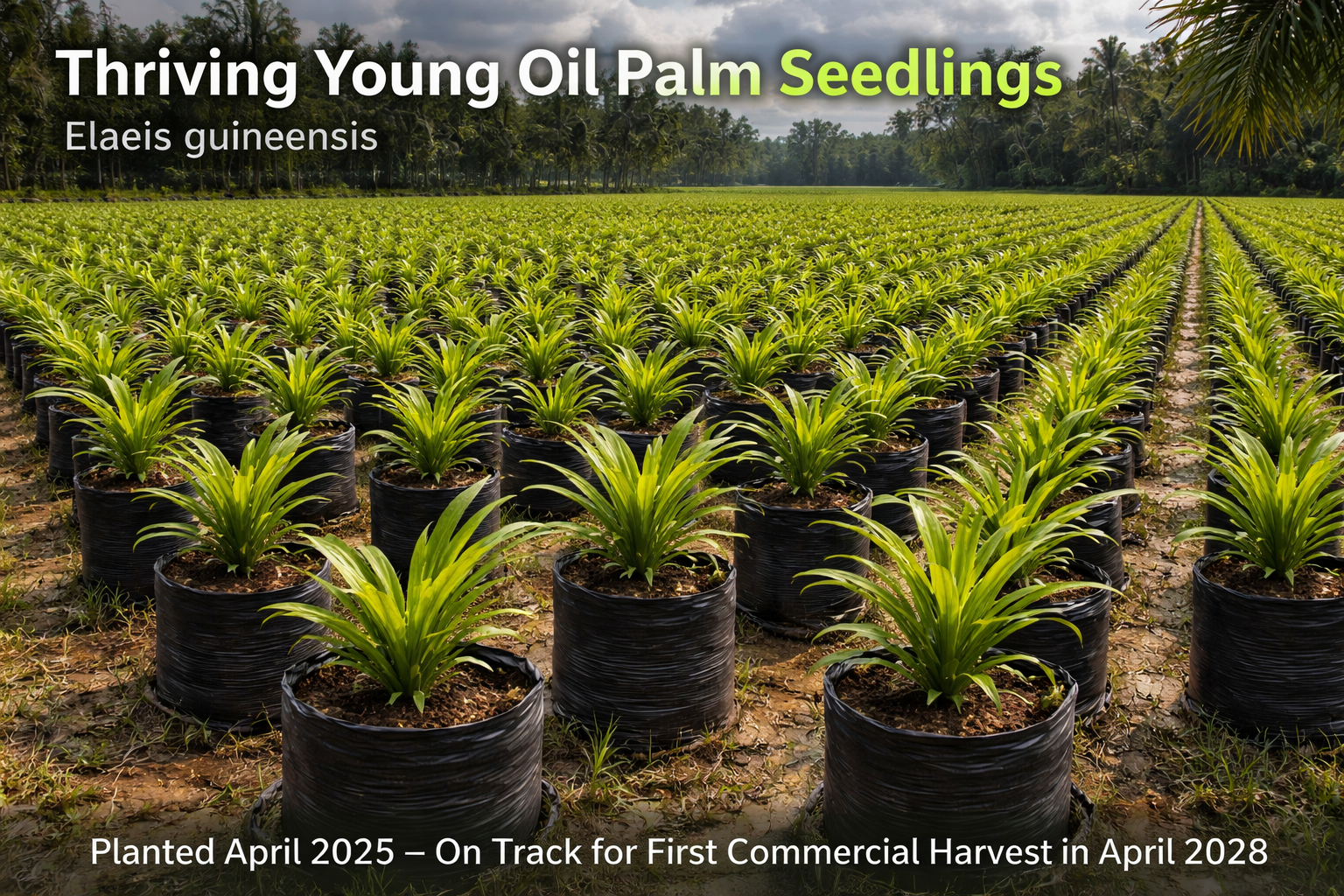
- 🌿Crop: Oil Palm (Elaeis guineensis) — Nursery Stage, planted April 2025. Expected first harvest April 2028.
- 📍Location: Ucayali Region, Peruvian Amazon (~8.33°S, 74.75°W) — humid tropical, high annual rainfall, consistently warm temperatures.
- 🛰️Data Sources: Sentinel-2 (NDVI, NDWI, SAVI), Sentinel-1 SAR (RSM, RVI), AI nutrient modelling, and FAO-56 ET₀ calculations — the backbone of any mature precision agriculture system.
- ⚠️Primary Risks: N/P/S nutrient deficiency, NDVI decline to 0.21 (Mar 25), Rhynchophorus palmarum weevil risk at 96%, and waterlogging-triggered Bud Rot at 92%.
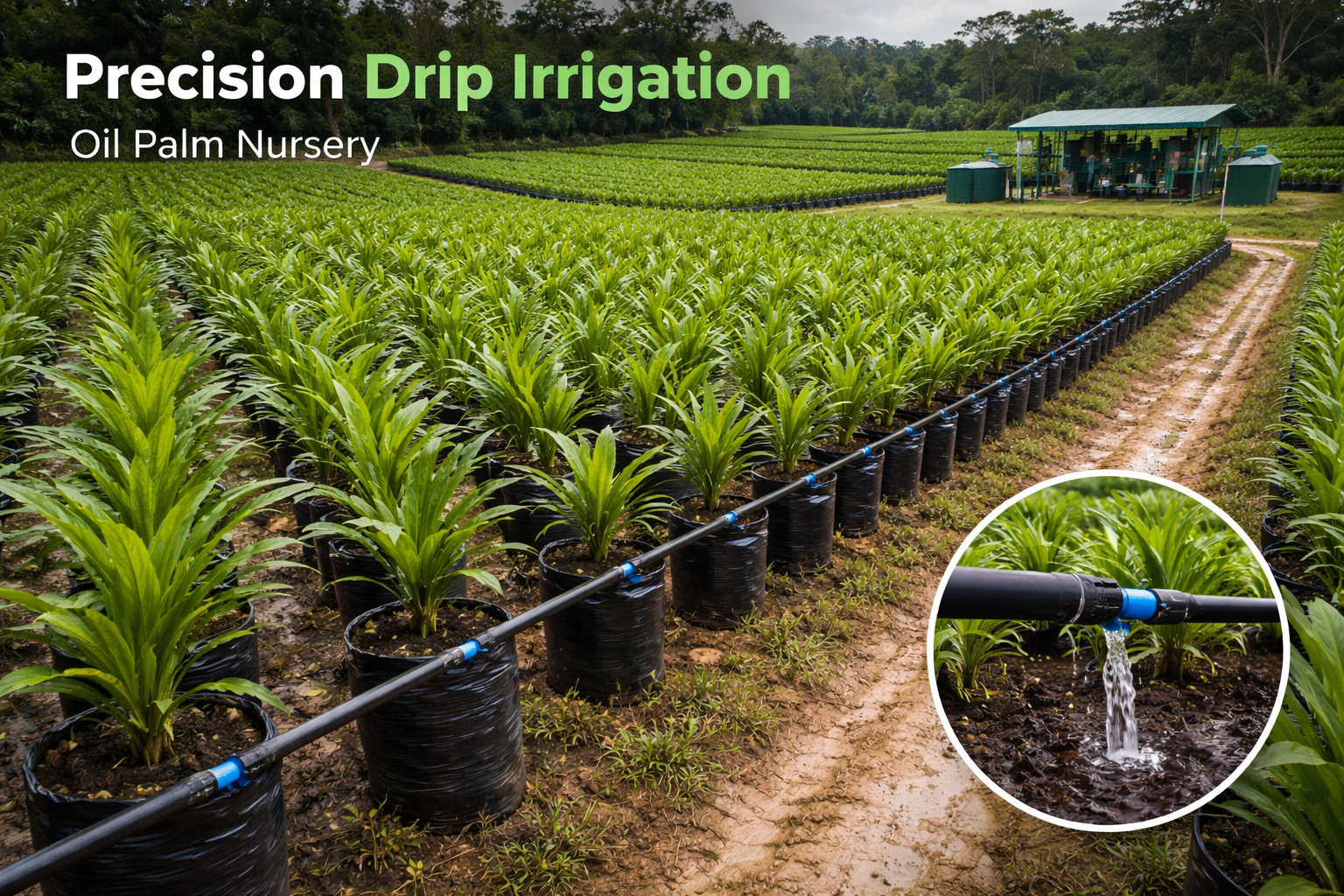
- 💧Irrigation: Drip irrigation at 3.5 mm/day (05:00–07:00) recommended for optimal moisture with minimal evaporation.
- 🌱SOC Status: Critically low at 0.13% (optimal: 2–3%). Immediate organic amendment via precision agriculture soil management strategy required.
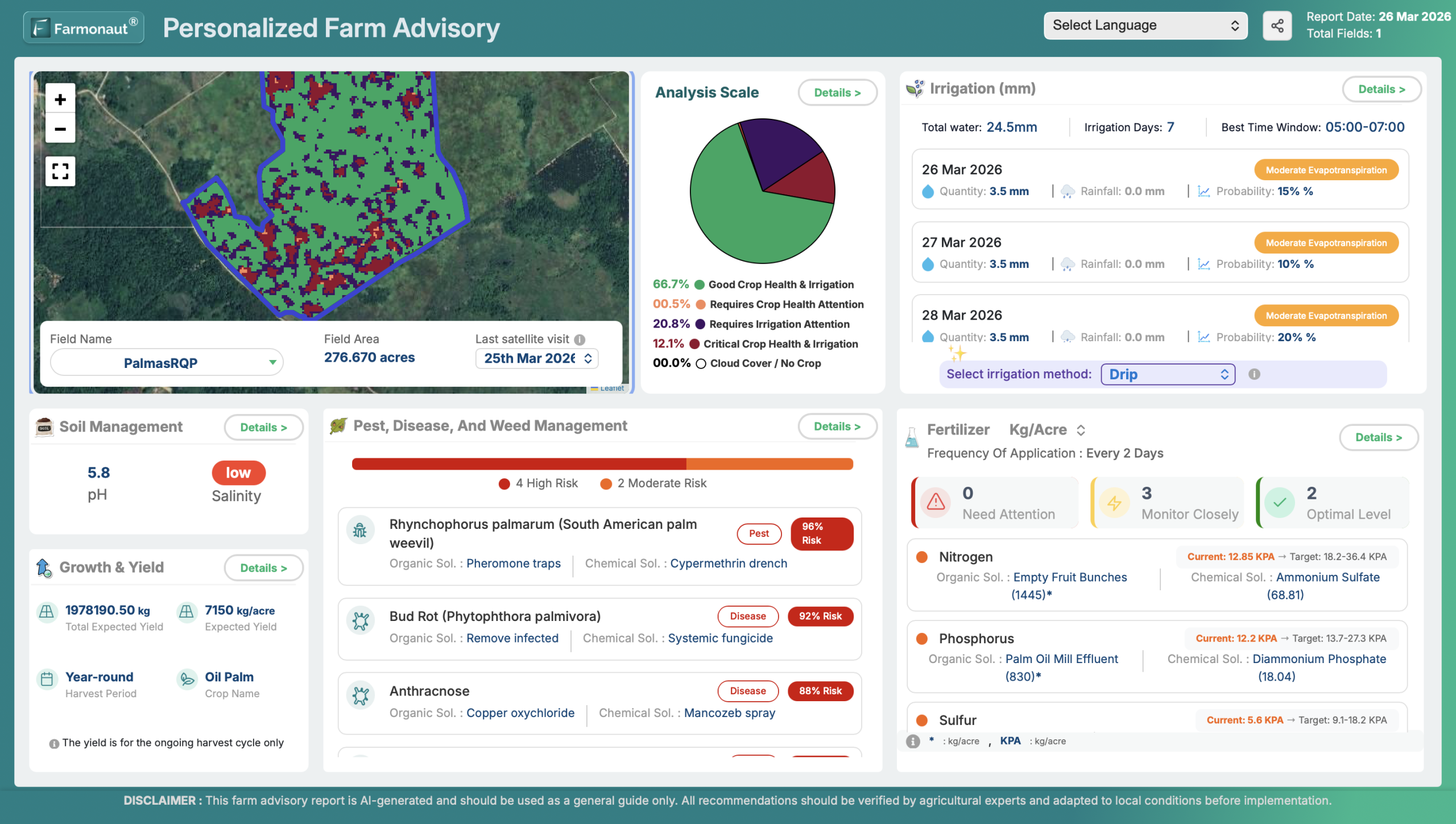
Satellite Health Snapshot — 25 Mar 2026
Multi-Date Satellite Analysis
NDVI Health Trend & Yield Trajectory
Six satellite passes over 18 days reveal a dynamic crop-health picture — the kind of continuous precision agriculture monitoring that replaces guesswork with data.
The value of precision agriculture lies in detecting change before it becomes catastrophic. Between March 7 and March 25, healthy green cover peaked at 72.99% before declining to 66.66%, while the critical zone worsened from 7.34% to 12.11% — an early warning that field interventions were urgently required.
Crop Health Trend (% Good Coverage vs Critical Zone)
Projected Yield per Acre (kg/acre)
Full Multi-Date Breakdown
| Date | Good % | Irrig. Req. | Critical | Yield | Trend |
|---|---|---|---|---|---|
| 07 Mar | 72.91% | 19.18% | 7.68% | 6,850 kg | Baseline |
| 10 Mar | 72.91% | 19.18% | 7.68% | 7,100 kg | ↑ +3.6% |
| 15 Mar | 67.40% | 19.52% | 12.66% | 7,800 kg | ↑ +9.9% |
| 17 Mar | 66.84% | 21.92% | 10.82% | 7,650 kg | ↓ -1.9% |
| 20 Mar | 72.99% | 19.43% | 7.34% | 7,420 kg | ↓ -3.0% |
| 25 Mar | 66.66% | 20.76% | 12.11% | 7,150 kg | ↓ -3.6% |
📡 Key Insight: NDVI dropped sharply from 0.46 (Mar 20) to 0.21 (Mar 25) — below the nursery optimum of 0.30–0.45. A concurrent NDWI spike to 0.80 indicates waterlogging, the principal driver of Bud Rot and Anthracnose. This is why precision agriculture monitoring at 5–7 day intervals is indispensable for tropical nurseries.
Advisory Evolution Timeline
Baseline advisory. NDVI 0.46 healthy. Drip irrigation 3.5mm/day initiated. Yield: 6,850 kg/ac
Stable conditions, RSM elevated (0.72–0.77). High weevil risk flagged. Fertigation every 3 days. Yield: 7,100 kg/ac ↑
NDVI exceeds nursery range — inter-row weed proliferation suspected. Glyphosate spot treatment advised. Yield: 7,800 kg/ac ↑
NDWI elevated (0.40–0.51), waterlogging emerging. Bud Rot risk elevated to 94%. Yield: 7,650 kg/ac ↓
NDWI spike to 0.80 — extreme waterlogging confirmed. Surface irrigation replaced with controlled drip. Yield: 7,420 kg/ac ↓
NDVI collapses to 0.21. Critical zone reaches 12.11%. Fertigation raised to every 2 days. Yield: 7,150 kg/ac ↓
Critical Zone & Irrigation Deficit Progression
Soil Management
Soil Health Assessment
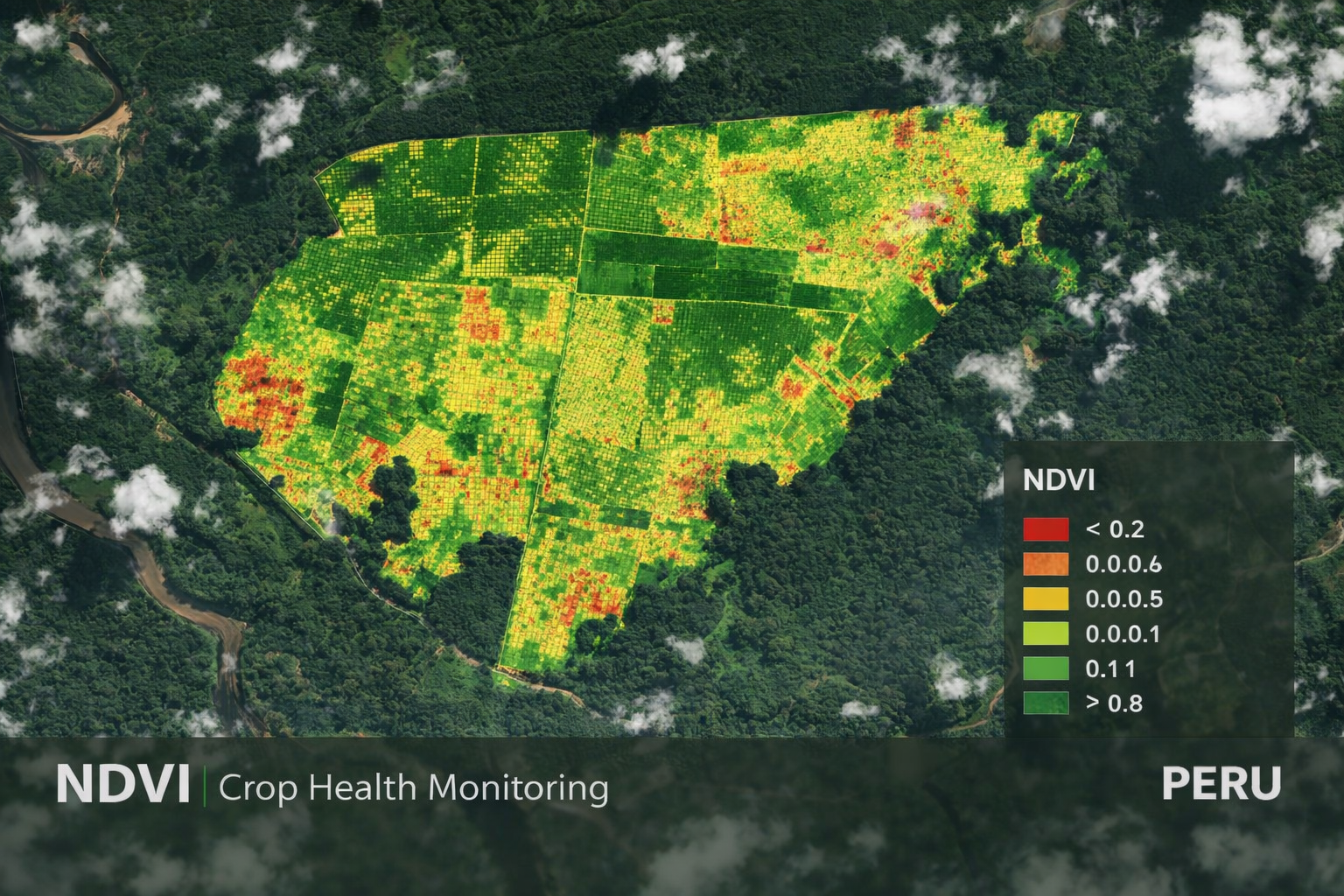
AI-modelled soil parameters derived from satellite indices, fertilizer history, and FAO regional classification for Peruvian Ultisols/Oxisols.
Precision agriculture is only as effective as the soil data underpinning it. In PalmasRQP, AI-modelled soil analysis revealed that the Peruvian Ultisol baseline presents significant nutrient and organic matter challenges — critical context for any precision agriculture recommendation engine.
🌱 SOC Remediation Strategy: Apply Empty Fruit Bunches (EFB) as mulch, land-apply Palm Oil Mill Effluent (POME), establish Mucuna bracteata leguminous cover crops in inter-rows, and retain pruned fronds in situ. These precision agriculture soil interventions can raise SOC from 0.13% toward the 2–3% target over 2–3 seasons.
Fertilizer Management
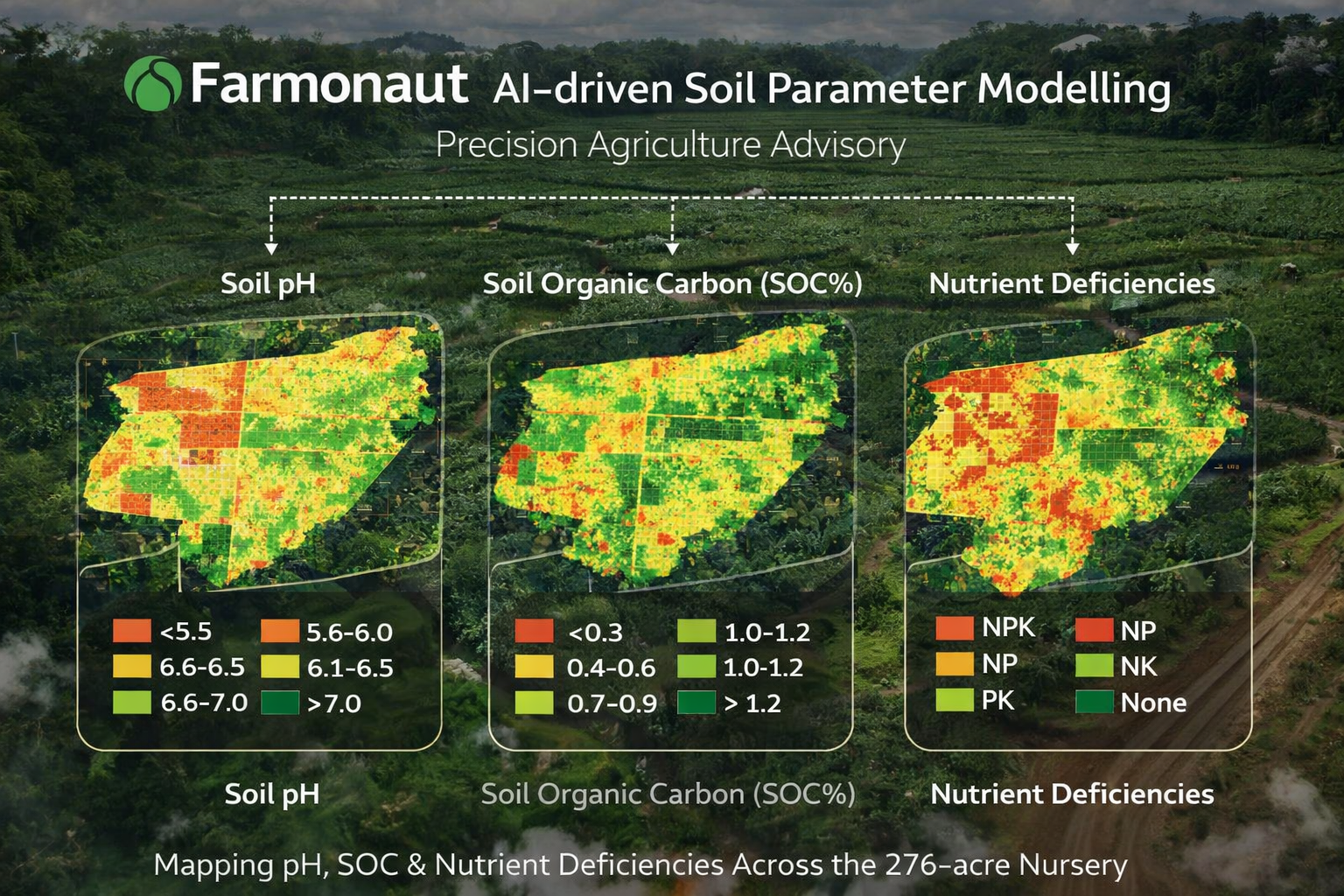
Precision Nutrient Advisory
AI-computed application rates benchmarked against MPOB guidelines. Application frequency: every 2 days via fertigation through drip system — a hallmark of modern precision agriculture scheduling.
Sources: MPOB Oil Palm Nursery Guidelines; Fairhurst & Hardter (2003); FAO Fertilizer Specifications.
Irrigation Schedule
Precision Water Management
ET₀ estimated at 4.5 mm/day using the Hargreaves-Samani method. NDWI (0.22) on the latest date indicates mild water stress despite recent waterlogging — a nuance only precision agriculture monitoring can detect.
7-Day Irrigation Schedule (from Mar 26)
| Date | Qty | Rainfall | Precip. % | ET Level |
|---|---|---|---|---|
| 26 Mar | 3.5 mm | 0.0 mm | 15% | Moderate |
| 27 Mar | 3.5 mm | 0.0 mm | 10% | Moderate |
| 28 Mar | 3.5 mm | 0.0 mm | 20% | Moderate |
| 29 Mar | 3.5 mm | 0.0 mm | 15% | Moderate |
| 30 Mar | 3.5 mm | 0.0 mm | 10% | Moderate |
| 31 Mar | 3.5 mm | 0.0 mm | 5% | Moderate |
| 01 Apr | 3.5 mm | 0.0 mm | 10% | Moderate |
Pest, Disease & Weed Management
Risk Assessment & Recommended Solutions
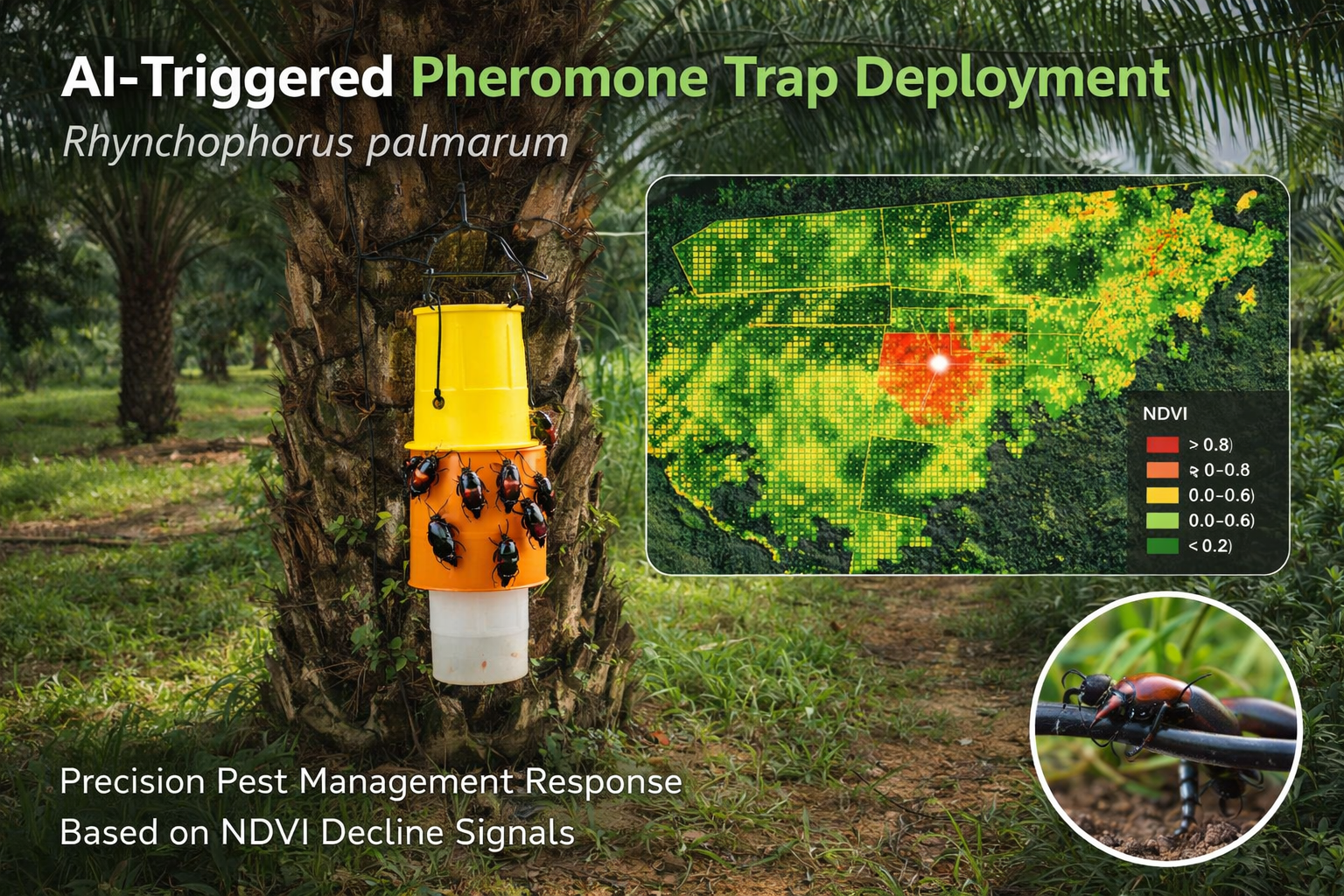
AI-identified threats based on NDVI decline, NDWI waterlogging signals, and regional pest prevalence for the Peruvian Amazon — demonstrating how precision agriculture AI can pre-empt biological threats before visible damage occurs.
Overall Risk Distribution
(South American Palm Weevil)
(Phytophthora palmivora)
(Antracnosis)
(Cogon Grass)
(Ox Beetle)
🔬 Root Cause Analysis: The NDWI spike to 0.80 on March 20 created a primary waterlogging event — the principal environmental driver for both Phytophthora palmivora (Bud Rot) and Anthracnose. The precision agriculture monitoring system flagged this 5 days before visual symptoms could be confirmed in the field, enabling proactive rather than reactive treatment.
About the Platform
Why Farmonaut’s JeevnAI for Precision Agriculture?
Farmonaut makes precision agriculture accessible and affordable — combining satellite remote sensing, SAR radar, and AI to deliver actionable advisories directly to farmers and agribusinesses worldwide.
Traditional farm advisory models rely on periodic field visits, laboratory soil analysis, and agronomist intuition — all valuable, but slow and expensive. Farmonaut’s precision agriculture platform changes this by combining multi-sensor satellite data with AI-driven agronomic models that update with every satellite pass, typically every 5–7 days in the tropics.
Multi-Sensor Satellite Stack
Combines Sentinel-2 optical (NDVI, NDWI, SAVI) with Sentinel-1 SAR radar (RSM, RVI) to monitor crop health even through cloud cover — critical for this precision agriculture deployment in tropical Peru.
AI-Driven JeevnAI Advisory
Machine learning models integrate satellite indices, FAO-56 evapotranspiration, regional soil databases, and MPOB benchmarks to generate crop-specific precision agriculture recommendations updated with every satellite pass.
Adaptive Recommendations
Precision agriculture advisories dynamically adapt across fertilizer rates, irrigation schedules, and pest risk levels as conditions change — not a one-time report, but a living, evolving farm intelligence system.
Cost-Effective Precision Agriculture at Scale
Satellite precision agriculture monitoring at a fraction of the cost of traditional field scouting or drone surveys — making data-driven management viable for commercial plantations and smallholder farms alike across 100+ countries.
Key Findings & Recommendations
Action Plan Summary
A prioritised checklist of immediate and medium-term actions from Farmonaut JeevnAI’s precision agriculture advisory for field PalmasRQP.
🚨 Immediate Actions (0–7 days)
- ⚡Improve drainage in waterlogged zones — NDWI at 0.80 is causing Bud Rot. Install drainage channels or raise nursery beds.
- 🧪Apply systemic fungicide immediately for Phytophthora palmivora (92% risk). Remove and destroy infected palm buds.
- 🪤Deploy pheromone traps for R. palmarum weevil (96% risk) — inspect traps every 48 hours.
- 💧Restore drip irrigation at 3.5 mm/day (05:00–07:00). NDVI drop to 0.21 requires immediate moisture consistency.
⚠️ Short-Term Actions (7–30 days)
- 🌿Apply Ammonium Sulfate (68.81 kg/ac) + DAP (18.04 kg/ac) via fertigation. Split into 3 doses over 6 days.
- 🌱Manual weed clearance + Glyphosate spot treatment for Cogon grass in inter-row zones.
- 🔍Spray Mancozeb to control Anthracnose (88% risk) — cover all foliage uniformly during early morning.
✅ Medium-Term Actions (1–3 months)
- 🌾Begin SOC remediation: apply EFB mulch at 1,445 kg/acre + POME land application in inter-rows.
- 🌿Establish Mucuna bracteata cover crop to accelerate SOC improvement and nitrogen fixation.
- 📊Continue precision agriculture satellite monitoring every 5–7 days to track NDVI recovery from 0.21 back to the 0.30–0.45 nursery optimum.
- 🧂Monitor soil pH — Ammonium Sulfate applications will lower pH over time. Consider lime if pH drops below 5.5.
Implementing the full precision agriculture advisory — especially the SOC remediation programme and integrated pest management — could recover the yield trajectory toward the 8,200–8,800 kg/acre upper range of local potential. This represents an estimated 14.7% yield uplift over current projections, achievable through data-driven, precision agriculture intervention alone.
Get This Level of Intelligence
for Your Farm — Today.
Join thousands of farmers and agribusinesses across 100+ countries using Farmonaut’s satellite and AI precision agriculture advisory. Start monitoring in minutes — no hardware required.

 Godrej Agrovet
 Hayleys Agriculture
 Linx Agritech
 Adinet
 Save Your Soils
 GalaxEye Space
 Grandstream Algérie
 XOS Realty
 Geospatial Lab Africa
 Agro La Gándara
 HIPSAC
 ZOL Zimbabwe
 Juligerm
 AdBio
AdBio MISE Maroc
 NWNS
NWNS Red August Group
 Farm Inc
 WeMe Global
 Agrotoken
 Blue BearX
 Insignito
 DnCubed
 Indosistim Teknologi
 Liquify Digital
 CU Foods
 BeyondTech Global
 Rouge VC
 AgroRisk
 Oath Inc
 Esri North East Africa
 MDCV UK
 Etech Consulting Madagascar
 Vestlandsforsking
 WB Dev
 Sama Premium
 Tres Valles
 Blickwinkel
 Agricultural Credit Policy Council
 eKGIS
eKGIS Mostas Tech
 Andex
Andex Deluxe Conseil
 WICO
WICO Chimera Innovation
 SkyHarvest
 Teledarbas
 Exurbia Geospatial
 FieldZero
