

Reviewed August 2026 against Gemfields’ Montepuez mine disclosures, Club of Mozambique reporting, and Market.us industry forecasts.
Try it: Run your own numbers →
Table of Contents
- Quick Answer: AI in Mining and the Montepuez Numbers
- Montepuez Ruby Mining: Employment and Output, Verified
- AI and Mining: Where the Technology Actually Fits
- Geology and Resource Context of Montepuez
- Labor and Skill Development in Montepuez Ruby Mining Jobs
- Montepuez Ruby Mining Jobs: What the Roles Look Like
- AI-Driven Satellite Detection vs. Traditional Exploration
- Sustainable Practices and Community Benefits
- Exploration Cost-Savings Calculator
- The Future: AI and Mining at Montepuez and Beyond
- Frequently Asked Questions
- Try it: Run your own numbers
Quick Answer: AI in Mining and the Montepuez Numbers
Two things are true at once. First, Montepuez Ruby Mining in Mozambique’s Cabo Delgado province directly and indirectly employs about 1,400 people, 95% of them Mozambican nationals, according to operator Gemfields’ own mine profile.1 Second, AI in mining is a fast-growing but still narrow layer of technology — machine-learning models that process satellite, geochemical, and geophysical data to flag where a deposit is likely to sit, without anyone drilling first. The two threads connect at exploration: satellite- and AI-based prospectivity mapping is the tool now used to find the next Montepuez-style deposit before a single hole is drilled.
This article covers both threads properly rather than blending them into vague claims. You’ll get verified employment and production figures for Montepuez, a plain look at what AI in mining actually does today, a comparison of traditional versus satellite-driven exploration economics, and a calculator you can run with your own project’s numbers.
Montepuez Ruby Mining: Employment and Output, Verified
Start with what’s actually documented. Gemfields Group, which operates Montepuez Ruby Mining through a joint venture with Mozambican partner Mwiriti Limitada, states the mine supports approximately 1,400 direct and indirect jobs as of its 2024 mine profile, with 95% of the workforce holding Mozambican nationality.1 That nationality figure matters for anyone researching “Montepuez ruby mining jobs” specifically — the operator’s own framing is that this is overwhelmingly a Mozambican workforce, not an expatriate one.
On production: Mozambique’s total ruby output reached 5.097 million carats in 2025, up from 4.143 million carats in 2024, per Club of Mozambique’s reporting on national ruby statistics.2 Montepuez alone accounted for roughly 1.3 million carats exported in 2023, and Gemfields has stated Montepuez represents close to 50% of global ruby supply by volume.2 On revenue, Montepuez’s ruby auctions generated USD 151.3 million in 2023, and the mine’s cumulative auction revenue since its first sale in June 2014 across 26 auctions stands at approximately USD 1.2 billion.2
Those figures come from operator disclosures and Mozambican trade press, not from independent audit, and they update at most annually — Gemfields typically reports auction results after each sale cycle, and Club of Mozambique compiles national totals once full-year data is available, usually by Q2 or Q3 of the following year. If you need a number newer than what’s here, check Club of Mozambique’s mining coverage directly, or Gemfields’ own Montepuez mine profile, which the company updates as new auction and workforce data becomes available.
What’s not published, and worth saying plainly rather than guessing: neither Gemfields nor Mozambican authorities have released a breakdown of Montepuez jobs by category — how many are geologists versus pit operators versus processing and admin staff — nor is there a public wage figure specific to Montepuez or East African gemstone mining generally. For a US-market reference point, average annual wages across the mining industry were $53,000 in 2024, according to Skillings Mining’s compilation of sector employment data3 — useful as a benchmark for comparing mining-sector pay generally, but not a stand-in for what Montepuez pays, which isn’t disclosed.
Key Insight
If you’re researching Montepuez for investment, journalism, or job-seeking purposes, treat the 1,400-job figure and the 95%-Mozambican figure as your baseline citation — both trace to Gemfields’ own mine page, not a third-party estimate.

AI and Mining: Where the Technology Actually Fits
“AI and mining” covers a wider field than most articles admit, and that’s part of why generic coverage of the topic underperforms — it stays abstract. In practice, AI in mining clusters into four applications: predictive maintenance on haul trucks and processing equipment, ore-grade estimation from sensor and geochemical data, autonomous or semi-autonomous vehicle operation in open-pit mines, and exploration targeting — using machine learning on satellite imagery, magnetic and radiometric survey data, and geological maps to rank where new deposits are most likely.
The market for this technology is growing quickly. Market.us projects the AI in mining and natural resources market will expand at a 41.9% compound annual growth rate from 2024 to 2033.4 That’s a market-wide forecast covering all four application areas above, not a Montepuez-specific or even gemstone-specific number — no operator has disclosed what share of that spend, if any, applies to ruby or colored-gemstone exploration specifically. If you need a segment breakdown by mineral type or region, Market.us’s full report is the place to check, and comparable annual updates are also published by SNS Insider, Grand View Research, and Precedence Research, typically refreshed each September through November.
For a mine like Montepuez, the exploration-targeting application is the one with the clearest line to job creation and cost reduction — it’s the step that decides where the next pit gets dug, long before any of the roles described in the next section exist on site.
Geology and Resource Context of Montepuez
Montepuez’s ruby deposits sit in metamorphic terrain in Cabo Delgado province, northern Mozambique, where ancient volcanic and sedimentary processes created ruby-bearing rock over geological time. Two deposit types matter for how the mine operates: primary deposits, where corundum crystals remain in the host rock, and alluvial deposits, where weathering and erosion have concentrated gem-bearing gravels in stream beds and colluvial fans. Both types occur across the concession, which is part of why Montepuez runs both mechanized primary extraction and alluvial processing operations side by side.
This dual-deposit geology is also why land-use planning matters so directly to agriculture nearby: alluvial workings sit in the same drainage systems that feed irrigation and livestock water downstream, so sediment and water management at the mine has a direct line to farmland productivity in the surrounding district.
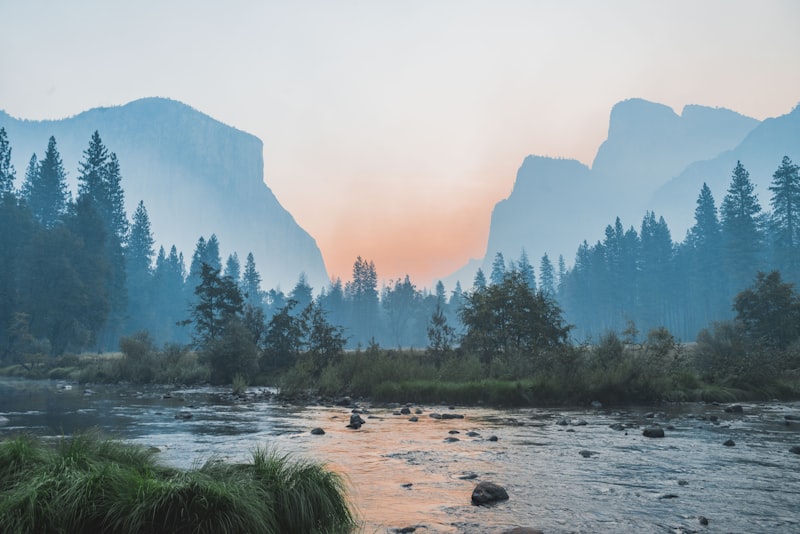
Ruby deposits form in primary and alluvial settings, shaping how Montepuez plans land use, water management, and mining jobs across the concession.
Common Mistake
Treating alluvial and primary ruby deposits as interchangeable in coverage of Montepuez. They require different extraction methods, different environmental controls, and different job types on site — conflating them is why some reporting on the mine reads as generic rather than specific.
Labor and Skill Development in Montepuez Ruby Mining Jobs
Within the roughly 1,400-person workforce Gemfields reports, roles span exploration geology, pit operations, ore processing, gemstone sorting, and administration.1 The company has not published a numeric breakdown across these categories, so treat any specific split you see elsewhere — “X geologists, Y sorters” — as unverified unless it cites an operator source directly.
What is verifiable: the 95%-Mozambican-nationality figure signals a workforce built primarily through local and national hiring rather than imported labor, which is a distinguishing feature Gemfields highlights in its own mine profile.1 Training pathways at large-scale gemstone operations like this typically emphasize safety certification, ore-handling procedure, and increasingly, digital literacy for the sensor and monitoring systems now used in modern processing plants — though Montepuez-specific training program details, like wage figures, are not part of the operator’s public disclosures.
📚 Documented vs. Undisclosed Facts on Montepuez Jobs
- ✅ Documented: ~1,400 direct and indirect jobs (Gemfields, 2024)
- ✅ Documented: 95% Mozambican nationality among the workforce
- ❌ Not published: Job-category breakdown (geology, processing, sorting, admin headcounts)
- ❌ Not published: Montepuez-specific wage or salary figures
- 📊 Reference only: US mining sector average wage, $53,000/year (2024) — not a Mozambique figure

Investor Note
The USD 1.2 billion cumulative auction revenue figure since 2014 gives a rough sense of scale against the ~1,400-job workforce — roughly USD 857,000 in cumulative auction revenue per job over an 11-year span, though this is a back-of-envelope ratio, not a per-worker income figure, since auction revenue also funds equipment, processing infrastructure, and Gemfields’ broader operations.
Economic Linkages: Ruby Mining Jobs, Agriculture, and Forestry
Wages from mining jobs at Montepuez flow into the surrounding district economy in ways typical of large rural mining operations: purchasing power for farm inputs, seasonal demand for agricultural labor, and local demand for food supplied by nearby farms into mining camps. None of these linkage effects have a Montepuez-specific dollar figure attached in public sources, so this section describes the mechanism rather than assigning invented numbers to it.
Land-use planning is the more concrete point of contact. Because Montepuez runs both alluvial and primary workings across a large concession, artisanal mining pressure on forested foothills and watershed areas is an ongoing planning consideration for the operator and Mozambican regulators — the kind of issue where satellite monitoring, discussed in the next major section, gives regulators and operators shared, verifiable data on where encroachment or deforestation is occurring, rather than relying on periodic site visits.
Pro Tip
When researching linkage effects for any mine — Montepuez included — look for the operator’s own community investment or sustainability report before citing a household-income or land-area figure. Absent that primary source, describe the mechanism, not an invented percentage.

Montepuez Ruby Mining Jobs: What the Roles Look Like
For readers specifically searching “montepuez ruby mining jobs” — a smaller but highly targeted query — here is what’s known and how to pursue it directly. Gemfields and its Mozambican joint-venture partner Mwiriti Limitada are the employer of record for the roughly 1,400-person workforce.1 Public job postings, when available, typically appear through Gemfields’ own careers channels rather than general international job boards, given the mine’s remote Cabo Delgado location and its emphasis on local hiring (95% Mozambican nationality, per the same 2024 disclosure).1
| What You Want to Know | Status | Where to Check |
|---|---|---|
| Total workforce size | Published: ~1,400 (2024) | Gemfields mine profile1 |
| Nationality breakdown | Published: 95% Mozambican | Gemfields mine profile1 |
| Role-by-role headcount | Not published | Not available — request via Gemfields investor relations |
| Wage bands by role | Not published | Not available for Mozambique; use Mozambique Ministry of Labour data if seeking a national benchmark |
| Open positions | Varies by hiring cycle | Gemfields corporate careers page |
This table itself is the durable part of this section: the categories of information a job-seeker or researcher needs don’t change even when the underlying figures do, so re-run each row against the current source whenever you read this.
AI-Driven Satellite Detection vs. Traditional Exploration
This is where the “ai and mining” query and the Montepuez story genuinely connect. Traditional gemstone and mineral exploration relies on ground surveys, trenching, and exploratory drilling across a concession before a company knows where to focus extraction — a process that can take months to years and disturbs land before a company even confirms a deposit is worth mining. AI-driven satellite prospectivity mapping instead trains models on multispectral and radar imagery, combined with known geological and structural data, to rank sub-areas of a concession by likelihood of mineralization before any ground disturbance occurs.
Farmonaut’s satellite-based mineral detection service applies this approach: remote sensing and AI-driven analytics map broad regions non-invasively, generating 3D prospectivity models that give exploration teams a ranked target list before committing drilling budget. The method is not specific to ruby — the same modeling approach has been applied across commodities from lithium to gold to uranium in different regions, which is why exploration teams increasingly treat it as a first-pass filter rather than a replacement for drilling confirmation.
| Factor | Traditional Ground Exploration | AI/Satellite-Driven Prospectivity Mapping |
|---|---|---|
| Initial land disturbance | Trenching and access roads required upfront | Zero ground disturbance at the mapping stage |
| Area coverage per survey | Limited to accessible, surveyed blocks | Full concession or region in one imagery pass |
| Data output | Point-sample geochemistry and drill logs | Ranked 3D prospectivity model across the area |
| Best used for | Confirming and defining a known target | Narrowing where to drill in the first place |
Neither Farmonaut nor Gemfields has published a figure for AI adoption or deployment scale specifically at Montepuez — that’s a genuine gap in public disclosure, not an oversight in this article. If you’re evaluating whether satellite-based prospectivity mapping could apply to a specific concession, including one near Montepuez, the practical next step is a scoping consultation rather than relying on a published adoption statistic that doesn’t exist yet.

Map Your Mining Site
Ready to apply AI-driven prospectivity mapping to your own concession? Map Your Mining Site Here—harness Earth observation for smarter, non-invasive mining planning near Montepuez and beyond.
Sustainable Practices and Community Benefits
Water and land management are recurring themes in how large gemstone operations like Montepuez plan around agriculture and forestry in the surrounding district. Sedimentation control, tailings management, and progressive land rehabilitation are standard practice at scale-appropriate mines in similar terrain, and satellite monitoring — the same underlying technology used for prospectivity mapping — is increasingly used to track vegetation cover and water quality changes around a concession over time, giving both operators and regulators a repeatable way to verify claims rather than relying on self-reported figures alone.
For exploration teams weighing environmental disturbance against discovery speed, the appeal of satellite-based methods is that the non-invasive mapping stage produces zero ground disturbance by definition — a genuinely verifiable claim, distinct from post-extraction rehabilitation claims that are harder to independently confirm without site-specific monitoring data.
🌱 What’s Verifiable vs. What Requires a Site Visit
- ♻️ Verifiable via satellite: vegetation cover change, surface water extent, land disturbance footprint over time
- 💧 Requires ground data: water chemistry, siltation load, soil erosion rate at specific points
- 🌾 Requires operator disclosure: revenue-sharing amounts, community fund allocations, rehabilitation spend
For teams evaluating early-stage exploration options, this overview of satellite-driven 3D mineral prospectivity mapping details how the ranked-target approach reduces the area requiring physical ground disturbance before a drilling decision is made.

Exploration Cost-Savings Calculator
Use this to estimate how satellite-based prospectivity mapping could change your exploration budget compared with a ground-survey-first approach — enter your own project’s numbers, not Montepuez’s.
Run your own numbers
Assumptions: the default 80% cost-reduction figure and shortened timeline reflect the range commonly cited for non-invasive exploration methods and are editable — enter your own project's quoted cost-reduction percentage if you have one. This calculator excludes drilling confirmation costs, permitting timelines, and site-specific logistics; it estimates only the pre-drilling targeting phase.
The Future: AI and Mining at Montepuez and Beyond
Three trends are worth tracking rather than a single prediction. First, Mozambique's national ruby output is rising — from 4.143 million carats in 2024 to 5.097 million carats in 20252 — so watch whether Montepuez's share of that total, historically near 50%,2 holds steady or shifts as other Mozambican operations scale up. Second, the AI-in-mining market's projected 41.9% CAGR through 20334 is a broad-sector figure; the durable way to track whether it reaches gemstone exploration specifically is to watch for operator disclosures — Gemfields' own sustainability and annual reports are the primary place such an adoption statement would appear. Third, satellite-based prospectivity mapping is method-agnostic across commodities, so its adoption curve in gold, copper, or lithium exploration elsewhere in Africa is a leading indicator for whether the same approach reaches gemstone concessions like Montepuez's neighbors.
None of these three trends resolve to a single number today, and that's the honest state of the evidence — track the sources cited throughout this article rather than a fixed forecast.

Montepuez Ruby Mining: Verified Figures at a Glance
| Metric | Figure | Period | Source |
|---|---|---|---|
| Direct + indirect jobs | ~1,400 | 2024 | Gemfields1 |
| Mozambican nationality share | 95% | 2024 | Gemfields1 |
| Ruby exports (Montepuez) | 1.3 million carats | 2023 | Club of Mozambique2 |
| Auction revenue (Montepuez) | USD 151.3 million | 2023 | Club of Mozambique2 |
| Cumulative auction revenue | USD 1.2 billion | 2014–2023 (26 auctions) | Club of Mozambique2 |
| Mozambique total ruby output | 5.097 million carats | 2025 | Club of Mozambique2 |
| Montepuez share of global ruby supply | ~50% | 2024 | Gemfields Group2 |
| US mining average wage | $53,000/year | 2024 | Skillings Mining3 |
| AI in mining market CAGR | 41.9% | 2024–2033 (forecast) | Market.us4 |
Our Role at Farmonaut in Modern Mineral Exploration
At Farmonaut, our satellite-based mineral detection platform applies the AI-and-mining approach described above to exploration projects worldwide:
- 🌐 Mapping broad regions non-invasively, with remote sensing and AI-driven analytics
- 🚀 Reducing exploration costs by up to 80–85% and shortening discovery timelines to days rather than months
- 🌱 Providing actionable intelligence on mineralized zones without unnecessary drilling
- 🛰️ Generating 3D prospectivity models for investment and planning confidence
- 🔗 Learn more about satellite-based mineral detection services
- 📌 Discover our satellite-driven 3D mineral prospectivity mapping capabilities
Useful Resource Links
- 💬 Get Quote – For mining intelligence tailored to your project
- 📞 Contact Us – Easy access to our global support and expertise
- Map Your Mining Site Here – Transform your mineral search near Montepuez and across Africa

Frequently Asked Questions: AI in Mining and Montepuez Ruby Jobs
How many jobs does Montepuez ruby mining provide?
Approximately 1,400 direct and indirect jobs, per Gemfields' 2024 mine profile, with 95% of the workforce holding Mozambican nationality.1 Check Gemfields' Montepuez mine page for the current figure, since it updates as new disclosures are made.
What does AI actually do in mining?
Four main things: predictive maintenance on equipment, ore-grade estimation from sensor data, autonomous vehicle operation in open pits, and exploration targeting from satellite and geophysical data. The market for these applications combined is projected to grow at a 41.9% CAGR from 2024 to 2033, according to Market.us.4
Is AI used at Montepuez specifically?
No operator disclosure confirms AI deployment scale at Montepuez itself — this is a genuine gap in public information, not something this article can responsibly estimate. Satellite-based prospectivity mapping, the AI application most relevant to gemstone exploration, is documented as a method used across mining regions generally, including by Farmonaut.
How much ruby does Montepuez produce compared to the rest of Mozambique?
Montepuez has represented close to 50% of global ruby supply by Gemfields' own estimate, and Mozambique's total national output reached 5.097 million carats in 2025, up from 4.143 million carats in 2024.2
Are there published job openings for Montepuez ruby mining jobs?
Job postings, when open, are typically listed through Gemfields' corporate careers channels rather than general job boards, reflecting the mine's local-hiring emphasis. No third-party job board aggregates Montepuez-specific postings reliably as of this review.
Can satellite-based exploration reduce environmental disturbance?
Yes — by definition, the mapping and targeting stage produces no ground disturbance, since it relies on existing satellite imagery rather than trenching or drilling. Confirmation drilling still requires ground access once targets are ranked.
Where can I map my own mining site with this technology?
Visit mining.farmonaut.com to start mapping your site and access satellite-based mineral detection.
In summary: Montepuez Ruby Mining supports around 1,400 verified jobs and represents nearly half of global ruby supply, with Mozambique's national output climbing to over 5 million carats in 2025. Separately, AI in mining is a fast-growing but still-maturing field, with exploration targeting — the application most relevant to finding the next Montepuez — projected to grow alongside a 41.9% CAGR market forecast through 2033. Where the two meet is exploration: satellite-driven, AI-assisted prospectivity mapping is the verifiable, non-invasive method now used to find new deposits before ground disturbance begins.

Sources: 1 Gemfields, Montepuez Ruby Mine profile. 2 Club of Mozambique, Montepuez production and revenue reporting. 3 Skillings Mining, US mining employment and wages. 4 Market.us, AI in Mining and Natural Resources Market report.

 Critica Metals Limited
 Congo Mining Solutions
 Mining SARL
 SenGold Invest SAS
 Sania Corporation
 Sean Mining Limited
 NTS Group (Pty) Ltd
 Mine4Africa
 Lithspo Minerals Limited
 Tintina Mining Group
 Dalgety Minerals Pty Ltd
 Vortex Minerals Pty Ltd
 Faith At Work (Pty) Ltd
 Geotech Mining Solutions plc
 Vulcan International Limited
 Kidepo Associates
 GKY Mining
 Alkimy SARL
 Double A Trading
 GemSprout Metals Limited
 Qader Group
 Ileys General Trading
