

7 Powerful Ways to Boost Farm Water Efficiency Sustainably
“Efficient irrigation can reduce farm water use by up to 50%, significantly conserving resources and supporting sustainability.”
Sustainable water management is the foundation of modern, productive, and resilient agriculture. In today’s farming landscape, water remains the most contested resource across crop-producing landscapes—not just for its necessity in plant growth, but also for its role in soil health, economic viability, and ecological balance. Merely conserving moisture is no longer enough. Instead, effective water management aligns productivity with environmentally sustainable practices that ensure a reliable supply for future generations.
This comprehensive guide explores 7 powerful ways to boost farm water efficiency sustainably. We dive deep into irrigation techniques, soil stewardship, sustainable practices, crop choice, and advanced data-driven technology—demonstrating how the smart integration of these strategies can transform your farm’s water footprint.
Whether you are a smallholder, an agronomist, or an investor keen on sustainable agriculture, this article delivers broad yet cohesive treatment of this relevant topic. Read on to unlock insights that protect your soil, crops, and water resources—all while maximizing productivity and resilience to climate variability.
Why Sustainable Water Management Matters in Agriculture
Water is the lifeblood of agriculture, yet competing demands and climate variability make its management profoundly challenging. Poor irrigation, degrading soil health, and unplanned water use can result in ecosystem damage, economic loss, nutrient leaching, and unrecoverable productivity dips. Sustainable water management offers a framework for:
- ✔ Balancing productivity with
ecological and social equity - ✔ Reducing operational stress from drought and erratic rainfall
- ✔ Enabling resilient crop cycles amidst climate change
- ✔ Protecting downstream ecosystems through reduced runoff and nutrient loss
- ✔ Supporting long-term economic viability for farmers
Sustainably managed water supports both short-term productivity and the longer-term health of farming landscapes—including soil structure, biodiversity, and community resilience.
1. Irrigation Efficiency & Smart Scheduling
Efficient irrigation is the foundation of modern water management, directly impacting crop health, soil moisture, and overall resource conservation.
Why Irrigation Methods Matter
The right irrigation methods can maximize water use, reduce loss to evaporation and runoff, and minimize nutrient leaching. Examples include:
- ✔ Drip irrigation: Delivers water directly to the plant root zone, ensuring minimal waste
- ✔ Micro-sprinklers & Surge irrigation: Offer efficiency gains on certain soil types
- ✔ Scheduling via soil moisture sensors: Prevents over-watering and adapts to weather patterns
When irrigation is scheduled and aligned with crop stage and local conditions, farms see improved yields with less water and lower total input costs.
Use weather-based irrigation controllers that forecast evapotranspiration to adjust water delivery in real time. This technology greatly enhances efficiency and resilience, especially during unpredictable climate periods.
Smart Irrigation Scheduling in Practice
- 📊 Drip irrigation can reduce water use by up to 50%*
- 🌱 Integrating soil moisture sensors prevents both over- and under-irrigation
- 🕓 Automated scheduling enables time- and weather-based water application for all farms
*Based on industry estimates
2. Soil Health: The Water-Holding Foundation
Healthy soils are inseparable from efficient water use. High organic matter, stable aggregate structure, and abundant soil biota all contribute to improved moisture retention and infiltration. When soils are well-cared for:
- ✔ Infiltration rates are higher so rainfall and irrigation are absorbed, not lost to runoff
- ✔ Root zones remain adequately moist between water applications, reducing stress on crops
- ✔ Nutrient cycles and ecosystems are preserved, strengthening the resilience of the entire farm
Key soil management practices include:
- 🌾 Applying compost and manure to build organic matter and support soil structure
- 🌳 Implementing agroforestry and landscape terracing to reduce erosion and increase water retention on slopes
- ⬇ Reducing tillage to conserve soil cover and enhance biota activity
“Healthy soils can hold up to 20,000 gallons of water per acre, boosting farm resilience during droughts.”
Soil Health & Water Efficiency: Visual List
-
 Rich Compost – Boosts organic matter
-
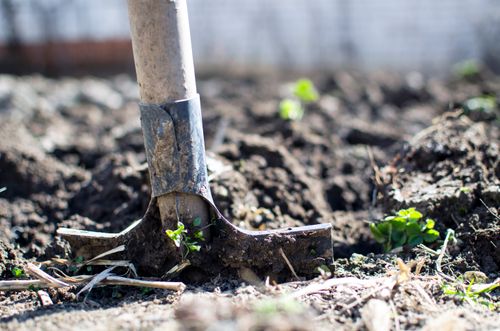 Aggregated Soil – Improves infiltration
Common Mistake
Heavy and frequent tillage breaks down soil structure and organic matter, leading to compaction, reduced infiltration, and greater water loss via runoff. Adopt reduced tillage methods for higher water efficiency.
3. Precision Technology for Field Irrigation
New-generation technology is enabling farmers to move beyond intuition, using data and sensors for smarter irrigation management.
Key Technologies & Benefits
- ✔ Soil moisture mapping for precision irrigation
- ✔ Remote sensing and drone analysis to monitor crop water needs at field scale
- ✔ Decision-support platforms providing real-time recommendations for water delivery, scheduling, and infrastructure upgrades
Visual List: Precision Field Management in Action
- 🌍 Remote Sensing – Tracks plant growth trends & spot-diagnoses water-stressed patches
- 📱 Field Sensors – Provide instant soil moisture updates for on-the-go irrigation
- 🛰 Satellite Analytics – Enable whole-field, season-long water budgeting and anomaly detection
Farms adopting real-time data platforms and precision sensors witness measurable cost-savings on water and energy, in addition to productivity gains. Want to optimize smart resource use for your mining or agriculture investment site?
Contact Us for bespoke geospatial analysis.
- ✔ Quantifies irrigation depth & prevents overwatering
- 📊 Captures infiltration & runoff data at each field
- ⚡ Integrates with cloud dashboards for efficient water management
- 🛰 Satellite monitoring enables analysis on a global scale
- 🔒 Empowers both smallholders and corporate farms with actionable insights
4. Mulching and Cover Cropping for Moisture Conservation
In addition to advanced irrigation, on-field practices such as mulching and cover cropping play critical roles in conserving water, reducing evaporation, and protecting soil health.
How Mulching and Cover Crops Work
- ✔ Mulch layers (straw, leaves, crop residues) act as physical barriers, keeping soil cool and reducing evapotranspiration
- ✔ Cover crops (legumes, grasses) maintain living root structure, enriching soil organic matter and increasing water-holding capacity
- ✔ Both practices curb runoff and erosion, protecting nutrient cycles
A healthy mulch layer can reduce surface evaporation by 35–50%, drastically enhancing moisture conservation in both rainfed and irrigated farming systems.
Implementing Cover Crops and Mulching
- 🌱 Use winter cover crops (clover, rye, vetch) to build soil organic matter and foster infiltration during the off-season
- 🌿 Shred standing biomass post-harvest to create an instant, effective organic mulch
- 🌀 Apply mulching material thickly (at least 3–4 inches) for the best water-saving results
Many farms skip off-season cover crops to “rest” the land—yet this can degrade soil health and reduce moisture retention over time. Strategic cover cropping is a staple for sustainable management.
5. Diversified Water Sources and Storage Strategies
Relying solely on ground or surface water for irrigation can leave farms vulnerable to climate variability, seasonal shortages, and drought. A diversified approach distributes risk and enhances resilience.
Diversified Solutions
- 💧 Rainwater harvesting ponds – Capture and store rainfall during wet periods for use in dry spells
- ⌛ On-field storage (tanks, cisterns) – Provide buffer capacity to withstand unpredictable rainfall
- 🌀 Flexible scheduling – Adjust crop calendars and planting dates in response to water supply
By mitigating the impact of erratic rainfall and hydrologic stress, farms achieve greater production stability and can support a wider variety of crops.
6. Integrated Landscape and Watershed Management
Farms exist within complex ecosystems and wider hydrological systems. Managing water at a field scale is a start, but real sustainability arrives only when farm-level actions are integrated with watershed planning.
- ✔ Buffer strips and wetlands – Filter runoff, trap sediments and nutrients, and support wildlife along watercourses
- ✔ Landscape design – Harnesses natural land contours for maximum infiltration and erosion control
- ✔ Shared infrastructure – Cooperative water storage or irrigation enable investment at scale, boosting community-wide resilience
These practices foster both production gains on-farm and benefit downstream communities and ecosystems—key to social equity and sustainable growth.
A 10-meter vegetated buffer along streams can reduce field runoff of sediment and nutrient by up to 70%, protecting water quality downstream.
- ✔ Contributes to balancing ecological cycles
- ✔ Reduces social conflict over water resources
- ✔ Mitigates the impact of climate-driven variability
7. Data-Driven Decision Making in Water Management
Harnessing technology and data is the new standard for economic efficiency and sustainable farming. Accurate data:
- ✔ Guides infrastructure upgrades and irrigation investments
- ✔ Enables rapid adaptation to changing climate, rainfall patterns, and crop needs
- ✔ Facilitates smarter allocation of resources and labor
Accessible, affordable platforms such as satellite-based monitoring—like those offered by Farmonaut—are game changers for large and small operations alike.
Geospatial platforms provide whole-landscape perspective and enable better prediction of farm and watershed hydrology—vital for water conservation and yield security.
- ✔ Field-level quantification of irrigation depth, infiltration rates, and return flows
- ✔ Identify yield-limiting stress and nutrient issues before they escalate
- ✔ Improve farm financial planning and reduce water-related operational surprises
Explore our satellite-driven 3D mineral and land prospectivity mapping for your mining or agricultural landscapes:
View Satellite Prospectivity Platform Demo
Ready to start? Map Your Mining Site Here
Sustainable Water Efficiency Techniques: Impact & Benefits
| Technique | Description | Estimated Water Savings (%) | Estimated Cost Savings (%) | Environmental Impact | Sustainability Score (1-5) |
|---|---|---|---|---|---|
| Drip Irrigation | Directs water to roots, minimizing evaporation and runoff | 40–55% | 25–45% | High | 5 |
| Soil Moisture Monitoring | Real-time sensors optimize irrigation timing | 25–35% | 15–30% | High | 5 |
| Mulching | Soil surface coverage reduces evaporation | 35–50% | 20–35% | High | 5 |
| Rainwater Harvesting | Captures and stores seasonal rainfall for farm use | 15–35% | 5–20% | Moderate–High | 4 |
| Cover Cropping | Enhances infiltration and builds organic matter | 20–35% | 15–30% | High | 5 |
| Reduced Tillage | Minimizes soil disturbance, improving soil health & infiltration | 15–25% | 5–15% | High | 4 |
Visual List: Top Five Sustainability Boosters
- 💧 Drip Irrigation: Most efficient for direct root zone delivery & low evaporation
- 🌱 Mulching: Key for surface moisture & weed reduction
- 📡 Soil Moisture Sensors: Enable data-driven, site-specific scheduling
- ☁ Rainwater Harvesting Structures: Reservoirs improve resilience to drought
- 🌾 Cover Cropping: Protects and builds soil while restoring hydrologic balance
Ready to quantify how sustainable irrigation and smart water management can transform your farm or mining site? Get Quote for tailored, satellite-driven analytics that enable informed, efficient resource management on any landscape.
🌍 Map Your Mining Site Here 🌍
Use our seamless portal to submit coordinates, define your area of interest, and unlock satellite-based reports on your site’s mineral or water resource status.
Our satellite-driven detection solutions deliver rapid, accurate landscape analysis—enabling smarter exploration, sustainable resource management, and lower risk of financial or environmental loss.
Frequently Asked Questions (FAQ)
Q1: What is the single most effective way to improve farm water efficiency?
Drip irrigation combined with soil moisture monitoring frequently offers the highest overall water and cost savings, delivering water directly to plant roots and reducing evaporation and runoff.
Q2: Are soil health and water management really inseparable?
Absolutely. Healthy soils rich in organic matter and aggregate stability absorb and retain more water, reduce runoff, and enable efficient root uptake—directly boosting both water management and farm yield.
Q3: What are the best on-farm practices to reduce water wastage?
✔ Using mulch or plant residue to cover soil,
✔ Planting cover crops during off-seasons,
✔ Employing reduced tillage methods,
✔ Scheduling irrigations using sensors or weather data, and
✔ Harvesting and storing rainwater.
Q4: How does climate variability impact water management, and how can farms adapt?
Climate variability increases unpredictability of rainfall, drought risks, and creates new pest/disease pressures. Adaptation requires diversified water sources, flexible crop calendars, and use of early warning and data platforms to anticipate and respond.
Q5: Can sustainable water management really boost farm profitability?
Yes. Reducing water input reduces costs and improves yield stability, while better soil health means less need for fertilizers and fewer climate/seasonal losses—making the entire operation more profitable over time.
Conclusion
Sustainable water management is both an art and a science—a blend of innovative technology, practical field practices, and a holistic ecological mindset. By investing in efficient irrigation, building strong soil health, leveraging data-driven solutions, and collaborating with local and downstream communities, farm operations will remain productive and resilient against the backdrop of climate change and growing resource competition.
At Farmonaut, we harness the power of Earth observation, remote sensing, and AI to enable smarter, more sustainable management at both farm and landscape scale. Contact Us for a tailored discussion, or Map Your Mining Site Here to unlock rapid, environmentally responsible mineral and water resource intelligence.

 Dreamz Tech
 Wild Oak Farm
 SFX
SFX BACF Africa
 Doodlakine
 Exurbia Geospatial
 FieldZero
 Indico Company
 Kubota
 FFBS
FFBS Jontra
 Tucor
Tucor
