

Table of Contents
- Introduction: Core Drill, Gas Core Drill, Drill Cores
- What Is Core Drilling? Principles & Methods
- Gas Core Drill: How Gas Revolutionizes Drilling
- Drill Cores: The Science of Subsurface Discovery
- Applications in Agriculture, Forestry, Mining & More
- Comparative Features & Applications Table
- Best Practices and Quality Control in Drilling
- Data Integration, Modeling, and Advanced Analytics
- Farmonaut: Satellite-Based Mineral Intelligence (Mining)
- Top Youtube Videos – Core & Mineral Exploration
- Frequently Asked Questions (FAQ)
- Conclusion: The Future of Drilling & Subsurface Analysis
“Modern gas core drills can penetrate up to 50 meters of rock per day, revolutionizing mining and infrastructure projects.”
Core Drill, Gas Core Drill, Drill Cores: Top Innovations Across Industries
Core drill, gas core drill, and drill cores play pivotal roles in the exploration and interpretation of the Earth’s subsurface across a wide range of sectors. From agriculture and farming to forestry, mining, minerals, gemstones, infrastructure, and defense, these innovations enable precise assessment of soil, rock, and subsoil layers. By integrating advanced drilling methods and robust sampling protocols, industries now have access to richer, more actionable data for planning, design, management, and mitigation.
This comprehensive guide offers a detailed look at how core drill, gas core drill, and drill cores transform resource management within agricultural and related sectors, presenting both established and cutting-edge techniques. We break down the science, the equipment, operational best practices, and how these innovations deliver value—while ensuring a clear understanding of their unique benefits, limitations, and futuristic potential.
Key Insight
Innovative core drill, gas core drill, and drill cores technologies are now at the heart of sustainable exploration, boosting accuracy for soil, mineral, and structural investigations and informing smarter environmental stewardship decisions across sectors.
What Is Core Drilling? Principles, Methods & Advanced Use Cases
Core drilling is a specialized method used to obtain cylindrical samples—known as drill cores—from solid materials such as rock, soil, concrete, and mineralized zones. This technique has become essential in projects demanding insight into the composition, structure, and physical properties of the subsurface.
The Science Behind Core Drilling
- Vertical Sampling: Drilling progresses into the ground, extracting continuous cylindrical cores (typically up to several meters in length), preserving the natural sequence of layers in the subsurface.
- Representative Data: Cores provide a “vertical snapshot” – essential for delineating soil profiles, rock layering, mineralized zones, and physical properties that drive technical and commercial decisions.
- Non-Destructive Analysis: Unlike bulk sampling or excavation, core drilling leaves most of the surrounding land undisturbed (low environmental impact when compared to open-pit or trenching methods).
Core Drill Types & Operations
Core drills use a hollow, cylindrical drilling bit, often diamond-tipped for hard rocks, that rotates and advances downward, cutting around a solid cylinder of the target material (the “core”). The core is then retrieved to the surface for logging and laboratory study.
- Drilling occurs through a pre-planned borehole path and at a controlled depth
- Fluid or gas is used to cool the bit and remove cuttings
- Core orientation is critical to maintain structural integrity and understand vertical/sedimentary variability in the targeted horizons
“Advanced core drilling methods provide soil samples with 95% accuracy, crucial for resource management and defense planning.”
✔ Visual List: Key advantages of Core Drilling
- ✔ High sample integrity: Minimal disturbance to cores enables accurate laboratory analysis.
- 📊 Robust subsurface data: Core samples preserve composition, layering, and structure for detailed logging and interpretation.
- ⚠ Reduced contamination risk: Closed-system extraction reduces mixing of horizons and preserves the original properties.
- ✔ Broad applicability: Effective in soil, rock, and engineered materials across agriculture, mining, defense, and infrastructure.
- 📈 Supports modern analytics: High-quality cores accelerate resource modeling and design workflows.
Gas Core Drill: How Gas Revolutionizes Drilling Operations
Gas core drill is a modern drilling technique that utilizes pressurized gas (typically air or nitrogen) to both cool the drill bit and clean rock cuttings from the borehole by conveying them rapidly to the surface. In contexts characterized by poor ventilation, compacted soils, or sensitive formations, adopting gas core drilling delivers substantial advantages over conventional drilling fluids (water/mud).
Principle of Operation
- Pressurized Gas Flow: Gas is pumped downhole via the drill string, entrains cuttings, and transports them up the annulus to the surface.
- Improved Borehole Conditions: Absence of liquid minimizes slumping, drainage, or physical-chemical alteration of samples, and reduces the risk of formation damage or lost circulation.
- Enhanced Bit Performance: Reduced friction decreases bit wear and allows for higher penetration rates, especially in dry or hard rock.
Where Gas Core Drills Shine
- Mineral exploration: Efficient sampling in fractured, dry, or poorly consolidated formations
- Forestry and agriculture: Drilling through compacted subsoils or sandy zones prone to water loss
- Infrastructure and defense: Rapid penetration through cemented, rocky, or engineered turf; geotechnical pre-assessment of difficult foundations
Gas core drilling not only accelerates borehole advancement but also ensures high-quality, uncontaminated core recovery. This method supports the highest standards of sample integrity, especially where water-based methods risk altering or washing away target minerals and soil properties.
Technical Enhancements with Gas Core Drill
- Sample integrity: Optimal for logging mineralogy, ore texture, or delicate soil layers in environmental or geotechnical investigations
- Lower environmental impact: Reduces water needs and prevents introduction of drilling fluids into groundwater zones
- Reduced operational downtime: Quicker cleanout of cuttings improves drilling speed and safety in confined or remote locations
- Adaptability: Can be applied to mining, infrastructure, defense, and even sensitive agricultural lands

Drill Cores: The Science of Subsurface Discovery
Drill cores are the direct products of core drilling—solid, undisturbed cylinders of earth or rock that provide vital, tangible evidence for interpretation across industries. From agriculture and forestry to mining and infrastructure, extracting, logging, and analyzing these cores generates the data that drives planning, design, and responsible resource management.
By examining drill cores, professionals can directly observe and measure:
- Stratification: Identification of distinct horizons and layers (topsoil, subsoil, weathered bedrock)
- Material Composition: Soil texture, organic matter content, mineralogy, moisture level, evidence of salinity, etc.
- Physical Properties: Porosity, compaction, fracture networks, and mechanical strength
- Ore & Mineral Content: Crucial for mining exploration (grade, thickness, continuity of mineralized zones)
Why Drill Cores Matter
- Vertical clarity: Only cores provide accurate depth-resolved samples necessary for detailed resource and geotechnical models
- Assay and testing: Enables laboratory measurement of nutrient, metal, or gemstone concentrations for valuation and planning
- Design and mitigation: Detailed core analysis supports structural design in infrastructure and defense contexts by revealing fracture, strength, or groundwater conditions
📊 Visual List: What can drill cores reveal across industries?
- 🧪 Soil health & fertility: Nutrient cycles, organic matter, moisture profiles for agriculture and farming
- 🌲 Rooting and compaction: Tree root penetration and site productivity in forestry
- ⛏️ Ore body delineation: Critical values for mining, minerals, and gemstones—grade, thickness, continuity of mineralized zones
- 🏗️ Foundation safety: Rock strength, stiffness, fracture patterns for infrastructure/defense risk mitigation
Comparative Features & Applications Table: Core Drill, Gas Core Drill, Drill Cores
| Drill Type | Principle of Operation | Estimated Drill Depth (m) | Typical Use Cases (Agriculture, Mining, Infrastructure, Defense) | Advantages | Limitations | Innovation Level |
|---|---|---|---|---|---|---|
| Core Drill | Rotating hollow drill bit extracts solid cylindrical core samples; typically uses liquid (water/mud) to cool bit & transport cuttings. | 30–100 |
|
|
|
Standard/Advanced |
| Gas Core Drill | Pressurized gas (e.g., air or nitrogen) cools bit and forcibly conveys cuttings to surface; minimizes liquid contact, suited for dry/fragile formations. | 20–80 |
|
|
|
Advanced/Pioneering |
| Drill Cores | Tangible solid, cylindrical samples produced by core (including gas-assisted) drilling; analyzed for geochemistry, physical properties, etc. | Identical to source drill method |
|
|
|
Standard/Advanced |
Failing to properly orient and label recovered cores can result in lost stratigraphic context and flawed resource models. Always adopt rigorous chain-of-custody and documentation protocols.
Applications in Agriculture, Forestry, Mining, Infrastructure, and Defense
The utility of core drill, gas core drill, and drill cores extends far beyond initial sampling and analysis. As foundational technologies, they enable advanced decision-making within agriculture, farming, forestry, mining, minerals, gemstones, infrastructure, and defense.
Agriculture & Farming
- Understanding soil profiles: Reveals nutrient stratification, organic matter content, drainage, texture, and compaction zones affecting root penetration and plant health.
- Enables precision land management: Guides irrigation, cropping, and soil amendment planning.
- Helps identify subsoil constraints: Depth to hardpan or water table, salt or contamination layers.
Forestry & Agroforestry
- Assesses soil health to support tree establishment and stand productivity.
- Guides sustainable management: Reveals site-specific rooting depth, compaction, and zones for targeted interventions (mulching, aeration, reclamation).
Mining, Minerals, and Gemstones
- Delineating ore bodies, estimating grade, continuity, and thickness of mineralized zones.
- Guides excavation planning and feasibility studies with real subsurface data.
- Delivers high-value assay samples for laboratory testing.

- ✔ High-value samples aid in:
- Resource modeling
- Structural interpretation
- Investment-grade reporting
- ⚠ Poor recovery or contamination undermines all subsequent resource and design models.
Infrastructure and Defense
- Assess foundation conditions, material strength, fracture networks, and stiffness for the safe design of bridges, buildings, pipelines, or military fortifications.
- Identify risk factors: groundwater inflows, seismically active faults, or adits (tunnels) in advance of construction/excavation.

Best Practices & Quality Control for Core Drill, Gas Core Drill, Drill Cores
The reliability of drilling data hinges on best-in-class execution—from drill planning to sample collection, recovery, and analysis. Industry standards and emerging innovations now ensure more accurate, integrated results across sectors.
Planning & Execution
- Interval Selection: Define borehole depths and core intervals to sample key layers and variability.
- Logging & Labeling: Document orientation, stratigraphy, and condition at each step for reliable vertical context.
- Sample Preservation: Use proper core trays/tubes, avoid exposure to light/moisture, and record chain-of-custody.
- Avoid Cross-Contamination: Clean equipment between intervals to prevent blending of horizons.
- Handle Core Fragility: Pay special attention in fractured/altered or weathered zones to prevent loss.
Integrating core drill and drill core data with surface mapping and satellite-geophysical analytics—such as those available with satellite-based mineral detection—provides a comprehensive model of resource distribution, structural controls, and risk factors.
Quality Challenges & Laboratory Analysis
- ⚠ Core Loss: Fragile or highly fractured formation may break, requiring careful recovery and reconstruction in trays
- 📏 Non-representative Sampling: Always ensure interval and orientation are maintained and recorded.
- 🧬 Lab Analysis: Cores undergo petrography, mineralogy, geochemistry, physical tests (compressive strength, porosity, permeability, etc.). This supports robust resource modeling and engineering.
- 🔬 Chain of Custody: Track samples from extraction, through lab, to storage for legal and compliance standards.

Data Integration, Adaptive Models, and Modern Resource Management
The full potential of core drill, gas core drill, and drill cores emerges when sample data is combined with surface mapping, remote sensing, and satellite-driven mineral intelligence. This integration supports:
- 📊 Advanced structural and geochemical models for exploration and risk mitigation
- 🌐 Regional-scale prospectivity mapping for efficient resource allocation
- 🖥️ 3D visualization of ore bodies and subsoil horizons using tools like satellite driven 3D mineral prospectivity mapping
- 💡 Real-time adaptive drilling strategies as data is logged and modeled simultaneously
Enhanced by artificial intelligence and multisource data fusion, these approaches dramatically increase discovery rates for minerals, accelerate project timelines in mining, and cut environmental and commercial risk.
mining.farmonaut.com
| Upload your area of interest & get a rapid, satellite-based mineral prospectivity assessment—saving time, cost, and minimizing ground disturbance.

Farmonaut: Satellite-Based Mineral Intelligence—Transforming Exploration
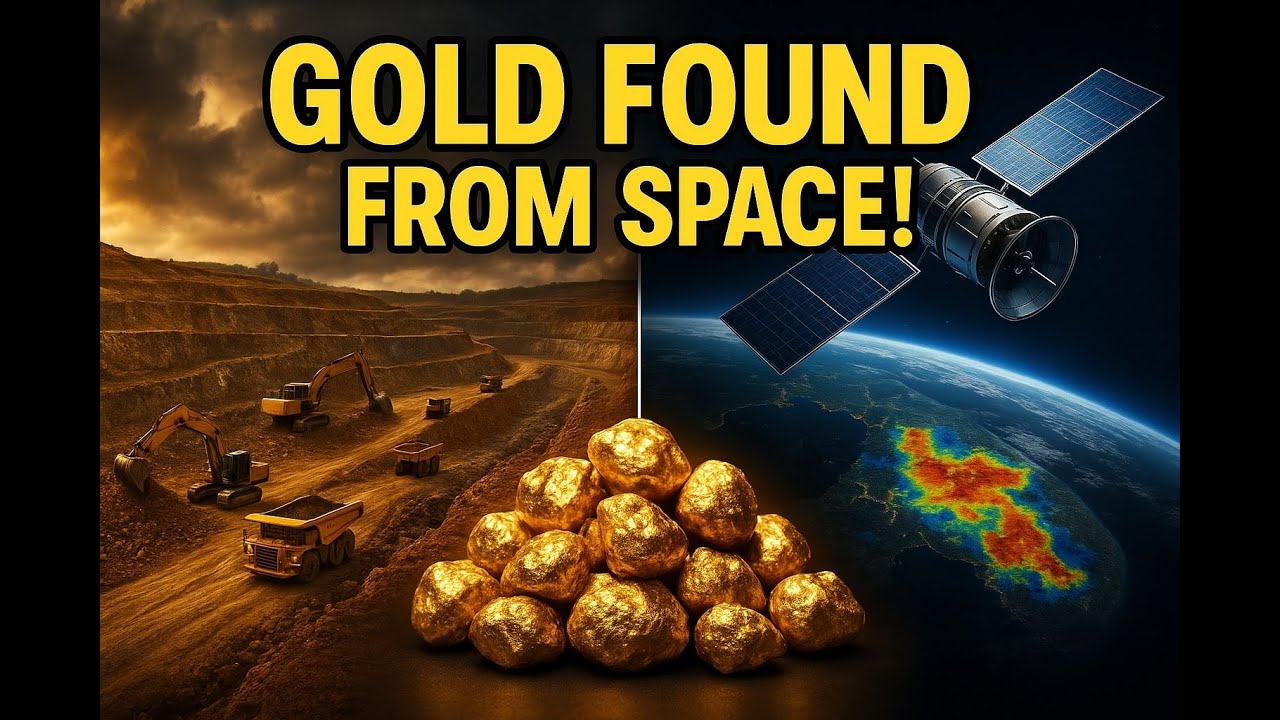
At Farmonaut, we bridge the gap between subsurface investigation and advanced satellite intelligence. Our satellite-based mineral detection solution leverages Earth observation, remote sensing, and AI to modernize exploration for mining companies, investors, and infrastructure leaders globally.
- 🌐 Global scale operation: Our technology covers 80,000+ hectares across 18+ countries, detecting over 13 mineral types—from gold in Africa and South America to lithium, cobalt, and rare earths globally.
- 📉 Time & cost savings: Reduce exploration duration by months or years, and cut field survey costs by up to 80–85%.
- 🌱 Non-invasive discovery: All initial assessment is satellite-driven, eliminating the need for trenching or drilling at the earliest stage.
- 📈 TargetMax™ Drilling Intelligence: (Available in our Premium+ offering): Find the optimal drilling angle & increase probability of ore intersection—with interactive 3D subsurface models.
Our process is seamless: clients define the area of interest, select minerals, and we deliver professional mineral intelligence and actionable next steps within 5 to 20 business days. This way, unnecessary drilling is minimized, environmental disturbance is reduced, and decision-making is rapid and evidence-based.
- ✔ Comprehensive reporting: PDF, GIS files, high-resolution maps for both technical and commercial stakeholders
- ✔ Environmental, Social, Governance (ESG) alignment: Satellite-driven, supporting sustainability and focused resource management
With Farmonaut’s satellite-based mineral detection and advanced prospectivity mapping, you can pinpoint high-confidence mining targets months before ground work begins. Allocate capital more effectively, reduce wastage, and accelerate the road from discovery to feasibility.

mining.farmonaut.com
— Upload your area of interest for an ultra-fast, satellite-based assessment. Ideal for mining, mineral exploration, and land-use planning with zero ground disturbance at the early stage.

Watch More: Top Youtube Videos On Core Drilling & Satellite Mineral Discovery
- ▶️ Gold Identification Project in Peru
- ▶️ Gold Rush Arizona 2025: History & Modern Gold Mining Revival | Ultimate Guide
- ▶️ How Gold is Extracted from Mines | Full Guide
- ▶️ Ghana Gold Discovery: How Satellite Tech Pinpoints Hidden Deposits Accurately!
- ▶️ Mauritania’s Gold Rush: Uncovering Hidden Deposits with Satellite Data
- ▶️ Rare Earth Boom 2025: AI, Satellites & Metagenomics Redefine Canadian Critical Minerals
- ▶️ Arizona Copper Boom 2025: AI Drones, Hyperspectral & ESG Tech Triple Porphyry Finds
- ▶️ Satellite Mineral Exploration 2025: AI Soil Geochemistry Uncover Copper & Gold in British Columbia!
Frequently Asked Questions (FAQ)
Q: What is the difference between core drill and gas core drill?
A: Core drill typically uses liquids (water/mud) as a drilling medium, while gas core drill uses pressurized gas to achieve faster penetration, reduced bit wear, and better sample integrity in dry/fragile formations.
Q: Why are drill cores essential in mining and mineral exploration?
A: Drill cores provide precise, vertical samples critical for ore body delineation, grade estimation, and resource continuity modeling. This drives feasibility studies and risk assessment for investment.
Q: How does Farmonaut support efficient mineral exploration?
A: We use satellite-based mineral detection and AI to identify, map, and prioritize high-potential zones, reducing the need for ground surveys and speeding up discovery timelines.
Q: How are drilling samples preserved and protected?
A: Samples (cores) are placed in labeled trays, photographed, logged, and often cooled or covered to prevent moisture loss, oxidation, or contamination during transport and storage.
Q: Can gas core drilling be used in wet/clay soils?
A: While possible, gas drilling is best suited to dry, compacted soils or rock where fluid-based drilling may be problematic. Special adaptations may be required for very wet or plastic clays.
Q: Where can I map my site for mineral prospectivity using satellite intelligence?
A: Visit our dedicated platform: mining.farmonaut.com to upload your site and receive a satellite-based mineral assessment, powered by our advanced technology.
Conclusion: A Comprehensive Look at Core Drill, Gas Core Drill, and Drill Cores for Modern Resource Management
In summary, core drill, gas core drill, and drill cores act as pillars of modern resource investigation—fueling discovery, risk mitigation, planning, and sustainable management within agriculture, forestry, mining, minerals, infrastructure, and defense. Their utility spans from guiding crop selection and irrigation in farming, supporting sustainable forestry, and defining resource potential in mining, to shaping resilient urban infrastructure and critical defense fortifications.
Advances in drilling equipment, sample handling, and the integration of remote sensing with ground-based drill data have produced unprecedented accuracy and confidence for land, resource, and environmental professionals. Stakeholders gain deep visibility into the composition, structure, and properties of solid materials—transforming how we approach soil management, mineral exploration, and infrastructure design.
For those seeking a next-generation edge, platforms like Farmonaut’s satellite-based mineral intelligence and 3D mineral prospectivity mapping offer the precision and scalability demanded by today’s resource-centric industries. Combined with best practices in core drilling and core logging, these innovative approaches point to a future where we can discover and manage the Earth’s wealth—smarter, faster, and more sustainably than ever before.
Access next-gen subsurface intelligence with satellite-based mineral detection and advanced core drilling solutions:
Get a Custom Quote Today | Contact Us
Map and analyze your site directly: mining.farmonaut.com

 Almosi SARL
 SRK Consulting
 Berks Gold Limited
 Mwerezi Minerals Company Limited
 Mining SARL
 SenGold Invest SAS
 Sean Mining Limited
 NTS Group (Pty) Ltd
 Mine4Africa
 Lithspo Minerals Limited
 Tintina Mining Group
 Dalgety Minerals Pty Ltd
 Vortex Minerals Pty Ltd
 Faith At Work (Pty) Ltd
 Geotech Mining Solutions plc
