

How Vehicle-Mounted Computers Support Precision Agriculture
Precision agriculture helps farmers make better use of positioning data, machinery, and field information. From tractor guidance to precision seeding and variable-rate spraying, digital systems allow agricultural equipment to work more consistently and give operators a clearer picture of what is happening in the field.
Much of the attention goes to GNSS positioning, automation software, and agricultural implements. Yet another component plays an important role inside the cab: the vehicle-mounted computer.
It provides the computing platform and operator interface that bring information from different parts of the system together. Its performance, connectivity, and reliability can affect how well the complete solution works in daily field operations.
1. Why Precision Agriculture Needs More Than Accurate Positioning
Accurate positioning is an important starting point, but it does not guarantee accurate fieldwork on its own.
A typical precision agriculture system may include a GNSS receiver and antenna, navigation software, a steering controller, implement sensors, electronic control units, and mechanical actuators. Each component has a different responsibility.
For example, an RTK GNSS receiver can provide centimeter-level positioning when the correction source and system configuration are suitable. Navigation software uses positioning information to calculate or display guidance relative to a planned route. A steering controller then manages the steering operation in an automated system.
The vehicle-mounted computer connects these functions from the operator’s perspective. Depending on the system design, it runs the agricultural application, displays guidance and machine information, communicates with other electronic devices, and records operating data.
This role becomes more important as agricultural machinery gains additional sensors, cameras, and electronic controls. Operators need to understand the machine’s status without constantly switching between separate displays or devices.
2. Five Applications of Vehicle Computers in Precision Agriculture
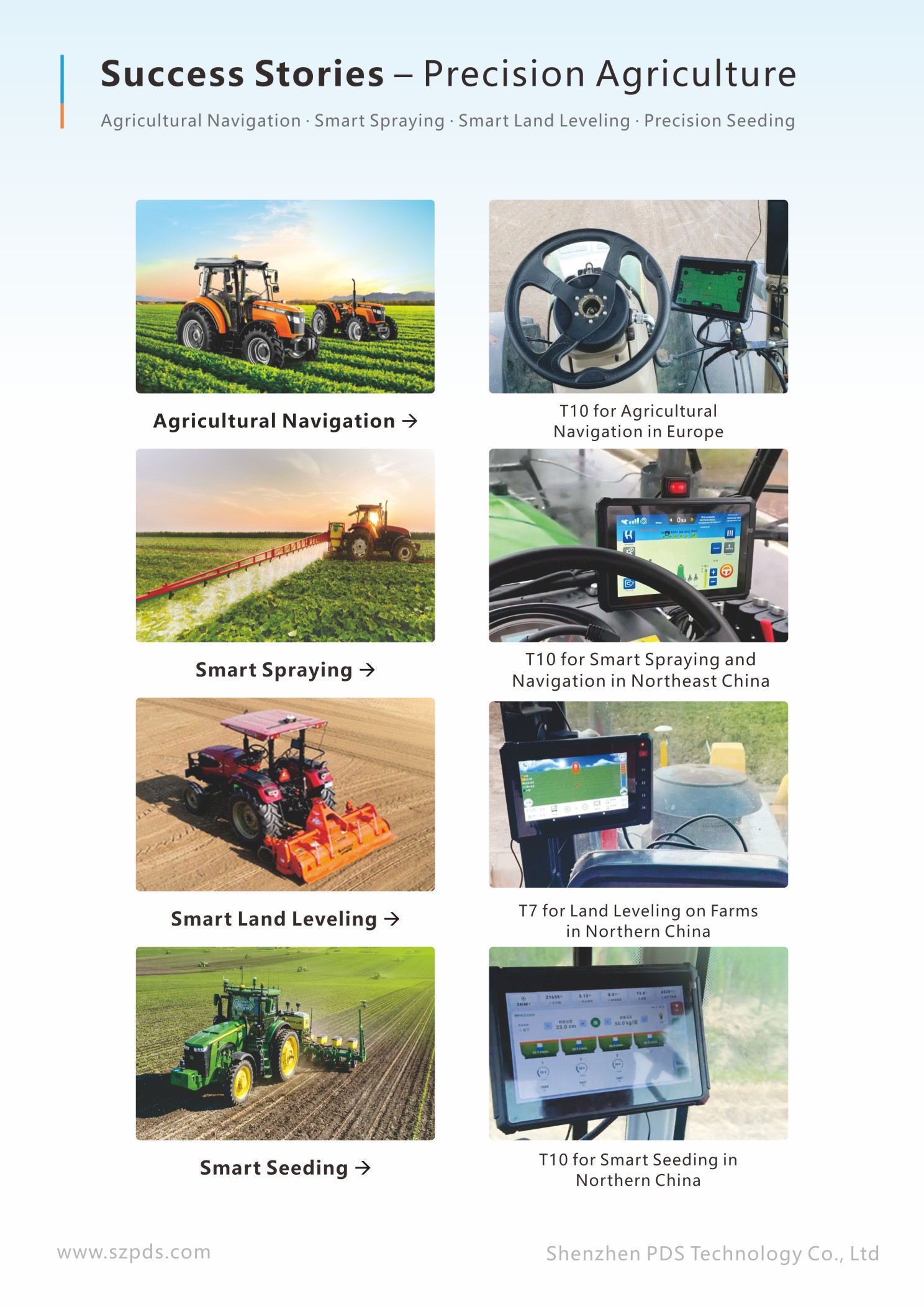
Agricultural Guidance and Auto-Steering
Tractors often need to follow planned paths across large fields. When positioning data and guidance software are properly configured, operators can follow parallel lines, maintain consistent passes, and reduce unnecessary overlap.
A vehicle computer displays information such as the guidance line, vehicle position, heading, RTK status, and work progress. It may also communicate with the steering controller and display relevant machine information.
The computer does not necessarily perform the steering itself. That depends on the system architecture and the dedicated steering hardware.
A reliable in-cab terminal makes the guidance system easier to operate. The screen must remain readable in daylight, and the interface should present important information clearly while the tractor is moving.
Precision Seeding
Seed placement depends on several factors, including vehicle speed, row spacing, seed-metering performance, and the accuracy of the planting control system.
In a precision seeding system, the vehicle computer can display planned rows, guidance information, operating speed, planting status, and alarms. Where suitable sensors and software are integrated, it can also present information about seed delivery or missed-planting warnings.
The actual seed metering is handled by the seeder’s mechanical and electronic control components. Sensors detect relevant operating conditions, while the seeding controller manages the equipment according to the system design.
The computer helps operators monitor these functions and identify problems during operation. If planting data is recorded and linked to field maps, it can also support later reviews of field coverage and planting performance.
Precision Spraying and Section Control
Spraying is another application where positioning and machine control need to work together.
A sprayer may use GNSS positioning, speed sensors, flow meters, pressure sensors, section controllers, and electronically operated valves. Agricultural software uses the available information to manage spraying according to the configured application strategy.
The vehicle computer provides the interface for displaying field maps, vehicle position, target application rates, operating status, and alarms. Depending on the integration, it may also exchange data with the spray controller and other connected equipment.
Section control can switch individual boom sections on or off when the system detects that an area has already been treated or that spraying should stop. Variable-rate spraying can adjust application rates according to prescription maps or other supported inputs.
These functions depend on the complete system, not the display terminal alone. Positioning quality, sensor calibration, software logic, controller response, and nozzle performance all matter.
When these components work together, the system can help reduce unnecessary overlap and improve control over chemical application.
Land Leveling and Other Implement Operations
Precision land leveling uses positioning or elevation measurements, design data, and machine-control equipment to guide the leveling process.
A vehicle computer can display the target grade, current measurements, working progress, and relevant alerts. The control system uses information from the configured sensors and positioning equipment to determine the required blade movement, while hydraulic actuators carry out the adjustment.
Similar arrangements can be used in other agricultural operations, including furrowing, tillage, and mulching. The exact role of the computer depends on the implement, connected sensors, control hardware, and application software.
For equipment manufacturers, this makes interface compatibility important. The terminal needs to work with the actual control architecture rather than simply display a map.
Machine Monitoring and Field Records
Precision agriculture generates more than positioning data. Depending on the equipment and software, a vehicle computer may also display engine or implement information, camera images, machine alarms, work settings, and application status.
It can also support the recording of field operations, including coverage, working time, location, and selected operating parameters. If the software and communication system support data synchronization, these records can be transferred for later analysis or farm management.
Connectivity is not always available in remote fields. For that reason, system designers should consider how the application handles temporary network interruptions, stores local records, and resumes synchronization when the connection returns.
The value of this information depends on data quality and integration. A computer can display and record the information it receives, but it cannot compensate for inaccurate sensors or missing data from other equipment.
3. What Makes a Vehicle Computer Suitable for Agricultural Work?
Agricultural machinery operates in conditions that differ considerably from an office or passenger car. A computer installed in a tractor may face prolonged vibration, dust, moisture, temperature changes, direct sunlight, and fluctuations in vehicle power.
Several factors deserve attention when selecting a terminal.
Display readability. The screen should remain readable under outdoor lighting. Screen size should match the cab layout and the amount of information operators need to view at once.
Environmental protection. The enclosure, connectors, mounting structure, and cable routing all affect reliability. Protection ratings and temperature specifications should be checked against the actual working environment.
Power stability. Agricultural vehicles may experience voltage changes during engine starting and other operating conditions. Input-voltage range, transient protection, ignition control, and shutdown behavior should be verified.
Interfaces and compatibility. CAN bus, serial ports, Ethernet, USB, wireless connections, and camera inputs may be required, depending on the application. The available interfaces must match the connected GNSS equipment, implement controllers, sensors, and cameras.
Software support. Android may suit applications developed for that platform, while Linux may be preferred for some embedded systems and customized software. Hardware selection should follow the software and integration requirements, not processor specifications alone.
Mechanical installation. A suitable mounting position should allow operators to read the screen comfortably without obstructing their view. Connectors need enough clearance, and cables must be routed away from moving parts and other hazards.
A rugged computer is only one part of a reliable installation. The complete configuration needs to be tested in the intended machine.
4. Common Integration Problems to Address Early
Some problems appear only after a prototype is installed in a real tractor or sprayer.
A display may work correctly on a test bench but become difficult to read in direct sunlight. A connector may not match the implement harness. The application may not recover correctly after an ignition cycle. A communication interruption may leave the operator without a clear warning.
These problems are easier to address before volume production.
A practical validation process should include the production application, GNSS equipment, implement controller, cameras, and actual vehicle wiring. Tests should cover power cycling, vibration, outdoor visibility, communication interruptions, and the recovery of operating records.
Manufacturers should also confirm interface definitions, software versions, wiring diagrams, and acceptance criteria before approving a production configuration.
The objective is to verify the complete system under realistic conditions rather than evaluate each component in isolation.
5. A Real-World Example: Vehicle Computers in Precision Spraying
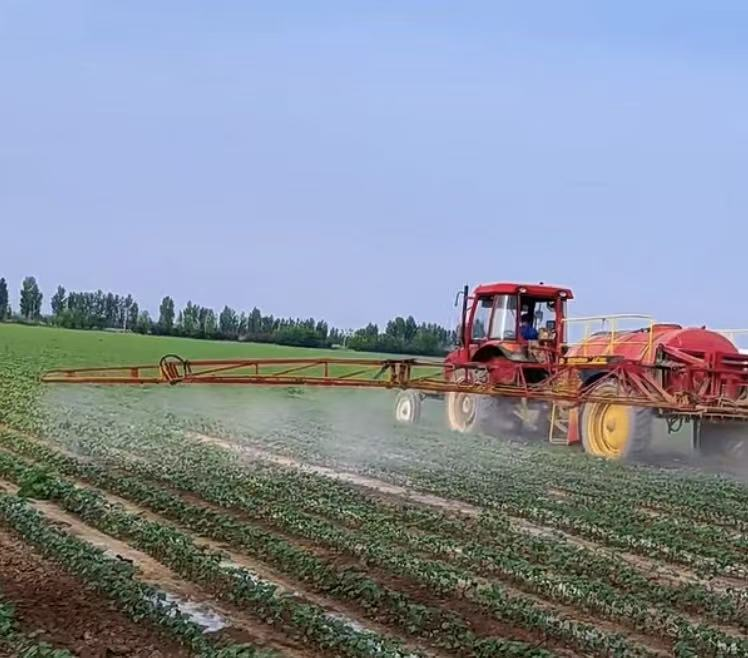
PDS Technology has published a case study describing a precision-spraying project in northern China. The solution used a 10-inch rugged vehicle-mounted computer with customer-developed Linux/Qt software and connections to positioning equipment, spray-control hardware, and cameras.
The sprayer manufacturer had shipped more than 1,000 units. According to the customer feedback reported in the case study, the overspray rate fell from approximately 15% to below 2%, while seasonal pesticide costs decreased by 15%–25%.
These are reported results from a specific integrated solution, not guaranteed outcomes for every spraying system. The performance depends on the software, positioning equipment, sensors, controllers, sprayer configuration, calibration, and operating conditions.
The case illustrates why the in-cab computer matters. It provides a platform for the application and a working interface through which operators can monitor the information needed for spraying. The complete system must still perform the calculations, control actions, and mechanical operations required for accurate application.
6. Choosing the Right Vehicle Computer for an Agricultural Project
There is no single screen size or hardware configuration suitable for every agricultural machine.
A compact terminal may fit a smaller tractor with limited cabin space. A larger display may be more appropriate when operators need to view guidance maps, implement information, and camera images together.
Equipment manufacturers and system integrators should first define the application, software platform, positioning requirements, interfaces, and operating environment. They can then compare suitable hardware configurations and validate the complete system.
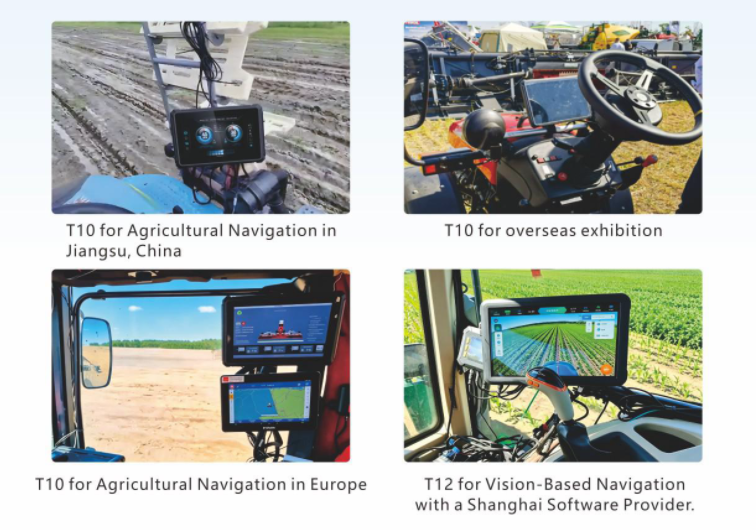
PDS Technology provides rugged vehicle computers in 7-inch, 10-inch, and 12.1-inch formats for agricultural applications, including auto-guidance, auto-steering, and intelligent spraying. Depending on the model, configurations may support Android or Linux, RTK GNSS, vehicle communication interfaces, and camera integration. PDS also provides OEM/ODM customization for equipment manufacturers with specific integration requirements.
For any supplier, the key question is whether the selected terminal can be integrated and validated with the intended machine, software, and control system.
Conclusion
Vehicle-mounted computers help make precision agriculture systems usable in the field. They bring navigation information, machine data, and operator controls into the cab while supporting communication between the agricultural application and connected equipment.
Their contribution depends on more than processing power. Display readability, environmental protection, stable power, compatible interfaces, and reliable software integration all affect practical performance.
When selected and tested as part of the complete machine, a suitable vehicle computer can support more consistent field operations and help agricultural equipment manufacturers build systems that are easier to operate and maintain.
Discussion
Questions, corrections or field experience? Share them below. First-time comments are reviewed before they appear, and your email is never published.
No comments yet. Be the first to add a question or your experience.

 FarmSetu
 Progenseed
 SkyHarvest
 Polaris Digitech
 Teledarbas
 Wild Oak Farm
 SFX
 BACF Africa
 Doodlakine
 Exurbia Geospatial
 FieldZero
 Indico Company
 Kubota
 FFBS

 Licence holder · Niger · Gold










