

Top AI Tools Helping Agribusinesses
Make Smarter Decisions
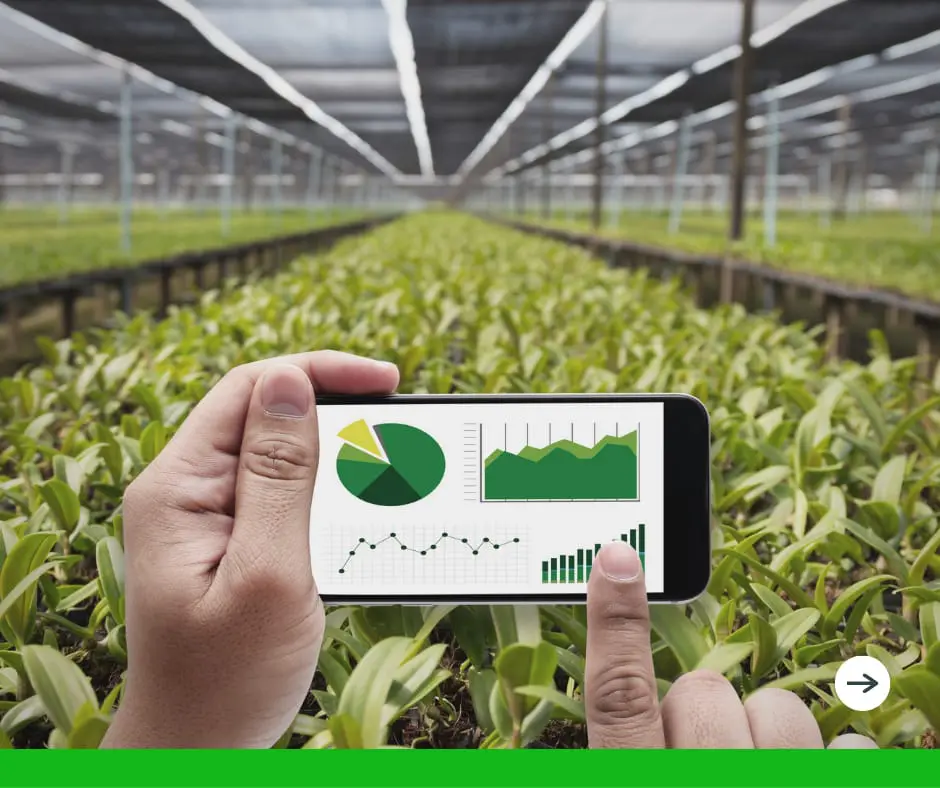
There was a time when farmers would make the most crucial decisions confidently with one confident look at the sky. Long gone are those days.
Rain doesn’t follow memory anymore. Seasons don’t respect patterns. Price doesn’t stay still for logic. That doesn’t make your instincts undeserving of trust. You definitely can, but when your land size is hundreds of acres, export timelines are tight, margins are shrinking, and you have supply contracts to fulfill, instincts alone wouldn’t be enough to scale.
So the industry adapted. Not loudly. Not all at once. But steadily.
Artificial intelligence didn’t arrive like a revolution. It seeped in. Quietly, like water finding cracks. Now it’s everywhere.
Section 01Precision Agriculture: When Fields Stop Being Uniform
Walk across a field, and it looks consistent. Same crop, same soil, same stretch of land. That’s the illusion.
Underneath, every few meters, conditions shift. Moisture changes. Nutrient levels rise and fall. One section struggles while another thrives. Treating it all the same was always inefficient. There just wasn’t a better way before.
Now there is.
Platforms like John Deere Operations Center and Climate FieldView started pushing this idea years ago. Then tools like Farmonaut made it more accessible, especially through satellite-based monitoring. Instead of guessing, farmers can now see vegetation health mapped out visually using indices like NDVI.
What that means in practice is simple. You don’t water everything the same. You don’t fertilize blindly. You might not even be present there, but something actually happens on the ground, and you react to it if you’re not physically there.
That shift alone changes how decisions get made.
Section 02Predictive Analytics: Less Than Perfect, More Than Guessing
No one can say with absolute certainty that they can accurately predict agriculture. Too many variables. Weather alone can undo the most careful plan.
But you don’t need perfect predictions. You just need better ones.
That’s where platforms like IBM Watson Decision Platform for Agriculture and Granular come in. They take historical data, weather forecasts, and soil information, and layer them together. The output isn’t certainty. It’s probability.
Yield estimates. Pest risk alerts. Suggested planting windows.
A farmer might have made these calls before based on experience. Now there’s a second voice in the room. One that’s seen more data than any individual ever could.
Section 03Crop Monitoring: From Occasional Checks to Constant Awareness
Manual field inspection has limits. Time, labor, visibility. You can’t be everywhere at once.
AI doesn’t have that problem.
Prospera, Taranis, and other such companies get HD scans of the fields using computer vision and drones. Not just a general overview. They can scan plants individually, row after row.
This gives them the ability to locate pest clusters, spot many disease signs early on, and sometimes even spot certain nutrition deficiencies before they are visible at scale.
What took days, even weeks in the past, now gets done so fast that people can take measures before the damage starts to spread.
That difference matters more than it sounds. In farming, timing isn’t just important. It’s everything.
Section 04Smart Irrigation: Water, But With Restraint
Water used to be applied in cycles. Fixed schedules. Same routine, regardless of actual need.
That approach doesn’t hold up anymore, especially in regions where water is limited or expensive.
Systems like CropX and Netafim’s NetBeat changed that by introducing data into irrigation decisions. Soil sensors measure moisture levels in real time. Weather forecasts add another layer. The system then adjusts irrigation automatically.
So, now the fields aren’t watered just because it’s time. They are watered because it’s needed.
It sounds obvious when you say it like that. But implementing it at scale wasn’t possible until recently.
The result is less waste, lower costs, and healthier crops. Not because more is added, but because less is wasted.
Section 05Supply Chain Intelligence: After the Harvest, the Real Work Begins
Growing crops is only part of the equation. Getting them to market without losses is another challenge entirely.
AI steps back in here.
Full Harvest, AgriDigital, and similar platforms have their focus set on market matching and logistics. They continuously analyze buyer demands, supply levels, pricing conditions, and transportation routes.
Wastage is one of the greatest hurdles in agriculture. A huge portion of the produce never get to the selling points, mostly because they can’t be connected to buyers in any efficient way or due to their appearance not meeting standards.
Full Harvest has worked its way around that. They have created a marketplace dedicated to the imperfect and surplus produce. AI helps match supply with demand quickly, reducing losses.
Section 06Livestock Monitoring: Extending AI Beyond Crops
AI isn’t limited to crops. Livestock operations are seeing similar changes.
Tools such as Allflex Livestock Intelligence and Cainthus track patterns in animal behavior using cameras and sensors. They are able to recognize movement, signs of disease or stress, feeding patterns, and more.
The goal is early detection.
Humans may not notice immediately when there’s a slight change in an animal’s behavior. But AI systems are able to quickly flag it and make way for intervention before the situation can escalate.
That reduces losses and improves overall productivity. Quiet gains, but significant over time.
Section 07Market Intelligence: Trying to Read What Comes Next
Agricultural markets are unpredictable. Prices shift based on weather, trade policies, global demand, and factors that don’t always connect in obvious ways.
AI platforms like Gro Intelligence and TellusLabs attempt to make sense of that complexity. They accumulate large chunks of data into organized sets, which makes identifying patterns a lot more organized.
This information is valuable to agribusinesses and farmers. It helps them decide on distribution channels, set priorities for the coming seasons, and when to sell.
To reiterate, being right every time is not the basic idea of it. It’s about being less wrong, more often.
A Necessary DetourTrust in an AI-Driven Environment
There’s something worth addressing here.
As AI tools become more embedded in agriculture, there’s also a growing need to verify the outputs they generate. Reports, recommendations, and even written analyses can be produced automatically now.
That introduces a different kind of risk.
Tools such as an AI detector are being deployed by some organizations to distinguish human-written and machine-generated content, especially when being credible is a requirement. It’s truly about maintaining standards rather than paranoia.
Because when money, long-term plans, and crops are involved in a decision, you can’t blindly and entirely rely on anything; not human, not machine.
Reality CheckAdoption Isn’t Frictionless
For all the advantages, there are barriers.
Cost is one. Many AI tools require upfront investment that smaller farms can’t easily afford.
Another big issue is connectivity. Internet access isn’t always stable in a lot of rural areas. Cloud-based platforms are largely limited due to this.
Then we need to factor in human error and bias. Even though data-driven systems are quite efficient and have been increasingly popular lately, not everyone feels inclined towards replacing familiar methods with these. Change is a matter of time everywhere; even more so in tradition heavy industries.
That means adoption still remains uneven despite technology being available at large.
ImpactWhat Actually Changes on the Ground
Strip everything down, and the impact of AI in agribusiness comes back to a few measurable outcomes:
- Better yield consistency
- Reduced input waste
- Improved timing in operations
- More informed market decisions
Those numbers most definitely vary across regions, conditions, and crops. But the direction is consistent.
Looking AheadWhere This Is Heading
The next phase isn’t about introducing new tools. It’s about connecting the ones that already exist.
Right now, many platforms operate in isolation. Irrigation systems don’t always communicate with crop monitoring tools. Market intelligence doesn’t always integrate with production planning.
That’s starting to change.
Over time, expect more unified systems. Data flowing between platforms instead of staying locked within them. More affordable solutions designed for smaller operations. Localization is definitely better. So, recommendations get made depending on specific conditions over broad averages.
And perhaps most importantly, a shift in how decisions are made. Instead of completely replacing human judgement, it’s supported with more consistent systems.
Conclusion
Agriculture has always involved uncertainty. That part hasn’t changed.
What has changed is how that uncertainty is handled.
AI doesn’t remove risk. It narrows it. Gives it edges. Makes it something you can work around instead of something you just endure.
The tools mentioned here aren’t perfect. None of them are. But they’re changing how agribusiness operates, step by step.
Less guesswork. More context. Fewer blind decisions.
And in a field where margins are tight and variables are endless, that shift matters more than anything else.
Discussion
Questions, corrections or field experience? Share them below. First-time comments are reviewed before they appear, and your email is never published.
No comments yet. Be the first to add a question or your experience.

 WB Dev
 Sama Premium
 Mahaswami
 Prochecker
 Tres Valles
 LACOS Geoinformation
 Pulsar Supernova
 Magrifly
 LatConnect 60
 WebsEdge
 Blickwinkel
 Agricultural Credit Policy Council
 MCSOD
MCSOD Marei Nursery
 eKGIS
eKGIS Mostas Tech
 Andex
Andex FCF India
 Unifrutti Gulf
 Deluxe Conseil
 Licence holder · Niger · Gold
 Licence holder · Nigeria · Gold + lithium










