

Alaska Quartz & Gold Quartz: 7 Steps for Mining Alaska – Sustainable Exploration, Balanced Land Management & Environmental Stewardship
“Alaska produces over 12% of the United States’ gold, much of it extracted from gold-quartz veins.”
💡 Key Insight
Interpreting Alaska’s gold quartz and quartz formations demands an integrated ecological and resource management lens. Sustainable mineral extraction is built on careful geologic targeting, minimized land disruption, and ongoing reclamation—uniting mining productivity with a commitment to Alaska’s heritage and ecosystem health.
Introduction: Alaska Quartz and Gold-Quartz Mining in a Balanced Lens
Alaska’s vast wilderness, rugged landscapes, and rich mineral resources have captivated prospectors, miners, land managers, and environmentalists for generations. Among its most storied and economically significant resources are Alaska quartz veins and gold quartz Alaska deposits—natural formations that form the backbone of lode and placer gold mining throughout the state. These quartz-bearing systems do more than yield precious metals; they also shape how land management, forestry practices, and environmental resource extraction unfold across Alaska’s diverse terrains.
This article spotlights the intersection of Alaska’s quartz geology, extractive activity, and ecosystem productivity. Far beyond simply locating gold-quartz deposits, sustainable mining in Alaska means harmonizing mineral exploration with the realities of land use, timber operations, water management, wildlife habitats, and community interests. Interpreting the state’s enduring geological heritage through a stewardship-focused lens brings practical insight for anyone invested in responsible land, mineral, and ecological management.
💰 Investor Note
Modern mineral intelligence platforms, such as Farmonaut’s satellite-based mineral detection, empower investors and operators to evaluate Alaska quartz potential accurately, reducing exploration timelines and risk—prioritizing areas where mining is feasible and environmentally responsible.
Alaska’s Unique Quartz Geology: Foundations of Mining Activity
Quartz is one of Alaska’s most common gangue minerals, frequently associated with hydrothermal veins that host precious metals, especially gold. Here, hydrothermal processes concentrate minerals within fractures and pockets in the state’s hard bedrock—often forming strikingly rich gold-quartz veins. The presence of quartz in Alaska’s geology indicates a history of mineral-laden fluids moving through rock, leaving behind veins that can extend for hundreds of meters, holding economic potential for gold extraction.
- ✔ Alaska quartz is pivotal in both lode (bedrock) and placer (stream sediment) mining systems.
- 📖 Gold quartz Alaska formations reflect unique mineralizing processes and define mining heritage in regions such as Juneau, Nome, and Fairbanks.
- 🛰 Modern exploration techniques increasingly rely on remote sensing, satellite-based mineral detection, and structural geology mapping to identify prospective veins across regional landscapes.
For land managers, forestry operators, and mining stakeholders, identifying quartz-rich zones helps delineate where mineral extraction may be feasible while recognizing the broader ecological footprint of exploration and mining activities.

📈 Pro Tip
Early identification of quartz veins using spectral and geological data can minimize unnecessary ground disturbance—streamlining drilling and reducing environmental impact even before field crews set foot on-site.
Alaska Gold Quartz: 7 Steps for Responsible Mining
Mining Alaska’s gold quartz veins and associated systems involves a series of technical phases, each carrying implications for resource yield, land management, environmental stewardship, and sustainable development. Let’s break down the seven core steps that comprise responsible quartz and gold-quartz mining in Alaska—positioned for today’s ecological and economic realities.
- Geological Mapping, Geochemical Sampling & Remote Sensing
- Defining Quartz-Hosted Ore Shoots and Drilling
- Grade & Tonnage Estimation
- Road & Infrastructure Planning
- Extraction and Ore Handling
- Ore Processing, Crushing, and Milling
- Reclamation, Revegetation, and Long-Term Monitoring
Each stage offers opportunities to maximize output, reduce environmental impact, and emphasize stewardship of land, water, forests, and wildlife habitats. Structured, science-driven approaches—such as those supported by Farmonaut’s satellite-based exploration intelligence—are critical for effective management.
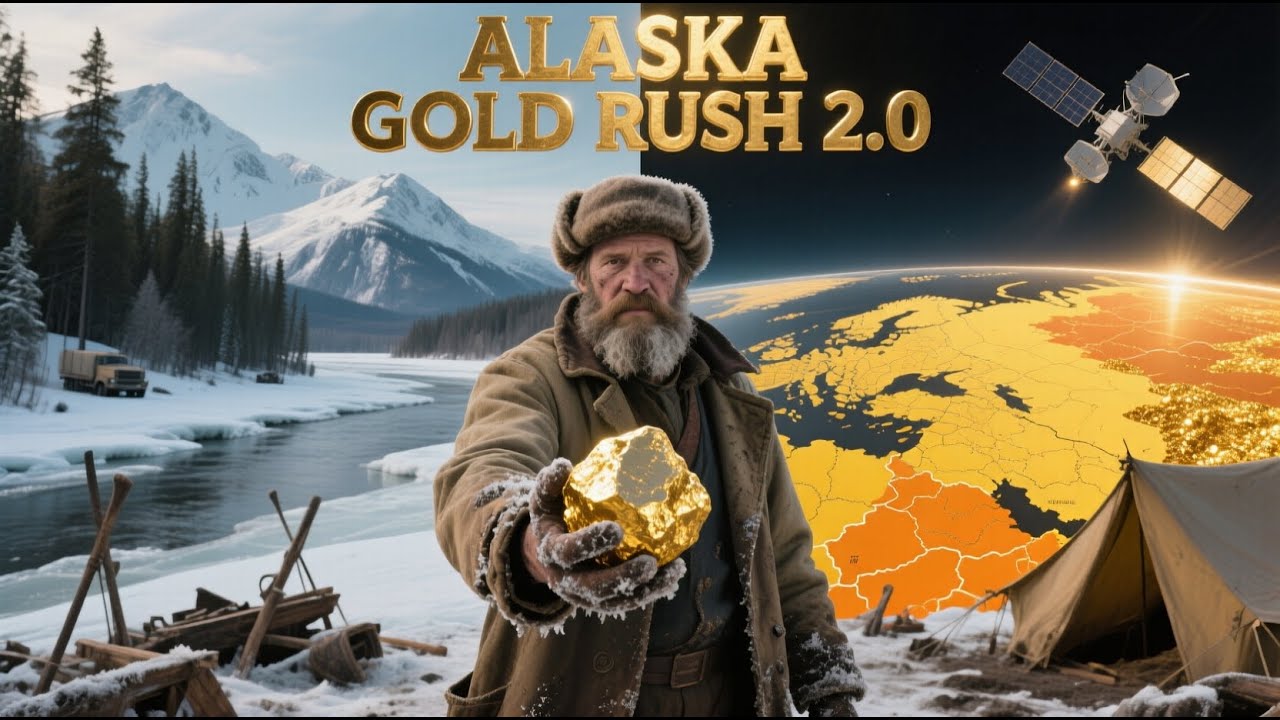
“Sustainable mining practices in Alaska have reduced land disturbance by up to 40% compared to traditional methods.”
Step-by-Step Alaska Quartz Mining Process: Environmental Impact & Sustainable Practice
| Step Number | Mining Activity | Estimated Resource Yield (oz/ton) | Potential Environmental Impact | Recommended Sustainable Practice |
|---|---|---|---|---|
| 1 | Geological Mapping, Sampling, Remote Sensing | – | Low (surface disturbance, biological surveys needed) | Use of satellite-based mineral detection to avoid unnecessary ground work. |
| 2 | Drilling to Test Quartz Ore Shoots | 0.25–1.5 oz/ton (varies) | Moderate (localized soil/vegetation impacts; machine emissions) | Selective targeting, drill pad minimization, drilling fluids containment, seasonal restrictions. |
| 3 | Grade & Tonnage Determination | – | Low (data, lab sample transport impact) | Centralized sample processing, reduce travel. |
| 4 | Infrastructure Development (roads, pads) | – | Moderate-High (habitat fragmentation, runoff risk) | Minimize footprints, use existing routes, install erosion controls, wildlife corridor planning. |
| 5 | Extraction & Ore Handling | 1–2.5 oz/ton (high grade); 0.25–0.5 oz/ton (typical) | High (disturbance, dust, noise, water use) | Dust control, noise barriers, strict water use protocols, fuel-efficient machinery. |
| 6 | Processing (Crushing, Milling, Extraction) | Dependent on ore type; 75–92% recovery rates possible | High (waste, tailings, energy use, potential leaching) | Containment facilities, water recycling, process optimization to minimize reagents. |
| 7 | Reclamation, Revegetation | – | Medium-Long term (soil, water, vegetation legacy risks) | Local native species for revegetation, contour restoration, continuous monitoring & adaptation. |
- ✔ Focus site targeting to prevent unnecessary land disturbance
- ⭐ Implement reclamation plans from project inception
- 💧 Recycle and monitor water for downstream habitat protection
- 🌱 Reestablish vegetation & stabilize soils post-extraction
- 🔗 Engage with local & Indigenous communities for sustainable land use

Modernizing Quartz & Gold Quartz Exploration in Alaska: Satellite & AI Approaches
The traditional approach to mineral exploration for quartz and gold quartz Alaska veins relies on complex combinations of ground surveys, geochemical sampling, geophysical fieldwork, and incremental drilling. These activities, while thorough, often carry a substantial environmental and financial footprint, especially in remote or ecologically sensitive Alaskan zones.
Today, satellite-driven solutions accelerate target identification and reduce disturbance: Farmonaut’s satellite-based mineral detection is at the forefront. By using multispectral and hyperspectral analysis, we empower geologists, land managers, and decision-makers to:
- ✨ Rapidly identify mineralized quartz-bearing zones via unique spectral signatures
- 📊 Generate high-resolution mineral prospectivity maps before field crews deploy
- 🔬 Delineate faults, alteration halos, and target ore shoots objectively across large landscapes
The results are reduction in exploration timelines (from years to weeks/days), substantial cost savings, and—crucially—no ground disturbance in early phases. For a deeper look at 3D mapping innovations, see our satellite driven 3D mineral prospectivity mapping explainer.

📍 Special Highlight:
Want to unlock the full mineral potential of your Alaska mining site? Try Map Your Mining Site Here – get professionally validated, satellite-powered prospect reports for smarter, faster, and more sustainable project decisions!

Planning Access, Infrastructure, and Minimizing the Footprint
Extracting value from Alaska quartz and gold-quartz deposits isn’t just a matter of knowing where the veins lie. The vast, often forested, and ecologically sensitive character of Alaska’s mining regions means that:
- ⚠ Careless road construction can fragment wildlife corridors, disrupt hydrology, and cause soil destabilization
- 🌊 Poorly managed infrastructure can increase sedimentation, affecting watershed stability and threatening key aquatic species like salmon
- 🌲 Integrated planning with forestry and land-use fosters coexistence between mining, timber operations, and long-term ecosystem health

Best Practices for Infrastructure Planning:
- Map topographic and habitat data prior to construction to avoid sensitive ecological zones
- Use existing routes and disturbed areas wherever feasible
- Design with minimal width and install water bars, sediment traps, and native species buffers along stream crossings
- Integrate reclamation protocols before construction even begins
⚠ Common Mistake
Overlooking the cumulative impact of multiple small access roads. Even narrow or temporary roads can disrupt migration, drainage, and vegetation recovery, causing outsized ecological harm down the line.
- ✅ Ecological Assessment
- 📍 Native Plant Buffers
- 🛤 Minimalist Road Footprint
- ⏳ Seasonal Construction Windows
- 💡 Integrated Reclamation
- 🚜 Reuse Existing Access
- 💦 Sediment/Water Management
- 🦌 Wildlife Movement Corridors
- 🗺 Landscape-Level Restoration
- 🔗 Stakeholder Engagement
Mining Alaska Quartz and Gold Quartz: Processing, Waste, and Efficiency
Once extraction begins, understanding Alaska quartz’s mineralogical complexities becomes central to crushing, milling, ore recovery, and waste management:
- 💎 Quartz hardness drives up crushing/milling costs and machinery wear
- 🔬 When intergrown with sulfide minerals, advanced metallurgical processing steps (like flotation, cyanidation, gravity recovery) may be required
- 🛢 Remote operations in Alaska demand efficient, fuel- and energy-smart processing design—every supply run and fuel barrel counts

Waste & Tailings Management Essentials:
- 🪨 Containment: Proper tailings dams, lined waste rock pads to avoid runoff and leaching
- 💧 Surface Water Diversion: Divert clean water around mining waste to mitigate acid rock drainage risk
- 🌱 Reestablish Native Vegetation: Restore landscape stability post-processing with soil amendments and native plantings
- 📊 Continuous Monitoring: Ongoing testing of water, soils, and wildlife utilization for adaptive management
🌱 Environmental Stewardship
Alaska mining projects should put reclamation at the forefront—ensuring that gold-quartz wealth supports enduring soil formation, wildlife foraging, and viable land post-closure, not lifeless scars on the state’s iconic terrain.

Ecosystem Stewardship in Alaska’s Forested Watersheds
Mining in Alaska’s forested zones and watersheds brings an imperative for integrated, cross-sector management:
- 🦅 Wildlife corridors affected by access roads and drilling activity
- 🐟 Placer mining may increase sedimentation, turbidity, downstream fish disruption—critical in salmon-rich rivers and streams
- 🌲 Coordinated forest & mining operations can minimize hydrological and seismic changes to fragile watershed systems
Best Management Strategies:
- 📉 Minimize simultaneous disturbances: Schedule mining, timber, and roadwork with staggered timing
- 💡 Restore and reinforce riparian buffers: Seed and stabilize banks after any mining or road work
- 🎯 Active habitat restoration: Fast-track revegetation with local species and periodic follow-up surveys
- 🔍 Ongoing monitoring and adaptive management: Use water quality and biological surveys to adjust practices as needed
Major Impacts:
- 🚧 Road/landing fragmentation
- 💧 Stream siltation risk
- 🐟 Fish habitat disruption
- 🦉 Wildlife corridor loss
- 🔥 Potential fire disturbance
Safeguards:
- ✅ Erosion control/stream protections
- 🌳 Riparian buffer replanting
- 🗺 Integrated watershed planning
- 📅 Staggered activity sequencing
- 🔬 Water/tissue sampling programs

🔗 Ready to Take the Next Step?
Connect with Farmonaut to Get a Quote, or Contact Us for tailored consultation on Alaska quartz, gold quartz Alaska, and more. Explore how we accelerate project timelines, cut costs, and reinforce sustainable outcomes.
Placer vs Lode: Understanding Alaska Gold Quartz Deposit Types
Alaska is world-renowned for both its placer and lode gold systems—two complementary deposit types shaped by the state’s dynamic geologic processes:
Placer Deposits:
Result from weathering and transport of gold (and quartz fragments) from primary veins into alluvial sediments. Mining these deposits is focused on stream beds and floodplains, where gold has concentrated over time.
- 🔶 Pros: Often accessible near-surface; historically high gold recovery;
- 🔴 Cons: Susceptible to sedimentation, water quality, and downstream fish impact if not managed carefully
Lode Deposits (Quartz Vein Hosted):
Occur as gold tightly intergrown with quartz within bedrock—mined via hard rock methods (drilling, blasting, and underground/extractive mining).
- 🔶 Pros: High-grade gold concentrated within veins, long-term mining potential
- 🔴 Cons: Higher upfront costs, significant rock movement, more complex processing
⛏ Placer:
- 🌊 Focus: Alluvial stream beds
- 💧 Environmental: Water, sedimentation risk
- 👥 Historic: Main driver in Alaska’s early gold rush
🪨 Lode (Quartz Vein):
- 🪓 Focus: Underground/hardrock veins
- 🔬 Environmental: Waste rock management, tailings
- 📈 Economic: Higher yield/ton but more complex
📊 Data Insight
Placer gold in Alaska often owes its upstream origin to erosion of rich gold-quartz veins. Knowing the distribution and history of quartz-rich source rocks is vital for both placer and lode exploration—boosting project targeting and environmental planning.
Conclusion: Integrating Mining Viability, Land, and Ecosystem Stewardship
Responsible development of Alaska quartz and gold quartz Alaska resources—at scales that support both economic growth and the state’s iconic landscapes—rests on several core principles:
- ✔ Targeting the right zones—with advanced geospatial and satellite technology—to minimize disruption and maximize mineral yield
- 🌲 Integrating mining, forestry, and watershed management in both land access and operational planning
- 💧 Prioritizing water and waste management—from placer sediments to tailings and acid rock drainage mitigation
- 🌱 Sustaining ecosystem function with restoration, native revegetation, and wildlife corridor preservation
- 📈 Supporting sustainable economic activity, regional livelihoods, and honoring Alaska’s rich mining heritage—without sacrificing land for future generations
For all stakeholders—miners, timber operators, land managers, Indigenous communities, regulators, and technologists—stewardship isn’t a one-time effort; it is an ongoing, adaptive process. With the right data, tools, and commitment, Alaska’s precious quartz and gold quartz Alaska systems can support enduring prosperity and ecological resilience.
If you are ready to take your mineral exploration to new heights—reducing costs, timelines, and ground impact—explore how Farmonaut’s satellite-based mineral detection and 3D mineral prospectivity mapping are redefining the discovery and management of natural resources in Alaska and beyond.
👇
Ready to start your own Alaska quartz project?
- 🗺 Map Your Mining Site Here
- 📞 Get a Quote for Satellite-Driven Mineral Exploration
- 💬 Contact Our Team for More Information
Frequently Asked Questions (FAQ): Alaska Quartz & Gold Quartz Mining
What is the significance of quartz in Alaska’s gold mining history?
Alaska’s gold rush era and modern mining heritage are built on rich quartz veins—the principal host rock for gold lode systems. These formations have supplied much of the state’s gold output and still define exploration efforts today.
How does modern exploration reduce environmental impacts?
New methods—such as Farmonaut’s satellite-driven mineral detection—allow rapid screening of large areas with no ground disturbance in initial phases. This minimizes unnecessary road building, clearing, and drilling, reducing impact from the outset.
What are the main environmental risks with Alaska quartz and gold-quartz mining?
Key risks include: land disturbance, waterway sedimentation, tailings or acid-generating waste, and habitat fragmentation. Integrated planning, infrastructure minimization, and robust reclamation are crucial safeguards.
What role does reclamation play in sustainable mining?
Reclamation is not “the final step”—it is integrated throughout responsible mining. Proper recontouring, vegetation reestablishment, and long-term monitoring protect soils, enable wildlife return, and maintain watershed stability.
How can I get a professional mineral prospectivity report for my Alaska site?
Try our streamlined “Map Your Mining Site Here” portal—just submit your area of interest, and let satellite-driven intelligence accelerate your next mineral discovery, cost-effectively and sustainably.
Discussion
Questions, corrections or field experience? Share them below. First-time comments are reviewed before they appear, and your email is never published.
No comments yet. Be the first to add a question or your experience.

 Double A Trading
 GemSprout Metals Limited
 Qader Group
 Ileys General Trading
 SG Gold Mining LLC
 VRV Global Pte Ltd
 Omsri International FZE
 G.I.T.T.
 Jaunita Erss Ltd
 Almosi SARL
 SRK Consulting
 Berks Gold Limited
 Mwerezi Minerals Company Limited
 Mining SARL
 SenGold Invest SAS
 Sean Mining Limited
 NTS Group (Pty) Ltd
 Mine4Africa










