

Alaska geology symbols · Guide
Alaska State Gemstone: Jade, Where It Is Found and Value
Alaska’s state gemstone is jade, named by law in 1968. The state’s jade is nephrite, found mainly in the Kobuk River region of northwest Alaska, according to the Alaska Division of Geological & Geophysical Surveys.
Key takeaways
- Jade became Alaska’s state gem under Chapter 51, Session Laws of Alaska 1968, in force from 24 June 1968.
- Alaska’s jade is nephrite; most known occurrences are in the Kobuk River region on NANA Regional Corporation land (DGGS).
- Gold is the state mineral (also 1968) and the woolly mammoth the state fossil; there is no separate state stone.
- US natural and lab-made gemstone output was an estimated $47 million in 2025, with 99% import reliance (USGS, 2026).
- California’s state gemstone, benitoite, was named in 1985 and comes mainly from one San Benito County mine (GIA).
In this article
- Alaska state gemstone: the short answer
- What nephrite jade is
- Where Alaska jade is found
- Gemstone vs mineral vs fossil: Alaska's three geology symbols
- Gemstones from Alaska besides jade
- Alaska jade vs California benitoite
- How much are gemstones worth in the US?
- How jade deposits are found
- Calculator: rough value of a jade piece
- Frequently asked questions
Alaska’s state gemstone is jade. Lawmakers named it the official state gem in 1968 (Chapter 51, Session Laws of Alaska 1968, approved on 26 March and in force from 24 June that year), and the Alaska Division of Geological & Geophysical Surveys (DGGS) confirms that jade is the official state gem and that most known Alaska jade comes from the remote Kobuk River region of northwest Alaska. The jade found there is nephrite, not the jadeite that comes from Asia.
This page goes past the one-line answer. It covers what nephrite is, exactly where Alaska’s jade occurs and who owns that ground, how the gem differs from the state mineral (gold), how it compares with California’s state gemstone, what US government data says about gemstone output, and a calculator that turns a piece of rough jade into a value range at your own price.
Alaska state gemstone: the short answer
- State gem: jade, named in 1968. The statute says “jade”; Alaska’s deposits are nephrite jade, as the DGGS explains.
- State mineral: gold, also adopted in 1968 (list of Alaska state symbols).
- State fossil: the woolly mammoth. Alaska has no separate “state stone” or “state rock” in that list, so a search for the state stone also leads back to jade.
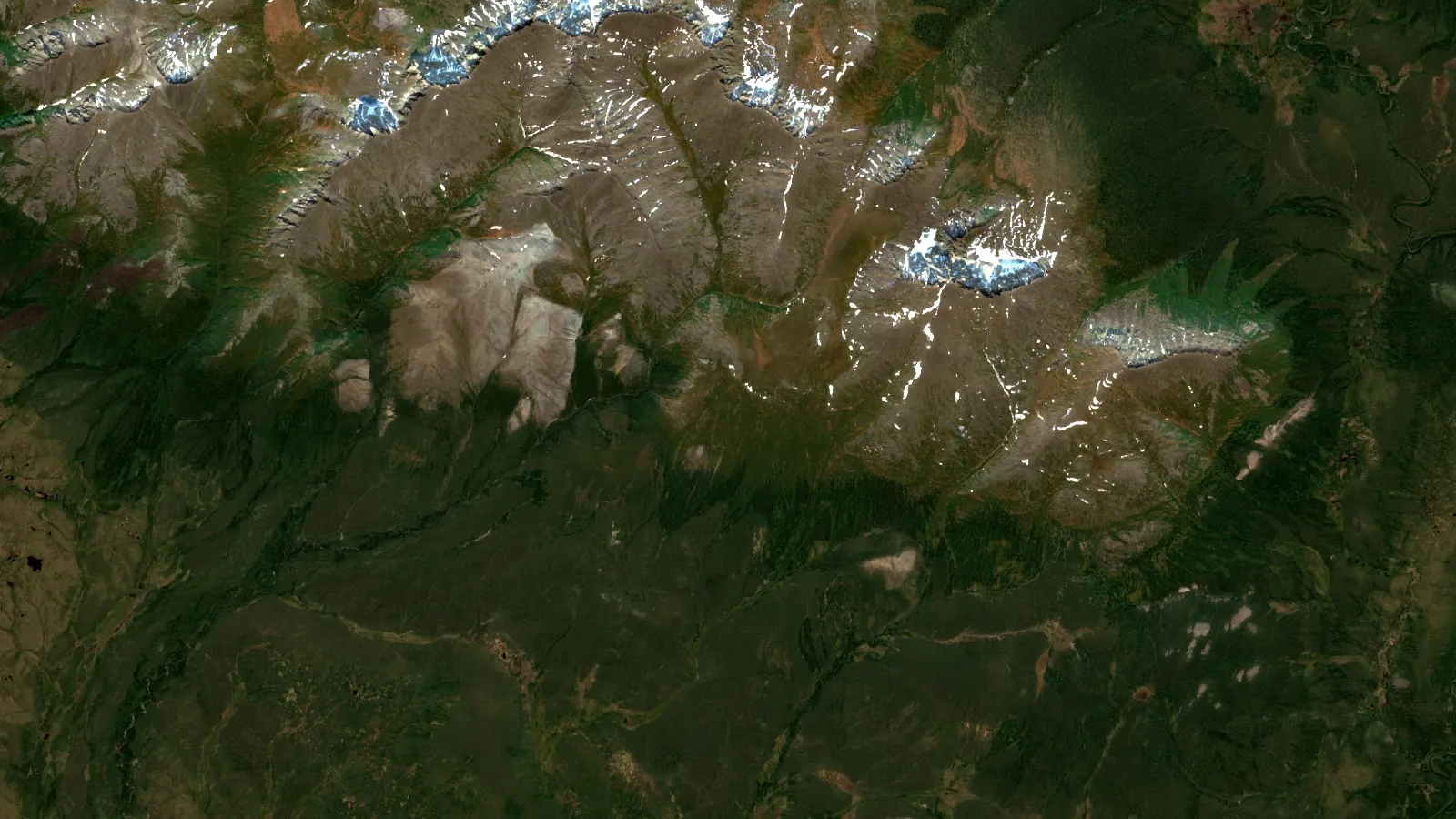
- Main source area: the Kobuk River valley, around the Jade Mountains, Jade Creek and Dahl Creek near the villages of Ambler, Kobuk and Shungnak.
- Land owner: most known jade ground sits on land owned by NANA Regional Corporation, one of Alaska’s 13 Regional Native Corporations (DGGS).
A common error online places Alaska’s jade on the Seward Peninsula. That is wrong: the Kobuk valley lies north of the Arctic Circle, east of Kotzebue, well away from the Seward Peninsula and Nome.
What nephrite jade is
“Jade” is a trade name for two different materials. According to the Gemological Institute of America (GIA), gemologists use the word for nephrite and jadeite, and under some conditions green omphacite. Both are rocks made of tiny interlocking crystals, which is what makes them so tough.
- Nephrite is a dense mat of fibrous amphibole crystals (tremolite to actinolite). GIA notes that it ranges from translucent to opaque and from light to dark green, and also occurs in yellow, brown, black, grey and white. Its colours tend to be more muted than jadeite’s.
- Jadeite is a pyroxene. It is usually the more valuable material, and the finest pieces come from Asia.
- Toughness, not hardness: hardness is resistance to scratching; toughness is resistance to breaking. The International Gem Society rates both jade materials as “very tough”, while most gems are brittle. That is why nephrite was used for tools and blades long before it was used in jewellery.
Alaska nephrite is mostly spinach to dark green, with some near-black and grey-green material. Colour in nephrite comes mainly from iron: more iron pushes the stone darker.
Where Alaska jade is found
The DGGS answer is short: most known occurrences are in the Kobuk River region of northwest Alaska, with other localities recorded in the Alaska Resource Data File. The best-known places are:
- Jade Mountains. A small range of the Baird Mountains, part of the Brooks Range, about 11 miles (18 km) long and 4 miles (6.4 km) wide. The range runs along the eastern edge of Kobuk Valley National Park, between Onion Portage and Ambler. George M. Stoney named them after his 1884 visit, when he collected jade samples for the Smithsonian.
- Jade Creek and Jade Mountain. Streams draining the range carry boulders and cobbles of nephrite.
- Dahl Creek and Shungnak River area. Jade float (loose boulders and pebbles) occurs in tributary creeks of the Kobuk River near Kobuk and Shungnak. Dahl Creek is also a historic placer gold creek.
Jade here forms where serpentinite meets other rocks. DGGS explains that nephrite and jadeite both form in settings with serpentinite, a metamorphosed rock that was high in iron and magnesium and low in silica. Several asbestos minerals also form in serpentinites, and Alaska has 62 known natural asbestos localities, so cutting or grinding unknown green rock needs dust control and a proper identification first.
For Iñupiaq communities, jade was one of the strongest materials available before contact, used for tools, weapons, knives and beads. That history is why the Kobuk jade fields matter culturally as well as geologically.
Who can collect jade in Alaska
Because most known jade ground is owned by NANA Regional Corporation, collecting there needs the landowner’s permission. Parts of the range lie inside Kobuk Valley National Park, where collecting rocks is not allowed without authorisation. On state land, the Department of Natural Resources (DNR) public information centre can say whether ground is state land, open to mineral entry, or already claimed; DGGS points readers to the DNR Alaska Mapper and its Mineral Estate Map for that check. Owning a mining claim gives a right to the minerals, not to the land itself; our guide to Alaska gold claims covers how claims, rentals and annual work rules operate.
Basic rules for anyone prospecting: get written permission from the landowner, hold the right licence or claim, follow safety rules in remote country, and never use mercury.
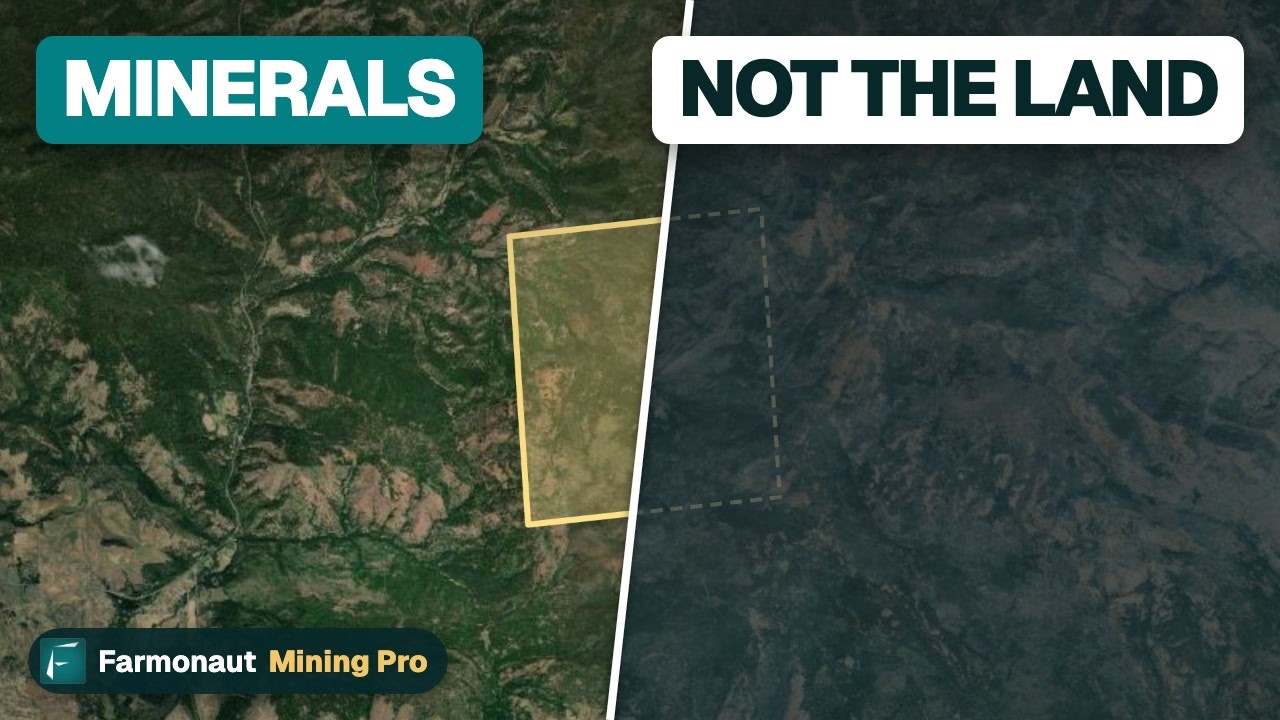
▶ Owning a claim is not owning the land: how mineral claims work and how to check ground first. · 3:19
Gemstone vs mineral vs fossil: Alaska’s three geology symbols
| Symbol | Official choice | Year adopted | What it means |
|---|---|---|---|
| State gem | Jade (nephrite in Alaska) | 1968 | An ornamental stone used for carving and jewellery |
| State mineral | Gold | 1968 | A native element and Alaska’s best-known metal |
| State fossil | Woolly mammoth | 1986 | Ice Age remains found across the state |
Chart
Alaska’s share of US metal output
Share of US mine production by tonnage, 2024 (%)
Gold and jade were adopted the same year, which explains why they are often mixed up. Gold is also one of the metals that makes Alaska a major mining state. The DGGS Special Report 78 on critical minerals (2026) uses USGS data to show that Alaska produced more than 80% of US zinc, about 42% of US silver and lead, and about 15% of US gold in 2024, and that the state’s nonfuel mineral production was worth $4.71 billion that year, sixth in the nation. The companies behind those mines are listed in our guide to Alaska mining companies.
Gemstones from Alaska besides jade
Jade holds the title, but it is not the only gem material in the state. Collectors also know Alaska for:
- Garnet: almandine garnet crystals in schist near Wrangell in southeast Alaska are the best known, often sold still in the host rock.
- Gold nuggets: not a gemstone, but nugget jewellery made from placer gold is a large part of Alaska’s gem and jewellery trade.
- Agate, jasper and other quartz: found on beaches and gravel bars in many parts of the state.
- Ivory: fossil mammoth ivory is carved and sold, but it is a fossil material, not a mineral gem.
For context on what counts as truly rare, see our guide to the rarest minerals; jade is not rare in that sense, but fine translucent material is uncommon.

▶ How satellites help find gold: mapping iron stains, clays and faults rather than the metal itself. · 4:25
Alaska jade vs California benitoite
California’s state gemstone makes a useful contrast. Benitoite, a blue barium titanium silicate, was discovered in early 1907 in San Benito County and was named California’s state gemstone in 1985, according to a GIA Gems & Gemology study of the New Idria district. Gem-quality benitoite has come mainly from one mine, the Benitoite Gem mine (once called the Dallas mine), which is why it is among the most restricted gem sources in the United States.
| Feature | Alaska: jade | California: benitoite |
|---|---|---|
| Year named | 1968 | 1985 |
| Material | Nephrite, an amphibole rock | Barium titanium silicate crystal |
| Main source | Kobuk River region, northwest Alaska | Benitoite Gem mine, San Benito County |
| Usual colour | Green to near-black | Blue, sometimes colourless or pink |
| Typical use | Carvings, slabs, cabochons, tools in the past | Small faceted stones and mineral specimens |
| Key property | Very tough | Strong fire (dispersion) for a blue gem |
The practical difference: benitoite is valued per carat because so little exists; nephrite is usually sold by weight because it occurs as boulders and slabs.
How much are gemstones worth in the US?
No public dataset gives Alaska jade output on its own. The national picture comes from the USGS Mineral Commodity Summaries 2026 (gemstones). It lists jade among the natural gems produced in the US and estimates the combined value of natural and laboratory-made gemstone output at $47 million in 2025, down 30% from 2024. Natural gems were about $9.4 million of that; Arizona led natural output, followed by Oregon, California, Nevada, Montana and Maine. Alaska is not among the six leading states.
Chart
US gemstone imports
US$ million, imports for consumption (2025 estimated)
Chart
US gemstone production value
US$ million, natural vs laboratory-created, 2021-2025 (2025 estimated)
Imports dwarf domestic output. USGS estimates US gemstone imports at about $11.0 billion in 2025, against $19.6 billion in 2024, and puts net import reliance at 99% of apparent consumption. In other words, almost every gem sold in the US, including much of the jade, is mined abroad.
How jade deposits are found
Jade prospecting in Alaska has always followed float: boulders in a creek are traced upstream to the outcrop they came from. The Kobuk valley has no road link to the rest of the state and a short field season, so each trip is expensive. Prospectors look for:
- Serpentinite belts: the host setting DGGS describes; these rocks often show as dull green or orange-weathering ridges.
- Contacts and shear zones: nephrite tends to form where serpentinite is sheared against other rock.
- Float trains: jade boulders in creek gravels, which are heavy, smooth and ring when struck.
- Confirmation: a specific gravity check or lab test to rule out serpentine and other green look-alikes.
Satellite imagery helps with the first two steps. Multispectral images can map magnesium-rich ultramafic rock, iron-oxide staining and long straight structures across a whole valley, so a field team knows which ridges and creeks to walk first. It cannot see jade or judge its quality; that still needs boots on the ground and a sample. Farmonaut offers satellite-based mineral detection for licence and claim areas, delivered as exploration targets ahead of fieldwork.
▶ Remote sensing for mining explained in plain English. · 2:01
Calculator: rough value of a jade piece
There is no public price index for Alaska jade. Rough nephrite is usually priced by weight, and the price depends on colour, translucency, and freedom from cracks and inclusions. The calculator below lets you enter the weight of a piece, the share you expect to be usable after cutting, your own price per kilogram and your cutting cost. The numbers in it are examples only; replace them with a quote from a buyer or a recent sale.
Calculator
What could a piece of rough jade be worth?
Enter your own weight, usable share, price and cutting cost.
- Usable jade (kg): 4.0
- Gross value (US$): $400
- Cutting cost (US$): $100
Example values only, not a benchmark or appraisal. No public Alaska jade price index exists. The price per kilogram is an input: example, use today’s price from a buyer quote or recent sale.
Frequently asked questions
What is the Alaska state gemstone?
Jade. The 1968 law names jade as the state gem; Alaska’s jade is nephrite, according to the DGGS.
When did jade become Alaska’s state gem?
The bill was approved on 26 March 1968 and took effect on 24 June 1968 (Chapter 51, Session Laws of Alaska 1968).
Is gold Alaska’s state gemstone?
No. Gold is the state mineral, adopted in the same year. Jade is the state gem.
What is Alaska’s state rock or state stone?
Alaska’s official symbol list has no separate state rock or stone. The geology symbols are jade (gem), gold (mineral) and the woolly mammoth (fossil).
Where is jade found in Alaska?
Mainly in the Kobuk River region of northwest Alaska: the Jade Mountains, Jade Creek, Dahl Creek and streams near Shungnak and Kobuk. Most of that land belongs to NANA Regional Corporation.
Is Alaska jade nephrite or jadeite?
Nephrite. DGGS notes that nephrite is the jade usually found in Alaska, while jadeite occurs in Asia.
Can I collect jade in Alaska?
Only with permission. Most jade ground is privately owned by NANA, and Kobuk Valley National Park does not allow rock collecting without authorisation. Check land status with the DNR before visiting.
What is California’s state gemstone?
Benitoite, a rare blue gem named the state gemstone in 1985 and found mainly at one mine in San Benito County.
How much is Alaska jade worth?
It depends on colour, translucency and soundness, and there is no public price index. Rough is generally sold by weight, finished carvings by the piece; use the calculator above with a buyer’s quote.
Is Alaska jade dangerous to cut?
Jade itself is not asbestos, but it forms in serpentinite, where asbestos minerals can also occur. DGGS lists 62 known natural asbestos sites in Alaska, so wet cutting and dust control are sensible for any unidentified green rock.
Questions about a specific claim or licence area can go to our team through the mining query form or the contact page. For mines across the state, see our US mining map by state.
This page is for information only. It is not legal advice or an appraisal. Confirm land status and collecting rules with the landowner and the Alaska DNR.
Farmonaut mining
Screen your Alaska claim from space
Claim owners and consultants can map ultramafic rock, iron staining and structures across a claim block with satellite data before planning fieldwork.

Mining Pro sample view, synthetic data
Keep reading
Sources
- Alaska DGGS, Frequently asked questions (jade, gold, claims): dggs.alaska.gov
- Alaska Legislature, Chapter 51 SLA 1968 (state gem): akleg.gov
- Alaska DGGS, Special Report 78: Critical minerals in Alaska (2026): dggs.alaska.gov
- USGS, Mineral Commodity Summaries 2026: Gemstones: pubs.usgs.gov
- GIA, Jade description: gia.edu
- GIA, Jade buyer’s guide: gia.edu
- GIA Gems & Gemology, Benitoite from the New Idria district (1997): gia.edu
- International Gem Society, Gemstone hardness and wearability: gemsociety.org
- Wikipedia, Jade Mountains (citing GNIS and NPS): en.wikipedia.org
- Wikipedia, List of Alaska state symbols: en.wikipedia.org
Discussion
Questions, corrections or field experience? Share them below. First-time comments are reviewed before they appear, and your email is never published.
No comments yet. Be the first to add a question or your experience.

 Sahel Shipping SA
 Sania Corporation
 Sean Mining Limited
 NTS Group (Pty) Ltd
 Mine4Africa
 Lithspo Minerals Limited
 Tintina Mining Group
 Dalgety Minerals Pty Ltd
 Vortex Minerals Pty Ltd
 Faith At Work (Pty) Ltd
 Geotech Mining Solutions plc
 Vulcan International Limited
 Kidepo Associates
 GKY Mining
 Alkimy SARL
 Double A Trading
 GemSprout Metals Limited
 Qader Group
 Ileys General Trading
 SG Gold Mining LLC
 VRV Global Pte Ltd
 Omsri International FZE
 G.I.T.T.
 Jaunita Erss Ltd

 Client · Tanzania · Gold
 Client & affiliate partner · Ghana · Gold










