

Canada Mining Companies: 7 Gold Mining Canada Companies Championing Sustainable Resource Stewardship
“Nearly 75% of Canada’s gold mines implement environmental monitoring programs to protect local ecosystems and agriculture.”
“Over 60% of Canadian gold mining companies partner with regional communities for sustainable land and resource management.”
Table of Contents
- Introduction
- The Importance of Mining in Canada’s Economy and Communities
- Balancing Sustainability, Agriculture & Forestry: The Canadian Approach
- Overview: Mining Companies of Canada
- Canada’s Top 7 Gold Mining Companies
- Comparative Sustainability and Community Impact Table
- Gold Mining Canada Companies: A Focus on Sustainable Development
- Infrastructure Benefits: Enabling Agriculture & Rural Communities
- Farmonaut: Satellite-Based Mineral Detection for Green Exploration
- Governance, Technology & Social Responsibility in Canadian Mining
- Best Practices in Environmental Stewardship & Reclamation
- Impact on Water, Agriculture, and Ecosystems
- Community Engagement & Indigenous Consultation
- Summary & Key Insights
- FAQs: Gold Mining Canada Companies & Sustainable Practices
Introduction
Canada stands at the forefront of global mining leadership, boasting one of the most robust and innovative ecosystems of mining companies globally. As a significant player in gold mining and mineral exploration, the mining sector in Canada forms a critical pillar of the country’s economy and community development across diverse regions. Yet, the modern era challenges companies to operate with heightened environmental consciousness—especially where mining intersects with agriculture, forestry, and regional communities. Readers focusing on these aspects demand a relevant lens that explains not just the gold output, but the broader sustainability context, particularly how companies balance resource stewardship with investment, infrastructure, and long-term land use goals.
Canada mining companies have pioneered integrated approaches that address the needs of local communities, agricultural productivity, environmental integrity, and long-term land rehabilitation—making the Canadian gold mining model a global benchmark for sustainable mineral development.
The Importance of Mining in Canada’s Economy and Communities
Canadian mining companies operate across a vast spectrum: from exploration for precious metals, base metals, and industrial minerals, to the development and operation of some of the world’s most advanced gold mines. The sector’s influence is felt in several key domains:
- ✔ Economic Driver: Over 620,000 jobs supported, with gold mining alone contributing billions to GDP annually.
- 🌲 Regional Resilience: Mining brings investment, infrastructure, and skilled employment to rural and remote communities across the country.
- 📈 Sustainable Development: Modern operations invest heavily in environmental management and partnerships with local agricultural and forestry sectors.
- 🔗 Cross-Sector Collaboration: Multiple industries including agriculture, timber, defence, and transport are deeply connected to mining activities and outcomes.
- 🎯 National Security: Strategic minerals and metals supply chains critical for defence and advanced manufacturing originate from Canadian mines.
Balancing Sustainability, Agriculture & Forestry: The Canadian Approach
Today’s Canadian mining companies must responsibly manage the lifecycle of mineral projects—beginning with exploration (often enabled by remote sensing and satellite analytics, like those from Farmonaut), continuing through development, operation, and closure. This stewardship ensures coexistence with other vital land uses, such as forestry, agriculture, and ecosystem preservation.
-
🌱
Environmental Stewardship: Protecting soil quality, watersheds, and ecosystems for the long term. -
🍒
Agricultural Integration: Ensuring minimal disruption to crops, grazing, and food security through thoughtful planning.
-
🛤️
Infrastructure Benefits: Upgrading roads, power networks, and service systems for community use. -
🤝
Community Development: Creating long-term employment, business, and educational opportunities for local residents and Indigenous communities.

Overview: Mining Companies of Canada
The mining companies of Canada are diverse, ranging from global giants to agile juniors. Their activities span exploration, development, mine operations, mineral processing, and supply chain management—with a strong culture of compliance, innovation, and responsible development.
- ⛏️ Canada is home to the world’s largest number of publicly listed mining companies—over 1,200—operating mines across all provinces and territories.
- 💎 The country’s geology offers world-class gold, precious metals, base metals, and industrial minerals (gypsum, potash, lithium, and more).
- 🌐 Canadian gold mining companies invest in every continent and lead on ESG benchmarks.
- 🌲 Activities frequently intersect with forestry, agricultural, and rural land-use zones.
Modern Canadian gold mining companies emphasize land rehabilitation and sustainable investment—making them increasingly attractive to impact-oriented investors and those focused on ESG leadership.

Canada’s Top 7 Gold Mining Companies: Balancing Environment, Economy, and Community
Gold remains the anchor for mining companies in Canada. Here are seven prominent gold mining Canada companies famous for balancing economic performance with environmental stewardship and community engagement:
- Barrick Gold Corporation – An iconic Toronto-based multinational with a commitment to tailings management and progressive reclamation.
- Agnico Eagle Mines Limited – Renowned for sustainable practices and robust Indigenous consultation programs.
- Newmont Corporation (Canadian operations) – Implements aggressive GHG reduction and water stewardship plans.
- Kirkland Lake Gold (Now Agnico Eagle) – Advanced groundwater monitoring and minimizing land footprint.
- Kinross Gold Corporation – Prioritizes progressive rehabilitation and supporting regional agricultural sectors.
- Iamgold Corporation – Leading in community employment and habitat restoration.
- Yamana Gold Inc. (now part of Pan American Silver with ongoing Canadian interests) – Focus on biodiversity offsets and cross-sector infrastructure improvements.
Together, these gold mining Canada companies exemplify best practices in environmental performance, community-focused development, and economic strength—especially as their activities intersect with local agriculture, forestry, and infrastructure.
When evaluating potential gold mining investments, review a company’s annual sustainability report for details on land reclamation, water management, community programs, and agricultural collaboration.

Comparative Sustainability and Community Impact Table
| Company Name | Primary Gold Mining Location | Estimated Annual Gold Output (tons) | Sustainability Rating | Environmental Initiatives | Agricultural Collaboration | Community Programs |
|---|---|---|---|---|---|---|
| Barrick Gold Corporation | Ontario, Quebec | ~140 | High | Advanced tailings & closure; ecosystem monitoring | Yes – Irrigation and water quality projects | Yes |
| Agnico Eagle Mines Limited | Quebec, Nunavut, Ontario | ~110 | High | Progressive reclamation, biodiversity offsets | Yes – Soil and forest restoration collaborations | Yes |
| Newmont Corporation (Canada) | Ontario, Quebec, Northwest Territories | ~80 | High | Comprehensive water treatment & GHG targets | Partial – Local watershed support | Yes |
| Kirkland Lake Gold (Agnico) | Ontario | ~45 | Medium-High | Extensive groundwater and land use monitoring | Yes – Crop land conservation efforts | Yes |
| Kinross Gold Corporation | Ontario, Nunavut | ~62 | Medium-High | Topsoil preservation, land return after closure | Yes – Fertile soil rehabilitation | Yes |
| Iamgold Corporation | Ontario, Quebec | ~30 | Medium | Habitat restoration & regional wetlands | No – Focus on ecosystem integrity | Yes |
| Yamana Gold Inc. (Pan American Silver) | Ontario, Quebec | ~25 | Medium | Wildlife corridors, cross-sector infrastructure upgrades | Partial – Community initiatives | Yes |

Evaluating gold mining Canada companies solely based on annual output without considering their environmental initiatives and community engagement strategies can lead to an incomplete assessment. Sustainability ratings and reclamation records matter!
Gold Mining Canada Companies: A Focus on Sustainable Development
Canada’s gold mining companies operate under a governance framework that emphasizes environmental stewardship, community input, and the prevention of contamination—helping ensure long-term land and water integrity for adjacent agricultural and forestry activities.
-
🌿
Environmental Monitoring: Continuous tracking of soil, water, and air quality -
💧
Water Treatment: Advanced tailings and runoff management
-
🔄
Land Rehabilitation: Progressive reclamation and ecosystem restoration -
👥
Community Involvement: Employment, training, and shared infrastructure
For example, modern tailings treatment programs and robust water monitoring reduce offsite impact and safeguard downstream farms, grazing lands, and wild habitats. Simultaneously, companies pursue integrated reclamation plans that restore disturbed lands for productive agricultural, forestry, or community use—even after mine closure.
To learn more about satellite-based mineral detection solutions that support early-stage exploration without land disturbance, we recommend reviewing the Satellite-Based Mineral Detection platform by Farmonaut. It’s specifically designed for environmentally-conscious mining companies seeking to balance discovery with responsible stewardship.

Mining Infrastructure Benefits: Enabling Agriculture & Rural Communities
A defining feature of Canada’s mining-led regional development is the spillover benefit of upgraded roads, power supply, and water management systems. These infrastructure investments not only support mining operations, but also directly benefit farmers, forest managers, and remote communities.
- 🛣️ New or improved roads reduce crop transport time and enhance access to markets for timber, minerals, and agricultural goods.
- ⚡ Electrification extends grid coverage to rural areas, enabling modern irrigation systems, food processing, and cold chains.
- 🚰 Water treatment & management projects support both mining and local irrigation/fish habitat health.
- ⛓️ Robust supply chains emerge, linking mines, mills, silos, and sawmills across regions.
Furthermore, these companies minimize disruption to existing farming activities through careful land use planning—buffer zones, seasonal work windows, and close coordination with local producers.
Looking to map your mining site with the world’s most advanced satellite analytics? Map Your Mining Site Here for faster, more environmentally friendly exploration intelligence!
Mining infrastructure upgrades extend beyond gold: new roads and power lines often become lifelines for rural Canadian farms, forestry operations, and even emergency services.
Farmonaut: Satellite-Based Mineral Intelligence for Modern Exploration
At the core of responsible, sustainable mineral exploration is advanced technology. Farmonaut has established itself as a global leader in satellite-based mineral detection—revolutionizing how mining projects begin their lifecycle. By shifting exploration from the ground to space, Farmonaut enables:
- 🔬 Rapid area screening: Identify high-potential mineralized zones across thousands of hectares before any on-ground activity.
- 📉 Cost savings: Reduce exploration costs by up to 80–85% compared to traditional trenching or drilling.
- 🌳 Zero ground impact: Early-stage exploration without soil disruption, deforestation, or ecosystem risk.
- 📊 Structured mineral intelligence: Actionable PDF & GIS reports for technical and commercial planning.
We, at Farmonaut, are proud to support Canadian and global mining companies with our satellite-based mineral detection and Satellite-driven 3D Mineral Prospectivity Mapping solutions. Our platform delivers fast, efficient, and environmentally friendly intelligence for early mineral targeting—helping teams focus resources, avoid unnecessary land disturbance, and plan smarter development.
For a customized mineral intelligence report, visit Get Quote or for further questions, Contact Us.
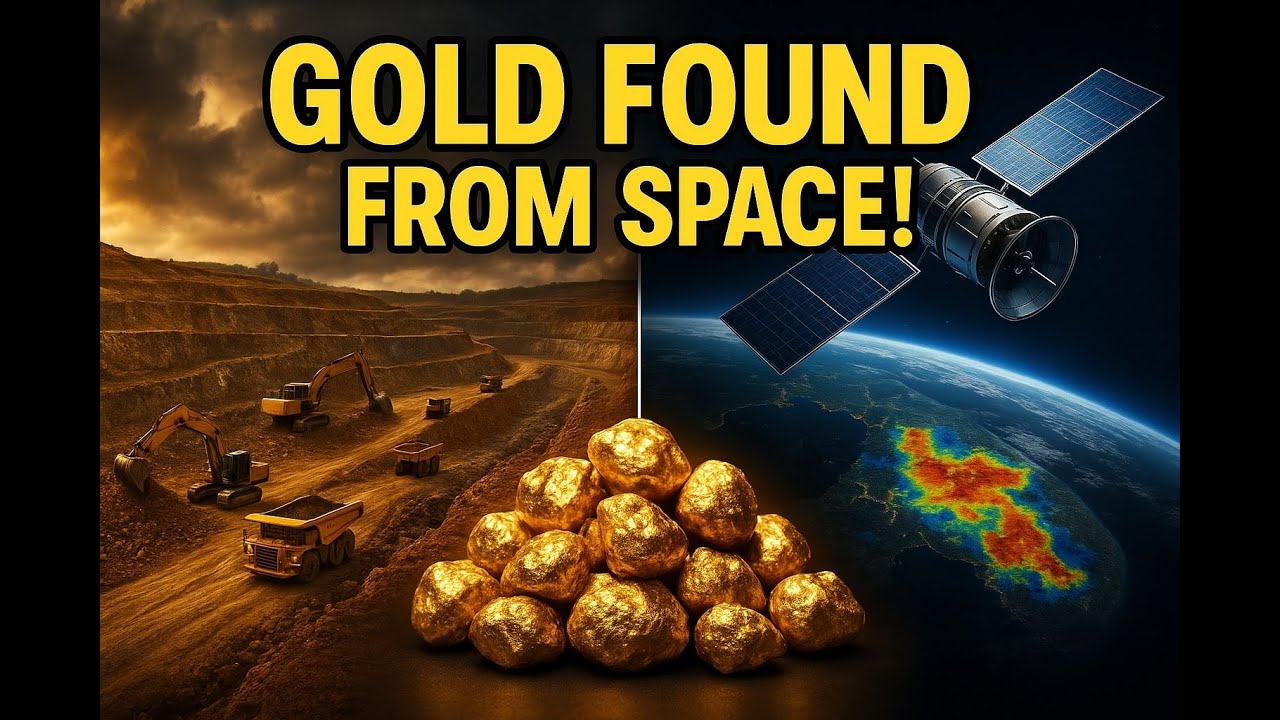
Farmonaut has helped accelerate the mineral discovery process for gold, lithium, copper, uranium, and more—reducing timeline and cost by as much as 80% for exploratory projects worldwide.
“Nearly 75% of Canada’s gold mines implement environmental monitoring programs to protect local ecosystems and agriculture.”
“Over 60% of Canadian gold mining companies partner with regional communities for sustainable land and resource management.”
Governance, Technology & Social Responsibility in Canadian Mining
Canadian mining companies work under a governance framework that emphasizes:
- ⚖️ Rigorous environmental assessment: Projects undergo strict screening for water, soil, and air impact.
- 📝 Stringent permitting and compliance: Permits require proven plans for land reclamation, contamination prevention, and water protection.
- 🤝 Indigenous consultation: Open, meaningful engagement with Indigenous rights holders and incorporation of traditional ecological knowledge into project design.
- 🤲 Transparency and reporting: Ongoing public reporting on sustainability performance, emissions, and community impact.
Assuming that high output equals high community benefit—companies with robust Indigenous relations and stakeholder programs contribute more to regional resilience and harmony.
Best Practices in Environmental Stewardship & Reclamation
The most progressive mining companies of Canada invest in best practices for environmental stewardship and eventual reclamation:
- 🌄 Progressive land rehabilitation: Restoring ecosystems, stabilizing soil, and enabling productive reuse for farming or forestry.
- 🌊 Integrated watershed management: Monitoring groundwater, surface flows, and watershed integrity to protect both crops and aquatic habitats.
- 🦫 Biodiversity off-sets: Creating or restoring equivalent habitats for species displaced by mining activities.
- 🛡️ Soil and water contamination prevention: Advanced systems for isolating tailings and treating effluent.
Companies like Agnico Eagle, Barrick, and Kinross have established themselves as leaders in returning disturbed lands to productive use, whether for grazing, farming, or reforestation.

Impact on Water, Agriculture, and Ecosystems
- ✔ Watershed Protection: Best practice mines implement real-time water monitoring for both chemical and biological health—enabling rapid response to anomalies.
- ✔ Agricultural Synergies: Upgraded water supply and irrigation systems not only serve the mine but also local farms, enhancing food system resilience.
- ✔ Ecosystem Safeguards: Selective clearing, replanting, and wildlife corridors protect native fauna and flora.
- ✔ Soil Conservation: Soil layers are preserved and replaced post-mining to restore crop productivity and grazing viability.
Community Engagement & Indigenous Consultation
Long-term sustainability for gold mining Canada companies depends on real outcomes for people:
- 👥 Employment & Training: Mining activities generate year-round, well-paying jobs for local residents and Indigenous workers.
- 📚 Education & Business: Skills development and procurement opportunities support regional economic diversification.
- 🏥 Health & Social Programs: Investment in clinics, schools, and recreation enhances community wellbeing.
- 🔗 Coexistence with Traditional Land Uses: Respectful consultation and integrated land-use plans help align mining, agriculture, and forestry for lasting prosperity.
Farmonaut supports this coexistence by delivering exploration solutions that minimize disturbance, making it easier to demonstrate responsible stewardship from the outset.
ESG priorities are more important than ever. Gold mining Canada companies scoring high on community engagement, reclamation, and agricultural collaboration are better positioned for long-term value—and often face fewer regulatory or social delays.
Summary & Key Insights for Canada Gold Mining Companies
- ✔ Canada mining companies are global leaders in balancing environmental, economic, and social goals.
- ✔ Gold mining Canada companies drive regional economic growth, create sustainable infrastructure, and foster agricultural benefits.
- ✔ Early-stage satellite mineral intelligence (like Farmonaut’s) reduces exploration costs, timelines, and ground impact—enabling sustainable development.
- ✔ Best practices in reclamation, water, and soil management safeguard both ecosystems and food systems for the future.
- ✔ Collaboration with local, Indigenous, and agricultural communities delivers long-term benefits across sectors.
For readers focused on agriculture, forestry, infrastructure, or regional economic impact, Canada’s mining companies offer a model for how resource development can benefit multiple stakeholders—while ensuring that lands, water, and communities thrive alongside robust mineral production.
Ready to unlock sustainable mineral opportunity without disturbing the land? Discover more with Farmonaut’s Satellite Mineral Detection Platform or Map Your Mining Site Here today.
FAQs: Gold Mining Canada Companies & Sustainable Practices
Q1. Why is Canada considered a global leader in sustainable gold mining?
Canada’s mining sector combines strict environmental regulations, comprehensive community engagement, and industry innovation. Top gold mining Canada companies consistently implement advanced water management, land rehabilitation, and Indigenous consultation—resulting in more harmonious integration of mining, agriculture, and ecology.
Q2. How do Canadian mining companies reduce their environmental footprint?
They use progressive reclamation plans, robust tailings management, water treatment technologies, and satellite monitoring. Early-stage exploration—supported by platforms like Farmonaut—further reduces soil and habitat disruption.
Q3. What are the main economic benefits of gold mining in Canadian rural areas?
The economic impact includes job creation, improved roads and power, business spin-offs, and greater market access for timber and agricultural goods. These benefits support long-term regional resilience.
Q4. Do gold mining Canada companies engage with agricultural and forestry stakeholders?
Yes, most major mining companies develop land-use plans in collaboration with agricultural producers, foresters, and local governments. This minimizes conflict and creates shared value, especially through water and soil management strategies.
Q5. How can technology support responsible mineral exploration?
Satellite analytics and remote sensing—like those offered by Farmonaut—allow companies to identify mineral deposits without ground disturbance, reducing exploration time, cost, and environmental impact. This approach aligns resource development with modern stewardship standards.
Learn More and Start Smarter Exploration
Discover Satellite-Based Mineral Detection for rapid, non-invasive exploration.
See how Satellite-Driven 3D Prospectivity Mapping works for advanced mineral targeting.
Get a Quote: Custom Mineral Intelligence
✨ Map Your Mining Site Here for instant satellite analysis! ✨
Contact Us for More Information
Discussion
Questions, corrections or field experience? Share them below. First-time comments are reviewed before they appear, and your email is never published.
No comments yet. Be the first to add a question or your experience.

 African Venture Partners Holding
 Congo Mining Solutions
 Mining SARL
 SenGold Invest SAS
 Sania Corporation
 Sean Mining Limited
 NTS Group (Pty) Ltd
 Mine4Africa
 Lithspo Minerals Limited
 Tintina Mining Group
 Dalgety Minerals Pty Ltd
 Vortex Minerals Pty Ltd
 Faith At Work (Pty) Ltd
 Geotech Mining Solutions plc
 Vulcan International Limited
 Kidepo Associates
 GKY Mining
 Alkimy SARL
 Double A Trading
 GemSprout Metals Limited
