

Battery metals · Demand guide
Cobalt Demand for EV Batteries: Chemistry and Outlook
EV battery makers used 113 kt of the 276 kt of cobalt demanded in 2025, up 25%, even as LFP cells with no cobalt passed half of EV batteries. Here is demand by use, chemistry and forecast.
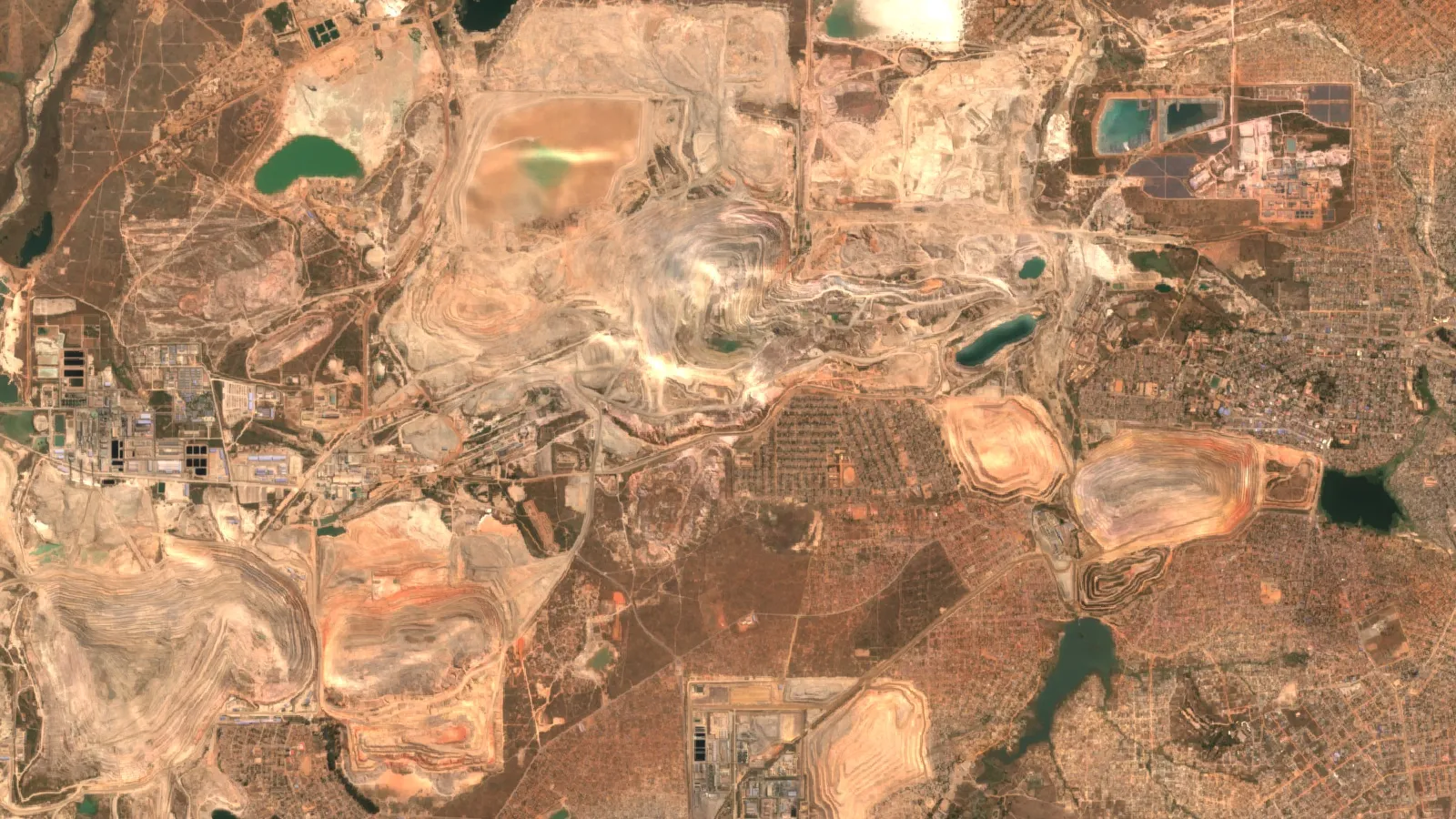
Key takeaways
- EV cell makers used 113 kt of cobalt in 2025, up 25% on 2024; total demand was 276 kt, up 13% (Cobalt Institute, May 2026).
- LFP, which holds no cobalt, was over 55% of EV batteries deployed worldwide in 2025, but EV cobalt demand still rose (IEA, Global EV Outlook 2026).
- Cobalt is 33% of the metal mix in NMC111, 20% in NMC622 and about 10% in NMC811 (Faraday Institution).
- EV cobalt demand is forecast to reach 220 kt by 2035, 66% of battery demand (Cobalt Institute, May 2026).
- Cobalt traded at US$39,345 per tonne on 14 October 2026 (Trading Economics).
In this article
- How much cobalt do EV batteries use each year
- Which battery chemistries use cobalt
- Is LFP replacing cobalt in EV batteries
- Cobalt demand outlook for the next decade and beyond
- How much cobalt does a battery plant need
- Portable, storage and defence demand
- Cobalt price and what it means for battery cost
- Recycling and secondary cobalt
- Environmental and sourcing checks behind the demand figures
- What mining consultants should take from the demand data
- Frequently asked questions
Electric vehicles took 113 kt (thousand tonnes) of the 276 kt of cobalt used worldwide in 2025, up 25% on 2024 and the largest single use, according to the Cobalt Institute’s May 2026 market report. Demand is still rising even though lithium iron phosphate (LFP) cells, which contain no cobalt, now fill more than half of new EV batteries, because the cars and cells that do use cobalt are being built in larger numbers. This page shows the numbers by use, by battery chemistry and by forecast, so you can judge where cobalt demand for EV batteries is heading.
The page is written for mining consultants and project owners. It covers demand, not supply: for who mines the metal and how the DRC export quotas work, read our companion guide on cobalt mining for electric cars.
How much cobalt do EV batteries use each year
Total refined cobalt demand reached 276 kt in 2025, 13% more than in 2024 (Cobalt Institute, May 2026, Benchmark Mineral Intelligence data). Batteries of all kinds took 212 kt of that, about 77%. The rest went to superalloys, hard metals, catalysts and other industrial uses.
Chart
Cobalt demand by use, 2025
Thousand tonnes of cobalt, four main uses (world total 276 kt; other uses not shown)
Inside batteries, the split is clear. Gigafactories (large cell plants) making EV batteries used 113 kt, a 25% rise on 91 kt in 2024. Batteries for phones, laptops and other portable devices used 93 kt, and stationary storage used 6.2 kt. Superalloys, the heat-resistant metals used in jet engines and gas turbines, used 20 kt, up 7.5%.
The report counts cobalt when the cell is made, not when the car is sold. A cell built in China for a car sold in Europe adds to Chinese demand in the year of manufacture. This matters if you compare these figures with national EV sales.
Which battery chemistries use cobalt
A battery chemistry is named after the metals in its cathode, the electrode that holds most of the cobalt. Four names cover almost all battery cells:
Chart
Cobalt share of the metal mix by chemistry
Per cent of nickel, manganese and cobalt (and aluminium for NCA); LFP holds none
- NMC (lithium nickel manganese cobalt oxide) is written with three digits for the metal ratio. NMC111 has equal parts nickel, manganese and cobalt (33% each). NMC622 has 20% cobalt and NMC811 has 10%, according to the Faraday Institution’s cathode review.
- NCA (lithium nickel cobalt aluminium oxide) holds about 15% cobalt in its metal content (IEA, Global EV Outlook 2026).
- LCO (lithium cobalt oxide) is the original cobalt cathode and is mainly used in portable electronics rather than cars (Faraday Institution).
- LFP (lithium iron phosphate) contains no cobalt or nickel.
The shares above are by metal content, not by weight of the cell. For a weight figure, the International Council on Clean Transportation (ICCT) puts NMC811 cathodes at about 0.08 kg of cobalt per kWh in model year 2023, which means roughly 8 kg of cobalt in the cathode of an average 300-mile-range battery electric car (ICCT, 2024).
| Chemistry | Cobalt in the metal mix | Typical use | Source |
|---|---|---|---|
| LCO | Cobalt is the only transition metal | Phones, laptops, soldier-power packs | Faraday Institution; Cobalt Institute |
| NMC111 | 33% | Older EV and portable cells | Faraday Institution |
| NMC622 | 20% | EVs and portables | Faraday Institution |
| NCA | About 15% | Premium EVs | IEA, Global EV Outlook 2026 |
| NMC811 and NMC721 | About 10% | Long-range EVs | IEA; Faraday Institution |
| LFP | None | Mass-market EVs, stationary storage | IEA |
The IEA adds that NMC721, NMC811 and NCA together made up roughly 80% of 2025 EV battery deployment among the cobalt-containing chemistries. The USGS notes that the cobalt content of lithium-ion batteries is being decreased, which fits the Cobalt Institute’s figures: cobalt-containing battery output rose 32% in 2025 to 868 GWh, while battery cobalt demand rose 22% to 212 kt.
Is LFP replacing cobalt in EV batteries
LFP is taking share, but mainly in China. The IEA reports that LFP made up over 55% of EV batteries deployed worldwide in 2025, up from nearly 50% in 2024. In the European Union LFP stayed above 10% of EV battery sales, and nearly all of it was imported from China. In the United States the LFP share almost halved in 2025 from a low base, after higher tariffs on Chinese imports (IEA, Global EV Outlook 2026).
The Cobalt Institute shows the same split from the cobalt side. For EVs sold in 2025, the share of nickel-based (NCM and NCA) cathodes fell 8 percentage points to 44%. But at the factory, 48% of the EV cells produced by energy (MWh) still used these chemistries, 2 points more than in 2024. North America and Europe drove 51% of end-use cobalt demand from batteries, because their cars carry more cobalt-bearing cells than Chinese cars do. Cell and cathode demand is still centred in China, which took 68% and 63% of the 2026 demand for cells and cathodes respectively.
So the answer depends on where you look. Per car in China, LFP means no cobalt. Per tonne of cobalt sold worldwide, the EV segment grew 25% in 2025 because export-oriented factories kept building nickel-based cells. The report also notes that global EV cell capacity of over 3.4 TWh ran at less than 50% utilisation against 1.5 TWh of supply, and expects that overcapacity to keep pushing factory-level demand above what end-use sales alone would need until 2034.
Cobalt demand outlook for the next decade and beyond
The Cobalt Institute’s forecast (Benchmark Mineral Intelligence) has EV cobalt demand growing 10% in 2026 and reaching 220 kt by 2035. Portable electronics are a mature market and grow at only 0.3% a year to 2035. Stationary storage grows 3.8% a year but stays small because storage mostly uses LFP.
Chart
Share of battery cobalt demand by application
Per cent of cobalt used in batteries
The effect is a change in who buys the metal. In 2025 EVs were 53% of battery cobalt demand and portables 44%. The forecast has EVs at 62% in 2030, 66% in 2035 and 70% in 2040, with portables falling to 27% by 2040. Stationary storage stays at 2% to 3%.
Other forecasters are more cautious in the short run. Benchmark expects total cobalt consumption to rise 8% in 2026 and 2.5% in 2027, led by EVs, which it sees adding 14,900 tonnes in 2026 and 8,400 tonnes in 2027. The IEA’s announced-policies scenario has automotive cobalt demand rising by nearly two-thirds between 2025 and 2040, while S&P Global forecasts a 9.6% fall in automotive cobalt demand in China from 2026 to 2030 as LFP spreads (Ecofin Agency, citing the Cobalt Institute, IEA and S&P Global).
Forecasts also get revised. The Cobalt Institute’s Cobalt 2050 study of October 2024 expected EV cobalt demand to reach 115,000 tonnes by 2035 under a net-zero scenario (Cobalt Institute, Cobalt 2050), yet EV cells already used 113 kt in 2025 and the May 2026 report forecasts 220 kt by 2035. Totals differ between editions too: the October 2025 quarterly update put 2025 demand at 213 kt on an unadjusted basis, against 276 kt in the May 2026 annual report (Cobalt Institute, Q3 2025 quarterly report). Always quote the edition and the basis.
Policy has already cut some forecasts. Before the 2024 US election, Benchmark expected North American cobalt demand to reach nearly 85 kt by 2030. It now expects just under 45 kt, after changes to US clean-vehicle tax credits and rules on Chinese involvement (Cobalt Institute, May 2026). The IEA’s Global EV Outlook 2026 adds that high-nickel chemistries use small amounts of cobalt and LFP uses none, and that together they account for most of today’s EV battery market.
On the supply side, the same report forecasts mined supply growing from 270 kt in 2025 to 550 kt in 2035, with Indonesia reaching 32% share and the DRC staying above 50% through 2040. Supply and demand figures come from the same model, so treat them as one scenario, not a guarantee.
▶ Explains how mining contributes to an economy. · 5:03
How much cobalt does a battery plant need
Planners often start from a factory’s output in gigawatt-hours (GWh) and work back to the metal. The calculator below does that in four inputs: GWh made, the share of cells that use a cobalt chemistry, cobalt per kWh, and a price. Replace the example numbers with your own.
Calculator
How much cobalt does a battery plant need?
Enter the cells you make, the cobalt-bearing share and a price.
- Value at your price (US$): $15,600,000
- Percent of 2025 EV cobalt demand (113 kt): 0.35
Example values only, not a benchmark. 0.08 kg of cobalt per kWh is the ICCT figure for NMC811 cathodes in model year 2023; LCO and NMC111 cells use more, and LFP uses none. The price is an example, use today’s price (US$ per tonne). The last line compares the result with the 113 kt EV total of 2025.
Portable, storage and defence demand
Not all battery cobalt goes into cars. Portable electronics grew by 15 kt to 93 kt in 2025 on replacement demand and larger battery packs, including for AI-related devices (Cobalt Institute, May 2026). Stationary storage took 6.2 kt, up from 5.1 kt, and the report says its effect on cobalt stays limited because storage mainly uses chemistries without cobalt.
Chart
Battery cobalt demand grew in every segment
Thousand tonnes of cobalt
Defence is a smaller but growing use. The Cobalt Institute estimates military applications, including batteries, magnets and superalloys, used about 6.8 kt in 2025, and military drone batteries alone used 2.6 kt. These uses matter for policy because governments treat them as strategic, which is one reason the market reacts quickly to export rules.
Cobalt price and what it means for battery cost
Cobalt traded at US$39,345 per tonne on 14 October 2026, down 4.5% over the month and 7.9% over the year, based on a contract tracking the benchmark market (Trading Economics). Treat this as one dated reading, not a forecast.
The price moved on supply, not on demand. After the DRC banned exports in February 2025 and began a quota system in October 2025, cobalt hydroxide prices rose by over 300% during the year, sulphate by 266% and metal by 130% (Cobalt Institute, May 2026). The DRC set a 2026 quota of 87,000 tonnes plus a 9,600-tonne strategic quota. We explain the mechanics in our DRC supply guide.
Prices have since eased. Cobalt hydroxide delivered to China was worth US$15.70 per pound on 18 September 2026 against US$5.80 at the start of 2025, according to Platts as reported by Ecofin Agency, after reaching US$26 earlier in 2026.
A higher cobalt price does hurt battery makers less than it used to. The IEA notes that the effect of cobalt price swings on overall EV battery cost is far more limited today than in the past, because high-nickel cells use little cobalt and LFP uses none. It also reports that LFP packs were more than 40% cheaper than NMC packs per kWh on average in 2025, although part of the gap reflects stationary storage, which mostly uses LFP (IEA, Global EV Outlook 2026).
Recycling and secondary cobalt
Recycling already covers part of demand. Secondary supply met roughly one tenth of global cobalt demand in 2025, and the Cobalt Institute projects that share will almost double by 2040. Recyclers shred cells into black mass, a powder that is rich in cobalt when LCO, NCM and NCA cells are processed. LFP black mass carries no cobalt, so a shift to LFP also lowers the value of future scrap.
Recycled cobalt today comes mainly from end-of-life portable batteries and cell-factory scrap, with end-of-life EV scrap still small outside Europe. In the United States, the USGS estimates that purchased scrap made up 25% of cobalt consumption in 2025 (USGS, Mineral Commodity Summaries 2026). In 2025, weak EV demand in Europe and North America, gigafactory suspensions and low commodity prices squeezed recyclers’ margins and slowed new capacity (Cobalt Institute, May 2026).
Environmental and sourcing checks behind the demand figures
Rising battery demand puts pressure on mines, and buyers now ask where cobalt came from. The USGS estimates that the DRC mined 73% of the world’s cobalt in 2025, and that China is the leading refiner and the leading consumer, mainly for lithium-ion batteries (USGS, Mineral Commodity Summaries 2026). The European Commission lists cobalt among the critical raw materials for battery manufacturing whose extraction is concentrated in a few non-EU countries (European Commission, batteries policy page). Any project that adds cobalt output has land, water and tailings questions to answer. The short video below explains seven common environmental impacts of mining in plain language.
▶ A short claymation explaining seven environmental impacts of mining. · 2:31
What mining consultants should take from the demand data
Cobalt projects are mostly copper-cobalt or nickel-cobalt projects, so their economics follow the host metal as well as the cobalt price. Three points from the data are useful when you review one:
- Check the chemistry mix of the likely buyers. Demand growth is concentrated in nickel-rich cells, portable cells and defence, not in LFP.
- Check the sourcing rules. Quotas and tax-credit conditions changed forecasts in 2025 within months.
- Treat forecasts as scenarios. The same model that forecasts 220 kt of EV cobalt by 2035 also cut its North American 2030 forecast from nearly 85 kt to just under 45 kt after the 2024 US election.
Satellite data does not measure cobalt grade, but it can screen a licence area for rock types, alteration and access before money goes into drilling. Cobalt is on the list of minerals Farmonaut screens for, and the result is an exploration target, which comes before a resource estimate and does not replace one. See our satellite mineral detection overview, our guide to nickel, cobalt, graphite and vanadium targets, and our explainer on lithium deposit types for the other main battery metal. To discuss a site, use the mining query form or contact us.
▶ Explains remote sensing for mining: measuring the ground from a distance. · 2:01
Frequently asked questions
How much cobalt do electric vehicles use?
EV battery makers used 113 kt of cobalt in 2025, about 41% of the 276 kt total (the Cobalt Institute rounds the share to 39%). The figure counts cobalt at the cell factory, so it follows cell output, not car sales (Cobalt Institute, May 2026).
How much cobalt is in one EV battery?
It depends on the chemistry and the pack size. The ICCT estimates about 8 kg of cobalt in the cathode of an average 300-mile NMC811 battery electric car in model year 2023. An LFP pack contains none.
Which battery chemistry uses the most cobalt?
LCO, used in portable electronics, because cobalt is its only transition metal. Among EV chemistries, NMC111 (33% cobalt in the metal mix) uses more than NMC622 (20%), NCA (about 15%) and NMC811 (about 10%).
Will LFP end cobalt demand?
Not on current forecasts. LFP took over 55% of EV batteries in 2025 (IEA), yet EV cobalt demand rose 25% and is forecast to reach 220 kt by 2035 (Cobalt Institute).
What is the difference between NMC and NCA batteries?
Both are nickel-rich cathodes with some cobalt. NMC adds manganese and NCA adds aluminium. NCA is used in some premium EVs and carries about 15% cobalt in its metal mix.
Is cobalt demand growing or falling?
Growing. Total demand rose 13% to 276 kt in 2025, and the Cobalt Institute forecasts further EV growth of 10% in 2026.
Where does most battery cobalt end up being used?
China has the most cell and cathode demand, but North America and Europe drive 51% of end-use demand from batteries because their cars use more cobalt-bearing cells.
Why did the cobalt price rise so much?
Because of supply policy, not demand. The DRC export ban and quota system lifted hydroxide prices by over 300% during 2025 (Cobalt Institute, May 2026).
Can recycling replace mined cobalt?
Not yet. Secondary supply met roughly one tenth of demand in 2025 and is projected to almost double by 2040, which still leaves mining as the main source.
Are other batteries growing besides LFP and NMC?
Sodium-ion cells are tracked as a separate, small category in the Cobalt Institute’s EV chemistry chart, and like LFP they contain no cobalt.
This page is for information only. It is not investment advice. Cobalt prices and DRC export rules change often; check the sources linked above before relying on any figure.
Farmonaut mining
Map your mining site from space
Consultants can screen a licence area from satellite data as an exploration target, ahead of a resource estimate.
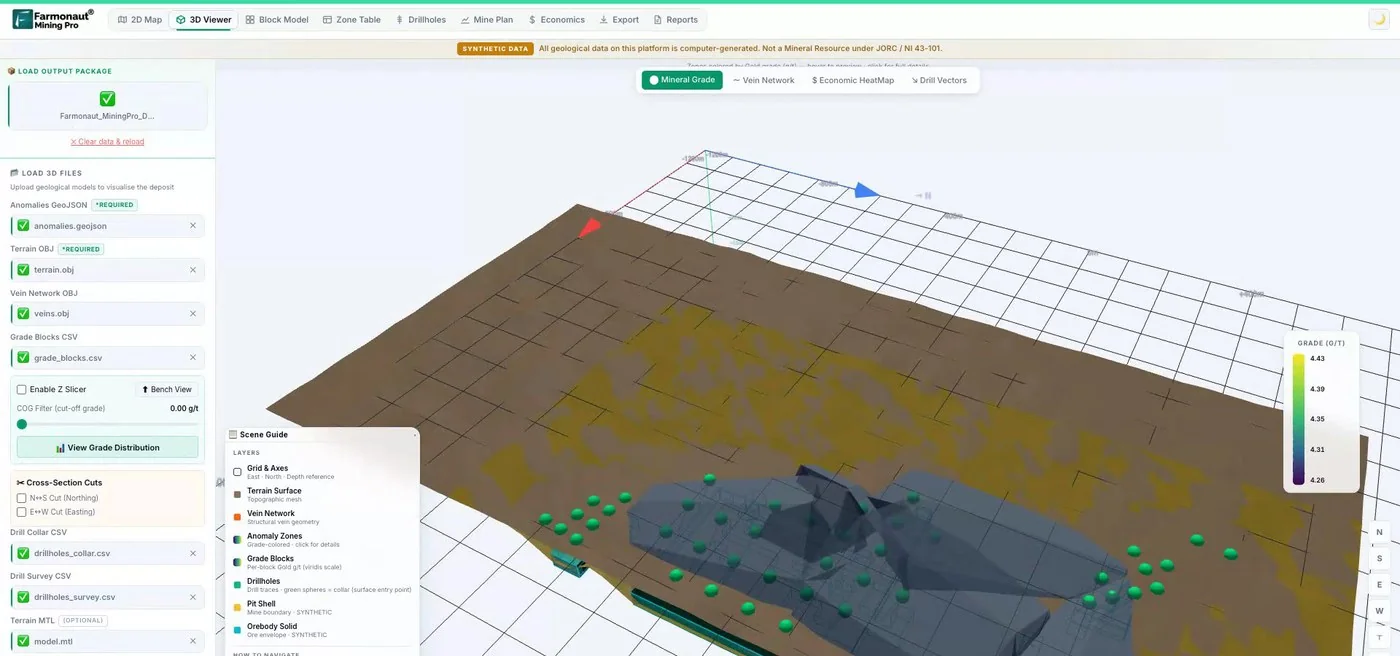
Mining Pro sample view, synthetic data
Keep reading
Sources
- Cobalt Institute, Cobalt Market Report 2025 (May 2026): cobaltinstitute.org
- Cobalt Institute, Cobalt 2050 net-zero study (October 2024): cobaltinstitute.org
- Cobalt Institute, Quarterly Cobalt Market Report Q3 2025: cobaltinstitute.org
- USGS, Mineral Commodity Summaries 2026: Cobalt: pubs.usgs.gov
- IEA, Global EV Outlook 2026: iea.blob.core.windows.net
- Faraday Institution, Insight 18: Developments in lithium-ion battery cathodes (2023): faraday.ac.uk
- ICCT, Investigating the U.S. battery supply chain and its impact on electric vehicle costs (2024): theicct.org
- Trading Economics, Cobalt price (14 October 2026): tradingeconomics.com
- Ecofin Agency, DR Congo’s cobalt demand holds strong despite rise of cobalt-free EV batteries: ecofinagency.com
- European Commission, Batteries: environment.ec.europa.eu
Discussion
Questions, corrections or field experience? Share them below. First-time comments are reviewed before they appear, and your email is never published.
No comments yet. Be the first to add a question or your experience.

 Sania Corporation
 Sean Mining Limited
 NTS Group (Pty) Ltd
 Mine4Africa
 Lithspo Minerals Limited
 Tintina Mining Group
 Dalgety Minerals Pty Ltd
 Vortex Minerals Pty Ltd
 Faith At Work (Pty) Ltd
 Geotech Mining Solutions plc
 Vulcan International Limited
 Kidepo Associates
 GKY Mining
 Alkimy SARL
 Double A Trading
 GemSprout Metals Limited
 Qader Group
 Ileys General Trading
 SG Gold Mining LLC
 VRV Global Pte Ltd
 Omsri International FZE
 G.I.T.T.
 Jaunita Erss Ltd
 SRK Consulting










