

Hudbay Copper World · Project status guide
Copper World Hudbay: Status, Permits and Timeline
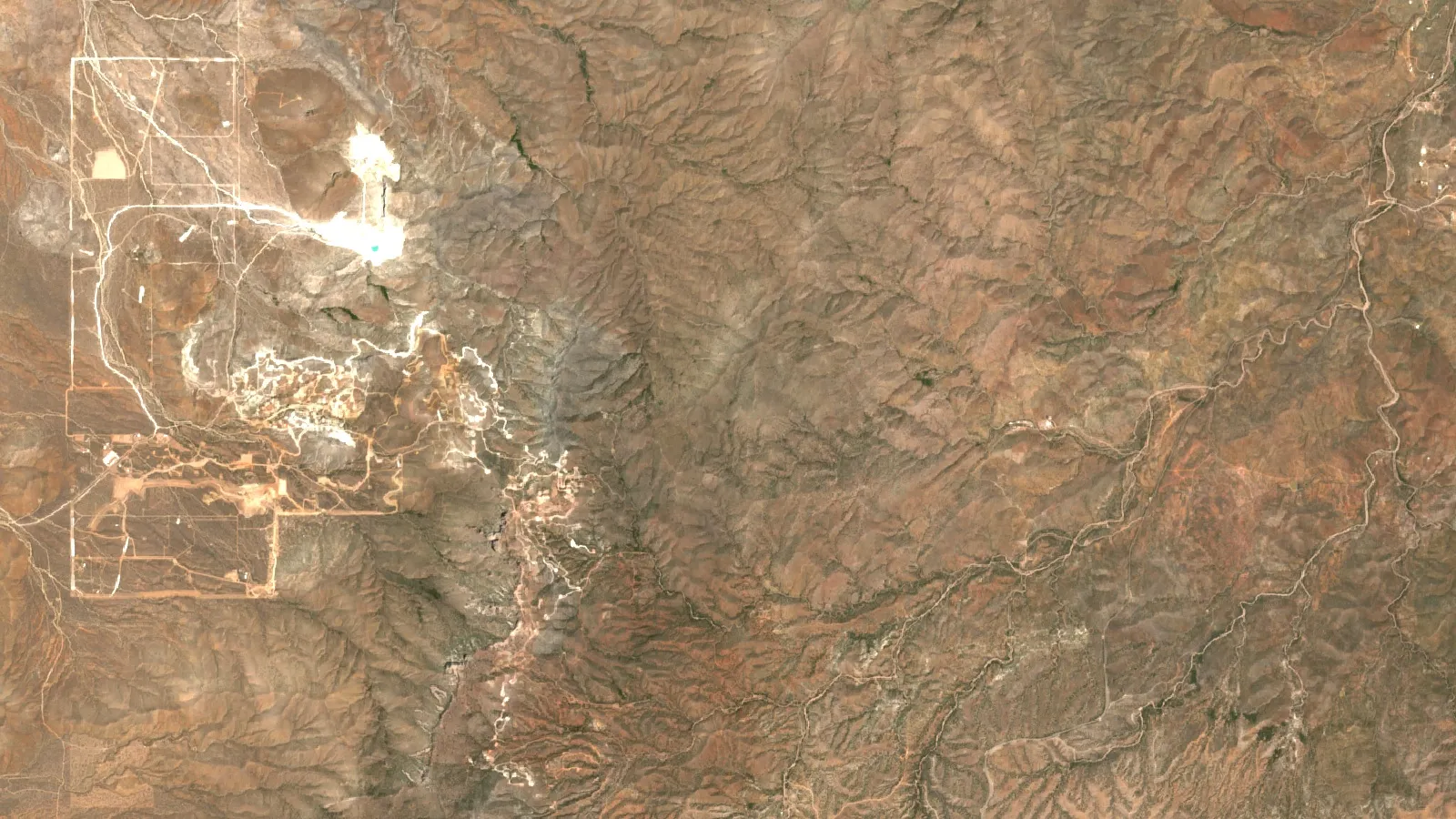
Hudbay and Mitsubishi approved construction of the Copper World copper mine in Arizona on 21 October 2026. It has 390 million tonnes of reserves at 0.47% copper and a first-production target in the second half of 2029.
Key takeaways
- Final investment decision on 21 October 2026: Hudbay (70%) and Mitsubishi (30%) approved construction; first production is targeted for the second half of 2029 (Hudbay, 2026).
- Reserves are 390 million tonnes at 0.47% copper; the Base Case averages 102,000 tonnes of copper a year over 10 years at a cash cost of US$1.65 per pound (Hudbay DFS, 2026).
- Initial capital is US$2.07 billion, up from about US$1.3 billion in the 2023 study; Base Case after-tax NPV is US$1.24 billion at US$5.00 per pound copper.
- The three key state permits are held; amendments for the mill expansion are still needed, and litigation over the air permit and some land rights is listed as a risk.
- At about 102,000 tonnes a year, Copper World would equal roughly a tenth of the 1.0 million tonnes of copper the USGS estimates the US mined in 2025.
In this article
- Project status at a glance
- Timeline from Rosemont to construction
- Permits: what is in hand and what is still open
- Reserves and resources explained
- Production, costs and capital: Base Case against Extension Case
- What Copper World economics depend on: the copper price
- How Copper World is being funded
- Copper World in the US copper market
- Other Hudbay mines and the Cactus project
- Water, land and community effects
- How to check a copper development project yourself: 6 steps
- Frequently asked questions
Hudbay Minerals (TSX, NYSE: HBM) and its partner Mitsubishi approved construction of the Copper World project in Arizona on 21 October 2026, with first copper targeted for the second half of 2029. The plan is a 15-year open pit on 390 million tonnes of reserves at 0.47% copper, averaging 102,000 tonnes of copper a year over its first 10 years, for initial capital of US$2.07 billion (Hudbay definitive feasibility study release, 21 October 2026). The sections below set out the status, the permits, the reserves and the timeline, with every figure dated and sourced. This page gives facts only and is not investment advice.
Project status at a glance
Copper World sits in Pima County, about 50 km (31 miles) southeast of Tucson, Arizona. Hudbay owns 70% through Copper World LLC, and Mitsubishi Corporation owns 30% under a joint venture that closed on 12 January 2026. The table collects the headline numbers from Hudbay’s October 2026 definitive feasibility study (DFS), the final engineering and cost study that a board uses to sanction a mine.
| Item | Detail (Base Case) |
|---|---|
| Owners | Hudbay 70%, Mitsubishi 30% |
| Status | Final investment decision taken 21 October 2026; construction approved |
| Type of mine | Open pit, shovel and truck, with a flotation concentrator making copper and molybdenum concentrates |
| Mine life | 15 years on reserves; 37 years in the Extension Case that needs federal permits |
| Reserves | 390 million tonnes at 0.47% copper (effective 1 August 2026) |
| Copper output | 102,000 tonnes a year on average over the first 10 years |
| Cash cost, first 10 years | US$1.65 per pound of copper, net of gold, silver and molybdenum credits |
| Initial growth capital | US$2.07 billion (US$1.84 billion net of the precious metals stream deposit) |
| First production target | Second half of 2029 |
| Jobs expected | Over 1,000 in construction, 500 permanent, up to 3,000 indirect |
A final investment decision (FID) means the owners have committed the money to build. It is not the same as production: Hudbay’s study spreads the initial spending over a 36-month build before commercial production. The Base Case assumes a long-term copper price of US$5.00 per pound, and every economic figure on this page moves with that assumption.
Timeline from Rosemont to construction
Copper World grew out of the older Rosemont project on the same side of the Santa Rita Mountains. Hudbay inherited Rosemont when it bought Augusta Resource in 2014 (MINING.COM, 2016). Rosemont depended on national forest land for waste rock. In May 2022 the Ninth Circuit Court of Appeals, in a 2-1 decision, upheld a 2019 ruling that had struck down the Forest Service approval (E&E News, 13 May 2022). Hudbay then moved ahead with Copper World, which is designed to run on private land and so needs state and local permits only. The East deposit in the plan is the former Rosemont deposit, joined by four deposits discovered in 2021 (Hudbay, October 2026).
| Date | Milestone |
|---|---|
| June 2022 | Preliminary economic assessment (PEA) with a two-phase plan: Phase I on private land, Phase II onto federal land |
| September 2023 | Enhanced pre-feasibility study (PFS) for Phase I: 20-year life, 85,000 tonnes of copper a year, initial capital about US$1.3 billion |
| August 2024 | Aquifer Protection Permit issued |
| January 2025 | Air Quality Permit issued, the last major state permit |
| August 2025 | Mitsubishi joint venture agreement announced |
| 12 January 2026 | Mitsubishi investment closes; US$420 million paid at closing, US$180 million to follow within 18 months |
| 24 June 2026 | Hudbay completes the Arizona Sonoran takeover, adding the Cactus project |
| 21 October 2026 | DFS released and construction approved by Hudbay and Mitsubishi |
| 2028 | Hudbay’s first capital contribution to the project expected |
| Second half of 2029 | Target for first production |
Sources for the table: Hudbay’s 2023 PFS release, its March 2026 reserve and resource update and the January 2026 Mitsubishi closing release.
Permits: what is in hand and what is still open
Hudbay says it holds all three key state permits for the original 60,000 tons-per-day plan: the Mined Land Reclamation Plan (first approved October 2021, with the amended plan approved in 2022), the Aquifer Protection Permit (August 2024) and the Air Quality Permit (January 2025). The Air Quality Permit was announced as the final major permit, and the company’s chief executive described Copper World as fully permitted at that point (North American Mining, 15 January 2025). The Base Case stays inside the project’s private land boundary, so no federal permit is needed to build and start the mine.
| Permit or approval | Issuing body | Status in Hudbay’s filings |
|---|---|---|
| Mined Land Reclamation Plan | Arizona State Mine Inspector | Approved October 2021; amended plan approved in 2022 (the court challenge to it was dismissed in May 2023) |
| Aquifer Protection Permit | Arizona Department of Environmental Quality (ADEQ) | Received August 2024 |
| Class II air quality permit | ADEQ | Received January 2025 |
| Groundwater withdrawal permit | Arizona Department of Water Resources | Up to 6,000 acre-feet a year; current term expires January 2028, renewable in 20-year terms |
| Power line certificate | Arizona Corporation Commission | Issued to Tucson Electric Power |
| Floodplain use permit for the water line | Pima County | Listed in the technical report |
The permit list and the water figures come from the NI 43-101 technical report filed on SEC EDGAR. Three points matter to anyone reading the status:
- Amendments are still needed. The technical report lists permit modifications for the in-pit crushing and conveying system, the expansion of the mill to 90,000 tons per day and the filtered tailings facility. The DFS names the same amendments as a risk.
- Litigation is listed as a risk. Hudbay’s second-quarter 2026 report names ongoing litigation over the air permit and certain land rights, and the DFS assumes no delay from legal challenges. Read the latest Hudbay filing for the current state of each case.
- The Extension Case needs federal permits. It moves mining onto unpatented claims and federal land from year 10. Hudbay notes that Arizona mining projects approved under the federal FAST-41 process have received federal permits in about three years.
Reserves and resources explained
A mineral reserve is the part of a deposit that a study shows can be mined at a profit; a resource is mineralised rock with reasonable prospects of being mined but without that proof. Resources are ranked measured, indicated and inferred, from most to least certain. Grade is the amount of metal in the rock, here a percentage of copper. Copper World is a copper porphyry deposit, a bulk-tonnage style of ore with low grade and very large volume (see our guide to porphyry copper deposits).
Chart
Copper grade is lower in the 2026 study than in 2023
Average copper grade, % Cu
| Category (effective 1 August 2026) | Tonnes (million) | Copper (%) | Molybdenum (g/t) | Gold (g/t) | Silver (g/t) |
|---|---|---|---|---|---|
| Proven reserves | 330 | 0.47 | 105 | 0.024 | 5.25 |
| Probable reserves | 60 | 0.46 | 94 | 0.018 | 4.14 |
| Total proven and probable | 390 | 0.47 | 103 | 0.023 | 5.08 |
| Measured resources (including reserves) | 890 | 0.42 | 124 | 0.022 | 4.43 |
| Indicated resources (including reserves) | 347 | 0.35 | 109 | 0.015 | 3.32 |
| Measured and indicated | 1,236 | 0.40 | 120 | 0.020 | 4.12 |
| Inferred resources | 309 | 0.30 | 103 | 0.012 | 2.69 |
Source: Hudbay, 21 October 2026, on a 100% basis (Hudbay’s share is 70%). Resource figures include the reserves. The estimates use US$5.00 per pound copper, US$20.00 per pound molybdenum, US$3,600 per ounce gold and US$50.00 per ounce silver, and a net smelter return (NSR) cut-off of US$5.80 per ton for reserves. An NSR cut-off is the minimum value per ton of rock, after processing and sales costs, that justifies sending it to the mill.
The reserve grade fell from 0.54% in the 2023 PFS to 0.47%, while tonnage stayed close at 390 million tonnes. Hudbay explains that the new mine plan uses an East pit about 20% smaller, because space for waste rock and tailings is the binding limit on private land. The smaller pit cuts the strip ratio (tonnes of waste moved per tonne of ore) to 1.5. The higher-grade rock left behind is picked up in the Extension Case. The 390 million tonnes at 0.47% hold about 1.8 million tonnes of copper in the ground (390 million x 0.47%); the plan recovers about 1.34 million tonnes of it into concentrate, an average recovery of 73.8% over the mine life.
Production, costs and capital: Base Case against Extension Case
Hudbay now shows two cases. The Base Case uses reserves only and stays on private land. The Extension Case uses measured and indicated resources only, adds federal land from year 10 and runs 37 years. The 2023 PFS column is the earlier Phase I study at a lower price assumption, so compare the layout, not the dollar values.
Chart
Copper in concentrate by year, Base Case
Thousand tonnes of copper, years 1 to 15 of operation
| Measure | 2023 PFS (Phase I) | 2026 DFS Base Case | 2026 DFS Extension Case |
|---|---|---|---|
| Mine life | 20 years | 15 years | 37 years |
| Concentrator | 60,000 tons a day | 60,000, rising to 90,000 tons a day in year 5 | Same as Base Case |
| Copper a year, first 10 years | 92,000 tonnes | 102,000 tonnes | 101,000 tonnes (117,000 in years 11-20) |
| Cash cost, first 10 years | US$1.53 per lb | US$1.65 per lb | US$1.79 per lb |
| Sustaining cash cost, first 10 years | US$1.95 per lb | US$2.22 per lb | US$2.32 per lb |
| Initial capital | US$1.3 billion (US$1.1 billion net of stream) | US$2.07 billion (US$1.84 billion net) | US$2.07 billion |
| After-tax NPV at 8% | US$1.1 billion at US$3.75/lb | US$1.24 billion at US$5.00/lb | US$2.51 billion at US$5.00/lb |
| After-tax IRR | 19% | 16.8% | 18.8% |
| Payback | 5.9 years | 5.4 years | 5.4 years |
Sources: Hudbay’s 2023 PFS release and 2026 DFS release. NPV is net present value, the future cash flows discounted back at 8% a year; IRR is the discount rate at which NPV is zero. “Cash cost” is the operating cost per pound of copper after by-product credits for gold, silver and molybdenum; “sustaining cash cost” adds the capital needed to keep the mine running.
Initial capital rose by about US$770 million against the 2023 PFS. Hudbay ties about US$200 million of that to scope changes (a path to the larger mill) and, in its second-quarter 2026 report, attributes the higher cost mainly to cost inflation and project scope changes. The Base Case adds US$25 million for a molybdenum plant in year 1, US$242 million for an in-pit crushing and conveying system in year 3 and US$443 million to expand the concentrator in year 4. Hudbay expects the expansion capital to be paid from the mine’s own cash flow and a US$70 million additional payment from Wheaton Precious Metals. The expansion lifts copper in concentrate from an average of 84,000 tonnes in years 1-5 to 120,000 tonnes in years 6-10.
The mine also yields by-products. The plan recovers about 179,000 ounces of gold, 38.7 million ounces of silver and 14,000 tonnes of molybdenum over the Base Case life. Under the amended stream agreement, Wheaton buys 92.5% of the gold and silver contained in production, at 15% of the market price.
What Copper World economics depend on: the copper price
The valuation moves more with the copper price than with any other input. Hudbay’s own sensitivity table shows the Base Case after-tax NPV at 8% rising from US$663 million at US$4.50 per pound to US$2,783 million at US$6.50 per pound. For context, COMEX copper futures were near US$6.63 per pound on 28 October 2026 (Trading Economics, 28 October 2026), while the US Geological Survey estimated the 2025 average COMEX price at about US$4.80 (USGS Mineral Commodity Summaries, 2026). A study price is a long-term planning figure, not a forecast of today’s market.
Chart
Base Case NPV rises with the copper price
After-tax NPV at 8%, US$ million, by long-term copper price
The calculator below turns an annual output, a copper price and a cash cost into a rough gross figure. It is a simple illustration: the real model also includes treatment and refining charges, royalties, the stream, sustaining capital and tax, which this tool leaves out. The defaults are the DFS first-10-year averages and the DFS long-term price.
Calculator
What could a Copper World style output earn per year?
Enter your own annual output, copper price and cash cost.
- Cash cost over the same pounds: 371.0 US$ million
- Gross value minus cash cost: 753.3 US$ million
Example values only. Defaults are the Hudbay DFS Base Case first-10-year average output (102,000 tonnes) and cash cost (US$1.65 per pound) with the DFS long-term price of US$5.00 per pound (Hudbay, 21 October 2026); the price is an input, use today’s price. Uses 2,204.62 pounds per tonne. Treatment charges, royalties, the stream, sustaining capital and tax are not included.
How Copper World is being funded
The funding plan in the DFS has five parts. Mitsubishi pays US$600 million for its 30% (US$420 million at closing in January 2026, US$180 million within 18 months). Wheaton Precious Metals pays a US$230 million deposit under the existing precious metals stream, due within four months of the investment decision. Equipment financing of US$127 million is netted out of the initial capital figure. About US$650 million of project-level debt is planned, which Hudbay puts at under 30% use. The remaining equity comes from Hudbay and Mitsubishi in their 70/30 shares, deferred to 2028.
Hudbay’s own capital contributions are expected to total about US$500 million, less than a quarter of the initial capital. As of 30 June 2026, Copper World LLC held US$334.5 million of restricted cash that can be spent only on the project, and on 24 June 2026 it raised US$52 million in 4.5% municipal solid waste disposal revenue bonds due in 2036, issued through the Arizona Industrial Development Authority (Hudbay second quarter 2026 results).
Copper World in the US copper market
At 102,000 tonnes a year, Copper World would add roughly a tenth to US mine output, which the USGS estimates at 1.0 million tonnes of recoverable copper in 2025, down 5% from 2024 (USGS, 2026). Arizona produced about 70% of that output. The same USGS summary counts 26 US mines that recover copper, 17 of which make more than 99% of production. Refined copper imports reached an estimated 1.7 million tonnes in 2025, and net import reliance was an estimated 57% of apparent consumption. In November 2025 the Interior Department added copper to the US list of critical minerals (USGS, 14 November 2025).
Two design choices matter for that supply chain. The Base Case sells copper concentrate, which is normally shipped for smelting and refining. The fully permitted concentrate leach facility, which would make copper cathode (refined copper sheets) in the United States, is held back as an option; Hudbay says it would add about US$226 million of NPV in the Extension Case, or US$377 million assuming a 10% US cathode premium at the time it is sanctioned. For wider market context see our pages on the challenges facing copper mining, US copper mining companies ranked by US output and the largest copper producers.
▶ Why electric vehicles need copper and where the metal is mined · 6:03
Other Hudbay mines and the Cactus project
Hudbay describes itself as a copper-focused mining company with three operations: the Constancia mine in the Cusco region of Peru, the Snow Lake operations in Manitoba, Canada, and the Copper Mountain mine in British Columbia, Canada. In the second quarter of 2026 the company produced 28,267 tonnes of copper, with the split shown in the chart below. Hudbay’s 2026 consolidated guidance is 110,000 to 138,000 tonnes of copper, and it projects an average of 159,000 tonnes a year in 2027 and 2028 (Hudbay, 27 March 2026). With Copper World and other brownfield projects, it expects consolidated output of about 250,000 tonnes a year (Hudbay, 21 October 2026).
Chart
Hudbay copper output by region, second quarter
Tonnes of copper produced, April to June 2026
In June 2026 Hudbay completed the acquisition of Arizona Sonoran Copper Company, which gave it 100% of the Cactus project in Pinal County, Arizona. Hudbay plans to spend about US$30 million at Cactus in the second half of 2026 and expects an updated pre-feasibility study in the second half of 2027. Hudbay describes Copper World and Cactus together as the third largest copper district in North America and expects shared construction crews and sulphuric acid from Copper World to be used to leach oxide ore at Cactus (Hudbay, 2 March 2026). For where copper deposits occur worldwide, see where copper is found.
Water, land and community effects
The technical report states that the mine draws groundwater from the Santa Cruz Basin under a permit of up to 6,000 acre-feet a year. Hudbay says the move to filtered tailings for about one-third of the tailings volume from year 5 lets the mill expand to 90,000 tons per day with no additional water supply. The land package mixes private fee land, patented claims, state rights-of-way and grazing leases. The Base Case stays within the private and patented land, and the Extension Case would reach unpatented claims and federal land.
Hudbay expects US$1.1 billion in total US taxes over the 15-year Base Case, including about US$200 million to Arizona and US$362 million in local property taxes, rising to US$3.7 billion over the 37-year Extension Case. Hudbay’s second-quarter 2026 report lists pending litigation over the air permit and certain land rights, which is why litigation sits in the risk list above. Mining always changes the land it occupies; the video below walks through the seven main environmental effects of mining and how they are managed.
▶ The seven main environmental effects of mining, explained in clay animation · 2:31
How to check a copper development project yourself: 6 steps
- Find the primary release and the technical report. For a TSX and NYSE company such as Hudbay, the news release sits on the company site and the NI 43-101 report on SEDAR+ and SEC EDGAR.
- Check the effective date and the price deck. A study at US$3.75 per pound and one at US$5.00 per pound are not comparable.
- Separate reserves from resources. Mine-life claims built on resources, such as Copper World’s 37-year Extension Case, depend on further permits and studies.
- Read the capital and cost basis. Look for the dollar year, the contingency, and whether cash cost is net of by-product credits.
- List the permits and their open points. Note which are issued, which need amendments and which are in dispute.
- Follow the money. Check who funds the build, how much is debt, and when each partner’s contribution falls due.
Multispectral satellite imagery gives claim owners and consultants a first look at ground before drilling or buying: it can show iron-oxide and clay alteration, disturbed ground and access routes. Farmonaut produces satellite mineral-detection reports for licence boundaries; the results are exploration targets, not resource estimates. The video below explains the basics of remote sensing for mining.
▶ Remote sensing for mining in three minutes · 2:01
Frequently asked questions
What is the Copper World project?
Copper World is an open-pit copper project in Pima County, Arizona, owned 70% by Hudbay Minerals and 30% by Mitsubishi. Hudbay and Mitsubishi approved construction on 21 October 2026 after a definitive feasibility study showed 102,000 tonnes of copper a year over the first 10 years.
Where is Copper World and who owns it?
It is about 50 km (31 miles) southeast of Tucson, Arizona, at the northern end of the Santa Rita Mountains. Hudbay, which trades on the TSX and NYSE under HBM, holds 70% through Copper World LLC, and Mitsubishi Corporation holds 30%.
When will Copper World start producing copper?
Hudbay and Mitsubishi target first production in the second half of 2029. Hudbay’s DFS spreads the initial capital over a 36-month build before commercial production, and Hudbay expects its first capital contribution in 2028.
Is Copper World fully permitted?
Hudbay holds the main state permits for the Base Case: the Mined Land Reclamation Plan, the Aquifer Protection Permit and the Air Quality Permit. Amendments are still needed for the in-pit crushing system, the larger mill and the filtered tailings facility, and Hudbay lists litigation over the air permit and certain land rights as a risk.
How much copper will Copper World produce?
The Base Case averages 102,000 tonnes of copper a year over the first 10 years, rising from 84,000 tonnes in years 1-5 to 120,000 tonnes in years 6-10 after the mill expansion. The Extension Case sustains 117,000 tonnes a year in years 11-20.
How big are the Copper World reserves?
Proven and probable reserves are 390 million tonnes at 0.47% copper as of 1 August 2026. Measured and indicated resources, including reserves, are 1,236 million tonnes at 0.40% copper, and inferred resources add 309 million tonnes at 0.30%.
How much will Copper World cost to build?
Initial growth capital is US$2.07 billion, or US$1.84 billion after the Wheaton stream deposit, in 2026 dollars. Expansion capital of US$25 million, US$242 million and US$443 million follows in years 1, 3 and 4 and is expected to come from operating cash flow.
Is Copper World the same project as Rosemont?
No, but they are neighbours. Rosemont, bought by Hudbay in 2014, needed national forest land and lost its federal approval in court in 2019, a ruling upheld in 2022. Copper World’s East deposit is the former Rosemont deposit, but the plan is built to stay on private land and needs state and local permits only.
Which mines does Hudbay operate?
Hudbay operates Constancia in Peru, the Snow Lake operations in Manitoba and Copper Mountain in British Columbia. Its growth projects are Copper World and Cactus in Arizona, Mason in Nevada and Llaguen in Peru.
Where are the main copper mines in America?
Arizona produced about 70% of US mined copper in 2025, according to the USGS. Copper is also mined in Alaska, Michigan, Missouri, Montana, Nevada, New Mexico and Utah. See our ranking of US copper mining companies by US output for operators.
Which country has the largest copper reserves in the world?
The USGS puts Chile first, with 180 million tonnes of copper reserves, followed by Australia (100 million), Peru (85 million), the Democratic Republic of the Congo (80 million) and Russia (80 million), out of about 980 million tonnes worldwide. The United States is listed at 47 million tonnes (USGS, 2026).
Is Copper World one of the best copper mines to invest in?
This page does not rank mines as investments and is not investment advice. It lists what the study shows: a US$1.24 billion Base Case NPV at US$5.00 per pound copper, a cash cost of US$1.65 per pound and US$2.07 billion of initial capital, all of which change with the copper price and cost inflation. Read the full technical report before drawing conclusions.
This page is for information only. It is not investment advice and not legal advice. Study figures are company estimates that change with metal prices, costs and permits; confirm permit status with the regulator.
Farmonaut mining
Screen a copper project area from space
Request a satellite mineral-detection quote for a licence boundary and see surface alteration targets before you drill.

Mining Pro sample view, synthetic data
Keep reading
Sources
- Hudbay, Copper World definitive feasibility study and construction approval release (21 October 2026): s23.q4cdn.com
- Hudbay, NI 43-101 technical report for Copper World, filed on SEC EDGAR (October 2026): sec.gov
- Hudbay, second quarter 2026 results (29 July 2026): s23.q4cdn.com
- Hudbay, annual reserve and resource update (27 March 2026): s23.q4cdn.com
- Hudbay, closing of Mitsubishi investment in Copper World (12 January 2026): s23.q4cdn.com
- Hudbay, enhanced pre-feasibility study for Copper World Phase I (8 September 2023): s23.q4cdn.com
- Hudbay, agreement to acquire Arizona Sonoran (2 March 2026): s23.q4cdn.com
- USGS, Mineral Commodity Summaries 2026: Copper: pubs.usgs.gov
- USGS, Interior Department releases final 2025 List of Critical Minerals (14 November 2025): usgs.gov
- North American Mining, Hudbay obtains final major permit for Copper World (15 January 2025): northamericanmining.com
- E&E News, 9th Circuit keeps massive Ariz. copper mine on ice (13 May 2022): eenews.net
- MINING.COM, Arizona court hands key legal victory to Hudbay’s Rosemont copper project (2016): mining.com
- Trading Economics, Copper futures (28 October 2026): tradingeconomics.com
Discussion
Questions, corrections or field experience? Share them below. First-time comments are reviewed before they appear, and your email is never published.
No comments yet. Be the first to add a question or your experience.

 Ramani Investments Ltd
 Congo Mining Solutions
 Mining SARL
 SenGold Invest SAS
 Sania Corporation
 Sean Mining Limited
 NTS Group (Pty) Ltd
 Mine4Africa
 Lithspo Minerals Limited
 Tintina Mining Group
 Dalgety Minerals Pty Ltd
 Vortex Minerals Pty Ltd
 Faith At Work (Pty) Ltd
 Geotech Mining Solutions plc
 Vulcan International Limited
 Kidepo Associates
 GKY Mining
 Alkimy SARL
 Double A Trading
 GemSprout Metals Limited











