

Gold reserves · Ranked list
Countries Buying Gold: Top Central Bank Buyers Ranked
Poland was the largest central bank buyer of gold in 2025 (102 tonnes), and total official buying was 863 tonnes (World Gold Council). Q2 2026 added 289 tonnes. See who holds, buys and sells, and what it means for gold projects.
Key takeaways
- Central banks bought 863 tonnes in 2025, down 21% from 1,092 tonnes in 2024 (WGC, full-year 2025).
- Poland led for the second year with 102 tonnes; Kazakhstan added 57 tonnes and Brazil 43 tonnes (WGC).
- Q2 2026 net buying was 289 tonnes, a record second quarter, but first-half 2026 was 345 tonnes, the lowest since 2022 (WGC).
- The United States holds about 8,130 tonnes (USGS Treasury stock) and China 2,346 tonnes at end-June 2026 (WGC).
- 89% of surveyed central banks expect global reserves to rise over the next 12 months (WGC survey, 2026).
In this article
- Which countries are buying the most gold? Ranked by tonnes added
- Top 7 gold buyers explained, one by one
- Who bought so far: a quarter-by-quarter view
- Which countries hold the most gold? Holdings we can source
- Countries selling gold: Russia, Turkey, Singapore
- Why central banks are buying gold: what the survey says
- Mine production versus central bank buying
- What central bank buying means for gold projects and licence holders
- How to read central bank gold data without being misled
- What to watch next in official gold buying
- Frequently asked questions
Poland, Kazakhstan, Brazil, China, Turkey and the Czech Republic were the central banks that added the most gold in 2025, and Poland led for the second year running with 102 tonnes, according to the World Gold Council (WGC) Gold Demand Trends report for full-year 2025. Total official-sector buying was 863 tonnes in 2025, down 21% from 1,092 tonnes in 2024. In the second quarter of 2026, central banks bought 289 tonnes, a record for a second quarter, and Poland again added the most (51 tonnes), per the WGC Q2 report.
This page ranks the buyers by tonnes, shows who holds the most gold today, names the sellers, and then asks the question a mining licence owner or consultant cares about: what does steady official demand mean for gold projects, and how do you check what a project would be worth at your own price? A calculator near the end turns tonnes into US dollars.
One term before we start. A tonne here is a metric tonne (1,000 kg), which is about 32,150 troy ounces. The WGC uses the phrase “central banks and other official institutions” for the whole group; we shorten it to central banks unless a sovereign fund is involved.
Which countries are buying the most gold? Ranked by tonnes added
The WGC publishes two sets of numbers. Reported data come from central bank statements and IMF filings. The Council’s own demand estimate adds an allowance for purchases that have not yet been disclosed. In 2025 that unreported part was large: the WGC puts it at 57% of the annual total, based on the gap between the Metals Focus estimate and official reports (WGC, full-year 2025). So any ranking of named countries covers only the buying that is visible.
How we ranked the buyers
The metric is reported net purchases in calendar 2025, in tonnes, as listed in the WGC full-year 2025 report. We include every buyer that the report names with a tonnage. The WGC says 22 institutions added about a tonne or more during the year and seven did most of the buying, so the table below is a list of named buyers, not of all 22. Where a figure covers only part of the year, the row says so. Figures can be revised, because banks often report late.
| Rank | Buyer | 2025 net purchases (t) | Holdings after (t) | What the WGC says |
|---|---|---|---|---|
| 1 | National Bank of Poland | 102 | 550 (end-2025) | Largest buyer for a second year; gold was 28% of reserves; target raised to 700 t |
| 2 | National Bank of Kazakhstan | 57 | n/a in report | Highest annual buying since records begin in 1993 |
| 3 | Azerbaijan sovereign wealth fund (SOFAZ) | 53 (as later reported) | 178 (after a 22 t Q1 2026 sale) | Only sovereign fund that publishes its gold holdings |
| 4 | Central Bank of Brazil | 43 (Sep-Nov) | 172 | First purchases since 2021; gold only 7% of reserves |
| 5 | Central Bank of Turkey | 27 (to end-October) | 644 (central bank plus Treasury) | Steady buyer through 2025 |
| 6 | People’s Bank of China | 27 | 2,306 | Only 3 t in Q4, lowest quarter since Q1 2024 |
| 7 | Czech National Bank | 20 | 72 | Target of 100 t by 2028 |
The SOFAZ line mixes two WGC reports: the full-year 2025 report counted 38 tonnes bought in the first three quarters, and the Q1 2026 report later gave the 2025 total as 53 tonnes (WGC, Q1 2026). Because SOFAZ is a state fund and not a central bank, some tables leave it out.
Top 7 gold buyers explained, one by one
1. Poland: the steady leader
Poland added 102 tonnes in 2025, lifting reserves to 550 tonnes. Gold then made up 28% of its reserves, close to a revised target share of 30%, and the governor said in January 2026 that he wanted to go further, to 700 tonnes, for national security reasons, with no deadline given. Buying continued in 2026: 82 tonnes in the first half, taking holdings to 632 tonnes by the end of June (WGC, Q2 2026). Best for: readers who want the clearest example of a bank with a published target. Watch: the 700-tonne goal has no date, so the pace can change.
Chart
Reported central bank gold purchases, 2025
Tonnes added in calendar 2025 (Turkey to end-October; Brazil Sep-Nov)
2. Kazakhstan: buying from home mines
Kazakhstan bought 57 tonnes in 2025, its highest annual figure on record back to 1993. The WGC notes that the Industry Ministry permitted the bank to buy 67 tonnes in 2025 and that the bank had suspended sales of gold bought from domestic production in February. The governor said the bank wants to stay a net buyer until global tensions ease. It added a further 15 tonnes in Q2 2026. Kazakhstan is also a large miner, with 130 tonnes of 2025 output estimated by the USGS Mineral Commodity Summaries, so home production can feed the reserve. Watch: purchases depend on a ministry quota.
3. Azerbaijan’s sovereign fund
SOFAZ bought 53 tonnes in 2025 on later reporting, then sold 22 tonnes in Q1 2026, which cut its holdings to 178 tonnes. It is a good reminder that official buyers also trim positions.
4. Brazil: back after four years
The Central Bank of Brazil returned to the market in 2025 after last buying in 2021. It added 43 tonnes between September and November and held 172 tonnes after those purchases (WGC, data to November 2025), although gold is only 7% of its reserves, so there is room to buy more if policy allows.
5. Turkey: buyer, then net seller
Turkey bought 27 tonnes in 2025 (data to end-October) and held 644 tonnes of official gold. In Q1 2026 its holdings fell by about 70 tonnes, roughly 10% of the total, and it used a further 80 tonnes of gold swaps for currency and liquidity. The governor described much of this as gold-currency swaps that return gold to reserves at maturity. In Q2 2026 Turkey sold only 4 tonnes and its swaps fell to about 60 tonnes (WGC, Q2 2026).
6. China: smaller reported steps
The People’s Bank of China reported 27 tonnes of purchases in 2025, with only 3 tonnes in Q4, bringing reported reserves to 2,306 tonnes (almost 9% of total reserves). In 2026 it added 40 tonnes in the first half, including 33 tonnes in Q2, its largest quarterly addition since Q4 2023 (44 tonnes), taking holdings to 2,346 tonnes. The WGC calls China’s gold programme strategic, while noting that monthly additions are modest compared with earlier phases.
7. Czech Republic: a numeric target
The Czech National Bank bought 20 tonnes in 2025, similar to the three years before, and holds 72 tonnes against a stated goal of 100 tonnes by 2028. It added another 6 tonnes in Q2 2026. Uzbekistan (16 tonnes in Q2 2026), Jordan (6 tonnes) and smaller additions from Ghana, Singapore, the UAE and Kyrgyzstan show how wide the buying was in that quarter.
Who bought so far: a quarter-by-quarter view
The first half of 2026 shows how uneven official buying can be. Estimated central bank net demand was 57 tonnes in Q1 after the WGC revised its first estimate of 244 tonnes down sharply (the revision, including a reclassification from central banks to over-the-counter trade, is described in the WGC Q2 2026 report). Q2 then came in at 289 tonnes, five times larger than Q1. The first-half total of 345 tonnes is the lowest for a first half since 2022, when it was 241 tonnes. The WGC explains that heavy Q1 selling by Turkey, Russia and Azerbaijan pulled the total down, while buying by other banks stayed healthy and broad.
Chart
Quarterly central bank net purchases
Tonnes, Q2 2025 to Q2 2026 (revised estimates)
Price may have played a part. The LBMA PM gold price averaged US$4,506.29 per ounce in Q2 2026, 8% lower than the Q1 record and 37% higher than a year earlier, and the WGC says softer prices and geopolitical uncertainty likely supported the Q2 buying. Reported data to 24 July also showed unreported buying “elevated” again in Q2.
Which countries hold the most gold? Holdings we can source
Buying is a flow. Holdings are the stock, and the two rankings differ: the biggest stocks were built up over decades, while the biggest recent buyers are mostly emerging economies and central European banks. The full country ranking sits behind a login on the World Gold Council site, so the table below lists only holdings we could confirm in open sources, each with its date. It is not a complete top 10.
Chart
Gold holdings: end-2025 versus end-June 2026
Reported official holdings, tonnes
| Holder | Gold held (t) | As of | Source |
|---|---|---|---|
| United States (Treasury stock) | 8,130 | End-2025 | USGS |
| China | 2,346 | End-June 2026 | WGC Q2 2026 |
| Turkey (central bank plus Treasury) | 644 | Late 2025 | WGC full-year 2025 |
| Poland | 632 | End-June 2026 | WGC Q2 2026 |
| Brazil | 172 | Nov 2025 | WGC full-year 2025 |
| Czech Republic | 72 | End-2025 | WGC full-year 2025 |
Sources: USGS Mineral Commodity Summaries (Treasury stock unchanged at 8,130 tonnes at the end of every year from 2021 to 2025, which is why the United States is not among the buyers), WGC Q2 2026 and WGC full-year 2025. The WGC updates its country table each month from IMF data; check it for Germany, Italy, France, Russia and Japan, the other large holders.
The share of reserves also explains behaviour. Gold was 28% of Poland’s reserves at the end of 2025 against a revised 30% target allocation, and almost 9% of China’s. Brazil, at 7%, has the most room to add.
Countries selling gold: Russia, Turkey, Singapore
Sales are smaller than purchases but matter for the net figure. In 2025 the sellers of note were the Monetary Authority of Singapore (15 tonnes), the Central Bank of Russia (6 tonnes), the Bundesbank (1 tonne, linked to its coin-minting programme) and the Central Bank of Jordan (1 tonne). In Q1 2026 the WGC identified 115 tonnes of reported sales by central banks and sovereign funds, led by Turkey (about 70 tonnes), with SOFAZ (22 tonnes), Russia (22 tonnes) and Kyrgyzstan (1 tonne) also selling. In Q2 2026 Russia was the largest seller at 22 tonnes, Turkey sold 4 tonnes and the Bundesbank 1 tonne. Selling is often tied to funding needs, for example currency support, rather than a view on gold.
Why central banks are buying gold: what the survey says
The WGC’s 2026 Central Bank Gold Reserves Survey (76 responses, run 5 February to 19 May 2026) gives the stated reasons, in the banks’ own words (WGC, survey 2026):
- Expectations: 89% expect global central bank gold reserves to rise over the next 12 months, and a record 45% expect to raise their own.
- Reasons: gold’s performance in crises, portfolio diversification and inflation hedging, plus gold as a geopolitical hedge and as part of reserve diversification.
- The dollar: 74% see moderately or significantly lower US dollar holdings in global reserves over five years.
- Funding: half would buy through a domestic purchase programme in local currency; 38% would sell other reserve assets.
- Storage: the Bank of England is the most popular vault (57%), followed by domestic storage (49%) and the Bank for International Settlements (16%).
A survey states intentions, not purchases, and respondents are anonymous. The WGC adds that high prices and country needs affect the timing and size of purchases. The same pattern shows in the data: in 2025, with prices at record highs, buying fell 21% but stayed well above the 2010-2021 annual average of 473 tonnes.
Mine production versus central bank buying
For anyone in mining, the useful comparison is with supply. The USGS estimates world gold mine production at 3,300 tonnes in 2025. Central banks bought 863 tonnes in the same year (WGC), which is about a quarter of mine output by our arithmetic. The WGC estimated quarterly mine production at 966 tonnes in Q2 2026 (WGC Q2 report), so a 289-tonne quarter of official buying was equal to roughly three tenths of that quarter’s mined supply. These two sets of figures come from different publishers and methods, so the ratios are approximate.
Chart
Top gold mining countries, 2025 estimate
Tonnes of mined gold
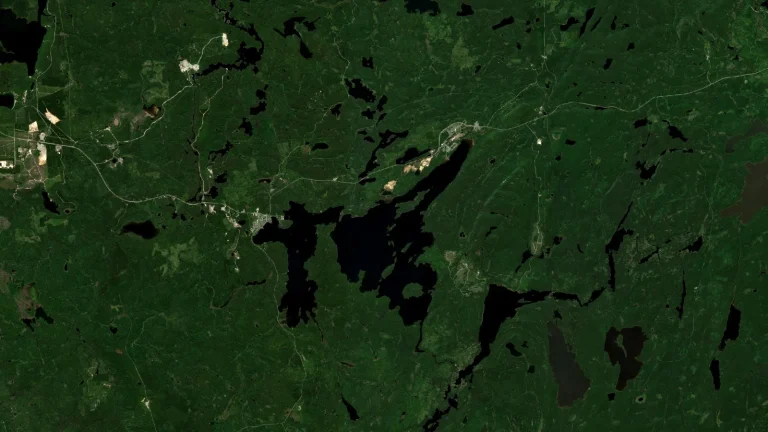
Several top buyers are also miners, and the USGS list explains why: China (380 tonnes), Russia (310), Australia (280), Canada (200), the United States (160), Ghana (150), Mexico (140), Kazakhstan and Uzbekistan (130 each). Kazakhstan and Uzbekistan are both in the top ten producers and both added to reserves in Q2 2026. Banks without large domestic output must buy in the market. For Canadian and US explorers, the regional picture is in our guides on the Abitibi greenstone belt and the gold mines of Manitoba.

▶ Follows one gold nugget from rock to ring, the mined supply that sits behind official buying. · 5:27
What central bank buying means for gold projects and licence holders
Official demand does not set the price on its own. The WGC says investment is expected to remain the main driver of demand growth through the second half of 2026, with central banks on course for another strong year, though probably lower than 2025. What a licence owner can take from the data is context for a long project timeline: a mine takes years to permit and build, while the quarterly average price moves from quarter to quarter: the LBMA PM average fell 8% from Q1 to Q2 2026, to an average of US$4,506.29 per ounce. The WGC publishes the average price each quarter, and the LBMA sets the daily benchmark through ICE Benchmark Administration (LBMA).
A practical way to use the tonnage data is to translate it into value. The calculator below turns tonnes into US dollars at a price you choose. It works for a central bank’s holding (Poland’s 632 tonnes, for example) and equally for a resource at a mining project, if you enter its contained tonnes. Prices are inputs; enter the day’s LBMA price. Our arithmetic at the Q2 2026 LBMA PM average of US$4,506.29 puts the 8,130 tonnes in the US Treasury stock at about US$1.18 trillion.
If you hold a gold licence, a satellite screen can show where alteration minerals, iron-oxide staining and structures sit on the ground, as exploration targets ahead of any resource estimate. Our guide to mining innovations covers the tools, and our satellite mineral detection page explains what Farmonaut maps. To start with your own area, use the mining quote form.
Calculator
What is a gold holding worth in US dollars?
Enter tonnes and your price to see the value of a central bank holding or a project’s contained gold.
- Troy ounces (millions): 20.32
- Value in US$ million: 81,277
- Gold as share of total reserves: 28.9%
Example values only, not a forecast. Price is an input: example, use today’s price (LBMA, US$ per troy ounce). One tonne is 32,150.75 troy ounces. The reserves input is an example, not any country’s figure.
How to read central bank gold data without being misled
- Check the date. Banks report with a lag. The WGC reserve table is built from IMF data that run about two months behind, so most holdings are as of June 2026 and late reporters are older.
- Separate reported from estimated. The WGC’s quarterly demand figure includes an estimate for unreported buying; its monthly country statistics do not. The two will differ.
- Expect revisions. The WGC cut its Q1 2026 estimate from 244 to 57 tonnes. Do not quote first estimates as final.
- Look at swaps and sovereign funds. Turkey’s swaps and SOFAZ’s holdings change what “official gold” means in a year.
- Watch the units. Tonnes are metric; one tonne is about 32,150 troy ounces. US sources often use troy ounces.

▶ Explains how foreigners can get a small-scale mining licence in Africa, where Ghana and South Africa mine gold. · 5:16
What to watch next in official gold buying
Three dated markers set the next few updates. First, Poland’s goal of 700 tonnes against 632 tonnes held at the end of June 2026 leaves about 68 tonnes to go, a figure that depends on the bank’s pace. Second, the Czech National Bank is at 72 tonnes (end-2025) against its 100-tonne target for 2028. Third, the WGC’s next Gold Demand Trends report will cover Q3 2026; compare it with the Q2 figures above before drawing a trend. In the survey, 45% of banks expect to increase their own holdings in the next 12 months, which is a statement of plans and not a forecast of tonnes.
Related reading on this site: Best Place to Find Diamonds: 7 Top Countries Ranked.
Frequently asked questions
Which country buys the most gold?
Poland. The National Bank of Poland was the largest reported buyer in 2025 (102 tonnes) and in the first half of 2026 (82 tonnes), according to the WGC.
How much gold did central banks buy in total?
The WGC counts 863 tonnes for 2025, down from 1,092 tonnes in 2024, and 345 tonnes for the first half of 2026. The 2010-2021 annual average was 473 tonnes.
Is China still buying gold?
Yes, in reported data. China added 27 tonnes in 2025 and 40 tonnes in the first half of 2026, reaching 2,346 tonnes by the end of June 2026, per the WGC. Unreported purchases, which the WGC says were again elevated in Q2 2026, are not in these figures.
Does the United States buy gold?
Not in the data. The USGS lists the Treasury stock at 8,130 tonnes at the end of every year from 2021 to 2025, and the Treasury’s holding has not changed in that period.
Which countries hold the most gold?
The United States holds about 8,130 tonnes (USGS, Treasury stock). Among the confirmed holdings above, China is next with 2,346 tonnes at the end of June 2026 (WGC). The WGC country table gives the full ranking.
Which countries are selling gold?
Turkey sold about 70 tonnes in Q1 2026 and Russia sold 22 tonnes in both Q1 and Q2 2026, according to the WGC. Singapore sold 15 tonnes during 2025.
Why do central banks buy gold?
The 2026 WGC survey lists performance in crises, diversification and inflation hedging as key reasons, with geopolitical risk also a factor. 74% of respondents expect lower dollar holdings in global reserves over five years.
Why do the totals differ between sources?
Some sources count only reported changes, while the WGC’s demand figure adds estimated unreported buying (57% of the 2025 total). Data are also revised. Always note the date and the publisher.
How much is a central bank’s gold worth?
Multiply tonnes by 32,150.7 to get troy ounces, then by the price. At the Q2 2026 LBMA PM average of US$4,506.29, Poland’s 632 tonnes would be worth about US$92 billion. The calculator on this page does the sum at your price.
Do gold mines supply the gold that central banks buy?
Partly. World mine output was an estimated 3,300 tonnes in 2025 (USGS), and recycled gold and over-the-counter trade supply the rest of the market. Some banks, such as Kazakhstan’s, are allowed to buy from domestic production.
Not investment advice: the figures are published statistics, not a recommendation to buy or sell gold or any security.
This page is for information only. It is not investment advice.
Farmonaut mining
Map your mining site from space
Consultants can screen a licence area with satellite data to produce exploration targets, ahead of any resource estimate.
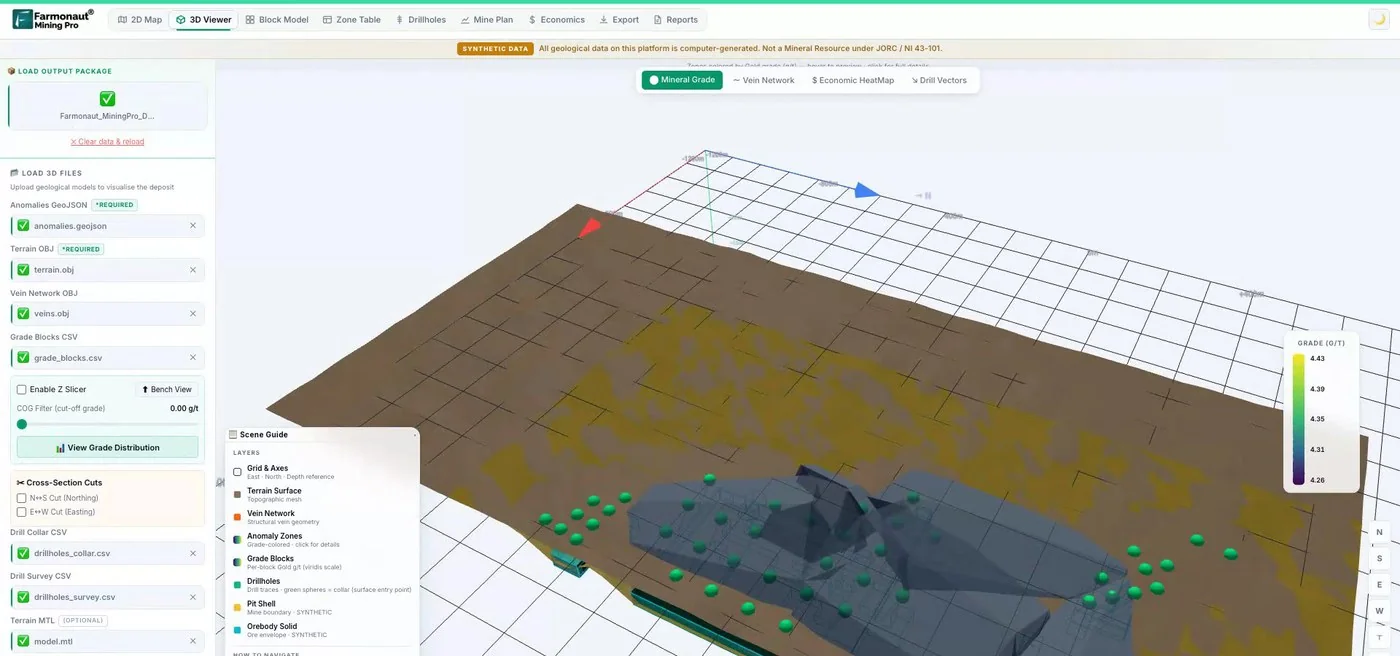
Mining Pro sample view, synthetic data
Keep reading

Sources
- World Gold Council, Gold Demand Trends Q2 2026: Central Banks: gold.org
- World Gold Council, Gold Demand Trends full-year 2025: Central Banks: gold.org
- World Gold Council, Gold Demand Trends Q1 2026: Central Banks: gold.org
- World Gold Council, Gold Demand Trends Q2 2026 (tables and supply): gold.org
- World Gold Council, Gold Reserves by Country: gold.org
- World Gold Council, Central Bank Gold Reserves Survey 2026: gold.org
- World Gold Council, full-year 2025 Gold Demand Trends press release: gold.org
- USGS, Mineral Commodity Summaries 2026: Gold: pubs.usgs.gov
- LBMA, Precious Metal Prices: lbma.org.uk
- World Gold Council, Gold Demand Trends full-year 2025 (29 January 2026): gold.org
Discussion
Questions, corrections or field experience? Share them below. First-time comments are reviewed before they appear, and your email is never published.
No comments yet. Be the first to add a question or your experience.

 CIMISCO SARL
 Mining SARL
 SenGold Invest SAS
 Sania Corporation
 Sean Mining Limited
 NTS Group (Pty) Ltd
 Mine4Africa
 Lithspo Minerals Limited
 Tintina Mining Group
 Dalgety Minerals Pty Ltd
 Vortex Minerals Pty Ltd
 Faith At Work (Pty) Ltd
 Geotech Mining Solutions plc
 Vulcan International Limited
 Kidepo Associates
 GKY Mining
 Alkimy SARL
 Double A Trading
 GemSprout Metals Limited
 Qader Group
 Ileys General Trading
 SG Gold Mining LLC
 VRV Global Pte Ltd
 Omsri International FZE










