

Steel and industrial minerals · Uses guide
Graphite Electrode Uses: Steel Furnaces, kg per Tonne
Graphite electrodes mostly melt scrap in electric arc furnaces, which made 30.3% of the world’s steel in 2025. UHP electrodes wear at about 1.7 kg per tonne of EAF steel, on average. Here are the uses, makers, raw materials and a cost calculator.
Key takeaways
- Electric arc furnaces made 30.3% of world crude steel in 2025, out of 1,849 million tonnes (worldsteel, 2026).
- UHP graphite electrodes are consumed at about 1.7 kg per tonne of EAF steel on average (GrafTech, 2025).
- Electrodes are made from needle coke, not mined graphite; only four needle coke producers operate outside China (GrafTech, 2025).
- Electrodes average under 2% of EAF steel production cost, by GrafTech’s estimate (2025).
- The US produced no natural graphite in 2025; world mine output was about 1.8 million tonnes (USGS, 2026).
In this article
- Graphite electrode uses at a glance
- Electric arc furnace steelmaking: the main use of graphite electrodes
- How many kilograms of electrode a furnace uses
- Other graphite electrode uses beyond steel
- Electric arc steel and emissions
- What graphite electrodes are made of
- Who makes graphite electrodes and where capacity sits
- What to watch in the electrode market
- Graphite electrodes versus Soderberg electrodes, and the temperature figures
- What this means for mining and exploration teams
- Frequently asked questions
Graphite electrodes are used mainly to melt scrap steel in electric arc furnaces (EAFs). The electrodes carry very large currents into the furnace and strike an arc that melts the metal. EAFs made 30.3% of the world’s crude steel in 2025, out of 1,849 million tonnes in total (worldsteel, World Steel in Figures 2026). GrafTech reports that ultra-high-power (UHP) electrodes are consumed at about 1.7 kg per tonne of EAF steel, on average (GrafTech annual report for 2025). Smaller uses are ladle furnaces, titanium dioxide, stainless steel and silicon metal.
This page gives the uses with numbers: how much steel depends on electrodes, how much electrode a furnace consumes, what electrodes are made from, who makes them and where the supply is tight. It ends with a calculator for electrode cost per tonne of steel and ten short answers to common questions. A graphite electrode is not made from mined graphite. It is made from needle coke, a specialty carbon product, so the mining link is indirect. We explain that link in its own section.
Graphite electrode uses at a glance
The table lists each use, what the electrode does there and the source for the claim. Dates are the dates of the source documents.
| Use | What the electrode does | Source |
|---|---|---|
| EAF steelmaking from scrap or iron units | Conducts current and carries the arc that melts the charge | GrafTech, 2025 |
| Steel refining in ladle furnaces | Heats the liquid steel after tapping so its temperature and chemistry can be adjusted | GrafTech, 2025 |
| Titanium dioxide, stainless steel, silicon metal and other metals | Heats the furnace charge in the production of these materials | GrafTech, 2025 |
| Lithium-ion battery anodes | Not an electrode use. Needle coke is also a raw material for synthetic anode graphite | GrafTech, 2025 |
Steelmaking is by far the largest use, so the rest of the page follows steel demand.
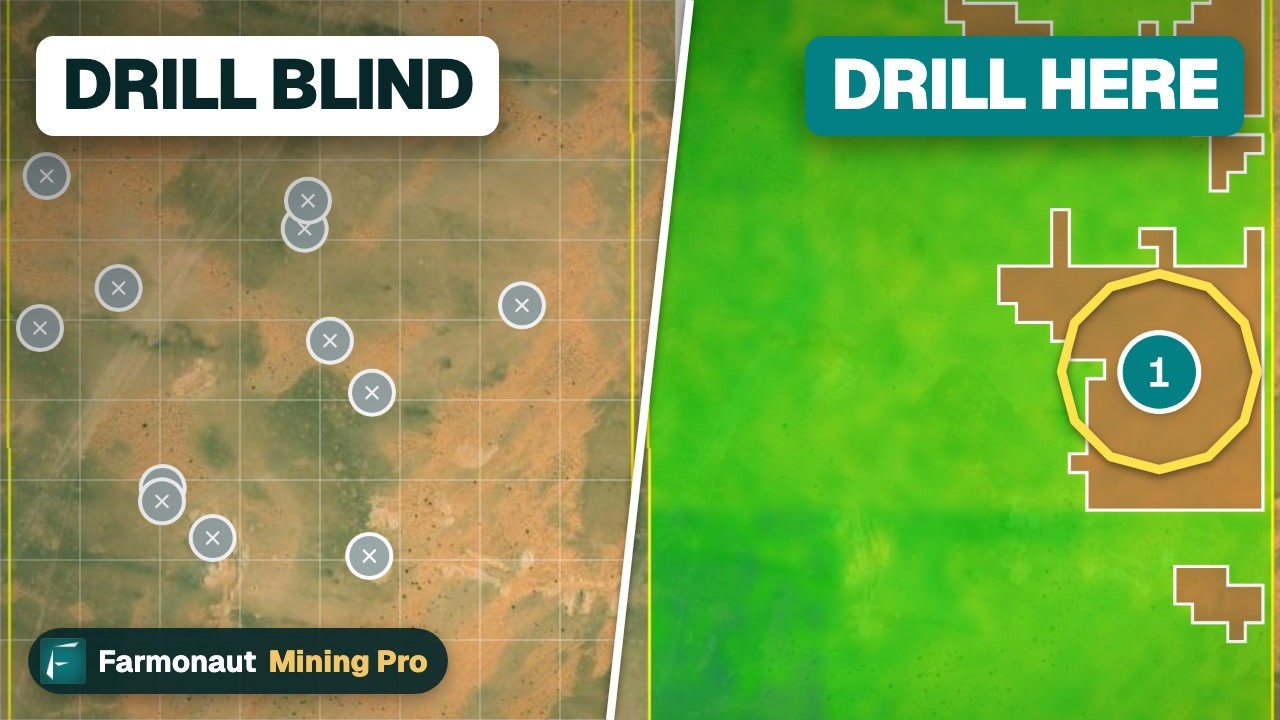
▶ Explains what mining contributes to economies and why many industries depend on mined and processed materials. · 5:03
Electric arc furnace steelmaking: the main use of graphite electrodes
An EAF is a refractory-lined vessel with a retractable roof. In an alternating-current furnace, three graphite electrodes enter through the roof. The operator lowers them onto the scrap and an arc forms between each electrode and the metal. GrafTech says melting the scrap takes heat as high as 5,000°F (about 2,760°C), with as much as 150,000 amps passing through the electrodes (GrafTech, 2025). The company states that graphite electrodes are currently the only known commercial product with enough electrical conductivity and heat resistance for this job. That statement is the producer’s own view, and it comes from a company that sells them.
Chart
Steel made in electric arc furnaces, 2025
Million tonnes, six selected producers, calculated as total crude steel times EAF share
Worldsteel’s 2025 table shows how unevenly the EAF route is used. EAFs made 71.3% of steel in the United States, 72.2% in Türkiye, 45.8% in the European Union, 25.8% in Japan and 10.6% in China. Because China makes so much steel (960.8 million tonnes in 2025, per worldsteel’s December 2025 release), it still has the largest absolute EAF output. The chart below gives the tonnes, calculated from worldsteel’s total and share for each producer.
In the United States, 47 companies ran 102 EAF minimills at the start of 2025, against two companies operating integrated mills (USGS Mineral Commodity Summaries 2026, iron and steel).
The share is rising slowly. Worldsteel’s tables put the global EAF share at 29.1% in 2024 and 30.3% in 2025. GrafTech, using worldsteel data, reports that EAFs made 51% of steel outside China in 2024 against 44% in 2015, and estimates that demand for UHP electrodes outside China will grow by about 3% a year through 2030.
How many kilograms of electrode a furnace uses
GrafTech reports an average of about 1.7 kg of UHP electrode per tonne of EAF steel. In a typical alternating-current furnace, three UHP electrodes are used up, on average, every eight to ten operating hours (GrafTech, 2025). An academic range from the AGH University of Science and Technology in Poland is wider: less than 1 kg per tonne up to 5 kg per tonne, and in special cases up to 10 kg per tonne (Migas and Karbowniczek, 2013). The spread comes from furnace design, electrical settings and operating practice.
Electrodes wear in two ways. Continuous wear is tip sublimation (the carbon turns straight to vapour at the arc) and oxidation of the sides. Discontinuous wear is breakage, lost stubs at the joints and spalling, which is flaking of the surface (same AGH source). Scrap that moves in the furnace can snap a column, so scrap handling matters as much as electrode quality.
Multiplying the rate by EAF tonnage gives a rough scale for demand. At 1.7 kg per tonne, the 560 million tonnes of EAF steel made worldwide in 2025 (our calculation from worldsteel) imply about 0.95 million tonnes of electrode. Treat this as an order-of-magnitude check, since actual rates vary by furnace, and compare it with GrafTech’s estimate of about 650 thousand tonnes of UHP demand a year outside China, which excludes China’s own large consumption. A 2024 review in the Journal of Sustainable Metallurgy puts world use of graphite electrodes at 966,000 tonnes for 2023, mainly in EAF steelmaking (Journal of Sustainable Metallurgy, 2024).
Electrodes are a small cost for a steelmaker. GrafTech estimates that they average less than 2% of total production cost of steel in a typical EAF (2025 annual report), yet the furnace cannot run without them. The calculator below turns your own numbers into a cost per tonne.
Calculator
What do electrodes cost per tonne of steel?
Enter your own furnace output, electrode use and price.
- Electrode cost per year (US$): $8,500,000
- Electrode cost per tonne of steel (US$): 8.50
- Saved per year at the reduction above (US$): $850,000
Example values only, not benchmarks. The 1.7 kg per tonne default is GrafTech’s average for UHP electrodes in EAFs (2025 annual report). The price is an input: example, use today’s price from your supplier quote (US$ per tonne of electrode). The saving percentage is also an example. GrafTech’s FY2025 10-K reports electrodes at under 2% of EAF production cost, so a result of a few US$ per tonne of steel is plausible, but it is not a benchmark.
Other graphite electrode uses beyond steel
GrafTech lists three further uses: steel refining in ladle furnaces, and the production of titanium dioxide, stainless steel, silicon metal and other ferrous and non-ferrous metals (GrafTech, 2025). It gives no tonnages for these uses. Steel dominates because EAF steel is made in the hundreds of millions of tonnes.
Chart
EAF share of crude steel, 2024 and 2025
Per cent of each producer’s crude steel, selected producers
Submerged-arc furnaces for ferroalloys, platinum, calcium carbide and copper slag cleaning mostly use Soderberg electrodes, which are baked in place from carbon paste instead of being made as graphite columns. A 2024 review estimates 1.8 million tonnes of Soderberg electrode use a year, against 966,000 tonnes of graphite electrodes in EAF steelmaking, so many metal furnaces are not graphite electrode customers (Journal of Sustainable Metallurgy, 2024).
Electric arc steel and emissions
The Steel Manufacturers Association (SMA) commissioned the consultancy CRU to compare emissions. The 2022 study found that Scope 1 and Scope 2 carbon emissions intensity for US EAF steelmakers was about 75% lower than for global blast furnace steelmakers, at the crude and hot-rolled steel stages (AIST report on the SMA study, 26 July 2022). Because the study was commissioned by a trade body for EAF producers, and compares US plants with a global blast furnace average, it is not a like-for-like figure for every country. The result also depends on the electricity mix and on how much scrap is available.

▶ A plain-language claymation on the seven environmental impacts of mining. · 2:31
What graphite electrodes are made of
Graphite electrodes are synthetic. Producers mix needle coke with binders, form the mix into rods, then bake it and heat it again until the carbon turns to graphite (GrafTech, 2025). Needle coke is a crystalline carbon with needle-like grains. It is low in sulfur, nitrogen and ash, and the needle structure makes the electrode expand along its length rather than its width, which lowers the chance of cracking.
Chart
Natural graphite mine production, 2025 estimate
Thousand tonnes, six largest producers; natural flake, amorphous and lump graphite, not electrode material
One type of needle coke, pitch needle coke, comes from coal tar pitch, a by-product of making coke from coking coal. GrafTech says some Chinese electrode makers use pitch needle coke. Outside China, GrafTech counts four needle coke producers, one of them its own Seadrift plant in Texas, with about 750 thousand tonnes of capacity at the end of 2025. Needle coke demand for UHP electrodes outside China averaged about 550 thousand tonnes a year over the previous three years. The same raw material also goes into anode graphite for lithium-ion batteries, so the two markets compete for it.
Natural graphite is a different product. It is mined as flake, amorphous or lump material and used in batteries, brake linings, lubricants, refractories and steelmaking. The USGS reports that the United States produced no natural graphite in 2025, used about 71,000 tonnes valued at US$128 million, and imported an estimated 79,000 tonnes (USGS Mineral Commodity Summaries 2026, graphite). World mine production of natural graphite was an estimated 1.8 million tonnes in 2025, of which China produced 1.4 million tonnes. The International Energy Agency adds that virtually all graphite supply growth in the past two years came from the dominant supplier, and that Mozambique introduced trade restrictions on graphite (IEA, Global Critical Minerals Outlook 2026). The USGS lists synthetic graphite powder and calcined coke among the substitutes in iron and steel production, and notes that the abundance of graphite on the world market discourages recycling (USGS, 2026). For readers exploring for graphite deposits, see our guide to graphite exploration and nickel, cobalt and vanadium targets and our look at the US graphite mining market.
Who makes graphite electrodes and where capacity sits
GrafTech estimates that the world outside China had about 771 thousand tonnes of nameplate electrode capacity at the end of 2025. The five largest producers outside China held about 75% of it; GrafTech and Resonac are two of them, and Tokai Carbon is another. GrafTech’s own stated capacity was about 178 thousand tonnes, or 23%. The company estimates that about 660 thousand tonnes, or 85% of the capacity outside China, is UHP grade.
Chart
Graphite electrode capacity, end of 2025
Thousand tonnes per year, GrafTech estimates; China is UHP only, the other bars are outside China
China’s UHP capacity is estimated by GrafTech at about 800 thousand tonnes, more than the rest of the world combined. The company believes more than half of it does not meet the quality needed for the most demanding furnaces. Customs duties in the United States, the European Union and Japan have limited Chinese exports, yet GrafTech estimates that Chinese UHP electrodes still met about one-third of UHP demand outside China.
Capacity is slow to add. GrafTech says no new electrode plant has been built outside China for several years. A UHP electrode and its connecting pin take about six months to make. The largest size GrafTech makes is 800 mm in diameter, over 3.4 m long and up to 2.6 tonnes.
What to watch in the electrode market
- Steel output and the EAF share. Demand follows EAF tonnes, not total steel. World crude steel output fell to 1,849 million tonnes in 2025 while the EAF share rose by 1.2 percentage points (worldsteel).
- Needle coke supply. Only four needle coke producers operate outside China, and capacity there has been flat for years, according to GrafTech.
- Trade rules. Duties on Chinese electrodes in the United States, the European Union and Japan shape where buyers can source, per GrafTech.
- Furnace practice. Better arc control and scrap handling lower kilograms per tonne, which cuts demand even when steel output holds.
Graphite electrodes versus Soderberg electrodes, and the temperature figures
Not every metal furnace takes graphite electrodes. Submerged-arc furnaces for ferroalloys and similar products commonly use Soderberg paste electrodes, and graphite is the electrode for EAF steel (Journal of Sustainable Metallurgy, 2024).
Temperature figures differ because they describe different things. GrafTech says melting scrap needs heat as high as 5,000°F (about 2,760°C). The AGH presentation says the electrode tip sublimates at 3,000°C or more, which happens at the arc itself. We do not give a single arc temperature, because neither source measures it directly.
What this means for mining and exploration teams
Electrodes touch mining in two places. First, needle coke is also a raw material for battery anode graphite, so the two markets compete for it (GrafTech, 2025). Second, a project that proposes a graphite mine must show buyers which product it makes: flake for batteries and refractories is not electrode feedstock.
Farmonaut works at the exploration end: satellite-based mineral detection that turns an area of interest into a map of high-potential zones, with indicative quantity ranges. These are not a formal resource estimate. Our satellite-based mineral detection page lists the minerals covered, and you can send a site to our team through the mining query form or contact us.
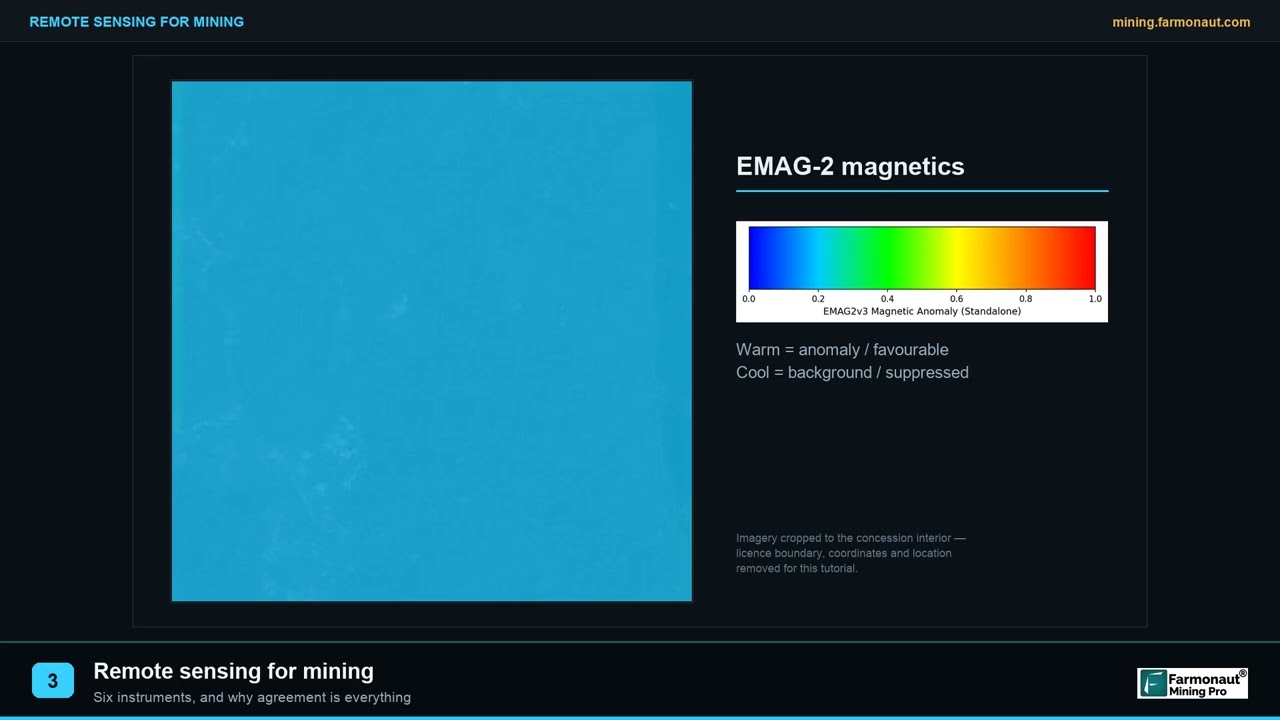
▶ Explains remote sensing for mining in three minutes without jargon. · 2:01
Frequently asked questions
What are graphite electrodes used for?
Mainly to melt scrap and iron units in electric arc furnaces for steel. They also heat ladle furnaces and furnaces for titanium dioxide, stainless steel and silicon metal (GrafTech, 2025).
Why are electrodes made of graphite?
GrafTech says graphite electrodes are the only known commercial product with the conductivity and heat resistance the furnace needs. Graphite conducts current and resists the furnace heat, so it can carry the arc, although the tip slowly turns to vapour (sublimes) at the arc.
What is the difference between a graphite electrode and a carbon electrode?
A graphite electrode is baked and then heated again until the carbon turns to graphite. Carbon electrodes are not graphitized: Soderberg electrodes bake in place from paste in submerged-arc furnaces, and prebaked carbon electrodes are used for silicon and phosphorus (Journal of Sustainable Metallurgy, 2024).
How much graphite electrode does it take to make a tonne of steel?
About 1.7 kg of UHP electrode on average, according to GrafTech. The wider academic range is under 1 kg to 5 kg per tonne.
What is a UHP graphite electrode?
UHP means ultra-high power. These electrodes have low electrical resistivity and last well in modern furnaces. They need higher quality needle coke blends (GrafTech, 2025).
What raw material is a graphite electrode made from?
Needle coke, mixed with binders, baked and then graphitized. It is not made from mined flake graphite.
How long does an electrode last?
In a typical AC furnace, three UHP electrodes are fully consumed about every eight to ten operating hours. Electrodes are added as segments joined by threaded pins.
How big is a graphite electrode?
GrafTech makes sizes up to 800 mm diameter, over 3,400 mm long and up to 2.6 tonnes.
Who makes graphite electrodes?
The largest producers outside China include GrafTech, Resonac and Tokai Carbon. China has more capacity than the rest of the world combined, by GrafTech’s estimate.
Is a graphite electrode the same as battery anode graphite?
No. They share needle coke as a raw material, but an electrode is a large rod used in a furnace, while battery anode graphite is a fine powder made for lithium-ion cells.
This page is for information only. It is not investment advice. Company figures are estimates by the company named and are dated.
Farmonaut mining
Map your mining site from space
Send a licence boundary and get a satellite-based screen for exploration targets, ahead of any resource estimate.

Mining Pro sample view, synthetic data
Keep reading
Sources
- worldsteel, World Steel in Figures 2026: worldsteel.org
- worldsteel, World Steel in Figures 2025: worldsteel.org
- GrafTech International, 2025 Annual Report (Form 10-K): s202.q4cdn.com
- USGS, Mineral Commodity Summaries 2026: Graphite (natural): pubs.usgs.gov
- Migas and Karbowniczek, AGH University, Selected Aspects of Graphite Applications in Ferrous Metallurgy (2013): dkg.de
- AIST, SMA claims major decarbonization advantage for EAF steelmakers (2022): aist.org
- Journal of Sustainable Metallurgy (2024) 10:1051-1069, carbon electrodes in metallurgy: doi.org
- USGS, Mineral Commodity Summaries 2026: Iron and steel: pubs.usgs.gov
- worldsteel, December 2025 crude steel production (23 January 2026): worldsteel.org
- IEA, Global Critical Minerals Outlook 2026, executive summary: iea.org
Discussion
Questions, corrections or field experience? Share them below. First-time comments are reviewed before they appear, and your email is never published.
No comments yet. Be the first to add a question or your experience.

 SenGold Invest SAS
 Sania Corporation
 Sean Mining Limited
 NTS Group (Pty) Ltd
 Mine4Africa
 Lithspo Minerals Limited
 Tintina Mining Group
 Dalgety Minerals Pty Ltd
 Vortex Minerals Pty Ltd
 Faith At Work (Pty) Ltd
 Geotech Mining Solutions plc
 Vulcan International Limited
 Kidepo Associates
 GKY Mining
 Alkimy SARL
 Double A Trading
 GemSprout Metals Limited
 Qader Group
 Ileys General Trading
 SG Gold Mining LLC
 VRV Global Pte Ltd
 Omsri International FZE
 G.I.T.T.
 Jaunita Erss Ltd











