

Vanadium · Price guide
Ferro Vanadium Price Today: Chart and Drivers
Fastmarkets put Western Europe ferrovanadium at $27.70-28.65 per kg V on 27 February 2026; China quoted FeV50 at CNY 86,500-87,500 per tonne on 12 October 2026. See the units, the V2O5 feedstock price, the drivers and who supplies it.
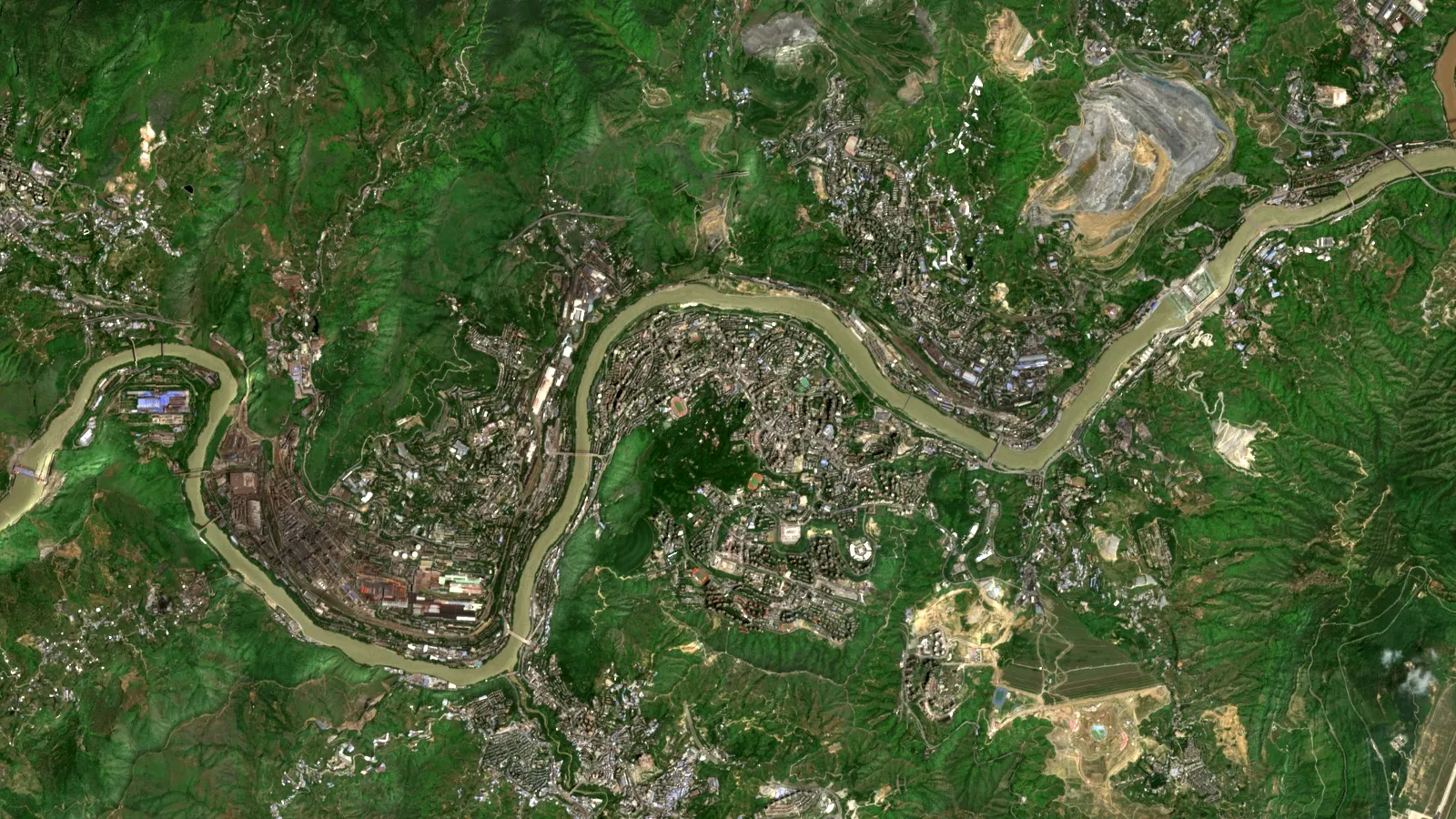
Key takeaways
- Fastmarkets assessed Western Europe FeV (78% V min, ddp) at $27.70-28.65 per kg V on 27 February 2026; a public tracker listed European FeV80 at $26.61 per kg on 7 October 2026.
- USGS puts the 2025 average U.S. ferrovanadium price at $14.14 per pound (13.05 in 2024) and the Chinese V2O5 average at $5.02 per pound (5.44 in 2024).
- China produced an estimated 82,000 t of the 110,000 t of world vanadium mine output in 2025 (USGS), mostly as a steelmaking coproduct.
- Vanitec counts record consumption of 123.7 thousand t V in 2025, slightly above production of 122.7 thousand t.
- At 0.05% V and a $25 per kg V alloy quote, vanadium adds about $13 to each tonne of steel (calculator example, not a benchmark).
In this article
- Ferro vanadium price: recent quotes and what they cover
- How to read a ferrovanadium quote: grade, unit and tax
- Glossary: the terms on a quote sheet
- Vanadium pentoxide price: the feedstock behind the alloy
- Six forces behind the alloy quote
- Who produces vanadium: countries, reserves and companies
- Where U.S. buyers get ferrovanadium
- How vanadium is mined and turned into ferrovanadium
- How much does ferrovanadium add to the cost of steel?
- Where satellite data fits in vanadium exploration
- What could shift supply and demand
- What to check before you rely on a vanadium price or project
- Frequently asked questions
Ferrovanadium (FeV) is the alloy steelmakers use to add vanadium to steel, and its price is quoted per kilogram of contained vanadium (V). Fastmarkets assessed Western Europe FeV (78% V minimum, delivered duty paid) at $27.70-28.65 per kg V on 27 February 2026, and a public price tracker listed European FeV80 at $26.61 per kg on 7 October 2026. In China the traded grade is FeV50, quoted at CNY 86,500-87,500 per tonne on 12 October 2026. The U.S. average for 2025 was $14.14 per pound, against $13.05 in 2024. The sections below set out the dated quotes, the vanadium pentoxide feedstock price, the main drivers, who produces the metal, and a calculator that turns a quote into a cost per tonne of steel.
Ferro vanadium price: recent quotes and what they cover
Daily and twice-weekly assessments are sold by price agencies such as Fastmarkets, Argus and SMM. The public figures in the table are dated and name their source, so you can check each one. They are not interchangeable: they differ by grade, currency, unit, tax and delivery terms.
| Market and grade | Quote | Date | Source |
|---|---|---|---|
| Western Europe, FeV 78% V min, delivered duty paid | $27.70-28.65 per kg V | 27 February 2026 | Fastmarkets assessment MB-FEV-0001 |
| Europe, FeV 80% | $26.61 per kg | 7 October 2026 | vanadiumprice.com tracker (underlying provider not named) |
| China, FeV50, ex-works | CNY 86,500-87,500 per tonne (quotation) | 12 October 2026 | vanadiumprice.com market report |
| United States, FeV 78-82% V | $14.14 per pound (annual average) | 2025 | USGS Mineral Commodity Summaries |
The Fastmarkets series is described on its own page as published twice weekly, in US dollars per kilogram, delivered duty paid in Europe. A tracker figure repeats a price somebody else collected, so treat it as a reading, not a contract price.
How to read a ferrovanadium quote: grade, unit and tax
Three details change the number you see.
- Grade. USGS says FeV is sold as 45-50% V or 80% V. The lower grade is made by silicothermic reduction (silicon removes the oxygen) of vanadium pentoxide (V2O5) in slag or similar material. Most 80% FeV is made by aluminothermic reduction (aluminium removes the oxygen) of V2O5 with steel scrap, or by direct reduction in an electric arc furnace.
- Unit. European quotes are per kg of contained V. Chinese quotes are per tonne of alloy. A tonne of FeV50 holds about 500 kg of vanadium, so the middle of the 12 October quotation (CNY 87,000) works out to roughly CNY 174 per kg V. The Chinese quotation is ex-works with tax, so it is not a like-for-like match for a duty-paid European price.
- Currency and conversion. One kilogram is 2.2046 pounds. The USGS figure of $14.14 per pound (78-82% V grade) is an annual U.S. average, and USGS does not state whether the pound is contained vanadium or alloy, so it should not be converted to a per-kg-V price.
Trade rules add a layer. USGS lists the U.S. normal trade relations duty on ferrovanadium at 4.2% and on vanadium pentoxide at 5.5% (tariff schedule dated 31 December 2025). USGS also notes that U.S. tariffs on many Brazilian imports rose to 50% from 6 August 2025 and covered high-purity vanadium products but not ferrovanadium.
Glossary: the terms on a quote sheet
- FeV (ferrovanadium): an iron-vanadium alloy, sold as FeV45-50 or FeV80. It is the main form in which steel mills buy vanadium.
- V2O5 (vanadium pentoxide): the oxide made from ore, slag or residues. It is quoted per pound of V2O5 and holds 56% vanadium by weight.
- Vanadium nitride and vanadium-nitrogen alloys: additives that Vanitec expects to gain from China’s rebar standard.
- Titanomagnetite (VTM): magnetite rich in titanium that carries vanadium. USGS says most Chinese vanadium comes from it as a coproduct of steelmaking.
- Coproduct: a metal recovered alongside the main product. Because vanadium is usually a coproduct, its supply does not respond fast to its own price.
- Grade and recovery: grade is the share of the target oxide in the rock (Largo: 0.50% V2O5), and recovery is the share of it that the plant captures (Largo: 82.5% in the second quarter of 2026).
- Ex-works, ddp: ex-works means the buyer collects from the factory gate, while delivered duty paid (ddp) means the seller covers delivery and import duty. The same alloy has a different price on each basis.
A worked example shows why the basis matters. Take the Fastmarkets range of $27.70-28.65 per kg V. A mill buying 5,000 kg of vanadium at the midpoint of $28.175 would pay about $140,900, while the same 5,000 kg bought at the 7 October tracker level of $26.61 would cost about $133,050. The gap of roughly $7,800 comes from different dates, grades and delivery terms, not from a change in the metal.
Vanadium pentoxide price: the feedstock behind the alloy
Vanadium pentoxide is the oxide that most vanadium plants sell, and USGS notes that most V2O5 and V2O3 is processed further into FeV. Its price therefore sets the floor for what an alloy maker will pay for raw material. USGS records the average Chinese V2O5 price (98% content, from Argus) at $5.02 per pound in 2025, down from $5.44 in 2024 and $9.29 in 2022. The chart shows the five-year path.
Chart
Chinese V2O5 price fell by almost half from its peak
Annual average, 98% V2O5, US$ per pound
Investing News Network, citing market data, reports that V2O5 fell more than 47% from a February 2022 peak of $9.20 per pound to a trough of $4.86 per pound in September 2025, and that early 2026 brought tentative signs of recovery. On the tracker, China V2O5 flake (98%) was $4.97 per pound on 15 October 2026 and Europe was $5.43 per pound on 7 October 2026.
To compare oxide and alloy, convert the oxide to contained vanadium. USGS gives the factor: multiply V2O5 by 0.56 to get vanadium content. On that basis $5.02 per pound of V2O5 is about $19.8 per kg of vanadium. An FeV quote per kg V will sit above that figure because the alloy maker pays for reduction, energy, labour and yield losses, but only quotes from the same date and market are a fair comparison.
Six forces behind the alloy quote
Vanadium is mostly a steel additive, so the alloy follows the steel cycle, then reacts to supply shocks and policy. The six drivers below are the ones the sources support.
Chart
Vanadium consumption caught up with production in 2025
Global totals, thousand tonnes of vanadium
- Steel demand, especially in China. USGS says vanadium depends largely on the steel industry, particularly Chinese steel. In the United States, metallurgical use (mainly alloying iron and steel) was more than 90% of reported vanadium consumption in 2025. Investing News Network cites World Steel Association expectations of global steel demand growth of roughly 0.3 to 1.3% in 2026 after three years of contraction.
- Rebar standards. China’s mandatory standard GB 1499.2-2024 took effect on 25 September 2024 and replaced the voluntary 2018 standard. Vanitec, the vanadium industry body, reported that Pangang Group estimated an increase of over 13,000 tonnes a year in vanadium nitride use based on 2023 rebar output. That is a company estimate, not a measured figure.
- Supply that is concentrated and tied to steel. China made about 82,000 t of the 110,000 t of world mine output in 2025 (USGS estimate), mostly as a coproduct of vanadium-bearing titanomagnetite ores processed during steelmaking. A change in Chinese steel output moves vanadium supply even when vanadium prices do not.
- Producer curtailments. Investing News Network reports that low prices pushed Western and Chinese producers to cut output and shelve expansions, and that analysts broadly expect a modest deficit by late 2026. That is a forecast, so check it against later market reports.
- Batteries. Vanadium redox flow batteries (VRFBs) store power in a vanadium electrolyte. Investing News Network reports that Vanitec projects Chinese installed capacity could exceed 8 gigawatt-hours in 2026, using an estimated 35,000 to 40,000 t of V2O5 equivalent, while a Fastmarkets consultant told the same outlet that flow batteries are losing ground to lithium iron phosphate chemistries outside China.
- Substitutes. USGS says steels with other alloying elements can replace vanadium steels, and that manganese, molybdenum, niobium, titanium and tungsten are to some degree interchangeable with vanadium in steel. A rise in the vanadium quote can therefore push mills toward other additives, which caps how far demand follows price.
Vanitec’s annual statistics show how tight the balance has become. Total production peaked at 129.1 thousand tonnes of vanadium in 2024 and eased to 122.7 thousand in 2025, while consumption reached a record 123.7 thousand, slightly above production.
Who produces vanadium: countries, reserves and companies
USGS estimates 2025 world mine production at 110,000 t of contained vanadium, with China at 82,000 t, Russia 21,000 t, Brazil 5,300 t and South Africa 5,000 t. South Africa’s output fell from 8,050 t in 2024, and USGS revised China’s 2024 figure using a government report. World reserves are 21,000 thousand t. The largest reserve in the USGS table is Australia’s 10,000 thousand t; USGS adds that Australia’s reserves under the JORC Code, the Australasian standard for public reporting, are 2.3 million t. Vanitec’s production total (122.7 thousand t in 2025) is higher than the USGS mine figure and the two series are not defined in the same way, so compare their trends rather than their levels.
Chart
Australia holds the largest vanadium reserve in the USGS table
Reserves, thousand tonnes of vanadium (USGS definitions)
Chart
China dominates world vanadium mine output
Mine production, tonnes of contained vanadium; four producing countries listed by USGS
The companies below are listed for their reported facts, not as recommendations.
- Largo Inc. (TSX: LGO; Nasdaq: LGO) runs the Maracas Menchen mine in Bahia, Brazil. The company says it is the world’s largest primary vanadium producer. Its second-quarter 2026 release reported 2,900 t of V2O5 produced (5,516 t in the first half), an ore grade of 0.50% V2O5 and a recovery of 82.5%.
- Glencore (LSE: GLEN) reported 18.0 million pounds of vanadium pentoxide from its ferroalloys assets in 2025, 2% below 2024.
- Australian Vanadium Limited (ASX: AVL) is developing the Gabanintha project in Western Australia. Its quarterly report dated 31 July 2026 states a JORC 2012 Mineral Resource of 395.4 Mt at 0.77% V2O5, including 173.2 Mt at 1.09%, and says the feasibility study and approvals work were continuing. It is not yet a producing mine.
- United States. USGS reports that primary vanadium mining on the Colorado Plateau ceased in early 2020 and had not restarted by the end of 2025. U.S. output of 7,500 t in 2025 (estimate) came from ash, residues and spent catalysts, and net import reliance was 41%. The 2023 USGS yearbook names AMG Vanadium (Ohio), Bear Metallurgical (Pennsylvania) and U.S. Vanadium (Arkansas) among processors, and records that the Bureau of Land Management approved the Gibellini project in Nevada in October 2023 for about 4,500 t of V2O5 a year.
Where U.S. buyers get ferrovanadium
The United States imports most of its ferrovanadium. USGS reports gross-weight FeV imports of 2,170 t in 2021, 2,650 t in 2022, 2,330 t in 2023, 1,820 t in 2024 and an estimated 2,200 t in 2025, against exports of only 10 t in 2025. For 2021-24 the import sources were Canada (50%), Austria (35%), Russia (6%) and Latvia (4%). Vanadium pentoxide came mainly from Brazil (47%) and South Africa (43%). Net import reliance for vanadium overall fell from 61% in 2021 to 41% in 2025 as secondary output from ash, residues and spent catalysts rose from 3,200 t to 7,500 t (estimate). A U.S. buyer therefore watches both the European and the Chinese quote, plus the 4.2% duty and any tariff changes, before a contract. The chart shows the import series.
Chart
U.S. ferrovanadium imports have stayed near 2,000 t
Imports for consumption, tonnes (gross weight)
How vanadium is mined and turned into ferrovanadium
USGS says vanadium occurs in phosphate rock, titaniferous magnetite and uraniferous sandstone, where it makes up less than 2% of the host rock, and that it is usually recovered as a byproduct or coproduct, so resource totals do not fully show what can be supplied. The 2023 USGS yearbook splits supply into three routes: primary production from mined concentrate (vanadiferous titanomagnetite, or VTM, and sandstone-hosted deposits), joint production from vanadium slag made when VTM iron ore is smelted, and secondary production from fly ash, petroleum residues and spent catalysts. Grade is the share of the rock that is the target material, here quoted as % V2O5. Largo’s reported ore grade of 0.50% V2O5 shows that even a leading primary mine works with half a percent of oxide in the rock.
Infographic
From ore to alloy in 5 steps
- 1Source the vanadiumMine titanomagnetite or sandstone-hosted ore, or collect steelmaking slag, ash, residues and spent catalysts.
- 2Make a concentrateProcess the ore or feed so that vanadium is concentrated away from waste rock.
- 3Make the oxideChemical processing turns the concentrate, slag or residue into vanadium pentoxide (V2O5).
- 4Reduce to alloyAluminium or silicon removes the oxygen with iron present, or an electric arc furnace reduces the oxide, to give FeV.
- 5Add to steelThe mill adds FeV to molten steel, usually at less than 0.15% vanadium in the finished steel.
Iron and vanadium separate in stages. Ore is crushed and the magnetic fraction is pulled out of waste rock; chemical processing turns the concentrate or slag into V2O5; and the oxide is reduced with aluminium or silicon, with iron present, to make FeV. This differs from the common shortcut that vanadium is simply added to molten iron in a furnace: the vanadium has already been separated and purified before it reaches the steelmaker.
▶ A clay nugget travels from rock to ring, showing the general steps of drilling, crushing, dissolving and refining a metal (gold is the example, not vanadium). · 5:27
How much does ferrovanadium add to the cost of steel?
Vanadium works in very small doses. USGS says microalloy and low-alloy steels generally contain less than 0.15% vanadium, while high-alloy steels can hold as much as 5%. At 0.05% V, one tonne of steel carries 0.5 kg of vanadium. At a quote of $25 per kg V and 95% yield into the steel, the alloy bill is about $13 per tonne of steel. Change the three inputs in the calculator to match your mill or your supplier’s quote. The yield is an example, not a benchmark, and your own metallurgist’s figure should replace it.
Calculator
What does the alloy cost per tonne of steel?
Enter your steel batch, vanadium content and a ferrovanadium quote per kg of contained V.
- Vanadium to buy (kg): 5,263
- Alloy to buy (tonnes of FeV): 6.6
- Total alloy cost (US$): $131,579
- V2O5 quote per kg of vanadium (US$): 19.69
Example values only, not a benchmark or a forecast. Prices are inputs: example, use today’s price. The V2O5 line divides the pound price by 0.254 (0.4536 kg per lb times the 0.56 vanadium share from USGS). The yield into steel is an assumption; use your own figure.
Where satellite data fits in vanadium exploration
Vanadium is not on the list of minerals Farmonaut screens for directly, but it often sits in iron-rich host rock, and iron is on that list. Satellite data can map surface geology, alteration and structure around a licence so that field crews sample the likeliest ground first. It does not replace drilling, and a screen result is an exploration target that sits ahead of any resource estimate. Our guide to nickel, cobalt and vanadium exploration targets, our note on how bulk iron deposits are found and tested and our list of vanadium mines and projects in Australia cover the ground work in more detail. You can see how satellite mineral detection works before you commission a survey.
▶ Remote sensing for mining in three minutes: the instruments that measure ground from a distance and why their agreement matters. · 2:01
What could shift supply and demand
Three things decide whether the market tightens or stays soft, and each one can be tracked in public data. First, Chinese steel output and rebar compliance: Investing News Network notes that China remains vanadium’s largest steel market and that its contraction is slowing, so a pickup in construction steel lifts alloy demand. Second, the response of idle capacity: when prices rise, curtailed producers can restart, which limits gains, and USGS revised China’s 2024 production significantly using a government report, a reminder that supply data is revised. Third, storage demand: Investing News Network reports that flow batteries are expanding in China but losing ground to lithium iron phosphate elsewhere, so the battery effect depends on where projects are built. Watch Vanitec’s annual consumption statistics, USGS summaries each February and company quarterly reports for the first signs of change. None of this predicts a price, and the figures on this page are dated records, not forecasts.
What to check before you rely on a vanadium price or project
- The basis of the number: grade (FeV50 or FeV80), unit (per kg V, per lb V2O5 or per tonne of alloy), currency, delivery terms and tax.
- The date and who assessed it: a price agency or an exchange, not a reposted figure with no named provider.
- Company status in filings: operating mines report production each quarter, while developers report resources, studies and approvals. Read the latest filing on the ASX, TSX, SEC EDGAR or the London Stock Exchange.
- Reporting standard: JORC, NI 43-101 and USGS reserve definitions are not the same thing, and a resource is not a reserve.
- What is coproduct: a mine that makes vanadium alongside iron or ilmenite, as Maracas Menchen does with ilmenite concentrate, has costs shared across products.
▶ Three limits of satellite exploration that matter for due diligence on a mining project. · 2:08
Frequently asked questions
What is the ferro vanadium price per kg?
Fastmarkets assessed Western Europe FeV (78% V minimum) at $27.70-28.65 per kg V on 27 February 2026, and a public tracker listed European FeV80 at $26.61 per kg on 7 October 2026. China quotes FeV50 per tonne of alloy instead of per kg V.
Why is ferrovanadium priced per kg of vanadium?
Buyers pay for the vanadium in the alloy, and grades range from 45-50% to 80% V, so a per-kg-V basis makes different grades comparable. Chinese quotes use a per-tonne-of-alloy basis for a 50% grade.
What is the difference between FeV50 and FeV80?
The number is the approximate vanadium content. USGS says the 45-50% grade is made by silicothermic reduction of V2O5 in slag or similar material, and most 80% FeV by aluminothermic reduction with steel scrap or by direct reduction in an electric arc furnace.
What is the vanadium pentoxide price?
USGS reports the 2025 average Chinese V2O5 price (98% content) at $5.02 per pound. A price tracker listed China V2O5 flake at $4.97 per pound on 15 October 2026 and Europe at $5.43 per pound on 7 October 2026.
Which country produces the most vanadium?
China, with an estimated 82,000 t of contained vanadium of the 110,000 t world total in 2025 (USGS), mostly as a coproduct of steelmaking from vanadium-bearing titanomagnetite.
Does the United States mine vanadium?
Not from primary ore. USGS says production from uraniferous sandstones in Utah ceased in early 2020 and was not restarted in 2025. U.S. output came from secondary sources such as ash, residues and spent catalysts.
How much vanadium goes into steel?
Microalloy and low-alloy steels generally contain less than 0.15% vanadium, and high-alloy steels can contain as much as 5% (USGS).
How is vanadium pentoxide turned into ferrovanadium?
The oxide is reduced, using aluminium or silicon, in the presence of iron (steel scrap or iron units), or reduced directly in an electric arc furnace. The result is an iron-vanadium alloy.
Do vanadium batteries affect the price?
Steel is still the anchor: Investing News Network cites industry estimates that alloying takes close to 90% of vanadium volume, while flow-battery use is growing in China. Vanitec projects Chinese installed flow-battery capacity above 8 gigawatt-hours in 2026.
Where can I track the price?
Fastmarkets, Argus and SMM publish assessments for subscribers. The Fastmarkets FeV page lists the assessment code and frequency, and public trackers repost daily China and Europe quotes with dates.
Can satellite data find vanadium?
Satellites cannot see vanadium itself. They map surface geology, alteration and structure, which helps rank ground for sampling. Drilling and assays confirm any target.
This page is for information only. It is not investment advice. It gives no price targets, and the prices shown are dated records from the sources named, not forecasts. Check each company’s own filings before you invest.
Farmonaut mining
See a licence area from space before drilling
Investors can see how satellite data screens a licence area for minerals as an exploration target, ahead of a resource estimate.

Mining Pro sample view, synthetic data
Keep reading
Sources
- USGS, Mineral Commodity Summaries 2026: Vanadium: pubs.usgs.gov
- USGS, 2023 Minerals Yearbook: Vanadium: pubs.usgs.gov
- Fastmarkets, Correction to ferro-vanadium, ddp Europe (27 February 2026): fastmarkets.com
- Fastmarkets, Ferro-vanadium basis 78% V min, ddp Western Europe, $/kg V (MB-FEV-0001): fastmarkets.com
- Vanitec, 2025 Vanadium Production and Consumption Statistics: vanitec.org
- Vanitec, Chinese Vanadium Steel Rebar Standard Becomes Mandatory (25 September 2024): vanitec.org
- Investing News Network, Vanadium Market Trends: H1 2026 Review and Forecast (4 August 2026): investingnews.com
- vanadiumprice.com, China Ferrovanadium Market Prices on 12 October 2026: vanadiumprice.com
- vanadiumprice.com, vanadium price tracker (Europe FeV80 and V2O5, October 2026): vanadiumprice.com
- Largo Inc., Q2 2026 production and sales release (23 July 2026): finance.yahoo.com
- Glencore, 2025 Full Year Production Report: glencore.com
- Australian Vanadium Limited, June 2026 quarterly report (ASX, 31 July 2026): announcements.asx.com.au
Discussion
Questions, corrections or field experience? Share them below. First-time comments are reviewed before they appear, and your email is never published.
No comments yet. Be the first to add a question or your experience.

 Southbridge & Wess PDC Ltd
 Qader Group
 Ileys General Trading
 SG Gold Mining LLC
 VRV Global Pte Ltd
 Omsri International FZE
 G.I.T.T.
 Jaunita Erss Ltd
 Almosi SARL
 SRK Consulting
 Berks Gold Limited
 Mwerezi Minerals Company Limited
 Mining SARL
 SenGold Invest SAS
 Sean Mining Limited
 NTS Group (Pty) Ltd
 Mine4Africa
 Lithspo Minerals Limited











