

Gold assay · Method guide
Fire Assay for Gold: Steps, Limits and Alternatives
Fire assay fuses a 30 g or 50 g sample with lead flux, cupels the button and measures the gold bead. This page covers the steps, detection limits by finish, quality control and the alternative to fire assay.
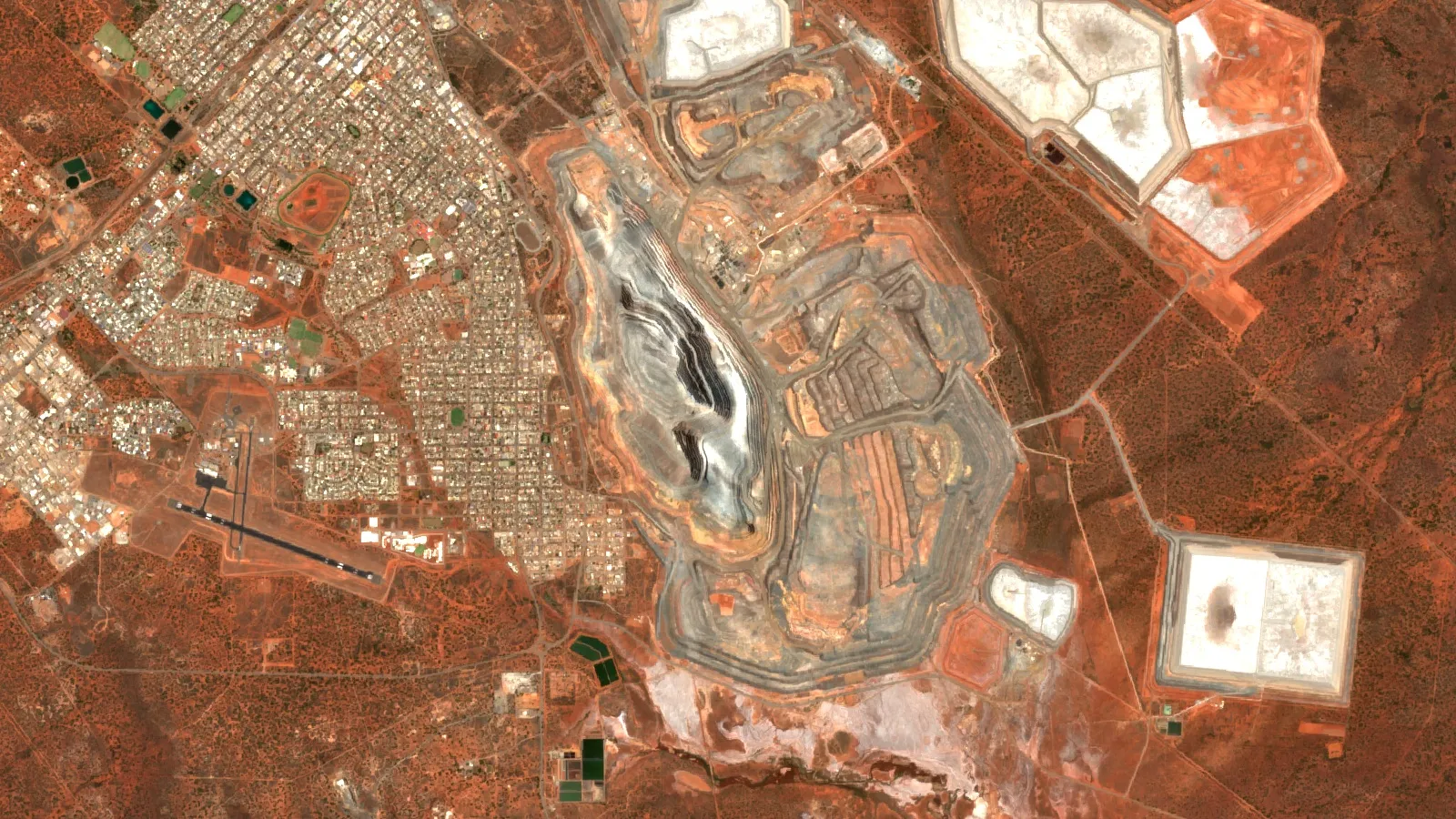
Key takeaways
- Fire assay is a total decomposition: fusion above 1,000 °C, cupellation, then a gravimetric, AAS or ICP finish (ALS).
- ALS reporting ranges for 30 g or 50 g charges run from 0.001 ppm (ICP-AES) to 10,000 ppm (gravimetric).
- Coarse gold can be missed by a small charge; screened metallics use 500 g to 1,000 g (SGS, Actlabs).
- PhotonAssay measures about 500 g in around 2 minutes, according to its developer (Chrysos).
- Insert your own blanks, standards and duplicates: CIM reports sole reliance on lab QC is unacceptable practice.
In this article
- Fire assay for gold: the steps from pulp to bead
- Fusion: what goes into the crucible
- Cupellation and the doré bead
- Gravimetric, AAS or ICP finish: which one to order
- Fire assay detection limits by method
- Sample size and the nugget effect
- Alternative to fire assay: five methods compared
- Gold assay QA/QC: standards, blanks and duplicates
- How to read a gold assay report
- Turnaround time and on-site gold assay
- What fire assay costs
- Lead, fumes and why not to do fire assay at home
- Where satellite screening fits before the lab
- Frequently asked questions
Fire assay is a lab method that fuses a powdered rock sample with lead oxide flux, collects the gold in a lead button, burns the lead off in a porous cup and measures the gold left behind. Labs such as ALS report it from 0.001 g/t up to 10,000 g/t depending on the finish, using a 30 g or 50 g charge. If you are looking for an alternative to fire assay, the main options are PhotonAssay, screened metallics, bulk leach and aqua regia digestion, and the choice depends on grain size, grade and how quickly you need numbers. This page covers the method step by step, then the detection limits, sample sizes, quality control and the alternatives.
A note on terms. Grade is the amount of gold per tonne of rock, written g/t (grams per tonne), which is the same as ppm (parts per million). One ppb (part per billion) is 0.001 g/t. A doré bead is the small gold-silver bead left after cupellation. Choosing a lab and comparing quotes is covered in our guide to a gold assayer near me and the wider range of tests in assay services for mining; this page stays on the fire assay method itself.
Fire assay for gold: the steps from pulp to bead
Every fire assay follows the same chain, whether it is run for drill core, soil, concentrate or bullion. The Nevada Bureau of Mines and Geology notes that the principles are the same as those described by Agricola in 1556. The modern version has six steps.
Infographic
Fire assay in 6 steps
- 1PrepareDry, crush, pulverise and split a 30 g or 50 g charge.
- 2Mix with fluxAdd litharge, soda ash, borax and a reducing agent.
- 3FuseHeat above 1,000 °C so slag forms and lead collects the gold.
- 4PourSeparate the lead button from the slag.
- 5CupelOxidise the lead into a bone-ash cupel to leave a bead.
- 6FinishWeigh the bead, or dissolve it and read it by AAS or ICP.
- Prepare the sample. The lab dries, crushes and pulverises the sample, then splits off a charge of 30 g or 50 g. Preparation errors are usually larger than assay errors (see the quality control section).
- Mix with flux. The pulp is mixed with litharge (lead oxide, PbO), soda ash, borax, sometimes silica, and a reducing agent such as flour.
- Fuse. The mixture is heated above 1,000 °C in a fireclay crucible. The rock melts into a glassy slag and lead drops out of the melt, collecting gold and silver.
- Pour and separate. The melt is poured into a mould. The slag floats on top and is hammered off the lead button underneath.
- Cupel. The button is heated in an oxidising furnace on a cupel made of bone ash. The lead turns to oxide and soaks into the cupel, leaving a tiny precious-metal bead.
- Finish. The bead is weighed (gravimetric finish) or dissolved and read on an instrument (atomic absorption or ICP). Where silver is present the bead can be parted in nitric acid first.
ALS describe this as a total decomposition technique and give the temperature as above 1,000 °C; the SGS fire assay brochure (a 2005 document) lists the same sequence of fusion, cupellation and instrument finish, and adds that nickel can be used as the collector in place of lead.
Fusion: what goes into the crucible
The flux has three jobs: lower the melting point of the rock, form a clean slag, and supply lead to collect the gold. The Nevada Bureau of Mines and Geology explains the usual recipe. For silicate rock the charge gets litharge, soda ash (sodium carbonate) and borax. Carbonate rock needs extra silica so a glass can still form. A reducing agent, generally flour, turns the litharge to metallic lead by the reaction 2PbO + C = CO2 + 2Pb.
Flux is matched to the rock. ALS says it identifies the geological matrix of each sample and customises the base flux for fusion recovery, with quality checks at each stage and a re-assay if they fail (ALS). Sulphide-rich, carbon-rich or iron-rich ores need different oxidising or reducing power, which is why a lab asks what the material is when you submit it.
The older USGS manual on fire assaying (Bulletin 1445) gives an example of a flux for one sulphide sample of 20 g sodium carbonate, 60 g litharge and 8 g silica, and explains the idea of an assay ton: a factor weight of 29.167 g in North America, where each milligram of gold in the bead equals one troy ounce per short ton of ore. In England and Australia the long-ton factor of 32.667 g is used. Most labs now weigh 30 g or 50 g, but the assay ton explains why older reports quote ounces per ton.
Cupellation and the doré bead
Cupellation is the step that removes the lead. The button sits on a bone-ash cupel in an oxidising furnace; the lead turns to lead oxide, most of which the cupel absorbs, and what remains is a bead of gold and silver, with any platinum-group metals (Nevada Bureau of Mines and Geology; SGS).
The bead from a 30 g sample is tiny. A sample that grades 3 g/t holds 90 micrograms of gold in a 30 g charge, a weight that needs a microbalance. That is why careful handling matters: a bead lost in the cupel is a gold loss that no later step can recover. It is also why labs that report low grades use an instrument finish instead of weighing.
When silver is present the bead can be parted. Nitric acid dissolves the silver and leaves the gold, which is annealed and reweighed; the difference gives the silver (Nevada Bureau of Mines and Geology). Actlabs lists a combined gold and silver gravimetric code for this (Actlabs fee schedule, February 2026).
Gravimetric, AAS or ICP finish: which one to order
The finish is how the gold in the bead is measured. ALS sets out three: ICP-AES or ICP-MS for the lowest detection limits, atomic absorption (AAS) for trace and mid-range grades, and a gravimetric finish for high-grade samples, where the bead is weighed directly. The table shows ALS method ranges for 30 g and 50 g charges.
| Finish | ALS code (30 g / 50 g) | Reporting range (ppm = g/t) | Use it for |
|---|---|---|---|
| ICP-AES | Au-ICP21 / Au-ICP22 | 0.001 to 10 | Exploration soils, drill samples, low cut-off ore |
| Atomic absorption (trace) | Au-AA23 / Au-AA24 | 0.005 to 10 | Routine drill-core and chip samples |
| Atomic absorption (ore grade) | Au-AA25 / Au-AA26 | 0.01 to 100 | Ore and grade control |
| Gravimetric | Au-GRA21 / Au-GRA22 | 0.05 to 10,000 | High-grade vein, concentrate, bullion-type material |
In practice: use ICP finish when you need the same low limit on every sample, AAS for routine mineralised drilling, and gravimetric when the first run reads above the instrument range. Gravimetric also has the advantage that it does not depend on calibration standards, only on a balance. ALS adds that removing the matrix before measurement eliminates interferences (ALS).
Ask the lab for the method code on the quote, not just “fire assay”. Two jobs with the same name can be 100 times apart in detection limit.
Fire assay detection limits by method
The chart compares the lowest reporting limits in the ALS table. The same lab can also report down to 1 ppb through instruments such as ICP-MS, and says low limits matter near cut-off grade, where small errors change tonnes and dollars (ALS). Limits at other labs differ: for example, the Actlabs schedule lists lead fire assay with AAS at 5 to 5,000 ppb and with ICP-OES at 2 to 30,000 ppb for a 30 g charge (Actlabs, February 2026).
Chart
Lowest reporting limit by finish
ppm (g/t), ALS fire assay, 30 g or 50 g charge
Sample size and the nugget effect
A standard charge is 30 g or 50 g of pulp. That is small, and gold is often coarse, so one charge can miss a grain that sits in the rest of the pulp. This is the nugget effect. Three tools deal with it.
- Replicate charges. Run duplicates of the same pulp. If results disagree widely, the gold is coarse.
- Screened metallics. SGS describes screening 500 g of sample to 106 microns, fire assaying the plus fraction in full and a duplicate of the minus fraction, then reporting weights and gold in each fraction plus the total. Actlabs lists metallic screen assays on 500 g and 1,000 g (Actlabs).
- Larger bulk samples. PhotonAssay measures a 500 g jar without grinding it to a fine pulp (Chrysos).
Two practical points from the Actlabs schedule: send at least 2 to 3 times the listed sample weight so there is material left for quality control, and note that a 50 g charge may not give the best recovery for some samples, so the lab may reduce the charge to 15 g or less for a proper fusion (Actlabs). A bigger charge is not automatically a better result.
Alternative to fire assay: five methods compared
No single method replaces fire assay in every case. Each alternative answers a different weakness: speed, sample size, cost, or the ability to measure in the field. The table sets them side by side.
| Method | Sample size | Strength | Limit to know |
|---|---|---|---|
| Standard fire assay | 30 g or 50 g pulp (ALS) | Reference method; total decomposition of the sample | Small charge; lead, 1,000 °C furnace and a batch queue |
| PhotonAssay (Chrysos) | About 500 g crushed sample in a jar | About 2 minutes per sample; no chemicals; non-destructive (developer) | Needs a unit on site or at a lab that owns one; lowest limits are set by the instrument and matrix |
| Screened metallics fire assay | 500 g to 1,000 g (SGS, Actlabs) | Reports coarse and fine gold separately | Slower and costlier per sample |
| Bulk leach (BLEG) or cyanide leach | 1,000 g or 50 g (Actlabs) | Low-level exploration screening; large sample | Measures leachable gold, not total gold |
| Aqua regia digest with ICP-MS | 30 g (Actlabs) | Gold by partial digestion; other elements need separate codes | Partial digestion; can read below total gold |
| Handheld XRF | Surface of rock or pulp | Instant field screening | Not a gold assay; JORC Table 1 asks for instrument, reading times and calibration to be disclosed |
PhotonAssay as the closest replacement
PhotonAssay fires high-energy X-rays from a linear accelerator through a 500 g crushed sample, so the whole jar is measured, not a surface. The developer states a result in about two minutes, a lower detection limit of 0.01 ppm on reagent blanks and 0.015 to 0.030 ppm on typical gold ores, and relative precision of about 4% at 1 ppm, comparable to fire assay at the same grade (Chrysos PhotonAssay). It also states that the results are routinely used in JORC and NI 43-101 statements. These are manufacturer figures; ask any lab for its own validation data and reference-material results before you switch a project.
Real uses include a gold mine with a cut-off of 0.2 g/t that halved its turnaround time by placing a unit on site, and a lease contract between Chrysos and Newmont for a unit at the Ahafo mine in Ghana, both reported by the supplier (Chrysos). Actlabs lists PhotonAssay at 500 g with a range of 0.03 to 350 ppm at C$27.25 per sample, close to its lead fire assay with AAS finish (see the cost section; Actlabs, February 2026).
Why handheld XRF is not an assay
The PhotonAssay developer states that XRF cannot be used to analyse gold quantitatively because its low-energy X-rays only reach the surface and lack the sensitivity at mining grades (Chrysos). Treat a handheld reading as a screening hint. For reporting, JORC Table 1 asks the Competent Person to disclose the instrument make and model, reading times and calibration factors when XRF data are used (JORC Code 2012).
Gold assay QA/QC: standards, blanks and duplicates
QA is the set of planned actions to prevent problems and QC is the checking that detects them, according to a CIM article on quality control reporting. In geological work, QC monitors the precision and accuracy of the assay data and contamination during preparation and assaying. In Canada, NI 43-101 section 3.3 requires a description of the QA/QC program for exploration information, and the technical report form (Item 15) asks for the nature and extent of quality control measures and any check assays (CIM). The JORC Code Table 1 asks for the nature of quality control procedures, such as standards, blanks, duplicates and external laboratory checks (JORC Code 2012).
| QC sample | What it checks | How it is used |
|---|---|---|
| Certified reference material (standard) | Accuracy; bias between or within batches | Submit standards that span the grade range of the project |
| Blank | Contamination in preparation or analysis | Barren rock submitted in every batch |
| Pulp duplicate or check | Analytical precision of the lab | Second charge from the same pulp |
| Coarse reject or field duplicate | Total variance from sampling plus assaying | Second split taken before or at the field stage |
| Umpire check | Bias against a second laboratory | A share of pulps sent to another accredited lab |
The CIM article describes the usual program as blanks, certified reference materials and duplicates inserted among the unknowns, with check assays at a second laboratory, and notes that AMEC found comprehensive programs still infrequent: of 26 projects it reviewed between 2003 and 2007, only four had programs that let precision and accuracy be assessed (CIM). Protocols vary by project, so set insertion rates with your qualified person. Sampling and splitting usually add more error than the assay itself, which is why duplicates taken early in the chain matter more than a second assay of the same pulp.
Reading a certified reference material
A standard comes with a certificate that lists the certified value per method. For example, OREAS 229, a greenstone-hosted gold standard from the Andy Well gold mine (now archived), was certified at 12.11 ppm gold by lead fire assay (1 standard deviation 0.206) and 11.75 ppm by aqua regia (1 standard deviation 0.635) (OREAS). The gap shows why the method on the certificate must match the method you order. Gold-silver and multi-element standards work the same way: each element has its own certified value and method, so check that your gold and silver codes match the certificate, and choose a standard with a grade near your cut-off. Check the supplier’s current catalogue, because some older standards are withdrawn.
Do not rely on lab QC alone. The CIM article reports that AMEC regards sole reliance on internal laboratory QC as unacceptable practice, because labs usually show the checks that pass and re-run those that fail (CIM). Insert your own blanks, standards and duplicates, and keep the identities hidden from the lab.
How to read a gold assay report
A gold assay report (certificate) is a table, one row per sample. A sample report should show the items below; if one is missing, ask the lab for it before you use the numbers.
- Sample ID and job number, matching your submission sheet.
- Method code (for example a fire assay with AAS finish on a 30 g charge) and the sample weight.
- Units: ppb, ppm, g/t or oz/ton. 1 ppm equals 1 g/t, and 1 troy ounce per short ton is about 34.29 g/t.
- Detection limits and upper limits, with any over-range samples flagged for a second method.
- Values below detection, usually shown as “less than” the lower limit. Do not enter these as zero when you average.
- Lab QC results: blanks, standards and repeats, as the CIM article notes, with the caveat that failures may have been re-run.
- Accreditation such as ISO/IEC 17025 for the method.
Use the calculator below to turn a bead weight and charge size into grade, ounces per ton and the in-ground value at a price you enter.
Calculator
What grade does my bead weight give?
Enter your own charge, bead weight and price.
- Ounces per short ton: 0.09
- Contained gold value per tonne (US$): $386
Example values only, not benchmarks. Grade in g/t equals micrograms of gold divided by grams of sample. One troy ounce per short ton is 34.2857 g/t (31.1035 g divided by 0.907185 t). Gold price is an example, use today’s price.
Turnaround time and on-site gold assay
The furnace is rarely the slow part. Turnaround at a commercial lab is mostly set by what happens before and after it.
- Transport. Couriering samples from a remote site to a regional lab can take longer than the analysis. This is the main case for on-site gold assay.
- Sample preparation. Drying, crushing and pulverising come before a charge is weighed. PhotonAssay works on crushed material in a jar, which cuts some of this work.
- Method. A fire assay batch has to be fused, cupelled and finished. PhotonAssay reads a sample in about 2 minutes after loading, and automation moves the QR-coded jars on a conveyor belt (Chrysos).
- Re-assays and QA/QC. Coarse gold that gives uneven repeats may need a screen fire assay, which adds time.
- Lab backlog. In busy exploration seasons, queue time can outweigh everything above.
Labs quote turnaround per job, so ask for it in writing with the method code, charge weight and detection limit. For automated gold assay, the developer describes jars sealed with QR codes and moved by conveyor with no chemicals (Chrysos); in a conventional lab, automation is mainly in sample preparation and weighing. A related post on core samples shows how the rock reaches the lab in the first place.
What fire assay costs
Prices vary by lab and country. The Actlabs 2026 schedule (Canadian dollars, dated 10 February 2026) gives a clear ladder from basic to specialised methods. The first chart plots price against sample mass for six Actlabs gold methods; the second shows the 30 g and 50 g price for four fire assay finishes.
Chart
Price against sample mass
Actlabs gold methods, C$ per sample
Chart
Price per sample by charge size
C$ per sample, Actlabs 2026 schedule, four lead fire assay finishes
Beyond these, Actlabs lists PhotonAssay at C$27.25, bulk leach (BLEG, 1,000 g) at C$56.75 and aqua regia with ICP-MS at C$25.00 per sample (Actlabs). Quotes for large batches, rush work or sample preparation are separate. Always confirm what the price includes: crushing, pulverising, the QC samples and the report.
Lead, fumes and why not to do fire assay at home
Fire assay uses lead oxide, furnaces above 1,000 °C and fumes from the fusion and cupellation steps. In the United States, OSHA sets a lead permissible exposure limit of 50 micrograms per cubic metre of air over an 8-hour average and an action level of 30 micrograms (OSHA 29 CFR 1910.1025). A lab handles this with ventilation, monitoring, waste lead and slag disposal.
For these reasons, fire assay at home is not advised. A kitchen or garage setup cannot control lead dust, furnace heat or fumes, and a home result without reference materials and accreditation is unlikely to be accepted for sale, finance or reporting. If you only need a screening answer, use a lab. Never use mercury to test or concentrate gold, and get permission from the landowner and the regulator before you sample ground.
Where satellite screening fits before the lab
Assays measure what is in the sample you send, so the sample plan decides the value of the result. Farmonaut screens ground from satellite imagery, ranking alteration and structural targets before drilling so that samples go to the best ground first (see satellite-based mineral detection). These are exploration targets, not resource estimates; the fire assay results from your drilling are what confirm grade. To send a site for screening, use the mining query form or contact us.
▶ How gold is mined and refined, step by step, from rock to ring. · 5:27
Frequently asked questions
What is the alternative to fire assay for gold?
The closest is PhotonAssay, which measures about 500 g in around two minutes without chemicals, according to its developer (Chrysos). Screened metallics, bulk leach and aqua regia digestion suit other cases. Handheld XRF is a screening tool, not an assay.

▶ How satellites help find gold: remote sensing explained. · 4:25
How accurate is fire assay for gold?
It depends on the sample, the preparation and the finish. Fire assay is used as the reference method, but small charges can miss coarse gold, and sampling error is usually larger than the assay error. Use duplicates and reference materials to measure your own precision.
What is the detection limit of fire assay?
For ALS, lead fire assay with an ICP-AES finish reports from 0.001 ppm, atomic absorption from 0.005 ppm (trace) or 0.01 ppm (ore grade), and gravimetric from 0.05 ppm (ALS). Other labs publish their own limits.
What sample size does fire assay use?
Usually 30 g or 50 g of pulverised sample (ALS). Screened metallics use 500 g to 1,000 g, and PhotonAssay uses about 500 g.
Fire assay or AAS: what is the difference?
Fire assay is the fusion and cupellation step that collects the gold from the sample into a bead. AAS (atomic absorption spectroscopy) is one way to measure the gold in that bead after it is dissolved. The other finishes are ICP and gravimetric weighing.
Why is gravimetric finish used for high grades?
The bead is large enough to weigh directly, and the result does not depend on instrument calibration. ALS uses it for samples between 0.05 and 10,000 ppm.
How long does a gold assay take?
Quotes vary by lab. The time is set by transport, preparation and queue as well as by the furnace. Ask for turnaround in writing with the method code.
What are reference standards for fire assay?
Certified reference materials with a known gold value and a stated method, used to check accuracy in every batch (CIM). Pick one near your cut-off grade and match the method on the certificate.
Can I do fire assay at home?
Not safely. It needs furnaces above 1,000 °C and lead flux, with fumes and waste that need controls. Use an accredited lab.
Is fire assay accepted for JORC or NI 43-101 reports?
Both codes ask for the assay method and QC to be disclosed rather than naming one method: JORC Table 1 asks for the nature of the assaying and laboratory procedures and the quality control used, and NI 43-101 requires a description of the QA/QC program.
What does a gold assay report show?
Sample IDs, method codes, units, detection limits, values (with below-detection flags) and QC results. See the section on reading a report above.
How can I reduce assay error on gold?
Take larger or duplicate samples for coarse gold, insert blanks and standards, split samples consistently, and send a share of pulps to a second lab.
This page is for information only. It is not legal advice. Confirm the rules with the regulator. Fire assay uses lead and high temperatures: use an accredited laboratory, get permission before sampling, and never use mercury.
Farmonaut mining
Rank your targets before you sample
Screen your licence area from satellite imagery to choose where to send the first samples.

Mining Pro sample view, synthetic data
Keep reading
Sources
- ALS, Gold by fire assay: alsglobal.com
- SGS Minerals, Fire assay gold brochure: sgs.com
- Nevada Bureau of Mines and Geology, Fire assaying: nbmg.unr.edu
- USGS Bulletin 1445, A manual on fire assaying: pubs.usgs.gov
- Actlabs, Geochemistry Schedule of Services and Fees (February 2026): actlabs.com
- Chrysos, PhotonAssay: photonassay.com
- OSHA, 29 CFR 1910.1025 Lead: osha.gov
- OREAS, OREAS 229 certified reference material: oreas.com
- CIM, Quality control reporting requirements by the mining industry: mrmr.cim.org
- JORC Code 2012: jorc.org
Discussion
Questions, corrections or field experience? Share them below. First-time comments are reviewed before they appear, and your email is never published.
No comments yet. Be the first to add a question or your experience.

 Almosi SARL
 SRK Consulting
 Berks Gold Limited
 Mwerezi Minerals Company Limited
 Mining SARL
 SenGold Invest SAS
 Sean Mining Limited
 NTS Group (Pty) Ltd
 Mine4Africa
 Lithspo Minerals Limited
 Tintina Mining Group
 Dalgety Minerals Pty Ltd
 Vortex Minerals Pty Ltd
 Faith At Work (Pty) Ltd
 Geotech Mining Solutions plc

 Licence holder · Nigeria · Gold + lithium










