

Gold Panning for Dummies: Complete Beginner’s Guide
Reviewed September 2026 against USGS Mineral Commodity Summaries 2025 and the USGS Mineral Resources Data System.
Try it: Run your own numbers →
Gold Panning for Dummies: The Short Answer
Gold panning is manual placer separation: you swirl water and sediment in a shallow pan so gold — roughly 19 times denser than water — sinks to the bottom while lighter sand and gravel wash over the rim. It costs under $50 in gear, needs no permit on most casual-use public land in small quantities, and works anywhere alluvial gold has settled: river bends, behind boulders, on bedrock. The catch for U.S. beginners is not the technique, it’s the location — most rivers in most states carry no gold at all, and knowing which ones do is the entire game.
This guide covers the technique end to end — pan selection, the wash sequence, seven fixes that separate beginners who find flakes from beginners who find nothing — plus where U.S. gold is actually documented to occur, using USGS production and site data rather than guesswork.
- ✔ Entry gear: $10–$40 for a pan; add a classifier and snuffer bottle for under $60 total
- ✔ US domestic mine gold production: 160 tonnes in 2025, worth roughly $17 billion, per USGS
- ✔ 75,746 documented gold-bearing sites are mapped in the USGS Mineral Resources Data System — most are historical or sub-economic, but the database tells you where gold has been found before
- ✔ Minimal environmental footprint when done with hand tools and no chemicals

Gold Locations: Where US Gold Actually Is
This is the question beginners skip and shouldn’t: panning technique is useless on a stream with no gold in it. The USGS tracks both where gold is currently mined at commercial scale and where it has historically been documented in the Mineral Resources Data System (MRDS), a public database of 75,746 mapped sites covering deposit type, commodity, and development status nationwide.
Where Commercial Production Concentrates
Per the USGS Mineral Commodity Summaries 2025, U.S. domestic mine production of gold was estimated at 160 tonnes for 2025, valued at approximately $17 billion. That’s down slightly from 163 tonnes in 2024, per the 2024 summary. Two states dominate:
- Nevada — 64% of total U.S. gold production (2025 estimate, USGS). This is lode gold from large-scale mining operations, not recreational panning territory, but it confirms Nevada’s geology carries gold-bearing structures across a wide belt.
- Alaska — 22% of total U.S. gold production (2025 estimate, USGS). Alaska is the one state where placer (streambed) gold recreational panning and commercial production overlap heavily — many Alaska creeks with active claims also permit recreational panning on adjacent public ground.
Nevada and Alaska together account for 86% of measured domestic production, leaving the remaining 14% spread thinly across states including California, Arizona, Colorado, Montana, and South Dakota — historically significant placer country even where current commercial tonnage is small.
Tennessee: What the Position-1.0 Ranking Actually Reflects
Searches for “gold locations in Tennessee” rank this kind of page near position 1 in search results, which tells you search engines associate the query with general prospecting guides rather than a dedicated USGS dataset for the state. Tennessee is not among the states USGS names in its top production shares. The state does have documented historical placer gold in the southeastern corner near the Coker Creek area in Monroe County, tied to the same geologic belt that produced Georgia’s Dahlonega gold rush, but this is small-scale historical placer, not a current production state. For site-specific verification, search the MRDS database directly by county at mrdata.usgs.gov — it lists deposit type, commodity, and whether a site is past-producer, occurrence, or prospect, which is more reliable than any single guide page for a fast-changing hobby landscape.
Iowa: An Honest Gap
Iowa gold-map searches get real impressions, and the honest answer is that USGS does not document economically viable gold deposits in Iowa. Iowa’s geology — thick glacial till over sedimentary bedrock — is not gold-bearing in the way that Appalachian, Rocky Mountain, or western basin-and-range terrain is. Small glacial “float” gold occasionally turns up in Iowa gravel pits, carried south by ice-age glaciers from Canadian Shield source rock, but this is not a mapped, minable deposit and state-level recreational regulations for it are not clearly published. If you’re in Iowa and serious about this, the MRDS database search by county is the starting point, not a blog claim.
Big Thunder Gold Mine
“Big Thunder Gold Mine” does not appear in USGS commodity reports or active mine databases under that name. It’s likely a tourist-attraction or colloquial name for a specific site rather than a USGS-tracked production mine — if you have a specific location in mind, cross-check it against the MRDS site database above, which lists official site names, coordinates, and status.
Why Panning Still Works
Gold panning separates dense gold particles from alluvial sediment using pans and water — no power tools, no chemicals. Industrial mining has moved to open-pit and cyanide-heap methods for lode deposits, but the physics that makes hand panning viable hasn’t changed: gold is about 19 times denser than water and roughly 6 times denser than common quartz sand. Swirl a pan of wet sediment, and gold sinks to the bottom while lighter material washes over the rim.
The Physics in Practice
- ⚒ Panning remains a core technique for artisanal and small-scale operations worldwide, and it’s the only technique a solo beginner can do with zero capital investment.
- 🔗 Riffled pans with green or red coloring (rather than black or blue) make small flakes visibly easier to spot against the pan surface.
Before You Pan: The Non-Negotiables
- 📍 Location: gold settles at river bends, downstream of obstacles, on bedrock, and in ancient buried channels — not randomly along a streambed.
- 💧 Water access: panning requires a continuous water source for washing and agitation; dry-panning exists but is far slower and covered separately below.
- ⚠️ Local law: panning rules vary by land manager — U.S. Forest Service, BLM, state park, or private land each have different permit thresholds. Confirm with the specific agency before you dig, since these rules shift with land-use policy and change quarterly in some districts.
- ♻️ Site restoration: refill holes, don’t undercut banks.

Choosing a Pan: Materials, Size & Design
The pan is the single most important purchase for gold panning for dummies-level beginners. Here’s what the material and size choices actually mean in the field.
Key Considerations
- ✔ Material: plastic pans dominate the beginner market for weight, corrosion resistance, and cost. Metal pans (steel or composite) are more durable but heavier, can rust, and cost more to haul into remote sites.
- ✔ Size: pans range 10–16 inches in diameter. A 14-inch pan balances sediment capacity against ease of swirling for a beginner.
- ✔ Weight: plastic pans run 0.25–0.5 kg; metal pans run 0.5–1.2 kg. Carry weight matters over a full day at the river.
- ✔ Color: green or red pans show gold flakes far more clearly than black or blue pans, especially in shade.
- ✔ Riffled edges: molded riffles trap fine flakes during the swirl that a smooth-edged pan loses.
Other Essential Gear
- 🧳 Classifiers: sieves that pre-sort sediment to the fine fraction where gold concentrates, improving recovery rate per pan load.
- 🧴 Snuffer bottles: suction bottles for lifting individual flakes out of the pan without losing them.
- ⛏ Hand trowels/scoops: for loading sediment into the pan or classifier.
- 🦺 Gloves & boots: comfort and safety on uneven, wet riverbank terrain.
- 🌐 GPS/mobile devices: for logging productive spots and staying safe in remote terrain — covered in more depth in the technology section below.

How to Pan for Gold: Step-by-Step
This is the full sequence for how to pan for gold, broken into repeatable steps.
- Locate a promising site
- Focus on active or ancient stream beds, downstream of river bends, at natural riffles, or below waterfalls and obstacles — see gold prospecting methods and top panning locations for a deeper look at method selection by site type.
- Favor sites with a documented history of alluvial gold or visible black sand, which frequently accompanies gold in placer deposits.
- Scoop sediment
- Use a small shovel or hand scoop to collect material from the bottom of the streambed or from behind large boulders, where heavier particles settle.
- Skip dry surface sand — gold sits lower in the material column.
- Classify and sort
- Pour sediment through a classifier sieve to remove large rocks and debris, leaving a compact, workable pan load.
- Initial washing and shaking
- Submerge the pan just below the water’s surface.
- Shake and swirl in a circular motion so heavier particles settle to the bottom.
- This agitation loosens lighter stones from around any trapped gold.
- Gentle edge washing
- Tilt the pan at roughly a 30-degree angle and swirl gently to wash lighter material over the edge.
- Repeat — add water, agitate, tip, swirl — until only black sand and possible gold flakes remain.
- Inspect carefully
- Look for shiny yellow flakes or gold nuggets in the residue; use a snuffer bottle to lift out small pieces.
- Repeat the full cycle multiple times per site to maximize recovery.

Panning Without a Pan
If you’re testing a spot before buying gear, you can substitute a wide, shallow container with a smooth interior — a metal pie tin, a plastic bowl, or even a frisbee with raised sides works for a rough first pass. The physics doesn’t change: you still need the density difference between gold and lighter sediment to do the separating, so the substitute needs a flat-ish bottom (not a deep bowl shape, which traps sediment in a way that’s hard to swirl clean) and enough surface area to work a meaningful sediment load. What you lose without a proper pan is the molded riffle pattern, which is what traps fine flour gold during the swirl — expect to lose more of the smallest flakes with an improvised container. Treat this as a way to confirm a site is worth returning to with real gear, not as a long-term substitute.
Gold Panning Tips for Beginners: 7 Fixes That Matter
These are the seven adjustments that separate beginners who find color from beginners who come home empty-handed.
- 💡 Tip 1: Prioritize heavier, dark sediment — black sand layers are a strong indicator of nearby gold. Concentrate collection near bedrock or compact clay layers rather than loose surface gravel.
- 🌎 Tip 2: Target natural gold traps — areas behind boulders, inside stream bends, and downstream of fallen trees catch and hold heavier material, including gold, the same way they catch leaves and debris.
- 📐 Tip 3: Mind the pan angle and water depth — too steep and you lose gold over the edge; too flat and lighter sediment won’t clear. A 30-degree tilt is the standard starting point for most 14-inch pans.
- 📲 Tip 4: Use technology and local knowledge together — satellite data, GPS logging apps, and experienced local prospectors help identify placer deposits faster and more safely than trial-and-error alone. For professional-scale remote mineral targeting, see satellite-based mineral detection, a non-invasive method for mapping mineral-rich zones before you hike out.
- ⏳ Tip 5: Practice responsible harvesting — refill excavated holes, avoid undercutting riverbanks, and respect wildlife to keep access open for everyone who pans after you.
- 🧤 Tip 6: Prioritize safety and comfort — waterproof boots, gloves, sun protection, and a filtered water bottle are what make a multi-hour session sustainable rather than a one-time trip.
- 🔎 Tip 7: Refine your swirl — small, persistent wrist motions during agitation retain more gold per pan load than aggressive, wide swirling, which tends to slosh fine flakes over the rim with the waste.

Gear Comparison Table
Gear selection affects recovery rate more than most beginners expect. Here’s how the standard kit compares:
| Gear Type | Material | Average Weight (kg) | Estimated Price (USD) | Beginner Efficiency (1–5) | Eco-Friendliness |
|---|---|---|---|---|---|
| Standard Gold Pan (14″) | Plastic/Polymer | 0.35 | $10–$22 | 5 | High |
| Metal Gold Pan (12–16″) | Steel/Composite | 0.85 | $15–$40 | 3 | Medium |
| Classifier Sieve | Plastic/Steel Mesh | 0.60 | $15–$29 | 4 | High |
| Snuffer Bottle | Plastic | 0.08 | $3–$7 | 5 | High |
| Hand Trowel/Scoop | Plastic/Metal | 0.15 | $5–$12 | 4 | High |
| Portable Sluice | Aluminum/Plastic | 1.60 | $45–$90 | 3 | Medium |
| Entry Metal Detector | Electronics/Polymer | 1.10 | $95–$200 | 2 | High |
Exact retail prices for entry-level pans and kits aren’t tracked by USGS or any government agency — the ranges above reflect the spread commonly seen across outdoor-retail and specialty prospecting suppliers; check current listings directly for today’s price on a specific model.
Gear to Carry to the Stream
- 🥇 Plastic pan with riffles and color contrast
- 🔳 Classifier sieve sized to your pan
- 🧴 Snuffer bottle
- ⛏ Hand trowel
- 🌄 Sun hat, boots, water filter
- 📱 GPS/mapping device for remote access
Site-Yield Calculator
Estimate how many pans you’d need to work through a given sediment volume at your own pace, so you can plan a session length before you’re standing in the creek.
Run your own numbers
Assumptions: pan time includes scoop, classify, wash, and inspect for one load; it excludes travel, site scouting, and rest breaks. This estimates throughput only — it says nothing about how much gold, if any, a given site will yield, since that depends entirely on local geology.
Legal & Environmental Rules
With more hobbyists taking up gold panning, responsible practice keeps sites open for everyone. U.S. rules vary by land manager — Forest Service, BLM, state park, or private landowner — and the details change with land-use policy, so verify directly rather than relying on a general guide.
- ♻️ Minimal disturbance: avoid excessive digging, don’t undercut riverbanks, refill holes before leaving.
- 🌱 No chemicals: panning uses only water — never introduce mercury or other agents into the stream.
- 👀 Leave no trace: pack out all equipment and trash; respect wildlife and vegetation.
- 📄 Permits: many U.S. public lands require permits for collecting or selling gold beyond small personal-use quantities. Contact the specific state DNR, equivalent state agency, or National Forest office directly — these rules shift quarterly in some districts as land-use policy changes, so a one-time check isn’t enough if you pan the same site repeatedly over a year.
- 🚫 Private land: always get landowner permission outside designated public prospecting areas.
💬 Quick Help Links
- ➤ Get field support or guidance by contacting the Farmonaut team here.
- ➤ Request a customized mineral intelligence quote for your region: Get Quote.

Satellite & GPS Tools for Prospecting
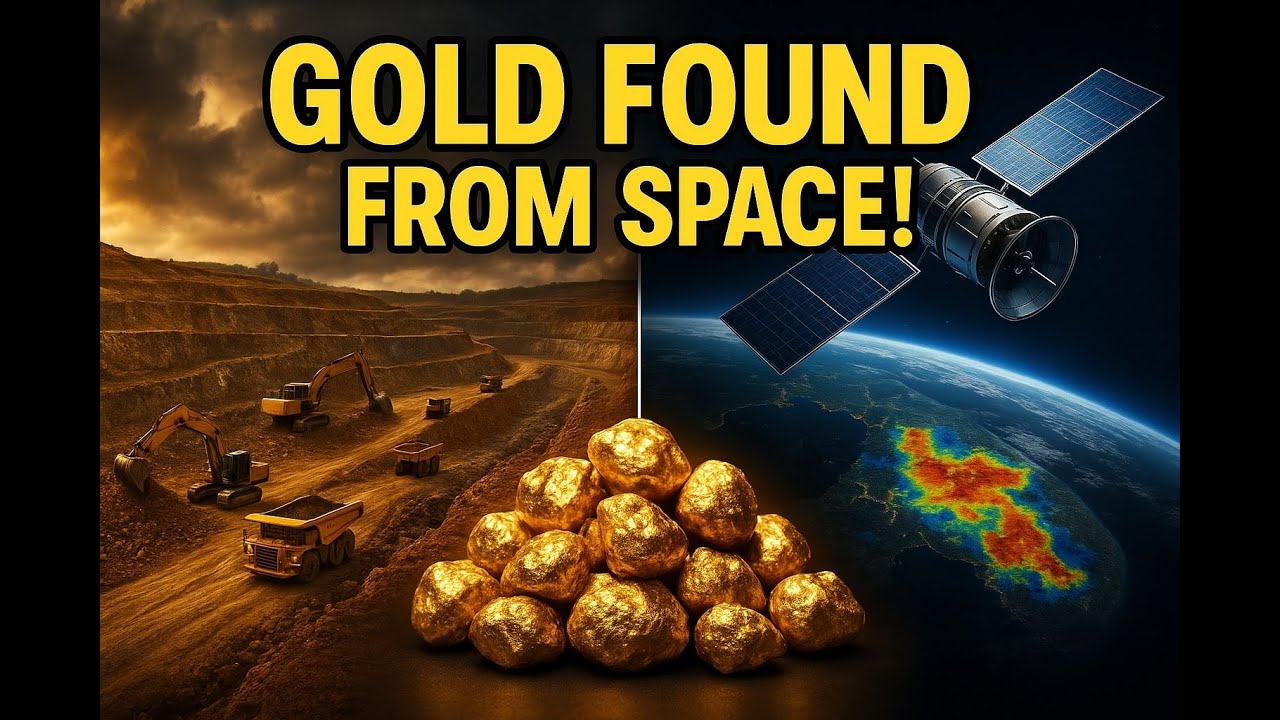
Field panning tells you what’s in one pan at one spot. Satellite-based mineral detection tells you where to bring the pan in the first place, screening large areas for gold-bearing mineral signatures before anyone hikes out.
How Satellite-Based Detection Fits In
- 📊 Farmonaut analyzes reflected electromagnetic energy from the Earth’s surface to identify gold mineral signatures, helping prospectors pinpoint zones worth a field visit before committing time to them.
- 🚀 Screening thousands of hectares this way takes days rather than the months a purely on-the-ground survey would need.
- 🌐 The same method applies across gold fields in Africa, the Americas, Australia, and Asia — it isn’t limited to one geology type.
Learn more about satellite-based mineral detection here (opens in a new tab).

GPS and Mapping for Recreational Panners
- 🌍 GPS mapping apps: log every sampling spot, stream path, and mineral trace so you can return to productive sites and avoid re-testing dry ones.
- 📲 3D prospectivity mapping: combines field sampling with satellite-derived models to visualize gold-bearing alteration zones. See a satellite-driven 3D mineral prospectivity mapping sample (PDF).
- ⚒ Portable metal detectors: complement a pan for rapid on-site identification of denser nuggets, especially in remote, high-potential terrain.
FAQ
Q1. Is gold panning legal in the United States?
A: Generally yes for small-scale recreational use on most public land, but permit thresholds differ by land manager — Forest Service, BLM, and individual states each set their own rules, and these shift with land-use policy. Confirm with the specific state DNR or National Forest office before you dig, and always get owner permission on private land.
Q2. What type of gold do you typically find panning?
A: Most panned gold is fine flakes (“flour gold”) or small fragments carried in alluvial sediment — not veins or large nuggets, which are rare finds even in productive areas.
Q3. Where should a beginner in the US start?
A: Start with USGS’s MRDS database (mrdata.usgs.gov) to find documented gold sites near you, then confirm current access rules with the land manager. Alaska and Nevada carry 86% of current U.S. commercial gold production combined, per USGS’s 2025 estimate, which signals where the underlying geology is richest — though recreational panning access and commercial mining are separate questions.
Q4. What’s the biggest beginner mistake?
A: Losing gold during the wash — swirling too aggressively or tilting the pan too steeply flushes fine flakes out with the waste. Slow down and use small wrist motions.
Q5. Can I pan without a proper pan?
A: Yes, for a rough first test — a flat-bottomed metal or plastic container with raised sides can separate gold roughly. You’ll lose more fine flakes without molded riffles, so treat it as a way to confirm a site before buying real gear.
Q6. Plastic or metal pan?
A: Plastic is the better default for beginners — lighter, non-corrosive, and it doesn’t interfere with a metal detector if you’re using both tools together.
Q7. Can Farmonaut help with recreational panning?
A: Farmonaut’s core product is satellite-based mineral intelligence for early-stage exploration and professional prospect validation, not hobby-level guidance. That said, the same data can point toward more geologically promising regions even for a recreational trip — see the satellite-based mineral detection page.
Where to Go From Here
Gold panning combines a technique that hasn’t changed in over a century with modern tools for finding where to use it. The method — collect, classify, wash, inspect, repeat — works the same whether you’re testing a Tennessee creek or an Alaska placer claim. What separates a productive trip from a wasted one is site selection: check the USGS MRDS database for documented gold occurrences near you, confirm current access rules with the relevant land manager, and bring gear suited to fine-flake recovery — a 14-inch riffled plastic pan, a classifier, and a snuffer bottle covers most beginner needs for under $60.
- ✔ Panning is low-cost, low-impact, and open to any skill level
- ✔ Site selection matters more than technique refinement for a first-time panner
- ✔ U.S. gold production remains concentrated — Nevada 64%, Alaska 22% of the 2025 total, per USGS — which should shape where you focus a serious search
- ✔ Responsible practice keeps access open for the next person at the same site
Ready to Go Beyond Recreational Panning?
- ➤ Get expert satellite mineral intelligence for your region: Get a Free Quote
- ➤ Have a specific question about exploration or mineral targeting? Contact Us directly for support
Discussion
Questions, corrections or field experience? Share them below. First-time comments are reviewed before they appear, and your email is never published.
No comments yet. Be the first to add a question or your experience.

 Faith At Work (Pty) Ltd
 Geotech Mining Solutions plc
 Vulcan International Limited
 Kidepo Associates
 GKY Mining
 Alkimy SARL
 Double A Trading
 GemSprout Metals Limited
 Qader Group
 Ileys General Trading
 SG Gold Mining LLC
 VRV Global Pte Ltd
 Omsri International FZE
 G.I.T.T.
 Jaunita Erss Ltd
 Almosi SARL
 SRK Consulting
 Berks Gold Limited
 Mwerezi Minerals Company Limited
 Mining SARL
 SenGold Invest SAS
 Exploration consultancy · South Africa · Gold










