

Iron ore · Process guide
Iron Ore Pelletizing Process: 7 Steps With Costs
Pelletizing rolls concentrate finer than 0.15 mm into 8 to 16 mm balls and fires them at about 1,290 to 1,400°C in US taconite plants. Here are the 7 steps, three furnace types, quality tests and a binder cost calculator.
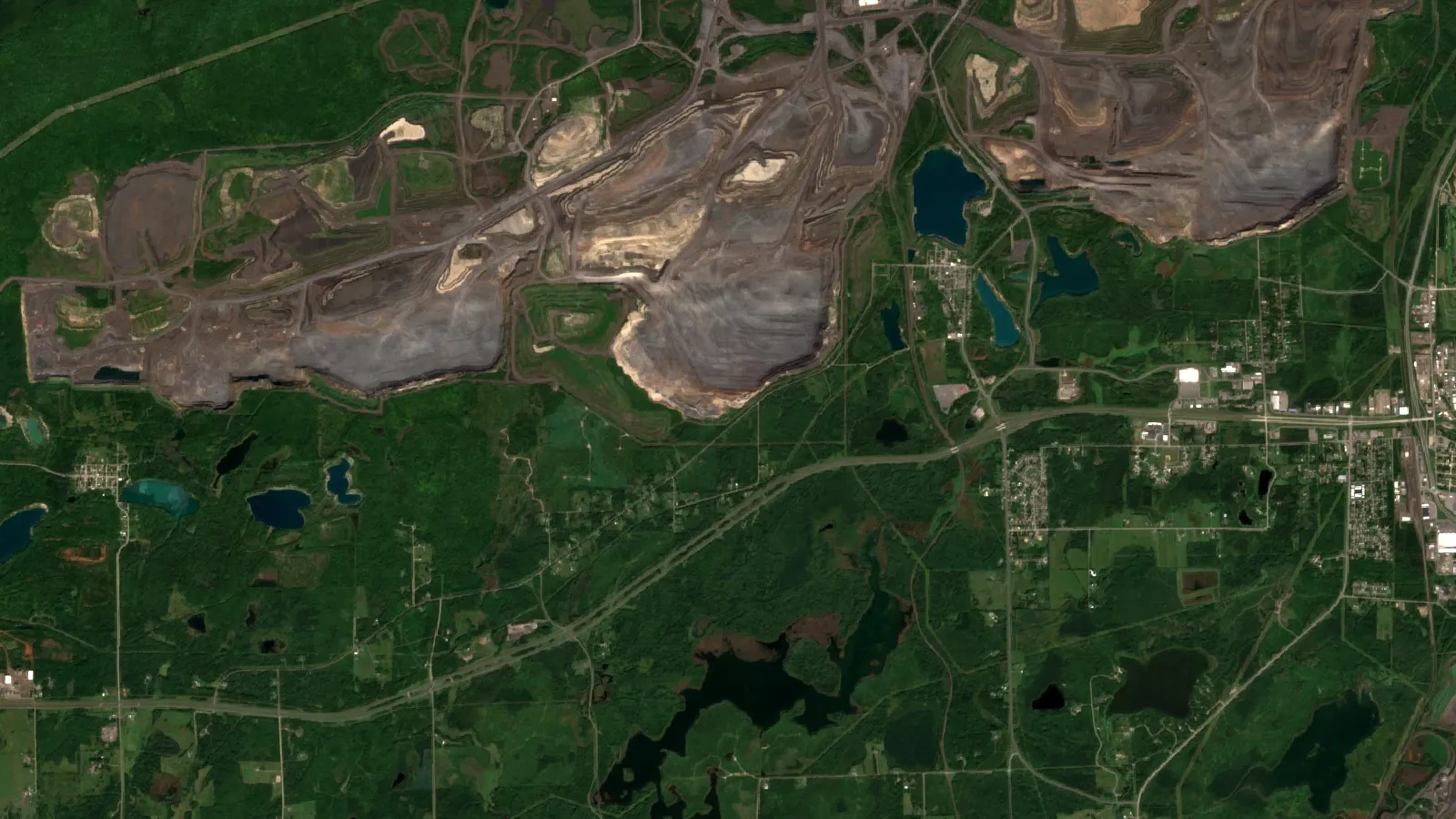
Key takeaways
- Pellet feed is ore below 0.15 mm; green pellets are rolled to 8 to 16 mm and off-size balls are screened and recycled (IntechOpen overview, 2018).
- US taconite pellets are fired at 1,290 to 1,400°C, with flux pellets at the high end; bentonite is dosed at 5 to 10 kg per tonne (US EPA AP-42, 1997).
- Straight grate fires unevenly through the bed (about 1,300°C for 6 minutes at the top, 1,200°C at the bottom), while a grate-kiln mixes pellets in a rotary kiln.
- Rio Tinto’s IOC pellets realised US$124.9 per wet tonne FOB in H1 2026 against US$85.2 for Pilbara iron ore (a different product).
- US iron ore output was an estimated 38 million tonnes in 2025, down 16% on 2024 (USGS, February 2026).
In this article
- Why fine iron ore is pelletized
- The iron ore pelletizing process in 7 steps
- Straight grate, grate-kiln or shaft furnace: which induration system
- Bentonite and limestone cost per tonne of pellets
- Blast furnace pellets or direct reduction pellets
- Pellet quality tests and what the numbers mean
- Pellet prices and US output: what the data show
- What to ask a lab or supplier before you specify a plant
- Fixing common pellet problems
- Emissions and energy at a pellet plant
- Where the ore for a pellet plant comes from
- Frequently asked questions
Iron ore pelletizing turns very fine iron ore concentrate into hard, round pellets about 8 to 16 mm across that a blast furnace or direct reduction plant can use. Pellet feed is ore finer than 0.15 mm, and the process takes it through seven steps: prepare the concentrate, mix in binder, roll green pellets, fire them, cool them, screen them and ship them (de Moraes et al., IntechOpen, 2018). Firing happens at roughly 1,290 to 1,400°C in US taconite plants (US EPA AP-42, section 11.23). This page gives the typical numbers for each step, compares the three furnace types, and includes a calculator for the bentonite and limestone bill.
It is written for mining consultants, plant engineers and project teams who need to check a pellet flowsheet, a supplier claim or a feasibility assumption. Every number carries its source and date. Plant results vary by ore, so treat the ranges as starting points for test work, not design values.
Why fine iron ore is pelletized
Grinding ore to release the iron minerals makes fine particles. Fines pack tightly, block the gas flow in a furnace and blow away as dust, so they need to be agglomerated (joined into larger lumps). The size classes used in ironmaking are lump at 6.3 to 31.7 mm, sinter feed at 0.15 to 6.3 mm and pellet feed below 0.15 mm (IntechOpen, 2018). Coarser material is usually sintered, while very fine ore is usually pelletized, and pellets generally travel and handle better than sinter (AusIMM Minerals Processing Toolbox).
Chart
US iron ore production, 2021 to 2025
Million metric tons of usable ore; 2025 is an estimate
The idea of rolling damp fine ore into balls and then firing them was patented in Sweden in 1912, and commercial plants started in the 1950s. The same chapter estimates world installed pelletizing capacity at 480.7 million tonnes a year, with China, the United States and Brazil holding the most (IntechOpen, 2018). In the United States, eight open pit mines in Michigan, Minnesota and Utah, each with concentration and pelletizing plants, shipped 98% of domestic usable iron ore products in 2025 (USGS, Mineral Commodity Summaries 2026).
The iron ore pelletizing process in 7 steps
The steps below follow the order of the plant. The numbers come from the US EPA description of taconite plants (1997 text, still the standard US reference for plant layout) and a peer-reviewed overview of the process.
Step 1: Prepare the concentrate
Ore is crushed, ground wet in rod and ball mills, then upgraded by magnetic separation or flotation, or both. Concentrate coarser than about No. 10 mesh can go to a blast furnace without further treatment, but finer material has to be agglomerated (US EPA AP-42, section 11.23). Grind size matters for strength: in one study on specular hematite, more particles below 44 micrometres improved green and fired pellet strength and abrasion resistance (IntechOpen, 2018). Ask your lab for a size distribution and a surface area test on every new concentrate.
Step 2: Mix in binder, flux and water
A binder is a material that holds the damp particles together. Powdered bentonite clay is the usual choice and is mixed with the carefully moistened feed at 5 to 10 kg per tonne (10 to 20 lb per ton). Plants that make flux pellets add 1 to 10% limestone; acid pellets use ore and binder only (US EPA AP-42, section 11.23). Even mixing is important, because uneven moisture or binder creates lumps before the pellets form. The calculator further down prices this step.
Step 3: Roll the mix into green pellets
Green pellets are the unfired balls. They are formed on a balling drum or an inclined balling disc, at 8 to 16 mm in diameter. Pellets below 8 mm or above 16 mm leave the disc circuit at the screen and go back to the start (IntechOpen, 2018). Moisture is a trade-off: less water gives higher compressive strength, while more water gives better drop resistance, so operators tune it to the ore.
Step 4: Dry, preheat and fire the pellets (induration)
Induration is the heat hardening step. Green balls are dried and heated in an oxidizing atmosphere to an incipient fusion temperature of 1,290 to 1,400°C for several minutes, with acid pellets at the lower end and flux pellets at the higher end (US EPA AP-42, section 11.23). A separate review gives drying temperatures up to about 300°C, preheating of 1,000 to 1,100°C in the grate-kiln route and firing up to 1,350°C, with most strength developing above 1,200°C as grains neck together and the pellet densifies (IntechOpen, 2018). Natural gas was the most common fuel in the EPA description.
Step 5: Cool the fired pellets
Fired pellets leave the hot zone and are cooled with ambient air, usually on the grate extension or in a separate cooler. Grate-kiln plants use an annular cooler with counter-current airflow (US EPA AP-42, section 11.23). The heated air is sent back upstream to the firing and drying zones, which saves fuel (IntechOpen, 2018).
Step 6: Screen and recycle
Cooled pellets are screened. Fines and broken pieces are removed, and on a straight grate a share of fired pellets is kept back as a hearth layer, a 10 to 15 cm bed that protects the grate (US EPA AP-42, section 11.23). Product size is checked against the sales contract with a sieve test.
Step 7: Store, load and ship
Finished pellets go by conveyor to stockpiles, rail cars or ships. Pellets generally travel and handle better than sinter (AusIMM), but they still wear in every transfer, so chute design and stockpile handling are part of quality control. Tumble and abrasion tests check how a lot holds up.
Straight grate, grate-kiln or shaft furnace: which induration system
Three kinds of furnace harden pellets. In a vertical shaft furnace, hot gas rises through a slowly descending bed of pellets. In a straight grate, a moving bed of pellets passes through drying, firing and cooling zones on one machine. A grate-kiln uses a short traveling grate for drying and preheating, then a rotary kiln for firing (US EPA AP-42, section 11.23).
| System | How it works | Strengths | Limits |
|---|---|---|---|
| Straight grate | One moving bed of pellets through drying, preheat, firing and cooling | Single machine; hearth layer protects the grate | Pellets near the top can see about 1,300°C for 6 minutes while bottom pellets peak near 1,200°C, so strength varies |
| Grate-kiln | Grate for drying and preheat, rotary kiln for firing, separate cooler | Tumbling in the kiln gives more even pellets; solid fuels such as coal are possible | Three machines; pellets need enough preheat strength to survive the kiln |
| Vertical shaft | Gas rises through a descending bed | Used in the first commercial plants | Described in the EPA text as one of three types; the same text says most large and new plants use the grate-kiln |
The straight grate and grate-kiln comparison comes from the IntechOpen overview (2018); the EPA text, written in 1997, notes that most large and new US plants used the grate-kiln. Pick the system with test work on your own concentrate, because ore type changes the firing curve.
Bentonite and limestone cost per tonne of pellets
Bentonite has been the main binder since pellet production began in the 1950s. It is cheap, but it adds silica and alumina to the pellet, which increases slag volume and energy use in the furnace. One review puts the usual dose at about 0.5% by weight (IntechOpen, 2018), which equals 5 kg per tonne, the low end of the EPA range of 5 to 10 kg per tonne. Michigan Technological University researchers reviewed organic and inorganic binders and found bentonite the most commonly used, with many alternatives that could compete in some cases (Eisele and Kawatra, 2003). Organic binders burn out without leaving residue, but give less strength to preheated and fired pellets than bentonite, so combined binders are often tested.
For price, USGS reports an average ex-works unit value of US$110 per tonne for US bentonite in 2025 (estimate), up from US$105 in 2024 (USGS, Mineral Commodity Summaries 2026: Clays). Ex-works means before freight, and pellet plants often pay more for specification-grade binder delivered to site. Use your own quote in the calculator below.
Calculator
What does the binder and flux bill come to?
Enter your concentrate rate, doses and quoted prices.
- Bentonite used: 6,000 t/year
- Limestone used: 30,000 t/year
- Binder and flux cost per tonne of concentrate: 1.56 US$/t
Example values only, not a plant benchmark or a forecast. Bentonite dose range: 5 to 10 kg per tonne (US EPA AP-42, 1997); flux pellets use 1 to 10% limestone. Prices are inputs: example, use today’s quote delivered to your site. USGS reports a 2025 average ex-works bentonite value of US$110 per tonne before freight. Excludes fuel, power, labour and freight.
Blast furnace pellets or direct reduction pellets
Both main iron-making routes accept pellets. In a blast furnace, iron is reduced and melted into liquid hot metal. In direct reduction, iron stays solid and the product is direct reduced iron (DRI) (IntechOpen, 2018). A 1993 AusIMM monograph describes major buyers negotiating a blast furnace pellet premium with pellet producers, with a separate direct reduction pellet premium agreed later (AusIMM Minerals Processing Toolbox).
Chart
Rio Tinto realised prices, first half
US$ per wet metric tonne, FOB; first half of 2025 against first half of 2026
Price reporters now publish those premiums. Fastmarkets launched a European blast furnace pellet premium on 1 July 2026, quoted over its 65% Fe Brazil-origin fines index for cargoes of at least 60,000 tonnes (Fastmarkets pricing notice, July 2026), and in 2023 it launched indices for 67.5% Fe pellet feed, the high-grade feed used for pellets (Fastmarkets pricing notice, February 2023). It also publishes a weekly direct reduction grade pellet premium indicator, launched in November 2022. For the direct reduction route, see our guide to a direct reduction plant. The United States also has one DRI plant in Louisiana and three hot-briquetted iron plants in Indiana, Ohio and Texas (USGS, 2026).
Pellet quality tests and what the numbers mean
Buyers write pellet specifications around physical, chemical and metallurgical properties, and most are standardized. The table lists the tests named in the IntechOpen overview (2018). Check which edition your contract cites, because ISO revises these methods.
| Property | Standard cited | What it tells you |
|---|---|---|
| Size distribution | ISO 4701 | Share of pellets in the sold size range |
| Crushing strength | ISO 4700 | Load a pellet carries before it breaks |
| Tumble and abrasion | ISO 3271 | Resistance to breakage and dust in handling |
| Swelling index | ISO 4698 | Volume growth during reduction |
| Low-temperature disintegration | ISO 13930 | Breakdown while heating in reducing gas |
| Reducibility | ISO 7215 | How fast oxygen is removed |
| Clustering | ISO 11256 | Tendency to stick together in the furnace |
Chemistry matters as much as strength. Silica and alumina from the ore and binder form slag, and bentonite is a known source of both (IntechOpen, 2018). Each buyer sets its own chemistry and strength limits in the contract, so the numbers on this page are not a specification.
Pellet prices and US output: what the data show
Pellets sell at a different price from the fines they are made from. Rio Tinto reported realised prices for its Iron Ore Company of Canada (IOC) pellets of US$124.9 per wet tonne FOB in the first half of 2026, against US$129.9 a year earlier. Its Pilbara iron ore (fines and lump, a different product from a different mine) realised US$85.2 per wet tonne, up from US$83.2 (Rio Tinto, 2026 half-year results). The two lines are not a like-for-like premium, because the mines, grades and shipping routes differ.
Chart
US iron ore average mine value, 2021 to 2025
US$ per metric ton, average unit value reported by mines; 2025 is an estimate
US output fell in 2025. USGS estimates 38 million tonnes of iron ore, a 16% fall from 45.1 million tonnes in 2024, after two Minnesota mines were idled in March 2025. The average mine value fell to about US$89 per tonne. The same report notes a 7-million-tonne-a-year mine and pelletizing plant project in Minnesota with a start expected in early 2026 when USGS wrote in February 2026 (check the project’s current status) (USGS, Mineral Commodity Summaries 2026).
What to ask a lab or supplier before you specify a plant
A pellet flowsheet is only as good as the test work behind it. Before committing to a design, ask for the items below and compare them with the ranges on this page.
- A size distribution and chemical analysis of the concentrate, including silica and alumina.
- Balling tests that show green pellet strength at several moisture levels and binder doses.
- Firing tests on pot-grate or similar equipment at the temperatures the chosen furnace can reach.
- Results against each ISO test your buyer names, using the edition the contract cites.
- A binder comparison, including bentonite, an organic binder and a combined option, with cost per tonne of pellets.
Fixing common pellet problems
Most pellet faults trace back to the first three steps. Use the list as a checklist before changing the furnace.
- Weak green pellets: check moisture and binder mixing first. Water that is too low reduces drop resistance, and too high reduces compressive strength.
- Fines or oversize at the screen: if many pellets fall outside 8 to 16 mm, the disc angle, speed or feed rate needs adjusting.
- Uneven fired strength: on a straight grate, top and bottom layers see different temperatures. A grate-kiln mixes pellets in the kiln.
- High silica or alumina in the product: review the binder. Bentonite adds both, and an organic or combined binder may help if the buyer penalizes them.
- Uneven drying: straight grate plants dry in two stages, with hot air blown up from below and then down from above, so the whole bed dries evenly.
Emissions and energy at a pellet plant
The first dust source in the pelletizing section is bentonite transfer and blending. Other emission points include the main waste gas stream from the furnace, and plants use hood-and-duct systems feeding cyclones, scrubbers or fabric filters (US EPA AP-42, section 11.23). Because the ore is processed wet until the drying stage of induration, dust from the grinding circuit is small, the EPA notes.
Energy is mostly fuel for drying and firing. Heat recovery from the cooler reduces that load, and recovering hematite from old tailings basins and pelletizing it is one route USGS lists for adding supply (USGS, 2026). Mining also changes land and water, which is why permits and closure plans matter before a plant is built.
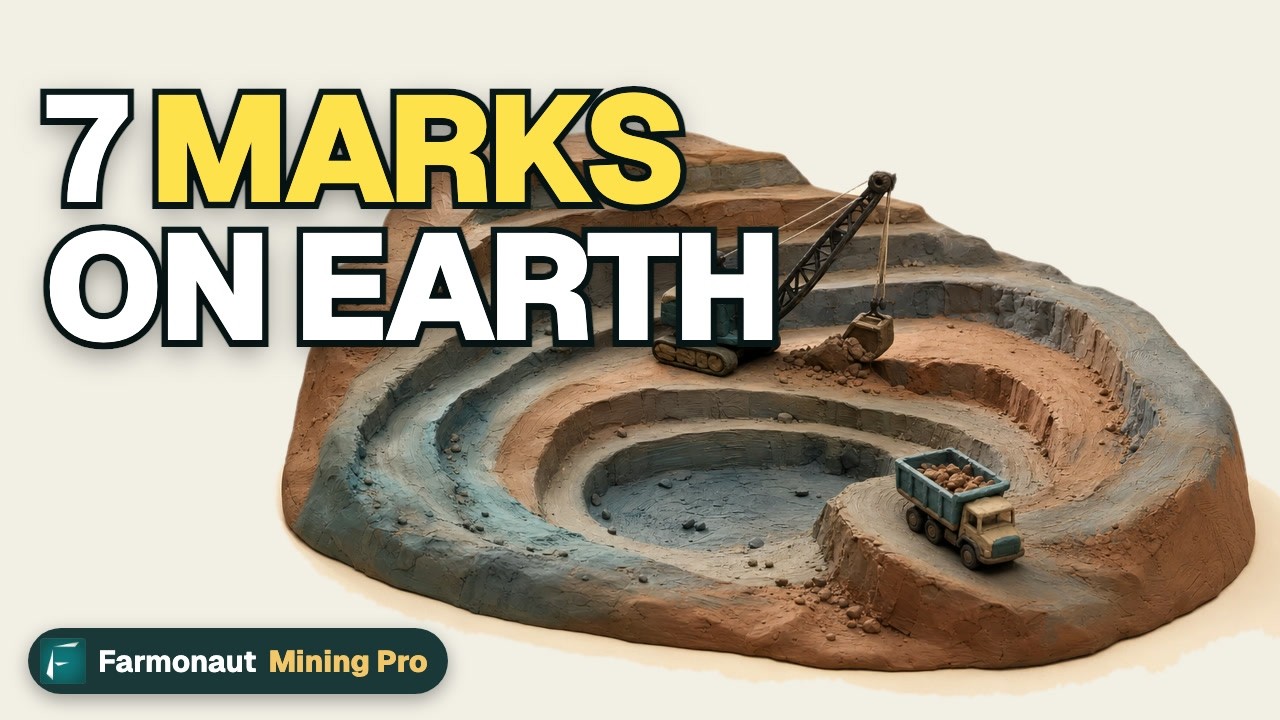
▶ Explains the main environmental impacts of mining in plain words, with satellite maps. · 2:31
Where the ore for a pellet plant comes from
A pellet plant is only as good as its concentrate, and concentrate depends on the deposit. Taconite, magnetite and hematite ores need different grinding and firing. Our guides on taconite pellets, the types of iron ore and iron ore exploration cover that side, and our post on pelletization innovations looks at newer plant ideas.
Chart
Iron ore mine production, selected countries, 2025
Million metric tons of usable ore (estimates); a selection of the countries USGS lists
Before a drill goes in, a satellite screen can show iron-oxide and alteration signatures across a licence, as a target for field work and not as a resource estimate. Farmonaut’s satellite mineral detection takes a KML, KMZ or polygon for your area; you can request a quote on the mining query form or contact us.
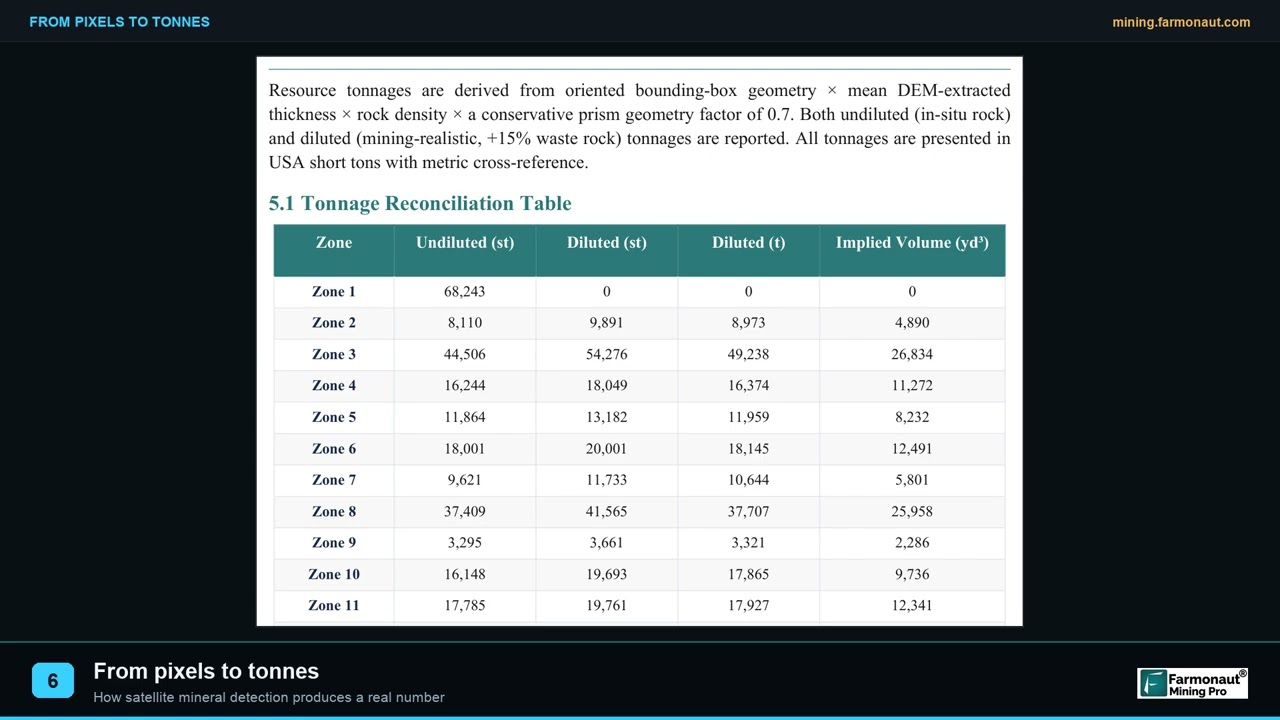
▶ Shows how a satellite picture becomes a map of targets, tonnes and grade, and which inputs are measured or assumed. · 2:54
Related reading on this site: Copper Beneficiation Process: 7 Steps and Recoveries.
We cover a connected topic in Copper Smelting Process Control: Targets by Step.
Frequently asked questions
What is iron ore pelletizing?
It is the process of rolling fine iron ore concentrate with a binder into balls, then hardening them in a furnace so they can be shipped and fed to a blast furnace or direct reduction plant.
What size are iron ore pellets?
Green pellets are formed at 8 to 16 mm, and pellets outside that range are screened out and recycled (IntechOpen, 2018).
What temperature is used to fire iron ore pellets?
US EPA gives 1,290 to 1,400°C for taconite pellets, with flux pellets at the higher end. A peer-reviewed overview gives firing up to about 1,350°C.
Why is bentonite used in pelletizing?
It binds the damp particles so green pellets hold together and survive handling and drying. The downside is that it adds silica and alumina.
How much bentonite is used per tonne of pellets?
The US EPA gives 5 to 10 kg per tonne of concentrate, and one review gives about 0.5% by weight. Test work sets the plant value.
What is the difference between acid and flux pellets?
Acid pellets are made from ore and binder only. Flux pellets have 1 to 10% limestone added before balling (US EPA).
What is the difference between pellets and sinter?
Both agglomerate fines. Pellets suit very fine ore and handle better in transport, while sinter is usually made from coarser ore.
Which furnace is better, straight grate or grate-kiln?
Neither always wins. A straight grate is one machine but fires unevenly through the bed, while a grate-kiln mixes pellets in a rotary kiln and can use coal, at the cost of three machines.
What is the difference between blast furnace and direct reduction pellets?
Both go into ironmaking, and buyers agree a separate premium for each product (AusIMM). Chemistry and strength limits are set in each buyer’s contract.
How is pellet quality measured?
With standard tests for size, crushing strength, tumble and abrasion, swelling, low-temperature disintegration and reducibility, plus a chemical analysis.
This page is for information only. It is not investment advice or engineering design advice. Pellet specifications, doses and temperatures vary by ore and by buyer, so confirm them with test work and your contract.
Farmonaut mining
Screen your iron ore licence from space
Request a quote to map iron-oxide and alteration signatures across your area as an exploration target, ahead of a resource estimate.
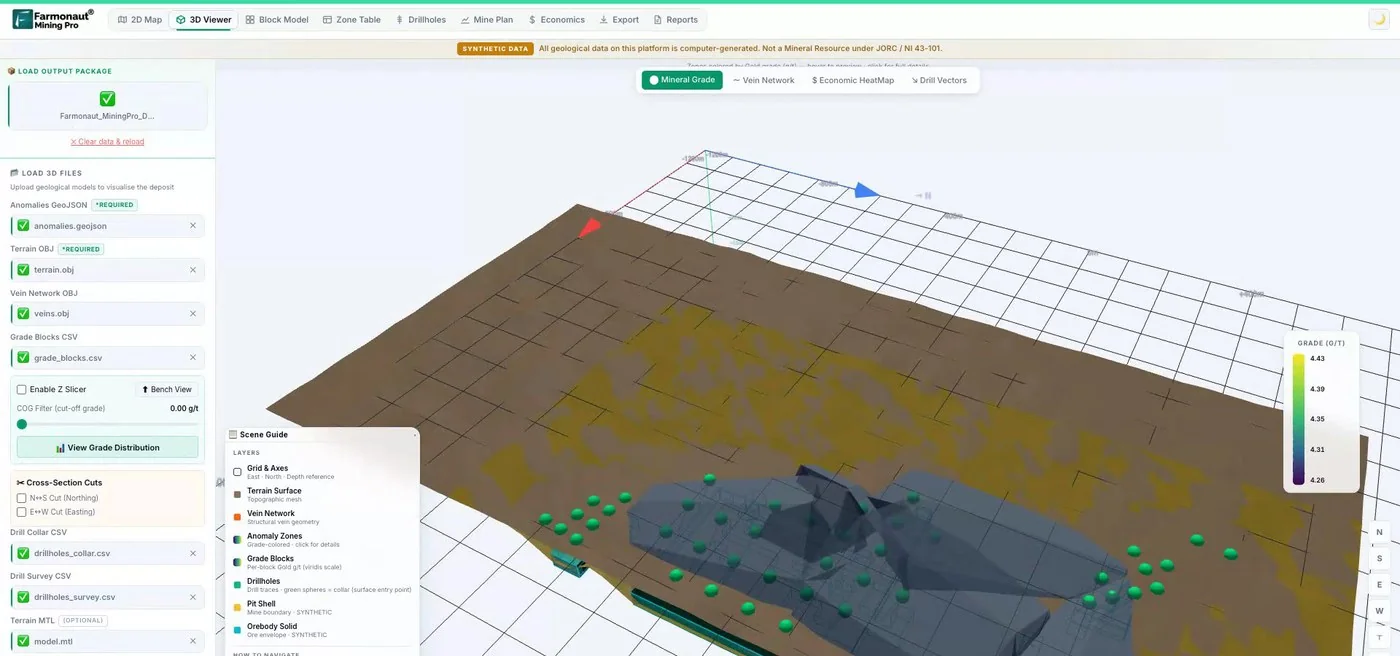
Mining Pro sample view, synthetic data
Keep reading
Sources
- US EPA, AP-42 Section 11.23 Taconite Ore Processing (1997): epa.gov
- de Moraes et al., Iron Ore Pelletizing Process: An Overview, IntechOpen (2018): intechopen.com
- USGS, Mineral Commodity Summaries 2026: Iron Ore: pubs.usgs.gov
- USGS, Mineral Commodity Summaries 2026: Clays: pubs.usgs.gov
- AusIMM, Cost Estimation Handbook Monograph 20 (1993), chapter on revenue and marketing: ausimm.com
- Eisele and Kawatra, A review of binders in iron ore pelletization (2003): digitalcommons.mtu.edu
- Fastmarkets, launch of blast-furnace-pellet premiums (July 2026): fastmarkets.com
- Fastmarkets, launch of 67.5% Fe pellet feed indices (February 2023): fastmarkets.com
- Fastmarkets, iron ore DR-grade pellet premium indicator: fastmarkets.com
- Rio Tinto, 2026 half-year results: riotinto.com
Discussion
Questions, corrections or field experience? Share them below. First-time comments are reviewed before they appear, and your email is never published.
No comments yet. Be the first to add a question or your experience.

 Sahel Shipping SA
 Sania Corporation
 Sean Mining Limited
 NTS Group (Pty) Ltd
 Mine4Africa
 Lithspo Minerals Limited
 Tintina Mining Group
 Dalgety Minerals Pty Ltd
 Vortex Minerals Pty Ltd
 Faith At Work (Pty) Ltd
 Geotech Mining Solutions plc
 Vulcan International Limited
 Kidepo Associates
 GKY Mining
 Alkimy SARL
 Double A Trading
 GemSprout Metals Limited
 Qader Group
 Ileys General Trading
 SG Gold Mining LLC
 VRV Global Pte Ltd
 Omsri International FZE
 G.I.T.T.
 Jaunita Erss Ltd










