

Milky Quartz Facts: What It Is, Uses & Value
Reviewed September 2026 against USGS Mineral Commodity Summaries (Quartz, Gemstones) and industry pricing surveys from Rock Chasing and Procurement Tactics.
Try it: Estimated value: calculating… →
Milky quartz is the cloudy-white variety of silica (SiO2) whose color comes from microscopic gas and water bubbles trapped during crystal growth — not from a different chemical composition. It is Mohs hardness 7, chemically inert, and the same mineral as clear quartz with one difference: light-scattering inclusions. Is milky quartz valuable? As a gemstone, rarely — cloudiness disqualifies it from the clear-quartz jewelry market, so pieces trade at $1–$4 per carat according to industry pricing surveys, while the USGS values ground high-purity quartz, the grade used in electronics and solar crucibles, at $500 to $12,000 per metric ton in 2025 (USGS). Its real value is industrial: construction aggregate, water filtration media, ceramics, and as a field indicator for gold, tin, and lithium exploration.
Table of Contents
- What Is Milky Quartz? Quick Answer
- Geological Formation: Why It’s Milky, Not Clear
- Milky Quartz Hardness & Identification Facts
- Is Milky Quartz Valuable? Real Pricing Data
- Milky Quartz Benefits: What’s Real, What’s Not
- What Is Milky Quartz Used For: Industrial Applications
- Milky Quartz in Agriculture & Soil
- Milky Quartz in Mining & Exploration
- Handling, Processing & Safety
- Value & Price Calculator
- Applications Comparison Table
- Video Resources
- FAQ
- Conclusion & How to Check Current Prices
- Try it: Estimated value: calculating…
What Is Milky Quartz? Quick Answer
Milky quartz is the cloudy, opaque-white to translucent variety of crystalline silica (SiO2). It is the single most common form of quartz on Earth — the mineral itself is one of the most abundant in Earth’s crust, and milky quartz is the variety most often encountered in veins, pegmatites, and stream gravel. Unlike amethyst, citrine, or rose quartz, its color has nothing to do with trace-element chemistry; it comes purely from physics. That distinction matters for every downstream question people ask about it: what it’s worth, what it’s used for, and whether the “milky quartz meaning” attached to it in crystal-healing circles has any grounding in science.
The short version: milky quartz is common, hard, chemically inert, and industrially useful — but its cloudiness is exactly what keeps it out of the optics, electronics, and fine-jewelry markets that make clear quartz valuable. Everything below unpacks that trade-off with real figures.

Geological Formation: Why It’s Milky, Not Clear
The Milky Cloudy Common Crystal Structure, Explained
Quartz crystallizes from silica-rich fluids — usually hydrothermal solutions — that move through fractures in rock and precipitate SiO2 as they cool. When crystallization happens quickly, or when the fluid carries a lot of dissolved gas, tiny bubbles of water vapor or gas get trapped inside the growing lattice instead of escaping. Those inclusions are the entire explanation for the “milky cloudy common crystal structure” people search for: light entering the crystal scatters off thousands of microscopic bubble surfaces instead of passing straight through, so the crystal reads as cloudy-white rather than transparent.
Where Milky Quartz Forms
- Hydrothermal veins — the most common setting, frequently found alongside metallic ore deposits.
- Pegmatites — coarse-grained igneous bodies that produce large, faceted milky quartz crystals and clusters.
- Sedimentary environments — siliceous sand and gravel where weathered milky quartz clasts accumulate and influence local soil texture.
This is also why milky quartz almost never reaches gem clarity: the same fast-growth conditions that make it abundant are what fill it with inclusions. Clear quartz forms more slowly, with fewer trapped bubbles — which is the entire reason the two varieties end up in completely different markets, covered in the pricing section below.

Milky Quartz Hardness & Identification Facts
Here are the diagnostic facts that separate milky quartz from other white or cloudy minerals it’s sometimes confused with (chalcedony, calcite, feldspar):
| Property | Milky Quartz | Why It Matters |
|---|---|---|
| Chemical formula | SiO2 | Identical to clear quartz — same mineral, different clarity |
| Milky quartz hardness | Mohs 7 | Scratches glass and steel; won’t scratch topaz (8) or corundum (9) |
| Luster | Waxy to vitreous | Freshly broken faces show more glassy shine than weathered surfaces |
| Transparency | Translucent to opaque | Diagnostic difference from clear quartz |
| Streak | White | Same as all quartz varieties |
| Fracture | Conchoidal | Curved, shell-like breaks, same as glass |
| Common inclusions | Gas/water bubbles, occasional “phantom” growth zoning | Source of the milky color; also a fluid-inclusion record geologists use to reconstruct formation temperature and pressure |

Milky Quartz vs Opal: The Milky White Mineraloid
If you are looking for a “milky white mineraloid”, the answer is usually opal, not milky quartz. The two look alike in the rough, and both are made of silica, but they are different materials.
- Milky quartz is a mineral. It has an ordered crystal structure, SiO2, and its whiteness comes from trapped bubbles of fluid and gas.
- Opal is a mineraloid. It lacks a regular crystal lattice. GIA lists it as hydrated silica, SiO2·nH2O, holding up to 20% water (GIA). Common opal without play-of-color is often milky white.
Three quick ways to tell them apart:
- Hardness. Quartz is 7 on the Mohs scale and scratches glass easily. Opal is 5 to 6.5 (GIA), so it scratches glass poorly or not at all.
- Weight in the hand. Opal’s water content makes it feel lighter than a quartz piece of the same size.
- Crystal faces. Milky quartz often shows six-sided crystals or vein fragments with glassy fracture surfaces. Opal fills cracks and cavities as rounded, waxy masses.
Chalcedony is a third look-alike. It is quartz in microscopic crystals, so it has quartz’s hardness but a waxier look.
Is Milky Quartz Valuable? Real Pricing Data
This is the question with the most searches and the least straight-talk online, so here are the actual numbers. Quartz pricing splits into three completely separate markets, and milky quartz sits in different spots on each:
- Export/industrial crystal: The USGS 2026 Mineral Commodity Summary puts the value of ground high-purity quartz (less than 100 ppm impurities) at $500 to $12,000 per metric ton for 2025, estimated (USGS Mineral Commodity Summary: Quartz, 2026). Ordinary milky vein quartz is worth far less unless it meets that purity.
- Gemstone-grade cut material: Milky quartz cut for jewelry or display trades at roughly $1 to $4 per carat, well below clear quartz varieties like citrine or amethyst, because clarity — not size — drives gem value (Rock Chasing quartz value guide).
- Raw-to-retail range: Procurement and retail aggregators put the spread for milky quartz specifically — from unprocessed rough to finished retail specimens or tumbled stones — at $5 to $200, depending entirely on processing, polish, and specimen size rather than rarity (Procurement Tactics quartz pricing report).
Zoom out further and the number gets smaller, not bigger: total U.S. natural gemstone production across every variety — quartz included — was valued at an estimated $9.4 million in 2025, according to the USGS (USGS Mineral Commodity Summary: Gemstones, 2026). That’s the entire domestic gem sector, not quartz alone — a useful reality check against any listing that prices a milky quartz specimen as if it were rare.
Is milky quartz worth anything, then? As a collectible or gem, only modestly — clarity, not the “milky quartz” name, drives price, and cloudy material sits at the bottom of the quartz gem hierarchy. As an industrial input, yes, at genuine commercial scale: it’s the raw feedstock for aggregate, filtration sand, and — after purification — the silicon supply chain. The next two sections cover both sides.
One structural fact keeps exact production tonnage of milky quartz specifically out of the public record: the USGS reports that only two companies produced cultured quartz crystal in the U.S. in 2025 (USGS, 2026), and it withholds their output as proprietary company data (USGS Mineral Commodity Summary: Quartz, 2025). There is no public breakdown of milky versus clear quartz volumes — if you need a production figure for a specific deposit or region, the method is to request site-level data directly from the operator or state geological survey, since the national aggregate won’t split it out for you.
Milky Quartz Benefits: What’s Real, What’s Not
Milky Quartz Stone Benefits — the Physical Ones
Strip away the marketing language and milky quartz has two genuinely useful physical properties, both grounded in physics rather than folklore:
- Piezoelectricity: Quartz generates a small electrical charge when mechanically stressed, and this is the only scientifically established “active” property of quartz as a mineral. It’s why quartz crystals (typically the clear variety, cut to precise dimensions) regulate frequency in watches, radios, and electronics — a real, measurable, patented application, not a metaphysical one (USGS Mineral Commodity Summary: Quartz, 2024).
- Mechanical durability: Mohs 7 hardness plus chemical inertness make it resistant to weathering, abrasion, and most acids — the basis for every industrial and construction use covered in the next section.
Milky Quartz Meaning: The Metaphysical Claims, and What the Evidence Says
Search interest in “milky quartz meaning” and “milky quartz benefits” is dominated by crystal-healing claims — calming energy, clarity, emotional balance. It’s worth being direct here: there is no peer-reviewed evidence that holding, wearing, or being near any quartz crystal produces a physiological or health effect beyond placebo. A landmark controlled study from the University of London (2001) tested whether people could distinguish real crystals from fakes in a blinded setting for perceived “energy effects” and found no difference — participants reported feeling effects equally regardless of which object they held, consistent with a placebo response rather than a property of the crystal itself. Subsequent reviews have not overturned that finding (Biology Insights summary of crystal healing research).
That doesn’t make milky quartz worthless as a decorative or personal object — plenty of people value mineral specimens the same way they value art or ceramics. It does mean any “milky quartz benefits” claim framed as a health or energy effect should be read as belief, not as an established property alongside piezoelectricity or hardness.

What Is Milky Quartz Used For: Industrial Applications
The cloudiness that kills milky quartz’s gem value is irrelevant to its industrial uses — none of them require optical clarity. Four sectors account for essentially all volume use:
- Construction aggregates: Crushed milky quartz-bearing rock supplies sand and gravel for concrete, road base, highway embankments, and rail ballast. Mohs 7 hardness and chemical inertness give it long service life under traffic loading and weathering.
- Water filtration media: Sized and washed quartz sand is standard filter media in municipal and industrial water treatment — the same hardness and inertness that make it durable in concrete make it inert in a filter bed, so it doesn’t dissolve or react with the water passing through it.
- Ceramics and glassmaking: Milled and purified milky quartz becomes industrial silica feedstock for ceramics, glass, and ordinary construction glass.
- High-purity silicon (indirectly): Electronics, solar and semiconductor supply chains use high-purity quartz, which the USGS defines as natural quartz with less than 100 ppm total impurities, or 99.99% pure; US output comes from pegmatites around Spruce Pine, North Carolina (USGS). This is the one application milky quartz is generally disqualified from directly — its cloudiness usually correlates with more trapped impurities than clear quartz carries, so it typically needs more processing to reach electronics-grade purity, and the highest tiers of chip-grade silica draw on cleaner starting material. Once purified past that threshold, though, the end silicon carries no memory of whether the feedstock looked clear or milky.
A useful summary from industry sourcing guides: milky quartz’s main industrial lane is “construction/aggregates, water filtration, ceramics, and high-tech silicon” — with its cloudiness specifically ruling it out of the optics and precision-electronics markets that demand visual clarity, even though the purified silica downstream can still reach electronics-grade purity (Oremill quartz ore types and industrial applications guide).
Lascas, the natural quartz used as feed for cultured quartz crystal, was mined and processed in Arkansas until 1997. Today the two US producers of cultured quartz crystal likely use a mix of rejected cultured crystal and imported lascas, most of which is mined in Brazil and Madagascar (USGS Mineral Commodity Summary: Quartz, 2026).
Milky Quartz in Agriculture & Soil
Quartz is chemically inert and contributes no nutrients, but its physical presence as sand, gravel, or clasts shapes soil texture, drainage, and porosity — properties that matter directly to U.S. row-crop and orchard operations working sandy or silica-rich ground.
- Soil drainage: Higher quartz content produces coarser, faster-draining soils, reducing waterlogging risk and improving root-zone oxygen availability.
- Soil structure and porosity: Milky quartz clasts contribute to pore space that affects root penetration and microbial habitat.
- Mapping legacy deposits: Quartz sand distribution traces old river channels, alluvial fans, and glacial deposits — useful context for USDA NRCS soil surveys and irrigation-design decisions on a given parcel.
- Filter beds and mulch: Quartz-rich sand and gravel are used in agricultural filter beds and as a mulch or soil-texture amendment in field and greenhouse settings — not as a fertility input, since quartz supplies no nitrogen, phosphorus, or potassium.
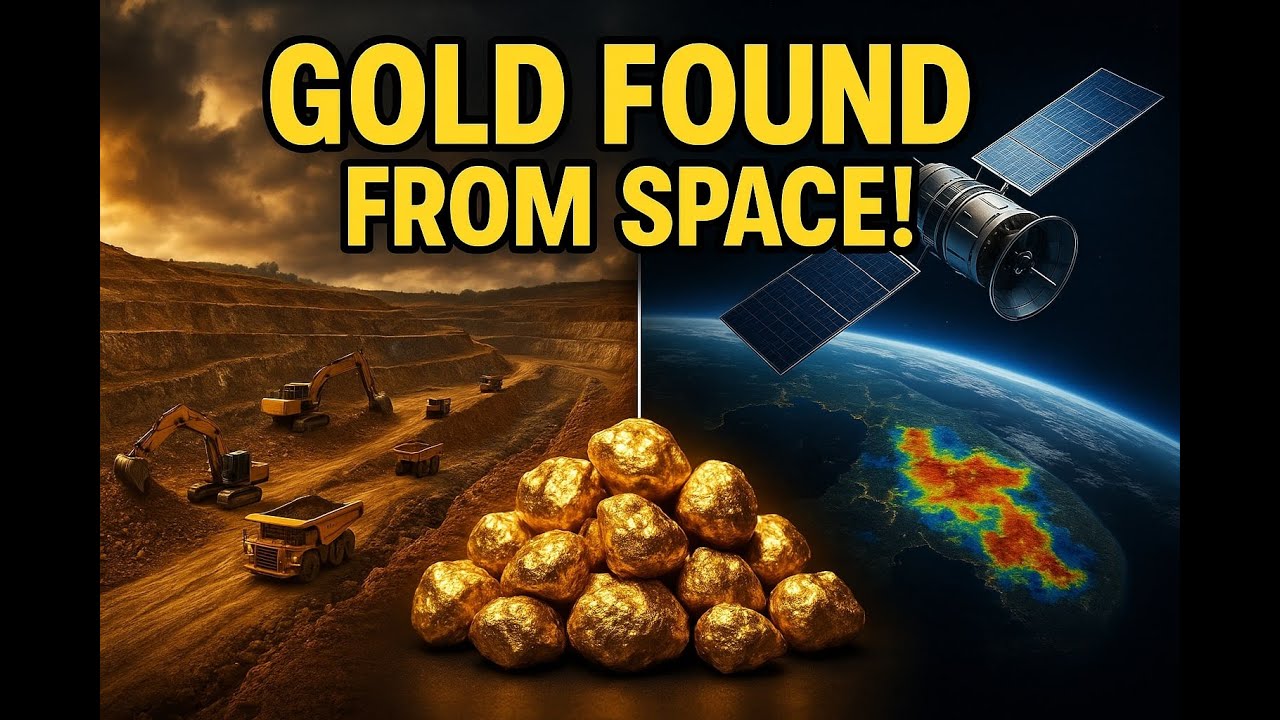
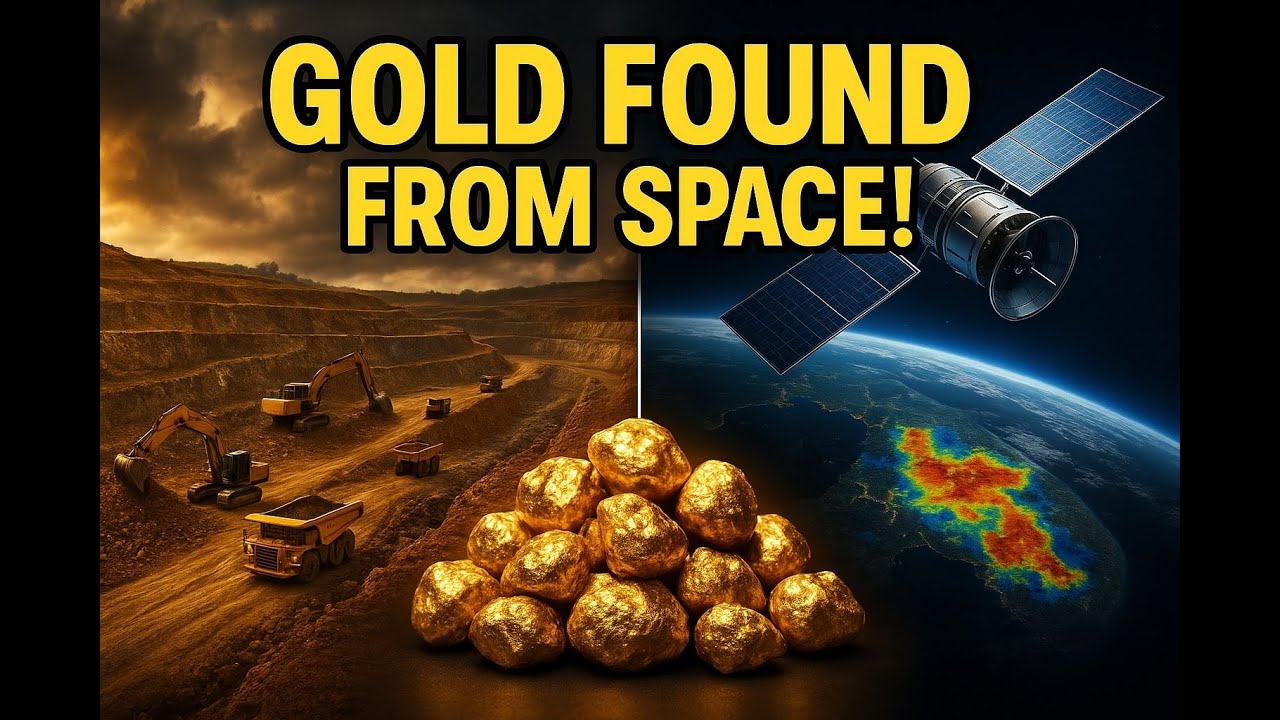
Satellite-based mineral mapping extends this from a single field to an entire farm or watershed. Farmonaut’s satellite-driven mineral detection platform can identify quartz-dominated terrain remotely, helping flag likely drainage patterns and historic soil properties at scale before a site visit — useful groundwork for irrigation design or land-improvement planning on larger acreages.
Milky Quartz in Mining & Exploration
For geologists, milky quartz is less interesting for what it is than for what it’s usually found next to. Hydrothermal systems that deposit milky quartz veins frequently also transported gold, tin, and lithium spodumene through the same fracture networks, so field geologists use milky quartz veining as a mapping and sampling target — not proof of ore, but a reason to look closer.
- Exploration indicator: Milky quartz veins guide field mapping toward zones with a higher prior probability of associated metallic mineralization.
- Gangue processing: In an active mine, milky quartz is typically non-valuable host rock (“gangue”). Its hardness resists blasting and crushing — adding wear to processing equipment, but also making the tailings suitable as stable aggregate.
- The common mistake: Not every milky quartz vein carries economic ore. Treating cloudy quartz veining alone as proof of mineralization has driven costly, misplaced drill campaigns — the vein tells you where to sample, not what you’ll find.
Farmonaut’s satellite-based mineral intelligence maps quartz-rich alteration halos and vein structures remotely, ahead of any ground disturbance, so exploration teams can prioritize which vein systems justify a field crew. Related quartz varieties worth comparing on adjacent pages: agatized quartz aggregate and clear and orange quartz varieties.
MAP YOUR MINING SITE HERE (Instant Satellite-based Quartz & Mineral Analysis) — upload coordinates, define an area of interest, and generate a satellite-driven 3D mineral prospectivity report without a prior field visit. See an example report.
Handling, Processing & Safety
Whether in a field setting or an industrial plant, cutting, crushing, or grinding milky quartz generates respirable crystalline silica dust — a documented occupational health hazard, unrelated to any property of the “milky” variety specifically.
- Common sources: Quartz veins in granitic and metamorphic terrain, plus pegmatites and sedimentary beds, yield the bulk of milky quartz encountered in the field.
- Safe handling: Use water suppression, local exhaust ventilation, and PPE (masks, goggles) during any cutting or grinding operation.
- Processing for silica: Purification and sizing turn raw milky quartz into specialty sands for water filtration, high-temperature ceramics, and engineered glass.
- Decorative use: Raw or polished milky quartz is also carved into landscaping stone and sculpture — a low-hazard use once dust from initial shaping is controlled.

Value & Price Calculator
Use the figures above to estimate what a milky quartz lot is likely worth across the three real markets it can sell into — enter a weight or carat count and compare.
Estimated value: calculating…
Assumptions: the bulk figure is an illustrative price per ton and will not match a specific buyer’s quote (USGS gives $500–$12,000 per ton for high-purity quartz only); gem basis uses the $1–$4/carat range from industry pricing surveys; retail basis reflects finished/tumbled specimens, not rough material. This tool excludes cutting, freight, assay, and dealer margin costs, and is not a formal appraisal.
Applications Comparison Table
How milky quartz’s properties translate into use across the sectors covered above:
| Sector | Primary Use | Property Exploited | Value Basis |
|---|---|---|---|
| Gems/collectibles | Cut stones, tumbled specimens | Waxy/vitreous luster, novelty | $1–$4/carat cut; $5–$200 retail specimens |
| Bulk export/industrial | Feedstock for processing | Abundance, consistent SiO2 content | Industrial grades vary; USGS puts high-purity quartz at $500–$12,000/ton (2025) |
| Construction | Aggregate, concrete, road base, rail ballast | Mohs 7 hardness, weathering resistance | Priced as bulk aggregate, not by mineral identity |
| Water treatment | Filtration media/filter sand | Chemical inertness | Priced as processed filter sand |
| Agriculture | Soil texture/drainage amendment | Physical grain structure, inertness | No direct market value; assessed via soil survey |
| Electronics/semiconductors | High-purity silicon feedstock (after purification) | Purity of 99.99% or better (high-purity quartz) | Requires purification; milky material typically needs more processing than clear |
| Mineral exploration | Vein-targeting indicator | Association with hydrothermal ore systems | No direct value; guides sampling decisions |
Video Resources: Mining, Exploration, and Quartz Intelligence
-
Find Hidden Minerals by Satellite | Farmonaut Detection: Surface and subsurface satellite techniques for quartz and mineral exploration.
Watch → -
Satellite Mineral Exploration | AI Soil Geochemistry: How quartz vein mapping supports gold and copper prospectivity.
Watch → -
Mauritania’s Gold Rush: Satellite Data Uncovers Hidden Deposits: How quartz veining correlates with gold zones.
Watch →
FAQ – Milky Quartz Facts
What is milky quartz?
Milky quartz is the cloudy white to translucent variety of crystalline SiO2, colored by microscopic gas and water inclusions trapped during crystal growth rather than by trace-element chemistry.
Is milky quartz valuable?
Modestly, and only in specific markets. Cut gem-grade material runs $1–$4 per carat, well below transparent quartz varieties. High-purity quartz is valued at $500 to $12,000 per metric ton by the USGS (2025 estimate), but most milky vein quartz is not that pure. Total U.S. natural gemstone production of all varieties, including quartz, was an estimated $9.4 million in 2025.
Is milky quartz worth anything as a raw find?
As a mineral specimen, retail prices for polished or tumbled pieces run roughly $5 to $200 depending on size and finish, not rarity. Raw, unprocessed rough is worth far less unless it has exploration value as a vein indicator.
What is milky quartz used for?
Primarily construction aggregate, water filtration sand, ceramics and glass feedstock, and — after purification to high-purity quartz (99.99% or better) — feedstock for electronics and solar. It’s also a field-mapping indicator in mineral exploration, since hydrothermal quartz veins are often associated with gold, tin, and lithium deposits.
What is milky quartz hardness?
Mohs 7 — hard enough to scratch glass and steel, but softer than topaz or corundum. This hardness is identical across all quartz varieties, since color doesn’t change the crystal lattice.
What is the milky cloudy common crystal structure of quartz?
It’s the same trigonal SiO2 crystal lattice as clear quartz. The “cloudy” appearance comes from light scattering off microscopic gas or liquid bubbles trapped between growth zones, not from any structural difference in the lattice itself.
What are milky quartz benefits, and are the healing claims real?
The scientifically verified properties are piezoelectricity (used in electronics, not on the body) and mechanical durability. Metaphysical “healing” or “energy” claims lack peer-reviewed support — a controlled University of London study (2001) found no measurable effect beyond placebo when testing perceived crystal effects under blinded conditions.
What does milky quartz meaning refer to in mineralogy vs. folklore?
In mineralogy, “milky” simply names the optical property caused by inclusions. Folklore and crystal-healing traditions assign symbolic meanings (clarity, calm, purification) to that same appearance, but those are cultural associations, not measured mineral properties.
How do I get a quote or more information about Farmonaut’s quartz/mineral mapping intelligence?
Get a custom quote here: farmonaut.com/mining/mining-query-form. Contact us for project discussion: farmonaut.com/contact-us.




Conclusion & How to Check Current Prices
Milky quartz is common, hard (Mohs 7), chemically inert, and industrially useful — but its defining feature, cloudiness, is a light-scattering artifact of trapped gas and water bubbles, not a different mineral or a boost to gem value. As a gemstone it trades at the low end of the quartz market, $1–$4 per carat; as industrial material its value depends on purity, with high-purity quartz at $500 to $12,000 per ton in 2025 per the USGS; and as a raw specimen it has no meaningful value beyond $5–$200 retail unless it’s polished or tied to an exploration lead.
None of these figures are fixed. Here’s the durable method for checking whether they still hold: USGS publishes its Mineral Commodity Summaries every January — search “USGS Mineral Commodity Summary Quartz” and “USGS Mineral Commodity Summary Gemstones” for the current year’s edition at pubs.usgs.gov/periodicals, and look for the line “average value, export, $ per ton” in the quartz report. For retail specimen pricing, marketplaces like Etsy update in real time; tracking listings monthly (or via the Wayback Machine for historical comparison) will show you current trend direction better than any single cited figure can. For gem-grade per-carat pricing, gemological price guides and rockhounding-industry surveys update quarterly.
For exploration teams, the durable takeaway is the checklist, not the price: milky quartz veining is a reason to sample, never proof of ore on its own — confirm with assay data before committing a drill budget. Farmonaut’s mineral detection platform narrows that search remotely before any ground crew deploys, and the related milky quartz industrial uses guide covers the applications side in more depth.
Want to check quartz-rich terrain at your own site, or get a mapping quote? Map Your Mining Site Here or Contact Us.
Discussion
Questions, corrections or field experience? Share them below. First-time comments are reviewed before they appear, and your email is never published.
No comments yet. Be the first to add a question or your experience.

 Tintina Mining Group
 Dalgety Minerals Pty Ltd
 Vortex Minerals Pty Ltd
 Faith At Work (Pty) Ltd
 Geotech Mining Solutions plc
 Vulcan International Limited
 Kidepo Associates
 GKY Mining
 Alkimy SARL
 Double A Trading
 GemSprout Metals Limited
 Qader Group
 Ileys General Trading
 SG Gold Mining LLC
 VRV Global Pte Ltd
 Omsri International FZE
 G.I.T.T.
 Jaunita Erss Ltd
 Almosi SARL
 SRK Consulting
 Berks Gold Limited
 Mwerezi Minerals Company Limited
 Exploration consultancy · South Africa · Gold










