

Phosphate mining · Mine profile
Phosphate Hill Mine: Owner, Output and Geology
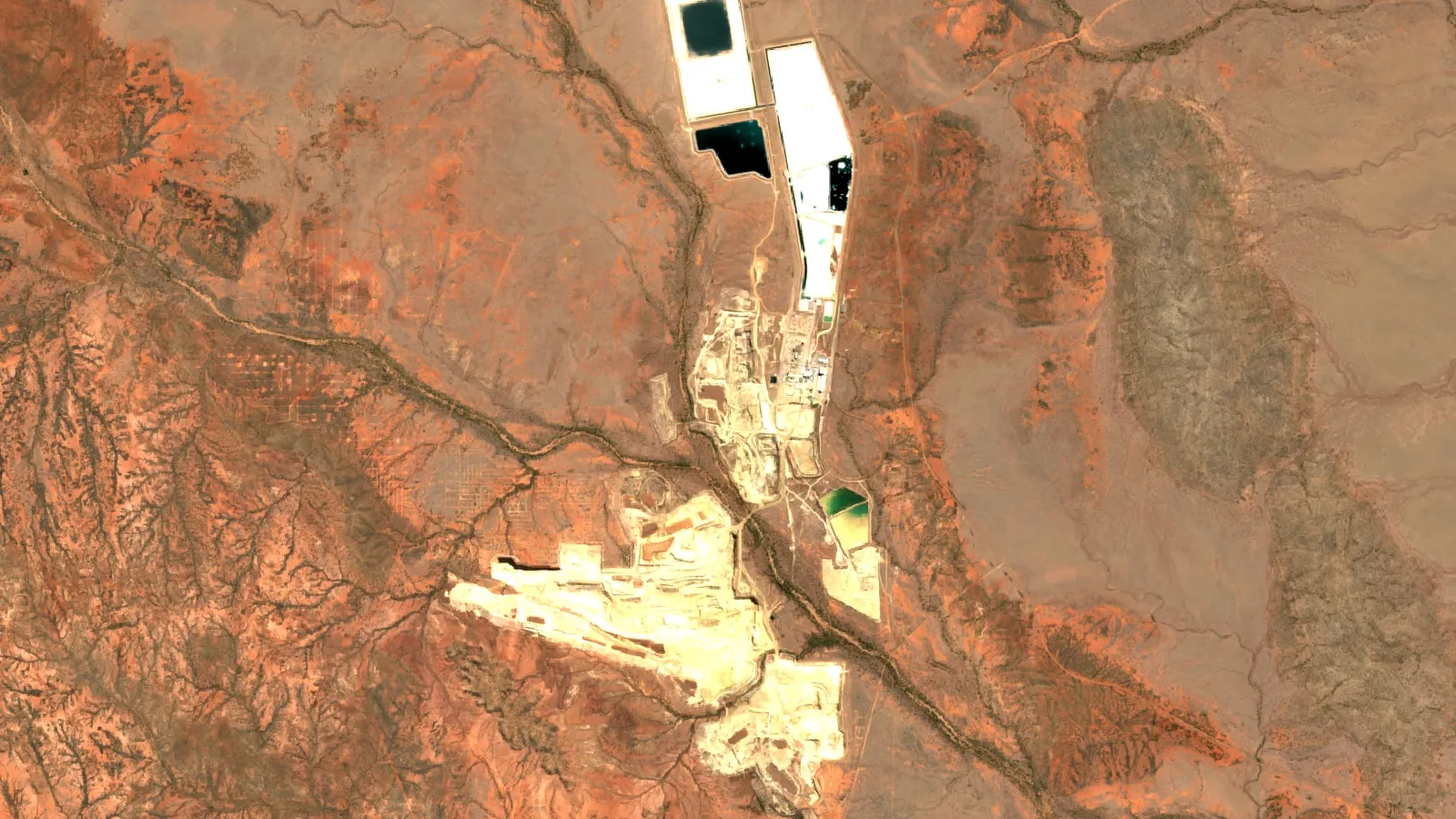
Phosphate Hill, 140 km south-east of Mount Isa, has been owned by Ryowa II GPS (Southern Cross Fertilisers) since 30 June 2026. This guide covers the sale terms, geology, processing, sulphur risk, world rankings, prices and a DAP input calculator.
Key takeaways
- Owner: Ryowa II GPS, a Mayfair Australia Corporation subsidiary, completed the purchase on 30 June 2026 for A$1, with up to A$150 million deferred to Dyno Nobel (Dyno Nobel, 1 July 2026).
- Ore: Cambrian carbonate-fluorapatite in the Monastery Creek Phosphorite Member, averaging about 20% P2O5 in the upper Beetle Creek Formation (PorterGeo).
- Scale: Australia produced 2.5 Mt of phosphate rock in 2025 against 250 Mt worldwide; China made 110 Mt (USGS, 2026).
- Risk: the plant depends on sulphuric acid from the Mount Isa smelter area; rail closures hit operations between July 2025 and February 2026 (Argus).
- Price: DAP averaged US$800.6 a tonne and North African rock US$170.0 in September 2026 (World Bank Pink Sheet, 2 October 2026).
In this article
- Phosphate Hill mine: owner, location and products
- How Phosphate Hill changed hands
- Geology of the Phosphate Hill deposit
- From rock to fertiliser: how the site processes phosphate ore
- Why sulphur and the Mount Isa smelter decide the future of the operation
- Phosphate Hill output and earnings
- Phosphate minerals explained: apatite, phosphorite and grade
- Which countries mine the most phosphate rock
- Phosphate rock reserves: where the rock is
- Phosphate rock and DAP prices with data
- Calculator: rock, sulphur and ammonia for a DAP tonnage
- Environment, rehabilitation and land after mining
- Screening phosphate ground from space: what satellites can and cannot do
- What to check before relying on any phosphate project
Phosphate Hill is an open-pit phosphate rock mine and fertiliser complex in north-west Queensland, about 140 km south-east of Mount Isa. Since 30 June 2026 it has been owned by Ryowa II GPS, a subsidiary of Mayfair Australia Corporation, after Dyno Nobel completed the sale for a nominal A$1 plus deferred payments. The new owner trades as Southern Cross Fertilisers. The site mines phosphate rock, upgrades it on site and turns it into two fertilisers, mono-ammonium phosphate (MAP) and di-ammonium phosphate (DAP).
This guide is written for consultants, licence holders and investors who need the facts in one place: who owns the operation and on what terms, how the deposit formed, how the plant works, what drives its costs, and how it compares with the world’s phosphate producers. Phosphate grade is quoted as P2O5, the oxide form of phosphorus, so a rock at 20% P2O5 contains about one-fifth of its weight as phosphate. Every figure carries its source and date.
Phosphate Hill mine: owner, location and products
The table gives the basic profile. The mine, the beneficiation plant (which crushes, mills and washes the ore to raise its phosphate content), the phosphoric acid plant, the ammonia plant and the granulation plant are all on one site. Sulphuric acid is made at a separate plant in Mount Isa and brought in by rail, and finished fertiliser goes by rail to the Port of Townsville, according to the owner’s website.
| Item | What the sources say |
|---|---|
| Owner | Ryowa II GPS Pty Ltd (trading as Southern Cross Fertilisers), a wholly owned subsidiary of Mayfair Australia Corporation, since 30 June 2026 (Dyno Nobel, 1 July 2026) |
| Previous owner | Dyno Nobel Limited (ASX: DNL), the listed company that Argus and Industry Queensland name as Incitec Pivot in earlier reporting (Argus, November 2024) |
| Location | About 140 km south-east of Mount Isa (ABC News, March 2026); about 50 km south of the town of Duchess (PorterGeo) |
| Mine type | Open pit (Industry Queensland) |
| Products | MAP and DAP fertiliser; phosphoric acid is made on site as the intermediate product |
| Start of mining | Mining began in May 1999 and the plant was commissioned in late 1999, built by WMC Fertilizers (James Cook University thesis on plant operations around 2003-04) |
| Workforce | About 540 employees and contractors, including staff at the Mount Isa acid plant (ABC News, March 2026; Dyno Nobel, 1 July 2026, says about 540) |
| Scale | Capacity of about 1 million tonnes of fertiliser a year (Industry Queensland); 769,000 t a year according to Argus, March 2026 |
Two statements about its place in Australia come from named sources. The federal industry minister, Tim Ayres, described it in March 2026 as the country’s only domestic producer of MAP and DAP, and the owner’s website says the same of its own business. It is a national fertiliser asset, not a major force in world phosphate: Geoscience Australia ranks Australia 11th in phosphate rock production with a 1% share (see the production section below).
How Phosphate Hill changed hands
Dyno Nobel put the site up for sale as it exited fertilisers to become an explosives-only company (ASX release, 9 March 2026). In November 2025 it told the market that it would sell the site by 31 March 2026 or begin an orderly closure by 30 September 2026 (ASX release, 10 November 2025). The timeline that followed:
- 9 March 2026: Dyno Nobel signed a binding agreement to sell to Ryowa II GPS. The buyer would take the economic risk and benefit from 1 April 2026 (ASX release, 9 March 2026).
- 30 June 2026: The sale completed. Dyno Nobel paid a fixed A$50 million at completion, the deferred payment owed to it rose from up to A$100 million to A$150 million, and the buyer took over all operating and environmental liabilities.
- 2 July 2026: The federal and Queensland governments announced a joint A$160 million loan to support operations at Phosphate Hill and the Mount Isa acid plant, as reported by ABC News.
Terms to keep apart: the A$150 million is deferred consideration payable to the seller if performance hurdles are met, calculated from a share of positive earnings, and the filing says it is only payable after other conditions that are likely to be long-dated. It is not the price paid at completion. The purchase price was A$1. Dyno Nobel also agreed to fund A$125.9 million for future rehabilitation of the site, which it said reflects its estimated remediation cost. ABC News reported on 2 July 2026 that the buyer paid a “final price of $150 million”; Dyno Nobel’s release shows the price was A$1, with the A$150 million payable later only if hurdles are met.
Geology of the Phosphate Hill deposit
Phosphate Hill is a sedimentary phosphorite, a rock formed on an ancient sea floor where phosphorus-rich water deposited calcium phosphate minerals. It sits in the Duchess Embayment, a graben (a down-dropped fault block) about 30 km wide and 100 km long cut into the Mount Isa basement rocks. The embayment is an appendage of the Cambrian Georgina Basin, a large sedimentary basin in Queensland and the Northern Territory (PorterGeo ore deposit description).
The key facts, from the PorterGeo database and a James Cook University thesis on plant operations:
- The ore is the Monastery Creek Phosphorite Member, the top unit of the Middle Cambrian Beetle Creek Formation. The formation is up to about 120 m thick.
- The phosphate mineral is carbonate-fluorapatite, mixed with iron hydroxides, clays and silica. The beds can be hard (indurated) or loose and sandy (friable).
- Phosphorites in the upper part of the formation average about 20% P2O5, locally up to 35%.
- Phosphate Hill is one deposit in a north-south string of similar deposits across about 180 square km that make up the Duchess phosphate field. The others include Rimmer Hill, Rogers’ Ridge, Mount Murray and Bluck’s Bluff. PorterGeo, writing in 2012, said Phosphate Hill was the only one being exploited.
- Within the embayment the Cambrian sequence is generally under 150 m thick and largely hidden by alluvium. Gentle folding gives a dome-and-basin shape, and the overburden above the ore is the Inca Shale.
Detail on pits, recoveries and stack sizes in the thesis describes the plant around 2003-04, so treat those numbers as historical. The geology of the deposit does not change, but the pits, rates and equipment have.
From rock to fertiliser: how the site processes phosphate ore
The route from the pit to a bag of fertiliser has five stages. The first three are mining and rock upgrading, the last two are chemical manufacturing. More on the wider industry is in our guide to phosphate mining and metallurgy process trends.
Infographic
From pit to fertiliser in 5 steps
- 1MineExcavators strip the overburden and peel the phosphorite off the footwall; ore is stockpiled and blended.
- 2UpgradeThree crushing stages and a ball mill grind the rock, and washing removes iron hydroxides, clay and quartz.
- 3Make acidSulphuric acid dissolves the rock into phosphoric acid and leaves phosphogypsum.
- 4AmmoniateAmmonia reacts with the acid to form the ammonium phosphates.
- 5GranulateThe product is granulated into MAP and DAP and sent by rail to Townsville.
- Mining. Excavators strip the overburden, remove clay-altered waste that has little phosphate, and peel the ore off the footwall. Ore is stockpiled in layers and reclaimed across the pile to even out the grade before processing.
- Beneficiation. Three crushing stages and a ball mill reduce the rock to under 25 microns. Washing removes iron hydroxides, clay and quartz. The thesis reported phosphate recovery of 87-93% at this stage in the early 2000s.
- Phosphoric acid. The rock slurry is reacted with sulphuric acid to make phosphoric acid and a by-product called phosphogypsum (calcium sulphate). The thesis recorded about 0.71 t of phosphogypsum per tonne of ore, with about 2 million tonnes of ore a year mined at the time, so phosphogypsum has to be stacked and managed.
- Ammoniation. The acid reacts with ammonia to make the ammonium phosphates.
- Granulation and dispatch. The slurry is granulated and sieved into MAP and DAP, then moved by rail to Townsville.
Fertiliser makers give a rule of thumb for the inputs. According to Mosaic’s technical page on DAP, one tonne of DAP needs about 1.5 to 2 tonnes of phosphate rock, 0.4 tonnes of sulphur and 0.2 tonnes of ammonia, and DAP has a standard grade of 18-46-0 (18% nitrogen, 46% P2O5, no potash). These are general industry figures, not Phosphate Hill’s own ratios. The calculator below uses them so you can test your own tonnage.
Why sulphur and the Mount Isa smelter decide the future of the operation
Sulphur is the second big input after rock. Phosphate Hill gets its sulphuric acid from an acid plant in Mount Isa that captures sulphur from Glencore’s copper smelter next door. The link works in both directions. ABC News reported that the smelter relies on the acid plant to handle its sulphur, which keeps the smelter’s emissions within limits, and that closure of the fertiliser operation would most likely end smelter production too, despite a A$600 million government rescue package announced in October 2025.
Two dated figures exist for the smelter’s end date. ABC reported in March 2026 that the sale would let the smelter run to a proposed end date of 2028, while Argus reported in November 2024 that Glencore expected operations to continue to 2030, pending capital approvals. Dyno Nobel’s annual report, as summarised by Argus, also listed equipment breakdowns, energy and water disruptions and severe weather as risks to output.
Two shocks hit in 2025-2026:
- Extended closures of the Mount Isa to Townsville railway affected operations between July 2025 and February 2026 (Argus, March 2026).
- Sulphur prices rose steeply during the sale process. The industry minister attributed this to the conflict in the Middle East and the closure of the Strait of Hormuz, and cited it as a reason for the government loan (ABC News, 2 July 2026). The completion payment in the sale also reflected higher inventory values from higher sulphur prices.
Phosphate Hill output and earnings
Output of ammonium phosphates was 739,500 t in the 2024 financial year (to 30 September), and the same annual report forecast 790,000-860,000 t for the 2025 financial year (Argus, November 2024). Dyno Nobel’s forecast range for the year to September 2026 was 790,000-850,000 t at a cost of A$720-780 a tonne, assuming a full year of operation (ASX release, 10 November 2025). The site’s earnings before interest and tax were A$233.2 million in the year to September 2025, then A$33 million for the 2026 financial year up to early March 2026 (Argus, March 2026), a period that included the rail closures described above.
The capacity figures differ by source: about 1 million tonnes a year in Industry Queensland and in the minister’s statement, and 769,000 t a year in Argus. Argus calls 769,000 t a year the plant’s size, yet Dyno Nobel’s own forecast for the year to September 2026 was 790,000-850,000 t, so no single capacity figure is firm; reported output was 739,500 t in the year to September 2024. Gas is another input to watch: Argus reported in November 2024 that the site used a mix of gas contracts with top-up supply from the Northern Territory and the east coast, and the owner’s 2026 disclosures said that securing economic gas supply remains critical.
Phosphate minerals explained: apatite, phosphorite and grade
A phosphate mineral contains the phosphate ion (PO4). Almost all commercial phosphate comes from one group, the apatites, which are calcium phosphates with fluorine, chlorine or hydroxyl in the structure. The FAO guide to phosphate rocks says pure igneous apatites contain slightly more than 42% P2O5, which is the practical ceiling. Real ore is lower because it is mixed with other minerals.
| Rock type | How it forms | Typical grade |
|---|---|---|
| Sedimentary phosphorite | Phosphorus-rich seawater deposits carbonate-fluorapatite on the sea floor; the most mined type | 30-35% P2O5 (NSW Resources) |
| Igneous apatite | Crystallises from magma; igneous and metamorphic rocks supply a minority of world output | 35-40% P2O5 (NSW Resources); about 15-20% of world phosphate |
| Phosphate Hill deposit (Beetle Creek Formation) | Sedimentary phosphorite in the Monastery Creek member | About 20% P2O5 on average in the upper part of the formation, up to 35% locally (PorterGeo); this is a formation average, not the mill-feed grade |
The table shows why beneficiation matters: Phosphate Hill ore is milled and washed to remove iron hydroxides, clay and quartz before it goes to the acid plant. Do not confuse P2O5 with phosphorus (P). The oxide is a reporting convention, and the same rock has a lower percentage of elemental phosphorus than of P2O5.
The rock has no substitute in farming. Geoscience Australia notes that phosphorus is used in fertilisers, animal feed, detergents and electronics, and there is no substitute for it in agriculture. The USGS (2026) says world resources exceed 300 billion tons and that there are no imminent shortages of phosphate rock, so the issue is cost, location and processing inputs, not running out. In November 2025 the USGS listed phosphate rock among the US critical minerals.
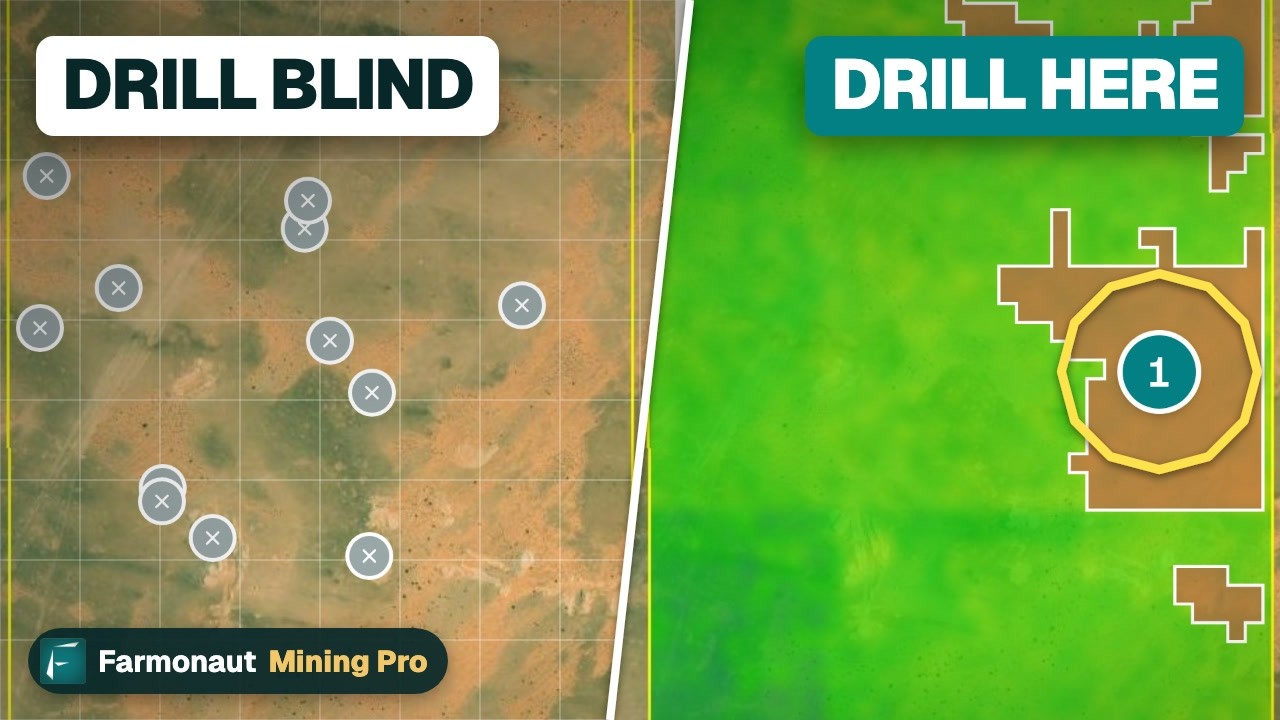
▶ Explains what mining adds to an economy through exports, jobs and revenue. · 5:03
Which countries mine the most phosphate rock
China, Morocco and the United States dominate output. The USGS Mineral Commodity Summaries 2026 estimates world mine production at 250 million tonnes in 2025, up from 239 million in 2024. China produced 110 million tonnes of that, Morocco 36 million and the United States 20 million. Australia is a small producer at 2.5 million tonnes.
Chart
Phosphate rock mine production, 2025 estimate
Million tonnes of marketable rock; leading producers plus Australia
Geoscience Australia reports different numbers because it uses a different year and basis. In its 2025 commodity summaries, Australia had five operating phosphate mines in calendar 2024 with 3.1 million tonnes of production, ranking 11th in the world with about 1% of output. Ore reserves were 123 million tonnes, and economic demonstrated resources 799 million tonnes (resources as at 31 December 2024).
Phosphate rock reserves: where the rock is
Reserves are even more concentrated than production. The USGS lists Morocco with 50 billion tonnes, about two-thirds of the world total of 73 billion tonnes, with China second at 3.4 billion. For Australia the USGS table shows 800 million tonnes but notes that reserves compliant with the JORC Code (the Australasian reporting standard for ore reserves) or equivalent were 120 million tonnes, close to Geoscience Australia’s 123 million. A larger resource number does not mean the same tonnage can be mined at a profit, which is why the chart bar for Australia needs this note.
Chart
Phosphate rock reserves by country
Billion tonnes; world total 73 billion tonnes
Phosphate rock and DAP prices with data
The World Bank’s October 2026 Pink Sheet (published 2 October 2026) gives monthly benchmarks. For September 2026, DAP at US Gulf spot was US$800.6 a tonne and phosphate rock f.o.b. North Africa was US$170.0 a tonne. The 2025 annual averages were US$685.2 for DAP and US$152.5 for rock. DAP sells for several times the price of rock, which is consistent with the sulphur, ammonia and processing inputs it carries.
Chart
DAP and phosphate rock prices, quarterly averages
US$ per tonne; DAP spot f.o.b. US Gulf, rock f.o.b. North Africa
The USGS gives a different measure, the average value of US marketable rock at the mine gate, which was about US$100 a tonne in 2025 (estimate) against US$96 in 2024. The two series are not comparable: one is a world export benchmark, the other a US mine-gate average of all grades. The World Bank series is monthly and the figures above are for September 2026. This page is not investment advice.
Calculator: rock, sulphur and ammonia for a DAP tonnage
Use the calculator below to estimate how much phosphate rock, sulphur and ammonia a given DAP output would need, and what the rock and sulphur would cost at prices you type in.
Calculator
How much rock, sulphur and ammonia does my DAP output need?
Enter your own DAP tonnage, input ratios and prices.
- Sulphur needed (tonnes per year): 300,000
- Ammonia needed (tonnes per year): 150,000
- Rock cost at your price (US$ per year): $223,125,000
- Sulphur cost at your price (US$ per year): $45,000,000
Example values only, not Phosphate Hill’s own ratios or costs. The default input ratios sit inside the ranges Mosaic gives for DAP (1.5 to 2 t rock, 0.4 t sulphur, 0.2 t ammonia per tonne). Prices are inputs: example, use today’s price. The rock price default is the World Bank North Africa f.o.b. benchmark for September 2026; the sulphur price is a placeholder to replace.
Environment, rehabilitation and land after mining
Phosphate mining and processing leave three main footprints: the pit, the waste dumps and the phosphogypsum stack. At Phosphate Hill, the thesis describes waste stockpiles that are rehabilitated once full, shaped to limit rain runoff and seeded with local plants. It also describes plans to study backfilling mine voids with phosphogypsum as part of a long-term close-out plan, and a water supply drawn from the Duchess Embayment aquifer.
On the money side, Dyno Nobel’s A$125.9 million payment matches the estimated remediation cost it carried on its balance sheet (ASX release, 9 March 2026), and the new owner has assumed the operational and environmental liabilities from completion.
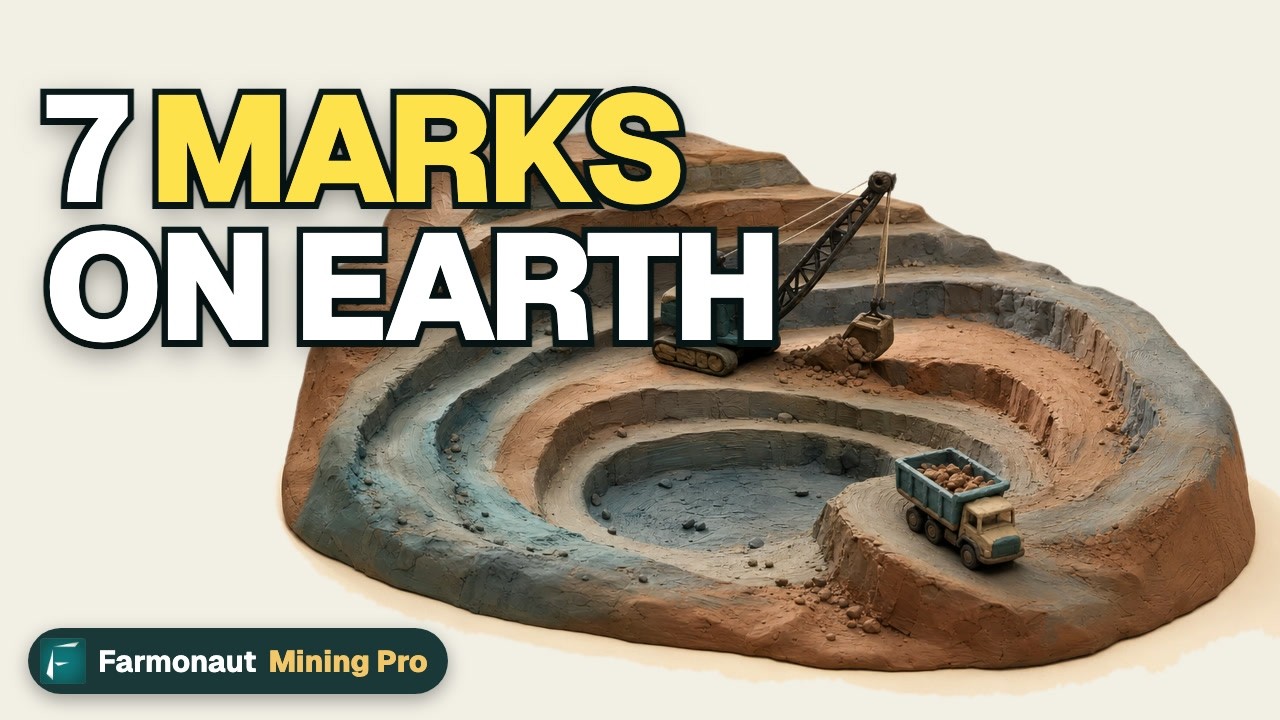
▶ A plain-language claymation on the seven environmental impacts of mining. · 2:31
Screening phosphate ground from space: what satellites can and cannot do
Satellite data does not measure P2O5 directly from orbit. What it can do for a phosphate project is map the structure, drainage, weathering and cover that guide where to sample, and track disturbance as a pit grows. At Phosphate Hill the ore lies under alluvial cover in a fault-bounded embayment, which is the kind of setting where structure and surface cover are worth mapping before drilling.
Farmonaut’s satellite mineral detection reports turn a licence boundary into ranked exploration targets in days rather than months, and the work stays ahead of a resource estimate: results need sampling and assays before any reserve is stated. Details are on the satellite-based mineral detection page, and you can ask for a quote through the mining query form or contact the team to confirm that your commodity and area are covered.
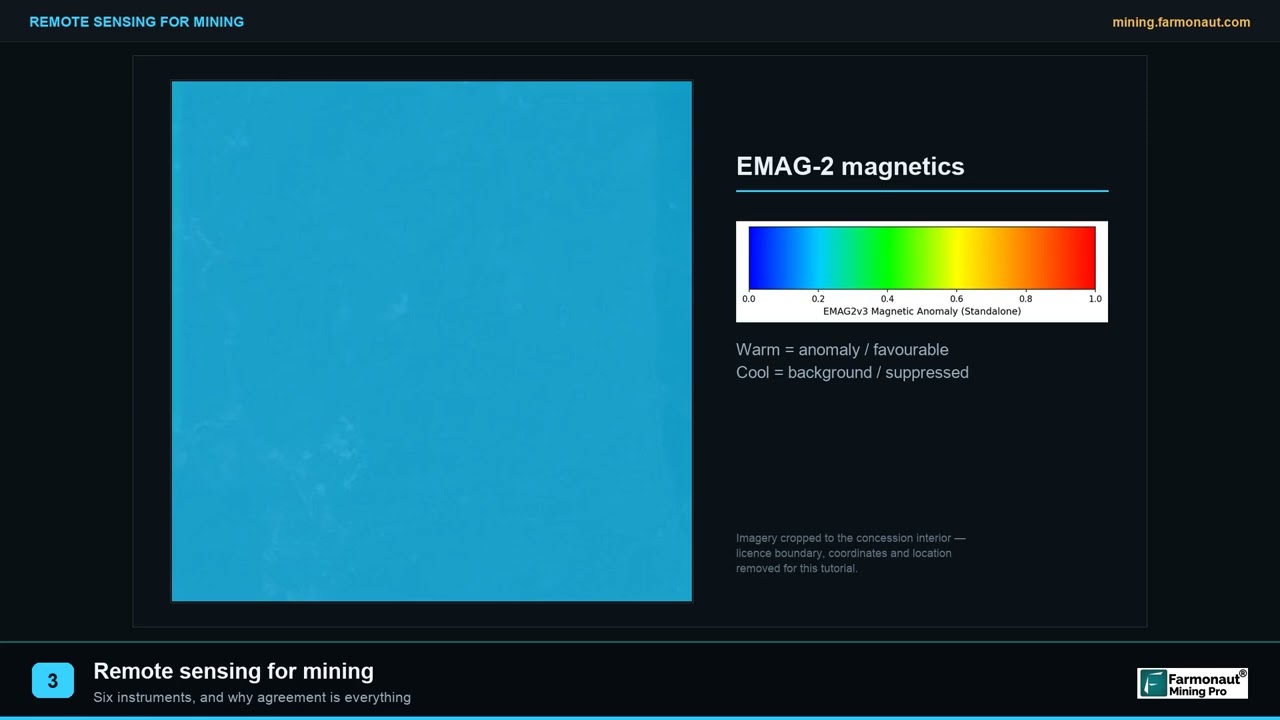
▶ Explains remote sensing for mining in three minutes without jargon. · 2:01
What to check before relying on any phosphate project
- Ownership and licences. Confirm the current holder in the state mining register and in company filings. The Phosphate Hill owner changed on 30 June 2026.
- Grade basis. Ask whether the figure is P2O5 or P, run-of-mine or after beneficiation, and whether it is a resource or a reserve.
- Inputs. List sulphur, ammonia, gas, water and rail. Phosphate Hill shows that one missing input can stop a plant whose rock is excellent.
- Liabilities. Check the rehabilitation estimate and who funds it.
- Price basis. Compare like with like: world export benchmark, mine-gate average or delivered price.
We cover a connected topic in Stawell Gold Mine: History, Geology and Gold Output.
For a closer look at a related question, see our guide: Telfer Mine WA: Owner, Output and Reserves.
Frequently asked questions
Who owns Phosphate Hill mine?
Ryowa II GPS Pty Ltd, which trades as Southern Cross Fertilisers and is a wholly owned subsidiary of Mayfair Australia Corporation. Dyno Nobel announced completion of the sale on 1 July 2026, effective 30 June 2026.
Where is Phosphate Hill mine?
In north-west Queensland, Australia, about 140 km south-east of Mount Isa and about 50 km south of the town of Duchess. PorterGeo gives the deposit location as 21 degrees 53 minutes south, 139 degrees 58 minutes east.
What does Phosphate Hill produce?
Phosphate rock from an open pit, which it upgrades on site into phosphoric acid and then MAP and DAP fertilisers. The owner says it is Australia’s only domestic producer of ammonium phosphate fertilisers.
How much does Phosphate Hill produce each year?
Output of ammonium phosphates was 739,500 t in the year to September 2024 (Argus, citing the annual report). Dyno Nobel forecast 790,000-850,000 t for the year to September 2026. Industry Queensland gives plant capacity as about 1 million tonnes of fertiliser a year; Argus gives 769,000 t a year.
Is Phosphate Hill closing?
Dyno Nobel had said it would close the site by 30 September 2026 if it could not be sold. The sale completed on 30 June 2026, and the new owner describes its three Queensland sites as operating under its control.
When did Phosphate Hill start mining?
Mining began in May 1999 and the plant was commissioned in late 1999, according to a James Cook University thesis on the plant.
What are phosphate minerals?
Minerals that contain the phosphate ion. The commercial ones are in the apatite group: fluorapatite, hydroxyapatite and chlorapatite, plus the carbonate-bearing variety found in sedimentary deposits.
How much P2O5 is in phosphate rock?
Pure apatite contains slightly more than 42% P2O5 according to the FAO. Sedimentary rock sold as phosphate rock typically has 30-35% P2O5 (NSW Resources).
Which country has the most phosphate reserves?
Morocco, with about 50 billion tonnes of the world’s 73 billion tonnes in the USGS 2026 summary. China has the largest production, at 110 million tonnes in 2025 (estimate).
Why does a phosphate plant need sulphur?
Sulphuric acid reacts with the rock to release phosphoric acid. Mosaic estimates about 0.4 tonnes of sulphur per tonne of DAP.
What is the price of phosphate rock?
The World Bank Pink Sheet of 2 October 2026 showed phosphate rock, f.o.b. North Africa, at US$170.0 a tonne for September 2026 and DAP at US$800.6 a tonne.
This page is for information only. It is not investment advice and gives no price targets. Ownership terms, prices and operating status change, so confirm them in the companies’ own filings and with the Queensland regulator.
Farmonaut mining
Map your mining site from space
Consultants can screen a licence area with satellite data to produce exploration targets ahead of a resource estimate.
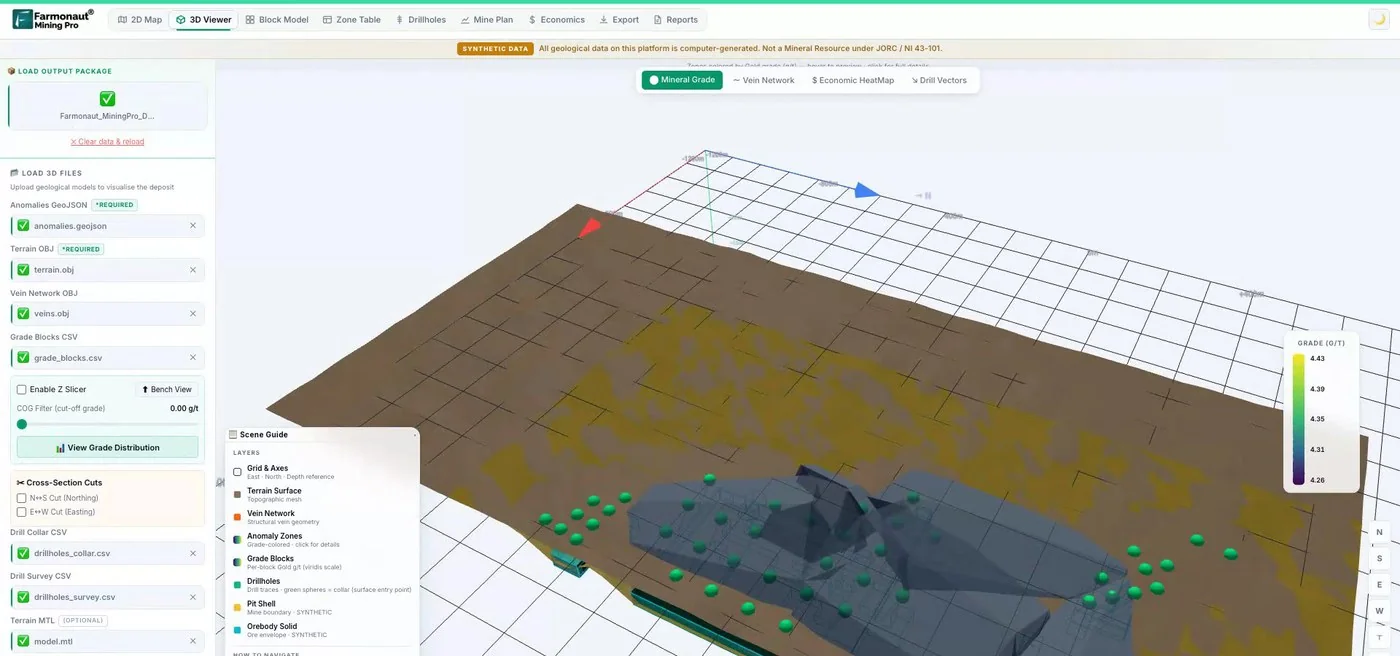
Mining Pro sample view, synthetic data
Keep reading
Sources
- Dyno Nobel, Phosphate Hill sale completes (1 July 2026): dynonobel.com.au
- Dyno Nobel, ASX release: binding agreement for sale of Phosphate Hill (9 March 2026): announcements.asx.com.au
- Dyno Nobel, ASX release: FY25 results and FY26 outlook (10 November 2025): announcements.asx.com.au
- Southern Cross Fertilisers, company website: scfert.com.au
- ABC News, Phosphate Hill sold to Mayfair (9 March 2026): abc.net.au
- ABC News, $160 million government loan (2 July 2026): abc.net.au
- Argus Media, Dyno Nobel to sell Phosphate Hill plant (9 March 2026): argusmedia.com
- Argus Media, IPL forecasts higher Phosphate Hill output (19 November 2024): argusmedia.com
- Industry Queensland, Phosphate Hill Mine profile: industryqld.com.au
- PorterGeo, Georgina Basin – Phosphate Hill, Duchess: portergeo.com.au
- James Cook University, thesis chapter 2: Phosphate Hill site and plant operations: researchonline.jcu.edu.au
- USGS, Mineral Commodity Summaries 2026: Phosphate Rock: pubs.usgs.gov
- Geoscience Australia, Australia’s Identified Mineral Resources 2025, commodity summaries: ga.gov.au
- FAO, Use of phosphate rocks for sustainable agriculture, mineralogy: fao.org
- NSW Resources, Phosphate rock fact sheet: resources.nsw.gov.au
- Mosaic Crop Nutrition, Diammonium phosphate: cropnutrition.com
- World Bank, Commodity Price Data (Pink Sheet), October 2026: thedocs.worldbank.org
Discussion
Questions, corrections or field experience? Share them below. First-time comments are reviewed before they appear, and your email is never published.
No comments yet. Be the first to add a question or your experience.

 Sean Mining Limited
 NTS Group (Pty) Ltd
 Mine4Africa
 Lithspo Minerals Limited
 Tintina Mining Group
 Dalgety Minerals Pty Ltd
 Vortex Minerals Pty Ltd
 Faith At Work (Pty) Ltd
 Geotech Mining Solutions plc
 Vulcan International Limited
 Kidepo Associates
 GKY Mining
 Alkimy SARL
 Double A Trading
 GemSprout Metals Limited
 Qader Group
 Ileys General Trading
 SG Gold Mining LLC
 VRV Global Pte Ltd
 Omsri International FZE
 G.I.T.T.
 Jaunita Erss Ltd
 Almosi SARL
 SRK Consulting
 Berks Gold Limited










