

“Only about 0.004 parts per million of Earth’s crust is gold, making quartz gold deposits exceptionally rare.”
Quartz Gold Deposits Natural Occurrence: Rarest Element Facts
In the vast and intricate world beneath our feet, quartz gold deposits stand as one of nature’s most intriguing mineral phenomena—a classic example of hydrothermal mineralization where hot fluids move through fractures in rock to deposit precious metals like gold as they cool. These veins, often elusive and deeply tied to geological processes over immense timescales, offer invaluable insight not just for mining, but also for agricultural, forestry, and land restoration contexts.
The rarity of elements—especially the rarest naturally occurring element on earth—serves as a reminder of how careful resource management, sustainable mining, and responsible stewardship of geological assets must shape land use & ecosystem health. This comprehensive guide explores the quartz gold deposits natural occurrence, rarity of elements, and sustainable mining’s impact on soil, agriculture, forestry, and land restoration.
- ✔ Classic Geology: Hydrothermal quartz gold veins as icons of mineralization
- 📊 Element Rarity: Facts on gold’s scarcity and how rarest elements impact mining and ecology
- ⚠ Sustainable Mining: Modern, responsible approaches that prioritize land, soil, & water restoration
- 🌱 Soil & Ecology: How geology, minerals, and mining affect soils and vegetation in agri-food and forestry systems
- 🌍 Future-Ready Exploration: Satellite intelligence enables efficient, ESG-compliant mineral detection
Understanding the Quartz Gold Deposits Natural Occurrence
The natural occurrence of quartz gold deposits is a mesmerizing demonstration of mineral-forming processes deep within the Earth’s crust. This remarkable association is not mere coincidence; it is a manifestation of hydrothermal mineralization—the passage of high-temperature, mineral-rich aqueous fluids through rock fractures and fault zones. As these solutions cool and experience changes in chemical or pressure environments, their ability to keep metals like gold dissolved is reduced, and precipitation occurs along quartz veins.
The Classic Example: Hydrothermal Veins
- Formation: Quartz gold veins usually form in orogenic belts where tectonic activity creates fractures and hot fluids rise from deep within Earth’s crust, leaching gold from rocks as they ascend.
- Textures: Common textures include banded quartz, veining, and alterations such as sericitization or carbonate halos—all clues prospectors use to locate ore shoots.
- Key Geological Signs: Gold-bearing systems typically exhibit silicification, iron oxides, and sulfide minerals in association with quartz.
- Precious Metals: Gold, silver, and sometimes other valuable metals (e.g., tellurium) can be trapped within quartz veins.

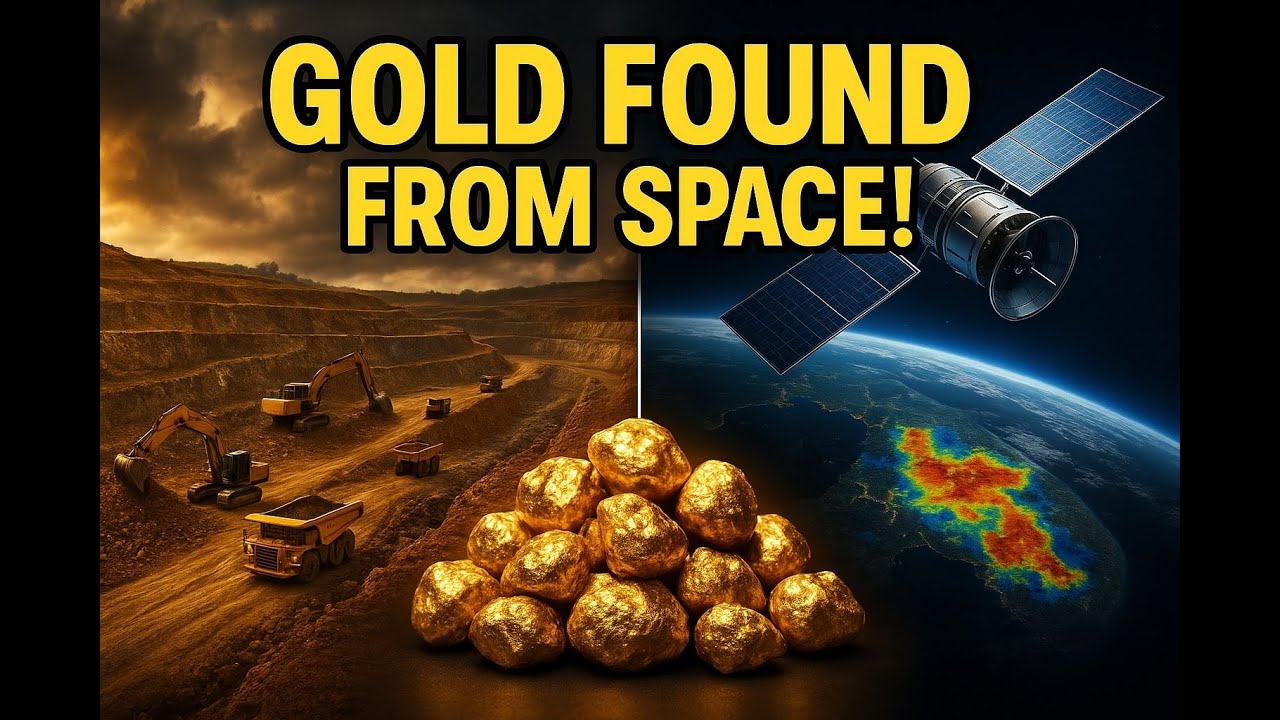
Above: Satellite-aided gold prospecting and quartz-gold vein identification.
How Does Gold Occur Naturally in Quartz?
Gold’s natural occurrence within quartz owes to a unique set of geological circumstances—where the chemistry, pressure, and temperature of Earth’s fluids combine ideally:
- Leaching: Hot, acidic hydrothermal fluids pass through host rocks, leaching trace quantities of dissolved gold.
- Deposition: As these fluids move through fractures in solid rock, they eventually cool or mix with surrounding groundwater. Under new chemical conditions, gold precipitates out of solution, freezing in place as gold-bearing quartz veins.
- Trapping: Gold becomes trapped within narrowly-banded quartz structures or sometimes disseminated as fine particles and nuggets.
Quartz gold deposits’ natural occurrence is not uniform. The ore content can vary dramatically across shoots, veins, and halos, making precise exploration and extraction strategies crucial.
Look for banded quartz, iron staining, and sericitization—these textures are key exploration guides for geologists and miners seeking high gold potential.

Exploring Quartz Gold Deposits: Classic and Satellite-Based Approaches
Exploration of quartz gold deposits is both science and art. Traditional exploration relies on surface mapping, sampling, drilling, and geophysical surveys to locate promising veins and ore shoots. However, these methods can be expensive, slow, and environmentally invasive.
- Visual Indicators: Banded quartz, carbonate halos, and iron-stained outcrops in arid environments often signal gold mineralization.
- Geochemical Sampling: Rock and soil samples are analyzed for trace gold and pathfinder elements (e.g., arsenic, antimony).
- Geophysical Methods: Resistivity, ground magnetics, or gravity surveys can delineate hidden veins or alteration zones.
- Drilling: Ultimately, core or reverse circulation drilling tests below-ground potential, revealing grade, size, and structure.
- ✔ Rapid preliminary targeting
- ✔ High spatial coverage
- ✔ Non-invasive—no ground disruption

What Controls the Formation of Quartz Gold Deposits?
The creation of a quartz gold deposit is the outcome of a delicate balance—where Earth’s tectonics, chemistry, and timing must align. Several key factors contribute:
Fluid Chemistry
The mineralizing fluids must contain dissolved gold and sufficient silica for quartz precipitation. Minor shifts in pH, oxidation conditions, or the presence of sulfur can change gold’s solubility, influencing whether it is deposited or not.
Structural Traps
Gold-rich quartz veins often occur along fracture networks and faults. The openness, orientation, and intersection of these structures determine how and where minerals are trapped within the host rock.
Temperature/Pressure Changes
Gold and silica are more soluble in hot, high-pressure fluids. As these fluids rise to cooler, lower-pressure levels near Earth’s surface, they precipitate their metals, forming classic quartz-gold veins.
“Sustainable mining can reduce soil erosion by up to 60%, aiding land restoration for agriculture and forestry.”
From Quartz Veins to Gold: Efficient Mining & Extraction
Once a high-potential quartz gold deposit is discovered, mining strategies focus on maximizing ore recovery while limiting environmental impact:
- Selective Mining: Because gold is often concentrated in narrow vein structures, selectively extracting these veins reduces the volume of waste rock and minimizes dilution (i.e., mixing valuable ore with barren material).
- Drilling & Blasting: The hardness and brittleness of quartz influence drilling strategies, blasting plans, and everything downstream—including crushing and milling.
- Crushing & Milling Circuits: Quartz forms a highly resistant framework. Effective grinding is essential to liberate gold particles.
- Gravity & Chemical Recovery: After milling, gravity separation or chemical processing (e.g., cyanidation) extracts gold from concentrated ore.
Ignoring the quartz “matrix effect” can lead to underestimating grinding requirements and poor gold liberation, reducing recovery rates and increasing waste.
Key Takeaways for Modern Mining
- ✔ Minimize Exposed Surface: Targeting narrow veins leaves more surrounding barren rock in place and reduces environmental footprint.
- ✔ Maximize Ore Quality: Efficient grade control improves profitability and reduces processing waste.
- ✔ Sustainable Waste Management: Proper tailings and waste rock handling prevent unwanted trace element leaching into soils and water.
Sustainable Mining & Environmental Management in Quartz Gold Districts
The environmental footprint of quartz gold deposits natural occurrence, rarest naturally occurring element on earth extends far beyond the mine gate. In regions where mining intersects farming, forestry, or sensitive ecological zones, proactive environmental management plans are essential:
- Sediment & Erosion Control: Runoff during mining can carry finely ground quartz and ore particles into rivers, affecting soils and drainage patterns.
- Trace Element Monitoring: Even small quantities of rare elements can impact local agriculture depending on their solubility and mobility in soils.
- Water Quality: Gold districts often lie at the headwaters of streams—planning is required to maintain downstream water quality for productive farms and forests.
- Land Rehabilitation & Restoration: Reclamation must ensure that disturbed grounds regain stable soils, nutrient capacity, and ecosystem structure.
Properly managed reclamation can return former mining sites to productive agricultural or forestry land use—protecting food security and biodiversity.
Explore Farmonaut’s full suite of mineral intelligence solutions for responsible, low-impact exploration and land management:
Satellite Based Mineral Detection
– for non-invasive mapping of mineralized structures, alteration halos, and environmental features.

Soil Formation, Agriculture, and the Quartz Connection
Quartz-rich geology shapes soil formation, texture, and drainage—with cascading effects on agriculture and forestry. As quartz-bearing rocks weather, their contributions to soil systems include:
- Texture & Drainage: Quartz dominates the sand and silt fractions, improving water infiltration and root penetration in forest soils and croplands.
- Nutrient Cycling: Quartz is chemically stable, so it does not contribute major nutrients—but as the parent rock degrades, it influences trace element availability and long-term fertility.
- Soil Depth & Productivity: Quartz-rich substrata are sometimes associated with thinner, more acidic soils; soil amendments or organic mulches may be required to enhance site productivity.
Agricultural Impact
- Sand fraction promotes loose, friable tilth
- Moderate water retention optimizes irrigation
- Trace minerals support healthy crops and livestock
- Adequate drainage prevents salt buildup
Forestry & Land Regrowth
- Good root penetration for timber & native trees
- Supports diverse ground cover species
- Favors successional regrowth in reclamation
For mining rehabilitation planning, baseline soil surveys and geochemical signatures of alteration zones (sericitization, carbonate halos) inform which trace elements require restoration and which ecosystem services can be quickly recovered.
Forestry, Land Use, and Ecosystem Restoration after Mining
Mining of quartz gold deposits often occurs within or near valuable forestry regions. Effective land restoration strategies are critical for promoting ecosystem resilience and safeguarding forest-based livelihoods.
- Rehabilitation Planning: Quick stabilization of mine soils with ground covers (grasses, legumes) reduces erosion, supports nutrient cycling, and primes the site for larger trees.
- Monitoring: Remote monitoring of vegetative regrowth and soil quality provides data-driven feedback, ensuring successful restoration.
- Productivity: Proper reclamation ensures that disturbed lands eventually support either renewed forest biodiversity or productive agroforestry systems.
Post-mining landscapes can—if carefully managed—be reclaimed for agriculture or forestry with minimal legacy impact, contributing to local community resilience and ecological health.
Element Rarity: Facts, the Rarest Naturally Occurring Element, and Mining’s Future
The rarity of gold makes quartz gold deposits so valuable—only 0.004 ppm of Earth’s crust is gold. But what about the rarest naturally occurring elements on earth?
- ✔ Rarest Elements: Some elements, like rhodium, osmium, iridium, and certain isotopes of technetium or promethium, exist in exceptionally low concentrations.
- ✔ Scarcity in Context: While gold veins can be actively mined, the rarest elements are often not present in economically recoverable quantities—posing challenges for infrastructure, energy, and high-tech industries.
- ✔ Critical Minerals: Rare earth elements (REEs) like neodymium and dysprosium are vital for clean energy technologies but can be environmentally disruptive if not carefully managed.
The future of mining lies in efficiently targeting rare minerals with remote, data-driven techniques that minimize waste and protect ecosystem integrity.

Comparison Table: Element Rarity, Deposit Occurrence & Environmental Impact
| Element | Estimated Abundance (ppm in Earth’s Crust) |
Typical Deposit Type | Global Distribution | Annual Extraction (Approx. tons) |
Environmental Impact on Soil/Agriculture/Forestry |
|---|---|---|---|---|---|
| Quartz-Gold | Quartz: 27,000 Gold: 0.004 |
Hydrothermal Vein, Placer | Global, esp. S. Africa, Australia, USA, China, Ghana | Gold: ~3300 (2023) Quartz: billions (industrial use) |
Medium-High: Mining disrupts soils and water but can be restored with proper reclamation |
| Platinum Group | 0.005–0.02 | Layered Intrusive, Alluvial | South Africa, Russia, Canada, Zimbabwe | ~450 | High: Deep mining, tailings, major ecosystem risk if unmanaged |
| Rare Earth Elements (REEs) | Combined ~200, individual REEs: 0.5–60 | Ionic Clay, Carbonatite, Monazite Sand | China, USA, Australia, Myanmar | ~300,000 | Variable: Risk of radioactive byproducts, major rehabilitation needed |
| Osmium/Iridium | 0.001–0.00037 | Sulfide Magmatic, Alluvial | South Africa, Russia | ~3–5 | Very High: Often co-mined, small amounts but hazardous if not contained |
| Uranium | 2.7 | Sandstone, Unconformity, Vein | Canada, Kazakhstan, Australia, Namibia | ~47,700 | Very High: Radioactive, requires extreme care for soil/water safety |
| Star Garnet | Trace | Metamorphic, Placer | Idaho (USA), India | Negligible (gem use only) | Low: Localized extraction, minimal soil/eco impact |
Farmonaut: Satellite-Based Mineral Intelligence for Sustainable Mining
As mining and resource management enter a new era of tighter environmental regulations and community expectations, satellite-based exploration becomes a game-changer. At Farmonaut, we combine advanced remote sensing, Earth observation, and proprietary AI algorithms to deliver non-invasive mineral discovery that revolutionizes how the world finds—and respects—mineral resources.
- ✔ Faster Exploration Cycles: Our platform cuts early-stage exploration timelines from months/years to days.
- ✔ Cost Savings: Clients see up to 85% reduction in exploration costs—allowing better allocation of capital and effort.
- ✔ Environmental Stewardship: No on-ground disturbance means zero habitat or soil impact during the detection phase.
- ✔ Global Reach: Proven application in 18+ countries—across gold, lithium, cobalt, uranium, quartz, rare earths, and more.
- ✔ Detailed Reporting: 3D mineral prospectivity maps, drilling intelligence, and field-ready geospatial insights.
See an example of how 3D satellite mineral mapping transforms exploration: Satellite Driven 3D Mineral Prospectivity Mapping – Visually locate and evaluate quartz-gold vein targets and prioritize field programs for major savings.
- 🌳 Sustainability Focus: Our intelligence supports reclamation planning, prevents unnecessary drilling, and reduces carbon/waste footprint.
- 💬 Simple Workflow: Send us your area of interest and target minerals. Receive ready-to-use technical & investment reports in 5–20 days.

Frequently Asked Questions: Quartz Gold Deposits & Element Rarity
Quartz gold deposits refer to accumulations of gold that have been naturally trapped within quartz veins via hydrothermal mineralizing fluids. The rarest naturally occurring elements on earth are those present in extremely low concentrations, such as certain isotopes of technetium or promethium, as well as ultra-rare metals like osmium, iridium, and rhodium.
Gold makes up only about 0.004 parts per million (ppm) of Earth’s crust, making it rarer than nearly all common metals and justifying high exploration and mining costs compared to elements like iron or aluminum.
Responsible mining—emphasizing erosion control and soil rehabilitation—can reduce soil loss by up to 60%, improve post-mining crop yields, and return previously disturbed land to sustainable agricultural or forestry uses.
Satellite-based detection offers non-invasive, rapid, and comprehensive mapping of mineral systems (including quartz gold deposits), minimizes environmental footprint during exploration, saves costs, and targets drilling to only the most promising locations.
Land restoration begins with stabilizing soils, restoring native vegetation, and monitoring soil chemistry for hazardous trace element levels. When planned properly, mined lands can achieve productive agricultural, forestry, or mixed-use outcomes.

Conclusion: A Focused View on Quartz Gold Deposits, Element Rarity & Sustainable Future
The saga of quartz gold deposits natural occurrence, rarest naturally occurring element on earth. is one that intersects science, technology, and sustainability. From the classic example of hydrothermal mineralization forming mesmerizing quartz-gold veins, to the soil and ecological impacts of extraction and restoration, this journey highlights the importance of balanced resource management.
- ✔ Geological understanding guides efficient, targeted mining—reducing both cost and risk.
- ✔ Sustainable mining preserves soil, water, and ecological function and paves the way for productive agriculture or forestry after resource extraction.
- ✔ Element rarity is a strategic driver for industries and nations; new approaches are needed to mine responsibly and restore land integrity.
Farmonaut’s satellite intelligence delivers non-invasive mineral prospectivity, empowers stakeholders to make rapid, responsible decisions, and provides foundational support for tomorrow’s sustainable mining and land use systems.
Discussion
Questions, corrections or field experience? Share them below. First-time comments are reviewed before they appear, and your email is never published.
No comments yet. Be the first to add a question or your experience.

 Tipareth Mines
 GemSprout Metals Limited
 Qader Group
 Ileys General Trading
 SG Gold Mining LLC
 VRV Global Pte Ltd
 Omsri International FZE
 G.I.T.T.
 Jaunita Erss Ltd
 Almosi SARL
 SRK Consulting
 Berks Gold Limited
 Mwerezi Minerals Company Limited
 Mining SARL
 SenGold Invest SAS
 Sean Mining Limited
 NTS Group (Pty) Ltd
 Mine4Africa










