

US rare earths · Project guide
US Rare Earth Deposits: 8 Projects, Owners and Status
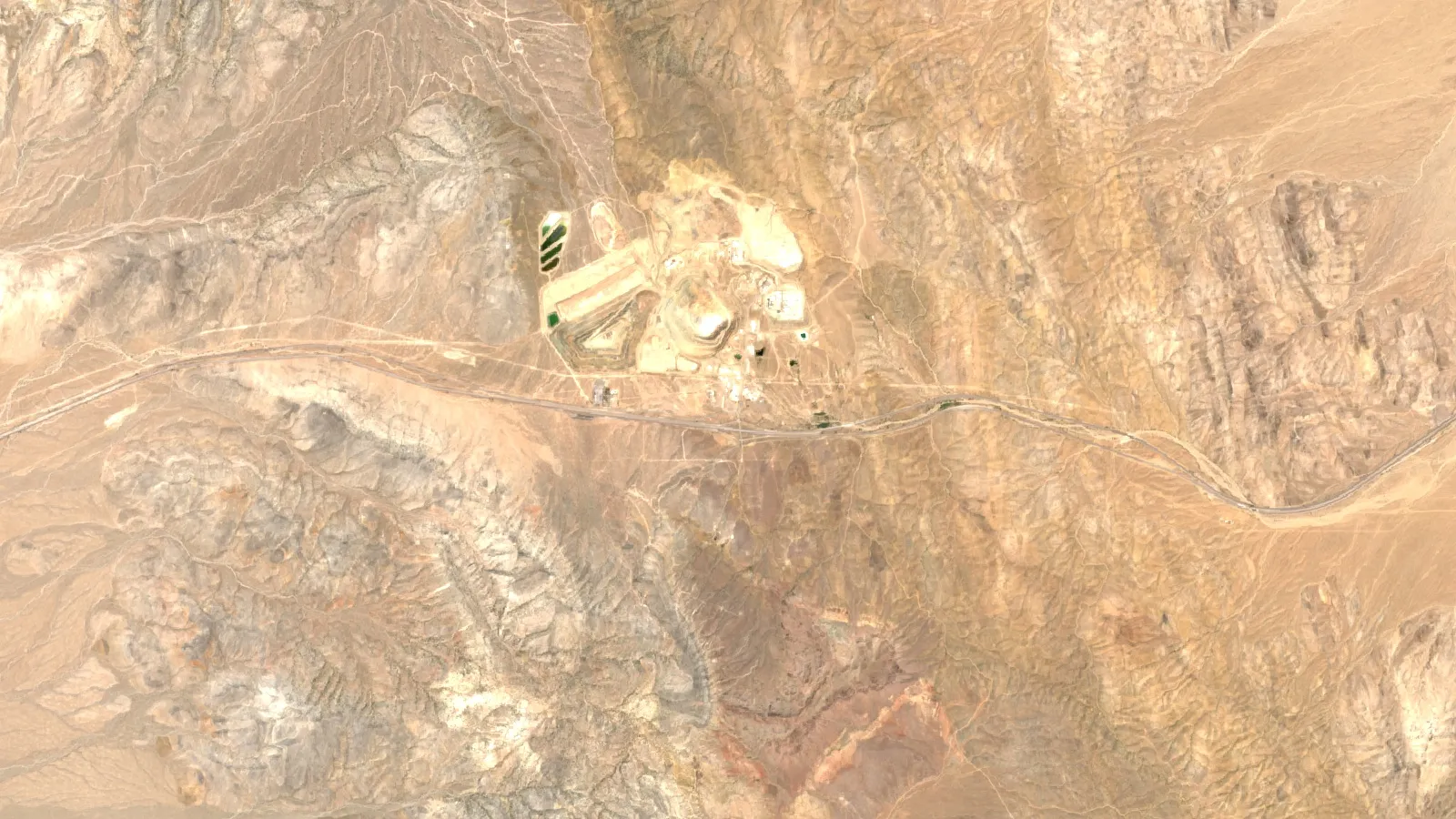
Mountain Pass in California is the one US rare earth mine of scale; USGS estimates US output at 51,000 tonnes of oxide in 2025. Seven more projects in Wyoming, Texas, Arizona, Alaska and Nebraska are at study or permitting stage.
Key takeaways
- USGS estimates 51,000 tonnes of rare earth oxide mined in the US in 2025 (45,500 in 2024), worth $240 million, against 270,000 tonnes in China; US reserves are 1.9 million tonnes (Mineral Commodity Summaries, February 2026).
- Mountain Pass, run by MP Materials, reports reserves of 28.96 million short tons of ore at 5.89% TREO and 50,692 tonnes of REO produced in 2025 (SEC 10-K, 31 December 2025; company results).
- Halleck Creek in Wyoming reports 2,627 Mt at 3,292 ppm TREO, and a 30 September 2026 scoping study models 4.5 Mt a year with about US$900 million of capital; it is not a feasibility study.
- Bear Lodge entered federal FAST-41 permitting on 20 March 2026, and the Forest Service issued its Notice of Intent on 29 July 2026; Bokan in Alaska reports 5.15 Mt at about 0.58% TREO, with 35% to 40% heavy rare earths (April 2026).
- US net import reliance for rare earth compounds and metals was 67% in 2025 (estimate), and heavy rare earths were 100% import-reliant (USGS, February 2026).
In this article
- US rare earth deposits at a glance
- How we chose and ordered the projects
- The eight projects in detail
- Other US occurrences named by USGS
- What USGS reports on US rare earth supply
- From mine to magnet: trends that move US projects
- Grade versus tonnes: why the projects are not comparable
- Light and heavy rare earths: where the value sits
- Rare earth project economics and a recovery calculator
- What to check before relying on a figure
- Where satellite screening fits
- Frequently asked questions
The United States has one producing rare earth mine of scale, Mountain Pass in California. Its owner calls it the only rare earth mining and processing site of scale in North America. Beyond it sit a set of larger or heavier-element projects in Wyoming, Texas, Arizona, Alaska and Nebraska that are still at the study or permitting stage. USGS estimates US output of rare earth oxide (REO) in mineral concentrates at 51,000 tonnes for 2025, worth $240 million, and US reserves at 1.9 million tonnes (Mineral Commodity Summaries, February 2026). This page lists eight US projects with their owner, stage and the main published figure, each with its basis.
Terms used below. REO is the weight of rare earth elements expressed as oxides, and TREO is total rare earth oxides. ppm means parts per million, so 3,000 ppm is 0.3%. Light rare earths (lanthanum, cerium, neodymium) are the common ones; heavy rare earths (dysprosium, terbium, yttrium and others) are scarcer and priced much higher. A resource is mineralised rock with prospects of economic extraction; a reserve is the part that a study shows can be mined at a profit. The full element list is in our guide to the 17 rare earth elements. This page is for information only and is not investment advice.
US rare earth deposits at a glance
The table is ordered by how far each project is from production, not by size. Figures come from company releases, filings and technical reports, so each carries the reporting standard of its source. Details and links follow in the next section.
| Project | State | Owner or operator | Stage | Main published figure (basis) |
|---|---|---|---|---|
| Mountain Pass | California | MP Materials | Producing mine and separation plant | 28.96 million short tons of ore at 5.89% TREO (reserves, SEC 10-K, 31 December 2025) |
| Bear Lodge (Bull Hill) | Wyoming | Rare Element Resources | Federal permitting; Forest Service environmental impact statement started | About 17 years of open-pit mining planned (company plan) |
| Elk Creek | Nebraska | NioCorp | Permitted; early construction; financing under way | 672 short tons a year of NdPr oxide planned as a by-product (2026 technical report) |
| Round Top | Texas | USA Rare Earth | Exploration stage under SEC rules | About 72% heavy rare earths by market value of the oxide basket, not by weight (company) |
| Halleck Creek | Wyoming | American Rare Earths | Scoping study; Wyoming state permitting route | 2,627 Mt at 3,292 ppm TREO (JORC resource, company) |
| Bokan Dotson-Ridge | Alaska | Ucore Rare Metals | Drilled resource; company focus is processing in Louisiana | 5.15 Mt at about 0.58% TREO (NI 43-101, effective 9 April 2026) |
| La Paz | Arizona | American Rare Earths | Resource defined; Halleck Creek is the priority | About 171 Mt at 391 ppm TREO (JORC, company page) |
| Brook Mine | Wyoming | Ramaco Resources | Exploration stage; conceptual study | US$3.2 billion estimated build cost plus about US$0.8 billion contingency (Hatch study, 29 July 2026) |
How we chose and ordered the projects
We included US projects that meet three tests: a named owner, rare earths as a main or planned product, and a company release, filing or regulator page dated in 2026 that we opened. Older work is used only where noted with its date. We did not rank by tonnes or grade because the numbers use different standards. Mountain Pass reports a reserve under SEC rules. Halleck Creek and La Paz report resources under the Australian JORC Code. Bokan reports a resource under Canada’s NI 43-101. Elk Creek publishes feasibility-level figures that this page does not reproduce. Round Top and Brook Mine are exploration stage. Stage is the one measure that applies to every project.
Projects that are processing plants or magnet factories without a US deposit are left out. They appear in the section on trends instead. Rare earths also occur in other US places that USGS has catalogued; those are listed in a separate section.
The eight projects in detail
1. Mountain Pass, California
MP Materials operates the Mountain Pass mine and processing facility in San Bernardino County, and USGS reports that bastnaesite was mined as a primary product there in 2025. MP reported REO production of 50,692 tonnes in 2025, up from 45,455 tonnes in 2024, and NdPr oxide output of 2,599 tonnes, up from 1,294 tonnes. NdPr is the neodymium and praseodymium oxide used in magnets. The same release says the company recognised income under a price protection agreement with the US Department of War, based on the gap between US$110 per kilogram and a benchmark NdPr price.
The company’s 10-K lists proven and probable reserves of 28.96 million short tons of ore at 5.89% TREO, using a 2.50% TREO cut-off grade, which is the grade below which rock is not worth mining. The mine life is stated as about 28 years. The filing also reports indicated resources of 5.29 million short tons at 3.50% TREO and inferred resources of 14.16 million short tons at 4.65% TREO, and reports no measured resources. Its resources are stated in addition to the reserves, not including them. In the June 2026 quarter MP produced 840 tonnes of NdPr oxide, and its Fort Worth magnet plant has made neodymium-iron-boron magnets since December 2025.
Best for: seeing what an operating US mine reports, from grade to price support. Watch: quarterly REO output moves; it was 11,072 tonnes in the June 2026 quarter against 13,145 tonnes a year earlier.
2. Bear Lodge (Bull Hill), Wyoming
Rare Element Resources is advancing Bear Lodge in northeast Wyoming. The company’s website says its majority shareholder is General Atomics, whose affiliates are advancing the separation technology. The Permitting Council announced FAST-41 coverage for Bear Lodge on 20 March 2026, with the US Forest Service as lead agency. FAST-41 is a 2015 federal law that sets a public timetable for reviews.
According to the company’s project page, the mine plan was submitted in March 2026 and judged complete in late July. The Forest Service issued its Notice of Intent on 29 July 2026 and set a comment period to 28 August 2026. The plan is an open pit at Bull Hill with about 17 years of mining and about 22 years from construction to final reclamation. A processing plant is proposed at Upton, about 40 miles away, where a demonstration plant already operates. The company says isolated thorium would go to a licensed disposal site.
Best for: following how a US federal rare earth permit works step by step. Watch: the company states the submitted plan is a starting point, not a decision, and the review covers water, dust, radioactive materials, access roads and wildlife.
3. Elk Creek, Nebraska
NioCorp’s Elk Creek project in southeast Nebraska is mainly a niobium, scandium and titanium project, with rare earths as additional products. The company says it holds all major permits for construction and has begun early work on the mine portal while it continues to arrange financing. Its 2026 technical report lists average yearly output of 672 short tons of NdPr oxide, 67 short tons of dysprosium oxide and 17 short tons of terbium oxide, alongside 8,095 short tons of ferroniobium.
Best for: readers who want a permitted US underground project with heavy rare earths as by-products. Watch: rare earths are one of eight planned products, so the economics do not depend on them alone, and financing is not complete according to the company page.
4. Round Top, Texas
Round Top is a rhyolite mountain near Sierra Blanca. USA Rare Earth’s annual report says it held 81.3% of Round Top Mountain Development LLC at 31 December 2025, with Texas Mineral Resources holding the other 18.7%. In March 2026 USA Rare Earth agreed to buy Texas Mineral Resources in a share deal valued at about $73 million when signed. The June 2026 quarterly report says the deal closed on 7 August 2026, valued at about $73.9 million, so USA Rare Earth now owns 100% of the Round Top Project. The annual report describes the deposit’s oxide basket as about 72% heavy rare earths, measured by market value (price-weighted) rather than weight, and targets commercial production for late 2028.
The annual report calls Round Top an exploration-stage property and says construction has not started. USA Rare Earth also built a magnet plant in Stillwater, Oklahoma, where it reports that the first production line was commissioned in the first quarter of 2026. Round Top itself has no mine yet.
Best for: following a heavy-rare-earth project with a magnet plant already built. Watch: no reserve is disclosed, so production dates are company targets.
5. Halleck Creek, Wyoming
American Rare Earths (ASX: ARR) owns 100% of Halleck Creek on 3,304 hectares. Its resource statement gives 2,627 million tonnes at 3,292 ppm TREO, with 1,479 Mt measured and indicated and 1,147 Mt inferred, containing 8.65 million tonnes of TREO. About 26% of the oxide is magnet rare earths and about 11% is heavy rare earths. Phase 1 is the Cowboy State Mine on Wyoming state land, a route the company says takes two to three years to permit against more than ten for federal land.
On 30 September 2026 the company published an updated scoping study. It models 4.5 Mt a year over 26 years, an after-tax net present value of about US$1.07 billion at an 8% real discount rate, initial capital of about US$900 million and average NdPr oxide output of about 2,500 tonnes a year. It assumes an NdPr oxide price of US$151 per kilogram (US$91 in the 2025 study; USGS 2025 average US$69) and an overall recovery of about 54.6% of payable oxide. The 2025 study had 3.0 Mt a year over 20 years, US$456 million of capital and about 1,800 tonnes a year. The company says the study is not a pre-feasibility or feasibility study, that no ore reserves are declared, and that the production target uses indicated resources only. Separated oxide from the pilot programme is targeted for late in the second quarter of 2027.
Best for: the largest reported tonnage on this list, with a state permitting route. Watch: the two studies use different discount rates (8% against 10%) and different price assumptions, so compare capital and output rather than the NPV figures.
6. Bokan Dotson-Ridge, Alaska
Ucore Rare Metals (TSXV: UCU) published an upgraded resource for Bokan Dotson-Ridge in Southeast Alaska on 14 April 2026, effective 9 April 2026, under both NI 43-101 and SEC Regulation S-K 1300. At a 0.4% TREO cut-off it reports 801,600 tonnes measured at 0.60% TREO, 3,369,800 tonnes indicated at 0.58% and 980,300 tonnes inferred at 0.57%. Those add up to about 5.15 Mt and 29,900 tonnes of contained TREO. The estimate rests on 97 diamond drill holes totalling 20,000 metres and 85 surface channels. Ucore says 35% to 40% of the oxide is heavy rare earths, a share that includes yttrium, and that the resource stays open at depth and along strike.
The company’s chief executive said the focus remains deploying its RapidSX refining technology at a Louisiana complex, with Bokan an important asset for a US supply chain.
Best for: a drilled, heavy-leaning resource with a modern two-code report. Watch: it is small next to Halleck Creek, and the owner’s priority is processing, not mine development.
7. La Paz, Arizona
American Rare Earths also owns La Paz, about 200 km northwest of Phoenix. Its project overview lists a JORC resource of 171 Mt grading 391 ppm TREO. The company’s 2023 annual report says the resource covers 10.2% of the project area, describes test-work recoveries of up to 66.4% of TREO and 71.5% of scandium, reports very low thorium and uranium, and says the company’s focus moved to Halleck Creek. That report also gives an exploration target of 742 to 928 million tonnes at 350 to 400 ppm TREO, which is a range of possible size and grade, not a resource.
Best for: a bulk, low-grade, low-radioactivity case study. Watch: at 391 ppm the grade is about one-eighth of Halleck Creek’s, so recovery and cost decide whether it ever works.
8. Brook Mine, Wyoming
Ramaco Resources describes the Brook Mine near Sheridan as a coal deposit that also holds rare earths and other critical minerals. In its August 2026 results release the company calls the property exploration stage and reports a conceptual study by Hatch dated 29 July 2026. The study puts construction capital at US$3.2 billion plus about US$0.8 billion of contingency, with initial production in 2031. A pilot plant building is under construction, with full pilot operations expected in 2027.
Best for: an unusual coal-hosted deposit type. Watch: the release gives no resource tonnage or grade, and a conceptual study is the earliest and least certain kind of study.
▶ Explains the seven environmental impacts of mining in plain words, the topics a permit review such as Bear Lodge’s weighs. · 2:31
Other US occurrences named by USGS
A USGS report on US rare earths, Scientific Investigations Report 2010-5220, reviews deposits beyond the ones above: the Iron Hill carbonatite complex in Colorado, the Pea Ridge iron deposit and mine in Missouri, the Diamond Creek area and Hall Mountain in Idaho, the Lemhi Pass district on the Idaho-Montana border, and placer deposits in Idaho, the Carolinas, Florida and Georgia. The 2010 report gives no current owners or status, so check each against a current filing. USGS also reports that monazite was produced in 2025 from heavy-mineral-sand concentrates in the southeastern United States. For global maps and data portals, see our guide to rare earth element maps and exploration.
What USGS reports on US rare earth supply
The USGS summary puts US mine output at 51,000 tonnes REO in concentrates for 2025 (estimate), up from 45,500 tonnes in 2024, against 270,000 tonnes for China. Reserves are 1.9 million tonnes for the US and 44 million tonnes for China, and USGS lists measured and indicated US resources at 3.6 million tonnes. World mine output is estimated at 390,000 tonnes for 2025, so the US share is about 13%.
Chart
Rare earth mine output, selected producers
Tonnes of rare earth oxide equivalent, 2025 estimate, selected countries
From mine to magnet: trends that move US projects
The mine is only the first step. Seven developments, each with a dated source, explain why most US projects are tied to separation plants and magnet makers.
Chart
US rare earth compounds and metals, 2021 to 2025
Tonnes of rare earth oxide equivalent; 2025 is an estimate
- Price support. MP Materials’ agreement with the Department of War sets a US$110 per kilogram reference price for NdPr products from Mountain Pass, while USGS puts the 2025 average NdPr oxide price at US$69 per kilogram (estimate).
- Magnet plants. MP began making neodymium-iron-boron magnets at Fort Worth in December 2025, and USA Rare Earth commissioned a first line in Stillwater, Oklahoma, in the first quarter of 2026.
- Export controls. USGS records that China added controls on samarium, gadolinium, terbium, dysprosium, lutetium, scandium and yttrium in April 2025, widened them in October, then suspended the October additions for one year in November.
- Faster federal permits. Bear Lodge became the 54th critical mineral and mining project under FAST-41 on 20 March 2026, according to the Permitting Council.
- State permits. American Rare Earths is using a Wyoming state permitting route for Halleck Creek’s first phase.
- Heavy-rare-earth separation. USGS says at least five companies were developing heavy-rare-earth processing capacity in 2025 and none had sustained commercial output. Energy Fuels’ June 2026 filing reports on-spec dysprosium and terbium oxide at pilot scale at its Utah mill and expects monazite from projects in Madagascar, Brazil and Australia to feed it.
- Recycling. USGS says only limited quantities were recovered from batteries, magnets and lamps in 2025, and MP has an agreement to supply magnets made from material recycled at Mountain Pass.
For listed companies and funds, our pages on rare earth stocks compared and rare earth ETFs compared cover fees, holdings and risks.
Grade versus tonnes: why the projects are not comparable
Grade is the concentration of oxide in the rock and tonnes is the size. Mountain Pass has high grade and modest tonnage, Halleck Creek (a resource at a 1,000 ppm TREO cut-off) has the opposite, and La Paz has low grade at moderate tonnage. The chart plots each project’s published figure on a log tonnage axis. The points mix a reserve (Mountain Pass) with resources (the others), so they show scale, not rank. Mountain Pass ore is converted to metric tonnes from short tons.
Chart
Grade against size for four US projects
Mountain Pass is a reserve (SEC); the others are resources (JORC or NI 43-101)
Light and heavy rare earths: where the value sits
Heavy rare earths matter because of price. USGS lists 2025 average oxide prices (estimates) of US$1.00 per kilogram for lanthanum, US$1.71 for cerium, US$69 for NdPr, US$239 for dysprosium and US$1,010 for terbium. USGS also reports US net import reliance for heavy rare earths at 100% for 2021 to 2025, with terbium compounds and metals imported only from China over 2021 to 2024. Two projects on this list report a heavy share of their oxide by weight: Bokan 35% to 40% (including yttrium) and Halleck Creek about 11%. Round Top reports about 72%, but that is a share of the oxide basket’s market value, so it cannot be compared with those two. Our page on heavy rare earth metals and demand covers the uses.
Chart
Average oxide price by element, 2025
US dollars per kilogram, USGS estimates
Rare earth project economics and a recovery calculator
Studies translate grade and tonnes into output. Halleck Creek’s 2025 scoping study used 3.0 Mt a year, 3,438 ppm TREO in the first-phase resource and 67% overall recovery, with a cash cost of US$35.58 per kilogram of NdPr equivalent against a US$91 per kilogram NdPr price assumption. For comparison, USGS puts the 2025 average NdPr oxide price at US$69 per kilogram, and MP reports an average realised price of US$4,707 per tonne of REO in concentrate for 2025, or about US$4.7 per kilogram.
The calculator below uses the 2025 Halleck Creek inputs as editable examples. That study was superseded on 30 September 2026 by one at 4.5 Mt a year, so replace the inputs with a project’s own numbers. It estimates REO in the ore, REO recovered each year and over the mine life, and gross value at a price per kilogram of REO that you set. The default price is a concentrate price, far below the NdPr-based price in the study, so the default value is a floor, not the study’s revenue.
Calculator
How much oxide could a project recover, and what is it worth?
Enter a project’s own tonnes, grade, recovery and price.
- REO contained in the ore each year: 10,314 t
- Gross value of recovered REO each year (US$): $32,478,786
- REO recovered over the mine life: 138,208 t
Example values only, not a benchmark or forecast. Defaults use Halleck Creek’s 2025 scoping study (3.0 Mt a year, 3,438 ppm TREO in the first-phase resource, 67% overall recovery, 20-year mine life; American Rare Earths, February 2025). That study was superseded on 30 September 2026 by a 4.5 Mt a year, 26-year case with lower recovery. The default price of 4.7 US$/kg is MP Materials’ 2025 average realised price per tonne of REO in concentrate (US$4,707), far below the NdPr-based price in the Halleck study (US$91/kg NdPr), so the default value is much lower than that study’s revenue. Price is an input: example, use today’s price. Gross value only: mining, processing, royalties and tax are not included.
What to check before relying on a figure
- Resource or reserve. A resource is not a reserve. Mountain Pass reports a reserve in an SEC filing; for any other project, open the technical report and find the word reserve.
- Reporting code. JORC, NI 43-101 and SEC S-K 1300 differ in details and in who may sign. Bokan reports under two codes and ARR is converting to S-K 1300.
- TREO against REE. TREO counts the oxides and TREE counts the elements, and oxide weighs more than the element alone, so the two figures differ. Check the unit label on any grade.
- Study stage. Scoping and conceptual studies are the least certain. Halleck Creek and Brook Mine are at that stage.
- Land and permits. Federal, state and private land follow different permit routes, as Bear Lodge and Halleck Creek show.
- Radioactivity. Rare earth ore often carries thorium. Rare Element Resources lists naturally occurring radioactive material among its review topics and says it would send isolated thorium to licensed disposal, while American Rare Earths reports very low thorium at La Paz.
- Price assumptions. Compare a study’s assumed NdPr price with the USGS average and the date of each.
Where satellite screening fits
Satellites measure reflected light, not metal grade. They map rock types, alteration minerals and structure at the surface, which helps rank ground for sampling before drilling. Farmonaut’s satellite mineral detection covers rare earth elements among 20+ mineral types, and results are exploration targets that sit ahead of any resource estimate. Learn how satellite-based mineral detection works, request a quote for a licence area, or contact the team with questions.
▶ Explains that remote sensing means measuring the ground from a distance, and why agreement between six instrument families is the core of the argument. · 2:01
If this topic matters to you, read Wyoming Gold Projects Compared: Ounces and Status next.
Related reading on this site: Salton Sea Lithium Projects: Status, Output and Tax.
Frequently asked questions
Where are the main rare earth deposits in the US?
The main named projects are Mountain Pass in California, Bear Lodge, Halleck Creek and Brook Mine in Wyoming, Round Top in Texas, La Paz in Arizona, Bokan in Alaska and Elk Creek in Nebraska. Only Mountain Pass is a producing mine on this list.
Which US mine produces rare earths today?
USGS reports that bastnaesite was mined as a primary product at Mountain Pass, California, in 2025. MP Materials operates it and reported 50,692 tonnes of REO production for 2025.
How much rare earth does the US produce and import?
USGS estimates 51,000 tonnes of REO in concentrates mined in 2025 and 8,900 tonnes of compounds and metals produced. Imports of compounds and metals rose 169% in 2025, and net import reliance for compounds and metals was 67% (estimate).
Which US projects have the most heavy rare earths?
Among the projects here, Bokan reports 35% to 40% heavy rare earths by weight (including yttrium) and Halleck Creek about 11%. Round Top reports about 72%, but as a share of the oxide basket’s market value, not weight, so the figures are not comparable. All three are company figures.
Who owns Round Top?
USA Rare Earth owns Round Top. It held 81.3% of the project company at 31 December 2025 (81.7% at 30 June 2026), agreed in March 2026 to buy the other owner, Texas Mineral Resources, and closed that purchase on 7 August 2026, according to its June 2026 quarterly report.
How big is Halleck Creek next to Mountain Pass?
Halleck Creek reports a JORC resource of 2,627 Mt at 3,292 ppm TREO. Mountain Pass reports reserves of 28.96 million short tons (about 26.3 Mt) at 5.89% TREO. Halleck Creek is far larger and much lower grade, and the two use different reporting standards.
Are US rare earth projects radioactive?
Many rare earth ores carry some thorium or uranium. Bear Lodge’s review includes naturally occurring radioactive materials, and La Paz is reported by its owner to have very low thorium. Handling rules depend on the state and the licence.
Why does the US import rare earths if it mines them?
The US mines concentrate but still relies on imports of finished compounds and metals, with net import reliance of 67% for 2025 (estimate). USGS reports that 71% of US imports of rare earth compounds and metals came from China over 2021 to 2024, and exports of ores and compounds were an estimated 14,000 tonnes in 2025.
What is the difference between a resource and a reserve?
A resource is mineralised rock with reasonable prospects of extraction. A reserve is the part shown by a study to be economic. Measured, indicated and inferred describe how well the resource is known.
Can satellites find rare earth deposits?
Satellites can screen surface rock types and alteration to rank areas for fieldwork, but they cannot measure rare earth grade. Samples and drilling confirm grade and tonnage.
Where can I compare rare earth companies and funds?
Our pages on rare earth stocks and rare earth ETFs compare companies and funds. They are information, not advice.
This page is for information only. It is not investment, legal or permitting advice. Company figures are the owners’ own statements, reported under different standards, and can change with new studies or filings.
Farmonaut mining
Map your mining site from space
Consultants can send a licence boundary as KML, KMZ or a polygon and receive satellite-derived exploration targets, ahead of any resource estimate.
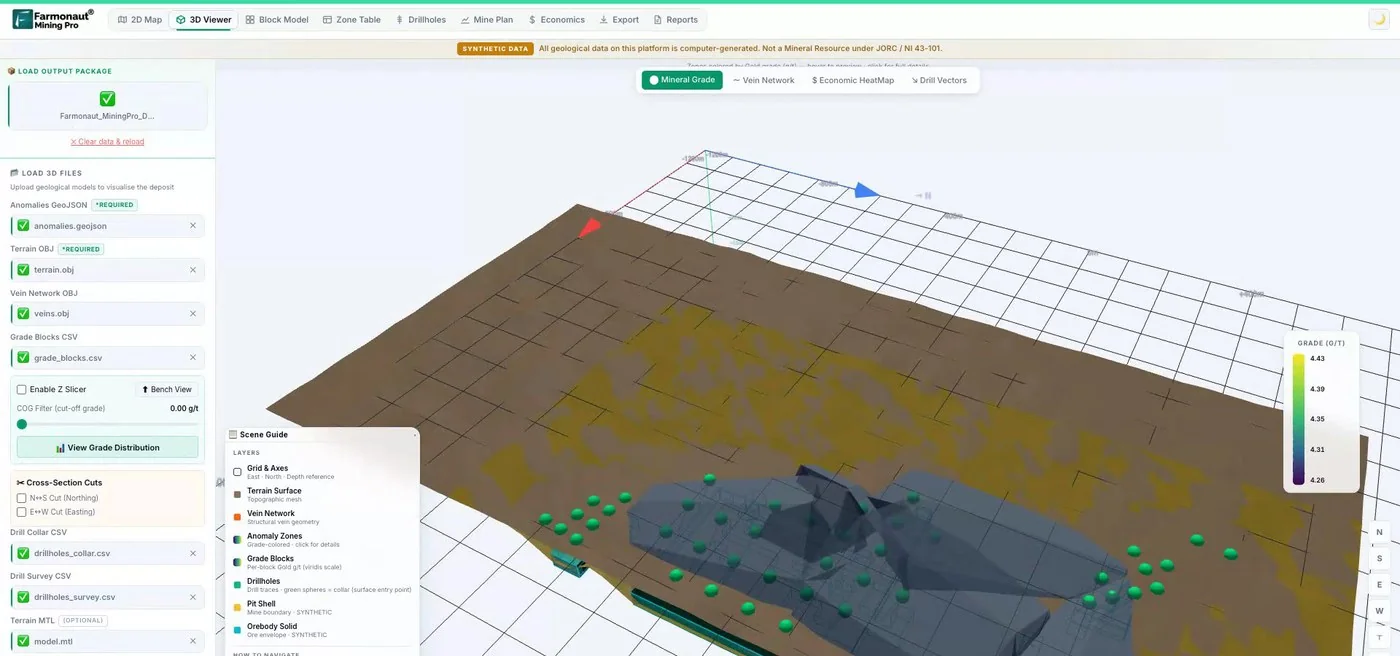
Mining Pro sample view, synthetic data
Keep reading

Sources
- USGS, Mineral Commodity Summaries 2026: Rare Earths (February 2026): pubs.usgs.gov
- USGS, Mineral Commodity Summaries 2026: Rare Earths (Heavy) (February 2026): pubs.usgs.gov
- USGS, Scientific Investigations Report 2010-5220, Rare earth elements in the United States: pubs.usgs.gov
- MP Materials, Form 10-K for 2025 (SEC): sec.gov
- MP Materials, fourth quarter and full year 2025 results: mpmaterials.com
- MP Materials, second quarter 2026 results (6 August 2026): mpmaterials.com
- Permitting Council, Bear Lodge Rare Earth Project gains FAST-41 coverage (20 March 2026): permitting.gov
- Rare Element Resources, Bear Lodge Project page: rareelementresources.com
- Rare Element Resources, company home page: rareelementresources.com
- NioCorp, Elk Creek Project page: niocorp.com
- USA Rare Earth, Form 10-K for 2025 (SEC): sec.gov
- USA Rare Earth, Form 10-Q for the June 2026 quarter (SEC): sec.gov
- Texas Mineral Resources, Form 8-K on the USA Rare Earth transaction (March 2026): sec.gov
- American Rare Earths, Halleck Creek project page: americanree.com
- American Rare Earths, projects overview: americanree.com
- American Rare Earths, Cowboy State Mine updated scoping study (ASX, 30 September 2026): announcements.asx.com.au
- American Rare Earths, Annual Report 2023 (ASX): announcements.asx.com.au
- Ucore Rare Metals, updated Bokan Dotson-Ridge mineral resource estimate (14 April 2026): newsfilecorp.com
- Ramaco Resources, Form 8-K with second quarter 2026 results (SEC): sec.gov
- Energy Fuels, Form 10-Q for the June 2026 quarter (SEC): sec.gov
Discussion
Questions, corrections or field experience? Share them below. First-time comments are reviewed before they appear, and your email is never published.
No comments yet. Be the first to add a question or your experience.

 Geotech Mining Solutions plc
 Vulcan International Limited
 Kidepo Associates
 GKY Mining
 Alkimy SARL
 Double A Trading
 GemSprout Metals Limited
 Qader Group
 Ileys General Trading
 SG Gold Mining LLC
 VRV Global Pte Ltd
 Omsri International FZE
 G.I.T.T.
 Jaunita Erss Ltd
 Almosi SARL
 SRK Consulting
 Berks Gold Limited
 Mwerezi Minerals Company Limited
 Mining SARL
 SenGold Invest SAS
 Exploration consultancy · South Africa · Gold










