
Silver exploration · Company guide
Silver Exploration Companies: Who Explores and Where
Eight silver explorers and producer-explorers compared by project, place and latest study, with US Geological Survey production by country, resource charts and a calculator that turns tonnes and grade into silver ounces.
Key takeaways
- Only 26% of 2025 world mine silver came from primary silver mines; the rest was a by-product of lead-zinc, copper and gold mining (Silver Institute, World Silver Survey 2026).
- Mexico produced about 6,300 tonnes of silver in 2025, 24% of an estimated 26,000 tonnes worldwide, ahead of Peru and China (USGS, 2026).
- Contango Silver & Gold (merged with Dolly Varden on 26 March 2026) reports 89.55 Moz AgEq indicated at Kitsault Valley; Apollo Silver’s Calico PEA of 29 October 2026 shows a US$737 million after-tax NPV at US$55 silver.
- Fresnillo expects about US$260 million of exploration expense for 2026 and Hecla guided US$55 million; both spend mostly near existing mines.
- Spot silver was US$52.59 an ounce on 5 November 2026 (Kitco), above the US$35.50 to US$38 used in Vizsla’s and Silver Tiger’s studies.
In this article
- Who explores for silver and what each type does
- Silver exploration and development companies compared
- Company notes: what each project is
- Where silver exploration is happening
- How much do the big silver producers spend on exploration
- How to read a silver explorer's resource and study
- Contained silver and value from a resource
- Silver price and why explorers move with it
- How to check a silver exploration company before relying on it
- Where satellite screening fits in a silver search
- Frequently asked questions
Silver exploration companies are the small and mid-sized firms that drill for silver and publish resource estimates, plus the large producers that spend part of their cash on finding more. Most are listed in Toronto, Sydney or New York. As of 5 November 2026, the best-known silver-focused names include Vizsla Silver, Contango Silver & Gold, Silver Tiger Metals, Apollo Silver, Silver Mines Limited and Silver47 Exploration, and two producers with large exploration budgets are Fresnillo and Hecla. This page lists who they are, where their projects sit, and how to read their numbers.
The first thing to know is that silver is mostly a by-product. In 2025 only 26% of world mine supply came from primary silver mines, according to the Silver Institute’s World Silver Survey 2026 (Metals Focus data). The rest came from lead-zinc, copper and gold mines. A company that explores only for silver is therefore a small slice of the industry, and its fortunes follow the silver price more closely than a base-metal miner’s do. Nothing here is a recommendation to buy or sell any share.
Who explores for silver and what each type does
Four kinds of company drill for silver, and they behave differently. Knowing which one you are looking at tells you most of what you need about risk, funding and timing.
- Junior explorers. These have no mine. They raise money from investors, drill, and report assay results (laboratory tests of core samples). Their aim is a resource estimate, then an economic study. Examples in this guide are Silver Tiger Metals and Silver47 Exploration.
- Advanced developers. They hold a defined deposit and are completing a feasibility study, permits and financing. Vizsla Silver and Silver Mines Limited sit here, as does Apollo Silver, which has a preliminary study.
- Producer-explorers. A working mine funds drilling around its own plant. Hecla’s Keno Hill in Yukon and Greens Creek in Alaska are examples.
- Majors. Large producers such as Fresnillo run exploration as a budget line. It is aimed mainly at replacing the ounces they mine each year.
A mining term you will meet often is silver equivalent (AgEq). It converts gold, lead and zinc in the rock into the silver ounces that would earn the same revenue at stated metal prices. Two companies can report very different AgEq numbers from similar rock simply because they assume different prices. Always read the price footnote.
Silver exploration and development companies compared
The table lists companies whose main asset is a silver or silver-gold project, plus two producers with large exploration programmes. Every figure is the company’s own, from the release or filing named in the last column, and was checked on the dates shown. Resource estimates are not mine reserves, and economic studies use the metal prices listed, which may differ from today’s.
| Company and listing | Main project and place | Latest published figures | Stage |
|---|---|---|---|
| Vizsla Silver (TSX and NYSE: VZLA) | Panuco, Sinaloa, Mexico | Feasibility study effective 4 Nov 2025: after-tax net present value (NPV) at 5% of US$1.8 billion, IRR 111%, initial mine life 9.4 years, at US$35.50 silver and US$3,100 gold | Development |
| Contango Silver & Gold (NYSE American and TSX: CTGO) | Kitsault Valley, British Columbia, Canada (merged with Dolly Varden Silver on 26 Mar 2026) | Resource effective 11 Sep 2026: indicated 7.66 Mt at 363 g/t AgEq (89.55 Moz AgEq); inferred 6.31 Mt at 320 g/t AgEq (64.92 Moz AgEq), at US$53 silver | Exploration and resource growth |
| Silver Tiger Metals (TSXV: SLVR) | El Tigre, Sonora, Mexico | 20 Jan 2026: underground preliminary economic assessment (PEA) after-tax NPV US$304 million, IRR 42.8%, initial capital US$83.5 million; separate Stockwork Zone pre-feasibility study NPV US$456 million, IRR 65.7%, at US$38 silver | Development |
| Apollo Silver (TSXV: APGO) | Calico, San Bernardino County, California, USA | PEA announced 29 Oct 2026: after-tax NPV US$737 million, IRR 25%, initial capital US$633 million, 15-year life, at US$55 silver; Measured and Indicated 115.6 Moz silver, Inferred about 51 Moz | Development (preliminary study) |
| Silver Mines Limited (ASX: SVL) | Bowdens, New South Wales, Australia | Definitive feasibility study 21 Jul 2026: ore reserve 47.9 Mt at 60.8 g/t silver (93.5 Moz); development consent not yet granted | Development, awaiting consent |
| Silver47 Exploration (TSXV) | Red Mountain, Alaska, USA | Inferred resource 15.6 Mt at 336 g/t AgEq (168.6 Moz AgEq; technical report effective 12 Jan 2024); agreed on 20 Aug 2026 to be acquired by Bunker Hill Mining | Exploration |
| Hecla Mining (NYSE: HL) | Greens Creek (Alaska), Lucky Friday (Idaho), Keno Hill (Yukon), Nevada | Q3 2026 silver production 4.17 million oz; exploration and pre-development spending US$17.2 million in the quarter, US$55 million guided for the year | Producer with exploration |
| Fresnillo plc (LSE: FRES) | Eight mines in Mexico; advanced projects Orisyvo, Rodeo, Guanajuato, Novador, Tajitos | First-half 2026 exploration expense US$109.3 million; about US$260 million expected for the year | Producer with exploration |
Sources for the table: Vizsla Silver, Contango release of 22 September 2026, Silver Tiger PEA release, Apollo Silver, Silver Mines feasibility summary, Bunker Hill filing with the US SEC, Hecla Q3 2026 results and Fresnillo interim results. This list is not complete: it leaves out many smaller explorers and does not rank companies. For the producers themselves, see our guides to the largest silver mines in the world and the Mexican silver mining companies.
Company notes: what each project is
Vizsla Silver: Panuco, Mexico
Vizsla Silver is based in Vancouver and holds the Panuco silver-gold district in Sinaloa. Its feasibility study (effective 4 November 2025, announced 9 December 2025) reports an after-tax NPV of US$1.8 billion at a 5% discount rate, a 111% internal rate of return, a seven-month payback and an initial 9.4-year mine life. The company states average annual production of 17.4 million silver-equivalent ounces. The study assumed US$35.50 silver and US$3,100 gold, well below the Kitco spot silver price of US$52.59 on 5 November 2026, so the study economics are a snapshot at lower prices. The company itself warns that there is no assurance Panuco will enter production.
Contango Silver & Gold: Kitsault Valley, Canada
Contango ORE completed its merger with Dolly Varden Silver on 26 March 2026 and changed its name to Contango Silver & Gold. Each Dolly Varden share became 0.1652 of a Contango share, according to the company’s closing release. The company holds about 100,000 hectares of tenure around Kitsault Valley in British Columbia’s Golden Triangle, and a 30% interest in the Peak Gold joint venture in Alaska (the Manh Choh mine, operated by a Kinross Gold subsidiary).
The September 2026 resource covers eight deposits. Indicated resources rose to 89.55 million ounces of silver equivalent from 46.37 million in the previous estimate, while inferred resources fell about 25% as drilling moved ounces into the indicated class. The prices used were US$53 silver, US$3,500 gold, US$5.00 per pound copper, US$1.25 zinc and US$0.90 lead. Drilling from the 2026 season, described as well over 50,000 metres, is not in the estimate and is planned for an update in the first half of 2027.
Silver Tiger Metals: El Tigre, Mexico
Silver Tiger owns 100% of El Tigre in Sonora. Its January 2026 package has two parts: a PEA for an underground mine with a 15-year underground life and an 18-month build, and an updated pre-feasibility study for the Stockwork Zone, an open-pit heap-leach plan with a 10-year life and initial capital of US$86.8 million. The company says the underground plan can be built on its own. A PEA is the least detailed study in the series and can include inferred resources, so its economics carry more uncertainty than a feasibility study.
Apollo Silver: Calico, California
Calico is a large, lower-grade silver deposit (resource grades of 66 to 90 g/t silver) about 15 km northeast of Barstow. Apollo’s PEA of 29 October 2026 assumes a 15-year life, roughly 5 million ounces of silver a year, initial capital of US$633 million including 25% contingency and a base case of US$55 silver. The Waterloo deposit holds 30.6 Mt measured at 89.5 g/t silver and 11.6 Mt indicated at 73.5 g/t, and Langtry holds 23.0 Mt inferred at 66.3 g/t. Apollo re-estimated the resource from the same drill database: it changed grade capping, estimation and classification methods, metal prices, reporting cut-off grades (the lowest grade counted as ore) and the pit shell. At Waterloo, measured and indicated tonnes fell 23% and average grade rose 20%, so contained silver fell from 125 million to 115.6 million ounces. No new drilling was done, so this is a change of method and assumptions, not new data.
Silver Mines Limited: Bowdens, Australia
Bowdens is Silver Mines’ main project in New South Wales. The July 2026 feasibility study set ore reserves at 47.9 million tonnes at 60.8 g/t silver, holding 93.5 million ounces, and set out a staged plan: stage one of 29.9 Mt over 16.75 years, with stage two still at pre-feasibility level for a 26-year total. Development consent had not been granted when the study was announced, and the company named consent as its immediate priority, with no firm timeline given.
Silver47 and Bunker Hill
Silver47 Exploration owns Red Mountain, in the Bonnifield district about 100 km south of Fairbanks, Alaska, with an inferred resource of 15.6 Mt at 336 g/t AgEq (168.6 million AgEq ounces). On 21 August 2026 Bunker Hill Mining announced a plan of arrangement to acquire all Silver47 shares at 0.1724 Bunker Hill share per Silver47 share, an equity value of about US$163 million at the 20 August 2026 closing price. Shareholder meetings were due by 15 November 2026, and the combined company would be renamed Bunker Hill Silver Corp. Bunker Hill’s own mine at Kellogg in Idaho’s Silver Valley targets commercial production in the fourth quarter of 2026. The deal is pending, so check the latest filing before relying on it.
Hecla and Fresnillo: exploration inside producers
Hecla’s three silver mines produced 4,170,826 ounces in the third quarter of 2026: Greens Creek 1,935,193, Lucky Friday 1,272,585 and Keno Hill 963,048. It guided US$55 million of exploration and pre-development spending for the year, including US$16 million in Nevada (more than triple the 2025 level) at Midas, Aurora and Hollister, and it runs four drills at Keno Hill. Fresnillo drilled 468,878 metres in the first half of 2026, up 30%, with 75% on targets next to existing mines. Its greenfield work (new ground away from mines) covered 96,340 metres at six projects, and it closed the acquisition of Probe Gold in January 2026, which brought the Novador project in Quebec.
Where silver exploration is happening
Mexico dominates both production and the explorer shortlist. The US Geological Survey’s Mineral Commodity Summaries 2026 estimates Mexican mine production at 6,300 tonnes in 2025, about 24% of the 26,000-tonne world total, ahead of Peru (3,600 tonnes) and China (3,400 tonnes). Reserves tell a different story: Peru holds 110,000 tonnes, Russia 92,000, Australia 91,000 and China 67,000, against 37,000 for Mexico.
Chart
Silver mine production by country
Tonnes of silver, 2025 estimate
The explorers cluster in a few belts:
- Mexico’s Sierra Madre. Panuco (Sinaloa) and El Tigre (Sonora) sit on the same belt of epithermal veins that supplies Fresnillo’s mines. For the districts and owners, see our Mexico silver mines guide.
- Western Canada and Alaska. The Golden Triangle of British Columbia (Kitsault), Yukon (Keno Hill) and interior Alaska (Red Mountain) are active, with short field seasons and heavy helicopter and road costs.
- The US West. Calico in the Mojave Desert, Nevada districts such as Midas and Hollister, and Idaho’s Silver Valley. See our guide to Idaho mining companies.
- Australia. Bowdens in New South Wales is the Australian example named above. Consent and community approval, not geology, set the timeline.
How much do the big silver producers spend on exploration
Exploration budgets show where producers think the next ounces are. Fresnillo expects exploration expenses of about US$260 million for 2026 and total “risk capital” invested in exploration of about US$308 million, after US$109.3 million in the first half (up about 42% on the same period of 2025). Hecla’s US$55 million guidance is about a fifth of Fresnillo’s expense figure. Fresnillo aimed 75% of its first-half metres at brownfield targets, meaning near existing mines where roads, power and mills already exist. That is cheaper per metre and carries less discovery risk than greenfield work.
For a small company the lesson is the same. Ground next to an operating mine is easier to finance than a remote target, but it is also more likely to be held by someone else already, so a title and ownership check comes first.
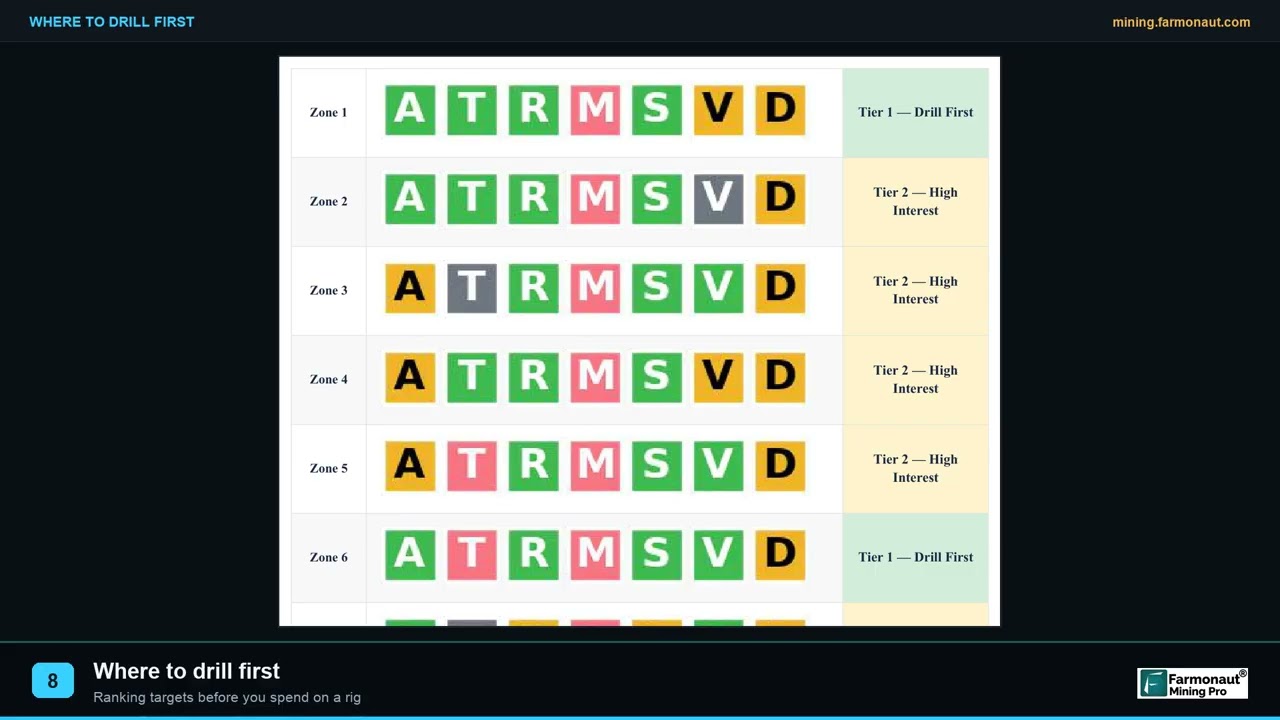
▶ Farmonaut explains how satellite targets are ranked into a drill order, the same question producers face when they spend exploration budgets. · 2:19
How to read a silver explorer’s resource and study
Most claims about an explorer rest on three layers of information: the resource, the study and the price used. Check each in the company’s technical report, filed in Canada under rule NI 43-101 or in Australia under the JORC Code.
Chart
Resource size at three silver explorers
Million ounces; Contango and Silver47 in silver equivalent, Apollo in silver
- Resource category. Measured and indicated resources are drilled closely enough to support a mine plan. Inferred resources are drilled more widely and cannot be used for reserves. Contango’s September 2026 update shows the normal pattern: inferred ounces shrink when infill drilling upgrades them to indicated.
- Cut-off grade and prices. A lower cut-off or higher metal prices add tonnes. Apollo’s 2026 re-estimate cut its Waterloo measured and indicated ounces by about 8% (125 to 115.6 million) while raising average grade 20%, because tonnes fell 23%.
- Study stage. A PEA is preliminary, a pre-feasibility study (PFS) is mid-level, and a feasibility study (FS or DFS) is the detailed basis for a financing decision. The step from PEA to FS usually changes capital cost.
- Reserve versus resource. Only ore reserves have passed the economic tests. Bowdens’ 93.5 million ounces of reserves are a different class of number from a resource figure.
The chart below compares resource size across three of the explorers above. The bases differ: Contango and Silver47 report silver equivalent, while Apollo reports silver alone, so compare them with care.
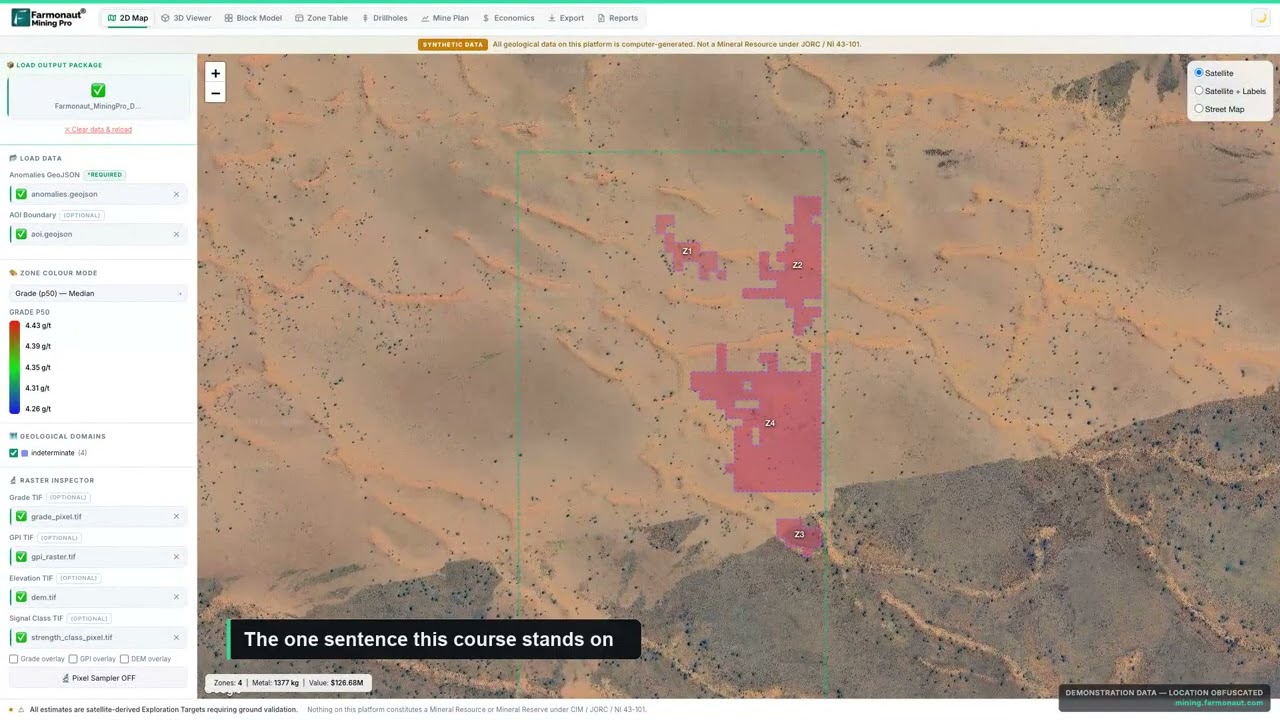
▶ What an Exploration Target is and what it takes to become a classified mineral resource. · 4:14
Contained silver and value from a resource
You can reproduce the “contained ounces” line in any resource table with simple arithmetic: million tonnes multiplied by grams per tonne, divided by 31.1035 grams per troy ounce, gives million ounces. The calculator below does that and then applies a recovery rate and a silver price of your choice. The default numbers match Apollo’s Waterloo measured and indicated figure of 42.2 Mt at 85.1 g/t, with an example recovery rate and price, so you can see how a company’s headline ounces turn into a smaller recovered amount.
Calculator
How many silver ounces are in a resource?
Enter tonnes, grade, recovery and a price; the results update as you type.
- Recovered silver (Moz): 98.1
- Value of recovered silver (US$ million): $4,907
Example values only, not a benchmark. Defaults match Apollo Silver’s Waterloo measured and indicated figure of 42.2 Mt at 85.1 g/t silver (company release, 29 October 2026); the recovery rate and silver price are examples. Silver price is an input: example, use today’s price. Contained ounces are not recoverable ounces and are not reserves.
Silver price and why explorers move with it
Silver averaged US$40.03 an ounce in 2025, up 42% on 2024, according to the London price series in the Silver Institute survey. Kitco’s spot bid was US$52.59 an ounce at 1:27 a.m. Eastern Time on 5 November 2026 (Kitco). The price matters for explorers in two ways. It raises the value of every resource, and it lowers the cut-off grade, which adds tonnes. It also makes it easier to raise money, so drilling programmes grow in strong markets and shrink in weak ones. Several studies in the table used prices below spot, such as Vizsla at US$35.50 and Silver Tiger at US$38, while Contango’s resource used US$53 and Apollo’s PEA used US$55.
Chart
Average silver price, London
US$ per ounce, annual average
Because only 26% of silver supply is primary, higher prices do not quickly bring new mines. By-product output follows copper, zinc and gold decisions. This is one reason the Silver Institute’s market balance has shown a deficit in each year from 2021 to 2025.
How to check a silver exploration company before relying on it
Use this checklist on any company, including those named here. It takes an hour with the company’s own filings.
- Find the filing. Technical reports are on SEDAR+ (Canada), EDGAR (USA) and the ASX announcements platform (Australia). A press release is a summary, not the report.
- Confirm who owns the ground. Check the claims, concession or licence (license in the US) in the government register, and note any royalties, streams or option agreements.
- Look for permits. Exploration permits, a mine permit, water rights and community agreements are separate steps. Bowdens shows that a feasibility study can come years before consent.
- Check the cash. Compare cash on hand with the next two years of planned drilling and study costs. Juniors dilute shareholders when they raise money.
- Read the price footnote. Note the silver and gold prices behind every NPV and every AgEq figure.
- Look at the independent author. A qualified person (Canada) or competent person (JORC) signs each report. Their name and employer are on the cover page.
- Check for change. Mergers are common. Dolly Varden is now part of Contango, and Silver47 is subject to a pending arrangement with Bunker Hill.
This is a research method, not investment advice, and share-price information is outside the scope of this page.
Where satellite screening fits in a silver search
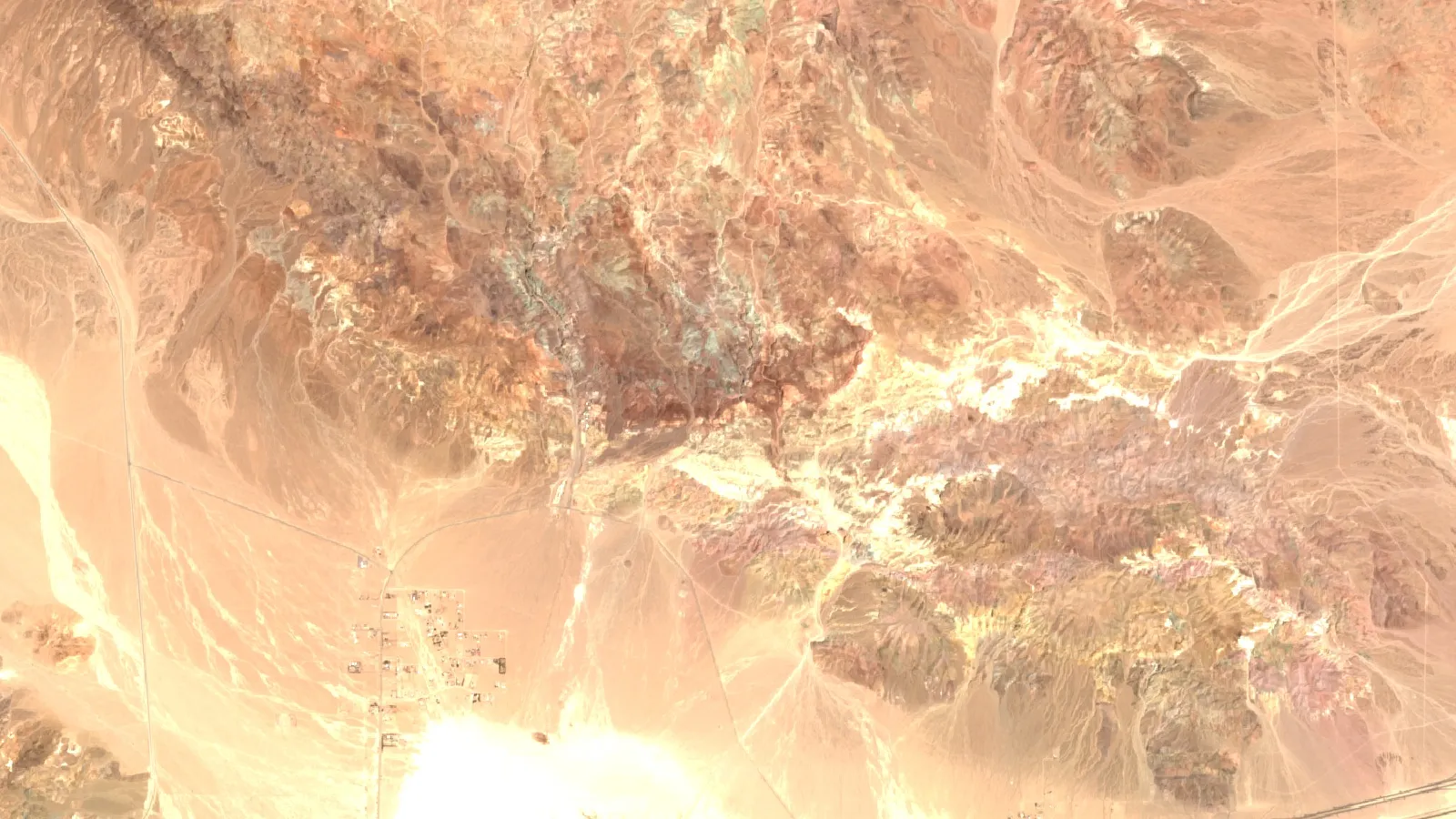
Silver deposits often show up in imagery as clay and iron-oxide alteration around veins, and Sentinel-2 and ASTER data can map those surface clues before a drill is ordered. Satellite screening narrows where to walk and sample; it does not measure silver grade, and it does not replace drilling or a resource estimate. Licence owners and consultants use it to rank targets inside a licence and to check whether ground offered for sale shows alteration at all. Farmonaut offers satellite-based mineral exploration reports built from a boundary you supply (KML, KMZ or polygon).
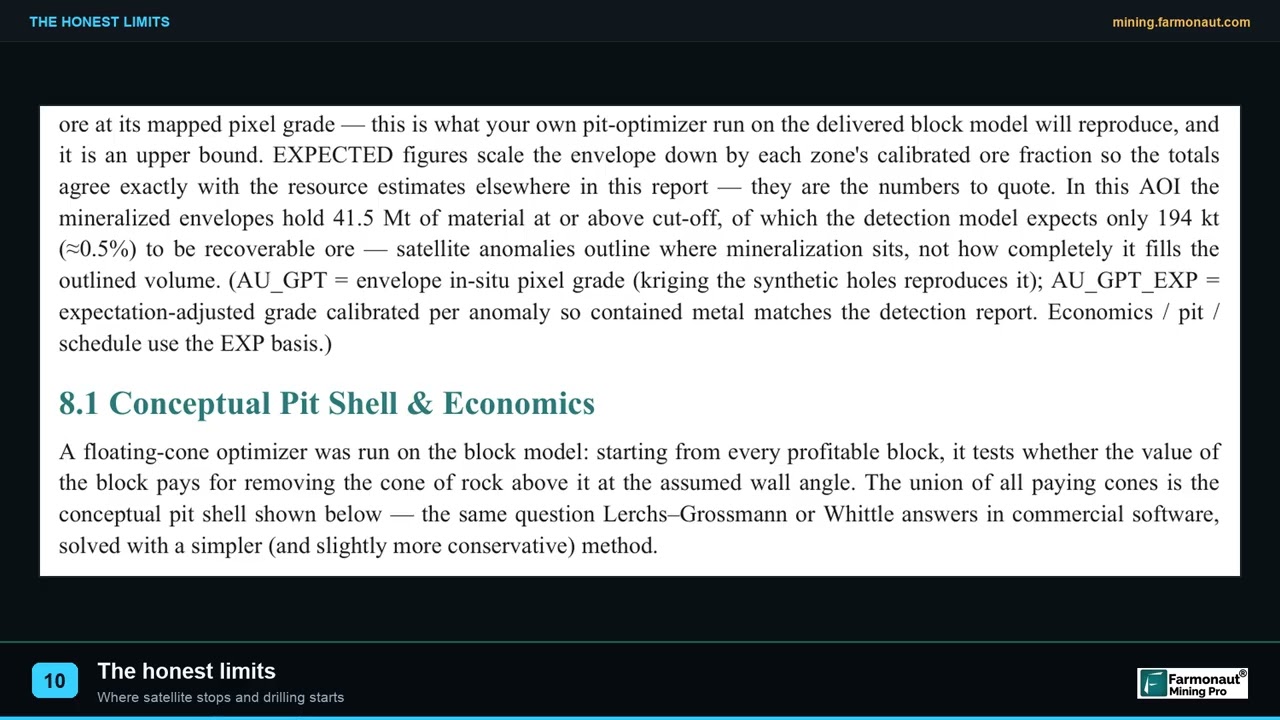
▶ The limits of satellite exploration, the half that matters in mining due diligence. · 2:08
Frequently asked questions
What is a silver exploration company?
It is a company whose main business is finding and defining silver deposits, usually by geological mapping, sampling and drilling. Most have no revenue and fund work by selling shares. Once a deposit is defined they either study it for development, sell it or merge with a larger company, as Dolly Varden did with Contango in 2026.
Which silver exploration companies are listed in the United States?
Vizsla Silver trades on the NYSE and TSX under VZLA, Contango Silver & Gold on NYSE American and the TSX under CTGO, and Hecla on the NYSE under HL. Apollo Silver trades on the TSX Venture Exchange and over the counter in the US. Check the exchange before you place any order; quotes and listings change.
Which countries have the most silver mine production?
In 2025 Mexico produced about 6,300 tonnes, Peru 3,600 and China 3,400 out of an estimated 26,000 tonnes worldwide, according to the USGS Mineral Commodity Summaries 2026.
Is silver mined mainly as a by-product?
Yes. Primary silver mines supplied about 26% of 2025 mine output; lead-zinc mines supplied the largest share at 249.1 million ounces and copper mines 237.3 million ounces (Silver Institute, World Silver Survey 2026).
How much silver does Mexico have in reserve?
USGS lists Mexican reserves at 37,000 tonnes, compared with 110,000 for Peru and 92,000 for Russia. Reserves depend on price and economics and are revised each year.
How do I tell a resource from a reserve?
A resource is mineralisation that could one day be mined. A reserve is the part of a measured or indicated resource that a study shows can be mined at a profit with permits expected. Only reserves carry that economic test.
What does AgEq mean?
Silver equivalent. It restates gold, lead, zinc and copper as silver ounces at stated prices, so it changes whenever the price assumptions change. Contango’s AgEq used US$53 silver, while Silver Tiger used US$38.
How much does it cost to explore for silver?
Costs vary by country and depth. Fresnillo, the largest producer-explorer in this guide, expects about US$260 million of exploration expense in 2026 for a portfolio of eight mines and several projects, and Hecla guided US$55 million. A junior’s programme is far smaller, often a few million dollars a season.
Can a licence owner check silver potential before drilling?
Yes, in steps: review public geology maps and past assays, screen the licence with satellite imagery for alteration and structure, then sample and drill the best targets. Imagery is a screening tool and cannot give a grade. Our guide on how to find silver in nature covers field clues, and a project must also earn more than it costs to mine.
Are silver exploration stocks a good investment?
This page gives facts, not advice. Exploration companies carry high risk, as most projects never become mines. Read the filings, check cash and permits, and speak to a licensed adviser.
This page is for information only. It is not investment advice. Company figures are the companies’ own and may change; read the technical report and latest filing before relying on any number.
Farmonaut mining
Get a quote to map your silver ground from space
Licence owners and consultants can send a boundary as KML, KMZ or polygon and request a quote for a satellite-based exploration report.
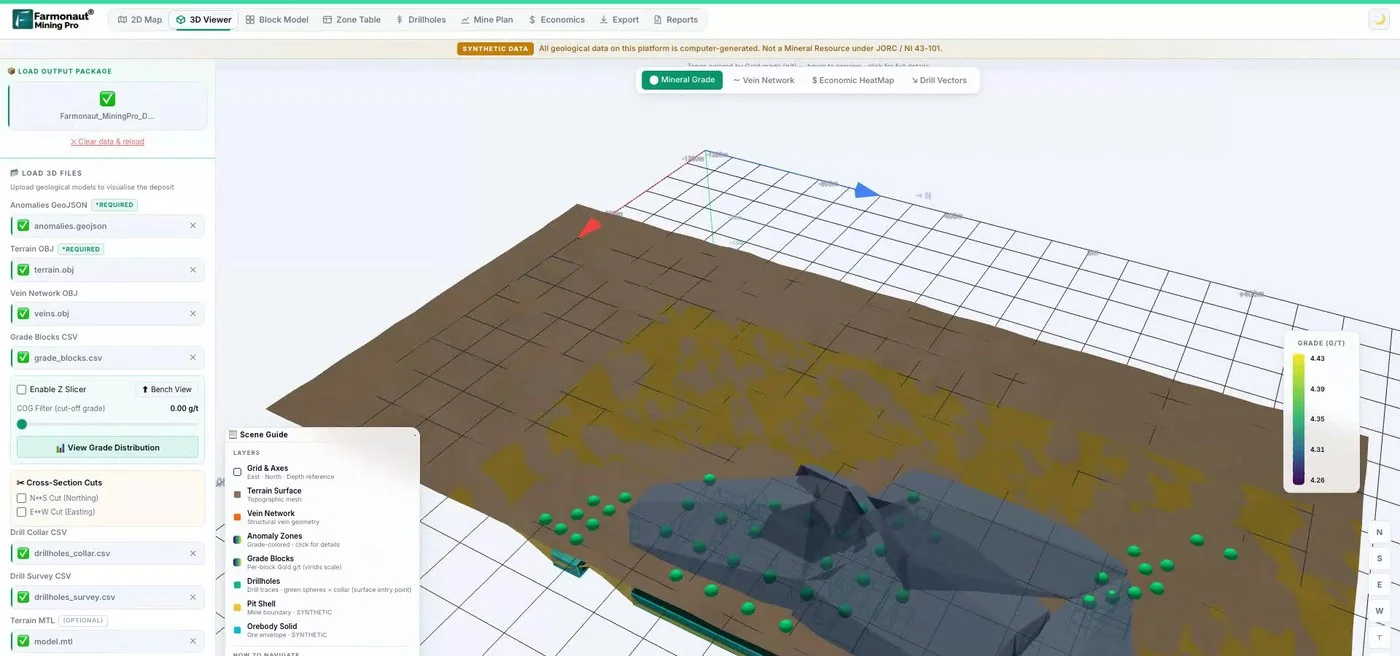
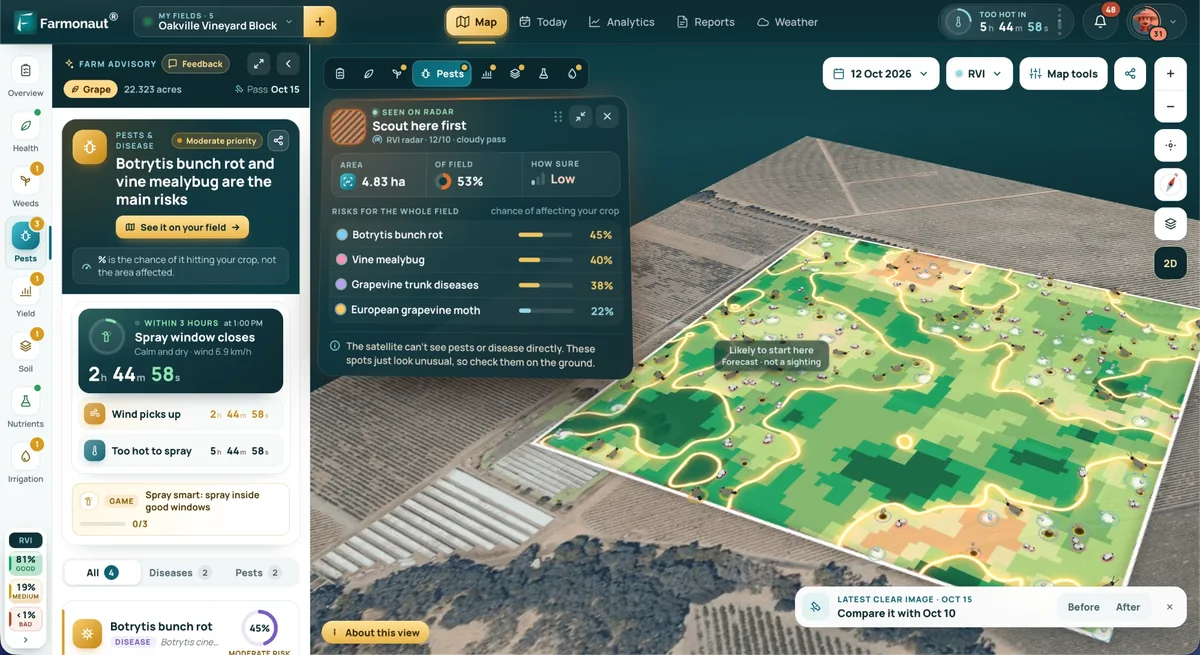
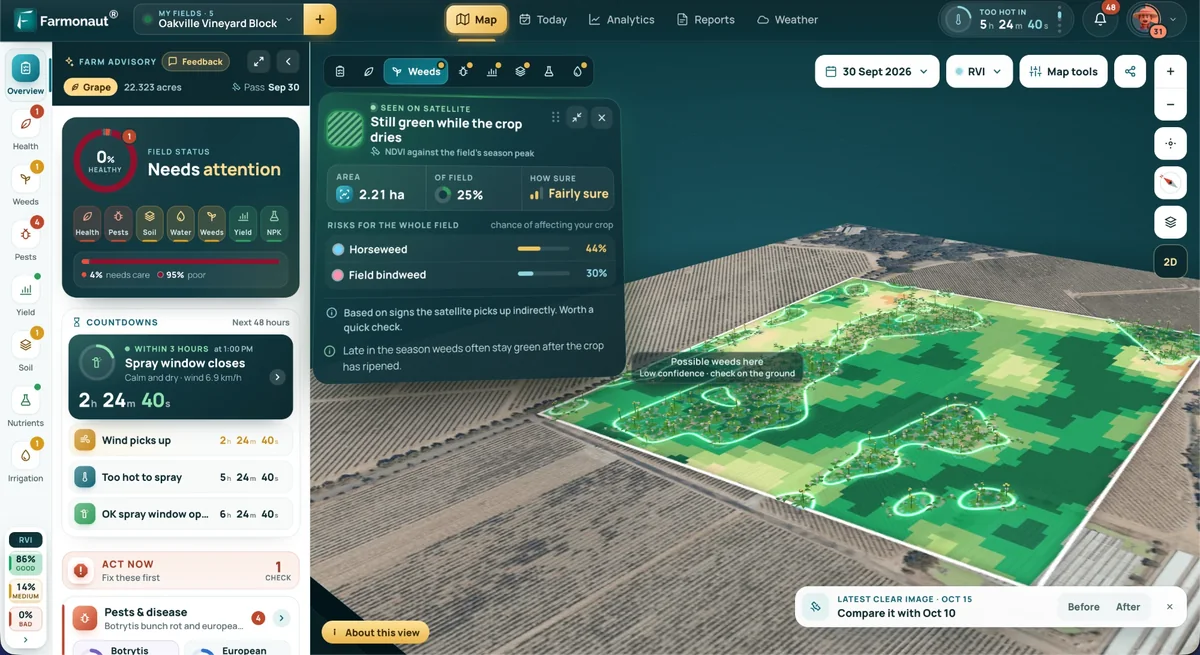
Mining Pro sample view, synthetic data
Sources
- Silver Institute / Metals Focus, World Silver Survey 2026: silverinstitute.org
- USGS, Mineral Commodity Summaries 2026: Silver: pubs.usgs.gov
- Kitco, silver spot price (5 November 2026): kitco.com
- Contango Silver & Gold, Kitsault Valley resource update (22 September 2026): finviz.com
- Contango ORE, merger with Dolly Varden completed (26 March 2026): contangoore.com
- Vizsla Silver, Panuco feasibility study report filed (9 December 2025): vizslasilvercorp.com
- Silver Tiger Metals, El Tigre PEA and PFS (20 January 2026): silvertigermetals.com
- Apollo Silver, Calico PEA (29 October 2026): apollosilver.com
- Silver Mines Limited, Bowdens definitive feasibility study summary (Kalkine, 21 July 2026): kalkinemedia.com
- Bunker Hill Mining, Silver47 arrangement (US SEC filing, August 2026): sec.gov
- Hecla Mining, third quarter 2026 results (US SEC, 3 November 2026): sec.gov
- Fresnillo plc, interim results for the six months to 30 June 2026: investegate.co.uk
Discussion
Questions, corrections or field experience? Share them below. First-time comments are reviewed before they appear, and your email is never published.
No comments yet. Be the first to add a question or your experience.

 NTS Group (Pty) Ltd
 Mine4Africa
 Lithspo Minerals Limited
 Tintina Mining Group
 Dalgety Minerals Pty Ltd
 Vortex Minerals Pty Ltd
 Faith At Work (Pty) Ltd
 Geotech Mining Solutions plc
 Vulcan International Limited
 Kidepo Associates
 GKY Mining
 Alkimy SARL
 Double A Trading
 GemSprout Metals Limited
 Qader Group
 Ileys General Trading
 SG Gold Mining LLC
 VRV Global Pte Ltd
 Omsri International FZE
 G.I.T.T.
 Jaunita Erss Ltd
 Almosi SARL
 SRK Consulting
 Berks Gold Limited
 Mwerezi Minerals Company Limited