

Small Scale Gold Mining Equipment & Refining for Sale
Reviewed August 2026 against USGS Mineral Commodity Summaries 2025, Goldwashplants.com’s equipment buyers guide, and Guanma Machinery’s refining equipment pricing.
Try it: Small Scale Gold Startup Cost & Payback Estimator →
Small scale gold mining equipment ranges from $2,000 sluice boxes to $250,000 gravity wash plants, with total startup costs for a small operation typically landing between $150,000 and $400,000 once permitting, labor, and site prep are added. Small scale gold refining equipment is a separate, much smaller line item — from $300 hand tools up to $65,000 for automated refining systems. This page breaks down both categories by price, capacity, and recovery rate, and links to satellite tools that help you confirm a site is worth the capital before you buy.
Table of Contents
- Introduction: What Small Scale Gold Mining Equipment Actually Costs
- US Gold Production Context: Why Small Scale Still Matters
- Large Scale Gold Mining Equipment vs. Small Scale: What Separates Them
- Key Categories of Small Scale Gold Mining Equipment
- Portable Gold Extraction Equipment Overview
- Processing Machines: Wash Plants, Trommels & Concentrators
- Small Scale Gold Refining Equipment: Costs & Standards
- Startup Cost Calculator
- Choosing the Best Small Scale Gold Mining Equipment for Sale
- Site Selection and Environmental Compliance
- Operational Practices That Protect Workers and Avoid Fines
- A Note on Small Farm Equipment Searches
- Farmonaut’s Role: Satellite-Based Mineral Detection Before You Buy
- Equipment Comparison Table
- Economic Factors: Recovery Rates, Operating Costs & Financing
- Key Takeaways
- Frequently Asked Questions (FAQ)
- Conclusion: Buying Equipment That Matches Your Site
- Try it: Small Scale Gold Startup Cost & Payback Estimator
Introduction: What Small Scale Gold Mining Equipment Actually Costs
“Small scale gold mining equipment can reduce mercury pollution significantly compared to traditional amalgamation methods, since modern gravity and centrifugal systems recover gold without mercury or cyanide at all.”
Anyone researching small scale gold mining equipment for sale quickly runs into a wall of vague pricing. This page fixes that by anchoring every figure to a named source and a date, so you know whether the number still applies when you read it. We cover the full equipment chain — extraction, processing, and refining — plus what separates large scale gold mining equipment from small operations, and where small scale gold refining equipment fits once you have concentrate in hand.
US Gold Production Context: Why Small Scale Still Matters
US domestic mines produced 160 metric tons of gold in 2024, according to the U.S. Geological Survey’s Mineral Commodity Summaries 2025. That figure covers all US mine output — the USGS report does not break out what share comes from small scale versus large industrial operations, so anyone claiming a precise split is guessing. What the report does confirm is that gold remains a materially sized US extractive industry, and the spot price backdrop makes the economics of small operations far more attractive than a decade ago: gold traded at $4,554.76 per troy ounce on August 21, 2026, per Trading Economics. Because that price updates continuously during trading hours, treat it as a snapshot and check the live feed before running your own numbers — the calculator further down this page lets you plug in whatever spot price is current when you read this.
A higher spot price changes the payback math on every equipment tier below. A $250,000 wash plant recovering gold at 95-98% needs materially less throughput to break even at $4,554.76/oz than it did when gold traded at half that level — which is exactly why equipment sales and financing inquiries for small scale operations have picked up alongside the price run.
Large Scale Gold Mining Equipment vs. Small Scale: What Separates Them
Large scale gold mining equipment — the haul trucks, mill circuits, and heap-leach infrastructure used at industrial mines — operates at a completely different capital tier than anything covered on this page. Large scale rigs process thousands of tons per day and require tens of millions of dollars in capital, dedicated permitting teams, and multi-year mine plans. Small scale equipment, by contrast, is built to be purchased, permitted, and operating within a single season, at a fraction of the cost.
The dividing line isn’t just size — it’s who can realistically buy it. A rural landowner, a small cooperative, or a first-time claim holder can finance a $150,000–$400,000 small scale startup package; almost none can finance a large scale mill circuit. If you searched for large scale gold mining equipment expecting mill and crusher specs at industrial tonnage, that content lives on a different Farmonaut page — this article stays focused on the small scale tier, where the actual buying decisions in this price range get made.
Compact Excavators: Where the Two Scales Overlap
One equipment category bridges both tiers: compact excavators. New 5–15 ton compact excavators used for overburden removal and site prep on small mining claims run $40,000–$150,000, per Farmonaut’s own gold mining equipment prices guide. That’s a large enough outlay that it’s often the single biggest line item in a small operation’s budget, second only to the wash plant itself.
Key Categories of Small Scale Gold Mining Equipment
Small scale gold mining equipment breaks into three functional groups, and pricing differs by an order of magnitude between the cheapest and most capable option in each:
- Extraction Units: Sluice boxes and gravity separation kits, priced $2,000–$25,000 depending on capacity and build quality, per equipment supplier guides referenced by Goldwashplants.com’s 2026 buyers guide.
- Processing Machines: Trommel wash plants ($15,000–$150,000) and full 100-ton gravity wash plant systems (around $250,000), also per the same 2026 buyers guide.
- Refining Apparatus: Small scale gold refining equipment spanning $300 hand tools to $65,000 automated units, per Guanma Machinery’s refinery equipment cost guide.
Portable Gold Extraction Equipment Overview
1. Sluice Boxes and Gravity Separation Kits
Sluice boxes and gravity separation kits are the entry point into small scale gold mining, priced $2,000–$25,000 depending on width, riffle design, and whether the unit includes a powered feed hopper. This is the equipment tier most searches for “small scale gold mining equipment for sale” resolve to, because it’s the lowest-capital way to test whether a claim or parcel has recoverable gold before committing to a wash plant.
- ✔ Alluvial Gold Enablement: Sluice boxes with removable mats and riffles capture fine and coarse gold from river sediments and creek gravels.
- 🚚 Portability: Lightweight construction enables transport between sites without heavy equipment.
- 🌱 No Chemical Input: Gravity separation uses only water and mechanical motion — no mercury, no cyanide.

Pro Tip
2. Trommel Wash Plants
Trommel wash plants — a rotating screen combined with a built-in sluice — cost $15,000–$150,000 depending on throughput capacity, per the 2026 buyers guide cited above. They process larger material volumes than a standalone sluice box and are the natural upgrade once a sluice-box test confirms a site is worth scaling.
- ⚡ Throughput: Trommel plants substantially outpace hand-fed sluice boxes, which is the entire justification for the price jump.
- 💧 Water Recirculation: Closed-loop systems reduce water draw and limit discharge, which matters directly for permitting under state water-quality rules.
- 🔄 Mobility: Trailer-mounted units can be towed between claims within a single operating season.

Processing Machines: Wash Plants, Trommels & Concentrators
100-Ton Gravity Wash Plants
A full 100-ton gravity wash plant system — the largest equipment tier most small scale operators will consider — costs approximately $250,000, per Goldwashplants.com’s 2026 buyers guide. At this scale, gravity wash plants achieve gold recovery rates of 95-98%, the same source reports, which is the headline number that justifies the capital outlay over a string of smaller sluice boxes: higher recovery means less gold lost to tailings on every ton processed.
Running that plant isn’t free once it’s installed. Annual operating costs for a 100-ton wash plant run $68,000–$132,000 per year, covering fuel or power, labor, water management, and routine maintenance — a figure that has to be weighed against expected throughput and the prevailing gold price before the purchase makes sense.
Centrifugal concentrators (Knelson-type units) typically sit inside the processing chain between the trommel and final cleanup, separating gold from tailings by density without mercury or cyanide. Pricing for standalone concentrator units varies by capacity and isn’t broken out separately in the 2026 buyers guide; request a line-item quote from the same suppliers when comparing full wash plant packages.

Small Scale Gold Refining Equipment: Costs & Standards
Refining converts concentrate or dore bars into market-ready gold, and it’s priced on an entirely separate scale from extraction and processing equipment. Small scale gold refining equipment ranges from $300 for basic hand tools up to $65,000 for a fully automated refining line, per Guanma Machinery’s refinery equipment cost guide. Within that range, an induction melting furnace with water cooling — the piece of equipment most small operators buy first — costs $1,130–$1,260, according to the same supplier’s small gold refining machine price guide.
What Separates Entry-Level From Automated Refining Equipment
- 💡 Batch, Chemical-Free Processes: Entry-level units near the $300–$2,000 end of the range typically use gravity and heat only, with no acid chemistry involved.
- 🧪 Electrolytic Systems: Mid-range and automated units use electrochemical refining methods, which raise purity but also raise the price toward the $65,000 ceiling.
- 🛡️ Fume Hoods & Scrubbers: Any unit that processes acid-based chemistry needs sealed fume handling — a feature that adds cost but is non-negotiable for worker safety and for most state environmental permits.
- 📦 Portable Design: Compact, wheel-mounted refining units let operators refine on-site rather than shipping concentrate off-site, cutting logistics cost and chain-of-custody risk.
Investor Note
Startup Cost Calculator
Use the figures cited above to estimate your own total startup cost and rough payback window — every input is yours to change, including the spot price, since gold moves throughout the trading day.
Small Scale Gold Startup Cost & Payback Estimator
Assumptions: this tool ignores financing interest, taxes, claim royalties, and year-to-year ore grade variation. It treats “gold recovered per year” as the output already adjusted by the recovery rate you enter — if your estimate is a raw resource figure, multiply it by your recovery rate first. Check the current spot price at Trading Economics before relying on payback results.
Choosing the Best Small Scale Gold Mining Equipment for Sale
When comparing small scale gold mining equipment for sale, weigh proven recovery rate, total cost of ownership, and how the equipment tier matches your actual site volume — not just sticker price. Selection criteria worth applying line by line:
- Recovery rate: Gravity wash plants at the 100-ton tier deliver 95-98% recovery. Confirm the recovery rate a supplier quotes is tested, not a marketing figure.
- Throughput match: A $250,000 wash plant is wasted capital on a site that only supports sluice-box-scale volumes. Test with a $2,000–$25,000 sluice kit before scaling up.
- Total cost of ownership: A 100-ton wash plant's $68,000–$132,000 annual operating cost has to be covered by recovered gold value every year the equipment runs, not just in the purchase year.
- Safety systems: Any refining unit using acid chemistry needs sealed fume hoods and scrubbers — factor this into the $300–$65,000 refining budget, not as a separate line.
- Parts and service availability: Confirm the supplier stocks spares domestically; import delays on wear parts stall a plant for weeks.
- Financing structure: Equipment-specific loan terms vary by lender and by the buyer's credit profile — there's no single published rate to cite here, so get quotes from at least two equipment financiers before committing.
Before buying equipment sized for a site you haven't confirmed, explore satellite based mineral detection tools from Farmonaut to identify promising gold zones first.

Map the site → mining.farmonaut.com
Site Selection and Environmental Compliance
Confirming Land, Water & Permit Status Before Buying Equipment
- 📍 Claim and Mineral Rights: Confirm mineral rights through county or state land records before ordering equipment — a wash plant with nowhere legal to run it is a stranded asset.
- 🌊 Water Discharge Permits: Most US states require a water-quality discharge permit for any wash plant or trommel operation. Permit fee schedules and processing times are set at the state level and are not standardized nationally — check with your state's environmental agency or geological survey for the current fee schedule, since neither the USGS nor equipment suppliers publish this figure.
- 🦋 Habitat and Buffer Zones: Map sensitive stream habitat before siting a trommel or wash plant discharge point, since buffer-zone requirements vary by state and by waterway classification.

Operational Practices That Protect Workers and Avoid Fines
- 🦺 Worker Training: Formalize safety protocols and correct fume-hood/scrubber use for anyone operating refining equipment, especially units above the $2,000 chemical-processing threshold.
- 🧹 Waste Handling: Settling tanks and filtration units at the trommel and wash-plant stage prevent the runoff violations that trigger the largest fines small operators face.
- 🔍 Maintenance Routines: Wash plants running $68,000–$132,000 a year in operating costs need scheduled maintenance built into that budget, not treated as a surprise expense.
- 📋 Compliance Documentation: Keep dated logs of chemical inventories and discharge monitoring — state inspectors ask for these first.
A Note on Small Farm Equipment Searches
If you arrived here searching for used small farm equipment for sale — tractors, tillers, general implements — this isn't the right page, and stretching this article to cover general farm equipment would only weaken both topics. Gold mining equipment and general farm equipment are different capital categories with different suppliers, financing paths, and regulatory regimes; a used tractor listing has nothing in common with a $250,000 wash plant beyond both being rural capital purchases. Farmonaut's farm-equipment coverage lives on separate pages built for that search specifically. The one overlap worth noting: on a working farm that also holds a mineral claim, a compact excavator purchased for gold-site prep can double as general earthmoving equipment between mining seasons — but that's a scheduling decision, not a reason to merge the two equipment categories into one article.
Farmonaut's Role: Satellite-Based Mineral Detection Before You Buy
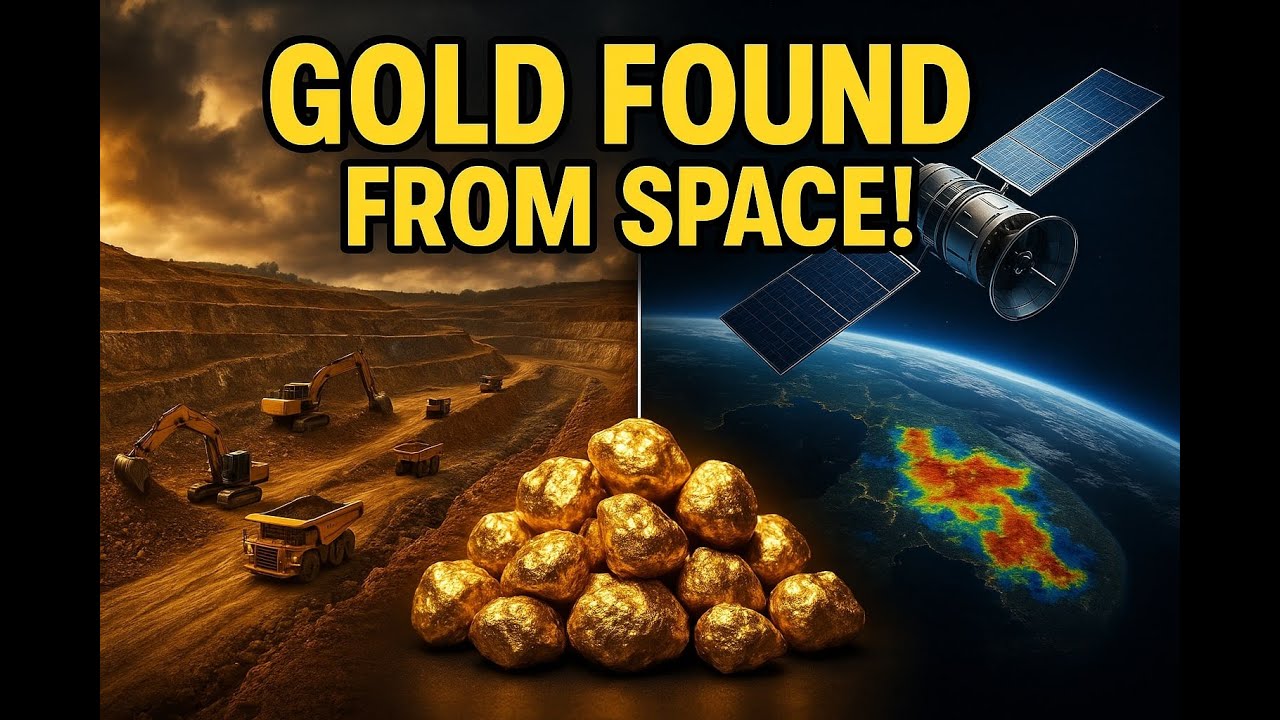
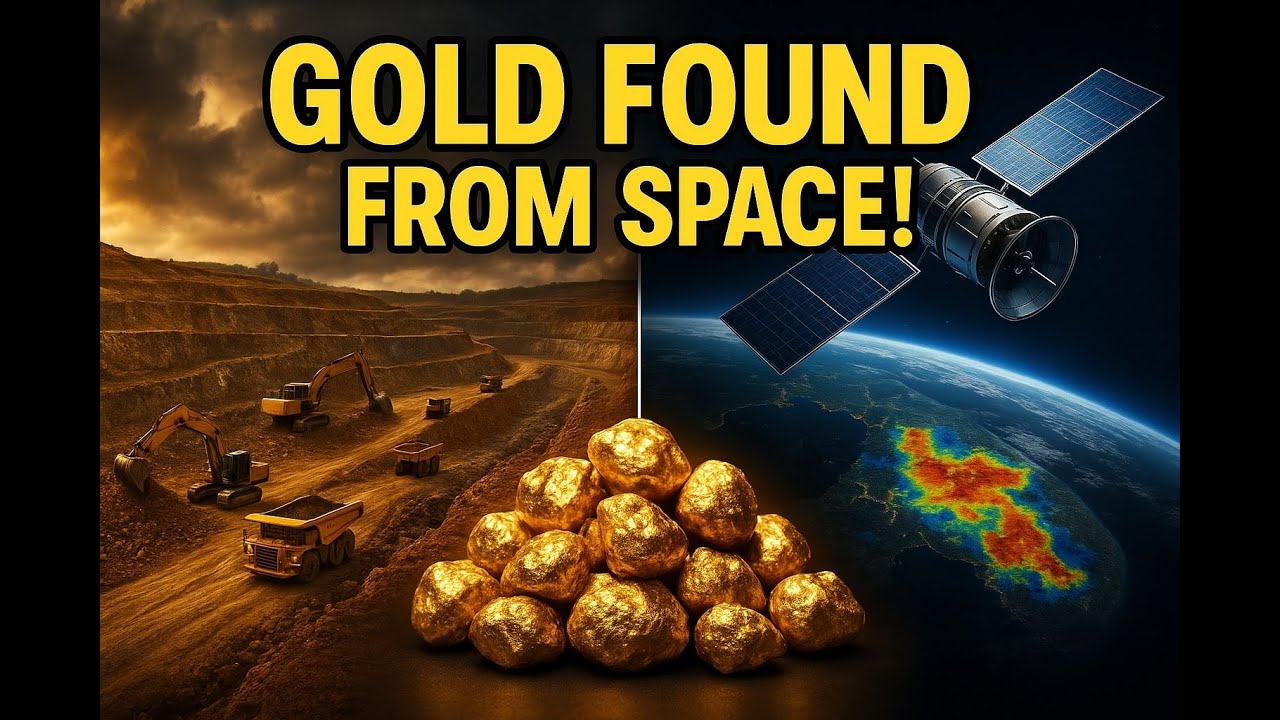
We at Farmonaut apply satellite-driven mineral intelligence and remote sensing to help buyers confirm a site is worth the equipment spend before committing $150,000–$400,000 to a startup package.
- 🌍 Screening at Scale: Our platform screens large regions to identify promising gold zones before any physical fieldwork begins, which cuts exploration cost relative to blind ground surveying.
- 🔬 Non-Invasive Exploration: Spectral analysis from satellite data narrows candidate zones without any ground disturbance in the early screening stage.
- 📊 Structured Reporting: Clients receive heatmaps, prospectivity scores, and depth estimates that inform whether a sluice-box test or a full wash-plant order is the right next step.
- 💼 Simple Workflow: Provide coordinates or a KML file, and reports are typically delivered within 5–20 business days.
To learn more about our satellite based mineral detection services and satellite driven 3D mineral prospectivity mapping (Farmonaut Mineral Detection, 3D Mapping Demo), please visit our website or Get a Quote.

Equipment Comparison Table
| Equipment Type | Price Range (USD) | Recovery Rate | Best Fit | Source |
|---|---|---|---|---|
| Sluice box / gravity separation kit | $2,000 – $25,000 | Not separately published | Testing a new site before scaling up | Goldwashplants.com, 2026 |
| Trommel wash plant | $15,000 – $150,000 | Not separately published | Confirmed alluvial sites needing higher throughput | Goldwashplants.com, 2026 |
| 100-ton gravity wash plant | ~$250,000 | 95% – 98% | Established operations with confirmed ore volume | Goldwashplants.com, 2026 |
| Compact excavator (5–15 ton, new) | $40,000 – $150,000 | N/A (earthmoving) | Overburden removal, site prep | Farmonaut equipment prices guide, 2026 |
| Small scale refining equipment (full range) | $300 – $65,000 | Varies by chemistry, not separately published | Converting concentrate to market-ready gold | Guanma Machinery, 2026 |
| Induction melting furnace, water-cooled | $1,130 – $1,260 | N/A (melting stage only) | First refining purchase for a small operation | Guanma Machinery, 2026 |
Investor Note: The two figures that most directly determine payback are the equipment's real-world recovery rate (95-98% for wash plants, per Goldwashplants.com) and the spot price at the time you're selling recovered gold ($4,554.76/oz on August 21, 2026, per Trading Economics). Recheck both before finalizing a purchase.
Economic Factors: Recovery Rates, Operating Costs & Financing
- 💸 Total Startup Range: $150,000–$400,000 covers a complete small scale operation — wash plant, excavator, and initial refining equipment — per the 2026 buyers guide.
- 📈 Recovery Rate Drives Revenue: The difference between 95% and 98% recovery on a 100-ton wash plant compounds directly into recovered ounces at $4,554.76/oz spot — a 3-point recovery gap is worth pursuing when comparing suppliers.
- 🔧 Annual Operating Cost: $68,000–$132,000 per year for a 100-ton wash plant must be covered by recovered gold value every operating year, not amortized only against the purchase price.
- 💼 Refining Adds a Separate Budget Line: Don't fold the $300–$65,000 refining equipment cost into the wash-plant budget — it's a distinct purchase decision with its own payback logic.
- 🤝 Financing: Equipment loan rates and terms are lender-specific and not published as a standard industry rate; request quotes from at least two equipment financiers rather than budgeting off an assumed rate.

Key Takeaways
- ✔ Price by tier: Sluice kits $2,000-$25,000, trommel plants $15,000-$150,000, full wash plants ~$250,000 — match the tier to confirmed ore volume, not budget alone.
- 📊 Refining is separate: Small scale gold refining equipment runs $300-$65,000, with the induction furnace most operators buy first priced $1,130-$1,260.
- ⚠ Recovery matters: 95-98% recovery on a 100-ton gravity wash plant is the number that drives payback — confirm suppliers test this, not market it.
- 💰 Startup total: $150,000-$400,000 covers a complete small scale operation; annual operating cost on the largest tier runs $68,000-$132,000.
- 🌎 Verify before buying: Satellite-based mineral detection confirms a site's potential before committing six figures to equipment.
Most Important Purchase Factors
- • Recovery rate (95-98% for wash plants)
- • Throughput match to confirmed ore volume
- • Total cost of ownership, not just sticker price
- • Parts and service availability
Operational Requirements
- Worker safety training
- State water discharge permits
- Waste and water management
- Routine maintenance budget
Frequently Asked Questions (FAQ)
How much does small scale gold mining equipment cost to start?
Total startup investment for a complete small scale operation runs $150,000–$400,000, covering a wash plant or trommel, an excavator, and initial refining equipment, per the Goldwashplants.com 2026 buyers guide. A test-scale sluice kit alone can start at $2,000.
What's the difference between large scale and small scale gold mining equipment?
Large scale gold mining equipment covers industrial mill circuits and haul fleets requiring tens of millions in capital. Small scale equipment — sluice boxes, trommels, and wash plants covered on this page — is designed to be purchased and operating within a single season for $150,000–$400,000 total.
Where can I find small scale gold mining equipment for sale?
Equipment suppliers such as those referenced in Goldwashplants.com's 2026 buyers guide list current inventory and pricing directly; request a quote for your specific throughput needs rather than relying on list prices, which update quarterly.
What does small scale gold refining equipment cost?
The full range runs $300 to $65,000 depending on automation level, per Guanma Machinery's refinery equipment cost guide. Most first-time buyers start with an induction melting furnace at $1,130–$1,260.
What gold recovery rate should I expect from a wash plant?
A 100-ton gravity wash plant achieves 95-98% recovery, per the 2026 equipment buyers guide. Ask any supplier for tested recovery data specific to your ore type before buying.
Where can I get help mapping or validating a new mining site before I buy equipment?
Use Farmonaut's mapping portal to upload coordinates and receive mineral prospectivity mapping, or contact us directly for a quote and consultation.






Conclusion: Buying Equipment That Matches Your Site
Small scale gold mining equipment spans a wide price range on purpose — a $2,000 sluice box and a $250,000 wash plant serve genuinely different stages of the same operation. The figures on this page (USGS's 160 metric tons of 2024 US production, $4,554.76/oz spot as of August 21, 2026, 95-98% wash plant recovery, and the $150,000-$400,000 startup range) give you a real starting point, but every supplier price and the spot price itself move on their own schedule. Recheck spot price at Trading Economics and pull a current supplier quote before finalizing any purchase, and run your own numbers through the calculator above rather than trusting a single snapshot.
With satellite-based mineral detection from Farmonaut, you can confirm a site's potential before committing capital to any equipment tier — narrowing the risk on the single largest decision in this process.
Ready to take the next step?
MAP YOUR MINING SITE HERE
Or contact us directly with your project details.
Discussion
Questions, corrections or field experience? Share them below. First-time comments are reviewed before they appear, and your email is never published.
No comments yet. Be the first to add a question or your experience.

 Vulcan International Limited
 Kidepo Associates
 GKY Mining
 Alkimy SARL
 Double A Trading
 GemSprout Metals Limited
 Qader Group
 Ileys General Trading
 SG Gold Mining LLC
 VRV Global Pte Ltd
 Omsri International FZE
 G.I.T.T.
 Jaunita Erss Ltd
 Almosi SARL
 SRK Consulting
 Berks Gold Limited
 Mwerezi Minerals Company Limited
 Mining SARL
 SenGold Invest SAS
 Sean Mining Limited
 Exploration consultancy · South Africa · Gold










