

Copper smelting · Process guide
Copper Smelting Process Control: Targets by Step
Copper smelting process control holds matte grade, slag chemistry, oxygen supply, converter end point and SO2 gas strength steady. This guide gives the published ranges for each step and a slag-loss calculator.
Key takeaways
- Matte grade in primary smelting ranges from 35 to 65% copper, with 45% most common in the plants EPA describes (EPA AP-42, 1986, reformatted 1995).
- A modern flash furnace holds matte to within plus or minus 1% copper, which can need up to plus or minus 20% change in oxygen as concentrate quality varies (Taskinen et al., 2019).
- An acid plant usually needs gas with at least 3% SO2; flash smelting gas holds 10 to 70%, reverberatory furnace gas 0.5 to 1.5% (EPA AP-42).
- Southern Copper’s Ilo smelter reported 97.4% average copper recovery in 2025 and over 92% sulfur recovery as acid (Form 10-K).
- With 2026 processing charges agreed at US$0 per tonne in one reported deal, recovery, uptime and acid sales carry the margin (Reuters, December 2025).
In this article
- Copper smelting process control in short
- How a copper smelter works, step by step
- Furnace controls: matte grade, oxygen and slag
- Converter controls: tuyeres, end point and slag
- SO2 gas control and the acid plant
- Process control targets compared by furnace type
- Emission rules that shape smelter controls
- Why smelter control matters when processing fees are low
- A practical order for improving smelter controls
- Upstream: how ore variability reaches the furnace
- Frequently asked questions
Copper smelting process control in short
Copper smelting process control means holding five things steady while molten concentrate moves through the plant: the copper content of the matte (the “matte grade”), the chemistry and temperature of the slag, the oxygen supplied per tonne of feed, the end point of each converter blow, and the strength of the sulfur dioxide (SO2) gas that goes to the acid plant. Get those right and more copper leaves as blister and less leaves in slag, dust or stack gas. This page gives the ranges that published sources report for each loop, explains how the loops depend on one another, and ends with a slag-loss calculator you can run on your own numbers.
It is written for smelter and concentrator owners, plant managers and consultants who need to know what to measure, what a sensible range looks like and where the money is lost. The ranges come from EPA reference documents, a peer-reviewed review of matte converting and an operating summary of a US flash smelter. They are published ranges, not targets for your plant: every concentrate, furnace and converter aisle has its own limits, and your vendor or process engineer sets the real setpoints.
Some terms first. Concentrate is the product of the concentrator: ore ground fine and floated until it holds roughly 20 to 30% copper as sulfide minerals. A flux is a material, usually silica sand, added so that iron oxide forms a liquid slag. Matte is the molten copper-iron sulfide that sinks to the bottom of the furnace. Blister copper is the 98.5 to 99.5% pure metal made by blowing air or oxygen through matte in a converter. A tuyere is the pipe that injects the air into the converter. An anode is the refined slab cast for the final electrolytic step.
How a copper smelter works, step by step
Most copper from sulfide ore is made by pyrometallurgy, which means separating the metal with heat. The EPA reference section on primary copper smelting describes the chain: mining, concentration by crushing, grinding and flotation, then roasting (in older plants), smelting, converting, and finally fire refining and electrolytic refining (EPA AP-42, section 12.3, dated 1986 and reformatted 1995). The section is dated 1986 (reformatted 1995), so treat its figures as a historical reference for the chain and check them against current plant data. Mined ore holds less than 1% copper. After flotation the concentrate holds about 25% sulfur and 25% iron, plus 10 to 15% water, with trace arsenic, antimony, bismuth, lead and other elements that the process must handle.
Chart
Refined copper production by country
Thousand tonnes of copper, 2025 estimate, selected producers
Each step has one main control question:
- Concentrate drying and feed preparation. Control moisture and blend so the furnace sees a steady feed. An operating summary of a US flash smelter reports a rotary dryer taking the charge from 8% moisture to 0.2% (911Metallurgist plant summary, early 1990s).
- Smelting. Control matte grade, slag silica and temperature. AP-42 gives the matte range as 35 to 65% copper, with 45% most common in the plants it describes.
- Converting. Control the blow, the slag and the end point so that iron and sulfur are removed and copper is not slagged. Blister copper leaves at 98.5 to 99.5% copper in the AP-42 description.
- Gas cleaning and the acid plant. Control gas strength, dust and flow so SO2 is converted to sulfuric acid instead of reaching the stack.
- Fire refining and electrolytic refining. Fire refining runs at about 1,100 degrees C in AP-42, oxidising the remaining impurities and then reducing the copper oxide. Electrolysis gives cathode copper at 99.95 to 99.96%.
About four unit weights of concentrate are needed to make one unit weight of blister copper (EPA AP-42), so a one-percentage-point loss in the smelter is a loss on a very large tonnage of material.
Where this refining capacity sits matters for context. USGS reports refinery production for 2025 as an estimate of 14 million tonnes in China out of a world total of 29 million tonnes, with the Democratic Republic of the Congo, Chile, Japan and Russia next (USGS Mineral Commodity Summaries, copper, February 2026). The United States had two primary smelters in 2025, according to the same USGS summary. For a wider view of how copper ore is formed and where it is found, see our guide to copper deposits, top countries and where to explore.

▶ Follows copper from a mine in Chile through to the finished metal. · 6:03
Furnace controls: matte grade, oxygen and slag
The smelting furnace sets the quality of everything downstream. The basic control strategy of the Outokumpu-type flash furnace, as described in the US plant summary, is to hold three things: matte grade, silica content of the slag and the matte and slag temperatures. In that plant the matte grade was held at 62% copper, plus or minus 2 percentage points, and the process air was enriched to between 65% and 74% oxygen, which gives the lowest gas flow to the acid plant (911Metallurgist plant summary, early 1990s). Treat these as one plant’s practice in one period, not as a standard.
Matte grade and the oxygen coefficient
Matte grade rises when more oxygen is supplied per tonne of concentrate, because more iron and sulfur are burned off. The oxygen supplied per tonne of feed is often called the oxygen coefficient. A peer-reviewed review of matte converting by researchers at Aalto University, Stellenbosch University and Outotec reports that a modern flash smelting furnace makes matte that is uniform in copper to within plus or minus 1%, and that holding this can require changes of up to plus or minus 20% in the oxygen feed as the concentrate quality changes (Taskinen et al., Mineral Processing and Extractive Metallurgy, 2019). In other words, a feed-forward calculation from the assay of the incoming blend does most of the work, and a feedback loop from matte samples and temperature trims it.
Flux and the iron-to-silica ratio
Flux sets the slag. Silica combines with iron oxide to form fayalite, a liquid iron silicate. The Aalto-led review gives the iron-to-silica ratio (Fe/SiO2) of fayalite as 1.86 by weight. It also explains why converter operators deliberately flux to a ratio above about 2.04, or no more than about 28% silica: under oxidising conditions the solid that forms first is then magnetite, which helps build a protective freeze lining on the bricks and keeps the slag well behaved at low and moderate magnetite levels. The US plant summary reports converter slag silica held to 28 to 32% and magnetite held to 16 to 20% (911Metallurgist plant summary, early 1990s).
Magnetite is a solid iron oxide that forms in oxidising conditions. The Aalto-led review notes that poor fluxing control and variable slag chemistry are typical of batch converting, so tracking slag assays by the shift and adjusting the flux feed to match is a basic discipline.
Temperature
The AP-42 description gives furnace temperatures by type: a flash furnace is held at about 1,000 degrees C in that description, while a reverberatory furnace may exceed 1,500 degrees C. Fire refining runs at about 1,100 degrees C, and the roaster, where one is used, at about 650 degrees C. The Aalto-led review says a flash furnace with high oxygen enrichment can run almost autogenously, meaning the heat comes mostly from burning the sulfides themselves. In the US plant summary, heat loss from the reaction shaft is calculated continuously from the rise in spray water temperature and flow. A normal range is 6 to 8 million BTU per hour, and a reading above that range signals an upset burner.
Slag copper: the loss you can measure
Copper lost in slag is the most direct measure of furnace and converter control. Use the calculator below to estimate how many tonnes of copper leave in slag for your own feed rate, slag rate and slag assay, and what that is worth at a price you enter.
Calculator
How much copper do you lose in slag?
Enter your concentrate, slag rate and slag assay.
- Copper contained in concentrate (t): 25,000
- Share of feed copper lost in slag (%): 2.4
- Value of slag copper at your price (US$): $6,000,000
- Matte made from the remaining copper (t): 40,667
Simple mass balance with example values only, not benchmarks: slag rate and slag copper vary by furnace and feed. It ignores dust and fume losses and assumes the slag copper is not recovered. Copper price is an example, use today’s price (LME or COMEX, US$ per tonne).
Converter controls: tuyeres, end point and slag
The Peirce-Smith converter is a horizontal rotating cylinder lined with basic (magnesia-based) bricks, with a row of tuyeres along one side. According to a survey cited in the Aalto-led review, about 70% of smelters use it or a modification of it. The review calls its batch operation a drawback that needs skilled operators because instrumentation and process control development has been slow, and it notes that converter operation, including ladle transfer of matte, is the largest single source of SO2 emissions in modern copper smelters. That is why a lot of control effort goes into this one unit.
Tuyere control
Solid accretions build up inside each tuyere over time and plug it. To keep the tuyeres open, operators push a reciprocating rod through each one to punch out the accumulated mass back into the bath, by hand in older practice or with a pneumatic punching machine (US patent 5,173,245, background section). The Aalto-led review lists the move from manual punching to punching machines, high-pressure blowing and shrouded tuyeres as part of the development of the Peirce-Smith converter, and lists tuyere cameras and machine vision as the state of the art for instrumentation. The US plant summary reports a tuyere campaign average of 45,000 tons of copper for its larger converters and 32,000 tons for its smaller one (the source says tons, not metric tonnes).
For a furnace owner who wants to optimise the tuyere line, the questions to ask are practical: how often each tuyere is punched, how much air each one passes, how the blow rate relates to the matte level, and how the campaign length of each tuyere compares with that of its neighbours. A tuyere that wears faster or plugs sooner than its neighbours often points to a local problem such as lining wear or a position near the matte-slag boundary.
End-point detection
The end of the copper blow is the most expensive judgement in the converter aisle. Blowing too long oxidises copper into the slag. Stopping too soon leaves sulfur in the blister. The Aalto-led review says that on-line optical spectroscopy through the converter mouth made a large change in end-point tracing and sharply reduced chemical copper losses to slag, and it describes mass and heat balance simulation as an advisory tool for operators. A simple version of this idea can be run in any plant: track oxygen blown against matte charged, and compare it with the oxygen the matte grade says is needed.
Continuous converting as a control simplifier
Flash converting feeds granulated high-grade matte continuously. The same review reports that copper in the slag is then the only control parameter needed along with temperature, because oxygen is almost fully consumed in the reaction shaft; when slag copper varies between 18 and 22% by weight, blister sulfur varies between 0.3 and 0.1%. It reports that flash converting has run at the Kennecott smelter in Utah since 1995 and that one US and three Chinese smelters used the technology when it was written (2018). In that review the typical interval between relinings is under one year for a Peirce-Smith converter and over five years for flash converting. Refractory use per tonne of copper is 1.5 to 4.5 kg for the former and about 0.25 kg for the latter (the review cites Davenport et al., 2002 and Tuominen and Kojo, 2005). The trade-off is a more complex plant and more capital, which is a decision for a feasibility study, not a control loop.
SO2 gas control and the acid plant
Smelting turns sulfide sulfur into SO2. The acid plant converts that SO2 into sulfuric acid, which is sold or used in leaching. EPA AP-42 says an acid plant needs gas with the particulates removed that usually holds at least 3% SO2 by volume. Gas strength therefore decides whether capture as acid is practical.
Chart
SO2 in off-gas by smelter unit
Typical range, percent SO2 by volume
The AP-42 table of typical SO2 concentrations in off-gas shows the spread: from 0.5 to 1.5% for a reverberatory furnace and 1.5 to 3% for a multiple-hearth roaster, up to 10 to 70% for a flash smelting furnace. Peirce-Smith converters sit at 4 to 7% in that table. The Aalto-led review quotes 3 to 12% for bath converting and 45 to 70% for flash converting, with sulfur capture above 99% for the latter. The review also describes the off-gas flow from batch converters as large, cyclically fluctuating and low in SO2, and says that good scheduling of converter operations matters for sulfur capture and acid plant operation.
Capture efficiency depends on the acid plant type. AP-42 reports that single-contact plants convert 92.5 to 98% of the SO2 in the gas fed to them, and double-contact plants collect 98 to more than 99%, leaving about 500 ppm SO2 in the tail gas. The US plant summary reports sulfur capture of 98% for 1991, acid plant availability of 97% and flash furnace availability of 90%. Acid plant availability is a control target in its own right: if the acid plant trips, the furnace must cut feed or vent gas.
A recent plant example comes from Peru. Southern Copper reports that its Ilo smelter, which uses an ISASMELT furnace followed by converters and anode furnaces, sends gas holding 11.34% SO2 to two double-absorption acid plants and recovers over 92% of the sulfur in the concentrate as 98.5% sulfuric acid. The company reports an average copper recovery of 97.4% for 2025 (97.1% in 2024 and 2023) on 1,040.7 thousand tonnes of concentrate smelted, with anode grade of 99.78% (Southern Copper, Form 10-K for 2025). The recovery figure is the company’s own, and plants define it differently, so compare it only with the same plant’s earlier years.
Dust control is part of the same loop. AP-42 says that hot electrostatic precipitators remove only 20 to 80% of total particulate, including the fine condensed fraction, while cold precipitators can exceed 95%. The gas fed to the acid plant must have the particulates removed.
Process control targets compared by furnace type
The table brings together the published ranges from the sources above. It is a reference for the questions to ask, not a benchmark of any particular plant. Every figure carries the source and the vintage of the document.
| Control point | Published range | Source and vintage |
|---|---|---|
| Matte grade, all furnace types | 35 to 65% Cu, 45% most common | EPA AP-42 12.3 (1986, reformatted 1995) |
| Matte grade, one US flash smelter | 62% Cu, plus or minus 2 points | 911Metallurgist plant summary (early 1990s) |
| Matte uniformity, modern flash smelting | Plus or minus 1% Cu, with up to plus or minus 20% oxygen change | Taskinen et al. (2019) |
| Oxygen enrichment, one US flash smelter | 65 to 74% O2 in process air | 911Metallurgist plant summary (early 1990s) |
| Converter slag silica and magnetite | 28 to 32% silica, 16 to 20% magnetite | 911Metallurgist plant summary (early 1990s) |
| Converter slag Fe/SiO2 set point | Above about 2.04, or up to about 28% silica | Taskinen et al. (2019) |
| Flash converting slag copper and blister sulfur | 18 to 22% Cu in slag gives 0.3 to 0.1% S in blister | Taskinen et al. (2019) |
| Minimum SO2 in gas for an acid plant | Usually at least 3% by volume | EPA AP-42 12.3 |
| Acid plant SO2 conversion | 92.5 to 98% single contact; 98 to over 99% double contact | EPA AP-42 12.3 |
| Blister copper purity | 98.5 to 99.5% Cu | EPA AP-42 12.3 |
| Cathode copper purity | 99.95 to 99.96% Cu | EPA AP-42 12.3 |
The clear lesson from the table is that controls are linked. Matte grade drives oxygen demand, oxygen enrichment drives gas strength, and gas strength decides how much sulfur the acid plant can capture. Raise one setpoint without checking the others and the saving shows up as a loss somewhere else.
Emission rules that shape smelter controls
US air-toxics rules now sit inside the control philosophy of a smelter. In May 2024, EPA finalised amendments to its air toxics standards for primary copper smelting (89 FR 41648, Federal Register, 13 May 2024). According to the EPA fact sheet, the rule covers three facilities, two major sources at Hayden and Claypool in Arizona and one area source at Magna in Utah. It set particulate limits for anode refining and for process fugitive emissions, design standards for capture, a lead limit for roofline vents, work practice standards for bypass stacks and electronic reporting, and it removed the exemptions for startup, shutdown and malfunction (EPA fact sheet on the final amendments, May 2024). EPA estimated the cost at about US$85.1 million initially and US$17.3 million a year after that.
Chart
Miami smelter: concentrate in, anode out
Thousand metric tonnes per year, Freeport-McMoRan Miami, Arizona smelter
The rule is under review. Freeport-McMoRan reports in its annual report for 2025 that EPA announced in March 2025 that it would reconsider the rule, that a presidential proclamation in October 2025 exempted the Miami, Arizona smelter from its compliance deadlines for two years, and that the company’s court appeal is suspended while petitions for reconsideration are decided (Freeport-McMoRan, Form 10-K for 2025). Check the current status with the regulator before you plan capital against it. Outside the United States, permits set their own SO2 and dust limits, and the control principles in this page apply either way.
What the rules change for the control room is practical. With no exemption for startups and upsets, the work that matters is fewer upsets: stable feed, fewer bypass events, fewer converter roll-outs with the hood off, and a documented procedure for each.
Why smelter control matters when processing fees are low
A smelter earns its income from treatment and refining charges (TC/RC), the fees miners pay to turn concentrate into refined metal, and from by-products such as acid. Reuters reported in December 2025 that Antofagasta and a Chinese smelter had agreed 2026 charges of US$0 per tonne and 0 cents per pound, against US$21.25 per tonne and 2.125 cents per pound for 2025, and that members of the China Smelters Purchase Team had said they would cut output by more than 10% in 2026 (Reuters via Mining.com, 19 December 2025). Reuters attributed the tight concentrate supply to outages at mines including Grasberg and Kamoa-Kakula.
Chart
Copper anode output at four Freeport smelters
Thousand metric tonnes, 2025
When the fee is zero, margin has to come from recovery, energy, acid sales and uptime, which are the things process control influences. A smelter cannot raise its fee, but it can lower copper lost in slag, extend the campaign life of furnaces and converters, and keep the acid plant running.
Downtime is its own cost. Freeport reports that its Miami smelter, which has operated for more than 100 years, needs a major maintenance turnaround roughly every three to four years, and that the 2025 turnaround brought maintenance charges and idle-facility costs of US$73 million. The smelter processed 821,200 tonnes of concentrate and made 209,300 tonnes of copper in anode in 2025 (Freeport-McMoRan, Form 10-K for 2025). USGS says that planned maintenance at both US primary smelters was the reason US refined output fell by an estimated 9% in 2025 (USGS Mineral Commodity Summaries, February 2026). Planned shutdowns are control decisions as well: refractory wear, tuyere campaigns and acid plant catalyst life are what set their timing.
A practical order for improving smelter controls
If you operate or advise a smelter, work down this list. Each step uses data most plants already collect.
- Audit the feed. Build a table of concentrate assays (copper, iron, sulfur, silica, arsenic, moisture) by delivery and by blend. Concentrate quality changes can force oxygen changes of up to plus or minus 20% in a flash furnace, and feed-forward control is only as good as the assays behind it.
- Close the matte loop. Compare the matte grade the oxygen coefficient predicts with the matte grade the lab reports, shift by shift. Persistent bias points to a sensor or a feed-weighing problem.
- Track slag copper by cause. Split slag assays by furnace, by converter stage and by the Fe/SiO2 and magnetite level at the time. Ask whether the copper is dissolved in the slag or carried in as matte, because the fixes differ.
- Record tuyere data. Log punching frequency, blow rate and campaign length for each tuyere. This is the cheapest source of converter improvements.
- Set an end-point routine. Use an oxygen and matte balance as a first check and add spectroscopy or camera data where the budget allows.
- Protect the acid plant. Keep a trend of inlet SO2, dust and flow, and plan converter schedules so that gas strength stays above the minimum.
- Plan for fugitive and bypass events. Write a procedure for each hood-off event and bypass, with a record of its duration.
- Review once a year. Update setpoints when the concentrate blend, refractory state or permit changes.
Upstream: how ore variability reaches the furnace
Everything above starts with the concentrate, and the concentrate starts with the ore body. A change in copper mineralogy, arsenic content or the proportion of iron sulfides in the ore reaches the furnace as a change in the required oxygen, flux and gas handling. It helps when assays travel from the mine to the smelter blending team.
At the exploration end of the chain, Farmonaut maps likely copper-bearing zones from satellite data, as an exploration target ahead of drilling, so that sampling and drilling can be concentrated where the data points. This is a screening step and not a resource estimate. It does not replace assays of the ore that will feed a smelter. See our guides to porphyry copper deposits and how they are found and to satellite-based mineral detection, or request a quote for a site. For questions about the service, use the contact page.

▶ Explains what an AI mining app does, from finding likely places to look through to planning and running a site. · 3:52
We cover a connected topic in Porphyry Copper Ore Grade: Chile vs Japan, by Mine.
Frequently asked questions
What is process control in copper smelting?
It is the set of measurements, calculations and adjustments that hold the smelter at its target conditions: matte grade, slag chemistry, temperature, oxygen supply, converter end point and gas strength. The aim is higher copper recovery, steadier output and lower emissions.
What is a normal matte grade in copper smelting?
EPA AP-42 gives a range of 35 to 65% copper, with 45% the most common in the plants it describes. A modern flash smelting furnace usually runs higher; one US flash smelter reported holding 62%, plus or minus 2 points, in an early-1990s operating summary.
How is copper lost to slag controlled?
By holding the slag at the right Fe/SiO2 ratio and temperature, keeping magnetite in range, and treating high-copper slag in a slag cleaning furnace (AP-42 describes coke or iron sulfide being used to bring the copper back to sulfide). The Aalto-led review shows that end-point control in the converter also reduces chemical copper loss to slag.
What does a tuyere do in a copper converter?
A tuyere injects air, or oxygen-enriched air, into the molten matte. Accretions form inside it and can plug it, so operators punch each tuyere with a rod, by hand or by machine, to keep the air flowing.
Why does the SO2 concentration in the gas matter?
EPA AP-42 says an acid plant usually needs at least 3% SO2 in gas with the particulates removed. Flash smelting gas can hold 10 to 70% SO2, while reverberatory furnace gas holds 0.5 to 1.5%, so the furnace type largely decides whether SO2 can be captured as acid.
How much of the SO2 can an acid plant capture?
EPA AP-42 reports 92.5 to 98% conversion in single-contact plants and 98 to more than 99% in double-contact plants. Actual capture over a year also depends on how often gas bypasses the plant.
What is the difference between smelting and refining copper?
Smelting melts the concentrate and separates a copper-rich matte from slag, then converts the matte to blister copper. Refining removes the remaining impurities, first by fire refining and casting anodes, then by electrolysis to make cathode of 99.95% or better.
How much concentrate does it take to make a tonne of blister copper?
EPA AP-42 says about four unit weights of concentrate are needed for one unit weight of blister copper. The exact ratio depends on the concentrate grade.
Which air-toxics rules cover US copper smelters?
The EPA national emission standards for primary copper smelting, amended in May 2024 (EPA’s reconsideration was continuing, according to Freeport’s 2025 annual report), cover major sources at Hayden and Claypool in Arizona, and an area source at Magna, Utah. Confirm the current text with EPA or your permit authority.
Can satellite data help a copper smelter?
Satellite data does not run a furnace. It helps at the front of the chain, by screening land for likely copper-bearing zones, so that drilling and sampling start with better targets. Smelter feed still depends on assays of the actual ore.
This page is for information only. It is not investment advice or engineering advice. Setpoints, emission limits and permits differ by plant and country; confirm them with your process engineer and the regulator.
Farmonaut mining
Get a quote for satellite mapping of your site
Request a quote to see how satellite data can screen your licence area for copper exploration targets before drilling.
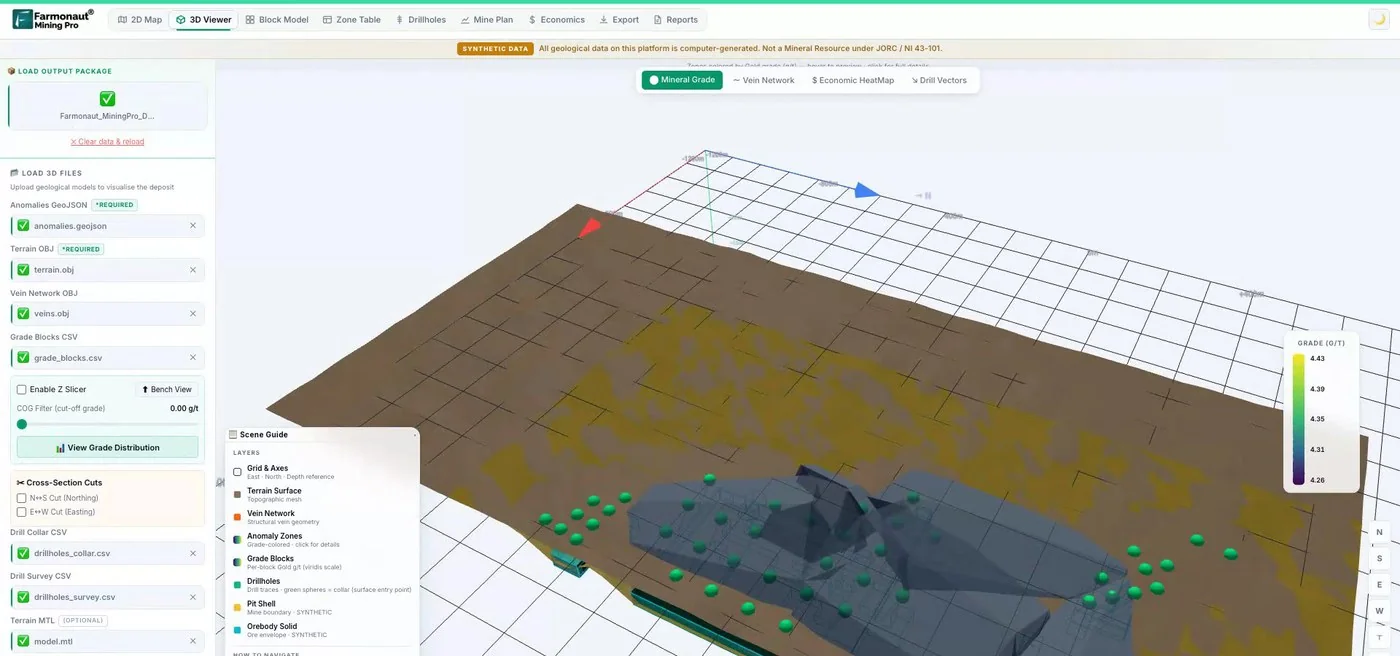
Mining Pro sample view, synthetic data
Keep reading


Sources
- US EPA, AP-42 section 12.3, Primary Copper Smelting (1986, reformatted 1995): epa.gov
- USGS, Mineral Commodity Summaries 2026: Copper (February 2026): pubs.usgs.gov
- Taskinen et al., Matte converting in copper smelting, Mineral Processing and Extractive Metallurgy (2019): acris.aalto.fi
- 911Metallurgist, Flash Smelting Process (US plant operating summary, early 1990s): 911metallurgist.com
- US patent 5,173,245, Tuyere injector (background on tuyere accretions and punching): patents.google.com
- US EPA, Fact sheet: final amendments to air toxics standards for primary copper smelting (May 2024): epa.gov
- Federal Register, 89 FR 41648, Primary Copper Smelting NESHAP (13 May 2024): federalregister.gov
- Freeport-McMoRan, Form 10-K for 2025: s22.q4cdn.com
- Southern Copper, Form 10-K for 2025: southerncoppercorp.com
- Reuters via Mining.com, Antofagasta agrees zero copper processing charges for 2026 (19 December 2025): mining.com
Discussion
Questions, corrections or field experience? Share them below. First-time comments are reviewed before they appear, and your email is never published.
No comments yet. Be the first to add a question or your experience.

 Omsri International FZE
 G.I.T.T.
 Jaunita Erss Ltd
 Almosi SARL
 SRK Consulting
 Berks Gold Limited
 Mwerezi Minerals Company Limited
 Mining SARL
 SenGold Invest SAS
 Sean Mining Limited
 NTS Group (Pty) Ltd
 Mine4Africa
 Lithspo Minerals Limited
 Tintina Mining Group
 Dalgety Minerals Pty Ltd
 Licence holder · Nigeria · Gold + lithium










