

Total Amount of Gold on Earth & World Reserves 2024: Anchoring Resource Strategy for Agriculture, Infrastructure, and Industrial Innovation
“Over 244,000 metric tons of gold have been mined globally, influencing equipment costs in agriculture and infrastructure.”
Table of Contents
- Introduction
- The Trio: Total Amount of Gold on Earth, Total Gold Mined in the World, and Total Gold Reserves on Earth
- Gold’s Occurrence, Distribution, and Its Role in Industry
- Global Gold Stock – How Much Gold Is There?
- Comparative Data Table: Global Gold Reserves, Mined Gold, and Industrial Usage (2024 Estimates)
- Gold in Agriculture, Forestry, and Infrastructure: Practical Influence
- Understanding Gold Supply Chains from Ore to Equipment
- Breakdown: Mined Gold, Reserve Metrics, and Their Market Impact
- Farmonaut’s Role in Modern Gold Mining and Exploration
- Gold in Equipment, Sensors, and Agricultural Innovation
- Balancing Economics: Gold, Commodity Cycles, and Rural Development
- Key Insights & Highlight Boxes
- FAQs
- Conclusion
Introduction
The total amount of gold on earth, along with the total amount of gold mined in the world and total gold reserves on earth, form a foundational trio of figures that anchor economic, industrial, and environmental planning across multiple sectors—spanning from agriculture and forestry to infrastructure, minerals, defense, and advanced technologies.
In 2024, our understanding of these quantities is more than an academic curiosity. Instead, these numbers directly influence costs, resource availability, equipment planning, capital investment, and risk management within supply chains that interlace extractive industries, farm operations, rural infrastructure, and industrial innovation. In this blog, we dive deep into these gold metrics, exploring their practical impact across sectors, especially agriculture, forestry, and supply-dependent rural economies.
While most gold may not be directly visible in tractors or irrigation pipes, its scarcity and value drive broader supply chain costs for high-durability electrical components, capital investments, and protective technology critical to sustainable agricultural and rural infrastructure.
The Trio: Total Amount of Gold on Earth, Total Amount of Gold Mined in the World, and Total Gold Reserves on Earth
Let’s first clarify what each figure means and why the trio of total, mined, and reserve gold metrics is so vital.
- Total Amount of Gold on Earth: Encompasses all naturally occurring gold—concentrated in native form in crustal rocks, placer deposits, ore bodies, and embedded as trace amounts in various minerals. This is a vast but finite reservoir—though not all of it is accessible or economically extractable.
- Total Amount of Gold Mined in the World: Represents the cumulative extraction of gold by humans from all mining operations throughout history up to the present.
- Total Gold Reserves on Earth: Indicates the current, measured quantities of gold that are economically viable to extract with contemporary technologies and at prevailing prices. This number fluctuates in response to discoveries, prices, and improvements in mining or ore processing.
Understanding these distinctions helps farmers, investors, equipment manufacturers, and planners to gauge resource cycles, asset depreciation, and risk within the commodity markets that ultimately influence input prices for everything from irrigation systems to high-tech sensors and protective coatings used in exposed rural environments.
Gold’s Occurrence, Distribution, and Its Role in Industry
Understanding Where Gold Comes From: Rocks, Ores, Placer Deposits, and Trace Elements
Gold occurs in several geological forms:
- Native in Crustal Rocks: Gold can be found as free metal or in alloy with silver or other metals, commonly near the Earth’s surface.
- Placer Deposits: Formed by erosion and concentration in riverbeds, these sources have historically supported artisanal as well as industrial mining.
- Ore Bodies: Gold can be embedded in host rocks such as quartz, often requiring extensive processing and refining to isolate the precious metal.
- Trace Amounts in Other Minerals: Detected via spectrometry and often overlooked in traditional extraction but increasingly important due to technological advancements.
Why Does This Matter for Agriculture and Infrastructure?
Gold’s unique properties—its chemical stability, unmatched conductivity, and resistance to corrosion—make it invaluable for producing durable, long-life electrical connectors, high-reliability sensors, and protective coatings on systems exposed to harsh farming, forestry, and mineral-processing environments. Its presence in commodities deeply influences both the cost and resilience of critical rural infrastructure around the world.

Global Gold Stock – How Much Gold Is There?
The total amount of gold on earth is a subject of scientific estimation. Here’s what current research and global mining experience suggest:
- In the Earth’s Crust: There are about estimated 57,000,000 tonnes (metric tons) of gold distributed throughout Earth’s crust. Most of this is present at low concentrations.
- Mined Gold So Far: As of 2024, close to 244,000 tonnes have been mined in the world since ancient times—equivalent to a cube just over 22 meters on each side.
- Accessible & Known Gold Reserves on Earth: The US Geological Survey estimates the total gold reserves that are feasible to mine with current technology at about 57,000 tonnes.
The vast majority of gold in the crust is spread in concentrations too small to be mined, thus scarcity and market value are driven by what is practically available, not just what exists in nature.
Only a fraction of the earth’s vast gold stock is part of total gold reserves on earth—understanding this distinction is crucial for evaluating mining investments, future facility projects, and commodity market risk.
For companies focused on optimal mining site selection and prospectivity mapping, tools like Farmonaut’s Satellite-Based Mineral Detection platform provide actionable intelligence, rapidly screening potential gold-bearing zones using Earth observation and AI.
Comparative Data Table: Global Gold Reserves, Mined Gold, and Industrial Usage (2024 Estimates)
| Region/Country | Estimated Gold Reserves (tonnes) | Gold Mined to Date (tonnes) | % of Global Reserves | Estimated Industrial Usage (%) | Notable Industrial/Agricultural Applications |
|---|---|---|---|---|---|
| World Total | 57,000 | 244,000 | 100% | ~7-8% | Sensors, precision connectors, protective coatings, agriculture & mining equipment |
| USA | 3,000 | 8,200 | ~5.3% | 13-15% | Electronics, defense, agricultural sensor tech |
| China | 2,100 | 11,200 | ~3.7% | 22-24% | Industrial connectors, smart agriculture hardware |
| Russia | 5,800 | 8,800 | ~10.2% | 5% | Infrastructure, mining, aerospace defense |
| South Africa | 5,000 | 15,000 | ~9% | 2-3% | Mining, mining equipment, large infrastructure |
| Ghana | 1,000 | 1,200 | ~1.8% | 0.5% | Mining, local agri-processing |
| Peru | 2,600 | 2,900 | ~4.6% | 3% | Mining, industrial manufacturing, local infrastructure |
| Australia | 11,100 | 10,600 | ~19.5% | 10% | Mining, agricultural equipment, high-resilience sensors |
“Only about 20% of Earth’s estimated gold reserves are economically viable to mine, driving innovation in industrial extraction technologies.”
Gold in Agriculture, Forestry, and Infrastructure: Practical Influence
The total amount of gold on earth, total gold reserves, and total amount of gold mined in the world may sound abstract, but their downstream effects touch our daily lives much more than we might imagine—especially for sectors like agriculture, forestry, mining, infrastructure, and rural development.
How Does Gold Impact Agricultural Operations and Rural Systems?
-
✔ Technology & Equipment:
Gold is a cornerstone in high-precision sensors, electrical connectors, and corrosion-resistant hardware in agricultural machinery, GPS-guided tractors, automated irrigation, and climate-control systems. -
📊 Investment & Asset Management:
Gold’s value anchors asset protection, hedging, and capital planning for land-based industries. Fluctuations in reserve estimates or mined totals cause ripples in costs for imports, lubricants, and maintenance schedules. -
✔ Rural Infrastructure Development:
Gold-based components are prevalent in robust wiring, solar power connections, communication relays, and other infrastructure critical to rural development. -
⚠ Supply Chain Resilience:
Uncertainty in reserves and extraction influences the supply of key industrial parts, causing cost and availability spikes that can impact entire farming cycles. -
✔ Environmental Stewardship:
Modern mining technique informed by up-to-date reserve numbers helps minimize tailings, water use, and emissions—a priority for both mining and agriculture sectors.
When budgeting for new agricultural machinery or rural infrastructure, factor in the commodity cycle for gold—periods of rising gold price often lead to increased costs for high-performance equipment, so advanced purchases or leasing can offer cost predictability.

🚀 Map Your Mining Site Here with Farmonaut
Seamlessly submit your mining site for satellite-powered mineral prospectivity analysis and unlock rapid, data-driven resource insights.
Understanding Gold Supply Chains from Ore to Equipment
The Pathway: From Earth’s Stock to the Farm, to the Factory
The journey of gold encompasses many stages:
- Exploration & Extraction: Modern companies (including Farmonaut clients) leverage satellite-based mineral detection to identify promising ore bodies and placer sources. Learn more here about this cutting-edge method.
- Processing & Refining: Extracted ore is processed to concentrate gold, then refined into pure form, often at central facilities.
- Industrial Fabrication: Gold is alloyed or applied as a coating in manufacturing of electronics, connectors, and high-durability agricultural equipment components.
- Distribution in Supply Chains: High-value, precision parts enter global trade networks supplying farming equipment, irrigation controllers, monitoring devices, and rural grid infrastructure.
- End-User Deployment: Machinery, sensors, systems, and infrastructure with embedded gold are deployed to farms, forests, and rural sites—enhancing durability and operational reliability.

- ✔ Superior Corrosion Resistance – Outlasts other metals in outdoor, humid, or chemical-exposed settings.
- 🔌 Excellent Conductivity – Ideal for reliable, low-loss connections in sensors and smart agri-machinery.
- 🔒 Asset Protection – Holds long-term economic value, useful in machinery depreciation planning.
- 🔎 Traceability – Gold-based electronics can be tracked, supporting supply chain resilience and environmental compliance.
- 👨💻 Precision Management – Vital for high-performance electronic controls in automated irrigation & resource scheduling.
- 🏞 Minimal Maintenance – Reduces downtime in rural operations, saving direct and opportunity costs.
- ⚡ Energy Efficiency – High-quality wiring reduces losses in farm and mining power distribution systems.
- 🤝 Enables Sustainability – Supports circular economy through high-recyclability and responsible sourcing programs.
Breakdown: Mined Gold, Reserve Metrics, and Their Market Impact Across Sectors
Every time the total amount of gold mined in the world increases or reserve figures are revised, ripple effects can extend across industries:
-
💰 Price Fluctuations: Market perception of scarcity or abundance shifts, affecting costs of agricultural hardware and investment in new rural infrastructure projects. -
💹 Financing & Capital Access: The total gold reserves on earth serve as a reference point in international finance, influencing borrowing rates, risk assessments, and asset-backed loans for rural projects. -
🔄 Supply Chain Management: Knowledge of reserve movements enables smart scheduling for parts replacements, maintenance, and forward buying to protect against market shocks. -
📉 Depreciation Planning: Asset lifecycles for machinery or infrastructure can be better forecasted when commodity cycles are understood—the value of embedded gold often buffers depreciation curves.
Confusing total gold reserves with total gold on earth leads to overestimating available supply—only a small percentage is ever likely to influence equipment or infrastructure markets in practical terms!
Farmonaut’s Role in Modern Gold Mining and Exploration
We at Farmonaut occupy a critical space in global mining modernization: fusing satellite-based mineral intelligence and advanced AI analytics to transform traditional, slow, and capital-intensive mineral discovery into rapid, environmentally responsible, and data-driven exploration.
Our satellite-based mineral detection platform leverages advanced Earth observation across diverse terrains, drastically shrinking timelines—typically from months to days—and dramatically reducing the cost and environmental disruption associated with early-stage exploration.
- 🌍 Global Reach: Projects executed in Africa, South America, North America, Asia, and Australia—demonstrating adaptability to all major gold-bearing geological settings.
- 📡 Advanced Detection: Via multispectral and hyperspectral analysis, we support detection of precious metals, base metals, rare earths, specialty gemstones, and industrial minerals.
- ⏳ Efficiency: Our workflows allow clients to evaluate vast areas and allocate exploration capital more strategically—cutting wasted investment by up to 85% at the earliest project stages.
- ♻ Environmentally Friendly: Zero ground disturbance during exploration, reduced carbon emissions, and lower impact—supporting global commitments to ESG principles and sustainable development.
To get a quote for Farmonaut’s mineral intelligence products, visit our Mining Query Form for a streamlined start.
If you need technical or commercial guidance, don’t hesitate to Contact Us for tailored assistance.

- 🔬 Objectively Screen Large Regions
- 🌄 Avoid Unnecessary Drilling in Early Stages
- 💸 Save Capital by Targeting High-Potential Zones
- 🗺️ Deliver High-Resolution, GIS-Compatible Maps
- 📈 Empower Informed Investment Decisions
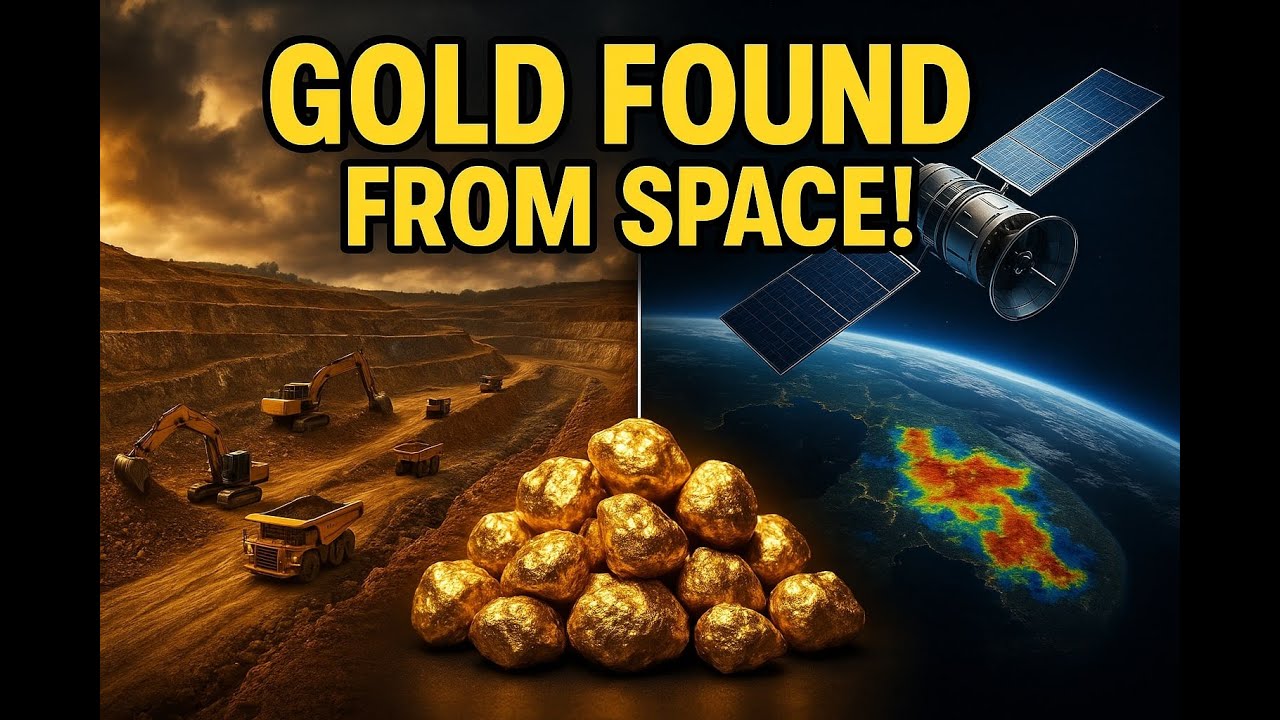
Early exploration with satellite-aided mineral detection platforms like Farmonaut not only speeds up resource identification but also aligns with the wider environmental and social responsibility now demanded by rural communities and global commodity stakeholders.
Gold in Equipment, Sensors, and Agricultural Innovation
Why Use Gold in Farming and Forestry Hardware?
Gold’s applications within agriculture, forestry, and rural infrastructure include:
- ⚡ Electrical Connectors: Gold’s conductivity means it’s used in high-reliability terminals for sensors, pumps, and automated system controls—critical in areas with fluctuating temperatures, humidity, or corrosive environments.
- 🔒 Protective Coatings: Gold plating is applied to exposed agricultural equipment components to resist rust, prolonging operational life in fields, forests, and mines.
- 🌾 Sensor Technology: High-performance satellite and ground-based sensor systems—enabling precision irrigation, yield prediction, and smart resource management—rely on gold for stable and interference-resistant circuit design.
- 🔩 Durable Machinery Parts: Key moving or friction-prone components are gold-coated for reduced wear, especially in high-pollution or salt-heavy environments.
Thus, the total amount of gold on earth and especially the total gold reserves on earth directly shape the future cost, durability, and reliability of the modern tools and equipment that drive food, fiber, and fuel production from the world’s rural regions.
The value of gold in the global commodity chain helps buffer rural economies during downturns—offering both capital security and technological edge for forward-thinking agricultural operators.
Balancing Economics: Gold, Commodity Cycles, and Rural Development
From mined gold metrics to reserve updates, every data point helps not only miners but also farmers, foresters, and rural planners to:
- Gauge Resource Cycles: Align large investments, refinancing, and asset purchases with upturns or downturns in gold and related commodity cycles for optimal cost management.
- Enhance Supply Chain Resilience: Plan for lead times, inventory, and backup components especially when market volatility looms.
- Minimize Risk: Utilize up-to-date exploration data to hedge investments or delay large procurements during volatility.
- Support Sustainable Development: Embrace modern mineral intelligence tools to scan and validate land use before physical disruption, ensuring responsible, community-friendly rural infrastructure growth.
Watching gold’s reserve and mining metrics is a smart move for rural asset management—these figures often foreshadow equipment cost trends, allowing savvy operators to optimize capital allocation.

- ✔ Anchors commodity value and helps set global market sentiment
- 📊 Guides pricing for high-tech agricultural and industrial equipment
- ⚡ Supports technological upgrades in precision farming and remote sensing
- 🏗️ Buffers risk in capital-intensive rural infrastructure projects
- 🌱 Enhances environmental accountability through improved mineral mapping and land stewardship
FAQ: Total Amount of Gold on Earth, Mining, and Agricultural Applications
What is the estimated total amount of gold on Earth?
Current scientific estimates suggest that the Earth’s crust contains about 57 million tonnes of gold, with the vast majority occurring at concentrations too low to be economically feasible for mining.
How much gold has been mined globally to date?
Approximately 244,000 tonnes have been extracted from the Earth as of 2024, used in everything from bullion and jewelry to electronics and industrial connectors.
What are ‘gold reserves,’ and why are they smaller than the total amount?
“Total gold reserves on earth” refers to measured, identified quantities of gold that can be mined profitably under current technology and price conditions. This is a much smaller number (about 57,000 tonnes) than Earth’s total gold content because most gold is diffused at low concentrations and cannot be economically recovered.
How does the gold supply chain influence equipment and infrastructure costs?
The global gold supply impacts prices and availability of high-precision components—such as sensors, connectors, and corrosion-resistant parts—in key machinery for farming, forestry, and infrastructure projects. Changes in mining rates or discoveries can cause equipment prices to fluctuate, affecting capital planning for rural businesses.
How does Farmonaut support mining companies and rural stakeholders?
Farmonaut delivers satellite-based mineral detection solutions, empowering mining companies, planners, and investors to identify high-potential gold sites efficiently and responsibly—shortening exploration cycles and supporting data-driven resource and environmental management.
Upgrading from conventional ground surveys to satellite-driven 3D mineral prospectivity mapping is now possible with Farmonaut—save years in exploration and dramatically improve targeting accuracy for your next project.
Conclusion
The total amount of gold on earth, the total amount of gold mined in the world, and the total gold reserves on earth are more than just numbers—they represent the practical backbone anchoring agricultural innovation, mineral sector investment, and resource-driven rural development. These metrics shape technology adoption, asset protection, supply chain resilience, and capital planning across a spectrum of industries.
Across farming, forestry, minerals, and infrastructure, up-to-date knowledge and precise resources mapping—supported by innovative intelligence platforms like those offered by Farmonaut—enhance our ability to plan for a sustainable, resilient, and technologically advanced future. Whether you’re a farmer assessing equipment cycles, a miner hunting the next productive site, or a planner building tomorrow’s rural infrastructure, those gold metrics—and the tools to interpret them—are your competitive edge.
As resource scarcity, economic cycles, and environmental demands intensify, integrating gold reserves and mining intelligence into operational planning will define the next era of growth and resilience across all land-based industries.
Ready to future-proof your mineral exploration or agriculture-linked infrastructure project?
Get a Quote | Contact Us | Map Your Mining Site Here
Discussion
Questions, corrections or field experience? Share them below. First-time comments are reviewed before they appear, and your email is never published.
No comments yet. Be the first to add a question or your experience.

 Critica Metals Limited
 Congo Mining Solutions
 Mining SARL
 SenGold Invest SAS
 Sania Corporation
 Sean Mining Limited
 NTS Group (Pty) Ltd
 Mine4Africa
 Lithspo Minerals Limited
 Tintina Mining Group
 Dalgety Minerals Pty Ltd
 Vortex Minerals Pty Ltd
 Faith At Work (Pty) Ltd
 Geotech Mining Solutions plc
 Vulcan International Limited
 Kidepo Associates
 GKY Mining
 Alkimy SARL
 Double A Trading
 GemSprout Metals Limited
 Qader Group
 Ileys General Trading
