

Uranium Yellowcake U3O8: 7 Safe Milling Steps – Environmental Stewardship From Mine to Reclamation
- Introduction: The Role of U3O8 Yellowcake in Modern Mining
- Trivia: Environmentally Friendly Innovations
- What Is Uranium Yellowcake U3O8? Composition, Appearance & Role
- Environmental Context: Why Safe Uranium Milling Matters
- Uranium Milling Yellowcake U3O8: 7 Safe Milling Steps Explained
- Process and Impact Summary Table
- Safety Controls & Sustainable Best Practices Throughout Milling
- Trivia: Fast Land Reclamation After Milling
- Implications for Agriculture & Forestry: Land, Soil, and Water Stewardship
- Rigorous Environmental Monitoring & Containment Systems
- Farmonaut: Satellite-Enabled Exploration, Mapping & Environmental Intelligence
- Economic & Social Perspective: Value, Stakeholder Engagement & Regional Development
- Fostering a Culture of Safety, Communication & Continuous Improvement
- Visual List Summary: Key Benefits, Risks, and Insights
- Conclusion: Aligning Milling with Sustainable Stewardship
- Frequently Asked Questions (FAQ)
Introduction: The Role of U3O8 Yellowcake in Modern Mining
Uranium milling yellowcake U3O8 production is a cornerstone operation in the nuclear fuel cycle—a process that sits at the vital intersection of extractive industry and environmental stewardship. The milling of uranium ore not only enables fuel supply for reactors powering local and global infrastructure, but also requires rigorous environmental management, sustainable planning, and responsible land reclamation. These considerations are crucial within mining sectors, with indirect implications radiating into agriculture, forestry, land planning, and rural development.
This blog unpacks the entire uranium milling process—focusing on the ‘yellowcake’ stage (U3O8 form)—by explaining the seven core steps, underlying chemical and radiological safety challenges, and, critically, the environmental controls that protect soil, water, and ecosystems. We clarify how careful management of milling operations, robust monitoring, land restoration, and innovative mapping (including satellite-based mineral detection) can help ensure responsible uranium extraction within today’s sustainability-focused landscape.
What Is Uranium Yellowcake U3O8? Composition, Appearance & Role
U3O8 yellowcake—uranium oxide—is the concentrated solid form uranium takes after it is chemically extracted from milled ore. Yellowcake is not directly usable as fuel, but acts as a crucial intermediary, bridging mining and downstream nuclear utilities.
- ✔ Composition: U3O8 is an oxide salt, with uranium in a highly oxidized, “hexavalent” (U6+) state, maximizing solubility in chemical processing.
- ✔ Physical appearance: Traditionally depicted as a dusty, crumbly, and distinctive pale yellow to tan powder or solid, though color and texture may vary depending on impurities and local mineralogy.
- ✔ Use & importance: Yellowcake U3O8 is the standard commercial product shipped to conversion facilities, where it is further processed for reactor use.
Mining companies strive to maximize uranium recovery as yellowcake, while minimizing environmental impacts—especially in regions with agricultural and forestry lands nearby.

Yellowcake’s “yellow” coloration can vary dramatically with local mineral impurities and processing history. Analysts use X-ray diffraction and spectroscopy to confirm purity before shipment.
Environmental Context: Why Safe Uranium Milling Matters
Uranium yellowcake U3O8 milling sits at the intersection of powerful extractive industry forces and the imperative for sustainable environmental management. Mining operations, by their nature, disturb vast land areas—affecting not just the mining lease, but often impacting adjacent forestry, agricultural, and water resource areas; environmental implications thus ripple into regional planning and development sectors.
- ⚠ Soil Structure & Fertility Risks: New waste rock, tailings, and process water ponds can degrade soil health, especially if not properly reclaimed.
- ⚠ Water & Hydrology Pressures: Increased water use, alteration of runoff patterns, and risk of chemical releases challenge watershed integrity.
- ⚠ Airborne Hazards: Crushing, grinding, and drying steps produce airborne particulates—including radioactive dust and radon progeny—posing a threat to workers and potential off-site dispersion.
The overriding goal: Employ best-in-class operational controls, planning, and monitoring systems that minimize hazard, manage tailings, and optimize safe reclamation to restore land for future use—especially critical for sustaining agriculture and forestry.
Modern uranium mills use water recycling systems and multi-stage emission controls to dramatically minimize the release of contaminants, protecting local soil and water resources throughout operations.
Uranium Milling Yellowcake U3O8: 7 Safe Milling Steps Explained
The production of uranium yellowcake U3O8 from mined ore follows a tightly controlled sequence designed to extract, concentrate, and secure uranium while protecting the surrounding environment. Each step—from crushing to drying—brings its own environmental, chemical, and radiological risks, and thus, its own tailored controls.
Step 1: Crushing & Grinding of Ore
- ✔ Purpose: Increase surface area by reducing ore to a fine particle size—facilitating chemical leaching of uranium minerals embedded in host rock.
- ⚠ Risk: Generation of dust; potential release of radioactive particulates.
- ✔ Control: Dust suppression with water sprays, ventilation, and enclosed equipment to minimize airborne particulates.
Step 2: Leaching (Acidic or Alkaline Solutions)
- ✔ Purpose: Dissolve uranium minerals from crushed rock using either sulfuric acid (common) or alkaline carbonate solutions.
- ⚠ Risk: Chemical handling hazards, risk of process solution leaks affecting soil and water.
- ✔ Control: Lined leach tanks, rigorous process containment, secondary containment and spill response protocols.
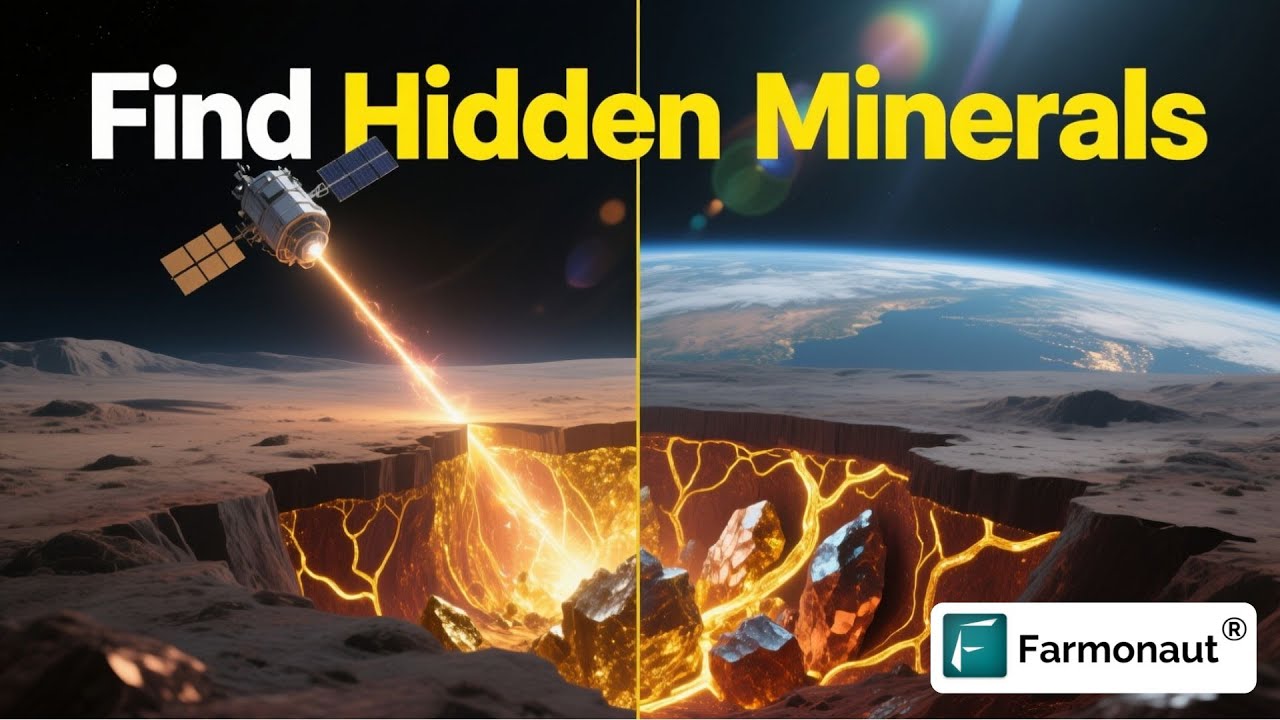
Did you know? Remote sensing technology, such as satellite-driven mineral detection, helps guide ore extraction, supporting safer, less invasive exploration planning.
Step 3: Solid-Liquid Separation (Thickening & Clarification)
- ✔ Purpose: Separate the leached uranium solution (liquid) from waste solids (slurry/tailings).
- ⚠ Risk: Tailings can contain chemical and radiological contaminants (radionuclides, metals).
- ✔ Control: Engineered tailings impoundments with double liners, groundwater capture, and cover systems to minimize infiltration.
Step 4: Solvent Extraction or Ion Exchange
- ✔ Purpose: Further concentrate uranium from the clarified solution—using either solvent extraction, which selectively binds uranium, or ion exchange resin beds.
- ⚠ Risk: Handling of organic solvents and complexing agents; potential fire hazard and chemical exposure.
- ✔ Control: Solvent control systems (ventilation, vapor recovery), worker training, fire suppression infrastructure.

Step 5: Precipitation of Uranium as U3O8
- ✔ Purpose: Add chemicals—ammonia, hydrogen peroxide, or magnesium oxide—to precipitate uranium as insoluble U3O8 (yellowcake).
- ⚠ Risk: Chemical handling, possible high-pH or oxidant releases impacting soil or water.
- ✔ Control: Controlled addition, closed mixing vessels, pH/tank monitoring.
Step 6: Dewatering and Drying of Yellowcake
- ✔ Purpose: Filter and dry the yellowcake to a stable, shippable solid form—usually containing over 85% uranium by mass.
- ⚠ Risk: Dust creation, handling of radioactive solids, and thermal equipment safety.
- ✔ Control: Enclosed dryers, HEPA filtration, automated transfer systems, personal protective equipment.
Step 7: Packaging, Storage, and Shipment
- ✔ Purpose: Place yellowcake in sealed drums, store in secure facilities, and coordinate shipment to downstream conversion plants.
- ⚠ Risk: Accidental drum breach, mislabeling, or uncontrolled spread during transfer.
- ✔ Control: Robust drum design, spill response plans, chain-of-custody procedures, proper radiological signage.
All seven steps require continuous monitoring, employee training, and community engagement for safe operations—especially where agriculture, water, and forestry resources are nearby.

Process and Impact Summary Table: 7 Safe Milling Steps for Uranium Yellowcake U3O8
| Milling Step | Purpose | Potential Environmental Impact | Safety Measures Implemented | Sustainable Management Practices |
|---|---|---|---|---|
| Step 1: Crushing & Grinding | Increase ore surface area to facilitate uranium leaching | Dust release to air, disturbance of host rock, localized soil changes | Dust suppression (water mist), enclosed circuit, real-time air monitoring | Progressive restoration, buffer vegetation zones |
| Step 2: Leaching (Acid/Alkali) | Dissolve uranium minerals into a chemical solution | Potential soil/groundwater contamination from chemical/leaks | Tank liners, spill control berms, secondary containment | Closed-loop water cycles, rigorous chemical inventory |
| Step 3: Solid-Liquid Separation | Separate uranium-rich solution from solid tailings | Tailings pond seepage, risk to local water quality, habitat alteration | Double liners, leak detection, groundwater pumps | Final capping/cover, wetland creation, water reuse |
| Step 4: Solvent Extraction/Ion Exchange | Concentrate uranium to purer form (removing impurities) | Volatile organics, possible vapor loss or fire risk | Fume hoods, solvent recycling, fire systems | Green chemistry substitutions, solvent minimization |
| Step 5: Precipitation | Force uranium out of solution as an insoluble solid (yellowcake) | Uncontrolled releases, pH swings in local water/soil | Closed systems, tank overflow alarms | Process optimization, chemical neutralization |
| Step 6: Dewatering & Drying | Stabilize and dry yellowcake for storage/shipment | Dust, radiological solids, worker exposure | Sealed dryers, HEPA filtration, PPE | Air quality tracking, zero-discharge dust programs |
| Step 7: Packaging & Shipment | Securely contain and transport U3O8 to conversion plant | Handling spills, mislabeling, risk during transit | Robust drums, chain-of-custody logs | Community notification, transparent logistics plans |
Mills that clearly document robust environmental and safety controls throughout each uranium yellowcake U3O8 step tend to enjoy better community relations and reduced long-term liability—a key due diligence factor for responsible investment.

Safety Controls & Sustainable Best Practices Throughout Milling
- ✔ Radiological Safety: Continuous area monitoring, worker dosimetry, radon capture, and air filtration throughout the plant minimize exposure to uranium and its decay products.
- ✔ Chemical Controls: Automated dosage systems for leaching agents, closed vessels, and overflow sensors reduce accidental releases.
- ✔ Criticality Safety: Uranium concentrations are actively managed to prevent the theoretical risk of an uncontrolled chain reaction during process upsets.
- ✔ Water Conservation: Most plants recycle 90%+ of process water—aiding both sustainability and cost savings.
- ✔ Tailings & Waste Management: Multi-layer liners, seepage detection, progressive capping, and regular environmental audits protect ecosystems.
For mining companies and site planners: sustainability isn’t optional. Demonstrating best practices in land, soil, and water management is required by modern regulatory frameworks, and increasingly, is expected by investors, neighbors, and local agricultural stakeholders.
Neglecting interim land stabilization (e.g., using vegetative cover) during active milling can lead to rapid erosion, soil compaction, and persistent runoff issues—making final reclamation far more costly and difficult.

Implications for Agriculture & Forestry: Land, Soil, and Water Stewardship
The aftermath of uranium milling yellowcake U3O8 operations reaches far beyond the mill fence. Reclamation planning is crucial, as the value and integrity of adjacent agricultural and forestry lands often rests on how well miners restore soil, fertility, water hydrology, and ecological function.
- ✔ Soil Reclamation: Excavated or compacted soils are reprofiled, decompacted, and amended with organic and mineral nutrients to restore structure and fertility.
- ✔ Hydrology Rebalancing: Surface grading and drainage channels are engineered to return water flows to pre-mining conditions and minimize erosion or offsite sedimentation.
- ✔ Vegetative Cover: Site-specific seed mixes—sourced from local provenance—are sown to immediately stabilize soil, support native biodiversity, and restore ecosystem function. Deep-rooted species aid long-term restoration.
- ✔ Wetland & Forest Buffer Restoration: Reclaimed land often supports multi-use buffers that shield waterways, reduce offsite dust, and provide wildlife habitat.
- ✔ Monitoring & Maintenance: Periodic audits and remote sensing tools (such as those available from Farmonaut) verify cover, fertility, erosion rates, and detect any need for adaptive management after closure.
Access mining.farmonaut.com to use Farmonaut’s intuitive platform for satellite-driven mineral prospectivity mapping, environmental monitoring, and reclamation validation. Map
and monitor your site’s progress with advanced, actionable insight—no field crews required.

Rigorous Environmental Monitoring & Containment Systems
Environmental Monitoring—Foundational to Compliance & Restoration
Effective uranium milling yellowcake U3O8 management depends on thorough environmental monitoring at each stage. The goal is to detect and respond to chemical or radiological releases before they impact nearby soil, water, or air, ensuring that both regulatory standards and community expectations are exceeded.
- ✔ Groundwater Monitoring: Multi-depth wells around tailings, waste, and leach areas track potential migration of uranium, metals, acidity/alkalinity, and process compounds.
- ✔ Surface Water Quality: Routine sampling of streams, ponds, wetland discharge points checks for sediment, radionuclide, and chemical parameters.
- ✔ Air Monitoring: Continuous stations check dust, radionuclides, particulates—especially downwind and during active transport/handling.
- ✔ Soil & Crop Testing: Where agriculture or forestry is impacted, soil health and crop uptake studies confirm safe conditions and support land handback for productive use.
Containment Design—Engineered for Climate and Durability
- ✔ Tailings Facilities: Double- and triple-layer liners (HDPE, clay) topped with robust final covers to minimize seepage and resist climate extremes (heavy rain, drought, seismic).
- ✔ Runoff Management: Engineered drainage, stormwater ponds, and water recycling loops reduce risk of acute releases after precipitation.
- ✔ Adaptive Planning: Sensors and seasonal data enable adaptation to evolving regional hydrology, erosion, and vegetative growth rates.

Farmonaut: Satellite-Enabled Exploration, Mapping & Environmental Intelligence
At Farmonaut, we believe in the power of satellite data and artificial intelligence to dramatically improve the way mineral resources—including uranium—are discovered, mapped, and managed for environmental sustainability. Our satellite-based mineral detection platform, coupled with advanced geospatial analytics, reduces ground disturbance, streamlines prospecting, and supports responsible planning for operations like uranium milling yellowcake U3O8.
- ✔ Global Coverage, Local Precision: We analyze multispectral and hyperspectral satellite images to find mineral hotspots—informing smarter, less invasive exploration long before any field teams are deployed.
- ✔ Speed and Cost Savings: Our process accelerates exploration from months to days and can lower preliminary exploration costs by over 80%.
- ✔ No Early-Stage Ground Impact: By using remote sensing for initial mineral targeting, there is no initial soil or water disturbance—critical for environmentally sensitive or agricultural areas.
- ✔ Environmental and Regulatory Support: Our 3D prospectivity mapping and anomaly validation can be used for environmental baseline studies, ongoing reclamation progress tracking, and auditable compliance documentation.
For operational teams, regulators, and land managers, this approach fosters trust and enables proactive stewardship of land, soil, and water resources—whether at early prospecting or active uranium milling yellowcake U3O8 stages.
Interested in seeing how satellite-driven mineral prospectivity mapping and environmental reporting can transform your uranium project? Get a quote from the Farmonaut mining team or contact us for more information.
Economic & Social Perspective: Value, Stakeholder Engagement & Regional Development
The production of uranium yellowcake U3O8 underpins not only nuclear energy generation, but also stimulates meaningful infrastructure development, skilled local workforce growth, and shared community services. But, the economic sustainability of uranium milling sits side by side with its social license to operate—secured by transparency, environmental compliance, and engagement with local stakeholders across the agriculture, forestry, and conservation sectors.
Many uranium regions require impact benefit agreements (IBAs), ensuring tangible local gains (training, infrastructure) and binding commitments to land and water restoration.
- ✔ Economic Value Chain: Uranium yellowcake U3O8 is a high-value export product, supporting jobs, tax revenue, and local contracts in mining services, logistics, and land rehabilitation.
- ✔ Link to Utilities: Milling provides the critical bridge between extraction and conversion/enrichment—essential for low-carbon energy utilities worldwide.
- ✔ Stakeholder Engagement: Regular dialogue with nearby landowners, agriculturalists, and forestry planners is pivotal for conflict avoidance, especially if water resources are shared.
Fostering a Culture of Safety, Communication & Continuous Improvement
Beyond process controls, robust safety culture and emergency planning define truly sustainable uranium milling yellowcake U3O8 operations. Employee training includes radiological hazard awareness, chemical safety, and rehearsed emergency protocols. Plans are in place for:
- ✔ Spill Response: Fast reactions to leaks or chemical releases, including containment, area cleanup, and regulatory notification.
- ✔ Equipment Failure: Preventative maintenance, redundant pumps/monitors, and spare part inventory minimize downtime and incident potential.
- ✔ Climate and Natural Events: Action plans address severe storms, flash floods, or seismic events—crucial in regions with variable weather or earthquake risk.
- ✔ Community Communication: Transparent workshops, hotline numbers, and rapid notification systems ensure local agriculture and forestry interests are always informed and protected.
With continuous improvement and documented “lessons learned”, each uranium site can reach new benchmarks in sustainable stewardship, returning more land and water to safe, productive use after mining concludes.
Integrated planning and ongoing dialogue with local sectors (agriculture, forestry, conservation) yields smoother closure approvals and measurable gains for community trust.
Visual List Summary: Key Benefits, Risks, and Insights
- ✔ Sustainable Milling: Modern processes recycle over 90% of water and minimize soil and ecosystem impacts.
- 📊 Continuous Monitoring: Multi-layer environmental tracking ensures all releases and activities remain within safe limits.
- ⚠ Radiological Awareness: Worker protection is foundational, with real-time dosimetry and clear communication across all mill areas.
- 📈 Value Chain Integration: Yellowcake production is the crucial bridge between ore extraction and low-carbon energy utilities—powering both industry and sustainable economic growth.
- 🌱 Land Reclamation: Progressive cover and native vegetation restore land structure, fertility, and regular hydrology for post-milling agriculture or forest use.
Top 5 Environmental Safeguards at Every Uranium Mill
- 🛑 Double-lined tailings impoundments
- 🌊 Water recycling and zero-discharge protocols
- 🕵️ Continuous groundwater, air and soil monitoring stations
- 🌿 Progressive vegetative cover with native species
- 🔐 Secure, labeled storage and transport containers for yellowcake
Common Risks With Corresponding Controls
- 🌫️ Excess dust – HEPA filtration and water mist systems
- 💧 Leakage risk – Multiple containment liners, leak sensors
- 🔥 Solvent volatilization – Fume hoods and solvent recycling
- 🌪️ Severe weather runoff – Engineered drainage and emergency ponds
- 💼 Shipping mishaps – Robust drums, chain-of-custody and response plans
Conclusion: Aligning Milling with Sustainable Stewardship
The journey from uranium ore to yellowcake U3O8 is an engineered blend of chemistry, safety, and sustainability. Each step—from mineral extraction, crushing, leaching, precipitation, to final drying—requires a holistic approach to environmental impact. With robust process controls, attention to soil, water, and air quality, and progressive reclamation, uranium mining can support low-carbon energy while aligning with sustainable land stewardship.
In a landscape marked by rising environmental expectations and economic transitions, adopting best practices in uranium milling yellowcake U3O8 production—especially where forested and agricultural lands are nearby—cements not just profitability, but a legacy of responsibility and community respect. Leveraging advanced technologies, including satellite based mineral detection and 3D prospectivity mapping, also means that future exploration and reclamation can be faster, less intrusive, and markedly more sustainable.
For continuous updates on mineral intelligence and sustainable mining, map your mining site here: mining.farmonaut.com
Frequently Asked Questions (FAQ)
What exactly is yellowcake U3O8, and is it dangerous?
Yellowcake U3O8 is a concentrated uranium oxide solid produced after ore processing. It is mildly radioactive, but poses little risk when handled with standard laboratory and process controls. Its main hazard is chemical toxicity, not acute radiation.
How do uranium mills prevent groundwater and soil contamination?
Modern uranium mills use multiple layers of containment (HDPE liners, clay, covers), groundwater monitoring wells, zero-discharge water systems, and rapid response plans to capture leaks and minimize any release to environmental receptors such as soil or water.
Is reclaimed land after milling safe for farming and forestry use?
Yes—if reclamation is properly executed with verified clean soil/residue levels, restored hydrology, and robust vegetative cover. Regulatory and third-party audits often confirm the land meets or exceeds safety standards for agriculture or forest use.
Can satellite technology really improve environmental performance in uranium mining?
Absolutely. Tools like Farmonaut’s satellite-based mineral detection and 3D mapping allow early targeting with less ground disturbance, high-resolution monitoring of reclamation progress, and independent verification of environmental compliance from space.
How quickly can Farmonaut deliver results for mineral exploration or environmental mapping?
We typically deliver actionable reports and high-resolution maps within 5–20 business days of receiving coordinates and mineral requirements. This expedited process significantly accelerates decision-making compared to traditional exploration methods.
Discussion
Questions, corrections or field experience? Share them below. First-time comments are reviewed before they appear, and your email is never published.
No comments yet. Be the first to add a question or your experience.

 Geotech Mining Solutions plc
 Vulcan International Limited
 Kidepo Associates
 GKY Mining
 Alkimy SARL
 Double A Trading
 GemSprout Metals Limited
 Qader Group
 Ileys General Trading
 SG Gold Mining LLC
 VRV Global Pte Ltd
 Omsri International FZE
 G.I.T.T.
 Jaunita Erss Ltd
 Almosi SARL
 SRK Consulting
 Berks Gold Limited
 Mwerezi Minerals Company Limited
 Mining SARL
 SenGold Invest SAS
 Exploration consultancy · South Africa · Gold










