

Surface coal mining · Pros, cons and permits
Pros and Cons of Strip Mining: The Numbers and the Law
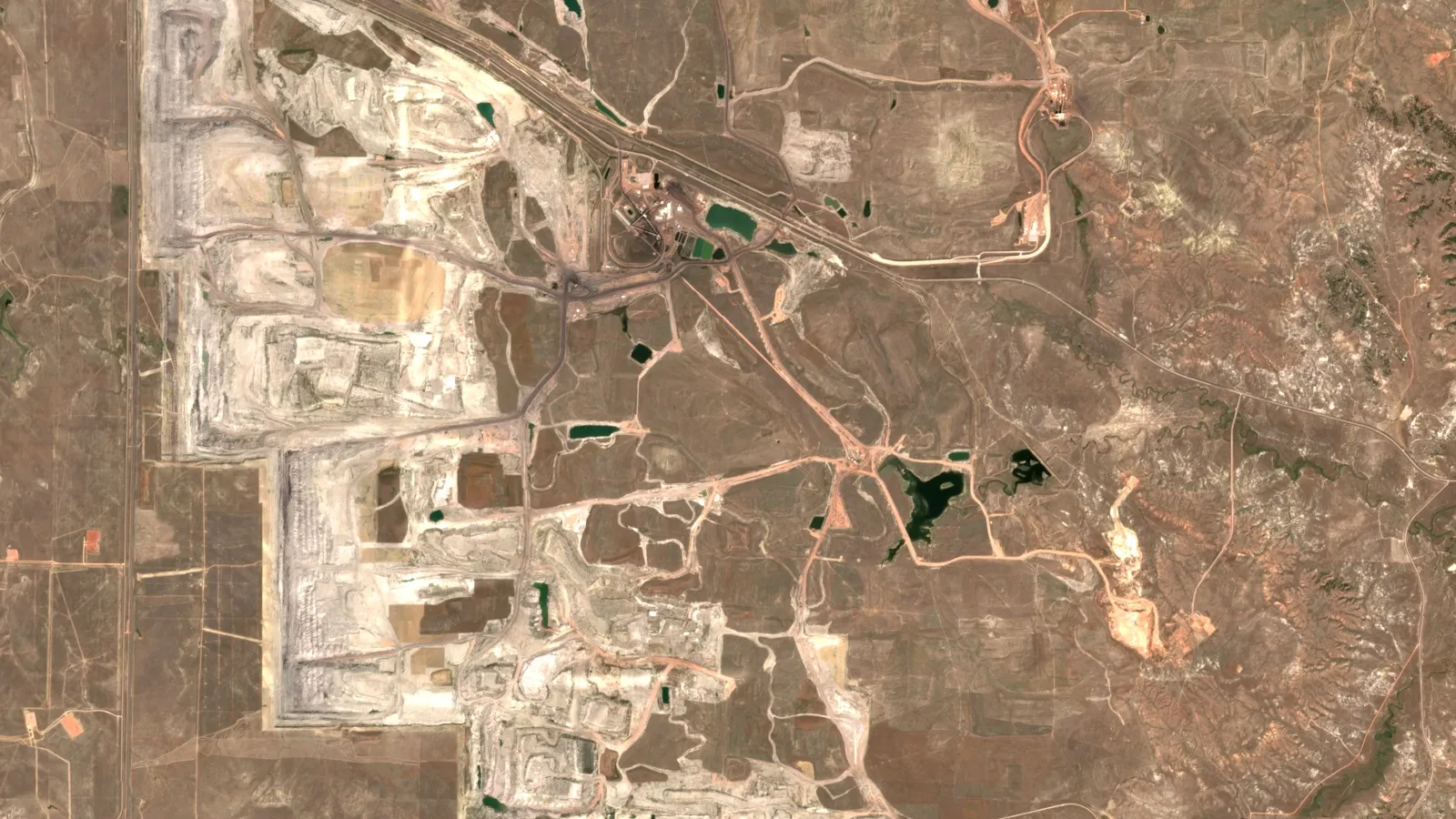
Strip mining is the cheapest way to mine a flat, shallow seam: US surface coal sold for $29.61 a short ton in 2024 against $85.88 from underground mines (EIA). The cost is that every acre above the seam is disturbed and must be bonded and rebuilt.
Key takeaways
- Surface mines produced 8.94 short tons per employee hour in 2024, against 3.24 at underground mines (EIA Annual Coal Report 2024).
- Surface-mined coal averaged $29.61 per short ton in 2024; underground coal averaged $85.88 (EIA, November 2025).
- Federal law (30 U.S.C. §1265) requires separate topsoil handling, approximate original contour and a 5-year revegetation liability, or 10 years where rainfall is 26 inches or less.
- The Abandoned Mine Land Fund had collected $14.233 billion by 30 September 2025, with $2.931 billion still unappropriated (OSMRE).
- Surface-mine capacity utilization fell from 77% in 2015 to 68% in 2019, while underground mines held near 77% (EIA).
In this article
- What strip mining is — and what the classroom definition leaves out
- The steps of strip mining, in permit order
- The compliance table: what is statutory vs. site-specific
- Pros of strip mining, with the numbers
- Cons of strip mining, with the numbers
- Stripping ratio & reclamation exposure calculator
- What happens to the land afterwards
- How to check any claim about a specific mine
- Where satellite data fits before the first cut
- FAQ
Strip mining removes the soil and rock lying on top of a shallow, layered deposit, works the exposed seam, then puts the ground back in the reverse order. It is the cheapest way to reach a near-surface resource and the most visible: about two-thirds of US coal production comes from surface mines, according to the US Energy Information Administration’s Coal Explained: Mining and Transportation pages. The trade-off is that the entire surface above the seam is disturbed at once — which is why federal law attaches a bond, a contour standard and a multi-year revegetation clock to every acre before a shovel moves.
Pros — low cost per ton, high recovery of the seam, fewer underground safety hazards, faster ramp-up. Cons — total surface disturbance, hydrologic disruption, a decade-long reclamation liability, and a legacy-site bill that predates the modern rules. The rest of this page attaches figures and statute sections to each of those.
What strip mining is — and what the classroom definition leaves out
“Removing the nonrenewable resources from just below the surface”
That phrasing circulates widely in US earth-science and geography coursework, and it is directionally correct: strip mining does target non-renewable deposits lying close enough to the surface that sinking a shaft makes no economic sense. Three things it omits, though, are the three things that decide whether a strip mine is viable:
- The deposit has to be layered and roughly flat-lying. Strip mining works a seam — coal, phosphate matrix, oil sand, some bedded industrial minerals. A steeply dipping vein is an open-pit or underground problem, not a strip-mining one.
- “Just below the surface” is an economic threshold, not a depth. What matters is the stripping ratio: cubic yards of overburden moved per ton of product recovered. When that ratio pushes the cost per ton past the sale price, the seam stops being shallow in any meaningful sense, whatever the tape measure says.
- The overburden is not waste — it is the reclamation material. Under 30 U.S.C. §1265(b)(5), topsoil must be removed as a separate layer and stockpiled separately from other spoil, with a protective cover if it is not replaced immediately. Mixing the horizons is the single failure that makes a site unrecoverable.
Strip mining vs. “step mining”, open-pit, and mountaintop removal
“Step mining” is not a distinct US regulatory category, and searches for it usually mean one of two things. Either the searcher has typed a near-miss for strip mining, or they are describing the stepped profile of a pit wall — the horizontal benches cut into a highwall so equipment can operate and the wall stays stable. Those steps are a slope-engineering feature, present in open-pit metal mines and quarries as much as in strip mines. The distinction that actually matters:
- Strip mining — advancing cuts across a flat-lying seam; spoil from the new cut backfills the previous one, so the void migrates rather than deepening.
- Open-pit mining — a widening, deepening cone with permanent benches, used for ore bodies with vertical extent. The pit is not backfilled as it goes.
- Contour and mountaintop mining — strip mining adapted to terrain. §1265(d)(4) defines a steep slope as anything above twenty degrees, and §1265(d)(2) requires complete backfilling with spoil to cover the highwall on those slopes.
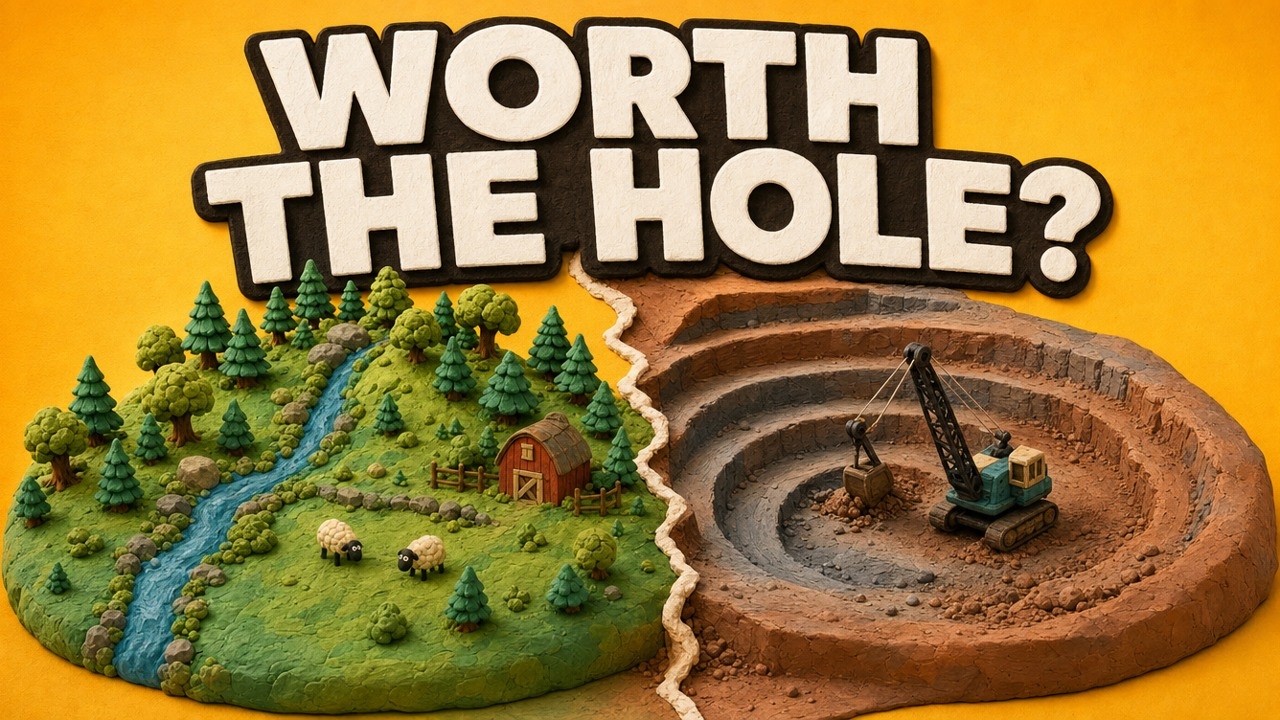
▶ Strip mining in clay: how the method works, its pros and cons, and how the land is rebuilt. · 4:37
The steps of strip mining, in permit order
The sequence below is the order a US regulator will actually walk through, not a generic textbook list. Steps 1 and 8 are where most of the elapsed time goes; steps 3 to 5 are where most of the money goes.
- Permit and baseline. Delineate the seam and overburden thickness, run baseline hydrology and soils work, and file the reclamation plan. The bond amount is set from that plan.
- Bond posting. A permit is not issued until a reclamation bond is in place. The Office of Surface Mining Reclamation and Enforcement recognises three forms on its reclamation bonds page: corporate surety bonds, collateral bonds (cash, CDs, real-estate liens, letters of credit, securities), and self-bonds. Self-bonding is restricted to permittees with at least $10 million in tangible net worth and $20 million in US fixed assets that also meet set financial ratios or hold an “A” or higher bond rating.
- Clearing, roads and sediment control. Vegetation is cleared only ahead of the advancing cut. Sediment structures go in before disturbance, not after.
- Topsoil and subsoil stripping. Horizons are lifted and stockpiled separately per §1265(b)(5). This is the step that determines the post-mining land capability years later.
- Overburden removal. Draglines, shovel-and-truck fleets or a combination, depending on the ratio. Spoil from the active cut goes into the previous cut wherever the plan allows.
- Seam extraction and haulage. The exposed product is loaded out and moved to preparation or direct rail loadout.
- Backfill and regrade. §1265(b)(3) requires backfilling, compaction where needed for stability or to prevent leaching of toxic material, and grading to restore the approximate original contour. Topsoil is redistributed and the site is seeded, with drainage and erosion control systems installed as part of the same pass.
- Revegetation liability and bond release. §1265(b)(20)(A) sets a responsibility period of five full years after the last augmented seeding, fertilizing or irrigation — extended to ten full years where annual average precipitation is twenty-six inches or less. Bond comes back in three phases, and Phase III is not available until the revegetation success standard is met and the period has run.
The compliance table: what is statutory vs. site-specific
Most articles on this topic present made-up durations. The useful version separates what the law fixes for everyone from what only your permit file can tell you — and names where to look for the second column.
| Stage | Fixed by federal law | Site-specific — where to get it |
|---|---|---|
| Permit & bond | Bond required before permit; self-bond floor $10M tangible net worth / $20M US fixed assets (OSMRE) | Bond dollar amount — set by your state regulatory authority from the approved reclamation plan |
| Topsoil handling | Removed as a separate layer, stockpiled separately, protective cover if not immediately replaced — §1265(b)(5) | Salvage depth by soil map unit — USDA-NRCS Web Soil Survey for the permit boundary |
| Backfill & grading | Approximate original contour; compaction where needed for stability or leachate control — §1265(b)(3) | Spoil swell factor and final contour drawings — permit application package |
| Steep slopes | Slopes above 20°; complete backfill covering the highwall; no downslope spoil placement — §1265(d)(1),(2),(4) | Slope survey — state permit file |
| Revegetation clock | 5 full years; 10 full years where average annual precipitation ≤26 inches — §1265(b)(20)(A) | Which clock applies — NOAA precipitation normals for the site |
| Bond release | Phase I backfill/regrade/drainage; Phase II topsoil replaced and vegetation established; Phase III success standard met (OSMRE) | Release status by permit — state regulatory authority public docket |
Pros of strip mining, with the numbers
- Cost per ton is the whole argument. EIA’s Annual Coal Report 2024, released 19 November 2025, reports average sales prices of $18.06 per short ton for subbituminous coal — the product of the big Western strip mines — against $86.72 for bituminous and $180.02 for metallurgical coal. Subbituminous rose 2.8% from 2023 while bituminous fell 9.9%.
- Labour intensity is low. The same report puts 2024 production at 512.5 million short tons from an average of 44,060 employees, a productivity of 5.22 short tons per employee hour. EIA’s Coal Explained pages note that modern methods produce about three times more coal per hour than in 1978.
- Recovery of the seam is near-complete. Underground methods leave pillars standing; a strip operation takes the full seam thickness across the cut.
- No underground hazard set. Roof fall, ventilation failure and confined-space escape are not part of the risk register.
- Concurrent reclamation is possible. Because spoil from cut n fills cut n−1, the open disturbance stays roughly constant while the mine advances — the bond release clock can start on early cuts while later ones are still being worked.
Chart
Average US coal sales price by rank
US$ per short ton, 2024
Surface vs underground: the gap in one table
The EIA Annual Coal Report 2024 splits US coal mines by method. Surface mines, which include strip, area and contour mines, beat underground mines on output per worker and on price per ton, although the price gap also reflects coal quality: most metallurgical coal comes from underground mines (EIA, Today in Energy).
| Measure (2024) | Surface mines | Underground mines |
|---|---|---|
| Short tons per employee hour | 8.94 | 3.24 |
| Average sales price, US$ per short ton | 29.61 | 85.88 |
| Change in employees from 2023 | down 1,114 | down 400 |
Geography matters as much as method. West of the Mississippi River, surface mines produced 16.59 short tons per employee hour in 2024; east of it, 2.37. The thick, flat seams of Wyoming’s Powder River Basin explain most of that gap: Wyoming produced 190.7 million short tons in 2024, all of it from 15 surface mines (EIA Annual Coal Report 2024, Tables 1 and 2). A thin Appalachian seam under steep ground gives the same method a much weaker case.
For a consultant, the practical point is that the pros of strip mining are site-specific. They hold where the seam is thick, the overburden thin and the ground flat, and they fade as the stripping ratio rises. Our US mining map by state shows where active surface operations sit today.
Chart
Coal mining productivity by method
Short tons per employee hour, US
Cons of strip mining, with the numbers
- Total surface disturbance. Every acre above the seam is stripped. Underground methods disturb a fraction of the surface for the same tonnage.
- Hydrology is rearranged, not merely disturbed. Backfilled spoil has different porosity and permeability than the strata it replaces; shallow aquifers and springs above the seam are frequently intercepted.
- The liability outlives the operation. Under §1265(b)(20)(A) the revegetation responsibility period does not even begin until the last augmented seeding or fertilizing — and in the arid West, where the twenty-six inch precipitation trigger applies, that is a ten-year tail on top of the mining years.
- Volume swings hit surface mines first. EIA’s Today in Energy analysis of coal mine capacity found surface-mine productive capacity fell from 773 MMst in 2015 to 656 MMst in 2019, with capacity utilization dropping from 77% to 68%, while underground utilization held near 77%. Total US capacity in 2019 was 1,009 MMst, 28% below the 2009 peak of 1,407 MMst. Under-used draglines still have to be maintained, and the reclamation obligation does not shrink with output.
- Pre-1977 sites are still an open bill. The federal Abandoned Mine Land fund has collected $14.233 billion including interest since the fee began on 3 August 1977, of which $2.931 billion remained unappropriated as of 30 September 2025, per OSMRE’s Reclaiming Abandoned Mine Lands page. Fee collection authority runs to 30 September 2034.
Chart
Coal mine capacity utilization by method
Production as % of productive capacity
The abandoned-mine ledger is the clearest illustration of what happens when a strip mine predates a bonding regime. The fee has raised more than fourteen billion dollars over almost five decades, and most of it has already been spent:
Chart
Where the Abandoned Mine Land Fund went
US$ billion, cumulative to 30 September 2025 (total $14.233 billion)
▶ The seven main environmental impacts of mining, explained in plain words. · 2:31
Stripping ratio & reclamation exposure calculator
Enter your own seam and permit numbers below to see the ratio that decides whether the deposit is strip-mineable, and what the reclamation obligation works out to per ton of product.
Calculator
What is your stripping ratio and overburden cost per ton?
Enter your own seam, overburden, cost and price figures for one acre.
- Coal per acre (short tons): 35,336
- Overburden per acre (bank cubic yards): 96,800
- Overburden cost per ton, US$: 5.48
- Price left after overburden, US$ per ton: 14.52
- Bond per ton, US$: 0.14
Example values only, not a benchmark. Tons per acre = specific gravity x 43,560 sq ft x 62.4 lb per cu ft / 2,000 x seam thickness. Overburden is bank volume with no swell factor. Excludes recovery losses, dilution, royalties, severance tax, haulage and preparation yield. Prices and costs are inputs: use today’s price and your own contractor rates.
What happens to the land afterwards
Post-mining land use is decided in the permit, not after closure, and it constrains everything upstream. If the approved use is cropland, the reclamation plan has to demonstrate a soil profile capable of supporting it — which means the topsoil salvage depth at step 4 was chosen years earlier to match a specific USDA-NRCS soil map unit. Get that wrong and no amount of later amendment fixes it.
Three failure modes account for most disappointing outcomes, and all three are decided during mining rather than after:
- Horizon mixing. Topsoil blended with subsoil or spoil loses its organic fraction and structure permanently. §1265(b)(5) exists precisely to prevent this.
- Compaction of the replaced profile. Scrapers and dozers running over the regraded surface create a plough pan that limits rooting depth. Deep ripping before seeding is the standard remedy, and it has to be planned into the regrade sequence.
- Contour that sheds water wrong. Approximate original contour is a stability and drainage standard, not an aesthetic one. A regraded surface that concentrates flow will gully before the revegetation clock runs out, and the bond stays posted.
The precipitation threshold in §1265(b)(20)(A) is the most consequential number in this whole section. A mine in a region averaging 26 inches or less of annual precipitation carries a ten-year revegetation responsibility rather than five — doubling the period during which the operator funds monitoring, remedial seeding and bond premiums. Check the site against NOAA’s published precipitation normals before assuming which clock applies.
Reclamation pros and cons
Reclamation is the part of strip mining people search for most after the cons, and it has its own trade-offs.
- Pro: it is a legal duty with money behind it. No permit issues until a bond is posted, and the bond comes back only in phases as the land meets its standards (OSMRE).
- Pro: better methods exist. OSMRE’s Appalachian Regional Reforestation Initiative promotes the Forestry Reclamation Approach, which uses loose, uncompacted soil so planted trees can grow into productive forest under existing rules.
- Con: much older reclaimed land is grass, not forest. The same initiative points to about 1 million acres of non-forested, bond-released mined land in the eastern US that could be replanted.
- Con: the clock is long. The liability runs five or ten years after the last seeding, so a mine can carry reclamation costs well after its last ton is sold.
- Pro for old sites: remining. On land eligible for remining, the revegetation period is two years, or five where rainfall is 26 inches or less (30 U.S.C. §1265(b)(20)(B)), which gives operators a reason to re-mine and reclaim abandoned ground.
Pre-law sites are still being paid for. OSMRE announced nearly $120 million in fiscal year 2026 abandoned mine land grants for 24 states and two tribes, with Wyoming the largest named recipient at $21.8 million (OSMRE, 9 February 2026). Our guide to how long it takes to build a mine puts the permit and reclamation stages into a full project timeline.
How to check any claim about a specific mine
This is the part that stays useful when every figure above has been superseded. Four public systems will answer almost any question about a US surface mine, and none of them require a subscription.
- Does the mine exist, what type is it, and how many people work there? MSHA’s Mine Data Retrieval System is searchable by mine ID, operator and state, and returns mine type and operational status. Note the system takes a maintenance window from Friday 10:00 PM ET to Saturday 10:00 AM ET.
- How much did it produce, and at what price? The EIA Annual Coal Report carries mine-level production in Table 9 and producer-level data in Table 10. The 2024 edition was released 19 November 2025 and was still the latest edition in November 2026, so between editions use the Quarterly Coal Report, whose latest edition listed in November 2026 covers the first quarter of 2026.
- Is there a legacy problem on the ground? OSMRE’s e-AMLIS inventory is public at amlis.osmre.gov and holds location, problem type and reclamation cost for eligible sites. Two limits worth knowing: it covers only pre-1977 coal problems eligible for AML funding, and its cost figures are direct construction costs only, excluding planning, design, permitting and oversight.
- What stage is the bond at? Phase I, II and III release status sits with the state regulatory authority that issued the permit, not with OSMRE. Ask for the permit file by number.
Applied in that order, those four steps will beat any secondary summary — including this one — because each system republishes on its own schedule and you can always get a fresher number than the one printed here.
Where satellite data fits before the first cut
Everything above starts after a deposit has been found and a permit boundary drawn. The disturbance arithmetic is far more forgiving if the exploration phase narrows the target before any ground is broken — a smaller permit area means a smaller bond, a shorter revegetation liability and less material to move per ton recovered.
At Farmonaut we work that earlier stage with Earth observation rather than trenching. Our satellite-based mineral detection service produces prospectivity heatmaps and structural interpretation from multispectral and radar imagery, so drill and pit planning starts from a ranked set of targets instead of a whole licence block. For operators who need sub-surface context, our 3D mineral prospectivity mapping overview shows how the same data feeds depth-slice models and drill targeting.
The same imagery time series is useful on the other end of the mine life: change detection over a reclaimed area gives an independent record of vegetation establishment across the five- or ten-year responsibility period, which is exactly the evidence a Phase III bond release argument needs.
Draw your boundary and get a targeted prospectivity read.
Open the mining platform
For a scoped quote, use the mining enquiry form, or contact the technical team directly to discuss reclamation monitoring alongside exploration.
FAQ
What are the steps of strip mining?
Permit and baseline studies; bond posting; clearing and sediment control; separate topsoil and subsoil stripping; overburden removal; seam extraction and haulage; backfill and regrade to approximate original contour; then the revegetation responsibility period and phased bond release. The last step is the longest — five years, or ten where average annual precipitation is 26 inches or less, under 30 U.S.C. §1265(b)(20)(A).
Is “step mining” the same as strip mining?
No. “Step mining” is not a US regulatory term. Searchers using it usually mean strip mining, or they are describing the benches — the steps — cut into a pit highwall for equipment access and slope stability. Benches appear in open-pit metal mines and quarries as well as strip mines.
What does “removing the nonrenewable resources from just below the surface” mean?
It is a common coursework definition of strip mining. It is broadly accurate but leaves out the three conditions that actually govern the method: the deposit must be layered and near-horizontal, “shallow” is an economic judgement expressed as a stripping ratio rather than a fixed depth, and the removed overburden is the material that must later rebuild the site.
What are the main pros and cons of strip mining?
Pros: lowest cost per ton — subbituminous coal averaged $18.06 per short ton in 2024 against $86.72 for bituminous, per EIA; near-complete seam recovery; high productivity at 5.22 short tons per employee hour across US coal mining in 2024; no underground roof or ventilation hazards; concurrent backfill. Cons: the full surface above the seam is disturbed; shallow hydrology is rearranged; the reclamation liability persists five to ten years past mining; surface mines absorb demand swings first, with capacity utilization falling from 77% in 2015 to 68% in 2019; and pre-1977 sites remain a public bill, with $2.931 billion of the AML Fund still unappropriated as of 30 September 2025.
What is mined by strip mining besides coal?
Any bedded, near-surface deposit: phosphate matrix, oil sand, some clays and industrial minerals, lignite, and shallow bauxite. The federal SMCRA framework described here — bonds, approximate original contour, revegetation periods — applies specifically to coal; other commodities are regulated under state mining and reclamation law, which varies considerably.
How do I find out what is being mined near me?
Search MSHA’s Mine Data Retrieval System by state and county for active operations, then check e-AMLIS at amlis.osmre.gov for legacy coal sites. Permit boundaries and bond release status come from your state regulatory authority.
Why is strip mining bad for the environment?
It removes all soil, rock and vegetation above the seam, rearranges shallow groundwater and leaves a large area bare until it is backfilled and replanted. Federal law limits the damage with bonds, separate topsoil handling and a five- or ten-year revegetation liability, but older sites mined before 1977 are still being reclaimed with public money.
Is strip mining less harmful to the environment than shaft mining but more dangerous to miners?
False, on both counts as usually taught. Strip mining disturbs far more surface per ton than underground (shaft) mining, and it removes the main underground hazards such as roof falls and ventilation failure. Surface mining has its own risks, including haul trucks, highwalls and heavy equipment; see our mining safety systems ranked by hazard.
What is area strip mining?
Area strip mining is used on flat or gently rolling ground. The mine cuts long parallel strips, and the overburden from each new cut is placed in the cut beside it. Contour strip mining follows a seam around a hillside instead. Both count as surface mining under federal law.
What are the advantages and disadvantages of strip mining in short?
Advantages: low cost per ton, high output per worker (8.94 short tons per employee hour at US surface mines in 2024, per EIA), near-complete seam recovery and no underground hazards. Disadvantages: full surface disturbance, changed groundwater, a long reclamation liability and exposure to falling demand.
Is strip mining still used in the United States?
Yes. About two-thirds of US coal production comes from surface mines (EIA), and Wyoming alone produced 190.7 million short tons from surface mines in 2024.
Who pays for reclaiming old strip mines?
Mines worked before the federal law took effect in 1977 are reclaimed through the Abandoned Mine Land Fund, paid for by a fee on each ton of coal produced. Fee collection is authorised through 30 September 2034 (OSMRE). Mines permitted since then must reclaim their own land under bond.
This page is for information only. It is not legal or investment advice. Confirm permit, bond and reclamation rules with your state regulatory authority.
Farmonaut mining
Map a mining site before the first cut
Consultants can screen a licence area and track reclaimed ground with satellite imagery before and after mining.

Mining Pro sample view, synthetic data
Keep reading
Sources
- US EIA, Annual Coal Report 2024 (PDF, November 2025): eia.gov
- US EIA, Annual Coal Report page: eia.gov
- US EIA, Coal explained: mining and transportation: eia.gov
- US EIA, Today in Energy: coal mine productive capacity (2020): eia.gov
- US EIA, Quarterly Coal Report: eia.gov
- Cornell LII, 30 U.S.C. §1265 environmental protection performance standards: law.cornell.edu
- OSMRE, Reclamation bonds: osmre.gov
- OSMRE, Reclaiming Abandoned Mine Lands: osmre.gov
- OSMRE, Nearly $120 million to reclaim abandoned coal mines (9 February 2026): osmre.gov
- OSMRE, Appalachian Regional Reforestation Initiative: osmre.gov
- OSMRE, e-AMLIS: osmre.gov
- MSHA, Mine Data Retrieval System: msha.gov
Discussion
Questions, corrections or field experience? Share them below. First-time comments are reviewed before they appear, and your email is never published.
No comments yet. Be the first to add a question or your experience.

 Swati Minerals
 Faith At Work (Pty) Ltd
 Geotech Mining Solutions plc
 Vulcan International Limited
 Kidepo Associates
 GKY Mining
 Alkimy SARL
 Double A Trading
 GemSprout Metals Limited
 Qader Group
 Ileys General Trading
 SG Gold Mining LLC
 VRV Global Pte Ltd
 Omsri International FZE
 G.I.T.T.
 Jaunita Erss Ltd
 Almosi SARL
 SRK Consulting
 Berks Gold Limited
 Mwerezi Minerals Company Limited
 Mining SARL
 SenGold Invest SAS

 Client · Oregon, USA · Gold
 Exploration consultancy · South Africa · Gold










