

What Does Gold Look Like in Rocks? Spot Real Raw Gold — The Professional’s Guide
“Only about 0.005 parts per million of Earth’s crust is gold, making visible gold in rocks exceptionally rare.”
Why Knowing What Gold Looks Like in Rocks Matters
Understanding what does gold look like in rocks is more than academic. For mining professionals, geologists, applied land-use planners, forestry experts, and agriculture-adjacent stakeholders, precise identification of gold informs exploration, land allocation, environmental management, and infrastructure planning. The ability to spot real gold in rock formations helps guide early-stage prospecting, investment decisions, and sustainable land stewardship.
From the professional geologist confirming ore samples in the field, to the forest manager assessing permit viability, to the exploration investor validating drill targets, identifying gold accurately impacts operations, profitability, and community well-being.
Key Insight 🧭
Gold’s characteristic appearance—bright metallic yellow, high density, and inert chemical behavior—makes “real gold” stand out from common look-alikes during on-site inspections or remote evaluation.
Gold Field Identification Basics: Recognizing Raw Gold
Let’s dive into the core question: what does gold look like in rocks? In nature, gold appears as native metal—not combined with other minerals chemically, but as a distinct, elemental phase. Its unique visual and physical properties form the basis of reliable field identification.
Here’s a concise context to help you recognize what does raw gold look like in a rock:
- ✔ Color: Gold is metallic yellow, often with a slightly reddish hue on fresh surfaces.
- ✔ Luster: Gold reflects light brilliantly; its luster is “bright metallic.”
- ✔ Density: Gold’s density is extremely high—its “feel” is distinctively heavy for its size, aiding field identification and mineral sorting.
- ✔ Weathering: Gold’s chemical inertness means it resists tarnish—remains shiny despite air and moisture exposure.
- ✔ Occurrence: Most commonly found as small grains, sheets, or flecks within quartz veins, fracture zones, and sulfidic minerals.
By recognizing these features, professionals can differentiate gold from common look-alike minerals in rocks, making exploration and sampling far more precise and efficient.

Key Features: What Does Gold Look Like in Rocks?
Let’s break down what does real gold look like in a rock using field-relevant criteria:
- ✔ Color Consistency — Gold remains its signature metallic yellow across every visible surface, not just one side or thin coating.
- ✔ Streak Test — Gold leaves a golden yellow streak (try rubbing it on unglazed porcelain). Contrastingly, pyrite, chalcopyrite, and mica leave greenish-black or brown streaks—never “gold.”
- ✔ Softness — Gold is soft (Mohs hardness 2.5–3). You can scratch it with a steel knife, but it won’t crumble to touch like mica.
- ✔ Density “Feel” — Even a tiny gold fragment “feels” disproportionately heavy for its size. This density is over 7x that of quartz!
- ✔ Shape/Form — Gold typically occurs as small grains, thin sheets, or wires, rarely as large, rounded nuggets in hard rock.
- ✔ Weathering Reaction — Unlike sulfides, gold won’t fizz, react, or tarnish when exposed to dilute acids, rain, or oxidizing conditions.
Field professionals should always use multiple tests in combination to conclusively identify gold within rocks, rather than relying on visuals alone.
Common Mistake 🚫
Don’t confuse gold’s true metallic luster with the vitreous, earthy, or pearly lusters of other yellowish minerals—mica and some sulfides can appear shiny but fade or flake with close examination.

What Does Real Gold Look Like in a Rock? — Forms and Occurrences
To accurately identify raw gold in rock during exploration and fieldwork, it’s essential to understand how gold usually presents in its host rocks:
Gold Occurrence in Rocks: Visual Forms
- Native Grains & Flecks
Tiny, often micrometric to millimetric, gold grains dispersed “within quartz veins” or along fracture surfaces. These flecks are distinctly metallic and yellow, persisting even after weathering. - Gold Intergrown with Quartz
Gold commonly forms as microscopic inclusions “within” milky or translucent quartz veins. Sometimes, you’ll see visible gold flecks along fracture faces—especially after recent breakage. - Wire and Sheet Forms
In some “hydrothermal” systems, gold appears as thin, delicate wires or flat sheets along fracture planes. These are rare but unmistakable when visible. - Gold Associated with Sulfides
Gold is often found attached to pyrite, arsenopyrite, sphalerite, or graphite. When these “sulfide minerals” weather, gold may detach and become visible as small, inert, and metallic yellow fragments in the “gangue” (waste rock).
For professionals in “mining, geology, and applied land use,” understanding these forms is essential—it aids rapid, field-ready assessments that drive exploration and development decisions.

Step-by-Step: How to Identify Raw Gold in Quartz Veins, Fractures, and More
Practical field identification requires an integrated approach. Let’s detail a focused guide for professionals, using the full spectrum of confirmation techniques and geology:
Visual & Physical Field Tests
- 1. Surface Observation
✔ Look for metallic yellow flecks that are consistently colored across all visible surfaces.
✔ Gold is often present as fine grains or thin sheets “within quartz veins,” fractures, or sulfidic minerals. - 2. Streak Test
✔ Rub the suspected fragment against unglazed porcelain; gold leaves a bright yellow streak (not greenish or brown like pyrite or chalcopyrite). - 3. Hardness
✔ Gold’s Mohs hardness is ~2.5–3. Try scratching with a steel knife—gold will scratch but not crumble.
✔ Mica crumbles; pyrite is harder and fractures with a gray tone. - 4. Density/Weight
✔ Even a small grain or sheet of gold “feels” heavy for its size—this is due to gold’s extreme density (19.3 g/cm³, see trivia box below). - 5. Acid/Weathering Test
✔ Gold is inert—won’t react with weak acids; pyrite/sulfides may fizz or change color (turning greenish, brown, or forming rust). - 6. Location within Host Rock
✔ Prioritize sampling and identification along milky or translucent quartz veins, fracture fillings, and areas of visible hydrothermal alteration—these are classic gold-bearing zones.
Pro Tip 🛠️
Gold is never magnetic. If a suspected “metallic” fragment responds to a magnet, it’s not gold—most likely pyrite or iron oxide.
“Raw gold’s density is 19.3 g/cm³—over 7 times denser than quartz, aiding precise geological identification.”

Investor Note 💡
Consistent, multi-test confirmation (visual, streak, density, acid) is standard best practice for reducing sampling errors and overestimation in early-stage gold exploration. Invest in professional field kits and training.
Mineral Identification Table: Distinguishing Gold from Similar Minerals
Raw gold is often mistaken for other metallic-yellow minerals. The following table distinguishes gold from common “fool’s gold” types (pyrite, chalcopyrite), mica, and copper using key physical and geological properties. This comparative matrix is ideal for field geologists, mining planners, and those in forestry or infrastructure planning:
Tip: Gold is the only mineral in this table with both standout density and a streak that remains yellow. Other minerals, regardless of their luster or color, will change color when streaked, scratched, or observed closely in the field.
Data Insight 📊
Density testing, streak plates, and careful visual examination are the three pillars of “real gold” field identification. Use all three wherever possible for highest reliability in mining and land-use decisions.

Geological Contexts: Hydrothermal Zones, Quartz Veins, and Host Rock Features
Geologists and land-use professionals must know where to look for real, raw gold in rocks for optimal exploration and environmental planning. “Gold” is rarely uniformly spread; it’s localized by mineralizing hydrothermal systems and structural controls such as:
- ✔ Quartz Veins & Fractures: Most gold forms in quartz-rich veins, sheets, and stringers—these are deposited by hot, circulating fluids.
- ✔ Alteration Zones: Hydrothermal zones often show silification (quartz addition), iron staining (from sulfide oxidation), and disseminated or visible gold flecks.
- ✔ Association with Sulfides: Gold is commonly associated “within” pyrite, arsenopyrite, or sphalerite in the host rock. Survey milky quartz and rusty fracture zones.
- ✔ Host Rock: While gold can occur in a variety of rocks, it’s most often found in granitic, volcanic, or metamorphic terranes, especially areas exhibiting structural complexity.
- ✔ Alluvial and Residual Placers: Weathering and erosion of “primary” gold-bearing rocks can concentrate gold in nearby gravel or soil as visible nuggets or dust.

Common Mistake 🔎
Assuming all quartz veins contain gold. Many are barren (“gangue only”). Look for the combination of native metallic flecks, density, luster, and geological setting to prioritize areas with true gold potential.

Environmental & Land-Use Planning: Managing Gold-Bearing Rocks in the Field
The ability to accurately recognize and map gold-bearing formations has profound ramifications for agriculture, forestry, environmental management, and infrastructure planning. Here are practical steps and cautions for professionals:
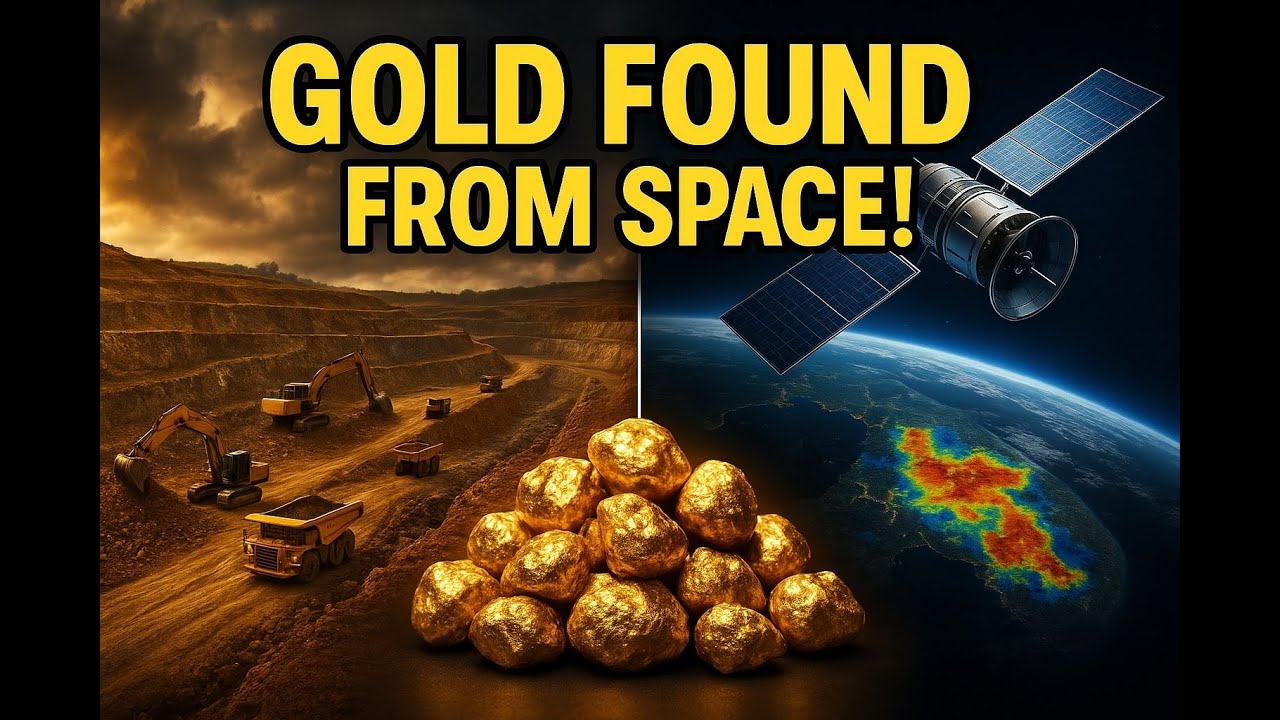
- ✔ Vein-Targeted Sampling: Prioritize “quartz veins” and fracture networks during early exploration. Use satellite based mineral detection for rapid surface screening and prospect delineation.
- ✔ Environmental Baseline Studies: Many gold-bearing rocks also host “sulfides”. On weathering, these can produce acid mine drainage. Always assess AMD risk ahead of mining or infrastructure projects.
- ✔ Ecosystem Rehabilitation: If land disturbance occurs (trenching, sampling), plan for “reactive mineral” stabilization and water control — protect downstream agriculture, forestry, and rural communities.
- ✔ Infrastructure Planning: Map out all mineral rights zones and gold-bearing corridors before road, pipeline, or building siting—minimize future land use conflicts.
- ✔ Remote Field Mapping: Use Farmonaut’s tools to pre-screen targets—protect habitats, avoid sensitive riparian, agricultural, and forested areas in preliminary plans.
Key Insight 📝
Many environmental and land-use impacts can be avoided or minimized by early, remote gold detection and mapping. Farmonaut’s satellite-based mineral detection platform provides geologists, land managers, and forestry planners with non-invasive, actionable mineral intelligence—long before major expenses or environmental risks occur.
Satellite, AI, & Remote Sensing: Farmonaut’s Technology-Driven Approach
In the past, finding what does gold look like in rocks depended on slow, manual field surveys, trenching, and costly drill programs. Today, advanced remote sensing and AI-driven analytics—as deployed by Farmonaut—have radically improved discovery, efficiency, and sustainability.
- ✔ Multispectral & Hyperspectral Imaging: Each mineral and alteration zone has a unique spectral “signature.” Farmonaut’s algorithms pinpoint mineralized targets and hydrothermal halos in large, remote areas—often in days, not months.
- ✔ Structural & Vein Mapping: Farmonaut technology detects subsurface veins, fracture zones, and fault patterns associated with gold mineralization; these maps directly aid field planning, access, and high-value sampling.
- ✔ Global Applicability: With experience mapping >13 minerals types in 18+ countries—including gold in Kenya, Tanzania, Ghana, Zimbabwe, Mauritania, South Africa, Peru, and the DRC—Farmonaut adapts to all major geological terrains and climates.
- ✔ Environmental Stewardship: No ground disturbance in exploration, zero emissions during initial prospecting, and complete adherence to modern ESG norms—ideal for professionals aligning with responsible mining and land-use mandates.
- ✔ Accelerated Returns: Fast-track target generation, 80–85% reduction in early exploration costs, and higher ROI on land-asset investment—all before boots hit the ground.
Pro Tip 👨💻
Leverage Farmonaut’s satellite-based mineral detection and 3D mineral prospectivity mapping to gain first-mover advantage—screen target areas and optimize exploration planning before committing to drilling or fieldwork.
- 🛰️ Satellite-Driven — Rapid assessment with no field disturbance
- 📈 AI-Validated — Advanced machine learning pinpoints “gold zones” and reduces subjective error
- 💡 Cost Effective — Up to 85% lower exploratory outlay compared to traditional methods
- 🌱 Environment First — No land clearing, trenching, or sample waste in the early phases
- 📌 Scalable — Evaluate lands from hectares to regions—ideal for both small and large exploration teams
For those considering advanced exploration in Africa, South America, North America, Asia, and Australia—or future-facing minerals such as lithium, cobalt, or REEs—Farmonaut provides an end-to-end remote assessment (Satellite-based Mineral Detection).
Get Started Instantly:
- 💼 For Quotes or Project Queries: Get Quote
- 📨 Professional Enquiries & Support: Contact Us
Modern Gold Identification Workflow
- 🔎 Remote Sensing → Satellite screening & spectral analysis
- 💻 AI Analysis → Automated pattern recognition
- 📍 Target Generation → Maps of highest “gold prospectivity”
- 🧑🔬 Focused Field Sampling → Validation of gold in priority rocks
- 🧰 Laboratory Validation → Assay and cross-confirmation
FAQ: What Does Gold Look Like in Rocks?
What does real gold look like in rocks?
Real gold in rocks is distinctly metallic yellow, often with a slightly reddish hue, and appears as tiny grains, sheets, or wires, usually within milky quartz veins or along fracture planes. Its bright, untarnished luster and extreme density set it apart from lookalike minerals.
What is the best way to confirm gold in the field?
Use a combination of techniques: color and luster observation, streak test (leaves a yellow mark), hardness check (scratches with a knife but isn’t crumbly), and density “feel” (very heavy for size). Acid tests can rule out sulfides—gold doesn’t react or tarnish.
How can technology assist gold exploration?
Satellite platforms like Farmonaut use multispectral and hyperspectral analysis combined with AI to rapidly detect mineralized “gold zones,” structural features, and alteration halos. This means cost-effective, large-scale area screening before manual fieldwork begins.
Why is gold most often found in quartz veins?
Gold is commonly deposited from hydrothermal fluids that move through fractures in rocks. Quartz forms simultaneously, making these veins prime sites for native gold grains, sheets, and inclusions—especially in structurally complex terrains.
Is finding visible gold in rocks rare?
Extremely. As highlighted above, only 0.005 parts per million of the earth’s crust is gold. Most gold is microscopic—visible gold flecks or sheets signal “bonanza” grades and deserve special attention in exploration and planning.
Field Mistakes to Avoid (🛑 List)
- ⚠ Confusing Pyrite for Gold: Pyrite is duller, harder, and lighter.
- ⚠ Mica Flake Errors: Mica’s “glitter” breaks apart in your fingers, gold does not.
- ⚠ Chasing All Quartz Veins: Only a fraction contain gold; use geological structure and chemical indicators to prioritize sampling.
- ⚠ Skipping Density Checks: Weight “feel” is the fastest field differentiator—gold is much heavier than any “fool’s gold.”
- ⚠ Ignoring Weathering Patterns: Gold resists corrosion; common sulfides and copper tarnish or oxidize quickly.
Conclusion: Responsibility Meets Opportunity
Understanding what does gold look like in rocks is more than a technical skill—it’s fundamental to responsible mineral exploration, sustainable land management, forestry, and infrastructure development. Being able to conclusively identify “real gold,” its forms, and its geological settings helps avoid costly errors, supports sustainable decision-making, and fosters a more efficient exploration sector.
At Farmonaut, we believe that technology, remote intelligence, and rigorous field methodology can bridge the gap between ambition and stewardship in modern mining. Our satellite-based platform enables professionals—geoscientists, land managers, agronomists, and planners—to assess vast, inaccessible, or environmentally sensitive landscapes with clarity and confidence, long before physical intervention.
Ready to revolutionize your mineral targeting?
- 🌍 Map Your Mining Site Here
- Get technical quotes: Get Quote
- Professional query or support: Contact Us
See the future of gold discovery—combine science, geospatial intelligence, and sustainable practice to realize every opportunity responsibly.
Investor Note 📊
Professional gold discovery in rocks is as much about technological innovation as it is about geoscience. Farmonaut’s satellite-based mineral detection and 3D prospectivity mapping can lower risk, accelerate discovery, and maximize land and investment value before breaking ground.
Let’s reimagine mineral exploration intelligently—for every land use, everywhere the opportunity exists.

 Almosi SARL
 SRK Consulting
 Berks Gold Limited
 Mwerezi Minerals Company Limited
 Mining SARL
 SenGold Invest SAS
 Sean Mining Limited
 NTS Group (Pty) Ltd
 Mine4Africa
 Lithspo Minerals Limited
 Tintina Mining Group
 Dalgety Minerals Pty Ltd
 Vortex Minerals Pty Ltd
 Faith At Work (Pty) Ltd
 Geotech Mining Solutions plc
