

Mining · Geochemistry
Copper-65 Isotope: Mass, Abundance and Mining Uses
Reference data for copper’s heavier stable isotope, what δ65Cu means, and how published porphyry copper studies use it to trace leached and enriched ore.
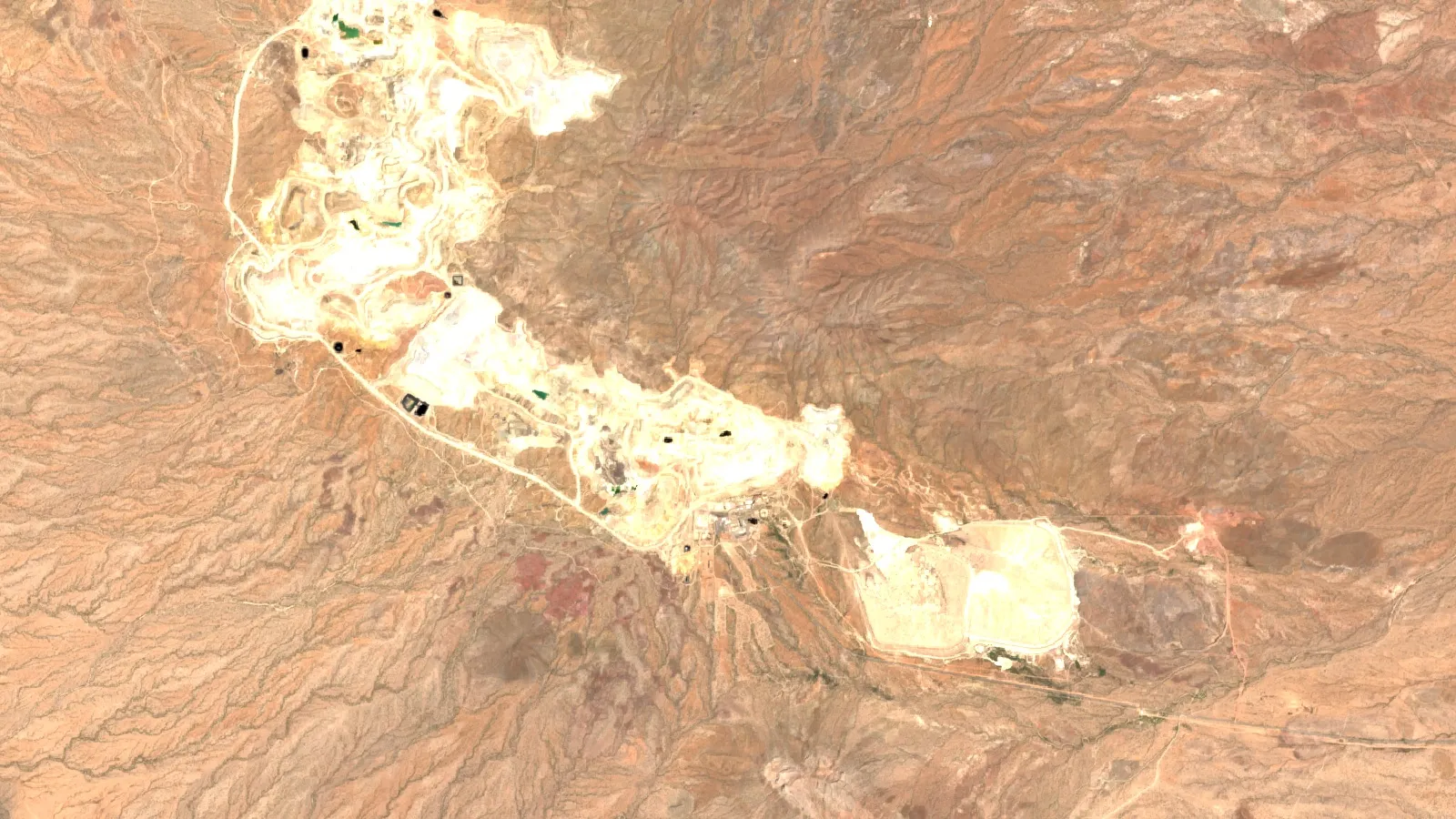
Key takeaways
- Copper-65 makes up 30.85% of natural copper and has an atomic mass of 64.927 790 Da (IUPAC CIAAW).
- It is stable: the radioactive copper isotopes used in medicine are copper-64 (12.70 h) and copper-67 (61.83 h).
- In nine porphyry deposits, primary chalcopyrite sat between −1‰ and +1‰ δ65Cu, secondary chalcocite between −0.3‰ and +6.5‰ and leached-cap iron oxides between −9.9‰ and +0.14‰ (Mathur et al., 2009).
- At Silver Bell, Ray and Morenci in Arizona, δ65Cu ran leached cap < hypogene < supergene enrichment and rose with copper grade (Economic Geology, 2010).
In this article
- Copper-65 isotope facts at a glance
- Isotopes of copper: stable and radioactive
- What δ65Cu means and how it is measured
- Copper-65 in porphyry copper exploration
- Copper isotopes in leach testing and processing
- Tracing copper from mine drainage
- Other uses of copper-65
- Where the copper comes from: mine supply context
- Satellite mapping before isotope sampling
- Frequently asked questions
Copper-65 (Cu-65, also written 65Cu) is the heavier of copper’s two stable isotopes: it makes up 30.85% of natural copper and has an atomic mass of 64.927 790 Da, according to the IUPAC Commission on Isotopic Abundances and Atomic Weights (CIAAW). It has 29 protons and 36 neutrons, it is not radioactive and it never decays. Its value to mining comes from something small: the ratio of Cu-65 to Cu-63 shifts by a few parts per thousand when copper is weathered, dissolved and redeposited, and those shifts can show where copper has moved inside an ore deposit.
This page gives the reference data for Cu-65, explains the delta notation geologists use (δ65Cu), and sets out what published studies on porphyry copper deposits in Arizona and Chile found. It also covers acid mine drainage tracing, leach testing, the medical copper isotopes that are often confused with Cu-65, and a calculator that turns a δ65Cu value into an isotope ratio, a Cu-65 share and an atomic weight.
Copper-65 isotope facts at a glance
Natural copper is a mixture of two stable isotopes, copper-63 and copper-65. An isotope is a form of an element with the same number of protons but a different number of neutrons, so the two behave almost the same in chemistry but differ slightly in mass. The reference values below are those published by CIAAW.
Chart
Copper-63 and copper-65 in natural copper
Isotopic abundance, amount fraction in %
| Property | Copper-63 | Copper-65 |
|---|---|---|
| Share of natural copper (amount fraction) | 69.15% | 30.85% |
| Atomic mass | 62.929 597 Da | 64.927 790 Da |
| Protons / neutrons | 29 / 34 | 29 / 36 |
| Stable? | Yes | Yes |
| Nuclear spin | 3/2 | 3/2 |
Copper’s standard atomic weight, 63.546(3), is the abundance-weighted average of the two masses. CIAAW has kept that value since 1969, when it widened the uncertainty to cover natural variations of up to about 0.15% in copper’s isotope abundances. In other words, the Cu-65 share is not fixed at exactly 30.85% everywhere: it moves slightly from sample to sample, and that small movement is what geochemists measure.
Mass of copper-65 and how it compares
The atomic mass of copper-65 is 64.927 790 Da (daltons, also called unified atomic mass units, u), about 1.998 Da heavier than copper-63. The mass number is 65 because the nucleus holds 65 particles in total (29 protons plus 36 neutrons). The atomic mass is a little under 65 because some mass is converted into the energy that binds the nucleus together.
A quick check of the weighted average: 0.6915 × 62.929 597 + 0.3085 × 64.927 790 = 63.546, which matches the standard atomic weight printed on periodic tables.
Isotopes of copper: stable and radioactive
Copper has two stable isotopes and 28 known radioisotopes, from copper-55 to copper-84, according to the isotope data compiled on Wikipedia from nuclear data tables. The longest-lived radioisotope, copper-67, has a half-life of 61.83 hours, followed by copper-64 at 12.70 hours and copper-61 at 3.34 hours. All the rest have half-lives under an hour, most under a minute.
- Copper-63 and copper-65: stable, found in all natural copper, used in isotope geochemistry.
- Copper-64: a positron and beta emitter used in PET imaging research. It can be made in a reactor through the 63Cu(n,γ)64Cu reaction or in a cyclotron from nickel-64, as described in the copper-64 entry.
- Copper-67: a beta emitter studied for targeted radiotherapy.
Copper-65 is often searched alongside these medical isotopes, but it is a different thing: it gives off no radiation, so it cannot be used for imaging or therapy itself. Both stable isotopes have a nuclear spin of 3/2, which lets chemists study copper compounds by nuclear magnetic resonance; copper-63 is the more sensitive nucleus, so it is usually preferred over copper-65 for that work.
What δ65Cu means and how it is measured
Geochemists rarely quote the Cu-65 share directly because the changes are tiny. They report the ratio of copper-65 to copper-63 in a sample compared with a reference copper, NIST SRM 976, in parts per thousand (per mil, ‰). The formula used by Mathur and co-authors (Journal of Geochemical Exploration, 2009) is:
δ65Cu (‰) = ((65Cu/63Cu in sample ÷ 65Cu/63Cu in NIST 976) − 1) × 1,000
A value of +2‰ means the sample has 0.2% more copper-65, relative to copper-63, than the reference. A negative value means it is “lighter”, with relatively less copper-65. The process that separates the two isotopes is called fractionation: when copper dissolves, oxidises or precipitates, one isotope moves slightly faster or binds slightly more strongly than the other.
Measurements are made on a multi-collector inductively coupled plasma mass spectrometer (MC-ICP-MS) after the copper is chemically separated from the rest of the sample. In the 2009 study, the error on each analysis was ±0.14‰, and instrument drift was corrected by measuring standards before and after each sample (standard-sample-standard bracketing). So a difference of 0.1‰ between two samples tells you little, while differences of 1‰ to 10‰, which are common in weathered ore, are easy to resolve.
How far natural copper-65 values range
CIAAW’s compilation reports a lowest natural δ65Cu of −7.65‰ in atacamite (a copper chloride mineral) from Chile, which corresponds to a copper-65 share of 30.66%, and a highest of +9‰ in aurichalcite (a copper-zinc carbonate) from Arizona, a share of 31.02%. Studies of ore deposits since then have measured wider spreads in single mineral groups, as the next section shows. Primary copper sulfides formed at high temperature sit near zero: between −1‰ and +1‰, as summarised by Kimball and co-authors in a USGS-indexed study (Geochimica et Cosmochimica Acta, 2009).
Calculator
What does a δ65Cu value mean in isotope terms?
Enter a δ65Cu value from a lab report to see the isotope ratio, copper-65 share and atomic weight it implies.
- Sample 65Cu/63Cu ratio (x 10,000): 4,465.2
- Implied atomic weight of the copper: 63.5
- Extra copper-65 vs reference (%): 0.20
- δ65Cu as multiples of the analytical error: 14.3
Example values only: the defaults show a sample at +2‰. Atomic masses from IUPAC CIAAW. The default reference ratio, 0.44563 (65Cu/63Cu of NIST SRM 976), reproduces the CIAAW figures: −7.65‰ gives a 30.66% copper-65 share and +9‰ gives 31.02%. Change it if your laboratory reports against another reference. The default analytical error, ±0.14‰, is the figure reported by Mathur et al. (2009); values within about two errors of zero are hard to tell apart from the reference.
Copper-65 in porphyry copper exploration
Porphyry copper deposits are the largest source of mined copper today: large, low-grade bodies of copper sulfide spread through altered igneous rock (see porphyry copper deposit). Where these deposits reach the surface in dry climates, rain and oxygen break down the primary sulfides (hypogene ore, formed from hot fluids at depth). Copper dissolves near the surface and is carried down to the water table, where it reprecipitates as chalcocite and other secondary minerals. That leaves three zones:
Chart
δ65Cu ranges in three Arizona porphyry mines
Lowest and highest δ65Cu (‰) by zone, Silver Bell, Ray and Morenci
- Leached cap: the rusty upper zone of iron oxides (hematite, goethite, jarosite) from which most copper has been removed.
- Supergene enrichment blanket: a layer near the old water table where the dissolved copper was trapped, often at a higher grade than the primary ore (grade is the percentage of copper in the rock).
- Hypogene zone: the unweathered primary ore below, mostly chalcopyrite.
Copper-65 matters because weathering sorts the isotopes. When copper sulfide oxidises, the dissolved copper tends to carry more copper-65, leaving the iron oxides behind relatively light. When that copper is trapped lower down, the enrichment minerals inherit the heavy signature.
What the Arizona and Chile studies found
Mathur and co-authors measured 50 minerals from nine porphyry copper deposits (2009). Primary chalcopyrite clustered between −1‰ and +1‰. Secondary chalcocite ranged from −0.3‰ to +6.5‰. Leached-cap iron oxides were light, from −9.9‰ to +0.14‰. Across all secondary minerals the spread ran from −16.96‰ to +9.98‰.
A follow-up study of 87 vein minerals from the Silver Bell, Ray and Morenci mines in Arizona (Economic Geology, 2010) found the same order in all three deposits: leached cap lighter than hypogene, hypogene lighter than supergene enrichment. Values ran from −13.5‰ to +8.3‰ and showed a positive relationship with copper grade. Silver Bell had the lightest cap minerals and the heaviest enrichment minerals of the three, which the authors explain by more intense leaching there. They also found that a Rayleigh distillation model (a model of how an isotope ratio changes as a reservoir is progressively drained) reproduces the leached-cap pattern and can estimate how much copper was leached.
The 2009 Geological Society of America abstract on the same three mines gives the reservoir ranges plotted above.
How to use copper-65 data on a prospect
The practical idea from these studies is a vector: a direction in which to drill. For a mining consultant reviewing a weathered copper prospect, the published work suggests these checks:
- Sample the leached cap first. Collect iron oxides from outcrop or shallow holes and measure δ65Cu. Strongly negative values mean copper was leached from that ground and may have been trapped below.
- Compare with primary ore. A chalcopyrite value near zero confirms the hypogene baseline for the system.
- Look for heavy secondary copper. Chalcocite or copper oxides with high positive δ65Cu point to an enrichment zone that captured leached copper.
- Map the pattern. Plot values on a plan and section. The authors report spatial patterns within each deposit, so a grid of samples tells you more than a few points.
- Combine with other data. Isotopes refine targets defined by geology, alteration mapping, geochemistry and geophysics; they do not replace drilling.
Limits matter. The studies are small (50 and 87 minerals), the ranges overlap between zones, and results depend on climate, water table history and how much copper later moved sideways. Analysis needs a specialist laboratory with MC-ICP-MS, so it is a follow-up tool on a defined target rather than a first-pass screen. For the wider picture of where porphyry and other copper deposits form, see our guide to where copper is found on Earth and the overview of types of ore deposits.
Copper isotopes in leach testing and processing
The same fractionation shows up in metallurgy. In a 2012 Mining Engineering paper, Mathur, Titley, Schlitt and Wilson measured copper isotopes in leach fluids, feed and residues from a quick leach test on ores from the Cañariaco project in Peru. Because each copper mineral carries its own signature, the isotope ratio of the leach solution showed which minerals were giving up their copper. The results pointed to covellite as the main source of leached copper.
For a heap-leach or dump-leach operation, that kind of test can help explain why recovery is lower than expected, for example when copper is locked in chalcopyrite that leaches slowly. It is a research tool rather than a routine plant control, but it uses the same Cu-65 to Cu-63 ratio measured in exploration.
Tracing copper from mine drainage
Copper isotopes also help track pollution. In a mineralised watershed in Colorado, the Kimball study found primary enargite at −0.01‰ and chalcopyrite at +0.16‰, while stream water affected by acid mine drainage measured +1.38‰ to +1.69‰. The water was about 1.4‰ to 1.6‰ heavier than the minerals that supplied its copper, a shift the authors linked to oxidation, partly abiotic and partly driven by microbes.
Because an isotope ratio does not change when water is diluted, it can separate copper from different sources, such as mine waste, natural weathering of mineralised rock, or industrial inputs. For mine operators and consultants this can support closure studies and disputes over the source of copper in a river, alongside conventional concentration monitoring.
▶ The seven environmental impacts of mining, explained in claymation with satellite maps. · 2:31
Other uses of copper-65
Beyond geology, copper-65 turns up in several technical fields:
- Neutron activation analysis: a method that exposes a sample to neutrons and measures the gamma rays from the radioactive isotopes formed. When copper-65 captures a neutron it becomes short-lived copper-66, and copper-63 becomes copper-64, so both isotopes take part when copper is measured this way. The technique analyses solids, liquids and slurries with little preparation.
- Isotope reference materials: laboratories use certified copper with a known 65Cu/63Cu ratio, such as NIST SRM 976, to calibrate instruments.
- Atomic weight work: the small natural range in Cu-65 abundance is why CIAAW marks copper’s atomic weight as limited by natural variation.
- Electronics and materials: copper metal in wiring, chips and batteries contains both isotopes in their natural ratio. No commercial product depends on enriching copper-65; for the metals that do drive electronics demand, see our list of rare minerals used in electronics.
Where the copper comes from: mine supply context
Every tonne of mined copper carries the same two isotopes, so the isotope story sits inside a large industry. World copper mine production was about 23 million tonnes in 2025 (estimate), according to the USGS Mineral Commodity Summaries 2026. Chile led with about 5.3 million tonnes, followed by the Democratic Republic of the Congo at 3.2 million tonnes and Peru at 2.7 million tonnes. US recoverable mine output was about 1.0 million tonnes, roughly 70% of it from Arizona, home to the Silver Bell, Ray and Morenci deposits used in the isotope studies.
Chart
Largest copper mine producers, 2025 estimate
Mine production, thousand tonnes of copper
USGS puts world copper reserves at about 980 million tonnes. Much of that sits in porphyry systems, which is why exploration teams care about any tool that helps find the higher-grade parts of them. The companies that run the largest of these mines are profiled in our list of largest copper producers.
Satellite mapping before isotope sampling
Isotope work is expensive per sample, so it pays to know where to sample. Leached caps show at the surface as iron-oxide staining, and the alteration around porphyry systems shows clay and sericite minerals that multispectral satellites can map. Farmonaut’s satellite-based mineral detection maps such surface signals inside a licence boundary, which a consultant can use to choose where field samples, including isotope samples, will be most useful. Project questions can go through our mining query form or the contact page.
▶ Remote sensing for mining explained in three minutes. · 2:01
Frequently asked questions
What is copper-65?
Copper-65 is a stable isotope of copper with 29 protons and 36 neutrons. It makes up 30.85% of natural copper, with copper-63 making up the remaining 69.15% (CIAAW).
Is copper-65 radioactive?
No. Copper-65 is stable and does not decay. The radioactive copper isotopes used in medicine are copper-64 and copper-67.
What is the atomic mass of copper-65?
The atomic mass of copper-65 is 64.927 790 Da (u), according to CIAAW. Its mass number is 65.
How many neutrons does copper-65 have?
It has 36 neutrons. Copper always has 29 protons, so 65 − 29 = 36.
Which is more common, copper-63 or copper-65?
Copper-63 is more common, at about 69% of natural copper. Copper-65 accounts for about 31%.
What are the stable isotopes of copper?
Only two: copper-63 and copper-65. All other copper isotopes are radioactive, and the longest-lived of them, copper-67, has a half-life of about 62 hours.
Why is copper’s atomic weight 63.546?
Because it is the weighted average of copper-63 and copper-65 masses at their natural abundances: 0.6915 × 62.9296 + 0.3085 × 64.9278 = 63.546.
What is δ65Cu?
It is the difference, in parts per thousand, between the 65Cu/63Cu ratio of a sample and that of the NIST SRM 976 reference copper. Positive values mean relatively more copper-65.
How are copper isotopes used in mining?
Mainly to show where copper moved during weathering of porphyry deposits: leached caps tend to be light, enrichment blankets heavy. Studies at Silver Bell, Ray and Morenci found values that also rose with copper grade.
How precise are copper isotope measurements?
In the 2009 porphyry study, each analysis had an error of ±0.14‰, measured by MC-ICP-MS. Natural differences in weathered ore are often several per mil, so they are well above that error.
More from Farmonaut: copper 65 powerful isotope applications for mining 2026.
This page is for information only and is not investment or technical advice. Isotope results should be interpreted by a qualified geochemist alongside geology and drilling data.
Farmonaut mining
Map your mining site from space
Farmonaut maps iron-oxide and alteration signals inside a licence boundary from satellite imagery, so consultants can choose where field and isotope samples will count before a site visit.

Mining Pro sample view, synthetic data
Keep reading
Sources
- IUPAC CIAAW, Atomic weight of copper: ciaaw.org
- Wikipedia, Isotopes of copper: en.wikipedia.org
- Wikipedia, Copper-64: en.wikipedia.org
- Mathur et al., Exploration potential of Cu isotope fractionation in porphyry copper deposits, Journal of Geochemical Exploration (2009): pure.psu.edu
- Mathur et al., Patterns in the copper isotope composition of minerals in porphyry copper deposits in Southwestern United States, Economic Geology (2010): pure.psu.edu
- Mathur et al., GSA Annual Meeting abstract, Portland (2009): gsa.confex.com
- Mathur, Titley, Schlitt and Wilson, Cu isotope fractionation in exploration geology and hydrometallurgy, Mining Engineering (2012): pure.psu.edu
- Kimball et al., Copper isotope fractionation in acid mine drainage, Geochimica et Cosmochimica Acta (2009), USGS record: pubs.usgs.gov
- USGS, Mineral Commodity Summaries 2026: Copper: pubs.usgs.gov
- Wikipedia, Porphyry copper deposit: en.wikipedia.org
- Wikipedia, Neutron activation analysis: en.wikipedia.org
- Wikipedia, Supergene (geology): en.wikipedia.org
Discussion
Questions, corrections or field experience? Share them below. First-time comments are reviewed before they appear, and your email is never published.
No comments yet. Be the first to add a question or your experience.

 Double A Trading
 GemSprout Metals Limited
 Qader Group
 Ileys General Trading
 SG Gold Mining LLC
 VRV Global Pte Ltd
 Omsri International FZE
 G.I.T.T.
 Jaunita Erss Ltd
 Almosi SARL
 SRK Consulting
 Berks Gold Limited
 Mwerezi Minerals Company Limited
 Mining SARL
 SenGold Invest SAS
 Sean Mining Limited
 NTS Group (Pty) Ltd
 Mine4Africa

 Client · Oregon, USA · Gold










