

Copper minerals · Formula and ore guide
Cuprite Formula Cu2O: Copper Content, Ore and Uses
The cuprite formula is Cu2O, copper(I) oxide: 88.82% copper and 11.18% oxygen by mass (Webmineral). It forms in the weathered oxide zones of copper deposits and is mined as copper ore.
Key takeaways
- Cuprite is Cu2O, with copper in the +1 (cuprous) state; molar mass 143.09 g/mol (Webmineral).
- At 88.8% copper it is richer than tenorite and chalcocite (79.9%) and chalcopyrite (34.6%), but deposit grades are usually 0.3% to 1% copper (USGS porphyry model, 2010).
- Identify it by its shining brownish-red streak, density near 6.1 g/cm3 and green malachite nearby (Handbook of Mineralogy).
- Oxide ores with cuprite are mostly heap leached and electrowon; the US had 14 electrowon refineries in 2025 (USGS, 2026).
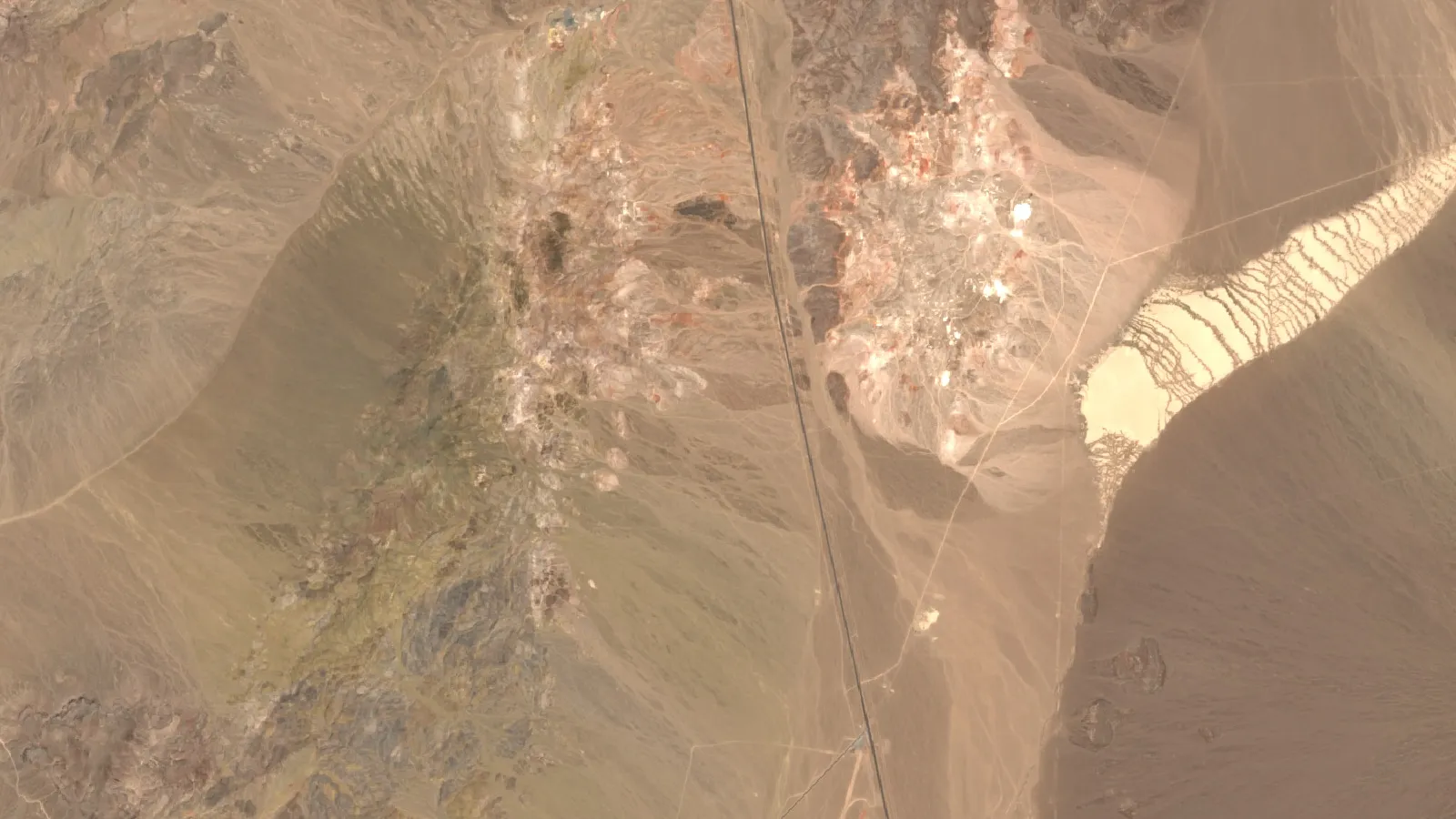
- Cuprite, Nevada is a standard test site for satellite and airborne mapping of altered rock (NASA, 1994; USGS).
In this article
- Cuprite formula: what Cu2O means
- How much copper is in cuprite compared with other ore minerals
- Cuprite properties at a glance
- How to identify cuprite in the field
- Where cuprite forms in a copper deposit
- Is cuprite an ore of copper?
- How cuprite ore is processed
- Where cuprite is found
- What is cuprite used for
- Cuprite as a gemstone and collector mineral
- Cuprite, Nevada: a mining district that trained satellite mineral mapping
- What to check before valuing a cuprite-bearing prospect
- Frequently asked questions
The cuprite formula is Cu2O: two copper atoms bonded to one oxygen atom, with copper in the +1 (cuprous) state. By mass, that makes cuprite 88.82% copper and 11.18% oxygen, according to Webmineral’s cuprite data sheet, which is more copper per kilogram than any other common copper ore mineral except native copper. This guide explains what the formula means, how cuprite is identified, where it forms, how it is mined and processed, and what it is used for, with a calculator for the copper locked in cuprite-bearing rock.
The page is written for consultants, geologists and licence holders who meet red copper oxide in outcrop, drill core or a vendor’s report and need to judge what it means for a project.
Cuprite formula: what Cu2O means
Cuprite is the natural mineral form of copper(I) oxide, a compound also sold as “cuprous oxide” or “copper oxide red”. The Handbook of Mineralogy writes the formula as Cu1+2O to stress the oxidation state. Each oxygen atom sits between copper atoms in a simple cubic crystal structure (space group Pn3m, cell edge about 4.27 angstroms).
The +1 charge is the key point. It separates cuprite from tenorite, whose formula is CuO and whose copper is in the +2 (cupric) state. A US Department of Agriculture technical review of copper products notes that cuprous oxide is the only compound in its set with a Cu+ ion, and that natural cuprous oxide occurs as the mineral cuprite (USDA AMS, 2022). For a fuller comparison of the two oxides and their industrial forms, see our guide to copper oxide, copper(II) oxide and their uses.
Molar mass and composition
- Formula: Cu2O (empirical and structural formula are the same).
- Molar mass: 143.09 g/mol (2 x 63.546 for copper plus 15.999 for oxygen).
- Copper: 88.82% by mass; oxygen: 11.18% (Webmineral).
- Name: from the Latin cuprum, copper. A hair-like, fibrous variety is called chalcotrichite.
How much copper is in cuprite compared with other ore minerals
Because the formula contains so little non-copper mass, cuprite carries the highest copper content of the common copper ore minerals. The figures below are theoretical (pure mineral) values from each mineral’s formula. Real ore is mostly worthless rock, or gangue, so the grade of a deposit (the share of copper in the whole rock, usually 0.3% to 1% for large open pits) is far lower than the mineral’s own copper content.
Chart
Copper content of common copper ore minerals
Percent copper by mass in the pure mineral
| Mineral | Formula | Type | Copper by mass |
|---|---|---|---|
| Cuprite | Cu2O | Oxide | 88.8% |
| Tenorite | CuO | Oxide | 79.9% |
| Chalcocite | Cu2S | Sulfide (often supergene) | 79.9% |
| Bornite | Cu5FeS4 | Sulfide | 63.3% |
| Malachite | Cu2(CO3)(OH)2 | Carbonate | 57.5% |
| Azurite | Cu3(CO3)2(OH)2 | Carbonate | 55.3% |
| Chalcopyrite | CuFeS2 | Sulfide | 34.6% |
Chalcopyrite holds only about a third of cuprite’s copper per kilogram, yet it supplies most of the world’s mined copper because it occurs in vast primary (hypogene) ore bodies. Cuprite is richer but forms in thinner, weathered zones above them.
Cuprite properties at a glance
| Property | Value |
|---|---|
| Crystal system | Cubic (isometric); octahedra, cubes, dodecahedra, hair-like fibres, massive or earthy |
| Colour | Cochineal-red, ruby-red, purplish red to nearly black |
| Streak | Brownish red, shining |
| Luster | Adamantine to submetallic; earthy in masses |
| Hardness (Mohs) | 3.5 to 4 |
| Density | 6.14 g/cm3 measured, 6.15 calculated |
| Refractive index | 2.849 (higher than diamond) |
| Fracture | Conchoidal to uneven; brittle |
All values are from the Handbook of Mineralogy (Mineral Data Publishing), which lists cuprite crystals up to 14 cm.
How to identify cuprite in the field
Three quick checks separate cuprite from look-alikes such as hematite, cinnabar and red-stained iron oxide:
- Streak. Rub the sample on unglazed porcelain. Cuprite gives a shining brownish-red streak. Hematite gives a duller red-brown, and cinnabar a scarlet streak.
- Weight. At about 6.1 g/cm3, cuprite feels heavy for its size, more than twice the density of quartz.
- Company. Cuprite almost always sits with green malachite, blue azurite, black tenorite, native copper or chrysocolla. Green or blue copper stains next to a red, glassy mineral are a strong hint.
A hand lens helps too: crystal faces have a near-diamond shine, and in reflected light the mineral can look grey-blue with red internal flashes. Hardness of 3.5 to 4 means a steel knife scratches it, while it scratches a copper coin only with difficulty. Confirm by laboratory XRD or a chemical assay before any claim reaches a report.
Where cuprite forms in a copper deposit
Cuprite is a secondary, or supergene, mineral. It forms when rain and air reach copper sulfides near the surface. Acidic groundwater dissolves copper from the primary sulfides and redeposits it as minerals stable in cool, oxygen-rich conditions. The USGS porphyry copper deposit model (2010) describes a typical vertical profile:
- Leached capping: porous, iron-stained rock at the top from which copper has been removed; it ranges from zero to several hundred metres thick.
- Oxide zone: malachite, azurite, cuprite, tenorite, chrysocolla, native copper, copper wad and atacamite fill fractures and voids. The USGS gives supergene oxide zones as tens to several hundred metres thick, holding tens to hundreds of megatons at 0.3% to more than 1% copper.
- Enriched sulfide blanket: mostly chalcocite, at 0.4% to 1.7% copper, always richer than the primary ore below.
- Hypogene (primary) ore: chalcopyrite and bornite in the unweathered rock.
Cuprite is often found with native copper, and it also turns into malachite over time; pseudomorphs (cuprite crystal shapes now made of malachite) from Chessy-les-Mines in France are a classic example. To see how these zones fit into the wider family of deposits, read our overview of porphyry copper deposits and our guide to types of ore deposits.
Is cuprite an ore of copper?
Yes. Cuprite is an ore of copper wherever it is concentrated enough to mine at a profit, and it is one of the oxide minerals the USGS lists as common in copper oxide ores. It is rarely the only copper mineral in a pit. Instead it is part of a mixed oxide ore with malachite, azurite, chrysocolla and tenorite, mined together and treated as one ore type.
What makes cuprite-bearing ore attractive is not its high copper content alone but how it can be processed. The USGS notes that the relatively low cost of recovering copper from oxide minerals by acid dissolution has made low-grade oxide deposits worth mining. In other words, an oxide zone at 0.4% copper can pay where a sulfide zone at the same grade might not, because it skips the concentrator and smelter.
Cuprite ore versus sulfide ore
| Point | Oxide ore (cuprite, malachite, azurite) | Sulfide ore (chalcopyrite, bornite) |
|---|---|---|
| Position | Near surface, above the water table | Deeper, unweathered rock |
| Main process | Acid heap or dump leaching, then SX-EW | Crushing, flotation, smelting, refining |
| Product at mine | Copper cathode | Copper concentrate |
| Main limit | Zone thickness and acid consumption by carbonate rock | Grade, energy and smelter capacity |
Calculator
How much copper is locked in your cuprite-bearing rock?
Enter your tonnage, estimated cuprite content, recovery and price.
- Equivalent copper grade, % Cu: 0.44
- Recoverable copper, tonnes: 311
- Gross value of recoverable copper, US$: $3,015,541
Example values only, not a benchmark. Uses cuprite’s theoretical 88.82% copper content (Webmineral) and 2,204.62 lb per tonne. Counts copper in cuprite only; add other copper minerals from assays. Price is an input: example, use today’s price.
How cuprite ore is processed
Most oxide copper ore, including ore that carries cuprite, is treated by hydrometallurgy rather than smelting:
Infographic
Oxide copper ore to cathode in 4 steps
- 1Mine and crushOre is blasted and crushed or stacked run-of-mine.
- 2Heap leachDilute sulfuric acid dissolves the copper.
- 3Solvent extractionAn organic reagent moves copper into a clean electrolyte.
- 4ElectrowinningCurrent plates pure copper cathode.
- Mine and crush: ore is blasted, then crushed or placed run-of-mine.
- Heap leach: crushed ore is stacked on lined pads and irrigated with dilute sulfuric acid, which dissolves the copper.
- Solvent extraction (SX): an organic reagent pulls copper out of the weak leach solution and hands it to a strong, clean electrolyte.
- Electrowinning (EW): electric current plates pure copper onto cathodes ready for sale.
The US alone had 14 electrowon refineries in 2025, alongside 2 primary electrolytic refineries for sulfide copper (USGS Mineral Commodity Summaries, 2026). Carbonate-rich host rock is a common problem, because it consumes acid, and each oxide mineral dissolves at its own rate. Both are reasons to run column leach tests on each ore type before a flowsheet is fixed.
▶ The environmental impacts of mining, explained with satellite maps · 2:31
Where cuprite is found
Cuprite occurs in the oxidised parts of copper deposits worldwide. The Handbook of Mineralogy names these localities for fine specimens, among others:
Chart
Largest copper mining countries
Mine production, thousand tonnes of copper, 2025 estimate
- United States: Bisbee (Cochise County), Ray (Pinal County) and Globe (Gila County), Arizona; Santa Rita, New Mexico.
- Namibia: Onganja mine, about 60 km north-east of Windhoek, famous for large crystals, and Tsumeb.
- Democratic Republic of the Congo: Likasi, Ruwe and the Mashamba West mine near Kolwezi.
- Chile: Chuquicamata.
- Australia: Broken Hill and Cobar (New South Wales), Burra and Moonta (South Australia), Red Dome mine (Queensland).
- Europe and Central Asia: Cornwall in England, Rheinbreitbach in Germany, the Ural Mountains of Russia and Dzhezkazgan in Kazakhstan.
- Mexico: Boleo, Baja California.
Many of these districts sit in the countries that mine the most copper today. Chile produced an estimated 5.3 million tonnes of mined copper in 2025, the Democratic Republic of the Congo 3.2 million and Peru 2.7 million, out of a world total near 23 million tonnes (USGS, 2026). For a wider tour of copper sources, see where copper is found on Earth.
What is cuprite used for
The mineral and the manufactured chemical share a formula but have different uses.
Chart
US farm use of copper compounds, 1992 vs 2017
Tonnes of product, high estimate
Uses of cuprite the mineral
- Copper ore: its main use. Cuprite is mined with other oxide minerals and leached to copper cathode, which goes into wire, plumbing, motors and alloys.
- Exploration indicator: red copper oxide in outcrop or trench tells a geologist the area has been weathered and that copper sulfides may lie below.
- Collector and museum specimens: sharp red octahedra and fibrous chalcotrichite are sought after.
- Rare gemstone: see the next section.
Uses of manufactured cuprous oxide (Cu2O)
- Antifouling marine paints: to stop barnacles and algae growing on hulls.
- Crop fungicide: cuprous oxide is one of the copper compounds allowed for plant-disease control under Codex organic guidelines and EU organic rules (USDA AMS, 2022).
- Red pigments for glass, glazes and ceramics.
- Semiconductor research: Cu2O is a semiconductor researched for low-cost solar cells and catalysts.
In US agriculture, the USDA review cites a high estimate of about 194 tonnes of cuprous oxide used in 2017, up from about 86 tonnes in 1992, while total copper-based product use fell by almost 20% over the same period. That cuprous oxide is made in chemical plants from refined copper, not mined as cuprite.
Cuprite as a gemstone and collector mineral
Faceted cuprite is one of the rarest cut gems. The International Gem Society notes that before the Onganja find in Namibia in 1973 the largest known cut cuprites were under one carat, while Onganja crystals reach 15 cm (about 6 inches) and flawless cut stones up to 300 carats have been made. With a refractive index of 2.849, cut cuprite is very bright, but its low hardness means it scratches easily, and long exposure to light can darken its colour. It is best kept in a collection or set in a protective pendant. Lapidaries should avoid breathing cutting dust, as copper compounds are toxic.
Cuprite, Nevada: a mining district that trained satellite mineral mapping
The name also belongs to a place. The Cuprite mining district in Esmeralda County, south-western Nevada, became a standard test site for airborne and satellite remote sensing because its hydrothermally altered rocks are well exposed, vegetation is sparse and its alteration minerals are spectrally distinct (NASA technical report, 1994). The USGS later used it to calibrate ASTER satellite maps of argillic and sericitic alteration, the clay and mica halos that surround porphyry copper systems (Rowan and others, USGS).
For a project owner, this matters because satellites cannot see a single cuprite crystal, but they can map the iron oxides of a leached cap and the clay alteration around it across a whole licence. That narrows where trenches and drill holes go. Farmonaut offers this kind of satellite-based mineral detection for licence boundaries; its results are exploration targets that come before drilling and a resource estimate.
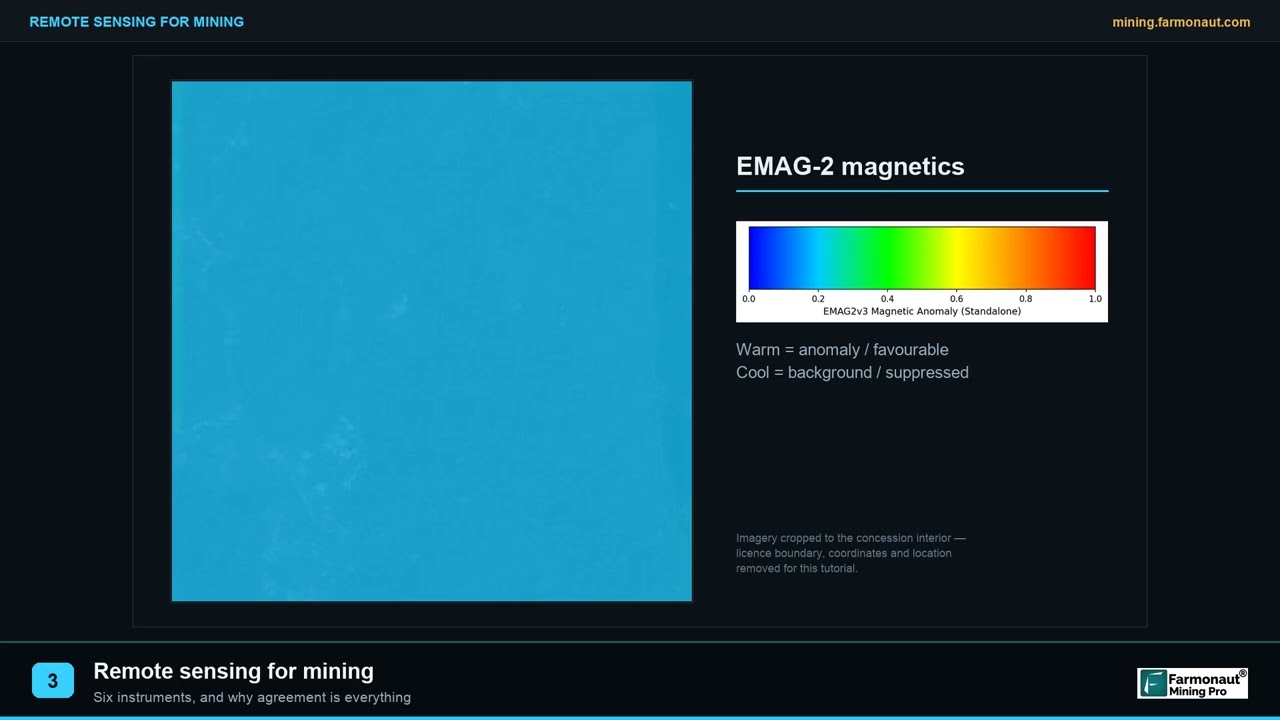
▶ Remote sensing for mining in plain words · 2:01
What to check before valuing a cuprite-bearing prospect
Bright red copper oxide in a sample can make a prospect look richer than it is. Before putting a value on it, check:
Chart
LME copper cash price, annual average
US cents per pound, 2025 estimated
- Whole-rock grade, not mineral content. A specimen may be 80% copper; the ore body may be 0.5%. Ask for assays over measured widths.
- Zone thickness and continuity. Oxide zones can be thin or patchy. Drill or trench across them.
- What lies below. Cuprite may cap an enriched chalcocite blanket or primary sulfides, which changes the whole project.
- Acid consumption. Limestone or dolomite host rock can make leaching costly.
- Leach recovery. Column tests show how much copper actually dissolves from each ore type.
- Copper price basis. The LME grade A cash price averaged 440 US cents per pound in 2025 by the USGS estimate, up from 384.8 cents in 2023. Use today’s price from the exchange, not a figure from an old report.
If you need a second opinion on a site, our team can be reached through the mining query form or the contact page.
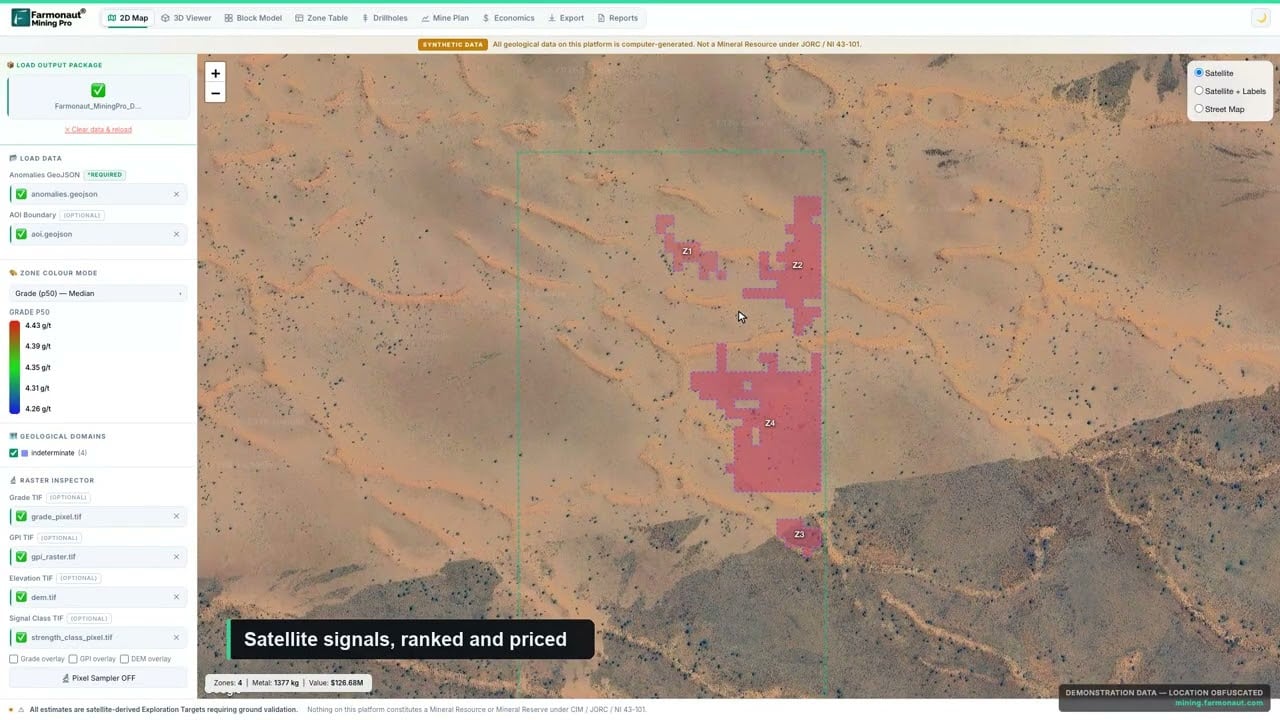
▶ What Farmonaut Mining Pro does with a licence boundary · 4:56
Frequently asked questions
What is the chemical formula of cuprite?
Cu2O. It is copper(I) oxide, with two copper atoms in the +1 state for each oxygen atom.
What is the difference between cuprite and tenorite?
Cuprite is Cu2O with cuprous (+1) copper and is red; tenorite is CuO with cupric (+2) copper and is black. Cuprite holds 88.8% copper, tenorite 79.9%.
Cuprite is an ore of which metal?
Copper. It is mined with other oxide copper minerals and usually processed by acid leaching and electrowinning.
How much copper does cuprite contain?
Pure cuprite is 88.82% copper by mass. Ore containing cuprite is far lower grade because most of the rock is gangue.
What is cuprite used for?
Mainly as copper ore. Collectors value its crystals, and rare clean pieces are cut as gems. Manufactured cuprous oxide with the same formula is used in antifouling paint, fungicides, red pigments and semiconductor research.
What color is cuprite and what is its streak?
Crystals are deep red to nearly black, often with a near-diamond shine. The streak is a shining brownish red.
How hard is cuprite?
3.5 to 4 on the Mohs scale, so a steel knife scratches it.
Is cuprite rare?
As a mineral it is common in the oxidised parts of copper deposits. Large clear crystals fit for cutting are very rare.
Is cuprite toxic?
Handling a specimen is low risk, but dust from cutting or crushing should not be breathed or swallowed. Wash hands after handling.
Is “cuperite” the same mineral?
Yes. “Cuperite” is a common misspelling of cuprite.
Why is a place in Nevada called Cuprite?
The Cuprite mining district in Esmeralda County shares the mineral’s name and is now best known as a remote sensing test site for mapping altered rocks.
This page is for information only. It is not investment advice. Collect samples only with the landowner’s permission and the right licence, and never use mercury.
Farmonaut mining
Map your mining site from space
Consultants use satellite alteration and iron-oxide maps to choose where to trench and sample on a copper licence.
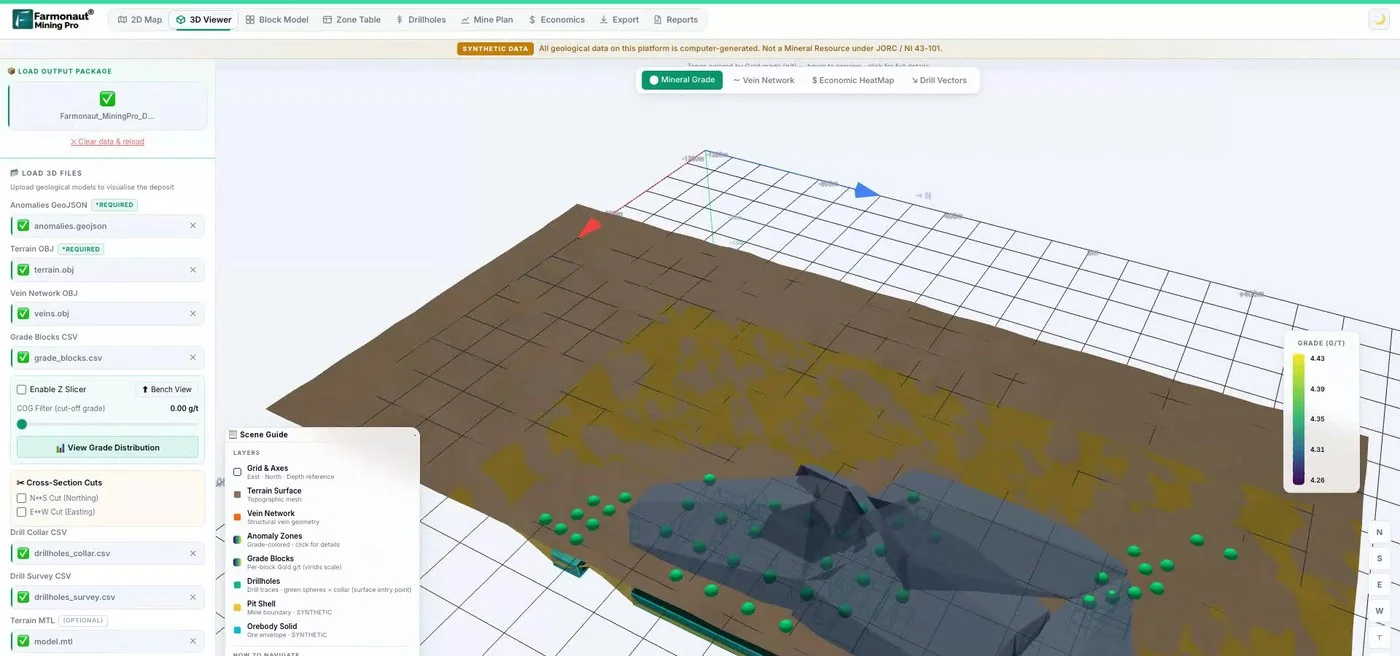
Mining Pro sample view, synthetic data
Keep reading
Sources
- Handbook of Mineralogy, Cuprite (Mineral Data Publishing): handbookofmineralogy.org
- Webmineral, Cuprite mineral data: webmineral.com
- Webmineral, Tenorite mineral data: webmineral.com
- Webmineral, Chalcocite mineral data: webmineral.com
- Webmineral, Bornite mineral data: webmineral.com
- Webmineral, Malachite mineral data: webmineral.com
- Webmineral, Azurite mineral data: webmineral.com
- Webmineral, Chalcopyrite mineral data: webmineral.com
- USGS, Porphyry Copper Deposit Model, SIR 2010-5070-B (2010): pubs.usgs.gov
- USGS Mineral Commodity Summaries 2026, Copper: pubs.usgs.gov
- USDA AMS, Copper Products Technical Report (2022): ams.usda.gov
- International Gem Society, Cuprite value and jewelry information: gemsociety.org
- NASA NTRS, Integrating remote sensing techniques at Cuprite, Nevada (1994): ntrs.nasa.gov
- USGS, Mapping hydrothermally altered rocks at Cuprite, Nevada, using ASTER: pubs.usgs.gov
Discussion
Questions, corrections or field experience? Share them below. First-time comments are reviewed before they appear, and your email is never published.
No comments yet. Be the first to add a question or your experience.

 Imperial Impex FZE
 Congo Mining Solutions
 Mining SARL
 SenGold Invest SAS
 Sania Corporation
 Sean Mining Limited
 NTS Group (Pty) Ltd
 Mine4Africa
 Lithspo Minerals Limited
 Tintina Mining Group
 Dalgety Minerals Pty Ltd
 Vortex Minerals Pty Ltd
 Faith At Work (Pty) Ltd
 Geotech Mining Solutions plc
 Vulcan International Limited
 Kidepo Associates
 GKY Mining
 Alkimy SARL
 Double A Trading
 GemSprout Metals Limited
 Qader Group
 Ileys General Trading
 SG Gold Mining LLC

 Client & affiliate partner · Ghana · Gold










