

Copper sulfate · Roots guide
Copper Sulfate for Roots: Pipe and Soil Doses
For sewer roots, a labelled copper sulfate root killer is flushed in two treatments a year at most. For soil, University of Idaho suggests 3 to 5 lb of copper per acre on deficient land, and Minnesota 6 to 12 lb on peat soils. Iron sulfate is a separate fix for yellow leaves.
Key takeaways
- The EPA-accepted Roebic K-77 label allows no more than two applications a year and 1 lb of metallic copper (4 lb of product) per linear foot per year, as the label words it (EPA, 2020).
- The label says to apply the crystals by flushing them down the toilet, and not through tub or sink drains (EPA, 2020).
- Copper sulfate pentahydrate is about 25% copper, so 5 lb of copper per acre needs 20 lb of product (University of Idaho, 1996).
- University of Minnesota extension (1997) found copper deficiency in small grains on peat soils and did not recommend copper for mineral soils.
- Ferrous sulfate for chlorosis: 2 oz in 3 gallons of water is a 0.5% foliar spray (Utah State, 1996).
In this article
- Copper sulfate for roots: which job do you mean?
- How to use copper sulfate root killer in a sewer line
- Why some places ban copper sulfate root killers
- Copper sulfate for plant roots: soil rates and thresholds
- Iron sulfate for roots: when ferrous sulfate helps
- Iron II sulfate, iron 2 sulfate and "iron copper sulfate": what the names mean
- Do copper sulfate and iron sulfate belong together?
- Where copper sulfate comes from and how mining uses it
- Environmental and safety limits you should know
- Buying checklist: what to confirm before you order
- Frequently asked questions
Copper sulfate does two different jobs at the roots, and the label for each is different. In sewer pipes, a US-registered root killer such as Roebic K-77 uses copper sulfate pentahydrate crystals (25.1% copper) at a labelled dose of about 2 lb of product per treatment, with no more than two treatments a year. In soil, the same salt is a copper fertilizer: extension guides from the University of Idaho suggest 3 to 5 lb of copper per acre on deficient soils, which is 12 to 20 lb of the pentahydrate. Iron sulfate (ferrous sulfate) is a separate product for yellow leaves, and it is not a root killer.
This page sorts out which one you need, shows the numbers printed on labels and extension sheets, and lists the environmental limits. It is written for site managers, consultants and operators who handle septic lines at camps and offices, small farms near a mine, or reagent stores. It is information only. The product label on your container is the legal instruction, and local rules can be stricter.
Copper sulfate for roots: which job do you mean?
Search results mix three different questions under one phrase. The table separates them. Only the first two involve copper sulfate placed near roots on purpose.
| Goal | What is applied | Where the number comes from | Main limit |
|---|---|---|---|
| Kill roots inside a sewer or septic line | Copper sulfate crystals, flushed down a toilet | EPA-accepted Roebic K-77 label (2020) | Two treatments a year; banned in some places |
| Fix copper deficiency in soil | Copper sulfate spread and mixed into soil | University of Idaho (1996); University of Minnesota (1997) | Soil test first; excess copper is hard to remove |
| Fix yellow leaves from low iron | Ferrous sulfate (iron sulfate), sprayed or placed in soil holes | Utah State and University of Arizona extension | High soil pH locks iron up; works only on iron deficiency |
How to use copper sulfate root killer in a sewer line
Root killers of this kind work because the crystals cling to roots inside the pipe and kill them over time, according to the US EPA coppers re-registration decision (2009). They do not repair a cracked pipe. If roots enter at a joint, the roots return, and the label itself says retreatment every 6 to 12 months may be needed for new or heavy intrusion.
The steps below follow the EPA-accepted Roebic K-77 label (registration 7792-1, accepted 14 August 2020). Other brands have their own labels. Read yours first.
- Check that it is legal where you are. The label lists areas where it is not for sale or use, including Connecticut and nine named California counties, with Florida and Massachusetts restrictions for septic systems.
- Confirm the root problem. A camera inspection or a plumber’s report tells you whether roots are the cause of slow drains.
- Apply at night. The label says to use the product at night before retiring.
- Flush it down the toilet, not a sink or tub. The label says to pour about one third of the 2 lb bottle (0.67 lb product, 0.17 lb copper) into the bowl and flush, and to repeat until all of the product has been flushed. It says not to apply through tub or sink drains. For a septic system it also allows adding the contents through the distribution box with 2 to 3 gallons of water.
- Count the dose. At 25.1% copper, one 2 lb bottle carries about 0.5 lb of metallic copper.
- Stay under the annual maximum. No more than two applications per calendar year, and no more than the 2020 label maximum of 1 lb of metallic copper (4 lb of product) per year (the label adds “per linear foot”; ask the maker what length it means).
- Keep people and pets away from the crystals. The label signal word is Danger: it can cause irreversible eye damage and may be fatal if swallowed. Wear safety glasses.
- Dispose of leftovers properly. Never pour unused product down an indoor or outdoor drain; call your local solid waste agency for part-filled containers.
Quick check of the label numbers
| Item | Label value (Roebic K-77, 2020 label) |
|---|---|
| Active ingredient | Copper sulfate pentahydrate, 99%; 25.1% metallic copper |
| Bottle size | 2 lb (908 g) |
| One third of the bottle | 0.67 lb product, 0.17 lb copper |
| Retreatment | Every 6 to 12 months if roots return |
| Applications per calendar year | No more than two |
| Maximum per year | 1 lb metallic copper (4 lb product) per linear foot per year |
Why some places ban copper sulfate root killers
Copper does not break down. The label warns that it accumulates in sediment with repeated use and is toxic to fish and aquatic organisms. Sewage treatment plants remove little of it (the EPA model assumed 1.8% removal). In its 2009 decision the EPA noted that public water districts in California said these products raised copper levels in the water entering their plants, and that some counties in California and New York banned the sale and use of sewer root killers. The EPA also said states and localities may be stricter than the federal label.
The same decision recorded an industry estimate of about 180,000 lb of copper sulfate pentahydrate sold each year for sewer root killer treatment. In its screening model the agency assumed far higher household use, about 2.2 million lb of metallic copper a year. That figure is a model assumption, and the agency also cited a different preliminary industry estimate, so the numbers do not agree and none is a measured release. Ask your sewer authority or health department whether copper root killers are allowed on your connection before you buy one.
On a mine camp with its own septic field, the same logic applies to the receiving water. Copper in a drain field can reach streams that also receive mine drainage, which adds to the copper load a regulator is watching. Talk to the environmental officer who holds your discharge permit before you treat any line.
Copper sulfate for plant roots: soil rates and thresholds
Most soils hold enough copper. The University of Minnesota extension (1997) says copper deficiency in the state appears when small grains grow on organic or peat soils, and that copper is not recommended for mineral soils because no yield response has been measured there. Idaho (1996) found low copper only in some soils with more than 15% organic matter, in the north of the state. The first rule is therefore to test the soil, not to guess.
Copper is not mobile in soil. Minnesota notes it is attracted to organic matter and clay, so a soil dose lasts for years. Idaho says a 5 lb per acre copper dose should last at least 5 years. Minnesota adds that if the soil test is already high, you do not need yearly doses.
| Source | Soil situation | Rate stated |
|---|---|---|
| University of Idaho (1996) | Copper-deficient soils | 3 to 5 lb copper per acre; add 25% if organic matter is over 25%, add 15% for cereals |
| University of Idaho (1996) | Foliar spray | 0.3 to 0.6 lb copper per acre |
| University of Minnesota (1997) | Peat soil, DTPA test 0 to 2.5 ppm | 6 to 12 lb copper per acre broadcast; 0.3 lb foliar |
| University of Minnesota (1997) | Peat soil, test above 5 ppm | None |
| University of Minnesota (1997) | Upper safety limit | Annual copper doses certainly less than 40 lb per acre |
To turn copper into product, divide by the copper share. The Idaho sheet lists copper sulfate pentahydrate at 25% copper and monohydrate at 35%. Five pounds of copper therefore needs 20 lb of pentahydrate or about 14.3 lb of monohydrate per acre. The calculator below does this for your own field size and price.
Enter the copper dose that your soil test and local extension office recommend. The result is product weight, not a recommendation.
Copper can also be too high for roots
A 1982 Florida plant pathology circular warns that copper and other micronutrients can quickly reach toxic levels if applied where supplies are already adequate. It records that repeated copper fungicide use made toxicity more common than deficiency in Florida citrus. A USDA organic technical review (2001) gives a rule of thumb that each 10 lb per acre of copper sulfate raises copper in the top 2 inches of soil by about 6 ppm, and that toxic levels in acidic mineral soils could be reached at 25 to 140 ppm. Plant tissue is usually 5 to 20 ppm copper; above 30 ppm may harm the plant (USDA AMS, 2001). Both figures come from older technical reviews, so check for newer local guidance.
Foliar copper sulfate is a quick fix, not a long-term one. The Florida circular mentions a spray of 3 oz copper sulfate in 2 gallons of water with one third of an ounce of hydrated lime for fast, possibly short, relief (Florida DPI circular 241, 1982). That recipe is 40 years old, so treat it as history and follow a current label. The same low-pH note applies: the circular says copper is most available at pH 6 or lower, and that high-pH copper deficiency should be treated by lowering pH with sulfur or ammonium sulfate.
If your question is fungicide use, for example copper sprays against leaf diseases, that is a separate topic. Our comparison of copper octanoate and copper sulfate covers it, and for one crop-disease example see our guide to angular leaf spot control.
Chart
Copper sulfate needed to supply a copper dose
Pounds of product per acre for two forms of copper sulfate
Calculator
How much copper sulfate does my field need?
Enter the copper dose from your soil test advice and your field size.
- Total product for the area: 200 lb
- Product cost at your price: $600
Example values only, not a recommendation. The copper share is a sourced default (pentahydrate about 25% Cu, monohydrate about 35%, University of Idaho 1996); use your product’s guaranteed analysis. Price is an input: use today’s quote.
Iron sulfate for roots: when ferrous sulfate helps
Yellow new leaves with green veins (interveinal chlorosis) usually point to iron that the plant cannot take up, not to a missing metal in the ground. The Utah State University extension sheet (1996) explains that most soils contain plenty of iron, but at high pH it forms solids that roots cannot absorb. That is why rusty nails or iron shavings in the soil do not fix it. The University of Arizona (2024) says chlorosis is frequent where soil pH is above 7.5 and that an iron fertilizer is worth considering when pH is 8.0 or higher.
Both sources list the same options. Foliar sprays of ferrous sulfate or chelated iron give a quick but partial and temporary response. Soil placement of equal parts ferrous sulfate and elemental sulfur lasts longer and costs less. Utah State gives a practical foliar recipe: a 0.5% solution is 2 oz of ferrous sulfate (20 to 22% iron) in 3 gallons of water, sprayed in the evening or on a cool, cloudy day to avoid leaf burn.
| Method | Speed | Lasts | Notes (Utah State, 1996) |
|---|---|---|---|
| Foliar ferrous sulfate | Quick, often in days | Often under one season | Partial control; may burn leaves; only practical method for field crops |
| Soil ferrous sulfate plus elemental sulfur | Slow | Up to several years | Holes 12 to 18 inches deep inside the drip line; for single trees and small areas |
| Iron chelates in soil | Fairly quick | Usually one year | Only EDDHA chelates work consistently at high pH |
Not all iron products are equal. Plain iron sulfate carries 20.5% iron in the Utah table. The ferrous sulfate blends sold as Ionate, Bandini 7 and Ironite carry 4.5 to 10%, and the iron chelates carry 5 to 10%.
Chart
Iron content of common iron products
Percent iron by weight, selected products in one extension table (Ionate, Bandini 7 and Ironite are ferrous sulfate blends; the rest are chelates)
Iron II sulfate, iron 2 sulfate and “iron copper sulfate”: what the names mean
Iron(II) sulfate, iron 2 sulfate, ferrous sulfate and FeSO4 are names for the same salt. Garden and extension sheets usually call it ferrous sulfate or just iron sulfate. Utah State lists it as the highest-iron source in its table at 20.5% iron, and calls the sulfur-plus-ferrous-sulfate soil mix relatively inexpensive while chelates are relatively expensive (Utah State, 1996).
Two uses are backed by the extension sheets we read. First, correcting iron chlorosis, by foliar spray or by placing it in the soil with elemental sulfur. Second, helping to lower soil pH, because the elemental sulfur in the mix slowly forms acid: Utah State says this keeps iron in a form roots can absorb. The University of Arizona also suggests periodic soil sulfur in beds where chlorosis keeps returning.
“Iron copper sulfate” is not a standard fertilizer name in any of the extension sheets or labels we opened. Where a product lists both metals, it is a blend, and its label gives the percentage of each. Buy by the guaranteed analysis, test the soil for each metal, and do not assume a mixed product fits a deficiency you have not confirmed. Searches for iron and copper sulfate together are best answered by looking at the two sections above one at a time.
Do copper sulfate and iron sulfate belong together?
They are used for different deficiencies, so the safe approach is to decide each one from its own test. We did not find an extension source that gives a ready-made copper-plus-iron recipe, and we do not make claims about how the two interact in a tank. If you ever need to apply both, apply them as separate, label-compliant products, and check the tank-mix section of each label.
The short answer is that a given field or pipe needs one fix at a time: a pipe needs a legal root treatment or a repair, a deficient soil needs a measured copper dose, and a pale shrub on alkaline ground needs an iron source that works at that pH.
Where copper sulfate comes from and how mining uses it
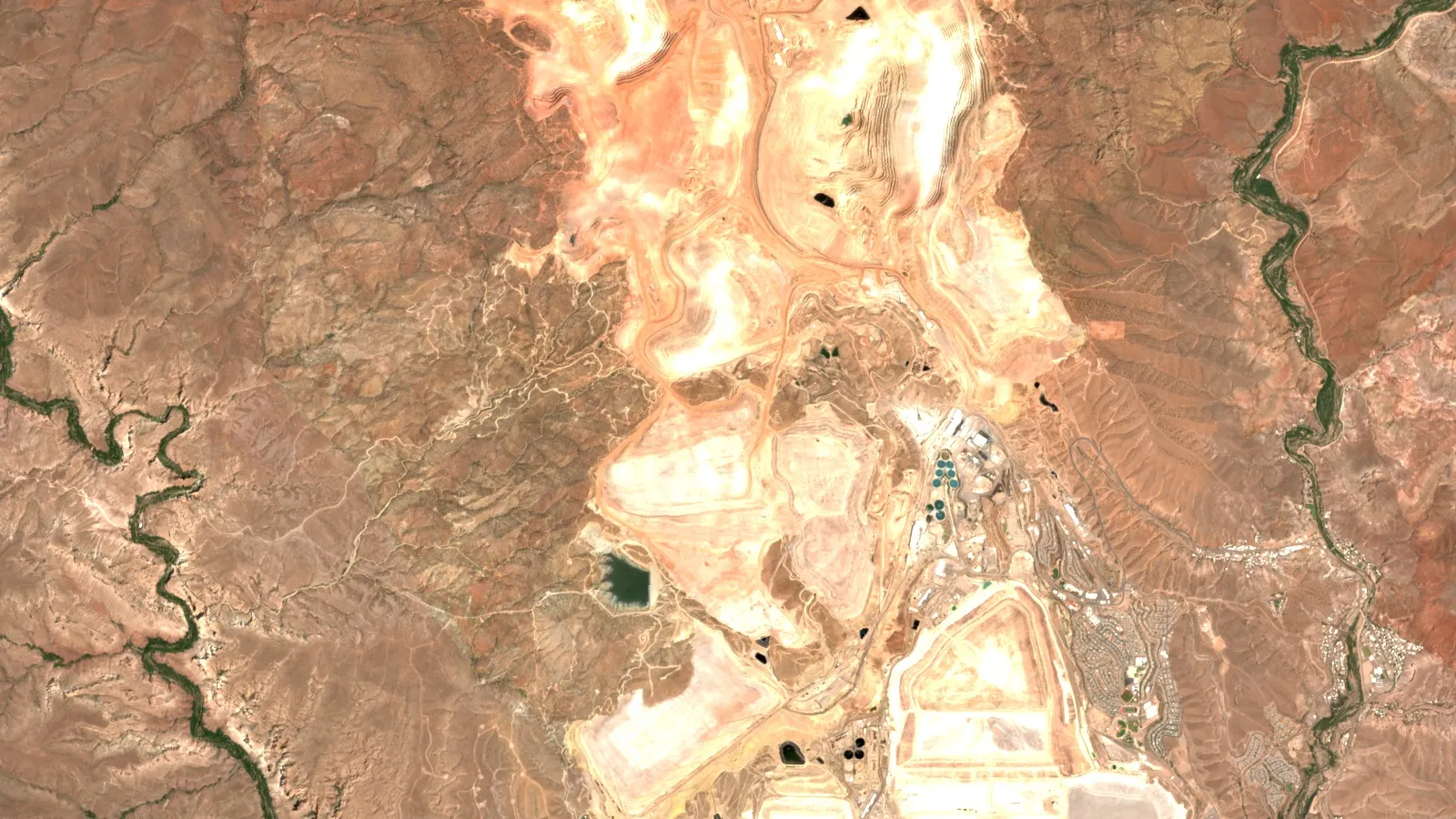
Copper sulfate is made from copper metal or copper-bearing material, so the copper industry sits behind every sack. The USGS Mineral Commodity Summaries 2026 estimates US recoverable copper from mines at 1.0 million tonnes in 2025, down 5% from 2024, with Arizona producing about 70% of the national total. Price your own order from a supplier quote, not from the metal price.
Chart
US mine output of copper, 2021 to 2025
Recoverable copper, thousand tonnes (2025 is an estimate)
Inside a mill, copper sulfate has a different job. Sphalerite (zinc sulfide) responds poorly to xanthate collectors in flotation. Adding copper ions activates the mineral surface so the collector can attach, as described in the 911Metallurgist flotation note. The effect depends on pH, and the same source reports that flotation is hard around neutral pH. Plants set the dose by test work. Our overview of the flotation process in mining explains the wider circuit.
If you want to read about where copper ore comes from, see our guides to copper deposit types and top countries and porphyry copper deposits.
▶ Farmonaut video on copper mining and where the metal comes from. · 6:03
Environmental and safety limits you should know
The EPA coppers decision found that treating a whole water body at the top rate of 1 ppm put more than 99% of modelled sites above the acute level of concern for fish, invertebrates and plants. For land uses at up to 7.5 lb of copper per acre, fewer than 1% of sites exceeded it for fish and 3% to 25% did for freshwater invertebrates. It also stated that treating even part of a water body is likely to put aquatic life at risk, although the agency recognised the benefit: copper sulfate is widely used to control algae in irrigation canals and catfish ponds. In practice, that means following the label rate on ponds and canals, treating only part of the water at a time (the EPA says users report treating up to 25% to 33%), and watching fish.
The same EPA label gives a stormwater rule: it must not be used in municipal storm sewers covered by a discharge permit, and treatments should be staggered so rain can clear previously treated drains. For the farm and the mine alike, the safe order is simple: confirm legality, test before you apply, measure the dose, record what you used, and keep it away from water you do not control.
Land managers who want to see how a site changes over time can use satellite imagery. Our satellite mineral detection service maps mineral signals for exploration, but it does not measure soil copper or advise on pesticide use, so keep lab tests for that.

▶ Farmonaut video on the environmental impacts of mining, explained in clay. · 2:31
Buying checklist: what to confirm before you order
- Registered use. For root control, buy a product whose label names sewer or septic root use and is registered in your state.
- Copper share. Pentahydrate is about 25% copper and monohydrate about 35%, so quotes are not comparable per kilogram.
- Grade. Fertilizer-grade, feed-grade and technical-grade lots differ in purity and heavy-metal limits. Ask for a certificate of analysis.
- Delivery. Moisture clumps crystals, so ask for sealed packs and a safety data sheet.
- Disposal. Plan where partly used product will go before it arrives.
Organisations that buy copper chemicals in tonnes, such as mills or farms near a mine, can send a quote request, or contact us with a site question.
If this topic matters to you, read Erosion Solutions: 10 Powerful Ways to Protect Soil next.
Frequently asked questions
How much copper sulfate should I put down the toilet to kill roots?
Follow the product label. The 2020 Roebic K-77 label calls for flushing the 2 lb bottle in portions of about one third at night, for 0.5 lb of copper per treatment, and no more than two treatments a year.
How often can I use copper sulfate root killer?
That label allows retreatment every 6 to 12 months if roots return, with a maximum of two applications per calendar year and a maximum annual rate of 1 lb of metallic copper (4 lb of product). The 2020 label words this limit “per linear foot per year”, and we could not tell what length it refers to, so ask the maker if you need to dose a long line.
Can I pour copper sulfate down a sink or tub drain?
No. The label says not to apply it through tub or sink drains. It also says to flush it down the toilet and never to pour unused product down any drain.
Is copper sulfate root killer banned anywhere?
Yes. The label lists Connecticut and nine California counties as areas of no sale or use, and the EPA noted bans in some California and New York counties. Check with your sewer authority.
Will copper sulfate in the sewer harm septic tanks?
The label states that it does not harm the natural bacteria content of septic tanks and cesspools, but it adds restrictions in Florida and Massachusetts for septic systems. Because rules differ by state, ask your local health agency.
How much copper sulfate do I need per acre for soil copper?
Divide the copper dose by the copper share. Idaho suggests 3 to 5 lb copper per acre for deficient soils, so 12 to 20 lb of the pentahydrate (25% copper). Test the soil first.
Does copper sulfate help plant roots grow?
Only when copper is lacking. Plants need a small amount of copper as a nutrient, but deficiency is rare in most soils. Extra copper does not boost growth and can be toxic.
How long does soil copper last after one dose?
Copper binds to organic matter and clay and does not leach. Idaho says a 5 lb per acre copper dose should last at least 5 years, and Minnesota says soil doses last many years.
Is iron sulfate the same as copper sulfate?
No. Iron sulfate (ferrous sulfate) supplies iron to correct chlorosis. Copper sulfate supplies copper. They do not substitute for each other, and iron sulfate is not a registered sewer root killer.
How do I make a 0.5% ferrous sulfate foliar spray?
Utah State extension says to dissolve 2 oz of ferrous sulfate (20 to 22% iron) in 3 gallons of water and spray in the evening or on a cool, cloudy day.
Why is my plant still yellow after iron sulfate in the soil?
At high pH, soil iron forms solids that roots cannot absorb. Arizona suggests iron fertilizer when pH is 8.0 or above, and notes that foliar iron treatment improves symptoms within a few weeks but must be repeated each year.
What is iron(II) sulfate used for?
Mainly to correct iron deficiency in plants, as a foliar spray or mixed with elemental sulfur in soil holes. Iron(II) sulfate, iron 2 sulfate and ferrous sulfate are the same compound.
Is there such a thing as iron copper sulfate fertilizer?
We found no standard product by that name in extension sources. Mixed micronutrient products exist, so read the guaranteed analysis for each metal.
Is copper sulfate used in mining?
Yes. In zinc flotation it activates sphalerite so collectors can attach. Dose depends on ore, water chemistry and pH, so plants set it by test work.
This page is for information only. It is not legal or professional advice. The product label is the legal instruction. Confirm local rules with your sewer authority, health agency or environmental regulator.
Farmonaut mining
Map your mining site from space
Send your site boundary and see mineral signals and terrain from satellite data.

Mining Pro sample view, synthetic data
Keep reading
Sources
- US EPA, Roebic K-77 Root Killer accepted label, Reg. No. 7792-1 (2020): www3.epa.gov
- US EPA, Reregistration Eligibility Decision for Coppers (2009): www3.epa.gov
- University of Idaho Extension, Copper in Idaho (1996): objects.lib.uidaho.edu
- University of Minnesota Extension, Copper for Crop Production (1997): conservancy.umn.edu
- USDA AMS, Copper sulfate technical review (2001): ams.usda.gov
- Florida Dept. of Agriculture, Plant Pathology Circular 241 (1982): ccmedia.fdacs.gov
- Utah State University Extension, Control of Iron Chlorosis (1996): extension.usu.edu
- University of Arizona Extension, Iron Deficiency (2024): extension.arizona.edu
- USGS, Mineral Commodity Summaries 2026: Copper: pubs.usgs.gov
- 911Metallurgist, Copper Activation of Sphalerite and Xanthate: 911metallurgist.com
Discussion
Questions, corrections or field experience? Share them below. First-time comments are reviewed before they appear, and your email is never published.
No comments yet. Be the first to add a question or your experience.

 Sahel Shipping SA
 Sania Corporation
 Sean Mining Limited
 NTS Group (Pty) Ltd
 Mine4Africa
 Lithspo Minerals Limited
 Tintina Mining Group
 Dalgety Minerals Pty Ltd
 Vortex Minerals Pty Ltd
 Faith At Work (Pty) Ltd
 Geotech Mining Solutions plc
 Vulcan International Limited
 Kidepo Associates
 GKY Mining
 Alkimy SARL
 Double A Trading
 GemSprout Metals Limited
 Qader Group
 Ileys General Trading
 SG Gold Mining LLC
 VRV Global Pte Ltd
 Omsri International FZE
 G.I.T.T.
 Jaunita Erss Ltd











