

Iron ore · Ranked list
Largest Iron Ore Mining Companies in Africa
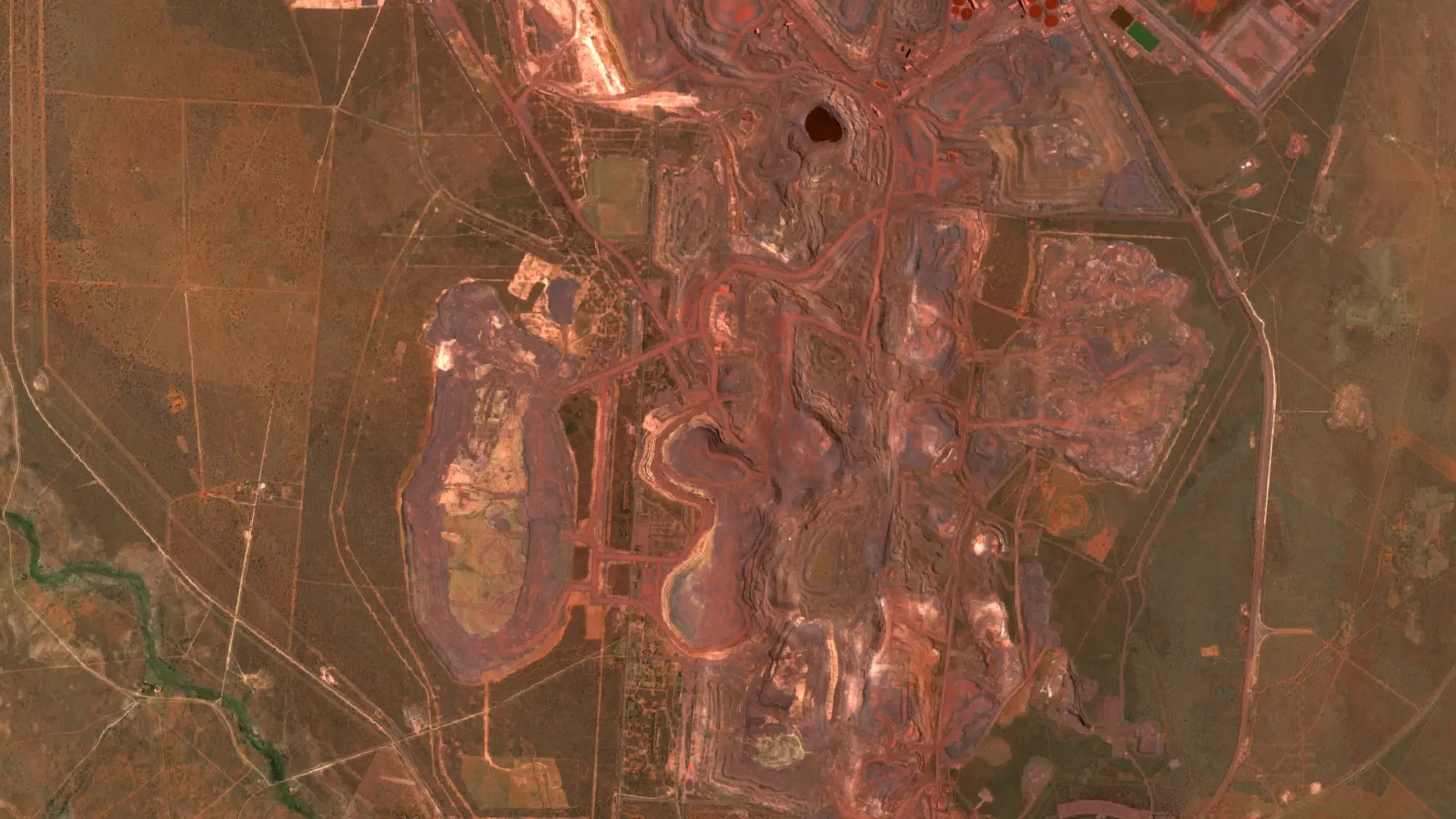
Kumba Iron Ore leads Africa with 36.1 Mt in 2025, ahead of SNIM, Assmang and ArcelorMittal Liberia. Africa is still small next to Australia’s 980 Mt (USGS), and Simandou is the project to watch.
Key takeaways
- Kumba Iron Ore produced 36.1 Mt in 2025: Sishen 25.3 Mt and Kolomela 10.8 Mt (Kumba, JSE, 5 February 2026).
- SNIM in Mauritania reported about 14.7 Mt in 2025 and targets 15.5 Mt for 2026 (Arab Steel Summit, 14 January 2026).
- South Africa (66 Mt) and Mauritania (15 Mt) are about 3% of world output of 2,600 Mt; Australia mined 980 Mt (USGS, 2026).
- SimFer, one of the two Simandou partners, shipped 2.2 Mt in the first half of 2026 and is designed for up to 120 Mt a year (SimFer, 6 August 2026; SteelOrbis).
- Iron ore was US$90.57 per tonne on 15 October 2026, down 14.2% in a year (Trading Economics); the calculator turns your price into a margin.
In this article
- Largest iron ore mining companies in Africa, ranked by output
- How we ranked them
- Kumba Iron Ore: Sishen and Kolomela in the Northern Cape
- SNIM in Mauritania: exports through Nouadhibou
- Assmang: Khumani and Beeshoek, a 50/50 joint venture
- ArcelorMittal Liberia: Nimba County and the new concentrator
- Simandou in Guinea: the project that will change the ranking
- Africa in the world iron ore market
- Iron ore price and what an African mine earns per tonne
- How to check an African mining licence or project before you deal
- Where satellite images help an iron ore project
- Frequently asked questions
The largest iron ore mining company in Africa by reported output is Kumba Iron Ore of South Africa, which produced 36.1 million tonnes (Mt) in 2025 from its Sishen and Kolomela mines. Next come Mauritania’s SNIM at about 14.7 Mt, the Assmang joint venture at 14.5 Mt for the year to June 2025, and ArcelorMittal Liberia at 10 Mt of shipments. Africa is not the world’s top supplier, though: South Africa and Mauritania together mined about 81 Mt of usable ore in 2025, against 980 Mt in Australia (USGS, 2026). The one project that could change the ranking is Simandou in Guinea.
This page is written for mining company owners, suppliers and consultants who deal with African iron ore. It ranks the producers with a published output figure, explains who owns what, shows how Africa compares with the big exporters, and gives a calculator for the margin on a tonne of ore. Iron ore is quoted in metric tonnes. A million tonnes is written as Mt, and one tonne of ore is called a wet tonne (wmt) or dry tonne (dmt) depending on whether moisture is counted.
Largest iron ore mining companies in Africa, ranked by output
The table ranks African iron ore operators by the latest annual figure each one has published. The figures are not all the same kind of number, so the third column says what each one measures. Read it as a guide to scale, not as an exact league table.
Chart
Latest reported output of Africa’s main iron ore producers
Million tonnes; Liberia is shipments; Assmang is the year to June 2025
| Rank | Company and main assets | Country | Latest figure and what it measures |
|---|---|---|---|
| 1 | Kumba Iron Ore: Sishen and Kolomela | South Africa | 36.1 Mt produced in 2025 (Kumba, 5 Feb 2026) |
| 2 | SNIM (Société Nationale Industrielle et Minière) | Mauritania | About 14.7 Mt produced and sold in 2025 (Arab Steel Summit, 14 Jan 2026) |
| 3 | Assmang: Khumani and Beeshoek (owned 50% by African Rainbow Minerals and 50% by Assore) | South Africa | 14.5 Mt produced in the year to 30 June 2025, 100% basis, before Beeshoek closed in October 2025 (ARM, 2025) |
| 4 | ArcelorMittal Liberia: Nimba County mines | Liberia | 10 Mt shipped in 2025 (ArcelorMittal, 4Q 2025 release) |
| 5 | Simandou: SimFer and Winning Consortium Simandou | Guinea | Started shipping in November 2025; SimFer shipped 2.2 Mt to China in the first half of 2026 (Rio Tinto, 6 Aug 2026) |
SNIM and Assmang are close: 14.7 Mt is a sales and production figure for a calendar year, while 14.5 Mt covers a financial year that ended in June 2025, so the order of those two could swap on a like-for-like basis. Simandou sits last only because it has just started. At full capacity it is planned to export up to 120 Mt a year, which would put it first by a wide margin, as the next sections explain.
How we ranked them
We used one metric: the most recent annual output or shipment figure published by the company, a stock exchange filing or a regulator, in millions of tonnes. We included every African operator that publishes such a figure and is named in company filings, and we left out projects that have not shipped ore. Where only shipments are published (Liberia, Simandou) we say so. We did not use grade-adjusted or revenue rankings, because producers report different ore types: lump, fines and concentrate sell at different prices. A cleaner comparison would be iron content, but few African companies publish it.
Gara Djebilet in Algeria is a project to watch but is not ranked. Chinese trade press reported on 30 January 2026 a first shipment of about 1,450 tonnes of raw ore January 2026 (SMM), a test volume rather than annual output.
Kumba Iron Ore: Sishen and Kolomela in the Northern Cape
Kumba is the clear number one. It is listed on the JSE and is a member of the Anglo American group. Its 2025 production of 36.1 Mt was 1% above 2024, and sales rose 2% to 37.0 Mt. Sishen, its older and larger mine, produced 25.3 Mt (down 1%), while Kolomela produced 10.8 Mt (up 7%). The company reported an average realised export price of US$95 per wet tonne, FOB (the ore is priced once it is loaded on the ship), compared with a benchmark price of US$85 per wet tonne, a 12% premium (Kumba production and sales report, JSE, 5 February 2026). Premiums like this depend on the grade and form of ore sold.
Chart
Output at Kumba’s mines and at Assmang, a year apart
Million tonnes; Assmang is the years to 30 June 2024 and 2025 (100% basis)
For a business owner dealing with Kumba as a contractor, buyer or neighbour, the lesson is scale. At 36 Mt a year, Kumba moves about two and a half times the tonnage of SNIM, the next largest producer. The chart above compares the two Kumba mines and Assmang against the previous year.
SNIM in Mauritania: exports through Nouadhibou
SNIM reported about 14.7 Mt of iron ore production and sales in 2025, the third year in a row above 14 Mt, and set a 2026 target of 15.5 Mt. It exports through Nouadhibou port to Europe and China and says it wants to widen sales to the Middle East. The company’s own stated aim is an annual capacity of 45 Mt by 2031 (Arab Steel Summit, 14 January 2026). Treat that as a target, not a forecast: it depends on new reserves, rail upgrades and financing.
Mauritania’s reserves are large relative to its output. USGS lists 10,000 Mt of crude ore reserves and 4,400 Mt of contained iron there, with 2025 mine production estimated at 15 Mt of usable ore (USGS, 2026). Reserves are the part of a deposit that is economic to mine at current prices, so a high reserve-to-output ratio signals room to grow.
Assmang: Khumani and Beeshoek, a 50/50 joint venture
Assmang is owned half by African Rainbow Minerals (ARM) through ARM Ferrous and half by Assore. Its two iron ore mines are in the Northern Cape: Khumani, about 200 km west of Kimberley and next to Sishen, and Beeshoek, about 7 km west of Postmasburg (ARM Ferrous). In the year to 30 June 2025 the two mines produced 14.5 Mt of iron ore (100% basis), up from 14.1 Mt, and sold 14.3 Mt (ARM integrated annual report, ferrous review).
The picture changed in the following year. Beeshoek was placed on care and maintenance in October 2025, and local sales volumes fell from 2 Mt to 0.5 Mt, according to Business Day’s report on ARM’s results for the year to June 2026. The same report says Khumani’s export sales rose by 180,000 tonnes, but a stronger rand cut its earnings. Expect Assmang’s next reported output to be lower than the 14.5 Mt shown in the table. It is a useful reminder that a mine can close even when the company is large, when costs, rand strength and prices move against a low-margin pit.
ArcelorMittal Liberia: Nimba County and the new concentrator
ArcelorMittal Liberia shipped 10 Mt of iron ore in 2025 and called it a record, with EBITDA (earnings before interest, tax, depreciation and amortisation) of US$0.2 billion. The company expects shipments to reach an annualised shipping rate above 18 Mt by the end of 2026 as its Phase 2 expansion ramps up toward 20 Mt a year of capacity (ArcelorMittal fourth-quarter 2025 release, SEC filing). The centrepiece is a concentrator at Tokadeh in Nimba County, opened in June 2025 as part of a US$1.8 billion second phase, with an upgraded railway to the port of Buchanan and a new berth (GMK Center, 10 June 2025).
A concentrator upgrades low-grade ore into a higher-grade product that sells at a better price. If Liberia hits 18 to 20 Mt, it would pass SNIM and Assmang on the table’s measure.
Simandou in Guinea: the project that will change the ranking
Simandou in Guinea is described by SteelOrbis as Africa’s largest integrated mining and infrastructure project. Operations began with a ceremony on 12 November 2025, when a first barge carrying 9,850 tonnes left Morebaya port. Two partners share the project: SimFer (the Guinean government, Rio Tinto and Chalco Iron Ore Holdings) and Winning Consortium Simandou. Together they are designed to export up to 120 Mt a year over more than 600 km of new railway to the Atlantic coast.
Ramp-up is gradual. SimFer said it expected 0.5 to 1 Mt of shipments in 2025 and full capacity of 60 Mt a year within 30 months of first shipment (GMK Center, 18 September 2025). In its update of 6 August 2026, SimFer reported 1.6 Mt shipped to China in the second quarter and 2.2 Mt in the first half of 2026, with its own port still on track for commissioning in the first quarter of 2027 (SimFer press release). At the first-half pace Simandou is far below Kumba, but at 60 Mt a year SimFer alone would be bigger than any other company in the table.
Simandou ore is widely described as high grade, so it is expected to compete with Australian and Brazilian supply, which is why it matters for the price discussion further down this page.
Africa in the world iron ore market
Africa is a mid-sized iron ore region, not the largest. USGS estimates world mine production of usable ore at 2,600 Mt in 2025. Australia (980 Mt) and Brazil (420 Mt) lead by a wide margin. South Africa (66 Mt) and Mauritania (15 Mt) add up to 81 Mt, about 3% of the world total. Guinea falls under “other countries” in the USGS table, which together produced 64 Mt (USGS, Mineral Commodity Summaries 2026). Older articles that call Africa the world’s “top supplier” or quote “60+ million tonnes a year” for the whole continent do not match these figures.
Chart
Iron ore mine production by country
Million tonnes of usable ore, 2025 estimate; selected countries
Iron ore matters beyond the mine. Mining supports exports, jobs and public revenue, and steel made from it goes into rail, bridges and machinery. The short video below explains how mining feeds an economy.
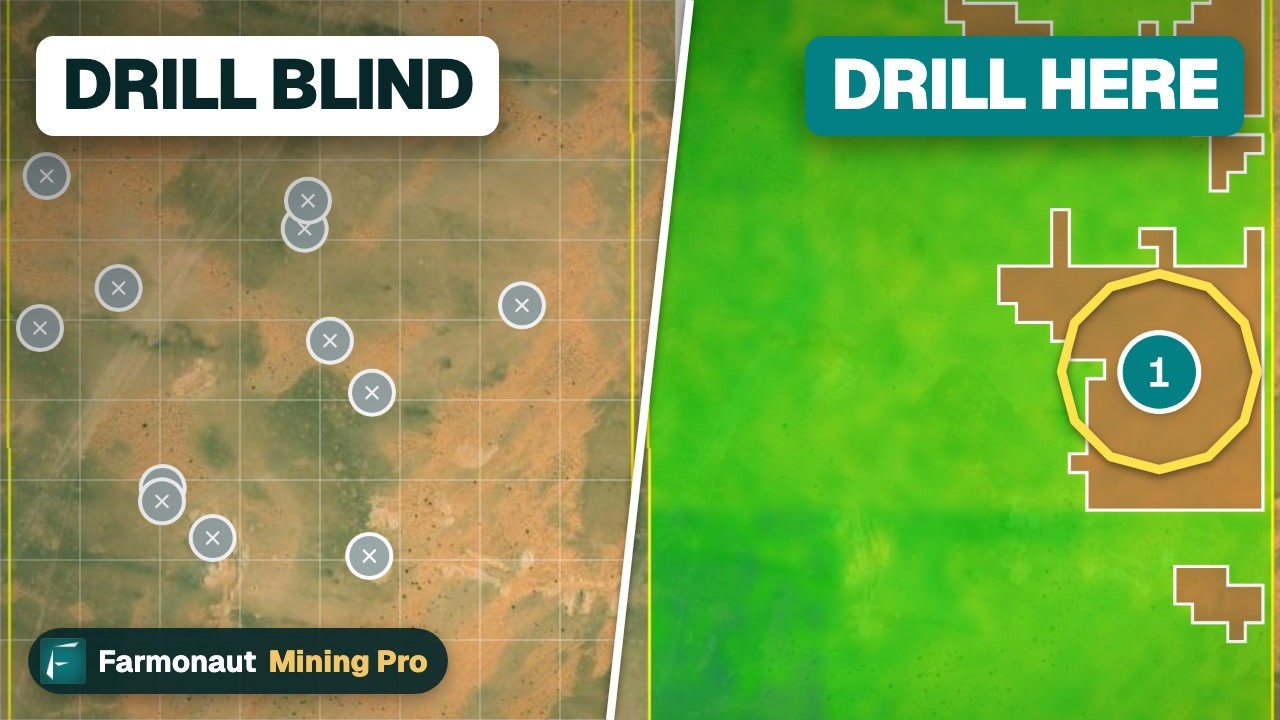
▶ Follows the money from mine to economy: exports, jobs, revenue and energy-transition minerals. · 5:03
Iron ore price and what an African mine earns per tonne
Iron ore fell to US$90.57 per tonne on 15 October 2026, down 7.0% over a month and 14.2% over a year, according to Trading Economics, a figure based on contracts for difference that track the benchmark. Prices change daily, so use this as a dated reference and check the day’s value before you plan.
The benchmark is usually the 62% iron fines price delivered to China. A mine in Africa does not receive that price. It receives the benchmark, adjusted for ore quality, minus freight to China, minus its royalty, and then it pays its own cash costs. Kumba’s 2025 average realised price (US$95 per wet tonne FOB) compared with a US$85 benchmark shows how quality premiums work. Freight and port charges come off the delivered price, so distance to a port counts. Use the calculator to test your own numbers.
Calculator
What margin does a tonne of your iron ore earn?
Enter your own price, freight, costs and royalty. Results update as you type.
- FOB netback per tonne: $70
- Royalty per tonne: $4
- Margin per year, US$ million: $158
- Break-even delivered price per tonne: $57
Example values only, not benchmarks or forecasts. The benchmark price is an input: use today’s price. FOB netback = delivered price x (1 + quality adjustment) minus freight. Royalty is taken on the FOB netback, which differs by country, so enter your own terms. All money in US$ per tonne.
How to check an African mining licence or project before you deal
If you plan to buy ore, invest, supply services or apply for a licence, check these points first, in this order:
- Find the national mining cadastre or ministry register and confirm the licence holder, licence type, area, expiry date and any pending transfers.
- Confirm the licence type. Large-scale mining licences, small-scale licences and exploration permits carry different rights, and small-scale rights are often reserved for citizens.
- Ask for the resource and reserve statement and read what standard it follows. A resource is not a reserve.
- Check logistics: distance to a railhead or port, who owns the rail, and whether there is spare capacity. Transport is a common limit for African iron ore: ARM said rail constraints left some iron ore capacity unused.
- Check state participation and royalty terms in the mining code. Guinea’s government, for example, is a partner in SimFer.
- Read the environmental and community permits, and ask how the company engages local communities.
This page is not legal advice, and rules change by country, so confirm them with the regulator. For gold-licence rules in neighbouring markets, see our guides to gold exploration in South Africa, Zambia and Nigeria. The video below looks at whether a foreigner can hold a small-scale licence in Africa.

▶ Explains whether a foreigner can get a small-scale mining licence in Africa. · 5:16
Where satellite images help an iron ore project
Iron ore deposits often show up in satellite images because iron oxides reflect light in a distinctive way, and because open pits, stockpiles, haul roads and railway corridors are easy to see. Before ground crews are sent in, a desk study can map outcrop colour, structure, access roads and surface change over time across a licence area. This reduces blind trips, though drilling and assays are still needed to prove any ore. Farmonaut is a US-based company that screens licence areas from satellite data; its satellite-based mineral detection page explains the method, and you can request a quote or contact the team with a KML, KMZ or polygon file.
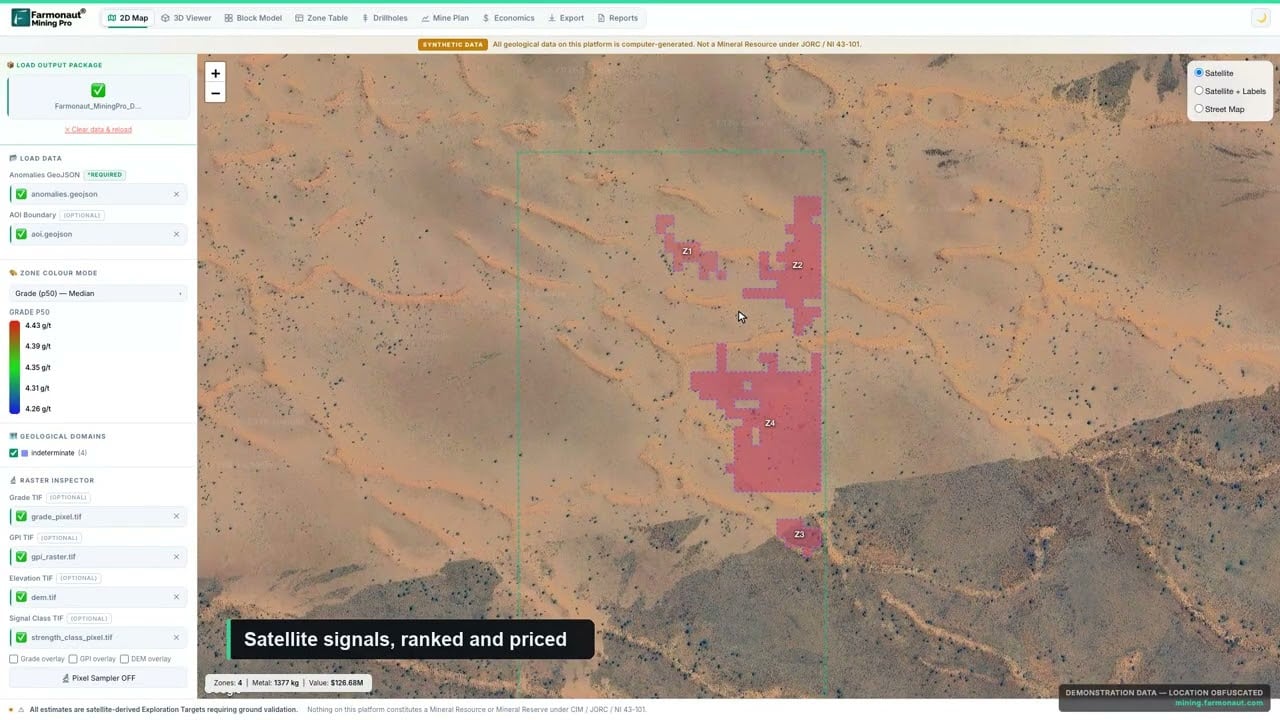
▶ A short look at Farmonaut Mining Pro, which turns a licence boundary into a geological and economic picture. · 4:56
Frequently asked questions
Who is the largest iron ore producer in Africa?
Kumba Iron Ore of South Africa, with 36.1 Mt produced in 2025 from the Sishen and Kolomela mines (Kumba, JSE announcement of 5 February 2026).
Is Africa the world’s largest iron ore supplier?
No. USGS puts Australia first with 980 Mt in 2025, followed by Brazil with 420 Mt. South Africa and Mauritania together mined about 81 Mt.
Which African country produces the most iron ore?
South Africa, at an estimated 66 Mt of usable ore in 2025, then Mauritania at 15 Mt (USGS, 2026). Guinea is expected to rise as Simandou ramps up.
What is the largest iron ore mine in Africa?
Sishen in the Northern Cape is Kumba’s biggest mine at 25.3 Mt in 2025. Simandou, once at full capacity, is designed to be larger as a whole project.
When did Simandou start shipping?
Operations started on 12 November 2025, when the first barge left Morebaya port with 9,850 tonnes (SteelOrbis).
How much iron ore has Simandou shipped?
SimFer reported 2.2 Mt shipped to China in the first half of 2026, including 1.6 Mt in the second quarter.
Who owns SNIM?
SNIM is Mauritania’s national iron ore company, so it is state-owned. It reported about 14.7 Mt in 2025 and targets 15.5 Mt for 2026.
Who owns Assmang?
African Rainbow Minerals, through ARM Ferrous, owns 50% and Assore owns the other 50% (ARM).
What is the iron ore price today?
Trading Economics showed US$90.57 per tonne on 15 October 2026. Check a live source before you decide anything.
How is iron ore priced?
Most trade is priced against the 62% iron fines benchmark delivered to China, then adjusted for grade, impurities and freight.
Can satellites find iron ore?
Satellites can map surface features linked to iron oxides and help rank areas for fieldwork, but only drilling and laboratory assays confirm ore.
This page is for information only. It is not investment advice. Company figures are the latest each one has published and are not all measured the same way. Licence and royalty rules differ by country: this page is not legal advice, so confirm them with the regulator.
Farmonaut mining
Get a quote to map your licence area from space
Send a KML, KMZ or polygon and Farmonaut screens the area from satellite images before ground crews go in.

Mining Pro sample view, synthetic data
Keep reading
Sources
- USGS, Mineral Commodity Summaries 2026: Iron Ore (February 2026): pubs.usgs.gov
- Kumba Iron Ore, production and sales report, JSE SENS (5 February 2026): sharedata.co.za
- Arab Steel Summit, SNIM iron ore output (14 January 2026): aisusteel.org
- African Rainbow Minerals, ARM Ferrous: arm.co.za
- ARM integrated annual report 2025, ferrous operational review: arm.co.za
- Business Day, ARM results for the year to June 2026 (4 September 2026): businessday.co.za
- ArcelorMittal, fourth-quarter 2025 earnings release (SEC filing): sec.gov
- GMK Center, ArcelorMittal opens Liberia concentrator (10 June 2025): gmk.center
- SteelOrbis, Simandou begins operations (12 November 2025): steelorbis.com
- GMK Center, SimFer plans first Simandou shipment (18 September 2025): gmk.center
- SimFer, Simandou operational milestones (6 August 2026): riotintoguinee.com
- Trading Economics, Iron ore price (15 October 2026): tradingeconomics.com
- SMM, Gara Djebilet first shipment (30 January 2026): news.metal.com
Discussion
Questions, corrections or field experience? Share them below. First-time comments are reviewed before they appear, and your email is never published.
No comments yet. Be the first to add a question or your experience.

 Sania Corporation
 Sean Mining Limited
 NTS Group (Pty) Ltd
 Mine4Africa
 Lithspo Minerals Limited
 Tintina Mining Group
 Dalgety Minerals Pty Ltd
 Vortex Minerals Pty Ltd
 Faith At Work (Pty) Ltd
 Geotech Mining Solutions plc
 Vulcan International Limited
 Kidepo Associates
 GKY Mining
 Alkimy SARL
 Double A Trading
 GemSprout Metals Limited
 Qader Group
 Ileys General Trading
 SG Gold Mining LLC
 VRV Global Pte Ltd
 Omsri International FZE
 G.I.T.T.
 Jaunita Erss Ltd
 SRK Consulting











