

Mining processing · Copper concentrate uses
Copper Concentrate Uses: 7 Products It Becomes
Copper concentrate holds about 20% to 30% copper and goes almost entirely to smelters. See the seven products that come out of it, where it is mined and smelted, and what a tonne contains.
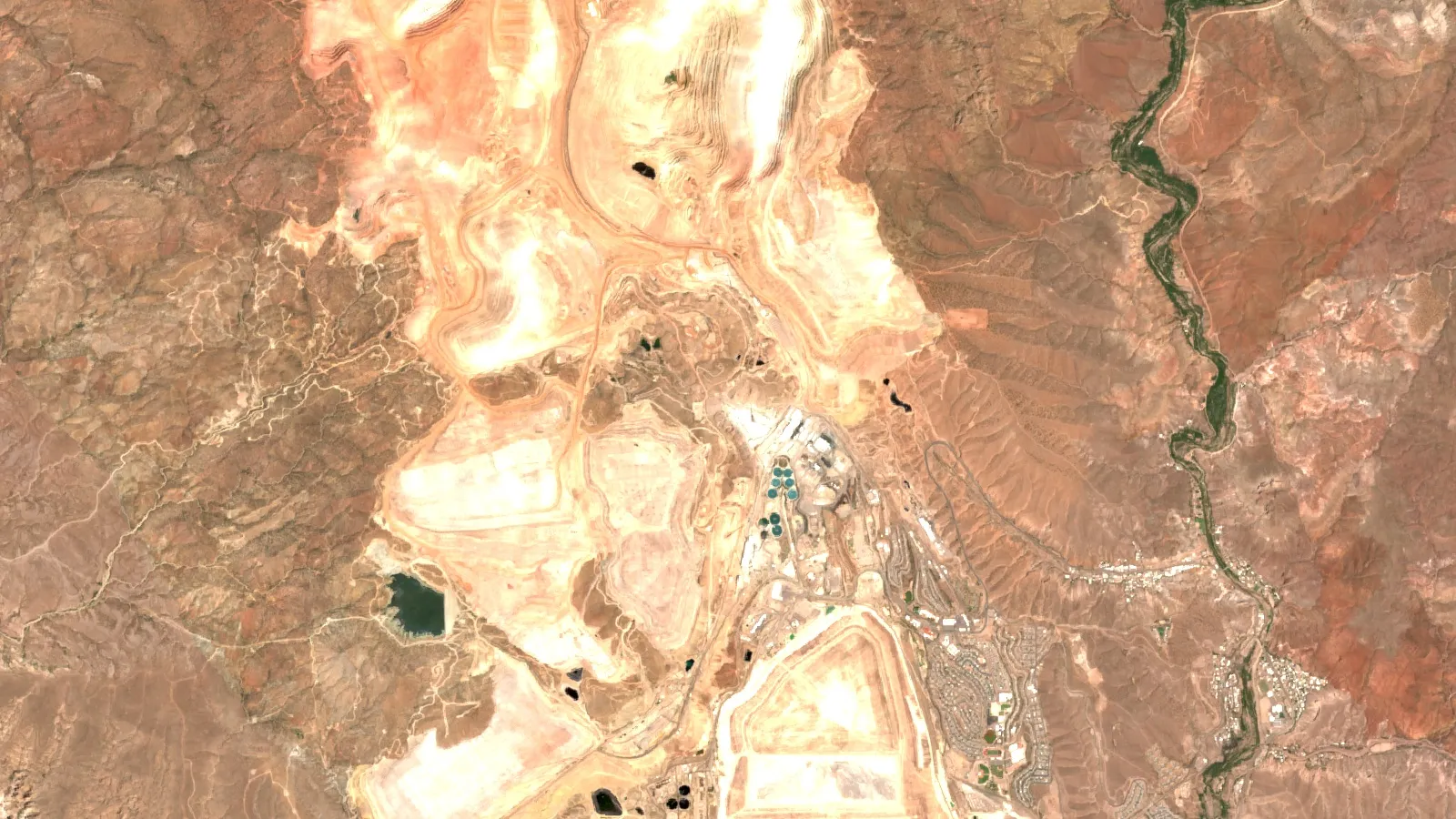
Key takeaways
- Copper concentrate carries about 20% to 30% copper and is smelted into 99.5% anode and 99.99% cathode (Freeport-McMoRan 10-K, 2025).
- Smelting also yields sulfuric acid; five U.S. nonferrous smelters recovered by-product acid in 2025, about 6% of U.S. sulfur output (USGS, 2026).
- Selenium and tellurium come mainly from copper refinery anode slimes; about 7% of U.S. mined gold came from base-metal, chiefly copper, ores (USGS, 2026).
- The U.S. exported an estimated 340,000 t of copper in ore and concentrate in 2025; China refined 14 Mt against 1.8 Mt mined (USGS, 2026).
- Farm copper products such as copper sulfate are made from refined copper or scrap, not from concentrate itself (USDA AMS).
In this article
- What is copper concentrate?
- What is copper concentrate used for: 7 uses in the order the smelter meets them
- How we chose and ordered these uses
- From ore to concentrate to cathode
- What refined copper from concentrate ends up in
- Where copper concentrate is produced and where it is smelted
- Copper concentrate exports from the United States
- What a tonne of copper concentrate contains
- Copper concentrate and agriculture: what is true
- Impurities, safety and the environment
- What to check before buying or selling copper concentrate
- Frequently asked questions
Copper concentrate is used almost entirely as feed for copper smelters. A mill crushes copper ore, grinds it and floats the copper minerals into a powder that holds roughly 20% to 30% copper (Freeport-McMoRan 10-K for 2025). The smelter turns that powder into copper anode and then 99.99% copper cathode, and on the way it recovers sulfuric acid, gold, silver, selenium and tellurium. So the honest answer to “what is copper concentrate used for” is one main use with several valuable by-products, listed below in the order the material meets them.
This page is written for mine and licence owners, consultants and investors who want to know where a concentrate stream ends up, what each tonne contains and how the trade works. Every figure carries its source and year, and a calculator lets you work out the copper and value in your own concentrate.
What is copper concentrate?
Copper concentrate is an intermediate product, not a finished metal. Most copper ore mined in large open pits carries well under 1% copper. That is far too little to smelt directly, so the ore goes through a concentrator first. There it is crushed, ground to a fine powder and mixed with water and reagents in flotation cells. Flotation is a separation method in which air bubbles carry the copper sulfide minerals to the surface as a froth, while the waste rock (called gangue) sinks and leaves as tailings.
The froth is thickened and filtered to a damp, dark grey powder. That powder is the concentrate. Freeport-McMoRan describes its own product as copper concentrate “with copper content of approximately 20% to 30%” made at its Morenci, Bagdad, Sierrita and Chino mines in the United States, at Cerro Verde in Peru and in the Grasberg district of Indonesia (Freeport-McMoRan, 2025 annual report). The rest of the concentrate is mostly iron and sulfur, because the main copper minerals in these deposits are copper-iron sulfides such as chalcopyrite. It also carries smaller amounts of gold, silver, molybdenum and unwanted elements such as arsenic.
Two terms you will meet in contracts: grade is the share of copper in the material, given as a percentage; dry metric tonne (dmt) is the weight after the moisture has been taken out, which is the basis for payment because concentrate is shipped damp to keep dust down.
Copper concentrate is not the only route from ore to metal. Oxide ores and some low-grade sulfides are leached with weak sulfuric acid and the copper is recovered by solvent extraction and electrowinning (SX-EW), which makes cathode at the mine without any concentrate step (Southern Copper 10-K for 2025). Our post on the copper ore concentrate refining process walks through both routes in more detail.
▶ How copper goes from a pit in Chile to the wiring in an electric car. · 6:03
What is copper concentrate used for: 7 uses in the order the smelter meets them
Each item below is something a smelter or refinery actually makes from concentrate, or a market that concentrate itself serves. For each one you get what it is, who it matters to and the main caveat.
1. Smelting into copper anode and refined cathode
This is the use that pays for the whole chain. At the smelter the concentrate is melted with silica flux and oxygen. Iron and some of the sulfur leave as slag and gas, and the copper is cast into anodes. Freeport-McMoRan reports that its anodes weigh 700 to 900 pounds and average 99.5% copper; electrolytic refining then turns them into cathode that averages 99.99% copper (Freeport-McMoRan 10-K). Its Miami smelter in Arizona produced 209,300 tonnes of anode in 2025.
Best for: anyone valuing a copper mine, because almost all the revenue in a concentrate comes from the copper the smelter pays for. Caveat: the miner never receives the full metal value; the smelter deducts treatment and refining charges and keeps part of the copper.
2. Sulfuric acid from the smelter gas
Smelting releases sulfur dioxide. Modern smelters capture it and convert it into sulfuric acid rather than release it. In the United States, by-product sulfuric acid was recovered at five nonferrous-metal smelters in four States in 2025 and made up about 6% of all sulfur production (USGS, Mineral Commodity Summaries 2026: Sulfur). Freeport-McMoRan says the Miami smelter is the most significant source of sulfuric acid for its U.S. leaching operations, which use the acid to dissolve copper from oxide ore.
Best for: integrated miners that also leach ore, because the acid closes a loop. Caveat: acid is bulky and corrosive to move, so its value depends on having a buyer or a leach pad nearby.
3. Gold and silver recovery
Many copper deposits carry gold and silver, and most of it follows the copper into the concentrate. The smelter passes it on to the refinery, where it collects in the residue under the anodes. About 7% of U.S. mined gold in 2025 was a by-product of processing base-metal ores, chiefly copper ores (USGS, MCS 2026: Gold), and copper mines are among the main U.S. sources of by-product silver (USGS, MCS 2026: Silver). Southern Copper runs a precious metals plant at its Ilo refinery in Peru that produces refined silver and gold.
Best for: owners of porphyry or copper-gold deposits, where precious metal credits can lift the value of each tonne of concentrate. Caveat: smelters usually pay nothing for gold below about 1 gram per tonne of concentrate (Troilus concentrate marketing study, 2024), so low gold grades earn no credit.
4. Selenium and tellurium from anode slimes
Anode slimes are the fine residue left in the refining tanks. They are the main world source of two minor metals. Selenium and tellurium are both “recovered principally as a by-product of the electrolytic refining of primary copper” (USGS, MCS 2026: Selenium). In 2025 two U.S. primary electrolytic copper refineries, one in Texas and one in Utah, produced copper telluride from tellurium-bearing slimes (USGS, MCS 2026: Tellurium).
Best for: investors following critical-mineral supply, since the supply of both metals depends on how much copper is refined electrolytically. Caveat: the miner usually receives no payment for these metals.
5. Molybdenum and rhenium from porphyry ores
In porphyry copper-molybdenum deposits the molybdenum mineral (molybdenite) is split off at the mill into its own molybdenum concentrate before the copper concentrate is shipped. Southern Copper says it produces “significant amounts of molybdenum concentrate and sulfuric acid” alongside its copper. Rhenium is then recovered as a by-product of roasting those molybdenum concentrates from porphyry copper-molybdenum deposits in Arizona and Montana (USGS, MCS 2026: Rhenium). Molybdenum was a by-product at seven U.S. operations in 2025 (USGS, MCS 2026: Molybdenum).
Best for: consultants modelling a porphyry project, where a moly circuit can add a second saleable product. Caveat: if molybdenum stays in the copper concentrate it is usually not paid and can be penalised.
6. A traded commodity in its own right
Concentrate is also a product that crosses borders in bulk ships. Many large mining countries smelt only part of what they mine, while large smelting countries buy concentrate from abroad. The United States exported an estimated 340,000 tonnes of copper contained in ore and concentrate in 2025 while importing almost none (USGS, MCS 2026: Copper). For a mine without its own smelter, selling concentrate under an offtake contract is the normal way to earn revenue.
Best for: small and mid-size producers. Caveat: the sales terms (payable copper, charges, penalties, moisture limits) decide how much of the metal value reaches the seller; see our guide to copper concentrate grades, payables and smelter charges.
7. Copper chemicals, including the copper sulfate used on farms
This is where the old version of this page went wrong. Concentrate itself is not spread on fields or fed to animals. Copper sulfate pentahydrate, the familiar blue crystal used as a fungicide, algicide and source of copper, is made by dissolving scrap copper in sulfuric acid or by oxidising scrap copper in dilute acid; copper sulfate solutions also come from the electrolytic processing of copper ores (USDA National Organic Program, Copper Sulfate technical review, 2001). The link to concentrate is therefore indirect: through refined copper, scrap and refinery solutions, not through the concentrate itself.
Best for: readers who arrived here looking for agricultural uses. Caveat: copper pesticides are regulated products with labels set by the U.S. Environmental Protection Agency (EPA, Copper reregistration decision, 2009).
How we chose and ordered these uses
We listed only outputs that company filings or the U.S. Geological Survey tie directly to copper concentrate, its smelting or its refining. The order follows the path of the material: smelting first, then the gas, then the precious metals and slimes that end up at the refinery, then by-products split off at the mill, then the trade in concentrate, and finally the chemicals made further downstream. It is not a ranking by revenue, because the value of each by-product differs from mine to mine. For almost every copper mine, though, the copper itself is by far the largest part of the value.
We left out claims from the earlier version that had no source, such as concentrate being used directly in fertiliser, animal feed or electrical cable. Cable is made from refined copper rod, not from concentrate.
From ore to concentrate to cathode
The path is the same at most sulfide copper mines. Ore is blasted, hauled and crushed. Grinding mills reduce it to a fine powder so the copper minerals are freed from the rock. Flotation lifts those minerals into a froth. Thickeners and filters dewater the froth into concentrate, which goes by truck, rail or ship to a smelter. The smelter makes anode and acid, and the refinery turns anode into cathode, recovering slimes for gold, silver, selenium and tellurium.
Infographic
From ore to cathode in 5 steps
- 1Crush and grindOre is reduced to a fine powder to free the copper minerals.
- 2FloatAir bubbles lift copper sulfides into a froth; waste leaves as tailings.
- 3Dewater and shipThe froth is filtered into damp concentrate and sent to a smelter.
- 4SmeltConcentrate becomes 99.5% copper anode; the gas becomes sulfuric acid.
- 5RefineAnode becomes 99.99% cathode; slimes yield gold, silver, selenium, tellurium.
Not every mine has all these steps on site. Freeport-McMoRan ships a significant portion of the concentrate from its Arizona and New Mexico mines to the Miami smelter, while concentrate from other mines has gone to its Atlantic Copper smelter and refinery in Spain and to third-party smelters. Southern Copper, by contrast, runs mines, concentrators, a smelter, a refinery and an acid plant within one business in Peru and Mexico.
What refined copper from concentrate ends up in
Once copper leaves the refinery as cathode or rod, it reaches the products most people mean when they ask about copper uses. In the United States the Copper Development Association splits use of copper and copper alloy products as follows: building construction 42%, electrical and electronic products 23%, transportation equipment 18%, consumer and general products 10%, and industrial machinery and equipment 7% (USGS, MCS 2026: Copper). Building wire and plumbing tube make construction the biggest single block.
Chart
U.S. use of copper and copper alloy products
Share of use by end market, %, latest Copper Development Association split
U.S. prices give a sense of the value at stake. The London Metal Exchange grade A cash price averaged an estimated 440 cents per pound in 2025, and the COMEX first-position price about 480 cents per pound, according to the same USGS summary. Prices move daily, so use the day’s quote in the calculator further down.
Where copper concentrate is produced and where it is smelted
Mine output and refinery output are very different maps, and the gap between them is the concentrate trade. USGS estimates for 2025 put world mine production at 23 million tonnes of copper and refinery production at 29 million tonnes, the difference coming largely from scrap and leached copper. Chile mined an estimated 5.3 million tonnes but refined 1.7 million. Peru mined 2.7 million and refined 0.34 million. China mined 1.8 million tonnes yet refined 14 million tonnes. Japan has no copper mine output in the USGS table but refined 1.4 million tonnes.
Chart
Copper mined vs copper refined, by country
Thousand tonnes of copper, 2025 estimates
The DR Congo stands out in Africa, with an estimated 3.2 million tonnes mined and 2.8 million refined in 2025. A large share of its output is made by leaching and electrowinning at the mine rather than by shipping concentrate. Our pages on copper mining in the DRC and on the largest copper producing companies go further into who mines it.
Deals in this part of the chain often follow the smelter gap, with buyers of concentrate seeking secure mine supply. Our review of mining M&A trends in key metals covers recent transactions.

▶ A look at the DR Congo’s copper wealth and how it is mined. · 13:34
Copper concentrate exports from the United States
The United States mines more copper than its two primary smelters can treat, so it exports concentrate. USGS figures show exports of copper in ore and concentrate of 344,000 tonnes in 2021, 351,000 in 2022, 339,000 in 2023, 326,000 in 2024 and an estimated 340,000 in 2025. Over the same period U.S. mine production slipped from 1.23 million to an estimated 1.0 million tonnes of recoverable copper, while refined copper imports rose to an estimated 1.7 million tonnes in 2025. In other words, the country sells part of its copper as concentrate and buys much of it back as metal.
Chart
U.S. copper exports in ore and concentrate
Thousand tonnes of contained copper, 2021 to 2025 (2025 estimated)
Arizona provided about 70% of U.S. mine output in 2025, with production also in Alaska, Michigan, Missouri, Montana, Nevada, New Mexico and Utah (USGS).
What a tonne of copper concentrate contains
To value a concentrate stream you need four numbers: the wet tonnes shipped, the moisture, the copper grade and the copper price. Remove the moisture to get dry tonnes, multiply by the grade to get contained copper, then convert to pounds (one tonne is 2,204.62 pounds) and multiply by the price. That gives the gross metal value, which is always more than the seller is paid, because the smelter deducts charges and pays for only part of the copper.
As an example, 1,000 wet tonnes at 9% moisture and 25% copper hold 910 dry tonnes and about 227.5 tonnes of copper. At an example price of US$4.40 per pound, that copper is worth about US$2.2 million before any deductions. Enter your own numbers below.
Calculator
How much copper is in your concentrate, and what is it worth?
Enter your own tonnage, moisture, grade and price.
- Dry tonnes: 910.0 dmt
- Contained copper: 227.5 t
- Contained copper: 501,551 lb
- Value per wet tonne (US$): $2,207
Example values only, not a benchmark. Price is an input: example, use today’s price (USGS gives a 2025 LME average of about 440 cents per pound). Result is gross contained metal value before payable deductions, treatment and refining charges, penalties, freight and royalties. 1 tonne = 2,204.62 lb.
Copper concentrate and agriculture: what is true
The earlier version of this page described copper concentrate as an agricultural input. That is not how it is used. Concentrate contains iron sulfides and can contain arsenic and other elements that no one would want on a field. What farms do use are refined copper compounds: copper sulfate, copper hydroxide, copper oxychloride and similar products sold as fungicides and as copper sources, made from refined copper, scrap or refinery solutions. The U.S. National Organic Program’s technical reviews describe these products and how they are manufactured (USDA AMS).
The sulfuric acid made at smelters does reach agriculture indirectly, because sulfur in the form of sulfuric acid is used to process phosphate rock into phosphate fertilisers (USGS, MCS 2026: Sulfur). That is a by-product of smelting concentrate, not a use of concentrate on the farm.
Impurities, safety and the environment
Concentrate is a dusty, fine sulfide powder. Handling it safely means covered storage, dust control and keeping it out of water. The bigger issues arise at the smelter. Arsenic is the impurity buyers watch most closely: it can be recovered from copper smelter flue dust, and the copper mineral enargite carries it into some concentrates (USGS, MCS 2026: Arsenic). Smelters charge penalties for high arsenic, and some will not take it at all.
In the United States, primary copper smelters are covered by national emission standards for hazardous air pollutants (40 CFR Part 63 Subpart QQQ). Freeport-McMoRan reports that the EPA announced in March 2025 that it would reconsider its Copper Smelter Rule and that an October 2025 presidential proclamation exempted the Miami smelter from that rule’s compliance deadlines for two years.
Tailings, the waste left after flotation, are the largest volume of material from any concentrator and need long-term storage and water management. For projects still at the exploration stage, satellite imagery can map alteration zones, drainage and existing disturbance across a licence area before ground work; Farmonaut offers satellite-based mineral detection for this screening step.
▶ A plain-language claymation on the seven environmental impacts of mining. · 2:31
What to check before buying or selling copper concentrate
- Copper grade and its spread: ask for assays from several shipments, not one sample.
- Moisture: confirm the moisture limit for safe shipping and how it is measured, since payment is on dry tonnes.
- Precious metals: check gold and silver grades against the buyer’s minimum payable levels.
- Penalty elements: arsenic, antimony, bismuth, mercury, lead and zinc above set limits reduce payment or make the material unsellable.
- Charges: treatment charges per dry tonne and refining charges per pound; these change every year with the market.
- Logistics: distance to port or smelter often decides whether a small deposit can sell concentrate at a profit.
- Source of the ore: buyers increasingly ask where the ore came from and whether the licence is valid; our guide to where copper is found covers deposit types.
If you have a question about a specific copper project or licence area, you can send it through our mining query form or the contact page.
Frequently asked questions
What is copper concentrate?
It is a powder made at a mine’s concentrator by grinding copper ore and floating out the copper minerals. It usually holds about 20% to 30% copper, with the rest mostly iron and sulfur.
What is copper concentrate used for?
It is used as feed for copper smelters, which turn it into anode and then 99.99% copper cathode. Along the way the smelter and refinery recover sulfuric acid, gold, silver, selenium and tellurium.
What does copper concentrate mean in a mining report?
It means the saleable product of the mill. Reports give its tonnes, grade and recovery, meaning the share of the copper in the ore that ends up in the concentrate.
How much copper is in copper concentrate?
Freeport-McMoRan gives about 20% to 30% for its mines. The exact grade depends on the minerals in the ore and how the mill is run.
Is copper concentrate the same as copper ore?
No. Ore is the rock as mined, often with less than 1% copper. Concentrate is the upgraded product after most of the waste rock has been removed.
Is copper concentrate used in fertiliser or farming?
Not directly. Farm copper products such as copper sulfate are made from refined copper, scrap or refinery solutions. Smelters do supply sulfuric acid, which is used in fertiliser manufacture.
What chemicals are used to make copper concentrate?
Flotation uses collectors that make copper minerals stick to air bubbles, frothers that hold a stable froth, and lime or other reagents to control acidity. The exact recipe is set by test work for each ore.
Which countries buy the most copper concentrate?
Countries whose refineries make far more copper than their mines produce. In USGS 2025 estimates, China refined about 14 million tonnes against 1.8 million mined, and Japan refined 1.4 million tonnes with no mine output listed.
What is the difference between copper anode and copper cathode?
Anode comes from the smelter at about 99.5% copper. Electrolytic refining dissolves the anode and plates the copper onto cathode at about 99.99%.
Why are some copper concentrates penalised?
Elements such as arsenic, antimony, bismuth and mercury are costly or hazardous for smelters to handle. Above set limits, buyers deduct penalties or refuse the shipment.
This page is for information only. It is not investment advice. Contract terms, grades and charges vary by buyer and change over time.
Farmonaut mining
Screen your copper licence from space
Licence owners and consultants can map copper targets and surface alteration across a project area before committing to ground work.
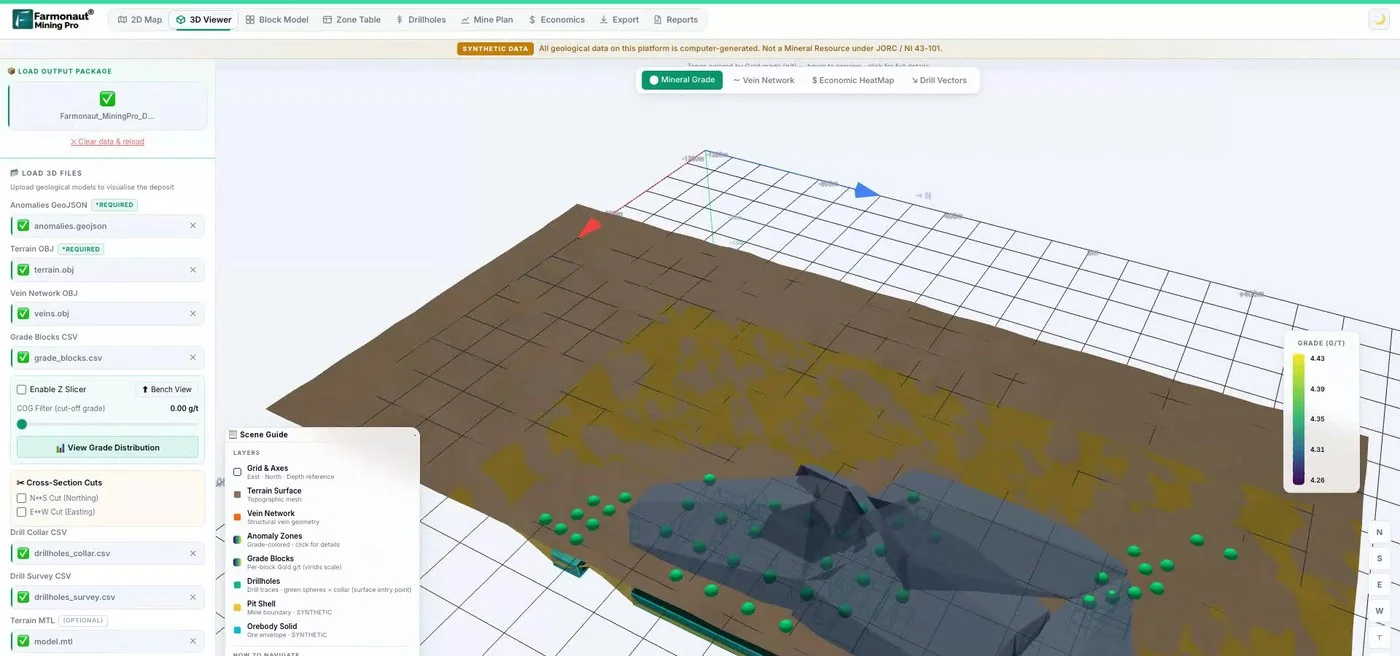
Mining Pro sample view, synthetic data
Keep reading
Sources
- USGS, Mineral Commodity Summaries 2026: Copper: pubs.usgs.gov
- USGS, Mineral Commodity Summaries 2026: Sulfur: pubs.usgs.gov
- USGS, Mineral Commodity Summaries 2026: Gold: pubs.usgs.gov
- USGS, Mineral Commodity Summaries 2026: Silver: pubs.usgs.gov
- USGS, Mineral Commodity Summaries 2026: Selenium: pubs.usgs.gov
- USGS, Mineral Commodity Summaries 2026: Tellurium: pubs.usgs.gov
- USGS, Mineral Commodity Summaries 2026: Molybdenum: pubs.usgs.gov
- USGS, Mineral Commodity Summaries 2026: Rhenium: pubs.usgs.gov
- USGS, Mineral Commodity Summaries 2026: Arsenic: pubs.usgs.gov
- Freeport-McMoRan, Form 10-K for 2025: s22.q4cdn.com
- Southern Copper Corporation, Form 10-K for 2025: southerncoppercorp.com
- USDA AMS National Organic Program, Copper Sulfate technical review (2001): ams.usda.gov
- U.S. EPA, Copper Reregistration Eligibility Decision (2009): www3.epa.gov
- eCFR, 40 CFR Part 63 Subpart QQQ, Primary copper smelting: ecfr.gov
- Troilus Gold, Concentrate Marketing Study (2024): iaac-aeic.gc.ca
Discussion
Questions, corrections or field experience? Share them below. First-time comments are reviewed before they appear, and your email is never published.
No comments yet. Be the first to add a question or your experience.

 Tipareth Mines
 GemSprout Metals Limited
 Qader Group
 Ileys General Trading
 SG Gold Mining LLC
 VRV Global Pte Ltd
 Omsri International FZE
 G.I.T.T.
 Jaunita Erss Ltd
 Almosi SARL
 SRK Consulting
 Berks Gold Limited
 Mwerezi Minerals Company Limited
 Mining SARL
 SenGold Invest SAS
 Sean Mining Limited
 NTS Group (Pty) Ltd
 Mine4Africa

 Client · Oregon, USA · Gold










