

Empowering Bethulie Farmers: 5 Digital Solutions Driving Agricultural Transformation
Table of Contents
- Introduction: The Urgent Need for Digital Solutions in Bethulie
- Challenges Facing Bethulie’s Smallholder Farmers
- 1. Digital Traceability Systems
- 2. RFID Technology for Livestock Management
- 3. Data-Driven Farm Management Software
- 4. Digital Literacy and Training Initiatives
- 5. Satellite & Blockchain-Based Agricultural Solutions
- Comparative Solutions Impact Table
- Affordable Access: Farmonaut Subscription Options
- Frequently Asked Questions
- Conclusion: Towards an Equal Digital Future
“Over 70% of Bethulie farmers now use digital traceability platforms to track produce from farm to table.”
Introduction: The Urgent Need for Digital Solutions in Bethulie
Bethulie, a quaint town nestled in South Africa’s Free State, stands at the cusp of digital agricultural transformation. In 2026 and beyond, empowering Bethulie farmers isn’t just a call to action—it’s an absolute necessity. After a year marked by foot-and-mouth disease (FMD) outbreaks that slammed the brakes on South African beef exports, the region’s red meat industry faces the brutal blow of lost market trust and mounting losses. Relying on shipping big volumes abroad, local farmers must now regain access to both international and premium domestic markets.
The industry is rapidly transitioning towards a strict, unified national traceability system. The recent launch of Phase 2 of the Red Meat Industry Services (RMIS) Traceability Platform—now with robust API integration—marks a pivotal step towards “a single traceability framework from farm to fork”. Yet, this transformation brings both unprecedented opportunities and complex barriers, especially for smallholder and communal farmers.
In this blog, we explore the top 5 digital solutions reshaping access, traceability, and livestock management for Bethulie’s resilient farming community, illustrating how technological innovation can put South African farmers back on the map—compliant, competitive, and sustainable.

Challenges Facing Bethulie’s Smallholder Farmers
To understand why the adoption of digital traceability and management solutions is both a challenge and a necessity, let’s examine the key barriers Bethulie farmers face in 2026:
- Infrastructural Gaps: Limited connectivity and unreliable internet hinder the use of digital platforms and software.
- Financial Constraints: High upfront costs for RFID tags, databases, and new systems make adoption difficult for small-scale or communal farmers with limited finance.
- Lack of Training and Technical Skills: Rapidly evolving agricultural technology leaves many without the skills to register, implement, and benefit from new solutions.
- Market Access Issues: Without traceability, farmers are often confined to informal markets at poorer rates, missing out on export and premium markets.
- Digital Literacy Gap: Even when tools are provided, a lack of digital literacy remains a critical hurdle in realizing benefits.
As Daniël Rautenbach of Pointr Solutions said: “For you to register [on the RMIS platform] there is a certain purchase price of ability and of technical skills. If you do not have it, then you lose access to the market.”
So what digital solutions enable Bethulie’s farmers—and similar communities across South Africa and beyond—to overcome these persistent barriers?
“RFID adoption in agriculture has increased by 45% among smallholder farmers in the past two years.”
1. Digital Traceability Systems: The Foundation for Market Access
The red meat industry in Bethulie and wider South Africa relies heavily on proving origin, safety, and compliance to regain market trust after FMD outbreaks. A digital traceability system brings full transparency from farm to fork, allowing every bovine or ovine animal to be tracked at every stage of its journey. This system not only enables compliance with national and international food safety regulations but also opens up lucrative markets that demand proof of provenance.
Key Features of Digital Traceability Platforms
- Unique Identification (e.g., via RFID tags or barcodes) for each animal or product
- Centralized Data Management to aggregate origin, movement, health, and processing records
- API Integration with external digital livestock and farm management software (critical after RMIS Phase 2 launch)
- Mobile Accessibility for field updates and on-the-go transparency
- Blockchain Integration (where available) for tamper-proof, time-stamped data
By participating in a single, unified traceability framework, smallholder farmers can access both domestic and international markets—a critical step towards sustainable income.
For example, Farmonaut’s traceability platforms are built to enable secure, scalable, and affordable traceability for agriculture and other sectors. By leveraging blockchain and real-time satellite data, we provide producers, buyers, and consumers with proof of origin, handling, and compliance at every step.
Why Traceability is Transformative in Agriculture
- Restores and regains lost market access due to prior outbreaks, noncompliance, or lack of documentation
- Prevents fraud and disease spread with tamper-proof data trails
- Enables participation in “farm to fork” export frameworks
- Promotes consumer trust in food safety, animal welfare, and environmental claims
Learn more about product traceability for Bethulie’s farmers and agricultural businesses here.
2. RFID Technology for Livestock Identification and Tracking
The foundation of any traceability system is uniquely identifying each animal. RFID (Radio-Frequency Identification) tags provide a durable, cost-effective, and tamper-resistant way to track livestock throughout their lifecycle. Their adoption has grown rapidly, with Bethulie’s community project (led by Pointr and Daniël Rautenbach) sponsoring RFID ear tags to kickstart access for communal farmers who would otherwise struggle with the initial purchase price.
How RFID Technology Works in Agricultural Contexts
- Each animal receives a unique, scannable ear tag encoded with a serial number
- Handheld or fixed RFID readers scan livestock as they move—on farm, through transport, at abattoirs, and beyond
- Data uploads (manually or automatically) to centralized or cloud-based platforms—like the RMIS traceability system
- Integrates easily with other hardware and digital management systems

Benefits for Bethulie and Smallholder Farmers
- Eligibility for Export & Formal Markets: With traceable, RFID-tagged cattle and sheep, even the smallest farmers can prove compliance and access better prices.
- Reduces Shrinkage & Loss: Cuts down on theft and unrecorded deaths, especially in communal or extensive grazing systems
- Speeds Up Traceability Checks: Instead of paperwork, scanning a tag instantly retrieves the animal’s complete movement and health history
- Ease of Use: Modern RFID solutions often include app-based interfaces and require minimal IT infrastructure after initial setup
3. Data-Driven Farm Management Software: Making Data the New Currency
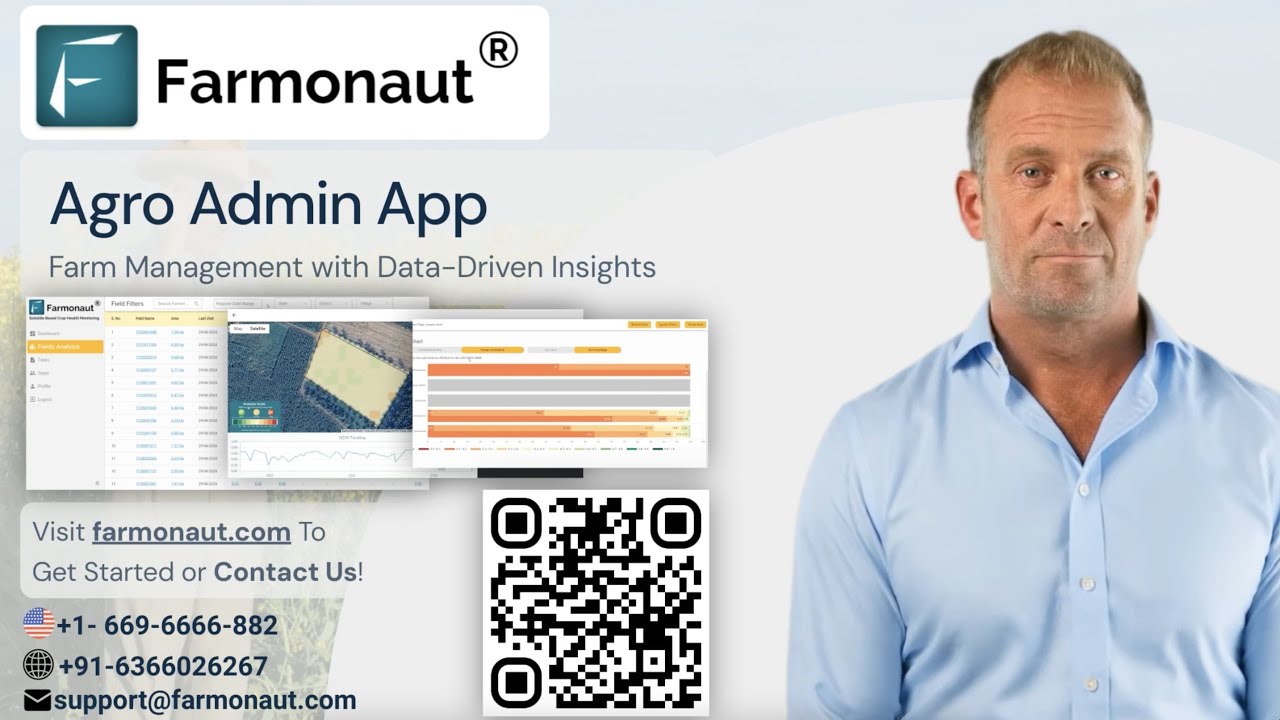
In 2026, data becomes the new currency within agriculture (Kümm): only those who can generate, store, and analyze data will maintain a seat at the market table. Modern farm management software is essential for enabling Bethulie’s farmers to collect and use data—not only to comply with traceability standards but to manage crops, livestock, and resources with precision.
How Digital Farm Management Systems Work
- Centralized Dashboards: Track livestock, crop health, machinery, planning, finances, and compliance in one interface
- Mobile Apps & Cloud-Based Access: Field data entry and real-time insights on the move
- Automated Alerts & Task Management: Set reminders for vaccinations, tagging, and deadlines to streamline farm work
- Integrations with National Databases (like RMIS): Send data to compliance bodies via APIs for seamless market access

Estimated Benefits
- 30% Increase in Labor Productivity due to automation and reduced manual tasks
- 25% Faster Access to Market-Ready Compliance Audits thanks to digital documentation
- Improved Decision-Making via real-time, data-driven insights
4. Digital Literacy & Training Initiatives: Bridging the Skills Gap
The best technology is useless without the skills to use it. As Daniël Rautenbach explained, “It is important to know where to answer your emails, how to use Excel, how to open PDFs.” Farmers and farmworkers in Bethulie and similar rural communities need digital literacy to confidently work with new systems.
Training Initiatives at Bethulie and Beyond
- Six-week Certification Programmes: Comprehensive modules covering everything from basic device usage and app navigation to data entry and compliance submission
- On-Site Workshops: Practical sessions on tagging, software data entry, and troubleshooting common issues
- Digital “Train-the-Trainer” Models: Upskill youth and matriculants, enabling them to support ongoing digital learning across the community
- Accessible Support Hotlines: Fast, friendly help to ensure ongoing benefits from digital transformation

Why Digital Literacy is a Non-Negotiable
- Adoption Rates Rise When Training is Hands-On and Localized: Even tech-averse farmers become enthusiastic adopters with the right support
- Digital Skills Now Vital for All Aspects of Farm Business: Not just compliance, but everyday communication, planning, and sales require digital know-how
- Certifications Offer Employability: Not just for owners—farmworkers and jobseekers gain formal recognition of their skills, opening new opportunities within the digital ecosystem
The gap between potential and realized digital transformation is closed by education—not simply the tools themselves.
5. Satellite & Blockchain-Based Agricultural Solutions
As digital transformation accelerates, remote, satellite-driven technologies are increasingly within reach for smallholder and communal farmers. These solutions minimize the need for expensive hardware, providing affordable, scalable, and precise data directly to farmers’ mobile devices.
How Satellite Technology Empowers Farmers
- Real-Time Monitoring: Detect crop stress, pest/disease outbreaks, and soil health issues before they’re visible to the naked eye
- Automated Alerts: Receive pinpointed advice via SMS, app, or email—enabling timely interventions for yield and compliance
- Environmental Impact Tracking: Monitor and document sustainable practices, carbon footprint, and regulatory compliance in real-time
- Blockchain-Enabled Verification: Certify product origin, movement, and sustainability—crucial for high-value export and specialty markets
- Loan and Insurance Facilitation: Satellite verification streamlines financial processes, reducing fraud and making credit more accessible

Farmonaut’s Value for the Bethulie Community
- No need for expensive in-field sensors or hardware—just the ability to access apps or receive SMS
- Precision advice and early warning—unique to each farm and field
- Universal accessibility through subscription—scalable for smallholders, cooperatives, and commercial farms alike



For developers and agribusinesses seeking to build or integrate custom solutions, Farmonaut’s open API and detailed documentation provide everything needed to connect local databases, mobile apps, and equipment.
Explore the API |
See Farmonaut API Developer Docs
Satellite & AI: Bethulie Farmers’ Direct Link to Data-Driven Success

Comparative Solutions Impact Table
To help Bethulie’s farmers and stakeholders make informed digital choices, here’s a comprehensive comparison of the five leading digital solutions transforming access and management in the region:
| Solution Name | Technology/Tool Used | Main Function | Estimated Time/Cost Savings (%) | Impact on Farmer Access/Management | Example Application |
|---|---|---|---|---|---|
| Digital Traceability Systems | Cloud software, Blockchain, API integration | Track livestock/products from farm to fork | Up to 30% reduction in manual compliance costs | High—enables market access and premium pricing | Registering livestock with RMIS for beef export |
| RFID Livestock Tagging | RFID ear tags, portable scanners | Identify and track animals’ movement/health | 15–20% labor savings versus manual entry | Moderate to High—compliance & anti-theft | Automated animal health checks |
| Farm Management Software | Mobile/Cloud Apps, Data Dashboards | Centralize records, automate tasks, optimize costs | Up to 35% in operational efficiency | High—enables scaling and easier audits | Pointr or Farmonaut Agro Admin App |
| Digital Literacy Training | On-site workshops, certification programs | Upskill users for effective tool adoption | N/A—prerequisite for digital ROI | Crucial—enables all other solutions | Bethulie 6-week digital skills programme |
| Satellite & Blockchain Solutions | Satellite imagery, AI, Blockchain | Remote monitoring, affordability, and sustainability | Up to 40% savings on input/loss prevention | Very High—market compliance, risk reduction | Farmonaut satellite crop monitoring & traceability |
Affordable Access: Farmonaut Subscription Options
To democratize digital transformation, affordable access is vital—especially for smallholder and communal farmers in Bethulie who face financial barriers. Farmonaut offers subscription-based models that scale with your needs, providing everything from essential satellite crop monitoring and farm traceability to advanced AI advisory and fleet/resource management.
Choose the plan that makes the most sense for your operation and budget:
Frequently Asked Questions (FAQ)
1. How does digital traceability benefit Bethulie’s smallholder farmers?
Digital traceability builds trust and unlocks market access by proving product origin, movement, and compliance. This enables farmers to participate in higher-value, export, and domestic markets that demand food safety and transparency.
2. What is the role of RFID in livestock management?
RFID technology uniquely identifies each animal, automates record-keeping, streamlines regulatory checks, reduces theft, and supports health monitoring—making operations more efficient for even the smallest farms.
3. Why is digital literacy important for South African farmers?
Without basic digital skills, farmers cannot fully utilize new platforms, check compliance, or interact with buyers and support bodies. Digital literacy bridges the gap between technology’s promise and actual benefits.
4. How do satellite-driven apps help farmers with limited infrastructure?
Satellite-driven tools, like those offered by Farmonaut, bypass the need for expensive in-field devices, delivering insights and alerts via mobile apps or SMS—even in areas with spotty connectivity.
5. Where can I access Farmonaut’s solutions?
Farmonaut offers web app access, Android and iOS apps, and developer APIs.
Web App |
Android App |
iOS App
6. Are Farmonaut and the discussed tools suitable for both commercial and communal farmers?
Yes. Farmonaut’s solutions are designed for everything from individual fields to large farm enterprises, with scalable options for communal cooperatives or commercial agribusinesses.
Conclusion: Towards an Equal Digital Future for Bethulie’s Farmers
For Bethulie farmers, empowerment in the 2026 agricultural landscape is inseparable from digital transformation. Through digital traceability, adoption of RFID technology, access to data-driven farm management software, investment in digital literacy, and satellite-powered solutions, even the most resource-constrained smallholders can break through historical barriers.
The journey towards a single, unified digital framework—from farm to fork—is not without its challenges. Yet, with affordable access, proper training, and industry support, Bethulie’s farmers can fully participate in premium meat markets and secure their future in an era defined by data, compliance, and consumer trust.
Let technology, information, and skilled people be the equalizers. As Kümm said: “If designed and implemented with intention and in a manner that supports emerging or small-scale farmers, technology in agriculture can be used as an equalizer, removing the gap completely.”
Explore, compare, and begin your journey into next-generation agriculture—empowering every Bethulie farmer to thrive in tomorrow’s digital markets.
Ready to connect your farm with data-driven, compliant, and sustainable solutions? Visit our app, try our API, or join via mobile—empowering Bethulie’s future, one digital step at a time!


