

Organic Matter in Agriculture: 10 Proven Tips (2025)
Meta description (preview): Organic matter in agriculture powers soil life and SOC. Learn the importance of organic matter in agriculture, how to build climate-resilient soils, and 10 proven tips for 2025.
As we enter 2025, the conversation about organic matter in agriculture has shifted from theory to action. Farmers, agronomists, and agroforestry managers now recognize that organic matter (OM) is the engine of soil life, a central attribute of productive, resilient farmland. In practical terms, OM—often expressed as soil organic carbon (SOC)—enhances nutrient cycling, improves structure and water dynamics, buffers pH and cation exchange, supports biological diversity, and contributes to climate mitigation by storing atmospheric CO2. If you’ve ever asked, “what is organic matter in agriculture?” or searched for a clear “organic matter definition agriculture,” this comprehensive guide will help you connect principles to field-ready practices.
“Cover crops can add 0.3–1.0 t C/ha/year to soils strengthening climate resilience, Compost at 5–10 t/ha annually can raise SOC by 0.1–0.3 percentage points in 3–5 years”
Table of Contents
- What Is Organic Matter in Agriculture? (SOC basics and definitions)
- Why Organic Matter Matters in 2025: Functions and Farm Performance
- Components, Typical Values, and Targets for SOC
- Measurement and Monitoring of SOC (2025-ready)
- Organic Matter in Agriculture: 10 Proven Tips (2025)
- Practice-to-Impact Comparison Table: OM, SOC, Water, and Climate Resilience
- Risks, Trade-offs, and Quality Considerations
- How We Support SOC With Satellite Tech (Farmonaut Tools)
- Frequently Asked Questions



What Is Organic Matter in Agriculture?
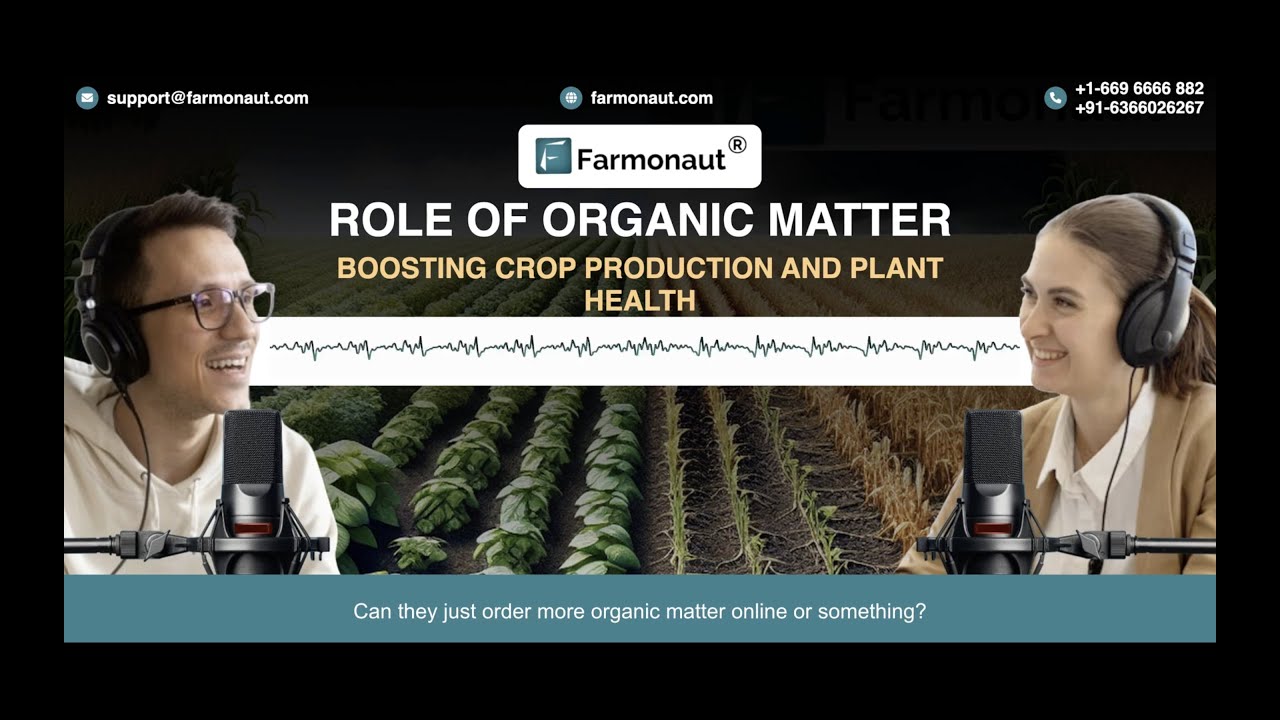
The phrase “organic matter in agriculture” refers to the fraction of soil composed of plant and animal residues at various stages of decomposition, living organisms (including microbes, earthworms, and roots), and stable humus. In practice, this pool is often expressed as SOC—soil organic carbon—a measurable indicator used in reporting, management, and climate monitoring.
In short, the organic matter definition agriculture experts use connects directly to farm performance: OM performs multiple, interlinked functions that determine soil health, nutrient supply, structure, water handling, and carbon sequestration. It is the engine of soil life, a central attribute of resilient farmland in crops and agroforestry systems alike.
When we ask “what is organic matter in agriculture,” we must also ask how OM increases resilience and the importance of organic matter in agriculture under a changing climate. The answer lies in the way OM drives cycling of nitrogen, phosphorus, sulfur, and micronutrients, and how OM enhances aggregation, porosity, and infiltration while buffering pH and improving cation exchange capacity.

Why Organic Matter Matters in 2025: Functions and Farm Performance
In 2025, building and maintaining OM is essential, not optional. Climate extremes intensify, and farms need to be more resilient. OM matters because it does the following:
- Nutrient cycling and supply: As residues and roots undergo decomposition, they release nitrogen, phosphorus, sulfur, and micronutrients in plant-available forms. Microbial activity is driven by organic substrates. This stabilizes the supply of nutrients and reduces reliance on soluble fertilizers.
- Soil structure and water dynamics: OM binds soil particles into aggregates, improving porosity, infiltration, and water-holding capacity. This lowers runoff and erosion and improves drought tolerance—essential as extremes intensify.
- Cation exchange and pH buffering: Organic compounds boost cation exchange capacity and buffering, reducing nutrient leaching, improving fertilizer efficiency, and balancing ph for root growth.
- Biological diversity and disease suppression: A rich OM matrix supports beneficial microbes, mycorrhizae, and macrofauna that help suppress pathogens, enhance nutrient uptake, and promote root growth.
- Carbon sequestration and climate mitigation: Increasing SOC stores atmospheric CO2, contributing to climate action and providing potential for participation in carbon incentive schemes. This is a clear path to mitigation while improving yields and soil health.
In modern agriculture, these interlinked benefits translate into better farm performance. OM creates soils that are productive, resilient, and responsive to good management. That is why the importance of organic matter in agriculture is at an all-time high.

Components, Typical Values, and Targets for SOC
Organic matter is roughly 58% carbon by mass. Because of that relationship, SOC is the measurable indicator most widely used in reporting and policy. In mineral soils, SOC can range from <1% in degraded sands to >5% in well-managed soils with high OM. Practical targets depend on climate, parent material, and current OM levels.
Many regenerative programs aim to increase SOC by 0.1–0.5 percentage points per decade. That is realistic in most regions when we use diverse practices such as residue retention, cover crops, reduced or no-tillage, compost, manure, and biochar amendments, plus agroforestry or integrated livestock to recycle biomass. Continuous inputs, minimal disturbance, and good moisture management are the levers that move SOC.
Remember that OM includes both stable humified pools and more labile fractions that turn over faster. Sustainable SOC gains come when we feed both: we add residues, protect aggregates, and build longer-lived humus.
Measurement and Monitoring of SOC (2025-ready)
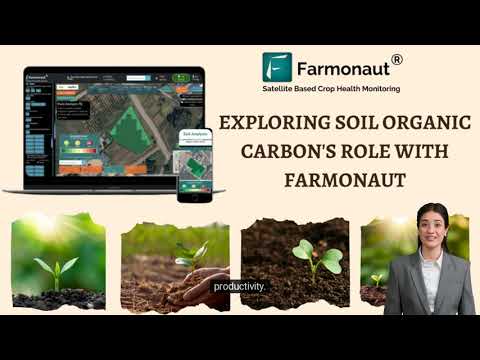
Accurate monitoring is vital. SOC measurement starts with a baseline and standard sampling methods, then integrates in-field sensors and remote sensing to track change over time. In 2025, a combined approach is best:
1) Field and Lab Methods
- Dry combustion (recommended): Provides precise SOC data. Consistent depth—often 0–15 cm or 0–30 cm—is key.
- Bulk density: Needed to convert SOC concentration to stocks (t C/ha). Track changes alongside aggregation and infiltration.
- Aggregate stability: Indicates the strength of OM-driven structure, which reduces erosion and runoff.
2) Sensors, Remote Sensing, and Digital Soil Mapping
- In-field probes: Give rapid indications of organic trends when calibrated to lab data.
- Multispectral satellite indices (NDVI, cover percent): Track green cover, residues, and vigor to infer OM inputs and reduced disturbance.
- Digital soil mapping: Combines legacy data, terrain, and spectral inputs to model SOC across fields.
Such integrated monitoring supports data-rich management, smoother reporting for carbon incentive schemes, and better targeting of practices that build SOC while cutting n2o emissions.

“Cover crops can add 0.3–1.0 t C/ha/year to soils strengthening climate resilience, Compost at 5–10 t/ha annually can raise SOC by 0.1–0.3 percentage points in 3–5 years”
Organic Matter in Agriculture: 10 Proven Tips (2025)
This section translates principle into practice. Each tip relates directly to the importance of organic matter in agriculture, showing how to increase OM inputs, protect structure, and enhance resilience while managing nutrients and reducing emissions.
Tip 1: Retain Residues and Roots—Avoid Burning
Residue retention is a cornerstone of OM management. Keep residues on the surface as mulch, and maintain living roots as long as possible. Together, these practices increase om inputs, binds soil particles into aggregates, and improve porosity and infiltration. Burning, by contrast, oxidizes carbon and leaves soil bare, raising erosion risks. Retention also moderates soil temperature and microbial habitat, which reduces moisture loss and supports microbial activity.
Tip 2: Plant Diverse Cover Crops for Continuous Living Roots
Cover crops feed microbes during off-season windows, create stable channels for water, and reduces erosion. Mixes with grasses, brassicas, and legumes complement functions: grasses add fibrous residues, brassicas improve rooting depth, and legumes fix nitrogen. The result is balanced nutrient supply, improved structure, and rising SOC. This strategy is essential for climate resilience in 2025.
Tip 3: Use Compost and Well-managed Manures
High-quality compost and manure amendments add both labile and stable carbon. Compost introduces humified materials and microbial inocula that enhance microbial activity. Rate and timing matter: 5–10 t/ha annually is common where feasible. Screen for salts and weed seeds. Combined with residues and covers, compost builds long-term humus and helps buffer ph, reducing nutrient leaching and improving fertilizer efficiency.
Tip 4: Evaluate Biochar for Stability and Nutrient Interactions
Biochar is a highly stable form of carbon that can persist for decades. It enhances cation exchange capacity and moisture retention. It is not a fertilizer, but it can synergize with compost or manures to improve nutrient use efficiency, reduce leaching, and support beneficial microbes. Match the char’s feedstock and pyrolysis conditions to soil needs.
Tip 5: Reduced or No-Tillage With Thoughtful Residue Management
Minimizing disturbance slows OM oxidation and preserves aggregates. Reduced/no-till works best when residue cover is high and cover crops are integrated. Transition gradually if needed. Avoid compaction during wet periods; use controlled traffic to maintain pore networks. Expect improvements in water infiltration and earthworm activity, which supports OM cycling and disease suppression.
Tip 6: Diversified Rotations With Legumes
Rotations diversify substrates and root architectures, building a rich biological matrix. Including legumes supplies biological nitrogen that helps balance carbon-to-nitrogen ratios, which stabilizes OM build-up and cuts dependence on synthetic N. Diverse rotations also interrupt pest cycles and reduces disease pressure.
Tip 7: Integrate Livestock and Agroforestry Where Feasible
Mixed systems recycle biomass efficiently. Managed grazing returns manures to fields, while agroforestry adds perennial inputs from leaf litter and prunings. Trees promote deeper roots, shade, and microclimate buffers that support resilience. Ensure stocking rates and timing avoid overgrazing to protect cover and structure.
Tip 8: Precision Nutrient Management to Avoid Excess N
Over-application of N can accelerate OM mineralization and spike n2o emissions. Use soil tests, split applications, enhanced-efficiency products, and variable-rate techniques to match crop demand. This keeps nitrogen in plant-available forms while protecting SOC. The approach reduces reliance on soluble fertilizers and enhances efficiency.
Tip 9: Water-Smart Practices to Protect Aggregates
Good water management reduces crusting and erosion. Improve infiltration with cover, residues, and contouring. Use mulches to cushion raindrop impact. Drain excess water to prevent prolonged saturation that can cause denitrification and n2o emissions. Water-smart fields keep om where it belongs—in your soils.
Tip 10: Monitor, Verify, and Report SOC Over Multi-year Intervals
OM gains are incremental. Build a monitoring plan with fixed sampling depths, GPS-located points, and consistent lab methods. Combine NDVI, cover percent, and field observations to track progress. Reliable data supports claims in carbon incentive schemes, improves decision-making, and documents mitigation outcomes.


Practice-to-Impact Comparison Table: Organic Matter, SOC, Water Holding, Climate Resilience
Use this quick, SEO-optimized comparison to connect soil-building practices with outcomes in SOC, water, nutrients, and climate resilience. Estimates are realistic ranges based on meta-analyses and field trials; exact results will depend on soil type, climate, and starting conditions.
| Practice | Mechanism | Estimated SOC gain (t C/ha/yr) | Water infiltration increase (%) | Bulk density change (g/cm³) | Nutrient supply boost (kg N-P-K/ha/yr) | Erosion reduction (%) | Time to visible impact (months) | Implementation cost ($/ha) | Climate resilience score (1–5) | Evidence strength | Monitoring indicator |
|---|---|---|---|---|---|---|---|---|---|---|---|
| Cover crops | Continuous living roots, residue inputs, aggregation | ~0.2–0.6 | ~10–30 | −0.05–0.10 | ~20–40 N | ~20–40 | ~6–12 | ~40–120 | 4–5 | Meta-analyses | NDVI, cover percent |
| Compost/manure | Stable carbon, microbial stimulation | ~0.3–0.7 | ~10–25 | −0.05–0.15 | ~30–60 N | ~25–45 | ~6–12 | ~60–150 | 4–5 | Trials + meta | Soil tests, SOC |
| Reduced/no-till | Lower oxidation, aggregate preservation | ~0.1–0.4 | ~10–20 | −0.02–0.10 | ~10–25 N | ~20–35 | ~9–18 | ~30–80 | 3–4 | Meta-analyses | Residue cover, SOC |
| Residue retention/mulch | Surface protection, OM input | ~0.2–0.5 | ~15–30 | −0.05–0.10 | ~15–30 N | ~30–50 | ~6–12 | ~20–70 | 4–5 | Trials | Cover percent, infiltration |
| Crop rotation with legumes | Biological N, diverse roots and residues | ~0.2–0.4 | ~10–20 | −0.03–0.08 | ~20–40 N | ~20–40 | ~9–18 | ~20–80 | 3–4 | Meta-analyses | Crop diversity, SOC |
| Agroforestry | Perennial inputs, deeper roots, microclimate | ~0.3–0.8 | ~15–30 | −0.05–0.12 | ~20–40 N | ~30–50 | ~12–24 | ~60–150 | 4–5 | Trials + meta | Tree cover, SOC |
| Biochar | Stable carbon, CEC, moisture retention | ~0.1–0.3 | ~10–20 | −0.02–0.08 | ~10–25 N | ~15–35 | ~6–12 | ~80–150 | 3–4 | Trials | SOC, soil tests |
| Rotational grazing | Manure return, sward recovery, residue retention | ~0.2–0.5 | ~10–25 | −0.03–0.10 | ~20–40 N | ~20–40 | ~9–18 | ~20–100 | 3–4 | Trials | Ground cover, SOC |
Optional additional metrics to consider in your plan: expected yield effect (~2–8%) and emission reduction potential (~0.3–1.0 t CO2e/ha/yr), both influenced by baseline soil conditions and implementation quality.
Risks, Trade-offs, and Quality Considerations
As with any soil-health strategy, there are trade-offs. Sound management helps capture the upsides while avoiding problems.
- Amendment quality: Poorly processed compost or manure can introduce weeds, salts, or pathogens. Ask for analyses when possible; test on a small area first.
- Transient N2O emissions: Increased microbial activity can temporarily raise n2o emissions if nitrogen is abundant and soils are wet. Use precision N and water management.
- Biochar variability: Feedstock and pyrolysis temperature shape properties. Match to your soils.
- Reversion risk: Long-term OM gains are lost quickly if intensive tillage resumes. Protect aggregates and maintain cover.
- Timing and logistics: Cover crop windows and compost availability can be challenging. Plan rotations and sourcing early.

How We Support SOC With Satellite Tech (Farmonaut Tools)
We at Farmonaut provide satellite-powered tools that make monitoring and management of organic matter and SOC more accessible, affordable, and actionable for agriculture and agroforestry systems in 2025.
What We Offer for SOC and OM Management
- Satellite-Based Monitoring: We deliver multispectral imagery to assess vegetation health (e.g., NDVI) and infer cover, residue retention, and potential erosion hotspots—key signals for OM management and monitoring.
- Jeevn AI Advisory System: We use AI to contextualize satellite data with weather and field history, providing timely advice to promote practices like cover crops, residue retention, and reduced tillage that build SOC and boost resilience.
- Environmental Impact Monitoring: We support carbon footprint tracking in agriculture with data that helps quantify SOC-related mitigation and optimize inputs to minimize emissions.
- Blockchain-Based Traceability: We can help document sustainability claims and supply chain transparency, which supports participation in incentive schemes and market access.
Farmonaut API lets you integrate satellite and advisory insights into your own systems, while the API Developer Docs explain endpoints, authentication, and implementation tips.
Product Links to Accelerate Your SOC Journey
- Carbon Footprinting: Use satellite-backed data to track field emissions and SOC-linked mitigation moves. This supports reporting and readiness for carbon incentive schemes.
- Product Traceability: Document “climate-smart” practices like residue retention and cover crops with blockchain, enhancing transparency and potentially improving premiums.
- Crop Loan & Insurance: Satellite-based verification can streamline access to finance by showing crop vigor, cover status, and risk reduction from OM-building strategies.
- Large-Scale Farm Management: Manage many fields with unified dashboards for NDVI, cover, and tasking. Coordinate practices that increase SOC across your portfolio.
- Fleet Management: Optimize field operations and reduce unnecessary passes that can cause compaction, protecting structure and infiltration.
- Crop Plantation & Forest Advisory: Support for perennial systems and agroforestry, which deliver lasting inputs of carbon and residues.
Getting Started
Access our platform via the links below to begin tracking cover, residue, and SOC signals alongside weather and advisory tools:
Frequently Asked Questions
What does “organic matter in agriculture” include?
It includes plant and animal residues at various stages of decomposition, living organisms like microbes and earthworms, and stable humus. It is often expressed as SOC for measurement and reporting.
Why is the importance of organic matter in agriculture rising in 2025?
OM boosts nutrient supply, structure, water capacity, and resilience as climate extremes intensify. It also supports mitigation by storing carbon, enabling participation in carbon incentive schemes.
How fast can SOC increase?
Realistic gains are 0.1–0.5 percentage points per decade, depending on baseline, climate, and practices. A combined approach—cover crops, residues, reduced tillage, compost, and biochar—usually performs best.
What’s the role of nitrogen in building OM?
Balanced N supports biomass and humus formation. Too much mineral N can trigger rapid mineralization and n2o emissions. Precision N helps build SOC while protecting the environment.
How do I measure success beyond SOC?
Track bulk density, aggregate stability, infiltration, residue cover, NDVI, and crop performance. Together, these indicators show whether your soil is becoming more productive and resilient.
Can agroforestry help in annual crop systems?
Yes. Incorporating trees adds perennial inputs and deeper roots, which strengthen structure, improve water handling, and build SOC over time.
Does compost always improve SOC?
Quality and consistency matter. Good compost generally increases SOC and biological activity. Test materials for salts and contaminants and integrate with cover and residue strategies.
Is Farmonaut a marketplace or seller of farm inputs?
No. We are a satellite technology company offering monitoring, AI advisory, and digital tools to support better management, not a marketplace, input seller, or regulatory body.
Where can I access Farmonaut tools?
Use the web or mobile apps linked above, connect to the API, and read the Developer Docs for integrations.
What is “agriculture matter” in sustainability discussions?
It’s shorthand for the environmental and economic matters that affect agriculture, with OM and SOC at the core because they influence health, performance, and mitigation potential.
Conclusion
In 2025 and beyond, organic matter is the beating heart of productive, climate-resilient soils. By combining residue retention, cover crops, reduced disturbance, targeted amendments, integrated systems, and robust monitoring, farms can strengthen structure, water dynamics, and nutrient supply while building SOC. The result is lower risk, better efficiency, and measurable mitigation—a durable foundation for sustainable agriculture.


