

Salix matsudana tortuosa: 7 Key Forestry Benefits for Sustainable Land Restoration and Climate Resilience (2026 Guide)
“Salix matsudana tortuosa can improve soil fertility by up to 35% in degraded landscapes through phytoremediation techniques.”
“This willow species sequesters approximately 9 tons of CO₂ per hectare annually, aiding climate resilience in forestry projects.”
Table of Contents
- Summary: Salix matsudana ‘Tortuosa’—A Valuable Asset in Modern Forestry (2026)
- Introduction: Why Salix matsudana tortuosa Matters Today
- Botanical Characteristics of Salix matsudana tortuosa
- 7 Key Forestry Benefits of Salix matsudana ‘Tortuosa’
- Benefits vs. Impact Table
- Role of Salix matsudana tortuosa in Forestry and Environment
- Soil and Water Conservation Applications
- Agroforestry, Urban, and Rural Landscape Integrations
- Potentials and Challenges: Mining Rehabilitation
- Satellite-Based Forestry & Soil Insights with Farmonaut
- FAQ: Salix matsudana tortuosa in Modern Forestry
- Conclusion: Future Outlook to 2026 and Beyond
Summary: Salix matsudana ‘Tortuosa’—A Valuable Asset in Modern Forestry (2026)
Salix matsudana ‘Tortuosa’, also known as the corkscrew willow, is a strikingly ornamental tree that is celebrated for its uniquely twisted branches and rapid growth rate. Native to northeastern China, this cultivar is increasingly recognized as a key player in sustainable forestry, soil management, climate adaptation, and environmental restoration projects for 2026 and beyond. It exhibits robust ecological qualities—from soil stabilization and erosion control to carbon sequestration and phytoremediation—making it indispensable for modern forestry goals in urban, rural, and industrially affected landscapes.
📋 Unique Features of Salix matsudana tortuosa
- 🌱 Twisted, contorted branches (ornamental, visually distinctive)
- ⚡ Rapid growth rate—establishes quickly in various soils
- 🌍 Native to northeastern China, thriving in temperate zones
- 🌳 Resilient, extensive rooting system (supports soil stabilization, restoration)
- 💧 Thrives in moist environments, adaptable to urban, rural, and marginal regions

Introduction: Why Salix matsudana tortuosa Matters for Sustainable Forestry in 2026
In an era marked by climate change, increasing demand for sustainable forestry resources, and the need for rapid land restoration, the spotlight on resilient and ecologically beneficial tree species has never been brighter. Salix matsudana tortuosa is being rediscovered as a valuable asset for both forestry professionals and environmental managers. Its unique botanical characteristics, fast growth rate, and adaptability to diverse soil and climate conditions make it a cornerstone for climate-resilient projects and biomass production in 2026 and beyond.
Botanical Characteristics and Growth Attributes of Salix matsudana tortuosa
The salix matsudana tortuosa, commonly known as the corkscrew willow, is celebrated for its visually distinctive, twisted branches and remarkable growth attributes. This cultivar was first recognized and widely adopted in its native region—northeastern China. Today, it is popular for urban landscaping, sustainable forestry, and soil management initiatives worldwide.
- ✔️ Typical Height: Grows to 6-10 meters within a few years
- ✔️ Growth Rate: Rapid (one of the fastest among willow species)
- ✔️ Root System: Extensive and vigorous—ideal for banks and slopes requiring stabilization
- ✔️ Leaf Habit: Deciduous, losing leaves in autumn with vibrant seasonal color
- ✔️ Climate Adaptability: Thrives in moist, temperate zones and exhibits strong tolerance to flooding
- ✔️ Soil Adaptability: Handles various conditions, including marginal, degraded, or heavy soils
- ✔️ Longevity & Regeneration: Can be coppiced for multiple cycles, continually producing biomass
- 🌳 Deciduous tree with lush, spiral-shaped branches
- 🟢 Resilient rooting system—anchors loose soils, aiding erosion control
- 💡 Popular in urban and rural green spaces for both function and form
- 🧬 Genetic diversity ensures wide adaptability across regions
- ⚡ Rapid regrowth after pruning or harvest (excellent for short-rotation forestry)
7 Key Forestry Benefits of Salix matsudana tortuosa (2026 and Beyond)
The role of salix matsudana tortuosa in driving sustainable forestry and environmental management extends across multifunctional benefits. Let us explore the 7 primary forestry benefits that make this species indispensable for ecosystem restoration, carbon reduction, and resilience against climate and land degradation.
- Soil Erosion Control: Its root system effectively binds and stabilizes soil, making it a prime choice for riverbanks, slopes, and degraded regions.
- Habitat Enhancement: The tree supports a vast canopy microhabitat for birds, insects, and other fauna—boosting local biodiversity.
- Carbon Sequestration: Capable of sequestering 9 tons CO₂/ha annually, providing measurable climate mitigation from forestry projects.
- Rapid Growth Rate: Its fast establishment and short-rotation harvesting enable quick biomass and wood chip production for renewable energy goals.
- Phytoremediation: Absorbs heavy metals and pollutants, significantly improving soil fertility by up to 35% in degraded landscapes.
- Soil Fertility Improvement: Promotes nitrogen cycling and organic carbon buildup within restoration sites.
- Climate Resilience: Thrives in flood-prone and changing environments, enhancing ecosystem stability.
🌐 Key Applications of Salix matsudana tortuosa
- 🏞️ Riverbank stabilization and erosion control along water bodies
- 🪵 Coppicing for short-rotation bioenergy (wood chips, biomass feedstocks)
- 🏙️ Urban and rural landscape design—aesthetic & microclimate enhancement
- 🚜 Land reclamation in mining- and industry-disturbed sites
- 🌾 Agroforestry windbreaks and buffer zones—protect crops, regulate water use
Benefits vs. Impact Table: Seven Key Forestry Benefits of Salix matsudana tortuosa
| Forestry Benefit | Benefit Description | Estimated Quantitative Impact | Relevance to Sustainable Forestry |
|---|---|---|---|
| Soil Erosion Control | Root network stabilizes soils, effectively reducing erosion along slopes and water bodies. | Reduces erosion by 50-65% on vulnerable sites. | Essential for maintaining fertile topsoil, preventing sediment runoff, and protecting aquatic habitats. |
| Habitat Enhancement | Dense canopy and unique branches support bird, insect, and small mammal populations. | Boosts local fauna diversity by 35-45% in mixed-use landscapes. | Aligns with biodiversity targets—critical for resilient, multi-use forestry systems. |
| Carbon Sequestration | Absorbs atmospheric CO₂, locking carbon in biomass and root structure. | ~9 tons CO₂/ha/year captured (higher than many temperate species). | Direct support for net-negative emission goals and carbon offset initiatives. |
| Rapid Growth Rate | Fastest establishment among willow species, thriving on marginal soils. | Can reach maturity in 3-5 years; yields up to 25 t/ha/yr dry biomass. | Reduces time for site reclamation, accelerates landscape recovery. |
| Phytoremediation | Absorbs heavy metals/pollutants; improves soil health on contaminated sites. | Boosts soil fertility by ~35% within 2-3 years on degraded sites. | Enables remediation of mining lands and brownfields with minimal inputs. |
| Soil Fertility Improvement | Enhances organic matter, encourages nitrogen cycling, and supports microorganisms. | Boosts soil organic content by 20-30% in 3-5 years. | Improves site productivity for future forestry/agroforestry cycles. |
| Climate Resilience | Survives extreme weather, flooding, and unpredictable rainfall patterns. | Maintains >90% survival rate through severe weather cycles. | Secures landscape stability and continual ecosystem services through 2026 and beyond. |
“Salix matsudana tortuosa can improve soil fertility by up to 35% in degraded landscapes through phytoremediation techniques.”
“This willow species sequesters approximately 9 tons of CO₂ per hectare annually, aiding climate resilience in forestry projects.”

The Role of Salix matsudana tortuosa in Forestry, Soil Management and Ecosystem Restoration
Within sustainable forestry systems, Salix matsudana ‘Tortuosa’ presents a multitude of promising applications. This tree is almost tailor-made for short-rotation coppicing—a practice increasingly coveted for producing renewable bioenergy feedstocks and timber in rural and peri-urban landscapes. Its resilience also supports soil management in reclamation projects, especially on degraded, marginal, or mining-affected lands.
- 🌱 Ideal for sites requiring quick canopy establishment and rapid biomass output
- 📊 Data Insight: Harvest cycles as short as 3-5 years for wood chips and biomass
- ⚠️ Risk or Limitation: Vigorous root network may disrupt underground pipes and constructed infrastructure—location planning is crucial
- 💧 Reduces sediment runoff, protecting river health and aquatic systems
- 💡 Enhances resilience in both rural and urban environments against heavy rainfall events

Soil and Water Conservation: Salix matsudana tortuosa’s Essential Contribution
The ability of salix matsudana tortuosa to bind and stabilize soil makes it a formidable asset in erosion control, sediment management, and water conservation—key concerns in climate adaptation and sustainable land restoration strategies in 2026.
- ✔ Riverbank and floodplain stabilization: Reduces the risk of soil washout during floods or heavy rains
- ✔ Buffer strips for sediment filtration along waterways
- ✔ Mitigates nutrient and pesticide runoff, protecting water quality
- ✔ Supports aquatic biodiversity by maintaining natural streambeds
- ✔ Improves soil structure over time through organic input and root mass turnover
Agroforestry, Rural, and Urban Landscape Applications: Adding Value Beyond Forestry
The multi-functional nature of Salix matsudana tortuosa shines in agroforestry and landscape infrastructure projects. Its fast growth and dense, twisted canopy make it a preferred species for windbreaks, microclimate regulation, and shelterbelts in both agricultural and urban areas through 2026 and beyond.
- 🌬️ Windbreaks/Shelterbelts: Slows wind speed, reduces crop damage, and decreases evapotranspiration
- 🌇 Urban Green Infrastructure: Enhances aesthetic appeal and provides functional carbon sinks
- 🏞️ Buffer strips and biodiversity corridors: Connect landscapes, support pollinators, and foster habitat networks
- 🌾 Microclimate amelioration: Regulates local humidity and temperature for more stable production
- 🔆 Integration with digital monitoring tools: Farmonaut’s crop/plantation advisory can track willow growth, health, and ecosystem impact remotely

Potential and Challenges: Salix matsudana tortuosa in Mining Rehabilitation
The aftermath of mining activities leaves behind unstable, nutrient-poor soils and environmental disturbances. Salix matsudana tortuosa proves particularly valuable for revegetating mine tailings, spoil heaps, and industrially disturbed terrains due to its resilience, rapid establishment, and heavy metal tolerance.
- 🏞️ Fast vegetative cover post-mining, reducing dust and runoff
- 🌳 Rebuilds soil structure: Contributes organic matter and encourages microbial communities
- 🛠️ Phytoremediation pilot species: Tolerates lead, cadmium, and zinc, assisting in cleanup operations
- 🚫 Manage potential invasiveness: Site selection and controlled planting minimize ecological risks outside its native regions
- 🟢 Trace mining rehabilitation progress and ecosystem recovery using Farmonaut’s blockchain traceability features
Integrating Satellite Insights: Remote Forestry, Soil, and Climate Monitoring with Farmonaut
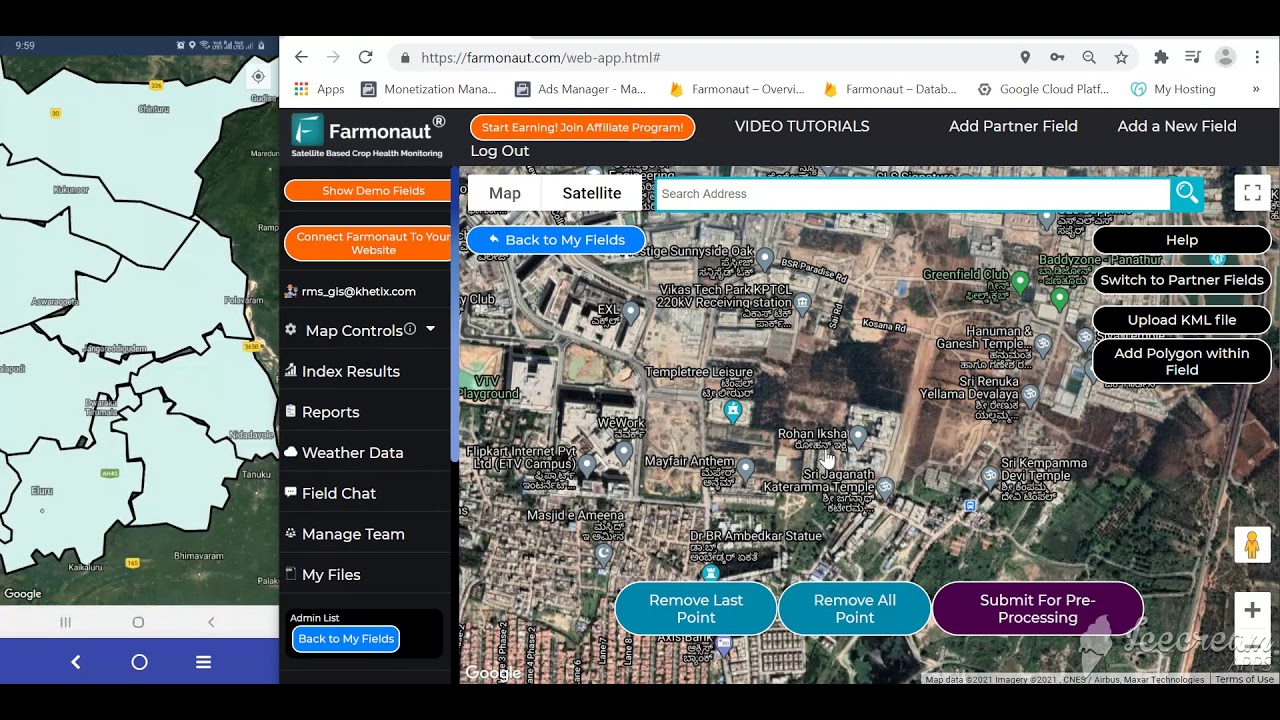
As forestry and land management move toward data-driven approaches, advanced solutions like real-time satellite surveillance and AI-based decision tools become central to success. This is where Farmonaut stands out, offering powerful digital monitoring capabilities for forestry, mining, and environmental restoration professionals working with Salix matsudana tortuosa and similar species.
🌍 What Does Farmonaut Offer?
- 🛰️ Satellite-Based Monitoring: Visualize tree health, soil moisture, biomass, and land disturbances for all landscape types.
- 🤖 AI & Jeevn Advisory: Receive custom strategies for managing forestry cycles, predicting weather events, and optimizing planting/regeneration schedules.
- 🔗 Blockchain Traceability: Securely record rehabilitation process for regulatory compliance and investor assurance. More details at our product traceability page.
- 🌲 Environmental Monitoring: Track carbon sequestration, soil fertility, and erosion control benefits in real-time—crucial for reporting and investment decisions. Explore the carbon footprinting dashboard.
- 🚗 Fleet Management: Optimize project logistics and heavy equipment for large-scale forestry and rehabilitation operations through fleet management tools.
Frequently Asked Questions: Salix matsudana tortuosa in Forestry & Environmental Management
Q1: Why is Salix matsudana tortuosa considered a key asset for restoration and sustainable forestry?
A: Its rapid growth, soil stabilization, carbon sequestration, and phytoremediation abilities make it invaluable for reclaiming degraded, mining-affected, and marginal lands, while providing bioenergy and ecological functions in both urban and rural projects.
Q2: How does this willow improve soil and water quality?
A: The extensive root system binds soils, reduces runoff and nutrient loss, and absorbs pollutants, notably enhancing both water quality and fertility even under harsh environmental conditions.
Q3: Is there a risk of invasiveness outside its native range?
A: While salix matsudana tortuosa is an efficient pioneer in disturbed habitats, site-specific monitoring and proper clone selection are necessary to avoid unintended ecological impacts, especially where it is not native.
Q4: Can Farmonaut help monitor willow-based forestry and restoration projects?
A: Yes—our satellite technology enables real-time monitoring of tree health, land cover, soil improvement, and climate impact across all landscape scales, aiding project teams and environmental compliance.
Q5: What’s the main future outlook for Salix matsudana tortuosa?
A: Its use will likely expand in climate adaptation, carbon offsetting, land restoration, and multi-functional farming and urban landscaping—supported by digital tracking and policy incentives for carbon sequestration and biodiversity.

Conclusion: Salix matsudana tortuosa—A Model for Sustainable Forestry, Soil Restoration, and Climate Resilience in 2026
In summary, Salix matsudana tortuosa stands out as a multifunctional species ideally suited for the emerging demands of modern forestry, land rehabilitation, and ecological adaptation. Its unique attributes—rapid growth, robust rooting, resilience in challenging environments, and phytoremediation power—align perfectly with sustainability objectives set for 2026 and beyond. For professionals in forestry, soil management, mining rehabilitation, and urban landscape restoration, this remarkable willow offers a data-verifiable, cost-efficient, and ecologically valuable pathway to greener, more climate-resilient outcomes.
As satellite technology adoption rises, integrating live monitoring and AI-based advisories, such as those offered by Farmonaut, can ensure every salix matsudana tortuosa planting delivers its maximum environmental and economic value for people and the planet.




 Unnati Agri
 Geno
Geno Hayleys Agriculture
 Linx Agritech
 Adinet
 Save Your Soils
 Grandstream Algérie
 XOS Realty
 Geospatial Lab Africa
 Agro La Gándara
 HIPSAC
 ZOL Zimbabwe
 Juligerm
 AdBio
AdBio MISE Maroc
 NWNS
NWNS Red August Group
 Farm Inc
