

Who Is the Market Leader in Weather Data for Aviation, Agriculture, and Energy Trading?
“The global weather data market for agriculture and aviation is projected to surpass $2.5 billion by 2027.”
- Introduction
- Market Dynamics: Weather Data Across Key Sectors
- Criteria for Market Leadership in Weather Data
- Deep Dive: Who Is the Market Leader in Weather Data for Energy Trading, Agriculture and Aviation?
- Advanced Weather Intelligence for Energy Trading
- Sector Focus: Aviation and Agriculture Weather Data
- Market Leaders Comparison Table
- Farmonaut: Satellite Technology Driving Weather Intelligence
- Choosing the Right Weather Data Provider: Key Takeaways
- Frequently Asked Questions (FAQ)
- Conclusion
Introduction
In today’s rapidly changing world, weather data isn’t just about knowing if it will rain tomorrow—it’s a cornerstone of intelligence that drives global industries. As we explore who is the market leader in weather data for energy trading, agriculture, and aviation, it becomes clear that the real leaders harness advanced forecasts, robust datasets, and platforms designed for operational excellence.
The market leader for such specialized weather intelligence is defined not only by accuracy in meteorology but also by how well they integrate data, APIs, tools, and actionable insights across planning, risk management, and operational workflows. This article will guide you through the criteria, sectoral needs, and standout providers, including a comprehensive focus on aviation agriculture (agriculture aviation) and emerging satellite-driven technologies like Farmonaut.



Market Dynamics: Weather Data Across Key Sectors
The rise of industry-specific weather data providers has transformed how energy trading, agriculture, and aviation businesses plan, mitigate risk, and manage daily operations. Each sector presents unique challenges:
- Aviation: Demands ultra-precise, timely forecasts, alerts, and analytics that ensure safety and operational efficiency.
- Agriculture (including aviation agriculture): Relies on localized forecasting and field-level insights for crop scheduling, phenology, irrigation, and disease management.
- Energy Trading: Requires hyper-local, minute-by-minute forecasting, probabilistic modeling, and tools to capture sudden volatility in wind, solar, and hydro resources.
Criteria for Market Leadership in Weather Data
Who is the market leader in weather data for energy trading, agriculture and aviation? The answer rests on several key capabilities:
- Accuracy and Resolution: High spatial/temporal resolution and scientifically validated forecasts.
- Data Integration: APIs, dashboards, interoperability with existing workflows and systems.
- Risk Management Tools: Tailored alerts, scenario analysis, and decision-support for planning and operations.
- Global Coverage and Local Relevance: Nations covered, field-level services, and support for regulated industries.
- Innovation: Examples include AI-powered models, ensemble/probabilistic forecasting, blockchain traceability, and superior visualization platforms.
Deep Dive: Who Is the Market Leader in Weather Data for Energy Trading, Agriculture and Aviation?
The top market leaders share some common themes: blending accurate, high-frequency data with powerful integration tools—enabling businesses to connect weather intelligence directly with asset management, control systems, and operational planning. Let’s examine the requirements of each sector in detail:

Advanced Weather Intelligence for Energy Trading
In the complex landscape of energy trading, access to hyper-local, minute-by-minute weather datasets is indispensable. Leading providers deliver:
- Probabilistic and Ensemble Forecasting: For risk quantification and hedging against sudden volatility in wind, cloud cover, solar irradiation, and precipitation.
- APIs and Dashboards: Seamless integration with trading platforms, risk models, and workflow automation.
- Historical Archives: Long-term, robust datasets for asset performance analytics—supporting both compliance and optimization.
- Operational Alerts: Real-time alerts enabling rapid response to generation challenges or grid outages.
These tools sustain reliability, enable proactive management, and define the standard of excellence for energy sector operations globally.
- ✔ Hyper-local accuracy for wind and solar resource planning
- 📊 Data insight: Long-range climate outlooks to inform hedging and transmission investment
- ⚠ Risk: Inadequate weather intelligence can lead to costly power imbalances and trading losses
Sector Focus: Aviation and Agriculture Weather Data
Aviation in agriculture (or agriculture aviation) is a prime example of cross-domain weather intelligence in action—demanding flight safety, scheduling, and crop-specific meteorology for aerial spraying, planting, or monitoring.
The market leaders deliver:
- Tailorable Aviation-Specific Forecasts: Covering turbulence, wind shear, icing, and volcanic ash for flight planning and safety.
- Airport & Runway Weather: Real-time observations, SIGMETs (Significant Meteorological Information), AIRMETs, and nowcasting for immediate decision-making.
- Integrations: Direct feeds to air traffic management, operator tools, and agricultural workflow software.
- Alerts and Compliance: Automated severe weather alerts and data standards adherence for both domestic and cross-border flight operations.

“Over 70% of leading energy traders rely on advanced weather intelligence for risk management and operational planning.”
Farming Weather for the Week Ahead: A Game Changer
For farmers and agronomists, farming weather for the week ahead directly impacts decisions on irrigation scheduling, pesticide/fertilizer application, harvesting, and frost/heat mitigation strategies. Modern providers blend:
- Crop Phenology Models: Data-driven prediction of crop growth stages and ideal intervention periods.
- Evapotranspiration and Soil Temperature Profiling: For irrigation planning and stress management.
- Historical Crop Performance Overlays: Disease pressure and yield-impact scenarios mapped against weather patterns.
- Zone-Based Alerts: Timely notifications about rainfall onset, frost, freeze, heatwaves, and pest risks.

Market Leaders Comparison Table
Below is an at-a-glance comparison of the current leading weather data providers for aviation agriculture, energy trading, and agriculture:
*Accuracy estimates reflect model forecast precision and user-reported reliability, varying by region and use case.

Farmonaut: Satellite Technology Driving Weather Intelligence
As the weather data market rapidly evolves, Farmonaut stands out for its innovative use of satellite technology, AI, blockchain, and real-time analytics—delivering actionable insights across aviation, agriculture, mining, infrastructure, and defense.
What Sets Farmonaut Apart?
- Satellite-Based Monitoring: Field-scale crop health insights using NDVI, soil profiles, and plant stress indicators. Large-Scale Farm Management unifies farm portfolio oversight in a single dashboard.
- AI & Machine Learning: The Jeevn AI Advisory System predicts weather risk, supports phenology alignment, and provides customized recommendations for yield optimization.
- Blockchain Traceability: Verify farm input origins and resource movements via the secure Farmonaut Traceability Suite.
- Environmental Footprint and Sustainability: Carbon Footprint Monitoring delivers granular, up-to-date emissions intelligence for sustainable farming and mining.
- Fleet & Resource Efficiency: Optimize agri-machinery and transport logistics using the Farmonaut Fleet Management Platform—minimizing downtime, ensuring safety.

API Integration: Data at Your Fingertips
- 🔗 Farmonaut API provides seamless access to satellite-driven weather intelligence—start building with our API here or browse our developer documentation.

Benefits of Farmonaut’s Weather Intelligence for Aviation, Agriculture, and Energy Sectors
- ✔ Granular Field Data: Satellite, weather, and historical overlays delivered via mobile, web, and API.
- ✔ Real-Time Risk Notifications: Automated, actionable alerts for in-field and flight operations.
- ✔ Advanced Analytics: Crop, weather, and phenology models drive predictive insights for operational planning.
- ✔ Workflow Automation: Seamless integration with farm management, mining logistics, and aviation scheduling systems.
- ✔ Scalable and Affordable: Tiered subscription options, open API, and compatibility with devices and partner tech stacks.
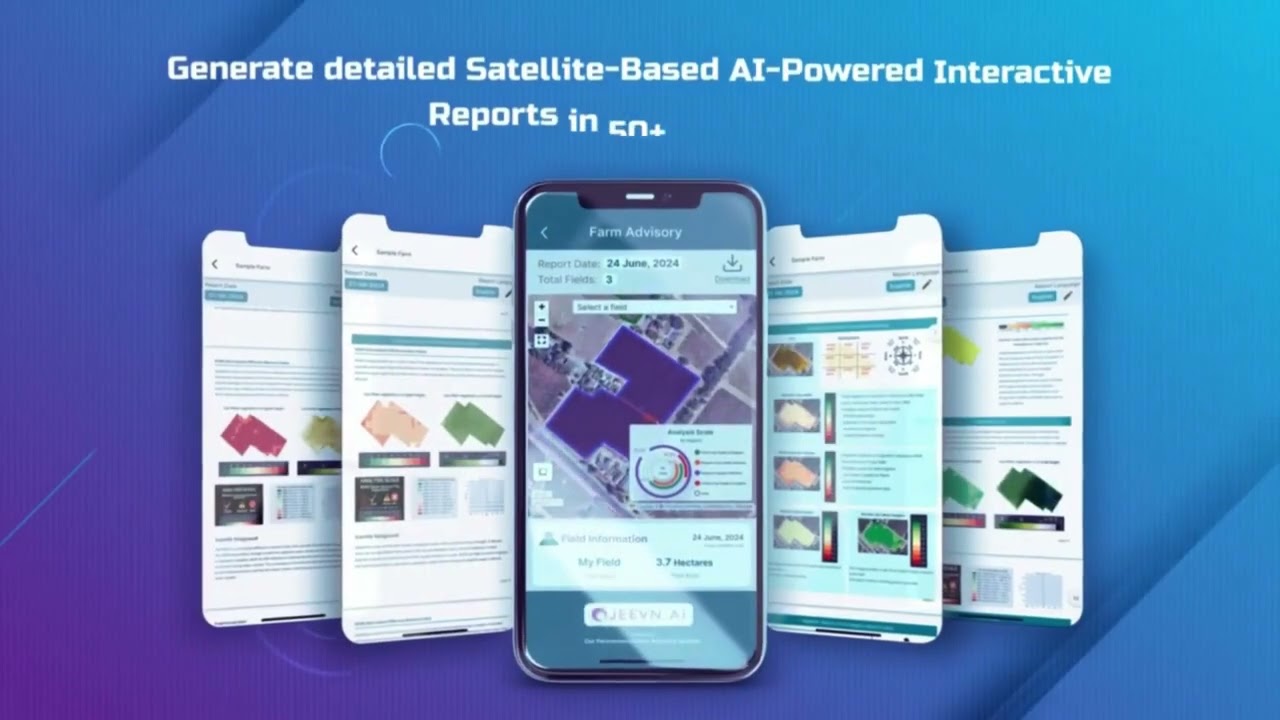
Farmonaut Platform: Multi-Device, Multi-Sector Power
- 📲 Mobile-Ready: Android/iOS apps for remote management in the field, on the runway, or in the boardroom.
- ⏱️ Live Dashboards: Monitor assets, crops, and operational risks in real time, optimized for aviation agriculture.
- 💡 Smart Advisory: AI-powered guidance for fertilizer scheduling, crop protection, yield maximization.
- 🛰️ Satellite Archive Access: Review trends, seasonality, and planning opportunities with years of historical data.
- 🌎 Global Scalability: From India to Africa to South America, Farmonaut empowers operations across 70+ countries.
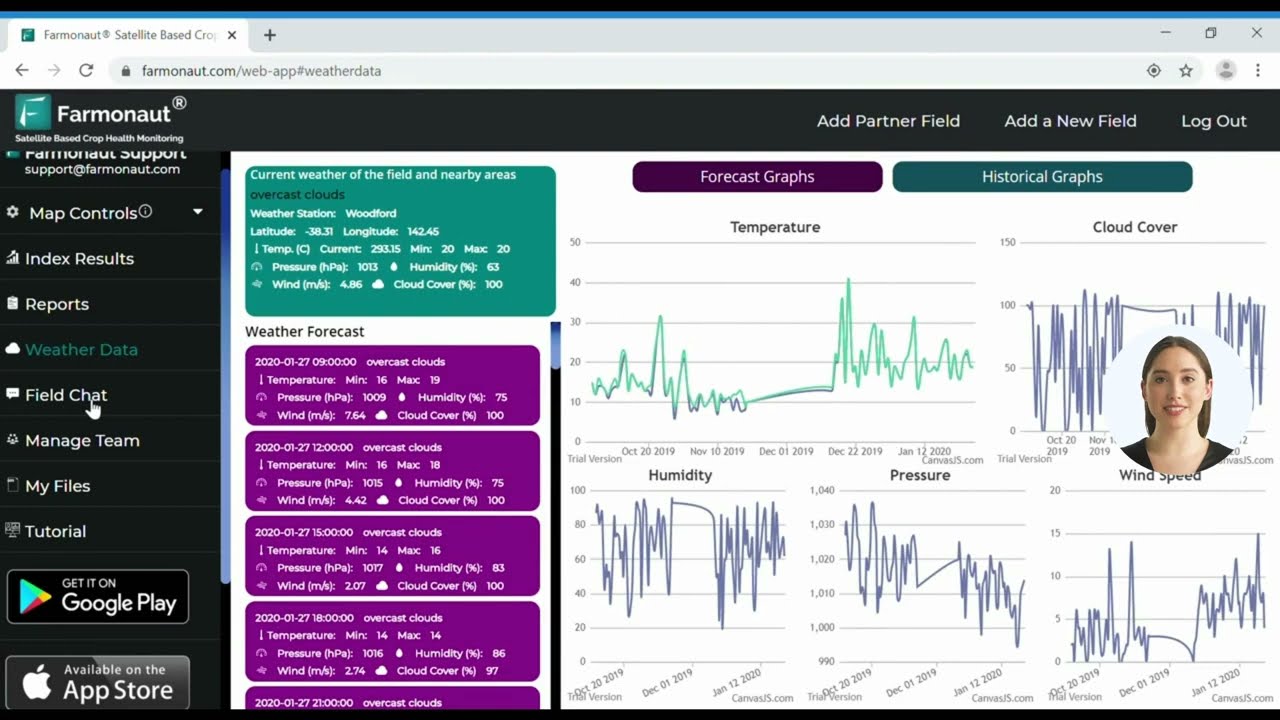
Farmonaut Business Model and Value Proposition
- ✔ Subscription-Based: Flexible plans for individuals, enterprises, and governments—see current plans above.
- 🔗 API/Integration Ready: Easy plug-and-play weather data feeds for custom software.
- 💸 Affordable Satellite Monitoring: Democratizing access with a cloud-first, global distribution model.
- 🔍 Verification for Finance: Satellite-backed insurance and loan verification tools for agriculture and mining.
- 🌱 Sustainability Commitment: Leading-edge carbon footprint analytics and environmental monitoring systems.
- 🌦️ Weather-Driven Scheduling: Dynamic models align every operation (from planting to aerial spraying) with optimal weather windows.
- 💼 Asset Management: Track the real-time condition and usage of fleets, crops, and infrastructure for maximum resource efficiency.
- 📉 Downtime Reduction: Reduce unscheduled maintenance, delivery delays, and loss due to unanticipated weather events.
- 🔬 Data-Backed Decision Making: Integrate historical, satellite, and AI forecasts for precision planning and long-term resilience.
- 🛡️ Safety First: Proactive alerts mitigate risks for both ground teams and airborne operations.
Choosing the Right Weather Data Provider: Key Takeaways
- Align with Local Needs: Your provider should offer the locality-specific data and tools necessary for your industry, geography, and workflow.
- Focus on Integration: Look for APIs, dashboards, and direct compatibility with your equipment, software, and regulatory requirements.
- Prioritize Risk Mitigation: Demand timely alerts, scenario analysis, and operational models that turn meteorology into action.
- Seek Proven Innovation: Choose platforms investing in AI, ensemble/predictive analytics, blockchain, and real-time monitoring for sustained excellence.
- Evaluate Support and Scalability: Your needs will change—ensure your provider grows with you and offers responsive, expert support.
Frequently Asked Questions (FAQ)
Q1. Who is the market leader in weather data for energy trading, agriculture, and aviation?
The leader is the provider offering sector-specific accuracy, real-time forecasts, robust datasets, and advanced integration tools—tailored for operational risk, planning, and optimization. Market leaders include Farmonaut (agriculture, mining, aviation), IBM/The Weather Company, Meteorologix (DTN), Vaisala, and Weathernews.
Q2. How do weather data platforms help in aviation agriculture?
They deliver aviation-grade forecasts, airport/runway monitoring, risk alerts for wind shear, icing, or turbulence, and integrate these insights with agricultural scheduling for aerial operations.
Q3. What are the key features I should prioritize in a weather data provider?
Focus on: accuracy, API/dashboard integration, AI-driven analytics, field-level or airport-specific insights, automated risk alerts, and scalability for your operational footprint.
Q4. Why is satellite technology critical for weather intelligence?
Satellites provide continuous, wide-area monitoring and highly granular data for crop health, soil conditions, asset management, and real-time environmental impact, supporting both agriculture and aviation operations.
Q5. How can I access Farmonaut’s services?
Access Farmonaut’s platform via web and mobile app, or integrate directly using the Farmonaut API and developer docs.
Conclusion: Shaping the Future of Operational Excellence
As industries contend with increased weather volatility, climate swings, and the demands of sustainable growth, the need for market-leading weather data solutions grows ever more urgent. Leaders like Farmonaut, IBM/The Weather Company, and others are continually pushing boundaries—fusing satellite technology, AI forecasting, blockchain, and integration platforms to transform weather data into sector-specific, actionable intelligence.
The ultimate benchmark for a trusted partner is not just the accuracy of their forecasts—but their ability to translate this intelligence into real-time strategies that protect assets, optimize resources, and sustain productivity across interconnected sectors like aviation, agriculture, energy trading, mining, and infrastructure.
Whether scheduling the next flight, planning irrigation, or calibrating a trading algorithm, choosing the right weather data provider shapes the future of your operations. For sector leaders in aviation agriculture, trading, and beyond, the path to operational excellence begins with data—and ends with informed, resilient, and agile action.


