

Satellite Farm Advisory Nigeria: 6 Fields, 4 Crops

AgroGreen Dynamics, a Nigerian farm-management hub, monitors maize, sesame, groundnut and okra on plots scattered from the humid south to the Sudan savanna — roughly a thousand kilometres apart, on soils and rainfall that have nothing in common. It reported that the advisory cut both water and fertiliser use by 30–50%. We opened the week it was reading and traced where each saving came from.
Smallholder farming is the hardest case for any advisory system, and this account is a good example of why. AgroGreen Dynamics – FarmTrack Hub is a farm-management service that tracks plots for growers across several Nigerian states. In the week we examined it was running six fields totalling 23.6 acres, carrying four crops at six different growth stages, split between the humid tropical south and the dry northern savanna. The median field is 4.2 acres. The smallest is half an acre.
In July 2026 the hub completed the feedback form attached to its satellite farm advisory and reported that the reports had helped it optimise irrigation by 30–50%, optimise fertiliser application by 30–50%, and take action on pest, disease and weed pressure. Both of those percentages turn out to be reproducible from the advisory data — and, unusually, through two entirely separate mechanisms. This article shows what the advisory said and where each saving actually sits.
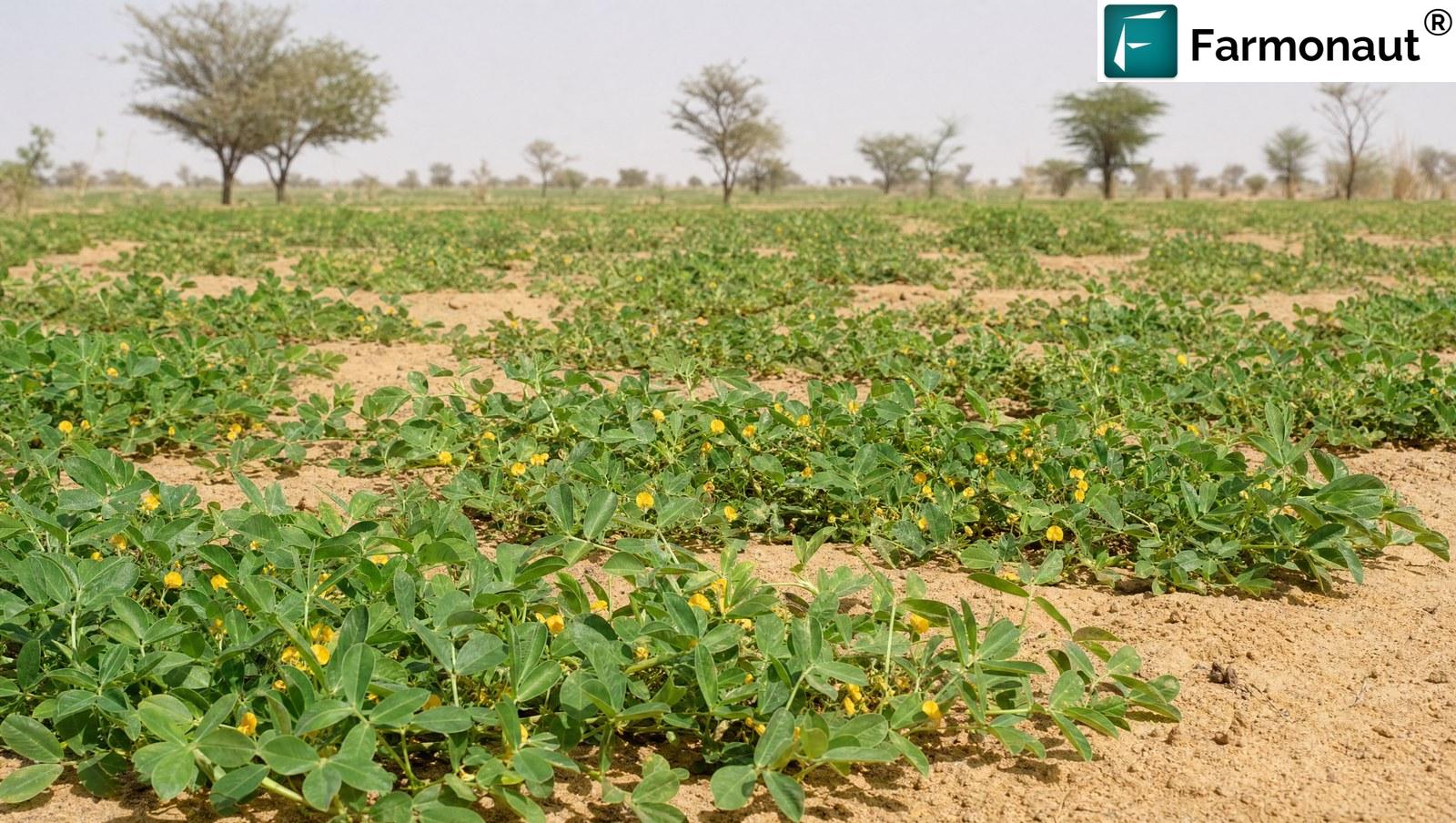
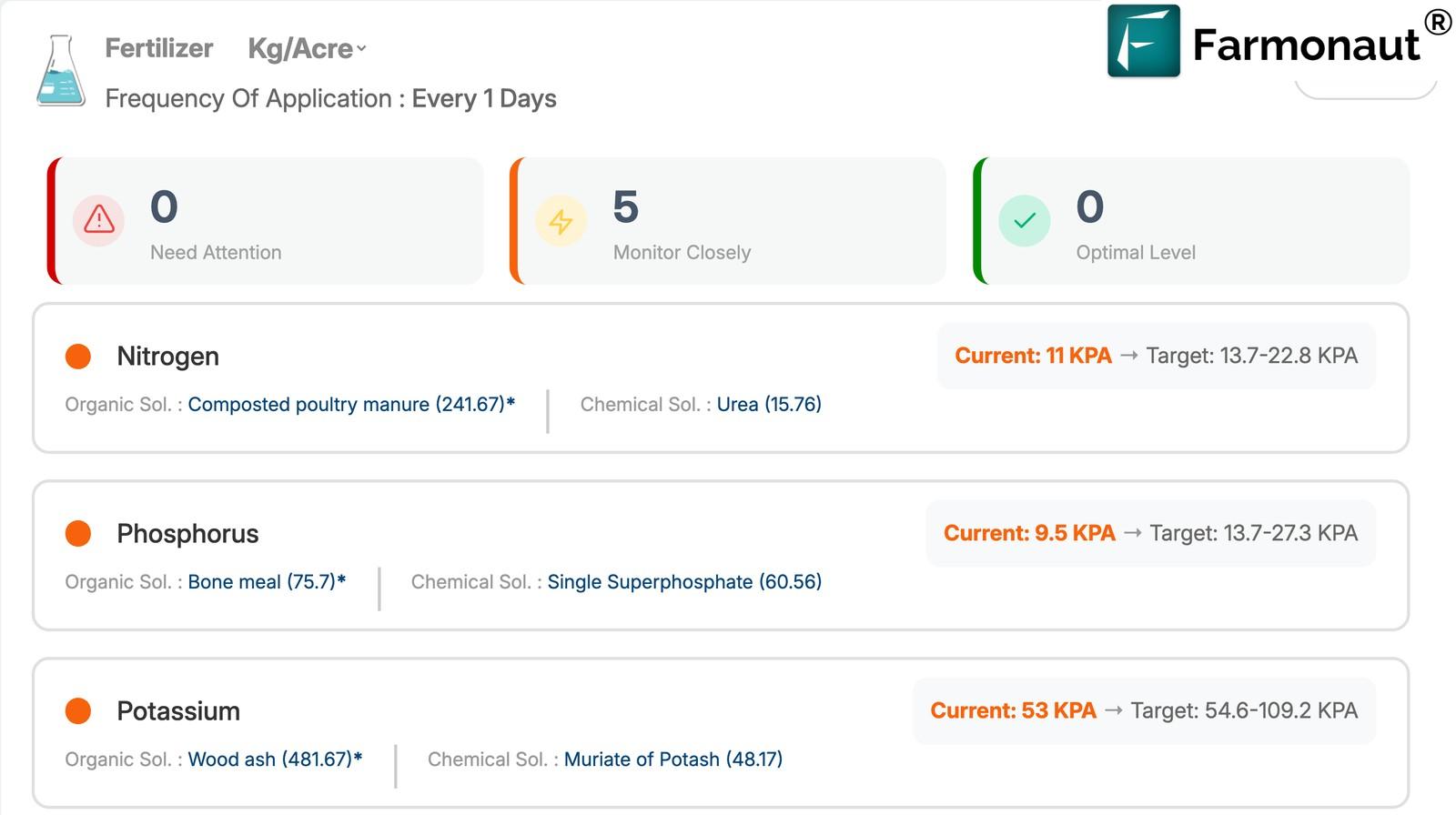
The single most telling number in this dataset is a zero. The groundnut field at peak flowering was prescribed no nitrogen at all, while still receiving phosphorus, potassium, sulphur and zinc. That is correct agronomy rather than a gap: groundnut is a legume and fixes its own atmospheric nitrogen. A blanket fertiliser programme would have spent money suppressing the very process that makes the crop work.
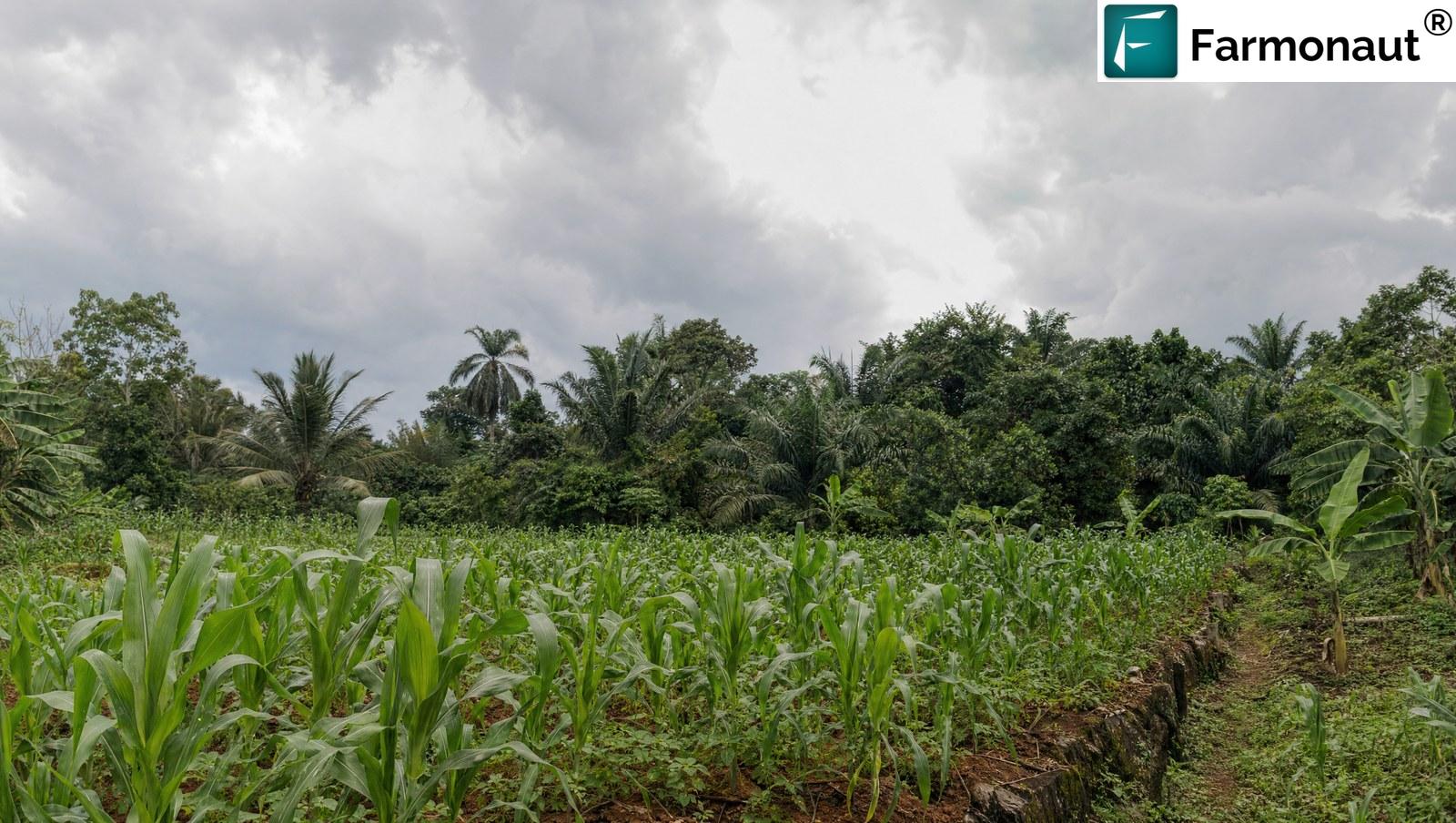

One hub, three states, four crops
The portfolio spans two agro-ecological zones that would normally require two different advisers. The Akwa Ibom fields sit in the humid tropical south, among oil palm, on red laterite soils in a long wet season. The Jigawa and Kaduna fields are in the northern savanna belt, on pale sandy soils with a short, sharp rainy season. The hub monitors both from one account, and each field is advised on its own.
| Crop | State | Acres | Growth stage | Irrigation days | Week’s water | Top alert |
|---|---|---|---|---|---|---|
| Peanut (Groundnut) | Jigawa | 6.78 | Flowering (peak) | 4 of 7 | 24.0 mm | Aphids (Aphis craccivora) 90% |
| Maize | Akwa Ibom | 6.60 | V6 (6th leaf collar) | 4 of 7 | 18.0 mm | Fall Armyworm 90% |
| Sesame | Jigawa | 5.59 | Vegetative growth | 4 of 7 | 16.0 mm | Aphids (Aphis gossypii) 90% |
| Maize | Akwa Ibom | 2.91 | V9 (9th leaf collar) | 4 of 7 | 24.0 mm | Fall Armyworm 90% |
| Maize | Kaduna | 1.25 | V6 (6th leaf) | 4 of 7 | 24.0 mm | Fall Armyworm 90% |
| Okra | Akwa Ibom | 0.51 | Continuous harvest | 0 of 7 | 0.0 mm | Pod Borers (Earias spp.) 80% |
| Portfolio | 3 states | 23.64 | 6 stages | 20 of 42 | 52.4% zero days | 15 alerts ≥80% |
Because the plots sit at different longitudes and latitudes across the country, they are not all imaged on the same satellite pass. For a hub that is an operational advantage rather than a complication: fresh guidance arrives for some part of the portfolio on most days of the week, so field visits can be planned against whichever plot was most recently updated. By the date of the feedback the account had received 59 field advisories across 27 satellite acquisition dates. The yield estimates alone show why a single averaged figure would be useless to this hub.
Four crops, six growth stages, two climate zones — and six advisories that share almost nothing with each other.
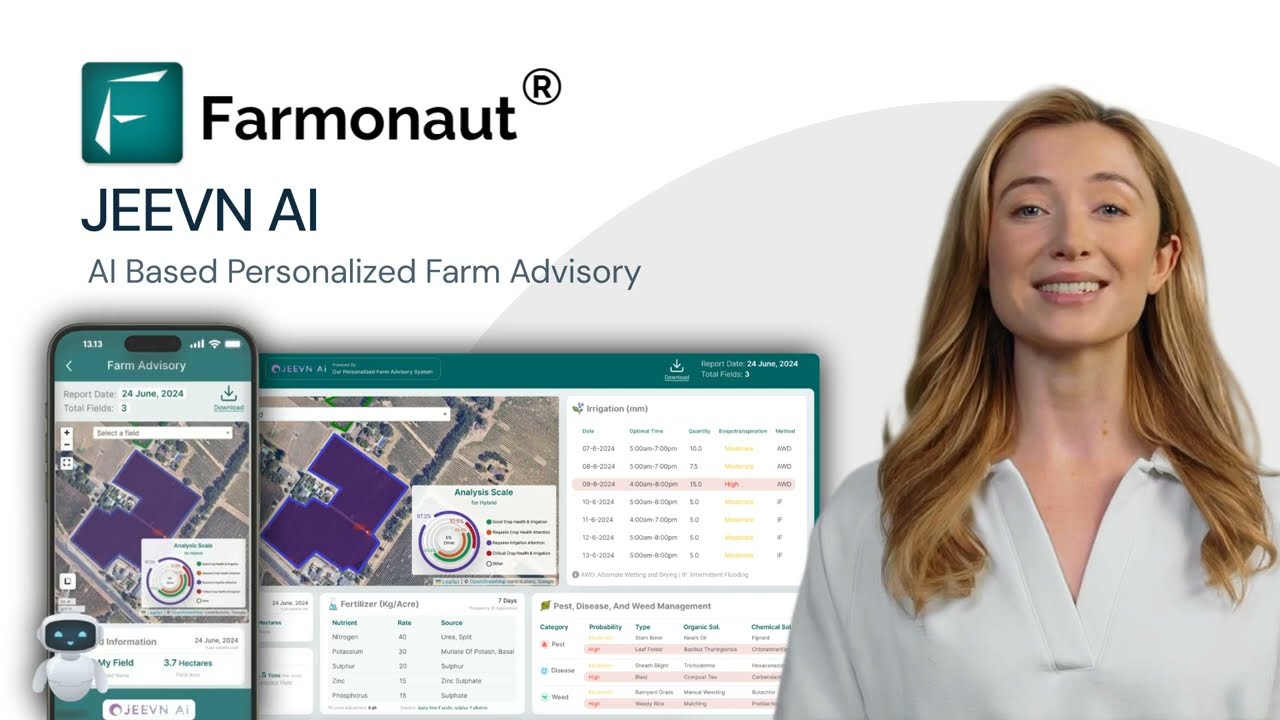
What the satellite farm advisory delivers per field
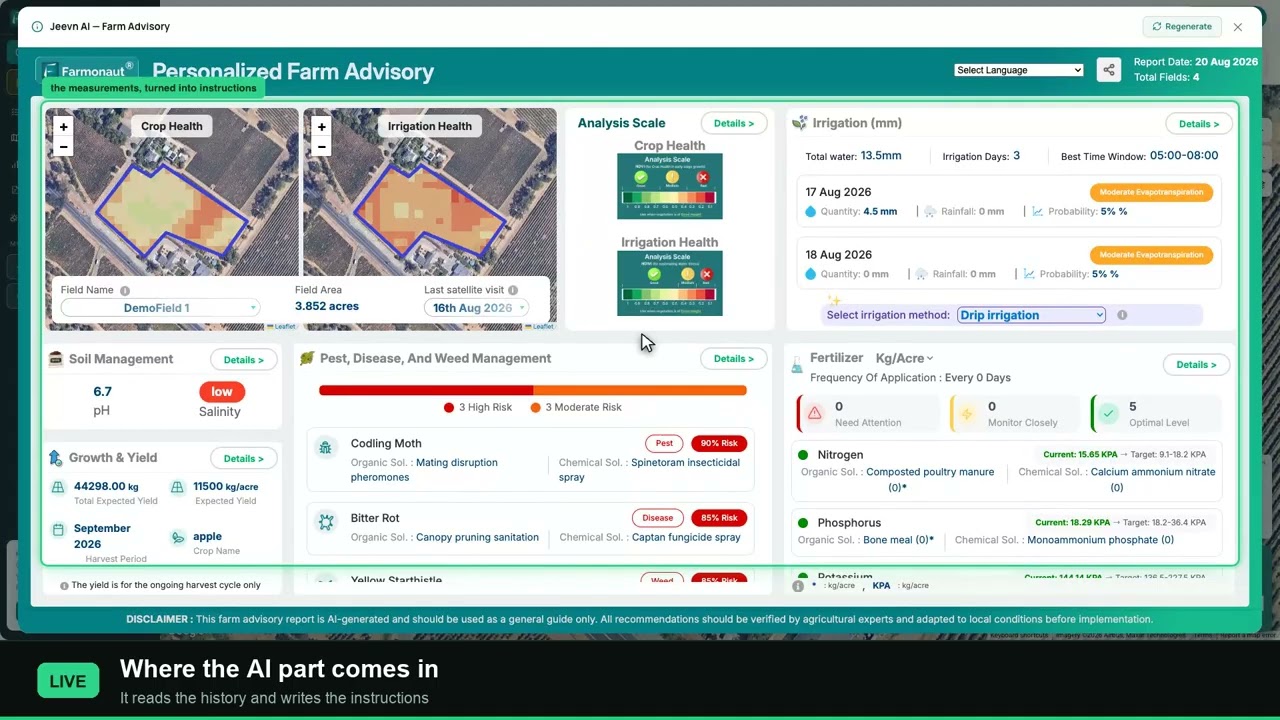
Each field gets its own satellite farm advisory per satellite pass: a day-by-day irrigation schedule, per-nutrient fertiliser rates with both organic and chemical sources, pest and disease risk with control options, weed pressure, soil chemistry, and a yield estimate. On this portfolio the two maize fields at V6 and the one at V9 are treated as three different problems, because at those stages they are.
Pest and disease: the right pest, and the right aphid
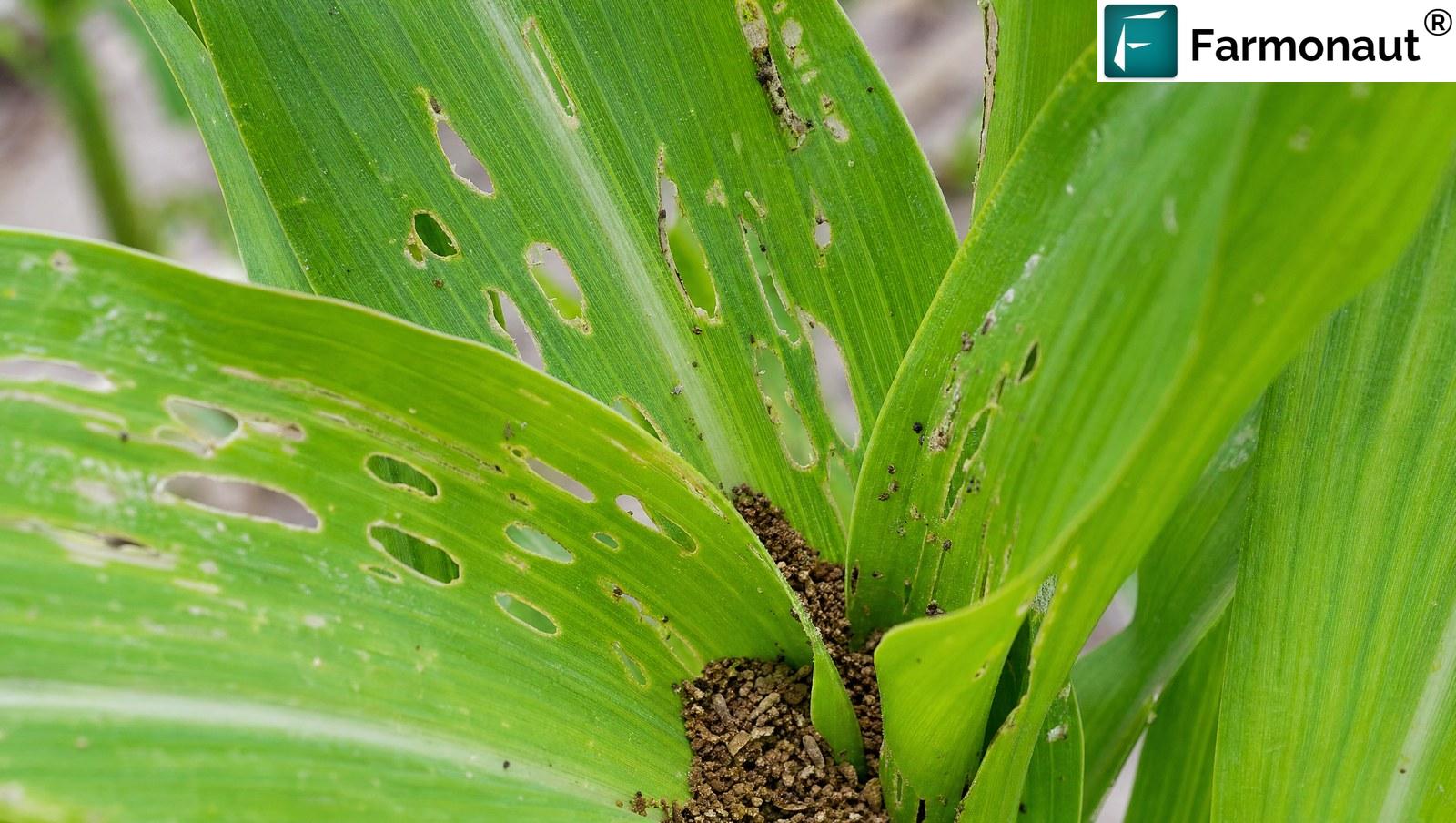
Across the six fields the advisory raised 15 alerts at 80% probability or above, and each one belonged to the crop it was raised on. The maize fields led with Fall Armyworm (Spodoptera frugiperda) at 90% — the correct headline threat for maize in West Africa — alongside Maize Streak Virus and the stem borer Busseola fusca.
The detail that shows the model is reading the crop rather than the region is the aphids. The sesame field was flagged for Aphis gossypii. The groundnut field, two states away, was flagged for Aphis craccivora — the legume-feeding aphid, and the vector of Groundnut Rosette Disease, which the same report flagged directly beneath it. Two different aphid species, correctly assigned by host, with the disease one of them transmits named alongside.
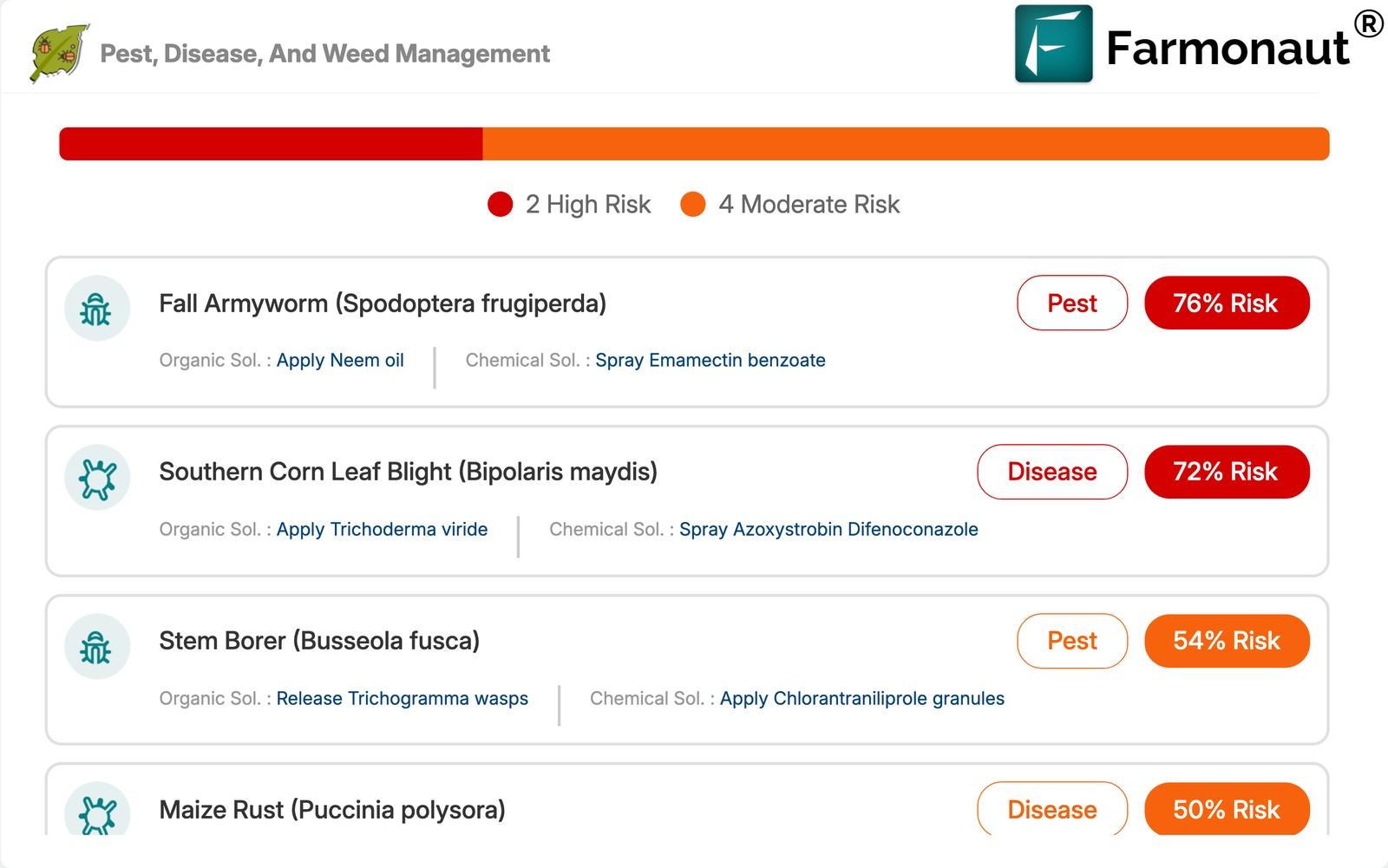
Every alert arrived with both an organic and a chemical option, and the organic ones are locally obtainable rather than aspirational: neem oil for armyworm, Trichogramma wasp release for stem borer, Trichoderma viride for leaf blight. In a smallholder context that matters more than the chemical name, because the chemical is often the option that is out of reach.
On a multi-field account, read the alerts as a route rather than a list. Fifteen alerts at 80% or above across six fields tells a field officer which plot to walk first on Monday morning — which is the scarcest resource a hub has.
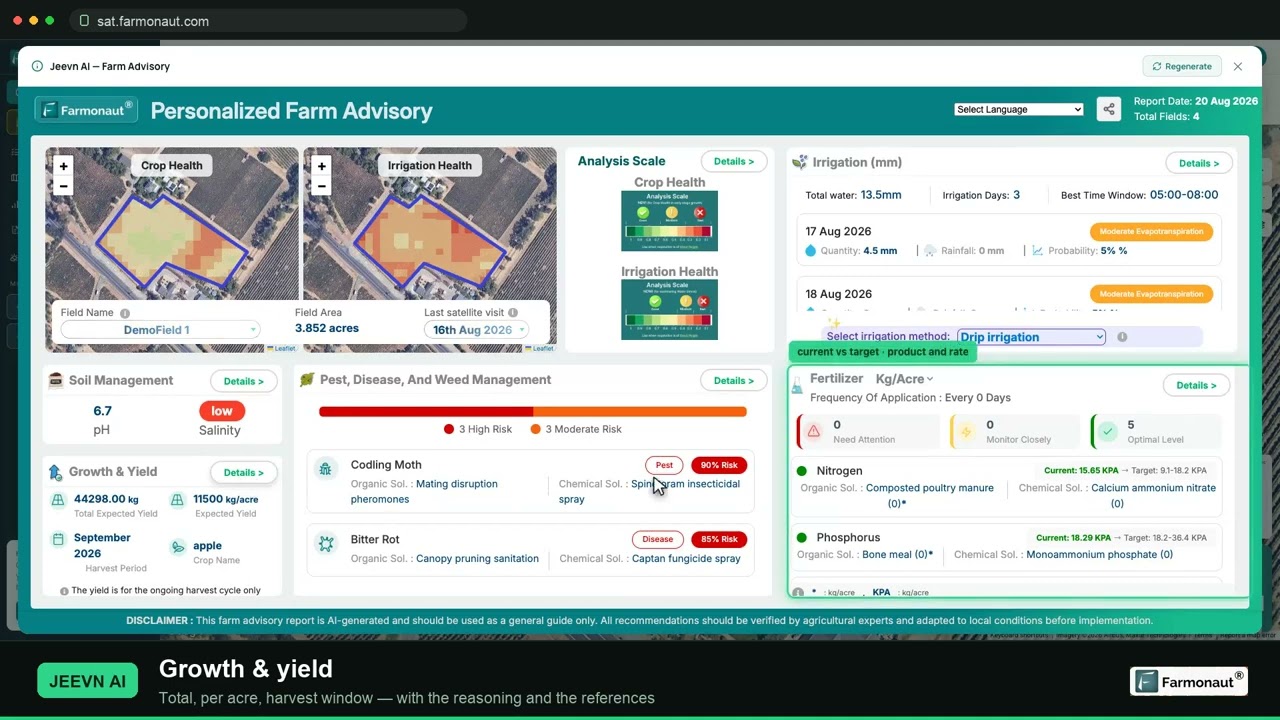
Treating two fields of the same crop as one job. Two of the maize plots here are at V6 and one at V9 — three leaf collars apart, and materially different in both water demand and nitrogen uptake. The advisory gave them different schedules and different rates. A single maize plan would have been wrong on at least one of them.
Irrigation: every other day, not every day
The irrigation mechanism here rewards a close reading. Every field in the portfolio is on a strict alternate-day pattern: a set depth on one day, zero the next, repeating across the week. Twenty-two of forty-two field-days carry a zero, and the okra plot at continuous harvest is told not to irrigate at all for the entire week.
Against a baseline of irrigating every day at the same depth — the common pattern when water is applied by opening a channel or running a hose, where the dose is however long a pass takes rather than a measured depth — following the schedule applies 42.9% less water. That sits inside the 30–50% the hub reported, and it is achieved without changing a single piece of equipment.
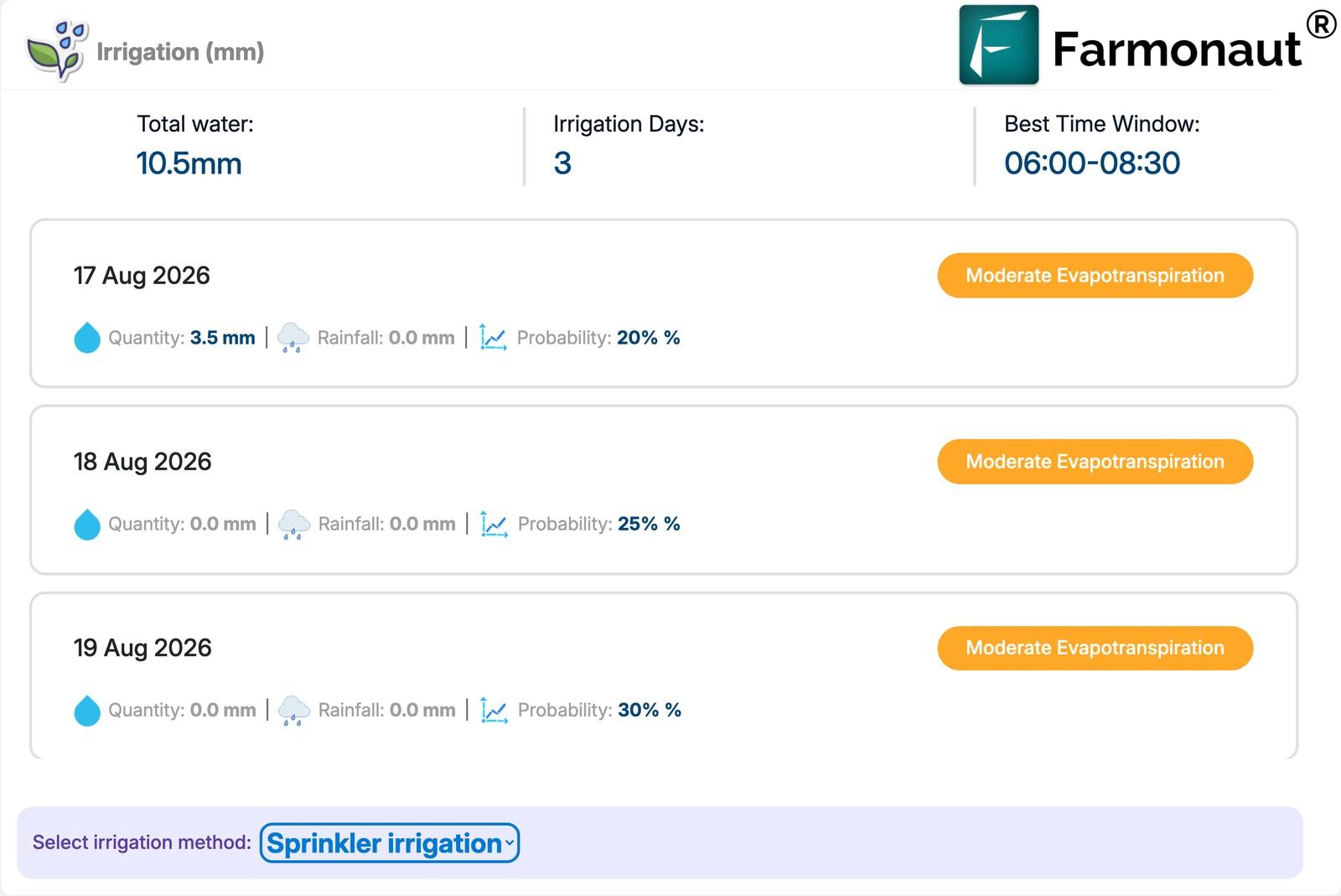
The report also discloses headroom the hub could take later. On the fields where the methods differ, drip is listed at 17–25% below the flood figure — 5.0 mm against 6.0 mm on one maize field, 3 mm against 4 mm on the sesame. Flood irrigation is nonetheless what the advisory recommends, because that is the method these fields actually have. The cheaper option is shown as a future step rather than imposed as advice the grower cannot act on today.
Fertiliser: zero nitrogen for the groundnut
The fertiliser section reports five nutrients per field — nitrogen, phosphorus, potassium, sulphur and zinc — each with a modelled current level, the ideal range for that crop, a rate, and both an organic and a chemical source. The groundnut zero is the headline, but the spread across the rest is just as consequential.
Potassium ran from 12.0 to 107.5 kg/acre — a 9.0-fold difference — and the okra plot was prescribed potassium and nitrogen but no phosphorus, sulphur or zinc at all. Summed across the portfolio the advisory prescribed about 2,567 kg of nutrient; applying one uniform average rate to every acre instead would have misallocated 33.6% of it, over-feeding some fields and starving others. That figure also lands inside the hub’s reported 30–50%.
Reverse-engineering the reported 30–50%
Zero kilograms of nitrogen for the groundnut — because that crop makes its own.
Both reported figures reconcile against the advisory data, which is worth stating plainly because it is not automatic.
| Reported | Mechanism in the advisory | Our modelled figure |
|---|---|---|
| Irrigation optimised 30–50% | 22 of 42 field-days set to zero on an alternate-day interval; one field zero for the full week | 42.9% less water vs daily application at the same depth |
| Fertiliser optimised 30–50% | Zero nitrogen on the legume; potassium spread 9.0×; okra given only two of five nutrients | 33.6% of the nutrient programme misallocated by a blanket rate |
| Acted on pest, disease and weed issues | 15 alerts at ≥80%, crop-correct to species, each with an organic and a chemical option | Consistent with the data |
The two mechanisms are independent of each other, which is what makes the agreement worth something. One is a scheduling change — irrigate on alternate days rather than daily. The other is a placement change — put each nutrient where the soil reading says it is short, and none where it is not. A farm can adopt either without the other, and most of the benefit here needs no new equipment at all.
Neither figure was reverse-engineered to fit the answer. We computed both from the advisory data first and compared afterwards, and each landed inside the band the hub had already reported. For a buyer assessing this kind of product, that independence matters more than the size of either number: two unrelated parts of the same report were each doing measurable work on the same portfolio, in the same week.
Grower-reported outcomes, as submitted
The cards below reproduce the hub’s answers to our in-app feedback questionnaire for the advisory dated 17 July 2026, exactly as recorded. They are structured survey responses, not paraphrases.
The percentages are the hub’s own estimates from a structured form, not metered volumes or invoiced tonnages. What our analysis establishes is that the advisory they were reading contained instructions capable of producing savings of that size, through mechanisms we can point at directly.
Building soil, not just applying fertiliser
One finding runs across all six fields and shapes the whole nutrient strategy: soil organic carbon sits between 0.10% and 0.15%. On sandy northern soils in particular, organic matter is what holds both water and nutrients in the root zone, so a low reading changes what the right recommendation is. Soil pH came back at a uniform 6.5 and salinity low throughout — both comfortable for these crops.
That is why the advisory’s organic column is not decorative. Composted poultry manure, bone meal and wood ash are named because they are obtainable in these markets and because they build the organic fraction while supplying the nutrient — something urea and muriate of potash cannot do. Wood ash as a potassium source is long-standing West African practice; the advisory quantifies it rather than replacing it.
Irrigation frequency and organic matter compound each other. Water applied faster than a carbon-poor sandy soil can hold it drains through, carrying dissolved nitrogen past the root zone. Cutting irrigation frequency and building organic matter are the same intervention seen from two sides — which is why cheap local amendments sit alongside the mineral rates rather than beneath them.
Why per-field beats per-farm at smallholder scale
Underneath every section sits the same asset: a per-pixel read of each field from satellite, translated through crop coefficients and regional pest models into instructions for that specific plot. The advisory’s own references name the inputs — FAO crop guidelines, regional pest calendars, and Sentinel-1 radar and Sentinel-2 optical indices.
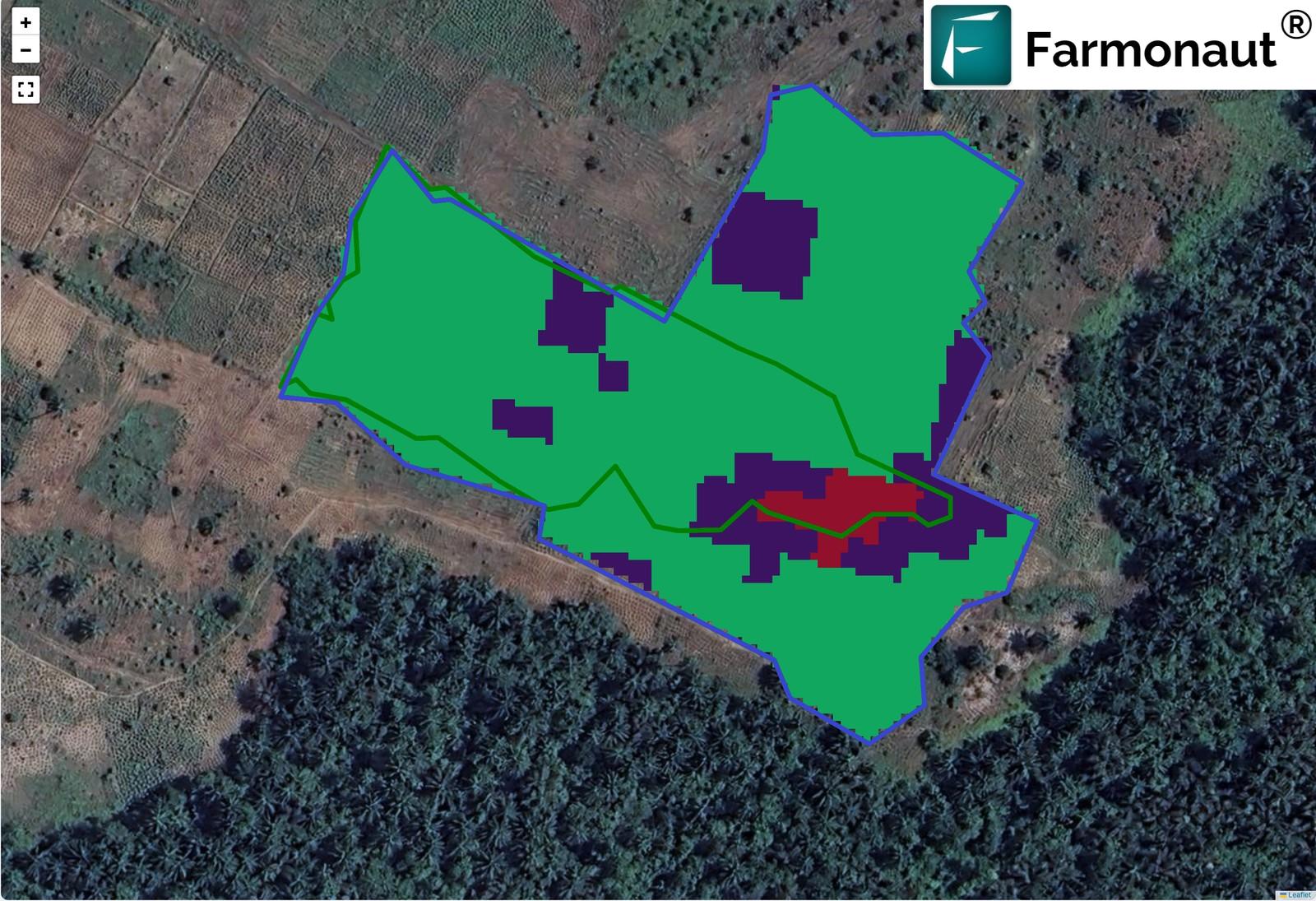
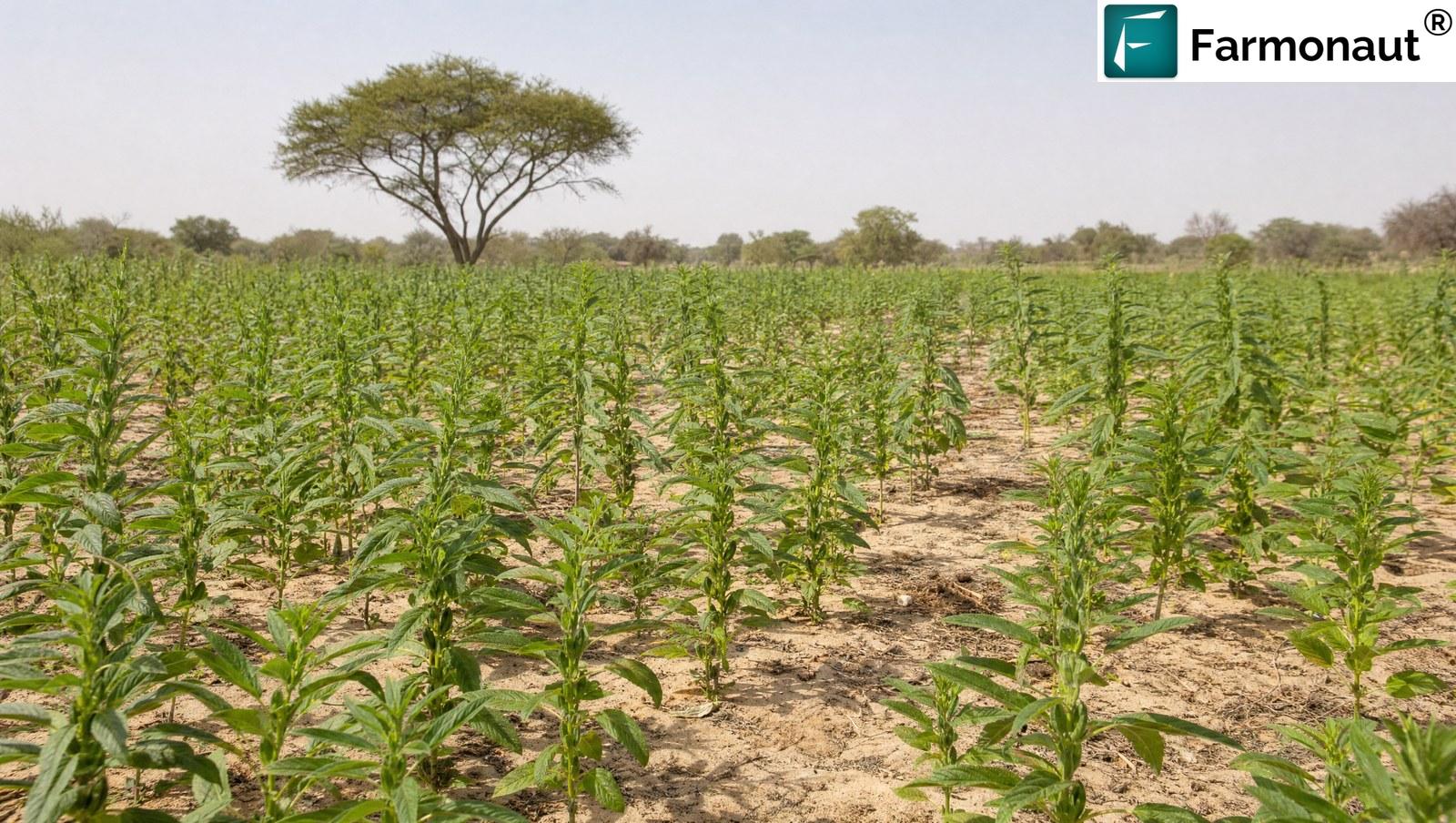
For a hub advising growers rather than farming itself, that per-field resolution is the entire product. The question is never “how is the portfolio doing” — it is “which of these six plots needs attention this week, and what exactly do I tell that grower”. On the evidence here, the answer differs on every field: different water, different nutrients, different pest, different stage.
Running this on your own farms
- Map each field separately, and map several. The per-field differences are the product, and one field cannot show you a difference.
- Set the crop correctly. The nitrogen zero on the groundnut and the species-level pest naming both follow from the crop field being right.
- Read the irrigation-days count, not just the depth. On this portfolio the interval carried the entire water saving.
- Compare nutrient mixes field by field. The totals hide the misallocation; the per-field rates expose it.
- Use the organic column. Poultry manure, bone meal and wood ash are named because they are locally obtainable — and because low organic carbon needs organic matter, not only mineral fertiliser.
Explore the platform at sat.farmonaut.com, read more about our satellite and AI-based farm advisory in the JEEVN AI overview, or talk to our team about onboarding a multi-field operation. JEEVN AI is a paid product; plan detail is on the platform.
Six plots, three states, one dashboard
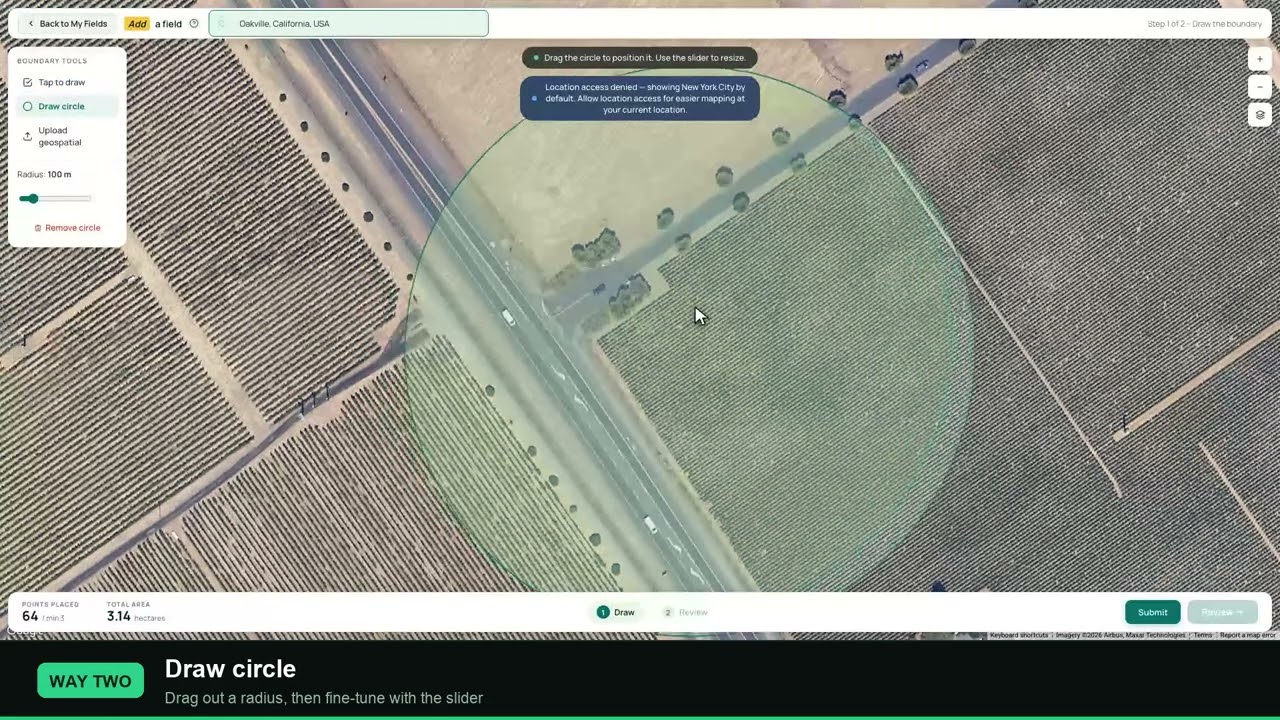
Map each field, set its crop, and get per-field irrigation, nutrient and pest guidance from satellite passes over your own ground — wherever those plots happen to be.
Frequently asked questions
What is a satellite farm advisory and what does it deliver per field?
A satellite farm advisory is a per-field report built from satellite passes over your own boundary, covering a day-by-day irrigation schedule, per-nutrient fertiliser rates for N, P, K, S and Zn with organic and chemical sources, pest and disease risk with control options, weed pressure, soil chemistry and a yield estimate. In this case study six fields across three Nigerian states each received their own, and the account had accumulated 59 advisories over 27 acquisition dates.
How does an alternate-day irrigation schedule save 40% of the water?
Relative to irrigating every day at the same depth. On this portfolio 22 of 42 field-days carried a zero, so following the schedule applies 42.9% less water than a daily pass at the same per-event depth. It targets habitual daily over-application, which is common where water is applied by channel or hose rather than metered — and it requires no change of equipment.
Why was the groundnut given no nitrogen?
Because groundnut is a legume and fixes atmospheric nitrogen in root nodules. The advisory prescribed 0.0 kg/acre of nitrogen for that field while still prescribing phosphorus, potassium, sulphur and zinc. Applying nitrogen to a nodulating legume wastes input cost and can suppress fixation, so the zero is the correct recommendation rather than a gap in the data.
How can a fertiliser advisory save money if the total tonnage does not fall?
By placing it correctly. On this portfolio potassium rates spanned 9.0× across six fields, one field needed no nitrogen at all, and the okra plot needed only two of the five nutrients. A single uniform rate applied to every acre would have misallocated 33.6% of the nutrient programme — over-feeding some fields while starving others. The saving is in the misapplication avoided.
Can one account cover fields in different states or climates?
Yes. This account’s six fields span Akwa Ibom in the humid tropical south and Jigawa and Kaduna in the northern savanna — roughly a thousand kilometres apart, with different rainfall, soils and pest pressure. Each field is advised independently, which is why the sesame field was flagged for Aphis gossypii while the groundnut field two states away was flagged for Aphis craccivora.
Does satellite monitoring work on small plots?
Yes, for the guidance that matters most. Fields of a few acres resolve well enough for useful within-field detail, and the irrigation, nutrient and pest guidance applies at any plot size because it is driven by crop, stage, soil and weather. This account’s fields run from 0.51 to 6.78 acres and all six received full advisories.
Are the pest probabilities confirmed infestations?
No — they are modelled risk scores from satellite indices, weather and regional pest pressure, and they work as a scouting priority list. A 90% Fall Armyworm alert means check the whorls today, not that the crop is infested. Each alert is paired with an organic and a chemical option so the control decision stays with the grower.
Glossary
- V6 / V9 (maize)
- Vegetative growth stages counted by fully collared leaves. V6 and V9 differ materially in water and nitrogen demand, which is why two maize fields on the same account can get different schedules.
- Nitrogen fixation
- The process by which legumes such as groundnut convert atmospheric nitrogen into plant-available form via root-nodule bacteria — the reason the groundnut field was prescribed zero nitrogen.
- Fall Armyworm (Spodoptera frugiperda)
- An invasive caterpillar pest of maize, now established across sub-Saharan Africa. Feeds in the leaf whorl, leaving ragged holes and frass.
- Groundnut Rosette Disease
- A viral disease of groundnut transmitted by the aphid Aphis craccivora. The advisory flagged both the vector and the disease on the same field.
- Soil organic carbon (SOC)
- A proxy for soil organic matter, governing water-holding capacity and nutrient buffering. Measured at 0.10–0.15% across these six fields, which is what drives the organic-amendment guidance.
Case-study basis: JEEVN AI field advisories for a single Farmonaut account, taking each field’s most recent advisory as of the client’s feedback submission (portfolio state at 15–17 July 2026, six fields), plus the account’s in-app feedback submission for the advisory dated 17 July 2026. Client organisation name, crops, states, field count and area are reported from the account’s own records; individual grower names and precise field locations are withheld. The 30–50% figures are the client’s own estimates from a structured feedback form, not metered or invoiced measurements; the 42.9% water figure is our comparison against a stated baseline of daily application at the same depth, and the 33.6% figure is the share of the nutrient programme a uniform blanket rate would misallocate. Pest, disease and weed percentages are modelled probabilities, not confirmed infestations. Yield figures are estimates, not guarantees. Imagery: the four platform screenshots and the crop-health zone map are genuine captures of this account’s own advisory and satellite data; the five wider field photographs are AI-generated illustrative imagery, each labelled as such in its caption, and do not depict the client, its growers or their fields. JEEVN AI is a paid product.
Discussion
Questions, corrections or field experience? Share them below. First-time comments are reviewed before they appear, and your email is never published.
No comments yet. Be the first to add a question or your experience.

 Grandstream Algérie
 XOS Realty
 Geospatial Lab Africa
 KhetiBuddy
 Agro La Gándara
 HIPSAC
 ZOL Zimbabwe
 Juligerm
 AdBio
AdBio MISE Maroc
 NWNS
NWNS Red August Group
 Farm Inc
 WeMe Global
 Agrotoken
 Blue BearX
 Insignito
 Croptimum
 DnCubed
 Field Capacity
 Indosistim Teknologi
