

Uranium · Price guide
1 Gram of Uranium Price: Chart and Calculator
Spot uranium was US$89.63 per pound of U3O8 at the end of September 2026 (Cameco). Divided by 453.59 grams per pound, that is about US$0.198 per gram of U3O8, or US$0.233 per gram of uranium metal. No market sells single grams at that price.
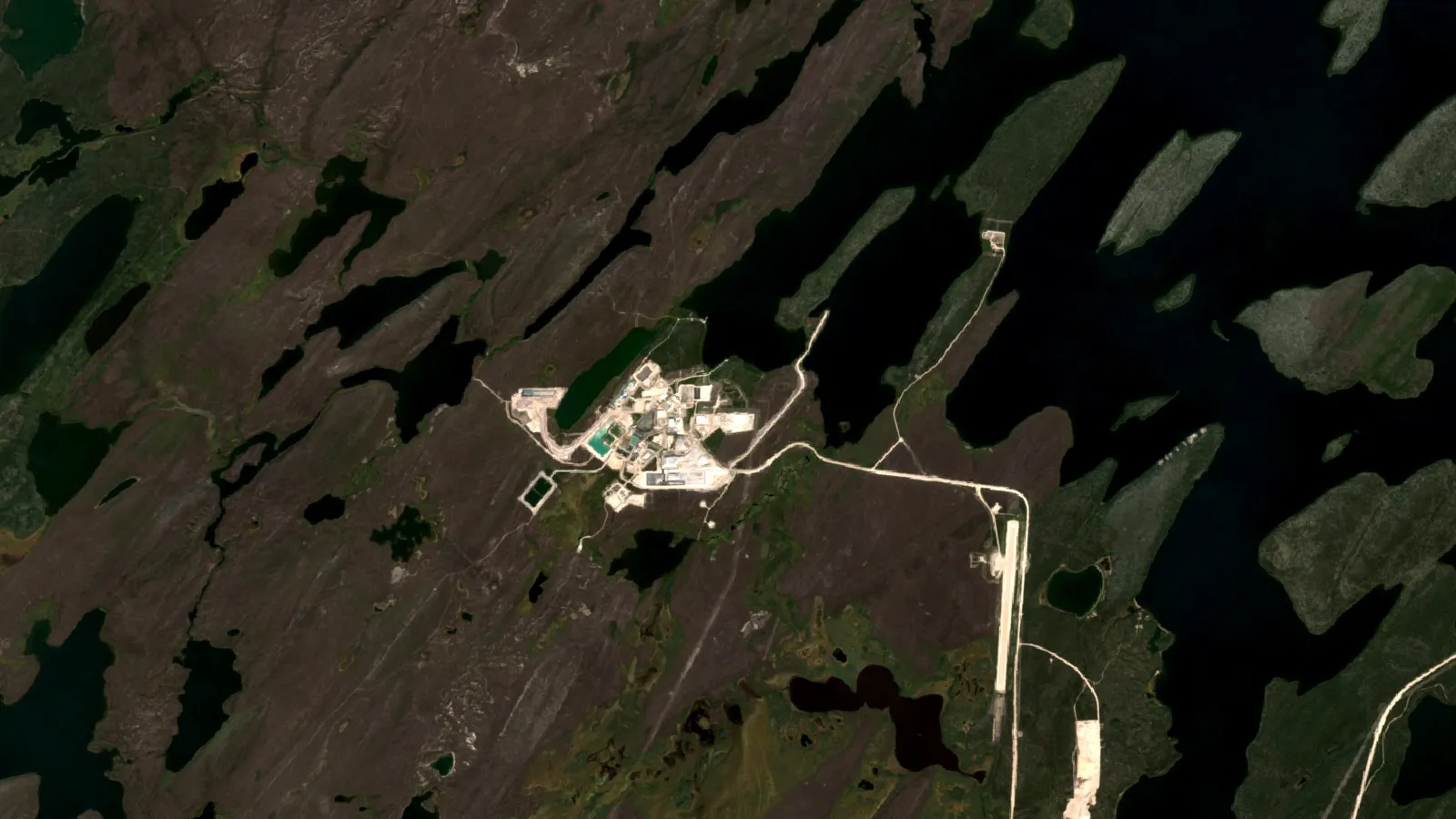
Key takeaways
- Spot U3O8 closed September 2026 at US$89.63 per pound; 89.63 ÷ 453.59 g = US$0.198 per gram (Cameco month-end series, converted).
- Per gram of contained uranium the same price is US$0.233, because 1 lb U3O8 holds 0.384647 kg of uranium (EIA conversion).
- US reactor owners paid an average US$58.46 per pound in 2025; spot contracts averaged US$76.01 and long-term contracts US$55.91 (EIA, 2025 data).
- There is no retail market: most trade is by 3 to 15 year contracts, and US law licenses uranium as source material (World Nuclear Association; 10 CFR 40).
- Kazakhstan, Canada and Namibia mined about three-quarters of world uranium in 2024 (World Nuclear Association).
In this article
- 1 Gram of Uranium Price: The Conversion Step by Step
- Why There Is No Retail Price for 1 Gram of Uranium
- Uranium Price per Gram Over Time: 13-Month Chart
- Spot vs Long-Term Price
- What Utilities Actually Pay per Pound and per Gram
- Who Supplies the Pounds Behind the Price
- How to Value Uranium in Ore
- What Moves the Market
- How to Follow the Market Without Buying a Gram
- Five Checks Before You Use a Quote
- How the Numbers on This Page Were Built
- Where Satellite Mapping Fits
- Frequently asked questions
Spot uranium was US$89.63 per pound of U3O8 at the end of September 2026, the latest month-end value in Cameco’s industry-average price series (Cameco prints no unit; US dollars per pound U3O8 is the market convention). One pound is 453.59 grams, so 89.63 ÷ 453.59 gives about US$0.198 per gram of U3O8, or roughly 20 US cents. Counting only the uranium metal inside the oxide, the figure is about US$0.233 per gram.
That is a conversion, not a shop price. No market sells a single gram at the spot price, because uranium is bought in pounds and tonnes through private contracts. Below you get the step-by-step conversion, a 13-month chart, what US utilities really paid, the rules that stop a retail market, and a calculator that turns any price you type in into a per-gram value.
1 Gram of Uranium Price: The Conversion Step by Step
Uranium is quoted as U3O8, the oxide concentrate that mills make from ore. It is a yellow-brown powder often called yellowcake. The market quotes US dollars per pound of U3O8, so a per-gram figure takes three short steps.
- Take the quoted price: US$89.63 per pound U3O8 (Cameco, September 2026 month-end).
- Divide by 453.59237, the number of grams in one pound: 89.63 ÷ 453.59 = US$0.1976 per gram of U3O8.
- For uranium metal only, divide the price per pound by the uranium inside it. The US Energy Information Administration (EIA) states that 1 lb U3O8 holds 0.384647 kg of uranium, so 89.63 ÷ 384.647 g = US$0.2330 per gram of uranium.
Per gram, uranium metal costs about 18% more than U3O8, because only about 84.8% of U3O8 by weight is uranium; the rest is oxygen. Check which basis a quote uses. Trade quotes are always for U3O8, and TradeTech’s conversion table lists 1.17924 units of U3O8 for each unit of uranium, which matches the same ratio.
| Unit | US$ at 89.63 per lb U3O8 |
|---|---|
| Per pound U3O8 (market quote) | 89.63 |
| Per kilogram U3O8 | 197.60 |
| Per tonne U3O8 | 197,600 |
| Per gram U3O8 | 0.198 |
| Per milligram U3O8 | 0.0002 |
| Per kilogram of contained uranium | 233.02 |
| Per gram of contained uranium | 0.233 |
Source: Cameco month-end spot, September 2026, converted with the factors above. Check the latest month before you quote any of these numbers.
Why There Is No Retail Price for 1 Gram of Uranium
People searching for a price per gram often expect a quote like gold’s. Uranium does not work that way, for four reasons.
It is not traded on an open exchange
Cameco’s price page notes that uranium does not trade on an open market like other commodities. Buyers and sellers negotiate privately, and published prices come from month-end surveys by UxC and TradeTech. The World Nuclear Association says most trade is through term contracts of 3 to 15 years, and that spot trading has been about one-quarter of the market over the last decade. A term contract is a long agreement to deliver set quantities at an agreed price formula, often linked to the spot or long-term indicator.
Utilities buy pounds, not grams
US reactor owners bought 46.9 million pounds of U3O8 equivalent in 2025 (EIA Uranium Marketing Annual Report). Spread over 453.59 grams a pound, that is about 21 billion grams. A one-gram order is not part of this business.
The metal is licensed material
In the United States, uranium is “source material” under the Nuclear Regulatory Commission rules in 10 CFR Part 40. The general licence in section 40.22 lets eligible firms and institutions hold natural and depleted uranium. For dispersible forms (powder, liquid, gas) a holder may keep no more than 1.5 kg of uranium and thorium at one time and receive no more than 7 kg a year; for other forms the limits are 7 kg at one time and 70 kg a year. Enriched uranium needs a specific licence. Section 40.13 exempts mixtures where uranium is below 0.05% by weight, and exempts unrefined, unprocessed ore as long as the holder does not refine it. Other countries have their own licensing, so ask the regulator before you buy or ship any uranium material.
Yellowcake is only the first step toward fuel
The U3O8 price covers the mined concentrate. Reactor fuel also needs conversion, enrichment and fabrication. The World Nuclear Association notes that at current delivery prices only about one-third of fuel cost is the ex-mine supply; most of the rest is enrichment and fabrication. Enrichment is priced in separative work units (SWU). US utilities paid an average of US$108.70 per SWU in 2025, up 11% from US$97.66 in 2024 (EIA). So a gram of enriched fuel does not cost a gram of yellowcake.
A small lot offered at a “per gram” price online is a different product: it is a priced item that carries assay, packaging and compliance cost, and it says little about the market. Treat such an offer with care and check the seller’s licence.
Uranium Price per Gram Over Time: 13-Month Chart
The chart below converts Cameco’s month-end spot values to US dollars per gram of U3O8. The spot price was US$82.63 per pound at the end of September 2025, dipped to US$75.80 in November 2025, reached US$94.28 in January 2026 and has held between US$84 and US$90 since February 2026.
Chart
Spot uranium in US$ per gram of U3O8
Month-end, September 2025 to September 2026
Longer history shows how wide the swings are. In the same Cameco series, month-end spot peaked at US$100.25 in January 2024 and fell to US$72.63 in December 2024.
| Year | Average of month-end spot, US$ per lb | US$ per gram U3O8 | Low to high month-end, US$ per lb |
|---|---|---|---|
| 2022 | 49.81 | 0.110 | 43.08 to 58.20 |
| 2023 | 62.51 | 0.138 | 50.48 to 91.00 |
| 2024 | 85.14 | 0.188 | 72.63 to 100.25 |
| 2025 | 73.54 | 0.162 | 64.23 to 82.63 |
| 2026 (January to September) | 87.41 | 0.193 | 84.18 to 94.28 |
Source: Cameco industry-average month-end spot series; the averages are our simple means of the monthly values, not an official annual price.
Spot vs Long-Term Price
Cameco also publishes a long-term price, the level at which multi-year contracts are written. In September 2026 it stood at US$96.50 per pound, US$6.87 above spot. In September 2024 and September 2025 the two were within about a dollar of each other. A long-term price above spot can mean buyers were willing to pay more to lock in future supply.
Chart
Spot and long-term price, September month-end
US$ per pound U3O8
What Utilities Actually Pay per Pound and per Gram
Month-end spot is only part of the story. The EIA surveys US reactor owners every year and reports what they paid for deliveries. For 2025 the weighted-average price was US$58.46 per pound U3O8 equivalent, 11% above US$52.71 in 2024. About 13% of the uranium delivered came under spot contracts at an average US$76.01 per pound, and the other 87% came under long-term contracts at an average US$55.91. In per-gram terms, the 2025 average was about US$0.129.
Chart
What US reactor owners paid for uranium delivered in 2025
US$ per pound U3O8 equivalent, weighted averages
The gap shows why a single “per gram” number misleads. Long-term contracts signed in earlier years at lower prices pull the average down. The EIA also reports 22 new purchase contracts with 2025 deliveries at an average US$70.46 per pound.
Who Supplies the Pounds Behind the Price
Supply is concentrated. The World Nuclear Association’s production table shows Kazakhstan at 23,270 tonnes of uranium in 2024 (39% of world supply), Canada at 14,309 and Namibia at 7,333. In situ leaching, where a solution is pumped through the ore underground and the uranium is recovered at the surface, produced more than half of world output that year. The same page lists identified recoverable resources to US$260 per kg of uranium at 7.825 million tonnes (Red Book, as of 1 January 2025).
Chart
Uranium mine output by country, 2024
Tonnes of uranium (tU)
The US regulator separates the mining and milling steps. The NRC says it does not regulate conventional mines, while it or an Agreement State regulates uranium mills and in situ recovery facilities (NRC uranium recovery).

▶ Looks at uranium in Africa through Zimbabwe’s Kanyemba deposit, which has no working mine, as context for where supply does and does not come from. · 4:27
How to Value Uranium in Ore
For a mining owner or an investor reading a project report, the useful number is not the price of a gram but the value of the pounds a deposit can produce. Three terms matter. Grade is the share of U3O8 in the ore, usually in percent or parts per million (ppm; 1,000 ppm is 0.1%). Recovery is the share that the mill turns into saleable concentrate. Price is the sale price per pound.
A worked example with round numbers: 1 million tonnes of ore at 0.1% U3O8 holds 1,000 tonnes of U3O8, or about 2.2 million pounds. At 90% recovery that is 1.98 million pounds. At an example price of US$90 per pound the gross value is about US$178 million, before mining, milling, royalties, taxes and capital costs. The calculator below does this sum for any numbers you enter.
Calculator
What is a gram, or a tonne of ore, worth at your price?
Type a U3O8 price and your own ore numbers.
- Per gram of contained uranium: 23.40 US cents
- Value of your grams of U3O8: $19.84
- Pounds recovered from your ore: 1,984,158 lb
- Gross value of recovered pounds: $178,574,220
Example values only, not a quote. Price is an input: example, use today’s price (US$ per lb U3O8). Constants: 453.59237 g per lb; 0.384647 kg uranium per lb U3O8 (US EIA, Monthly Energy Review). Gross value before mining, milling, royalty, tax and capital costs.
What Moves the Market
The sources used here point to a few drivers, stated as facts rather than forecasts.
- Contract structure. Most volume sits in term contracts, so spot moves on the smaller share of trade that is open (about one-quarter, per the World Nuclear Association; 13% of US deliveries in 2025, per the EIA).
- Concentrated supply. Three countries produced about three-quarters of mined uranium in 2024, so a disruption at one operation matters.
- Fuel-cycle costs. Enrichment and fabrication make up most of fuel cost, so the U3O8 price is only part of a utility’s budget.
- Contract timing. A buyer that signed years ago pays an old price, which is why average prices lag spot.
How to Follow the Market Without Buying a Gram
- Cameco’s monthly series (open to read at the link above) gives industry-average spot and long-term values, with monthly figures from 1988 onward.
- The EIA Uranium Marketing Annual Report gives what US utilities paid each year, split into spot and long-term contracts.
- UxC and TradeTech also publish price indicators, usually by subscription.
- Company reports show the price a producer realised and its cost per pound, which is the number that decides a mine’s margin.
Nothing here is a trading signal. Prices are quoted in US dollars, and a month-end value can differ a lot from a quote on any given day.
For more on the market, see our guides to the uranium price per pound and per ton, the price of 1 kg of uranium, yellowcake U3O8, the largest uranium mines and companies and the stages of mineral exploration.
Five Checks Before You Use a Quote
Quoted figures get mixed up all the time. Run through these checks before you put a number in a model, a report or a licence application.
- Check the basis. Is the price for U3O8 or for uranium metal? The difference is about 18% per gram.
- Check the unit. A pound is 453.59 grams. A short ton is 2,000 pounds, so US$89.63 per pound is US$179,260 per short ton. A metric tonne is 2,204.62 pounds, or US$197,600 at the same price. Posts that mix these up are common.
- Check the type of price. Spot, long-term and the average a utility paid are three different numbers. In September 2026 the first two differed by US$6.87 per pound.
- Check the date. Cameco’s values are month-end figures. The market can move within a month, and a price from a news site on one day will not match.
- Check the currency. The quotes used here are US dollars. A mine reporting in Canadian or Australian dollars needs the exchange rate for the same date.
How the Numbers on This Page Were Built
The spot and long-term values come from Cameco’s published industry-average series, which Cameco says it calculates from month-end prices published by UxC and TradeTech. Cameco’s page does not print a unit line, so we have applied the market convention of US dollars per pound U3O8; the pattern of values matches that convention. US utility prices, contract splits and SWU prices come from the EIA’s Uranium Marketing Annual Report, 2025 data, released in July 2026. Country output and resource totals come from the World Nuclear Association’s production page, which draws on national figures and the OECD Nuclear Energy Agency and IAEA Red Book. Licensing rules come from the text of the US federal regulations on source material. Every conversion on this page is our own arithmetic, shown so you can repeat it.
What this page cannot do is give you a price you can transact at. A broker, a producer or a fund would have to quote that, and the quote would depend on quantity, delivery location and date.
Where Satellite Mapping Fits
A price tells you what a pound is worth; it does not tell you where the pounds are. Farmonaut’s satellite mineral detection maps ranked exploration targets from a licence boundary you send as KML, KMZ or a polygon, and uranium is among the minerals it covers. Results are targets to test on the ground, not a resource estimate. If you hold a licence and want a scoped price, use the quote form.
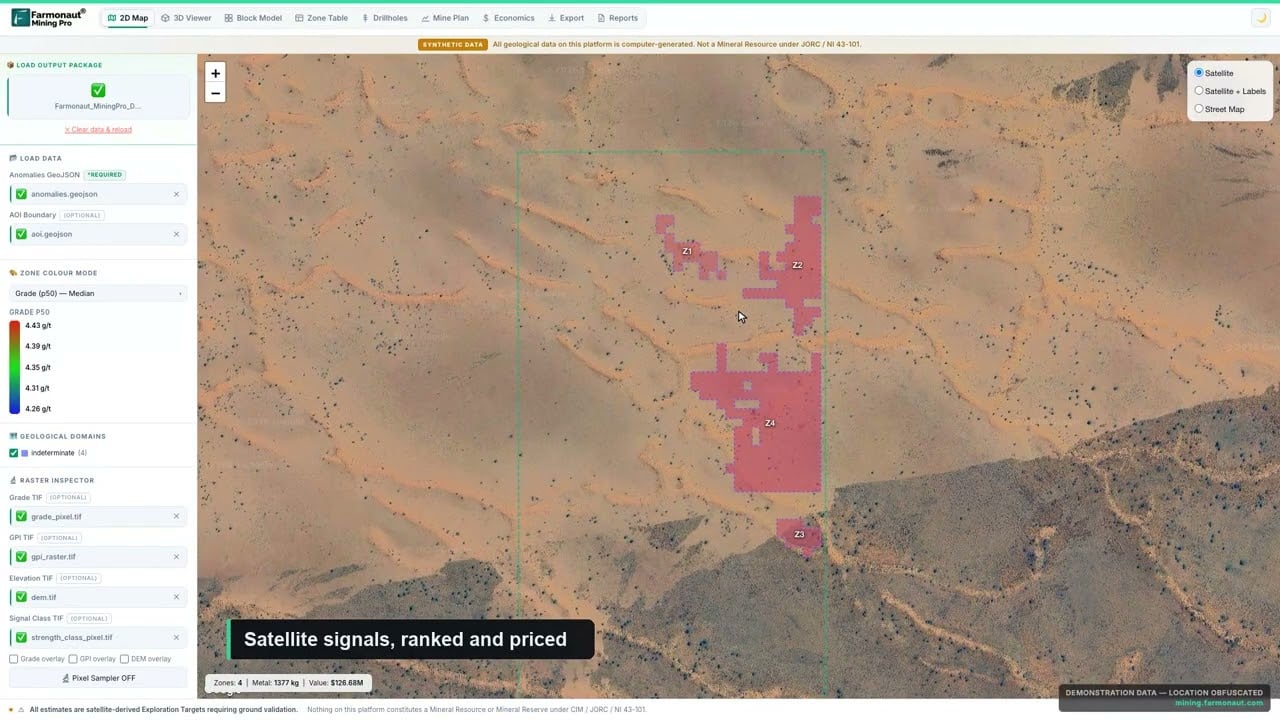
▶ Introduces Farmonaut Mining Pro, which maps a licence boundary from satellite data. · 4:56
If this topic matters to you, read Placer Gold Price per Gram: Purity, Payouts, Calculator next.
Frequently asked questions
What is the price of 1 gram of uranium?
About US$0.198 per gram of U3O8 based on the September 2026 month-end spot of US$89.63 per pound (Cameco). That equals about US$0.233 per gram of contained uranium. No market sells a single gram at that price.
How much does 1 kg of uranium cost?
At US$89.63 per pound U3O8, one kilogram of U3O8 is about US$197.60 and one kilogram of contained uranium is about US$233. Utilities buy by the pound or tonne, so these are conversions of the quote.
Why is uranium priced per pound and not per gram?
The trade works in contracts of thousands of pounds, and the US market quotes per pound of U3O8. Grams are too small to matter in a business that buys millions of pounds each year.
Can I buy a gram of uranium?
In the United States, uranium is licensed source material. A general licence covers limited quantities of natural and depleted uranium for eligible firms and institutions, and unrefined ore has its own exemption. Rules differ in each country, so ask your regulator first.
What is U3O8?
Triuranium octoxide, the oxide concentrate a mill makes from ore, also called yellowcake. About 84.8% of its weight is uranium.
Is the spot price the same as what utilities pay?
No. US utilities paid an average US$58.46 per pound in 2025 because most volume came under older long-term contracts (EIA). Spot contracts averaged US$76.01.
What was the highest uranium price in recent years?
In Cameco’s month-end series, spot peaked at US$100.25 per pound in January 2024. The month-end value was US$89.63 in September 2026.
How much of a uranium price is fuel cost?
The World Nuclear Association says only about one-third of fuel cost is the ex-mine supply at current delivery prices. Enrichment and fabrication make up most of the rest.
Where does most uranium come from?
Kazakhstan produced 39% of mined uranium in 2024, followed by Canada at 24% and Namibia at 12% (World Nuclear Association).
Where can I find the current uranium price?
Cameco publishes month-end spot and long-term values on its website; UxC and TradeTech also publish price indicators, usually by subscription. Always note the date of a quote.
This page is for information only. It is not investment advice, and it is not legal advice. Uranium is licensed material in most countries: confirm the rules with the regulator before you buy, hold or ship it.
Farmonaut mining
See where uranium could sit in your licence area
Send your boundary and get ranked satellite exploration targets for it, to test before you spend on drilling.
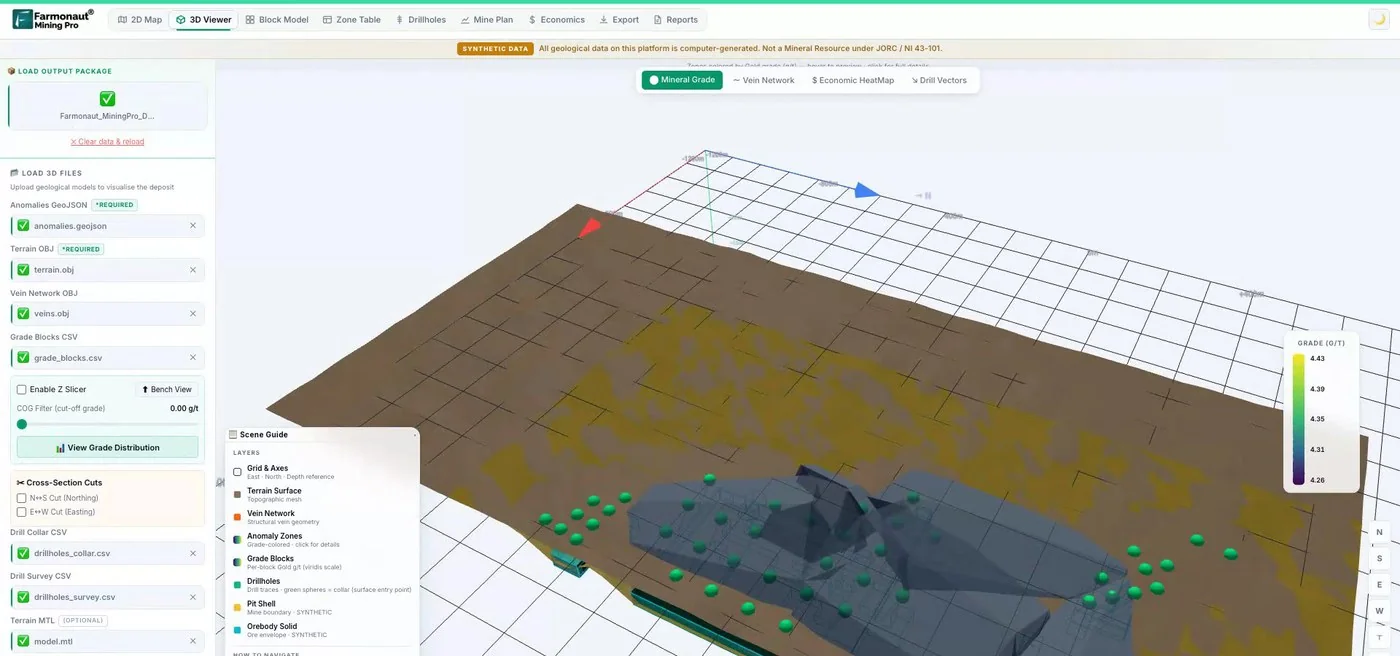
Mining Pro sample view, synthetic data
Keep reading
Sources
- Cameco, Uranium price (industry-average spot and long-term, monthly): cameco.com
- US EIA, Uranium Marketing Annual Report (2025 data): eia.gov
- US EIA, Monthly Energy Review, Appendix: uranium conversion factors: eia.gov
- World Nuclear Association, Uranium Markets: world-nuclear.org
- World Nuclear Association, World Uranium Mining Production: world-nuclear.org
- TradeTech, Unit conversion table: uranium.info
- US NRC, Uranium recovery: nrc.gov
- eCFR, 10 CFR 40.22 Small quantities of source material: ecfr.gov
- eCFR, 10 CFR 40.13 Unimportant quantities of source material: ecfr.gov
Discussion
Questions, corrections or field experience? Share them below. First-time comments are reviewed before they appear, and your email is never published.
No comments yet. Be the first to add a question or your experience.

 Tipareth Mines
 GemSprout Metals Limited
 Qader Group
 Ileys General Trading
 SG Gold Mining LLC
 VRV Global Pte Ltd
 Omsri International FZE
 G.I.T.T.
 Jaunita Erss Ltd
 Almosi SARL
 SRK Consulting
 Berks Gold Limited
 Mwerezi Minerals Company Limited
 Mining SARL
 SenGold Invest SAS
 Sean Mining Limited
 NTS Group (Pty) Ltd
 Mine4Africa










