

Alaska geology symbols · Gold facts and data
Alaska State Mineral: Gold, Mines and Output Data
Gold is the Alaska state mineral, named in 1968 alongside jade as the state gem. Alaska is the second-largest US gold producer, with about 22% of domestic output in 2025 (USGS). Here is how much it mines, where, and what a claim costs.
Key takeaways
- Gold has been Alaska’s state mineral and jade its state gem since 1968; the woolly mammoth became the state fossil in 1986. There is no state rock.
- Alaska produced about 26 short tons (roughly 758,000 troy oz) of gold in 2024 and an estimated 925,000-955,000 oz in 2025 (DGGS Special Report 78, 2025).
- Pogo led Alaska mines with 279,427 oz in 2024, ahead of Fort Knox at 239,508 oz (Alaska Department of Labor, April 2026).
- Alaska supplied about 22% of US mined gold in 2025, second to Nevada at about 64% (USGS Mineral Commodity Summaries 2026).
- Sunstone is Oregon’s state gemstone (1987), not Alaska’s.
In this article
- Alaska state mineral, gem and fossil at a glance
- Why gold became the Alaska state mineral
- How much gold Alaska produces
- Alaska gold mines ranked by output
- Placer gold and lode gold in Alaska
- What is placer gold worth? A quick estimate
- Alaska state gem: jade, not sunstone
- Is there an Alaska state rock or state stone?
- What it costs to hold a gold claim in Alaska
- What licence owners, consultants and investors should check
- Frequently asked questions
The Alaska state mineral is gold. Lawmakers named it in 1968, in the same session that made jade the state gem, and both designations still sit in Title 44, chapter 09 of the Alaska Statutes. Gold was an obvious pick: the state’s towns grew out of gold strikes, and Alaska is still the second-largest gold producer in the United States after Nevada, with about 22% of domestic mine output in 2025 according to the USGS Mineral Commodity Summaries 2026.
This page sets out the state’s geology symbols in one table, explains why gold was chosen, and then turns to what matters to a claim owner, consultant or investor today: how much gold Alaska produces, which mines produce it, the difference between placer and lode gold, and what a claim costs to hold. It also corrects a common mix-up. Sunstone is not Alaska’s gemstone; it is Oregon’s.
Alaska state mineral, gem and fossil at a glance
Alaska has three official symbols drawn from geology. Two of them date from the 1968 legislative session and one from 1986, as shown in the state’s statutes and in the list of Alaska state symbols.
| Symbol | What was chosen | Year adopted | Where it comes from in Alaska |
|---|---|---|---|
| State mineral | Gold | 1968 | Placer creeks and lode mines statewide; Interior and Southeast Alaska lead output |
| State gem | Jade (nephrite) | 1968 | Kobuk River area and the Jade Mountains, northwest Alaska |
| State fossil | Woolly mammoth | 1986 | Bones and tusks recovered from frozen ground, often in placer cuts |
| State rock | None adopted | Not applicable | Alaska has no official state rock or state stone |
The table answers the questions people most often type: the Alaska state mineral is gold, the state gem is jade, and there is no official state rock. When a website calls jade “the Alaska state stone”, it means the gem.
Why gold became the Alaska state mineral
Gold built modern Alaska. The National Park Service chronology of the Yukon-Charley region dates the key strikes: a major gold find in 1880 led to the founding of Juneau; the first big interior strike came on the Fortymile River in 1886; the stampede to Nome ran in 1899-1900; and placer gold was found in the Tanana Valley near Fairbanks in 1902. Each strike brought people, supply routes, river traffic and, later, roads and the Alaska Railroad.
The Klondike rush of 1897-98 took place across the border in Canada’s Yukon, but it pushed thousands of miners into Alaska. A US Geological Survey fact sheet on Alaska placer mining notes that many who arrived too late to stake Klondike ground moved down the Yukon River into interior Alaska, and their finds launched the state’s mining industry.
By the time lawmakers chose the state symbols in 1968, Alaska had already produced tens of millions of ounces. The same USGS fact sheet puts the state’s output at more than 33 million troy ounces, about 1 to 2% of all gold ever mined, with 72% of it from placers. That history is why gold, rather than a rarer mineral, was named.
Gold rush towns that still mine
Juneau is still a mining town: the Kensington mine sits north of the city and the Greens Creek mine on nearby Admiralty Island. Fairbanks remains the centre of Interior gold, with Fort Knox a short drive from town and Pogo to the southeast. Nome’s beaches and offshore gravels still draw small placer and suction-dredge operators each summer, under rules set out in the BLM Alaska placer mining guidebook.
How much gold Alaska produces
Alaska’s gold output has climbed in the last three years. The Alaska Division of Geological & Geophysical Surveys (DGGS) report Special Report 78 (2025) lists about 24 short tons of gold for 2023 and 26 short tons for 2024, using USGS data. One short ton (2,000 pounds) equals about 29,167 troy ounces, so that is roughly 700,000 ounces in 2023 and 758,000 ounces in 2024. The same report estimates 925,000 to 955,000 troy ounces for 2025, a mix of first-half actuals and company guidance.
Chart
Alaska’s share of US metal production
Percent of US mine output, 2024
The rise came mostly from Manh Choh, a new mine whose ore is trucked to the Fort Knox mill near Fairbanks. Its first gold pour was on 8 July 2024, according to a DGGS presentation on Alaska’s mineral industry.
In national terms, Alaska supplied about 15% of US gold in 2024 by the DGGS count and about 22% in 2025 by the USGS estimate, behind Nevada at about 64%. Alaska is also the leading US source of silver and zinc: in 2024 it produced more than 42% of the nation’s silver and more than 80% of its zinc, mainly from Greens Creek and the Red Dog mine (DGGS Special Report 78, 2025).
For a global sense of scale, Alaska’s 2024 gold equalled about 0.73% of world mine output. Small in world terms, but large for one US state.
Alaska gold mines ranked by output
Six lode mines and about 150 active placer mines produce gold in Alaska, according to the DGGS minerals overview. The ranking below uses 2024 gold production by mine, as published by the Alaska Department of Labor and Workforce Development in its Alaska Economic Trends mining article (April 2026), which draws on DGGS figures. Owners are as listed in DGGS Special Report 78 (2025).
Chart
Gold production by Alaska mine
Troy ounces, 2024
| Rank | Mine | Region | Owner or operator | 2024 gold (troy oz) | Deposit style |
|---|---|---|---|---|---|
| 1 | Pogo | Interior | Northern Star Resources | 279,427 | Underground, quartz-vein gold |
| 2 | Fort Knox | Interior | Kinross Gold | 239,508 | Open pit, intrusion-hosted gold |
| 3 | Manh Choh | Interior | Kinross and Contango Ore (joint venture) | 137,750 | Open pit; ore milled at Fort Knox |
| 4 | Kensington | Southeast | Coeur Mining | 95,671 | Underground, mesothermal quartz veins |
| 5 | Greens Creek | Southeast | Hecla Mining | 55,275 | Underground; silver-zinc-lead mine with gold by-product |
| 6 | Dawson | Southeast | Sundance Group | 12,800 | Underground gold-silver |
How we ranked them: by reported 2024 gold ounces only, not by revenue, reserves or mine life. Placer operations are not in the table because they report as a group, not by mine. For operator profiles and the other metals each mine produces, see our guide to Alaska mining companies and output by mine.
Mine life and projects in the pipeline
DGGS Special Report 78 lists an announced or projected mine life of 2030 or later for Fort Knox and Pogo, 2028 for Manh Choh, 2027 for Kensington, 2037 for Greens Creek and 2075 for Dawson. Projects in permitting or study include Donlin Gold in southwest Alaska and Lucky Shot in southcentral Alaska. The report also notes more than 22 million ounces of gold discovered in the Salcha River-Pogo and Livengood areas since 2004.
Placer gold and lode gold in Alaska
Two kinds of deposit explain almost all Alaska gold, and the difference matters for anyone buying or working a claim.
- Placer gold is loose gold in sand and gravel, worn out of bedrock and concentrated by water. The USGS fact sheet notes that up to 90% of the gold in stream placers sits in the lowest 3 feet (about 1 metre) of gravel and in cracks in the top of bedrock. Placers are mined with excavators, wash plants, sluices and, on some rivers and at Nome, suction dredges.
- Lode gold is gold still locked in hard rock, usually in quartz veins or in altered rock around an intrusion (a body of once-molten rock that cooled underground). Lode mines need drilling, a mine plan, a mill and major permits. Pogo, Kensington and Fort Knox are lode mines.
Grade is measured differently in each. Placer grade is usually quoted in troy ounces per cubic yard of gravel. Lode grade is quoted in grams per tonne (g/t), the grams of gold in one metric tonne of rock. A lode deposit at 1 g/t can be mined at a large open pit; a small placer may need well over 0.01 oz per cubic yard to cover fuel, wages and reclamation. To compare deposit styles in more depth, see our guide to types of gold deposits.
▶ How gold is mined and refined, from rock to ring, step by step. · 5:27
What is placer gold worth? A quick estimate
The calculator below turns a block of gravel into an estimate of recovered gold and its value. Enter your own volume, grade, recovery and gold price. The defaults are round examples, not a benchmark for any Alaska creek. For context, the USGS lists an average gold price of US$2,388 per troy ounce for 2024 and an estimated US$3,300 for 2025, so check today’s price before you rely on the result.
Chart
US average gold price
US$ per troy ounce, annual average (2025 estimated)
The result is a gross value before costs. Fuel, crew, equipment, camp, water management, reclamation bonds and claim fees all come off it. Treat it as a sense check, not a valuation.
Calculator
How much is the gold in this gravel worth?
Enter your own gravel volume, grade, recovery, gold price and claim acres.
- Gross value (US$): $528,000
- Gold left in tailings (oz): 40.0
- Federal maintenance fee per year (US$): $400
Example values only, not a benchmark for any Alaska creek. Gross value before mining costs. Federal placer maintenance fee is US$200 per 20 acres or part (BLM, claims located on or after 1 September 2024); the calculator divides acres by 20, so round partial blocks up yourself. Gold price is an example, use today’s price.
Alaska state gem: jade, not sunstone
Jade is the Alaska state gem, adopted in 1968. Alaska’s jade is nephrite, one of two materials sold as jade; the other is jadeite. The Gemological Institute of America describes both as very tough and resistant to chipping, which is why they carve so well.
Most Alaska jade comes from the Kobuk River area in northwest Alaska, including the Jade Mountains, a small range about 11 miles long on the eastern edge of Kobuk Valley National Park, between Onion Portage and the village of Ambler. Jade is found there as boulders and cobbles in streams and on slopes. Part of the range lies inside the national park, so collecting needs permission from the land manager.
Some websites, including an earlier version of this page, have called sunstone Alaska’s state gemstone. That is wrong. Sunstone, a sparkly feldspar, is the state gemstone of Oregon, which adopted it in 1987, as noted by the International Gem Society. For more on jade grades, colours and other gemstones found in Alaska, read our full guide to the Alaska state gemstone.
Is there an Alaska state rock or state stone?
No. Alaska has not adopted a state rock. Its statutes name a state mineral (gold), a state gem (jade) and a state fossil (woolly mammoth), but no rock. Several other states do have a state rock, which is why people search for one. If you see “Alaska state stone” in a gift shop or on a website, it almost always refers to jade.
The woolly mammoth fossil links back to gold. Many mammoth bones and tusks in Alaska have been found by placer miners stripping frozen muck off gold-bearing gravel in the Fairbanks area and elsewhere.
What it costs to hold a gold claim in Alaska
Gold in Alaska can be claimed on federal land managed by the Bureau of Land Management (BLM) or on state land managed by the Alaska Department of Natural Resources. The two systems have different fees and rules.
On federal land, the BLM mining claim fees page lists, for claims located on or after 1 September 2024, a US$25 processing fee, a US$49 location fee and a US$200 annual maintenance fee for each lode claim. For a placer claim, the maintenance fee is US$200 for each 20 acres or part of 20 acres. Fees are due each year by 1 September. Small miners holding 10 or fewer claims may qualify for a waiver if they file the required work affidavits.
A claim gives you the right to the locatable minerals, not ownership of the land surface. Before you buy, check that the claim is active in BLM’s records or the state’s land records, that the fees are paid, and that the land is open to mining. Our guide to Alaska gold claims covers state claims, and gold mining in Alaska: claims, rent and targets compares state rent with federal fees.
Any work on a claim needs the right permits, including a placer or hardrock mining permit, a water use authorisation and reclamation. Get the landowner’s permission where needed, follow the safety rules, and never use mercury to recover gold.
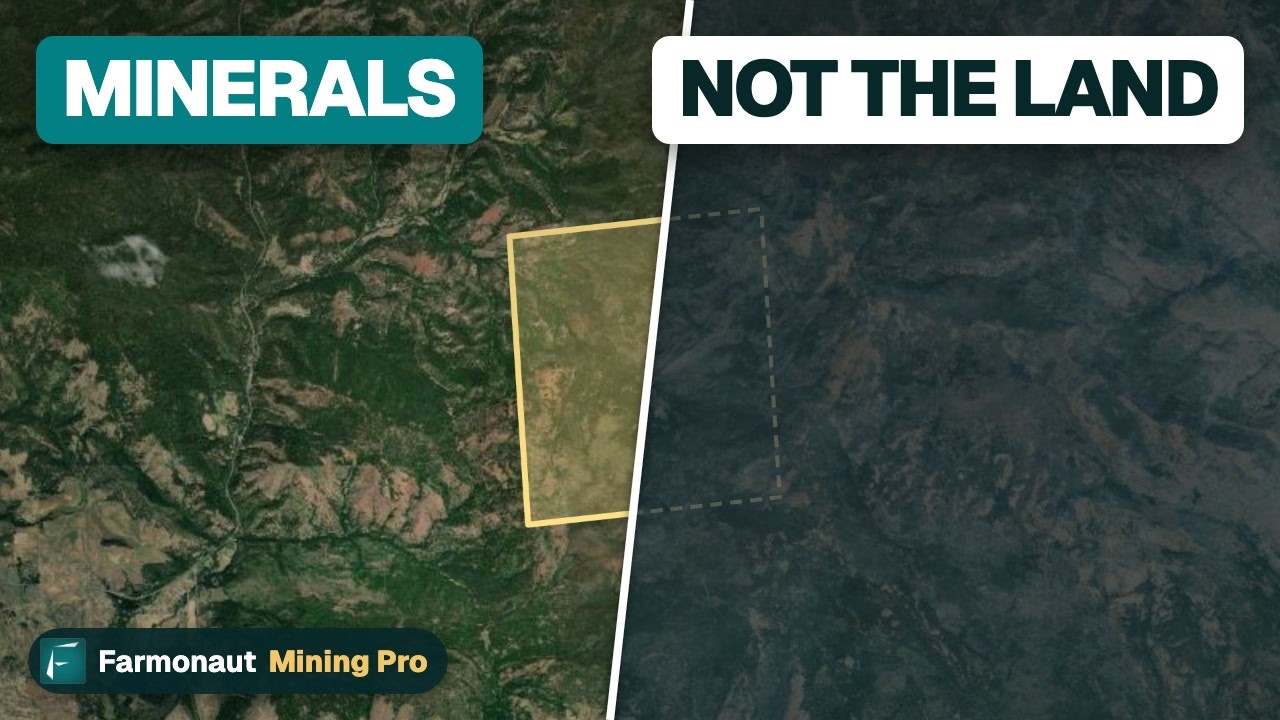
▶ Why owning a gold claim is not the same as owning the land, and what to check before buying one. · 3:19
What licence owners, consultants and investors should check
The state mineral is a symbol, but the questions behind most searches are practical. Before you commit money to Alaska gold ground, work through this list.
- Land status. Federal, state, Native corporation or park land? Each has its own rules, and some land is closed to new claims.
- Claim status. Confirm the claim is current and fees are paid in BLM’s Mineral & Land Records System or the state’s records.
- Deposit type. Placer or lode? Each needs a very different budget, permit set and time line.
- Production history. Look up past production for the creek or district in DGGS and USGS reports. Old workings show where gold was, not what remains.
- Access and season. Most placer mining in Alaska runs from late spring to early autumn. Fly-in ground costs far more to work than road-access ground.
- Water and reclamation. Placer operations need water rights, settling ponds and a reclamation plan, often with a bond.
- Remote screening. Satellite imagery can show old workings, tailings, alteration in exposed rock and access routes before anyone flies in. Farmonaut offers satellite-based mineral detection for this early screening step.
For a project-specific discussion, you can send a mining query or use our contact page.

▶ How satellite remote sensing helps screen ground for gold before field work. · 4:25
Frequently asked questions
What is the Alaska state mineral?
Gold. The Alaska Legislature named gold the state mineral in 1968, and the designation is part of Title 44, chapter 09 of the Alaska Statutes.
What is the Alaska state gem?
Jade, also adopted in 1968. Alaska’s jade is nephrite, found mainly in the Kobuk River area and the Jade Mountains of northwest Alaska.
Does Alaska have a state rock?
No. Alaska has a state mineral (gold), a state gem (jade) and a state fossil (woolly mammoth), but no official state rock.
What is the Alaska state stone?
There is no separate state stone. When people say “Alaska state stone”, they usually mean jade, the state gem.
Is sunstone Alaska’s state gemstone?
No. Sunstone is Oregon’s state gemstone, adopted in 1987. Alaska’s state gem is jade.
Why was gold chosen as Alaska’s state mineral?
Gold strikes at Juneau, the Fortymile River, Nome and Fairbanks between 1880 and 1902 drew the people who built the state’s towns and transport routes, and gold mining is still a major employer in the state.
How much gold does Alaska produce each year?
About 26 short tons, roughly 758,000 troy ounces, in 2024, rising to an estimated 925,000 to 955,000 ounces in 2025 (DGGS Special Report 78, 2025).
Which Alaska mine produces the most gold?
Pogo, an underground mine southeast of Fairbanks owned by Northern Star Resources, produced 279,427 ounces in 2024, ahead of Fort Knox at 239,508 ounces (Alaska Department of Labor, April 2026).
Where is the most gold found in Alaska?
Interior Alaska around Fairbanks, including the Fort Knox, Pogo and Manh Choh mines and many placer creeks, produces the most today. Southeast Alaska near Juneau is the second centre.
Can I pan for gold in Alaska?
Yes, on land open to recreational panning or with the claim owner’s or landowner’s permission. Panning on an active claim without permission is not allowed, and mercury must never be used.
What is Alaska’s state fossil?
The woolly mammoth, adopted in 1986. Many mammoth remains have been found by placer gold miners in frozen ground.
This page is for information only. It is not investment or legal advice. Confirm claim rules and fees with the BLM or the Alaska Department of Natural Resources. Prospect only with permission, follow safety rules and never use mercury.
Farmonaut mining
Screen Alaska gold ground from space
Claim owners can get a quote for a satellite screen of their ground, with ranked targets, before planning a field season.

Mining Pro sample view, synthetic data
Keep reading
Sources
- USGS, Mineral Commodity Summaries 2026: Gold: pubs.usgs.gov
- Alaska DGGS, Special Report 78: Critical minerals and minerals in Alaska (2025): dggs.alaska.gov
- Alaska DGGS, Alaska’s mineral industry presentation (2025): dggs.alaska.gov
- Alaska DGGS, Minerals overview: dggs.alaska.gov
- Alaska Department of Labor, Alaska Economic Trends, mining article (April 2026): live.laborstats.alaska.gov
- USGS Fact Sheet 058-98, Rivers of Gold: Placer Mining in Alaska: pubs.usgs.gov
- National Park Service, Golden Places: chronology: npshistory.com
- BLM, Mining claim fees: blm.gov
- BLM Alaska, Placer mining guidebook (2026): blm.gov
- Wikipedia, List of Alaska state symbols: en.wikipedia.org
- Wikipedia, Jade Mountains: en.wikipedia.org
- GIA, Jade buyer’s guide: gia.edu
- International Gem Society, Oregon sunstone: gemsociety.org
Discussion
Questions, corrections or field experience? Share them below. First-time comments are reviewed before they appear, and your email is never published.
No comments yet. Be the first to add a question or your experience.

 Denkyira Nkoranza Concession
 Mwerezi Minerals Company Limited
 Congo Mining Solutions
 Mining SARL
 SenGold Invest SAS
 Sania Corporation
 Sean Mining Limited
 NTS Group (Pty) Ltd
 Mine4Africa
 Lithspo Minerals Limited
 Tintina Mining Group
 Dalgety Minerals Pty Ltd
 Vortex Minerals Pty Ltd
 Faith At Work (Pty) Ltd
 Geotech Mining Solutions plc
 Vulcan International Limited
 Kidepo Associates
 GKY Mining
 Alkimy SARL
 Double A Trading

 Licence holder · Nigeria · Gold + lithium
 Client · Somalia · Gold










