

“By 2025, over 80% of top mining companies will integrate advanced geospatial ERP tools for exploration and planning.”



A Review of Geospatial Technology-Based Applications in Mineral Exploration: Transforming Mining in 2025
Mineral exploration remains the cornerstone of the global mining industry, powering economic growth, resource sustainability, and the supply of critical elements for technology and infrastructure. As the demand for minerals intensifies, the sector faces rising pressure to optimize the exploration methods, improve data integration and accuracy, reduce environmental impact, and support sustainable practices.
By 2025, geospatial technologies and the best ERP for mining industry solutions have become indispensable tools, fundamentally transforming how companies discover, evaluate, and manage resources. This blog delivers a review of geospatial technology-based applications in mineral exploration — covering advanced tools, platforms, and methods that are revolutionizing mineral exploration and mining conservation across the globe.
Best ERP & Geospatial Tech: Why Mining Needs Conservation Tools in 2025
The mining sector faces a rapidly changing landscape. Critical elements for batteries, electronics, and green infrastructure are surging in demand, while social expectations for responsible resource use are at an all-time high. Mining companies must minimize environmental impact, ensure transparent operations, and comply with stricter global regulations. Geospatial technologies and ERP (Enterprise Resource Planning) systems enable this transformation—combining the power of data-driven resource management, environmental stewardship, and digital integration to drive operational excellence.
- Geospatial analytics for mineral exploration leverages remote sensing, advanced satellite imagery, and AI-driven mapping to identify resources faster and with greater accuracy.
- ERP platforms integrate diverse datasets, automate workflows, improve sustainability management, and optimize everything from drilling to fleet management, and regulatory compliance.
- The result: mining companies reduce time and cost, improve resource estimation, and ensure sustainable extraction—meeting the challenges of 2025 and beyond.
Advancements in Geospatial Technologies for 2025
Geospatial technology for mineral exploration in 2025 is defined by rapid advancements and seamless integration of smart systems:
- Remote Sensing: Today’s industry standard, remote sensing employs multispectral and hyperspectral satellites, airborne LiDAR, and drones to provide high-resolution imagery.
- Global Positioning Systems (GPS): Enables precise drilling and mapping, allowing for efficient field operations and resource estimation.
- Geographic Information Systems (GIS): GIS platforms integrate spatial, structural, geological, hydrological, and geochemical data for advanced analysis and predictive modeling.
- Geostatistics: Innovations in spatial statistics support 3D modeling, enabling better ore body delineation, shape and deposit size assessment, and accurate resource calculations.
- IoT & AI: Maturity in IoT sensors and real-time analytics adds ground-truth intelligence, while AI/ML sorts through large datasets to identify anomalies and predict new mineralization zones.
These technologies enable unprecedented scales and depths of mapping, spatial analysis, and risk management—making them the best geospatial conservation tools for mining in 2025.

Application in Mineral Exploration Workflow: A Review of Geospatial Technology-Based Applications in Mineral Exploration
The modern mineral exploration workflow, powered by geospatial and ERP technologies, includes several mission-critical stages:
-
Target Generation & Prioritization
- Geospatial systems allow us to integrate regional geological and geophysical survey data with remote sensing results (satellite, drone, LiDAR). Hybrid models combining structural geology and geochemistry with pattern recognition help distinguish mineralization anomalies from background noise—making early discovery more reliable.
- Machine learning within GIS automates anomaly detection and target zone prioritization, significantly increasing exploration success rates.
-
Drilling Planning & Resource Estimation
- Accurate 3D geological models derived from geospatial data streamline drill site selection—reducing wasted effort and cost.
- Real-time, GPS-guided drilling ensures precise sample collection aligned with exploration goals, and advanced geostatistics combine spatial datasets for improved resource estimation and regulatory compliance.
-
Environmental & Social Impact Assessment
- Geospatial data enables continuous monitoring of vegetation, water bodies, terrain change, and human activities near exploration sites. This assists in early detection of environmental risks and enhances sustainable practices.
- Spatial data platforms promote transparency through interactive maps and reports for stakeholders and regulators—bridging the gap between public concerns and mining activities.
-
Workflow Integration & Data Management
- The heart of digital mineral exploration is robust data integration—combining varied datasets (satellite, geological, geochemical, hydrological, terrain) into one ERP-enabled system for consolidated analytics and reporting.

“Geospatial analytics can reduce mineral exploration time by up to 35% with integrated data platforms in mining operations.”
Integration with IoT, AI & ERP: Unlocking Smart Mining through Geospatial Systems
The future of mineral exploration leverages the synergy of IoT, AI, and interoperable ERP in digital platforms for the mining industry:
- IoT Sensors: Modern mining companies deploy distributed sensors for real-time data on surface conditions, equipment health, and environmental impact. Linking this with satellite-based geospatial analytics provides continuous feedback for predictive maintenance and resource optimization.
- AI & Machine Learning: Artificial intelligence algorithms analyze immense spatial and temporal datasets, identifying subtle mineralization patterns and forecasting new target zones.
- Comprehensive ERP Integration: ERP platforms are becoming the command centers of mining operations, aggregating distributed geospatial data and automating reporting, compliance, logistics, and fleet management.
- Blockchain Traceability & Automation: Blockchain integration enables secure, transparent records of resource movements from exploration to shipment. This is essential for meeting international standards and building trust with investors, regulators, and communities. Explore Farmonaut’s Blockchain-Based Traceability solutions for mining supply chains.
The convergence of ERP and geospatial systems in mining 2025 delivers dramatic increases in efficiency, transparency, and regulatory alignment. If you’re a developer or enterprise seeking to embed satellite and ERP data within your systems, check out the Farmonaut Satellite API and our API Developer Docs for seamless integration.

Sustainability and Environmental Impact: Geospatial Applications & Best Industrial Water Conservation Technologies for Mining
Responsible mineral extraction must place environmental sustainability at its core. Geospatial applications help mining companies reduce impact and adopt the best industrial water conservation technologies for mining in 2025:
-
Real-Time Environmental Monitoring:
- Satellite imagery tracks vegetation health (using indices like NDVI), water body shrinkage, terrain deformation, dust emissions, and hydrogeological shifts in active and potential mining zones.
- With spatial data from satellites, companies can implement targeted water conservation strategies, monitor reclamation efforts, and quickly identify contamination risks.
-
Advanced Water Management:
- ERP platforms merge geospatial hydrological datasets, remote sensors, and AI models for predictive water usage, waste reduction, and reclamation project tracking. Adopting the best industrial water conservation technologies for mining is now tightly integrated with analytics, IoT, and actionable satellite data.
-
Carbon Footprinting:
- Modern geospatial platforms—like Farmonaut’s Carbon Footprinting Solution—empower mining companies to track, report, and validate their GHG emissions. This supports compliance with new national and international sustainability standards in mining.

Farmonaut’s Role in Mining Geospatial Technology & Sustainable Mining Practices
At Farmonaut, we are dedicated to empowering the mining industry with cost-effective, real-time satellite-based geospatial solutions tailored for mineral exploration, environmental impact monitoring, and resource optimization.
- Satellite-Based Monitoring & NDVI: Our multispectral satellite imaging—offered through mobile, browser, and API platforms—enables monitoring of vegetation encroachment, surface geology, and terrain disturbance in exploration zones for smarter, sustainable mining.
- AI-Driven Advisory: Our Jeevn AI platform analyzes satellite and ground datasets, providing actionable recommendations for exploration, water conservation, and operational efficiency in mining projects.
- Blockchain Traceability: We support mining supply chains with blockchain-based traceability tools—for transparent tracking of minerals from source to client.
- Fleet & Resource Management: Companies can optimize logistics and reduce environmental impact with Fleet Management tools, making resource allocation and vehicle/equipment usage more efficient.
- Environmental Impact Tracking: Farmonaut’s platform delivers real-time insights on carbon and water metrics—helping clients achieve their sustainability goals and comply with regulations.
Our core value is making advanced satellite and geospatial technology accessible to businesses in resource, mining, infrastructure, and government sectors globally—with scalable pricing, robust API support, and focused industry applications. Learn more about how Farmonaut benefits mining operators worldwide.

Comparison Table: Leading Geospatial & ERP Tools for Mining (2025)
For decision-makers in mining, comparing the best tools is crucial for resource allocation and project planning. Here’s a side-by-side review of top geospatial, ERP, and conservation systems leading the mineral exploration industry in 2025.
| Tool/Software Name | Core Function | Key Features | Est. Implementation Cost (USD) | Est. ROI Timeline (months) | Sustainability Impact |
|---|---|---|---|---|---|
| Farmonaut Satellite Platform | Satellite-based remote sensing, AI advisory, environmental monitoring | NDVI vegetation monitoring, Jeevn AI, blockchain traceability, real-time reporting, fleet/resource management, API, mobile/web accessibility | $2,500–$15,000/year (subscription) | 6–12 | Up to 33% GHG reduction, 25% resource optimization, robust compliance |
| Esri ArcGIS Pro (Mining Suite) | GIS integration & 3D resource modeling | Spatial analytics, predictive geological modeling, geostatistics, integration with drones/LiDAR | $4,000–$25,000+/license/year | 12–18 | 20% emissions reduction, 20% water optimization |
| Hexagon Mining (HxGN MinePlan) | ERP/geospatial mine planning | Mine scheduling, real-time fleet management, spatial data fusion, machine-control, environmental monitoring | $15,000–$75,000/year | 12–18 | 25% resource efficiency, 18% emissions reduction |
| Dassault Systèmes GEOVIA Surpac | 3D geological modeling, data management | Resource estimation, block modeling, drillhole data fusion, geostatistics | $6,000–$22,000/license/year | 12–24 | 15%–20% resource optimization |
| ABB Ability™ Smart Mining | ERP integration & industrial water management | IoT integration, SCADA, automated water use monitoring, energy/resource tracking, advanced analytics | $20,000–$150,000/upfront | 18–30 | 35%+ water savings, 30% emissions reduction |
| Seequent Leapfrog | 3D geological modeling & visualization | Intuitive 3D dynamic modeling, integration with GIS and geochemical datasets | $4,000–$16,000+/license/year | 10–18 | Minimizes over-drilling, 10–15% resource optimization |
| Watersmart ERP Solutions | Industrial water conservation for mining | Water usage analytics, predictive maintenance, compliance reporting | $4,000–$12,000/year | 8–16 | Up to 45% water reduction |
Farmonaut Subscription Plans
Our scalable, subscription-based model fits any mining organization size, from field operators to enterprise-wide deployments.
Challenges & Future Prospects for Geospatial Technologies in Mining
While adoption of geospatial and ERP technologies is transformative, key challenges remain:
- Big Data Management: Handling, fusing, and analyzing heterogeneous datasets (e.g., satellite, field IoT, legacy geological data) at scale is a major challenge. Cloud computing and edge analytics, now more common in 2025, are solving some of these bottlenecks.
- Data Accuracy: Dense vegetation, complex terrain, or extreme weather events can obscure signals, requiring multi-source data fusion for reliable outputs.
- Cybersecurity: As high-value spatial and asset data migrates to cloud and platform-based systems, protecting sensitive geological information from breach is essential.
- User Training: The complexity of advanced geospatial platforms necessitates ongoing investment in digital skills for geologists, analysts, and operations personnel.
- Open Data & Collaboration: 2025 marks the beginning of more open spatial data exchange between nations and mining companies—but implementation of secure, standardized formats remains a work in progress.
- AI Explainability: As machine learning increasingly drives mineral anomaly detection and system recommendations, mining organizations demand transparency and interpretability in AI outputs.
Looking ahead, the integration of AI, IoT, and real-time satellite data, combined with scalable ERP platforms, will empower deeper subsurface imaging, cross-border exploration collaboration, and greener mining across the globe.

Watch: Mining Geospatial Technology in Action (Videos 2025)
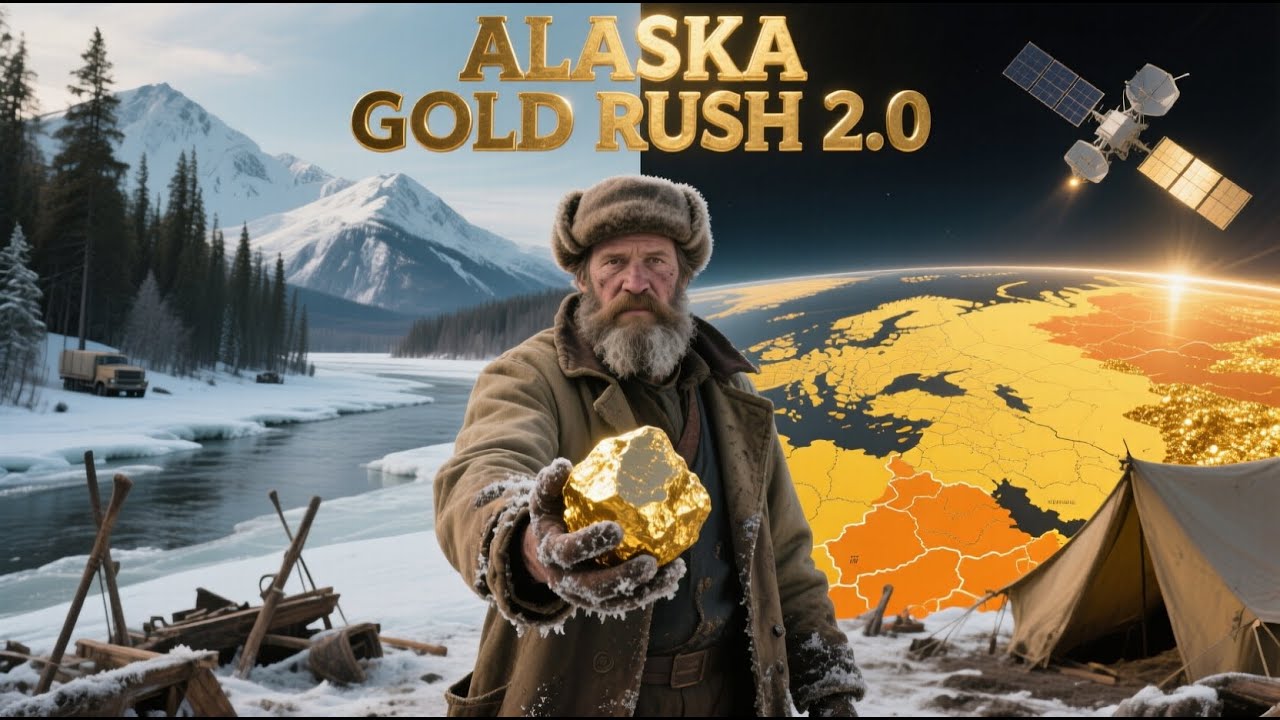
See some of the latest geospatial technology-based mineral exploration breakthroughs and mining conservation in action. These documentaries explore global projects using AI, satellites, drone platforms, and ERP-driven analytics across Alaska, Tanzania, Kenya, Mauritania, Canada, Arizona, British Columbia, and more.

- Satellites Spark a New Alaska Gold Rush
- Satellites Find Gold! Farmonaut Transforms Tanzania Mining | News Report
- Satellites Revolutionize Gold Exploration in Kenya’s Heartland
- Mauritania’s Gold Rush: Uncovering Hidden Deposits with Satellite Data
- Rare Earth Boom 2025 ? AI, Satellites & Metagenomics Redefine Canadian Critical Minerals
- Arizona Copper Boom 2025 ? AI Drones, Hyperspectral & ESG Tech Triple Porphyry Finds
- Arlington Gold Hunt 2025 ? AI DCIP, Hyperspectral & LIDAR Reveal BC High-Grade Zones
- Satellite Mineral Exploration 2025 | AI Soil Geochemistry Uncover Copper & Gold in British Columbia!
FAQs: Geospatial Tech and ERP in Mining 2025
What are the biggest benefits of geospatial technology for mineral exploration?
Geospatial technology enables mining companies to discover mineral resources faster, with greater accuracy and lower environmental impact. High-resolution satellite imagery, GIS integration, and remote sensing streamline target zone selection, improve resource estimation, and boost operational efficiency.
How does ERP integration improve sustainability in mining?
Modern ERP platforms integrate geospatial data, IoT sensor feeds, and resource tracking in a single system. This automates compliance, optimizes water and energy usage, reduces emissions, and supports transparent reporting—helping mining organizations achieve sustainability targets and meet regulatory requirements.
What are the best industrial water conservation technologies for mining in 2025?
The top water conservation technologies merge remote sensing, IoT-based flow monitoring, and AI/ML analytics to intelligently track and minimize industrial water usage. Leading systems, such as the ones reviewed above, provide predictive analytics, leak detection, and automated reclamation management for mining operations.
How can Farmonaut help my mining company?
Farmonaut offers advanced satellite monitoring, real-time AI-based advisories, resource management, environmental impact tracking, and blockchain-based traceability for mining. Its solutions are accessible via mobile, web, and API, with scalable pricing for operations of all sizes.
How quickly can mineral exploration companies see a return on investment (ROI) from geospatial and ERP tech?
ROI times typically range from 6 to 18 months, depending on the scale of deployment, the solution stack, and the operational baseline. Early adopters achieve faster discovery, reduced over-drilling, and significant improvements in resource efficiency.
How do I get started with Farmonaut’s geospatial and ERP-driven solutions?
Simply sign up through our web or mobile app, request a free trial, or access our API for developer integration. Flexible subscriptions and technical support ensure rapid onboarding.
Conclusion: Optimizing Success and Sustainability in Mining with Geospatial & ERP Tools
The global mining industry in 2025 is at a tipping point—balancing unprecedented mineral demand with the urgent necessity for sustainable practices. A review of geospatial technology-based applications in mineral exploration shows that the sector’s future success hinges on the seamless integration of geospatial technologies, ERP systems, and AI-powered analytical tools.
- Geospatial platforms deliver high-resolution, real-time spatial data for more efficient exploration, accurate resource estimation, and better environmental monitoring.
- ERP and management applications automate, correlate, and optimize business processes from site planning to reclamation—ensuring regulatory compliance and boosting project ROI.
- Farmonaut empowers users with affordable access to satellite insights and actionable AI, supporting everything from mineral discovery to large-scale resource management and sustainability tracking.
By leveraging the best ERP and geospatial conservation technologies, mining companies are positioned to not only meet but exceed the operational, environmental, and economic challenges of the decade ahead.
Are you ready to transform the future of mining with smart, sustainable, and data-driven geospatial solutions? Explore the Farmonaut app and API to get started.

 Comfix & Engineering Limited
 Congo Mining Solutions
 Mining SARL
 SenGold Invest SAS
 Sania Corporation
 Sean Mining Limited
 NTS Group (Pty) Ltd
 Mine4Africa
 Lithspo Minerals Limited
 Tintina Mining Group
 Dalgety Minerals Pty Ltd
 Vortex Minerals Pty Ltd
 Faith At Work (Pty) Ltd
 Geotech Mining Solutions plc
 Vulcan International Limited
 Kidepo Associates
 GKY Mining
 Alkimy SARL
 Double A Trading
 GemSprout Metals Limited
 Qader Group
