

Gemstone mines · Location and status guide
Blue Lace Agate Mine: Location, Status and Fire Agate
Blue lace agate came mostly from the Ysterputs Mine in Namibia, worked from 1962 to January 2017. Here are the documented facts, fire agate sites, collecting rules and buying checks.
Key takeaways
- The main source was the Ysterputs Mine, Karasburg West, Namibia, worked 1962 to January 2017; its future was listed as uncertain in December 2023.
- It is a vein agate formed in a Jurassic dolerite sill about 183 million years ago; veins are typically 20 to 30 mm thick.
- Fire agate is a different stone, known from Arizona, southern California and central Mexico, with a public BLM dig site at Black Hills, Arizona.
- BLM Arizona guidance sets personal collecting at 25 pounds a day and 250 pounds a year; selling needs a permit or contract.
- Chalcedony is often dyed, so ask for treatment and origin in writing before paying a premium.
In this article
- Blue lace agate mine: where it was and what is known
- How the Ysterputs agate formed
- Other places with similar blue chalcedony
- Fire agate mines compared with blue lace agate
- US gem mining in numbers
- What the vein sizes tell you about a gem deposit
- Is lab-made material changing the gem market?
- Rules for collecting agate on US public land
- Environmental effects of small gem mines
- How to buy blue lace agate without being fooled
- Can satellites help find gem-bearing ground?
- Frequently asked questions
The blue lace agate mine that was the main source of the world’s pale blue, lace-banded stone is the Ysterputs Mine (also spelled Ysterputz) on Ysterputs Farm 254 in the Karasburg West area of Namibia’s ǁKaras Region. It worked from 1962 until January 2017, and its future was listed as uncertain in December 2023, according to the Wikipedia entry on the stone, which summarises the peer-reviewed mineralogy papers. It was never a California mine. This page sets out what is documented about the mine, how the agate formed, where fire agate (the other stone in the old title) is actually dug, what the rules are for collecting on US public land, and how to buy without being fooled by dyed material.
Plain terms first. Agate is a banded form of chalcedony, which is a very fine-grained (cryptocrystalline) type of quartz made of silicon dioxide. A vein agate fills a crack in rock. A vug is an open cavity, often lined with small crystals. Hardness is measured on the Mohs scale, where quartz is 7. Both stones in this guide sit at 6.5 to 7, as listed in the fire agate and blue lace agate reference entries.
Blue lace agate mine: where it was and what is known
Most of what mineralogists know about the stone comes from one place. Most mineralogical data on the stone comes from Ysterputs material. This is reported in Welman-Purchase, Wicht, Miller and Roelofse (2024), “Blue lace agate and chalcedony pseudomorphs from Ysterputs in southern Namibia”, Journal of African Earth Sciences, vol. 212, and in Wicht and Miller (2020), and summarised in the Wikipedia entry linked above. The facts below come from those works.
- Location: Ysterputs Farm 254, Karasburg West, ǁKaras Region, southern Namibia.
- Owner and period: privately owned, by the late George Swanson; in operation from 1962 until January 2017.
- Status: described as uncertain as of December 2023. No restart has been reported as of October 2026, so treat any seller who says “new mine production” with care.
- Similar ground nearby: the same geology occurs on neighbouring farms, and other Namibian or South African occurrences may remain unmined.
The mine was a small private operation. No production tonnage has been published, and a figure seen in older web copy (such as “a third of annual supply”) has no named source. That is why this page gives no tonnage and no price trend for the stone.
Is there a California blue lace agate mine?
Some web pages say the main deposit was in California, that it closed in late 2023 because of desert land-protection rules, that prices rose 28 to 35 per cent and that fire agate output would grow 15 per cent. None of those figures has a named source, and the location is wrong. The documented primary source is in Namibia. Fire agate is the stone found in Arizona, southern California and Mexico, not the pale blue banded one.
How the Ysterputs agate formed
The stone is a hydrothermal vein agate. Hot, silica-rich water moved through cracks and left silica behind in layers. According to the published summaries, the veins formed in the Tandjiesberg sill, a body of dolerite (a dark, fine-grained igneous rock) that intruded about 183 million years ago in the Jurassic period. The sill cut into Whitehill Formation shale of the Ecca Group, part of the Permian Karoo sedimentary sequence. Heat from the intrusion set up a hydrothermal system that carried a salty, silica-rich fluid into fractures in a shear zone, and the silica came out of solution in successive bands.
Three details explain why collectors prize it.
- Structure: the veins are usually 20 to 30 millimetres thick and reach about 60 millimetres where agate fills the whole fissure. Banding is roughly symmetrical either side of the centre line, and a central vug often holds clear or blue druzy quartz (a carpet of tiny crystals).
- Colour: the pale blue is believed to come from the scattering of light by tiny cavities and sub-microscopic silica particles, not from a blue pigment. This matters for buyers: the colour is subtle by nature.
- Chemistry clue: most of the chalcedony is the length-slow type called quartzine, which suggests a high-salinity fluid. Some bands glow green under short-wave ultraviolet light because of trace uranyl ions.
Rare small cubes of blue chalcedony have been found at one spot in the mine. They were once called pseudomorphs after fluorite (a crystal replaced by another mineral that keeps its shape), but the 2024 Welman-Purchase study concludes they are more likely pseudomorphs after melanophlogite, a rare silica mineral.
Other places with similar blue chalcedony
Namibia supplied the standard material until 2017, but similar stone has been reported elsewhere. The Wikipedia summary lists the Lapurr Range in Turkana County, Kenya, Georgia, Malawi, Zambia and Turkey. A Malawi vein cross-section looks like the Ysterputs veins, which suggests a similar setting. These sources do not give volumes, grades or current operators, so none of them can be treated as a replacement mine. Blue chalcedony from other places may differ in banding and shade, and pale blue chalcedony can also be dyed.
Readers comparing blue stones can also read our guide to blue quartz types and uses, which covers a different set of blue silica materials.
Fire agate mines compared with blue lace agate
Fire agate is the better-known stone of the American Southwest. The US Bureau of Land Management (BLM) states that fire agate was only identified and formally recognised in the 1930s, shows an opal-like play of colour in reds, greens and blues, and is known only from the desert regions of Arizona, southern California and central Mexico. BLM adds that its origin is unknown but it is always associated with volcanic deposits. The reference entry notes that it is not a true banded agate, since it typically has no bands; the iridescence comes from thin layers of iron oxide (goethite or limonite) in the chalcedony.
| Feature | Blue lace agate (Ysterputs, Namibia) | Fire agate (Arizona, California, Mexico) |
|---|---|---|
| Setting | Hydrothermal veins in a Jurassic dolerite sill | Cavities and cracks in volcanic rock |
| Banding | Pale blue and white lace bands | Usually unbanded |
| Colour cause | Light scattering by tiny cavities and silica particles (believed) | Thin iron oxide layers giving iridescent flashes |
| Hardness (Mohs) | 6.5 to 7 | 6.5 to 7 |
| Main source status | Ysterputs Mine, private, worked 1962 to January 2017 | Public dig site and private fee mines |
| Public digging | None known at the closed mine | BLM Black Hills Rockhound Area, Arizona |
Sources for the table: the two reference entries and the BLM Black Hills Rockhound Area page.
The Black Hills Rockhound Area, Arizona
The public fire agate site most people mean is the Black Hills Rockhound Area, run by the BLM Safford Field Office. BLM lists it on the north side of Arizona Route 191, between Safford and Clifton, about 18 miles north of Safford, with access easiest from the highway just east of milepost 141 and coordinates of 32.87397, -109.39496. The page states there are no fees, digging is open to the public without permits, and camping is allowed for up to two weeks. Summers can exceed 100 degrees Fahrenheit. BLM contact details are on the page (Safford Field Office, 928-348-4400).
Private fire agate workings may charge for digging, but their current terms are not published by BLM, so we do not list them. Ask the owner for fees, hours and rules before you travel.
US gem mining in numbers
US gem output is small and almost all of the market is imported. The USGS Mineral Commodity Summaries for gemstones (February 2026) lists agate among the natural gem materials produced in the United States. Arizona led the nation in natural gemstone production by value, followed by Oregon, California, Nevada, Montana and Maine, and those six states made up 68 per cent of the total. USGS also reports net import reliance of 99 per cent of apparent consumption and about 1,100 mine employees for each year from 2021 to 2025.
Chart
US natural gemstone production value
Million US$, all natural gem materials, estimated minimum
The USGS value of US natural gemstone production has been flat at roughly 9 to 10 million US dollars a year. That covers every gem material, not only agate, and it is an estimated minimum, so it should not be read as the size of the agate trade.
What the vein sizes tell you about a gem deposit
Vein thickness sets what a lapidary can cut. A 20 to 30 millimetre vein yields slabs and cabochons (domed, polished stones), while a 60 millimetre vein is the exception. The chart below shows the thicknesses reported for the Ysterputs veins.
Chart
Reported thickness of Ysterputs agate veins
Millimetres
Is lab-made material changing the gem market?
For US producers the value of laboratory-created gemstones is far larger than the value of natural stones. USGS estimates synthetic output at 79.3 million US dollars in 2021, 87.1 million in 2022, 64.6 million in 2023, 56.8 million in 2024 and 37 million in 2025 (estimate), a 35 per cent fall in 2025 after a major Oregon producer stopped operating in July 2025. Synthetic gem output is a separate trade from agate, which is cut from natural rock, so the figures show the market’s scale rather than a threat to collectors.
Chart
US laboratory-created gemstone production value
Million US$
Rules for collecting agate on US public land
Collecting on federal land is allowed in many places, but it is limited. These are the main points from the regulation and BLM guidance.
- Check who manages the land. BLM, Forest Service, state trust and private land have different rules. A mining claim gives the claim holder the right to exclude others, so check for claims before you dig. BLM’s Arizona pamphlet repeats this point.
- Stay within reasonable amounts and personal use. Under 43 CFR 8365.1-5, collecting reasonable amounts of rocks, mineral specimens and semiprecious gemstones for non-commercial purposes is allowed on public land, outside developed recreation sites or where posted otherwise. Collecting for sale or barter to commercial dealers needs a contract or permit.
- Know the limits. BLM’s Arizona rockhounding pamphlet sets the reasonable personal-use limit at 25 pounds per day with a total of 250 pounds per year, and says groups cannot pool their yearly allotment to take a larger piece. Quantities above that need a permit from the local BLM office. Local offices can set their own rules, so confirm with the field office first.
- Use hand tools only. The regulation bars explosives and motorised or mechanical devices for collecting, with metal detectors as the exception. BLM’s pamphlet repeats the ban on heavy equipment and explosives.
- Limit your impact. No undue or unnecessary degradation of the land, and report abandoned mine hazards you find.
This is general information for hobby collecting. Commercial mining of gem material needs claims, permits and bonds under separate rules; speak to the land manager and a qualified adviser before you invest money. Take permission before entering any land, work safely, and do not use mercury or other toxic chemicals.
Environmental effects of small gem mines
Small gem workings are shallow and often reached by tracks, so the main effects are surface disturbance, waste rock and dust. Fire agate and vein-agate sites are usually dug with hand tools or small machines. Good practice is to backfill pits, keep spoil out of drainage lines, and rehabilitate access tracks. The video below explains the seven main environmental impacts of mining in simple terms; the same list applies, at smaller scale, to a gem working.
Operators can compare dated satellite images to see how a site’s disturbed area changes over time, and Farmonaut’s product traceability tools record origin along a supply chain. Readers running a working mine can also see our guide to 7 ways to make gold mining operations more efficient, much of which applies to any small hard-rock operation.
▶ The seven environmental impacts of mining, explained in plain words. · 2:31
How to buy blue lace agate without being fooled
Because the best-known source stopped producing in 2017, older stock, polished pieces and re-cut material make up much of what is for sale. Use these checks.
- Ask about dye. The Gemological Institute of America lists chalcedony among the materials that have been dyed since ancient times, and the International Gem Society says bleach and dye treatments are common in chalcedony and that brightly coloured samples need checking. The natural stone is pale. A deep sky blue should raise questions. Dyed blue chalcedony can be spotted in a lab: the International Gem Society notes dyed blue stones show pink in the Chelsea filter.
- Ask for origin in writing. A seller who says “Ysterputs” should give the source of the claim, such as an older collection label. Origin cannot be proved from a polished stone alone.
- Look at the banding. The published description of the stone is wavy blue spherulitic chalcedony bands layered with white micro-granular quartz, often with a central vug lined with druzy quartz (Wikipedia summary).
- Do not pay for scarcity talk. Claims such as “mine closed, price up 35 per cent” need a dated price source. No dated price series is published for this stone, so compare actual sold listings of similar pieces instead.
- Check weight and cut. Price by weight only makes sense when the cutting quality and banding are comparable.
What does rough cost per finished cabochon?
Lapidaries buy rough and lose most of it in sawing and shaping. The calculator below turns your rough price, usable yield and stone size into a cost per finished cabochon. All values are inputs, not benchmarks.
Calculator
What does rough cost per finished cabochon?
Enter your own rough price, yield and stone size. Defaults are examples.
- Rough cost in total: $200
- Rough cost per stone: $5
- All-in cost per stone: $10
Example values only, not a benchmark or a quote. Rough price is an input: example, use today’s price (US$). Usable yield is the share of rough weight that ends up in finished stones; it varies with the piece.
Can satellites help find gem-bearing ground?
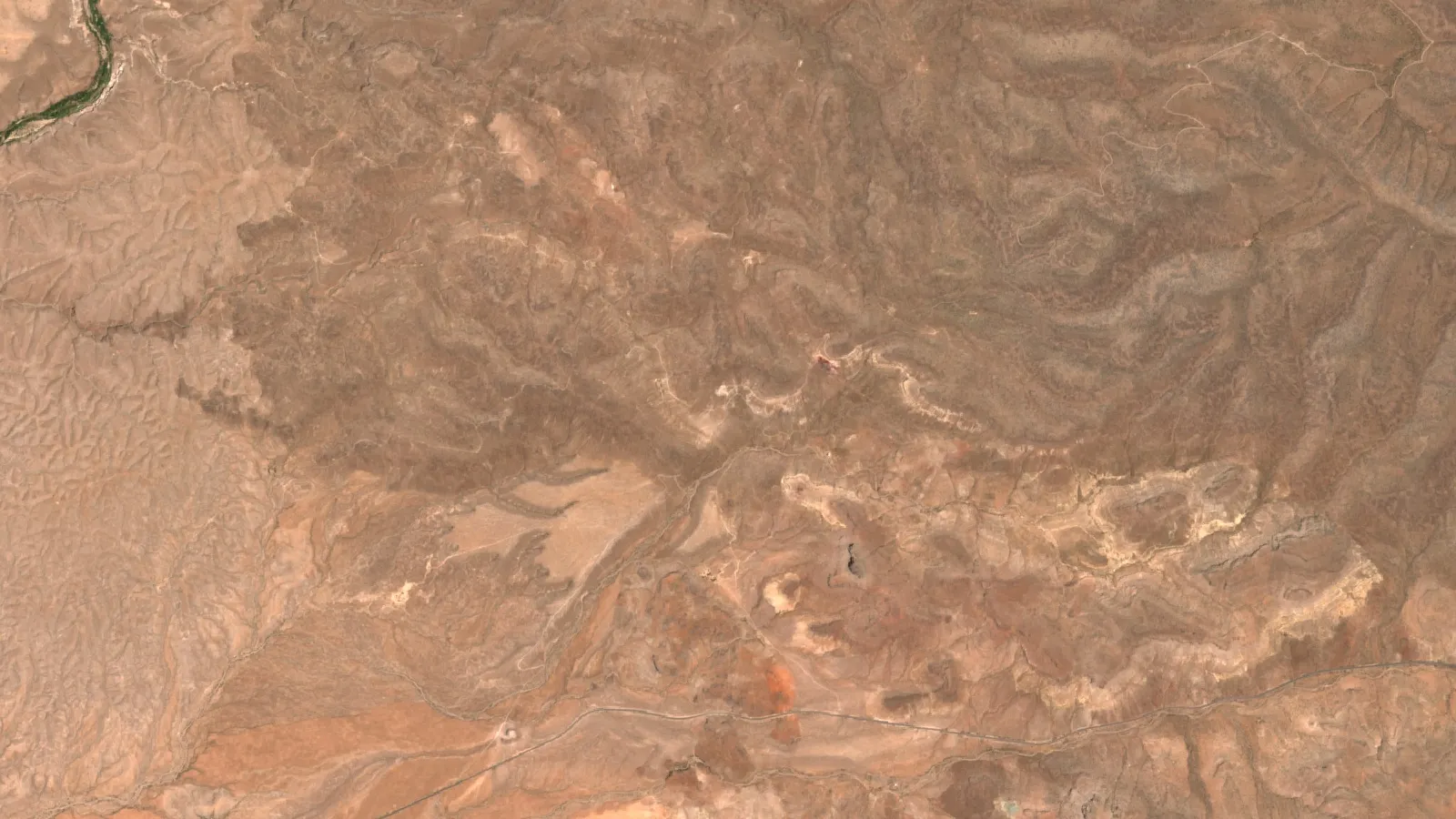
Satellite images cannot see a 20 millimetre agate vein. What they can show is the setting: volcanic fields, dolerite intrusions, fault and shear zones, altered ground and access roads. Geologists use that to choose where to send a field crew, which is how remote sensing is used for most small mineral targets. The Ysterputs deposit sits in a dolerite sill cut by a shear zone, and fire agate is tied to volcanic deposits, so both fit a map-first approach that then needs ground checking.
Farmonaut Mining Pro maps a licence area from satellite data and returns exploration targets, not a resource estimate, from a polygon in KML, KMZ or similar format. The video below explains remote sensing for mining in about three minutes.
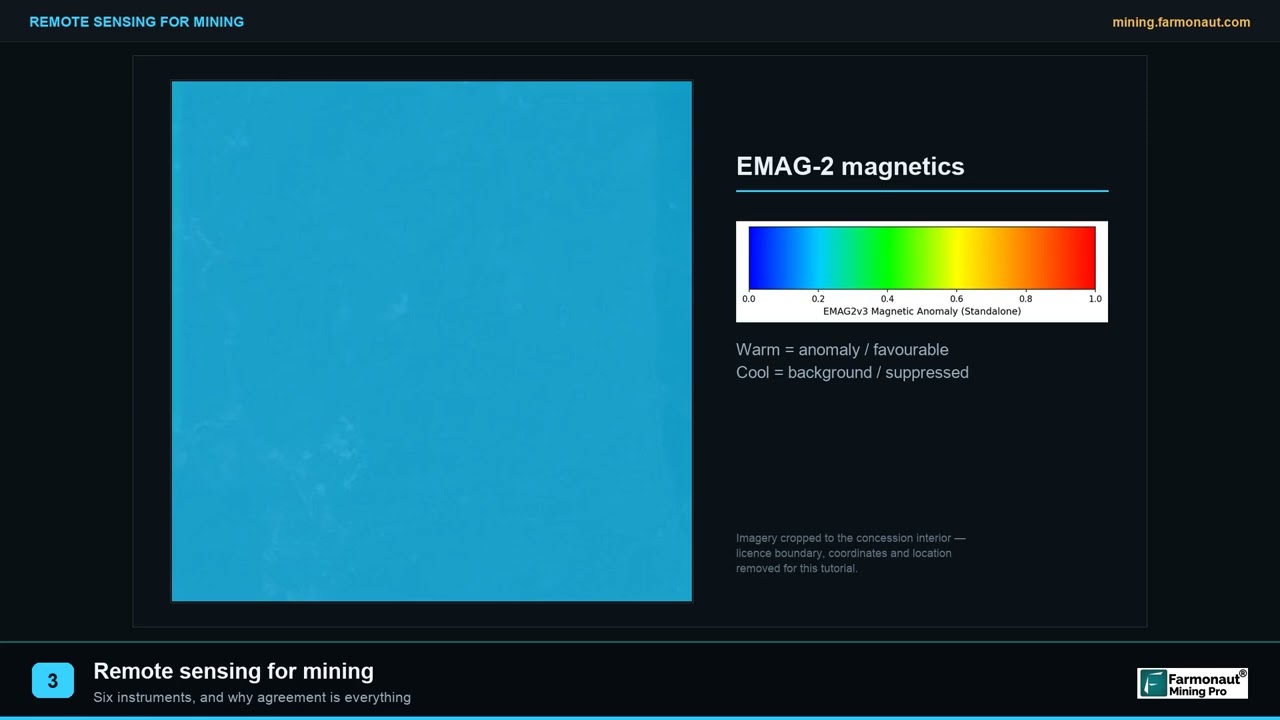
▶ Remote sensing for mining explained in three minutes. · 2:01
Frequently asked questions
Where does blue lace agate come from?
Most of it came from the Ysterputs Mine in southern Namibia, which operated from 1962 to January 2017. Similar blue chalcedony has been reported in Kenya, Georgia, Malawi, Zambia and Turkey.
Is the blue lace agate mine closed?
The Ysterputs Mine stopped operating in January 2017, and its future was described as uncertain in December 2023. No restart has been reported.
Why did the Ysterputs Mine close?
No reason for the closure has been published, so we do not give one. The claim that it closed because of California land-protection rules is wrong, because the mine is in Namibia.
Is there a lace agate mine in California or Arizona?
None of the documented primary sources for the stone are in the United States. California and Arizona are known for fire agate, not for pale blue lace-banded agate.
How did the Ysterputs agate form?
Hot, salty, silica-rich water moved through fractures in a Jurassic dolerite sill about 183 million years ago and deposited silica in bands. The result is a vein agate with blue and white lace patterns.
Why is the stone blue?
The colour is believed to come from light scattering by tiny cavities and sub-microscopic silica particles, not from a blue mineral or dye. This is why natural stones are pale.
Can I dig fire agate for fun?
Yes, at the BLM Black Hills Rockhound Area in Arizona, where BLM states there are no fees or permits and camping is allowed for up to two weeks. Follow the personal-use limits and hand-tool rules.
How much agate can I take from BLM land?
BLM Arizona guidance sets the reasonable personal-use limit at 25 pounds per day and 250 pounds per year. Collecting for sale needs a permit or contract. Ask the local field office before you go.
Is blue lace agate dyed?
Some blue chalcedony on the market is dyed, since dye treatments are common in chalcedony. Deep, even blue is a warning sign, and natural material is pale. Ask for written treatment disclosure.
Is fire agate a real agate?
It is a type of chalcedony, but it typically has no bands, so it is not a banded agate in the strict sense. Its flashes come from thin iron oxide layers.
Which state produces the most natural gemstones in the US?
Arizona, according to USGS, followed by Oregon, California, Nevada, Montana and Maine. Together these six states made up 68 per cent of US natural gemstone production by value.
This page is for information only. It is not investment advice or legal advice. Confirm access and collecting rules with the land manager. Take permission before entering land, work safely and do not use mercury.
Farmonaut mining
Map your own project area from space
Request a quote to have a licence or claim area screened from satellite data as an exploration target.
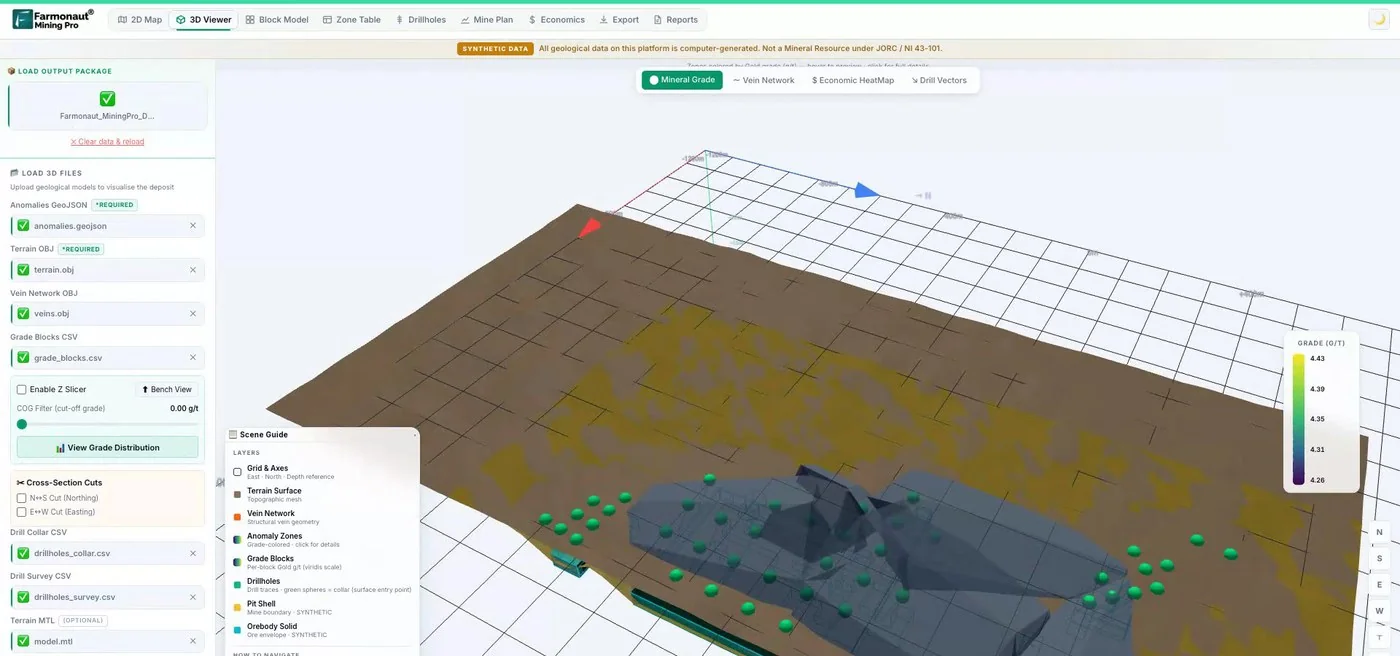
Mining Pro sample view, synthetic data
Keep reading
Sources
- Wikipedia, Blue lace agate (summarising Welman-Purchase et al., J. African Earth Sci., 2024, and Wicht and Miller, 2020): en.wikipedia.org
- Wikipedia, Fire agate: en.wikipedia.org
- BLM, Black Hills Rockhound Area, Arizona: blm.gov
- BLM Arizona, Rock hounding in Arizona pamphlet: blm.gov
- Legal Information Institute, 43 CFR 8365.1-5 (public conduct on BLM land): law.cornell.edu
- USGS, Mineral Commodity Summaries 2026: Gemstones: pubs.usgs.gov
- International Gem Society, Common gemstone treatments cheat sheet: gemsociety.org
- International Gem Society, Chalcedony value, price and jewelry information: gemsociety.org
- International Gem Society, Agate value, price and jewelry information: gemsociety.org
- GIA, An introduction to gem treatments: gia.edu
Discussion
Questions, corrections or field experience? Share them below. First-time comments are reviewed before they appear, and your email is never published.
No comments yet. Be the first to add a question or your experience.

 Kidepo Associates
 GKY Mining
 Alkimy SARL
 Double A Trading
 GemSprout Metals Limited
 Qader Group
 Ileys General Trading
 SG Gold Mining LLC
 VRV Global Pte Ltd
 Omsri International FZE
 G.I.T.T.
 Jaunita Erss Ltd
 Almosi SARL
 SRK Consulting
 Berks Gold Limited
 Mwerezi Minerals Company Limited
 Mining SARL
 SenGold Invest SAS
 Sean Mining Limited
 Exploration consultancy · South Africa · Gold










